 Choctaw Hall: What a Gazebo Ceremony Does to the Photographs
The Mississippi Governor’s Mansion, Jackson: Photographing State Rooms
State rooms were designed to be walked through in procession and looked at. They photograph accordingly.
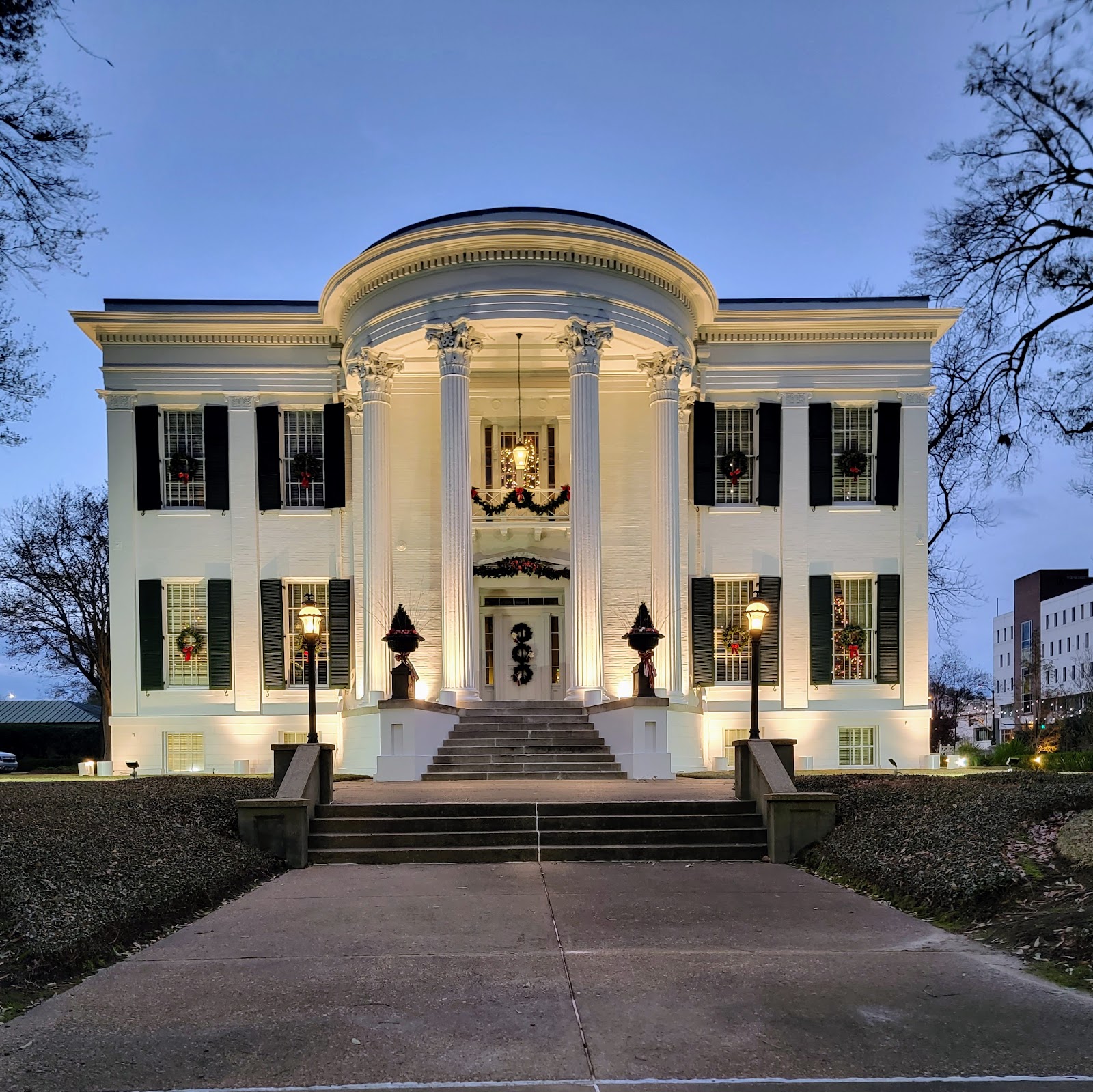
The Mississippi Governor’s Mansion in Jackson is an official residence with formal state rooms — a grand celebration space, as the venue’s own description puts it, and a setting for detailed interior photographs as much as for people.
An official residence has a coherent internal logic that is different from a hotel’s or a private house’s, and following it is the most useful way to plan. State rooms exist to be processed through and observed: they are arranged along an axis, they are symmetrical, they are furnished formally with pieces in fixed positions, and their ornament is concentrated where the eye naturally travels — doorways, ceilings, chimneypieces, the ends of rooms. Every one of those properties has a direct photographic consequence.
So this follows the venue’s own logic. We have not photographed a wedding at the Mansion; official residences behave consistently. What is permitted — which rooms, what may be touched, whether stands and flash are allowed, what the guest limit is — is set by the institution rather than negotiable, and it should be established in writing before anything else is planned.
The Mississippi Governor's Mansion at a glance
| Where | Jackson, Mississippi |
| Character | An official residence with formal state rooms and grounds |
| The logic | Axial, symmetrical, formally furnished, ornament where the eye travels |
| Consequence | Precision matters more here than anywhere else |
| Ask first | Rooms permitted, stands and flash, what may be touched, guest limit |
Axis and symmetry: why precision matters here
State rooms are arranged on an axis, usually with aligned doorways so that a view runs through several rooms at once. That enfilade is the single strongest frame the building offers, because it gives depth, repetition and a vanishing point in one move — and it exists in almost no other venue type.
It is also unforgiving. A one-point perspective frame collapses if the camera is off the centre line by even a small margin, or tilted by a degree: the doorways stop aligning, the verticals splay, and the whole effect reads as an accident rather than as intent. So this is a frame worth a level, a moment of care and, where permitted, a tripod. The difference between it working and not is two minutes.
Symmetry in individual rooms behaves the same way. A formal room with a chimneypiece centred on one wall and windows balanced either side wants to be photographed either exactly on axis or clearly off it — the near-miss is the only failure available, because the eye detects a two-degree error in a symmetrical composition instantly while forgiving a ten-degree one in an asymmetrical composition entirely.
The couple’s placement follows from this. In an axial frame, they belong in the depth rather than at the front: placed two-thirds of the way down an enfilade they become the vanishing point of the architecture, which is what the frame is for. Placed close to the camera they block the axis and the frame becomes an ordinary portrait with some doors behind it.
Formal furniture in fixed positions is the constraint that comes with all this, and at an official residence it is likely to be firm. Assume nothing moves, and use that: fixed furniture defines a small number of clean standing positions, and knowing them in advance is worth more than the freedom to rearrange would be.
The lighting: ornament, ceilings and mixed sources
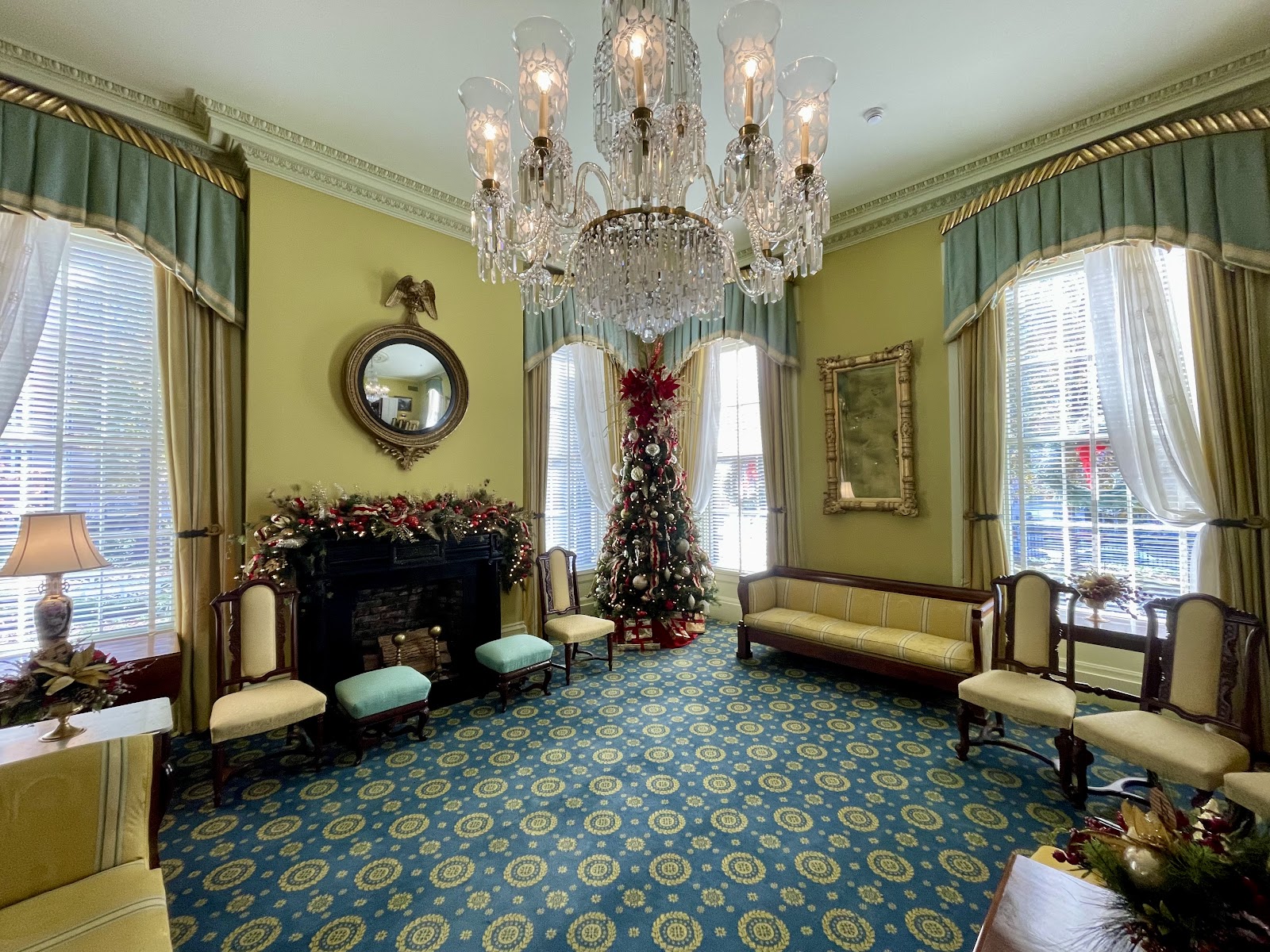
Formal rooms concentrate their ornament in three places — the ceiling and cornice, the doorcases, and the chimneypiece — and all three are three-dimensional, which means they read only when light crosses them at an angle. Even, downward light of the kind installed in most public interiors flattens plasterwork into a pale field and the room photographs blander than it looks.
The response is to place light to graze rather than to face. A single source set to one side of a chimneypiece or a doorcase puts a small shadow beside every moulding and the ornament comes back. That is a one-light problem rather than a big-kit problem, and at a venue where stands may be restricted it is worth knowing that one source in the right place beats three in the wrong ones.
High ceilings remove bounce, which is the reflex indoor move. A formal state room ceiling is far enough away that a flash aimed at it returns almost nothing usable, so the substitutes are a pale wall at a sensible distance, a reflector, or direct modified light. Test it with one frame on arrival.
Mixed sources are the colour problem and a residence of this kind will have several generations of them: daylight through tall windows, warm decorative fittings, cooler recessed downlights, and possibly display lighting on portraits or objects. Three colour temperatures in one frame cannot be resolved afterwards, so pick the source that should be correct, set a manual white balance to it, and switch off or overpower whatever else lands on skin.
Tall windows are the one thing in the room that changes through the day, and in daylight they are four or more stops brighter than the interior. Choose deliberately between letting them blow to white shapes, lighting the couple to match the view, and waiting for the crossing — the twenty minutes after sunset when the outside falls to interior brightness and one exposure holds the lit room and the grounds together. After that the windows become mirrors, which means lights off-axis and frames oblique.
- Level and centre the axial frame — the near-miss is the only failure available
- Place the couple into the depth, not at the front of an enfilade
- One source placed to graze ornament beats three placed to face it
- Assume no ceiling bounce; test it with a single frame on arrival
- Sunset plus fifteen for the one frame holding room and grounds together
The grounds, the permissions, and a Mississippi summer
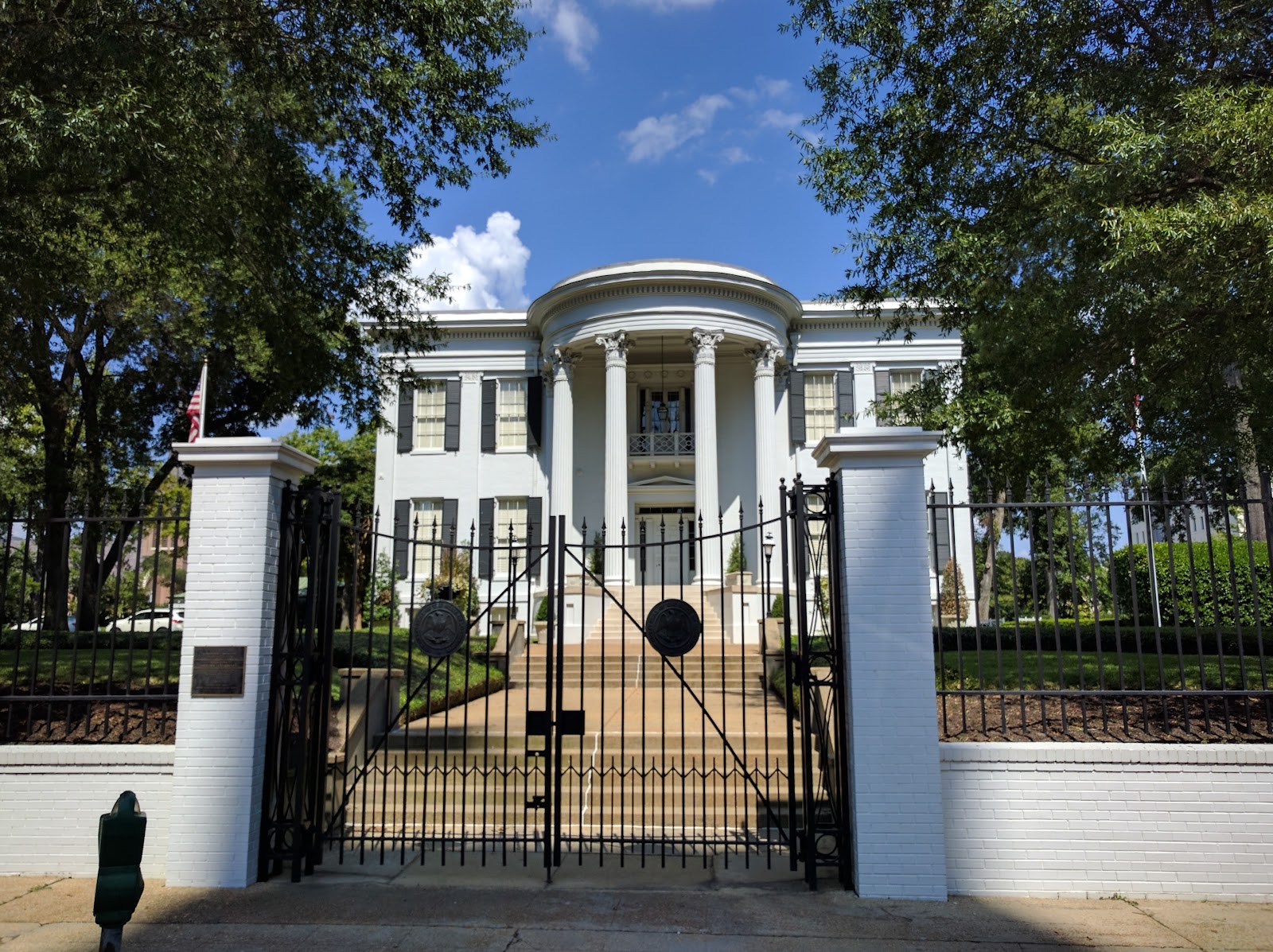
The grounds of an official residence are formal rather than picturesque, which is useful: clipped planting, symmetrical layout, gravel or paved walks and a maintained lawn give clean geometry and predictable mid-tones. A formal garden photographs best either straight down its axis, which reinforces the architecture, or from a low camera on the lawn, which pushes the horizon down and lets the building occupy the upper frame.
Mature trees, where they exist, are the summer resource rather than a decorative one. Continuous shade under canopy is the reason a Mississippi afternoon is workable, and locating the largest area of it on the first walk is the single most useful preparation. Dapple is the corresponding hazard — hot spots several stops above the shadow, moving with any breeze — so full shade, open light, or wait for the sun to drop.
Permissions at an official residence deserve their own paragraph because they are more extensive than at a commercial venue and they are not adjustable on the day. Which rooms are included, whether tripods and light stands are allowed, whether flash is permitted near furnishings or artworks, how many guests are admitted, and whether there is a security process for people and equipment — all of that should be in writing and read before the schedule is drafted. A residence that says no to three things has usually said yes to the two that matter most.
Mississippi conditions govern the outdoor half. Heat and humidity make long blocks genuinely difficult in formal clothes, so outdoor trips should be short and purposeful; the building’s own shadow is the reliable midday shade; and insects arrive at dusk, which is when the best light does.
Fogging is the climate’s specific equipment risk and it is the reverse of the cold-weather one: kit chilled inside a strongly air-conditioned interior fogs comprehensively on reaching warm damp air and takes many minutes to clear. Warm it towards outside temperature twenty minutes before it is needed, not at the door.
Afternoon thunderstorms are routine rather than exceptional in the season, which makes a substantial building a real advantage — the day continues indoors without a decision. And the light after a cell passes, with a dark sky, low sun underneath and wet paving returning reflections of a formal facade, is frequently the best of the day and worth going back out for.

More frames from The Mississippi Governor's Mansion
The Mississippi Governor's Mansion wedding photography: common questions
What is the strongest frame in a state-room building?
The enfilade — the view through aligned doorways running from room to room. It gives depth, repetition and a vanishing point in one move, and almost no other venue type has it.
Why does precision matter so much?
Because symmetrical, axial composition collapses under small errors. Half a metre off the centre line or a degree of tilt turns alignment into an accident; the near-miss is the only failure available.
Where should the couple stand in an axial frame?
Into the depth, about two-thirds of the way down, so they become the vanishing point of the architecture. Close to the camera they block the axis and the frame becomes a portrait with doors behind it.
How do you make plasterwork read?
Place light to graze it rather than face it. One source set to one side of a chimneypiece or doorcase puts a small shadow beside every moulding — a one-light problem, not a big-kit problem.
Does bounce flash work in state rooms?
No. Ceilings are far enough away to return almost nothing. Use a pale wall at a sensible distance, a reflector, or direct modified light, and test with one frame on arrival.
What should be settled in writing first?
Which rooms are included, whether stands and flash are permitted, what may be touched, the guest limit, and any security process for people and equipment. None of it is adjustable on the day.
More Jackson, MS venue guides
We are writing a photographer’s guide to every venue we would happily shoot in Jackson, MS. Here are three more, plus the full index:
- The Mississippi Museum of Art, Jackson: How the Light Moves
- The Oaks House, Jackson: One Frame and How It Is Made
- The Old Capitol Museum, Jackson: Four Ways Out of the Landmark Problem
All Jackson, MS Wedding Venues →
Planning a wedding at The Mississippi Governor's Mansion?
Permissions first, then the schedule. Tell us your date and we will get them in writing.