 Choctaw Hall: What a Gazebo Ceremony Does to the Photographs

The Manship House, Jackson: Four Ways Out of the Small-House Problem
Gothic Revival gives you the best exterior detail of any 19th-century style and the smallest rooms.
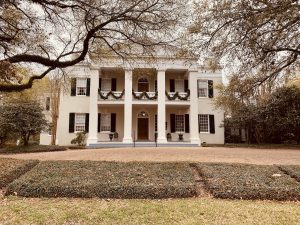
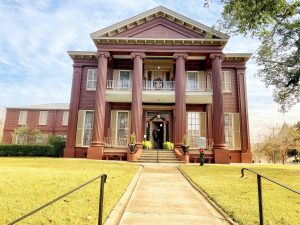
The Manship House in Jackson is a 19th-century house museum whose Gothic Revival architecture is, as the venue’s own material suggests, visually intriguing — which is accurate in a specific way worth unpacking.
Gothic Revival is unusually good material for a photographer because it is the most three-dimensional of the 19th-century domestic styles. Steep gables, pointed openings, decorative bargeboards, finials, verandas with carved detail, board-and-batten or patterned surfaces: all of it stands proud of the wall plane, which means all of it casts shadows, which means all of it reads strongly in raking light. A Gothic Revival elevation in low evening sun has more visible detail than an Italianate or Greek Revival one of the same size.
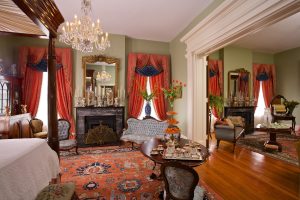
The problem is on the other side of the wall. A house of this type, preserved as a museum, has small rooms with modest windows, fixed furniture and a collection — which means very little working distance and very little freedom. This is written as that problem and four ways out of it. We have not photographed a wedding here; small house museums behave consistently. Interior access, photography rules, the guest limit and what may be touched are the questions to ask before anything else.
The Manship House at a glance
| Where | Jackson, Mississippi |
| Character | A 19th-century Gothic Revival house museum with grounds |
| The gift | The most three-dimensional 19th-century style — detail everywhere |
| The problem | Small rooms, modest windows, fixed contents, little working distance |
| Ask first | Interior access and photography rules, guest limit, what may be touched |
Why small historic interiors are hard
It is worth being precise, because small rooms are not simply cramped — they impose three separate limits and only one of them is about space.
The first is working distance. In a room four metres across you cannot step back far enough for a wide view without a very wide lens, and a very wide lens close to a face stretches it. So the wide frame and the portrait frame become two different photographs that cannot be combined, and attempting to combine them is how small-room coverage fails.
The second is the window area. A 19th-century domestic window is modest by modern standards, and there may be shutters, blinds or heavy curtains reducing it further. That gives one small directional source per room with steep fall-off — good light in a narrow zone and almost nothing two metres further in. The usable positions in a house like this are few and fixed, and finding them is the whole of the preparation.
The third is the collection. Furniture in a house museum is often in a documented position, textiles are fragile, and objects are accessioned items. The working assumption should be that nothing moves, nothing is leaned on, nothing is sat on unless offered, and no stand goes down without asking. That is clarifying rather than restrictive, but it does mean the set is fixed before you arrive.
One genuine compensation offsets all three: small rooms with pale walls bounce properly. In a room where the walls are close, a flash aimed at the ceiling is returned as soft fill from every direction, which makes bounce a real tool here in a way it is not in a high-ceilinged hall or a panelled club. That is worth testing in the first minute, because if the ceilings are pale it changes what is possible indoors entirely.
Four ways out
The first way out is to treat the exterior as the main event, which at a Gothic Revival house it should be. All the style’s best material is outside: gables, pointed openings, carved bargeboards, the veranda, the silhouette against the sky. None of it has a working-distance problem, none of it has a collection rule, and all of it improves enormously in the last ninety minutes when raking light throws every projecting element into relief. The honest plan is that the exterior carries the gallery and the interior supplies two or three specific frames.
The second is the veranda, if there is one, which in a house of this period and climate is likely. A covered porch is the best-designed light on any Southern house: the roof blocks the overhead sky, the wall behind bounces, and the open side becomes a single large directional source. Someone standing a metre inside its edge is being lit as well as a studio would light them, for nothing — and the veranda’s own carved detail frames them.
The third is to shoot the interior as detail rather than as space. A small room defeats wide frames but is excellent for close work: light falling across a window frame, a hand on an old newel post, a reflection in original glass, the couple framed through a doorway from the next room. Doorways in particular are the small-house photographer’s tool, because they let you stand in one room and photograph into another, which buys back the working distance the walls took away.
The fourth is the grounds. Any established garden around a 19th-century house will have mature planting, and in a Mississippi summer that canopy is the reason the middle of the day is workable — continuous deep shade, soft and directional towards any opening. It is also where a group photograph can happen, which a small house cannot host. Locate the largest area of continuous shade and the one position that will take the biggest group, and do it on the first walk rather than when they are needed.
- Let the exterior carry the gallery; the interior supplies specific frames
- Use the veranda — roof, back wall and open side make a free softbox
- Photograph through doorways to buy back working distance
- Test ceiling bounce in the first minute; in small pale rooms it works
- Find the continuous shade and the group position before either is needed

The last ninety minutes, and a Mississippi summer
The last ninety minutes are when a Gothic Revival house becomes what it is. Low sun raking across an elevation throws every gable, moulding and bargeboard into relief with a shadow beside it; the same elevation at noon is a flat pale plane with the detail washed out. Which face gets that light depends on orientation, so one walk around the house noting where the evening sun will land is worth more than any accessory.
The silhouette is the other exterior frame specific to this style. Steep gables, finials and chimneys against a sky that still holds colour after sunset give an outline that reads instantly as Gothic Revival — a frame that needs the sky rather than the house to be lit, and therefore needs to be taken in the twenty minutes after sunset rather than during it.
Dapple is the standing hazard in the grounds. Broken light through leaves puts hot spots several stops above the surrounding shadow across a face and moves with every breath of wind, so it can neither be corrected nor predicted. Full shade, open light, or wait for the sun to drop below the canopy.
Green bounce is the other planting effect. Dense foliage throws green onto nearby skin, which is unflattering in a way warm bounce from brick is not, so set a custom white balance on a face in the position you are actually using and use any pale path or gravel as a surface to put a neutral tone back.
Mississippi summer conditions set firm limits. Heat and humidity make long outdoor blocks difficult in formal clothes, so trips should be short and purposeful; insects arrive at dusk, which is when the light is best; and a camera chilled by air conditioning fogs comprehensively on reaching warm damp air, taking many minutes to clear. Let the kit warm before it goes out, twenty minutes ahead rather than at the door.
Afternoon thunderstorms are routine rather than exceptional, and a small historic house is not a large fallback — which makes the rain plan a genuine question rather than a formality. Ask what it is, how many it holds, and when the decision gets made. The compensation is that the house after rain is better than before it: wet surfaces hold reflections, planting is saturated, and low sun under a departing cloud bank throws the Gothic detail into the strongest relief it ever gets.

More frames from The Manship House
The Manship House wedding photography: common questions
Why is Gothic Revival good material?
Because it is the most three-dimensional 19th-century domestic style. Steep gables, pointed openings, bargeboards and finials all stand proud of the wall plane, so they all cast shadows and read strongly in raking light.
What makes small historic interiors hard?
Three things: no working distance, so wide and portrait frames cannot be combined; modest windows with steep fall-off, so usable positions are few and fixed; and a collection, so nothing moves.
Does bounce flash work in a house like this?
Yes, if the ceilings are pale — and that is the real compensation for small rooms. Close walls return light from every direction, which is not true in a high hall or a panelled club. Test it in the first minute.
How do you photograph a small room?
As detail rather than as space, and through doorways. Standing in one room and photographing into another buys back the working distance the walls took away, and it is the small-house photographer’s main tool.
When should the exterior be photographed?
In the last ninety minutes, when raking light puts a shadow beside every projecting element — and again in the twenty minutes after sunset, for the gable-and-chimney silhouette against a coloured sky.
What has to be settled in advance?
The guest limit, whether interior photography is allowed, what may be touched, and the exact rain fallback. A small house is not a large fallback, so the storm plan needs an agreed decision time.
More Jackson, MS venue guides
We are writing a photographer’s guide to every venue we would happily shoot in Jackson, MS. Here are three more, plus the full index:
- The Mississippi Civil Rights Museum, Jackson: The One Decision That Governs Everything
- The Mississippi Governor’s Mansion, Jackson: Photographing State Rooms
- The Mississippi Museum of Art, Jackson: How the Light Moves
All Jackson, MS Wedding Venues →
Planning a wedding at The Manship House?
Let the exterior and the garden carry the day. Tell us your date and we will plan the light.