 Tulsa Country Club: Field Notes on a 1908 Club
The Oklahoma City Museum of Art: Field Notes on Glass, Twice Over
Glass appears twice here — as the building and as a sculpture — and the two need opposite approaches.
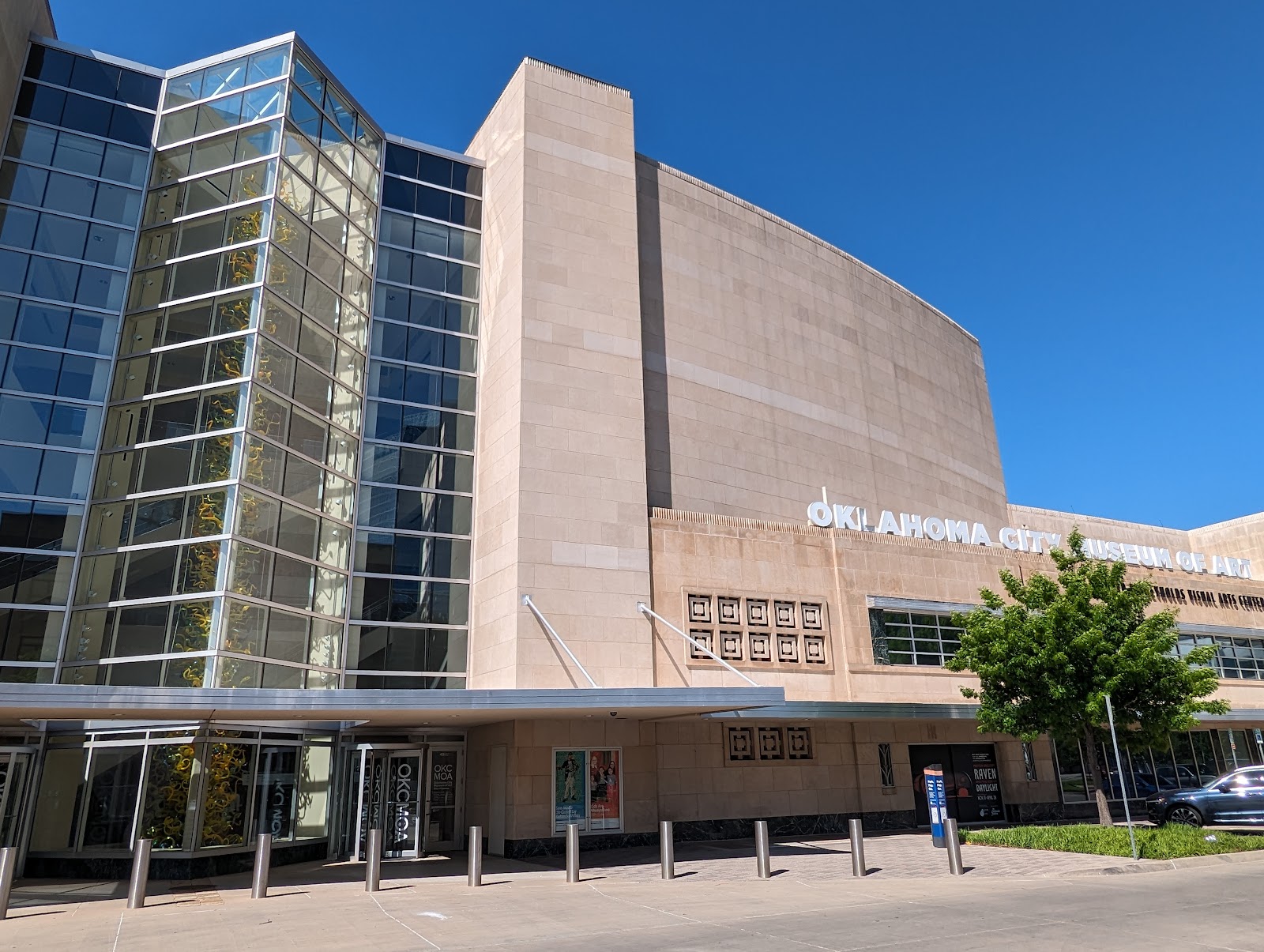
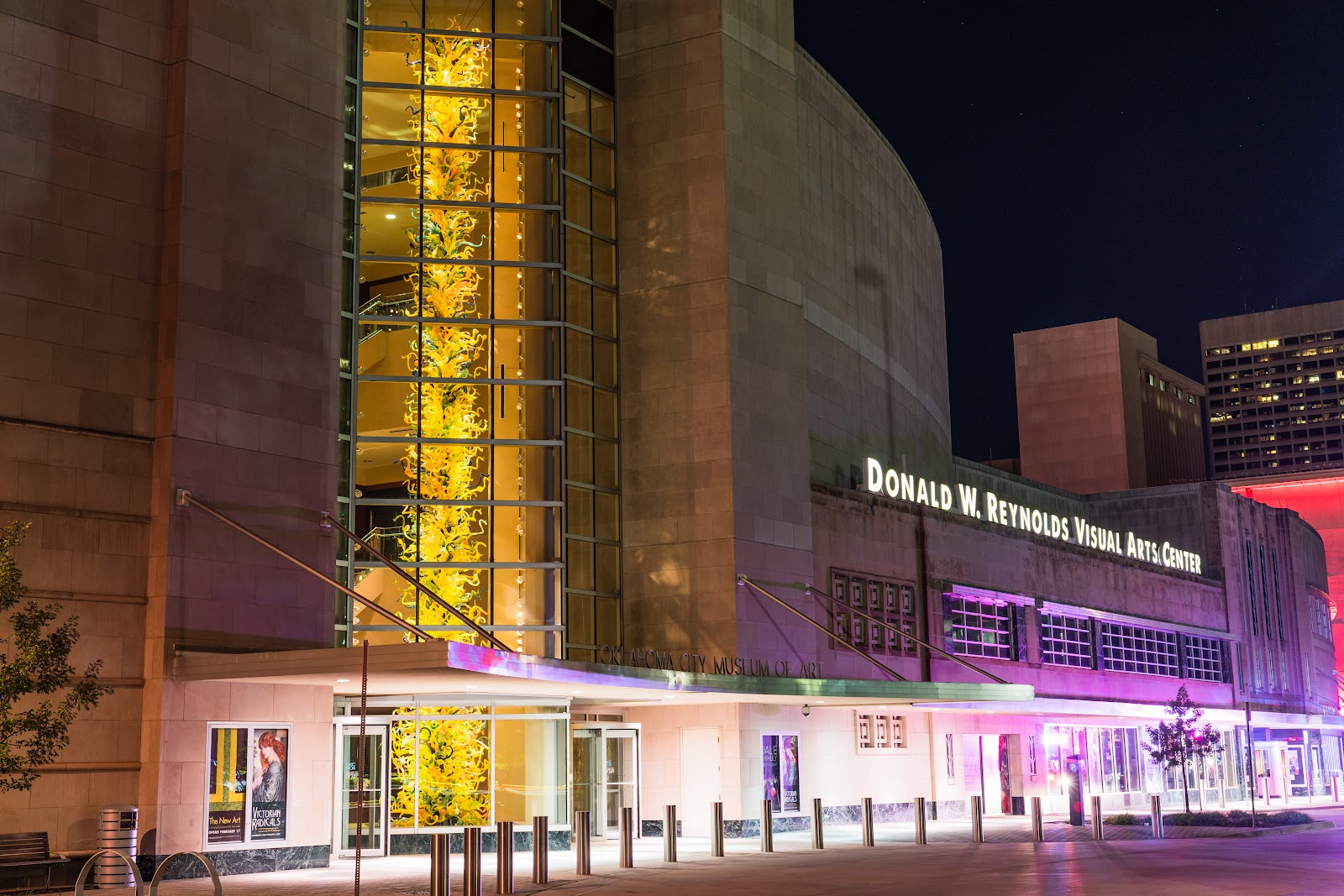
The Oklahoma City Museum of Art occupies a contemporary building in downtown Oklahoma City, with a glazed atrium containing a monumental glass sculpture, gallery floors above and the city immediately outside.
Glass features twice in this building and the two instances behave in opposite ways, which is worth separating before arriving. Architectural glazing is a large flat transmissive surface: it passes light in one direction and reflects in the other, and its behaviour inverts across the day. A glass sculpture is a small transmissive and refractive object: it bends, splits and concentrates light, and it is at its best when lit from behind or within rather than from the front.
Treating them the same produces poor results in both cases. These are field notes on each, plus the galleries. We have not photographed a wedding at the OKC Museum of Art; glazed atria and glass sculpture behave the same wherever they meet. Which spaces host events, what the collection rules are and whether the sculpture may appear in published photographs are questions for their events team — the last matters, because a major installed work has its own permissions.
The Oklahoma City Museum of Art at a glance
| Where | Downtown Oklahoma City, Oklahoma |
| Character | A contemporary museum with a glazed atrium and a monumental glass sculpture |
| Glass twice | As architecture — flat, transmissive, reflective; and as object — refractive |
| Opposite approaches | Architecture is timed; sculpture is lit from behind |
| Ask first | Whether the sculpture may appear in published photographs |
Problem one: architectural glazing and its three states
A large glazed atrium passes through three states in a day and only one of them gives a balanced frame. In daylight the outside is far brighter than the interior, so the glass reads as a bright wall: expose for the couple and the view blows out, expose for the view and the couple are silhouettes. Lighting a full-height atrium up to daylight levels is impractical across that area.
After dark the relationship inverts. The lit interior is brighter than the black sky, so every pane reflects the atrium, the guests and your lighting rather than showing the city. Wide frames that worked at dusk become cluttered an hour later.
Between them, for roughly twenty minutes around and after sunset, the sky falls to approximately the brightness of the interior lighting and one exposure holds the lit atrium, the couple and the city beyond with colour still in the sky. That is the only time all three coexist. Take the clock time from sunset and treat it as an appointment.
Two refinements: shoot obliquely to the glass rather than square on, so your own reflection goes off to the side rather than back into the lens; and add light sparingly if at all, because a strong source makes the interior brighter than the sky again and destroys the balance you came for.
Problem two: glass sculpture wants light from behind
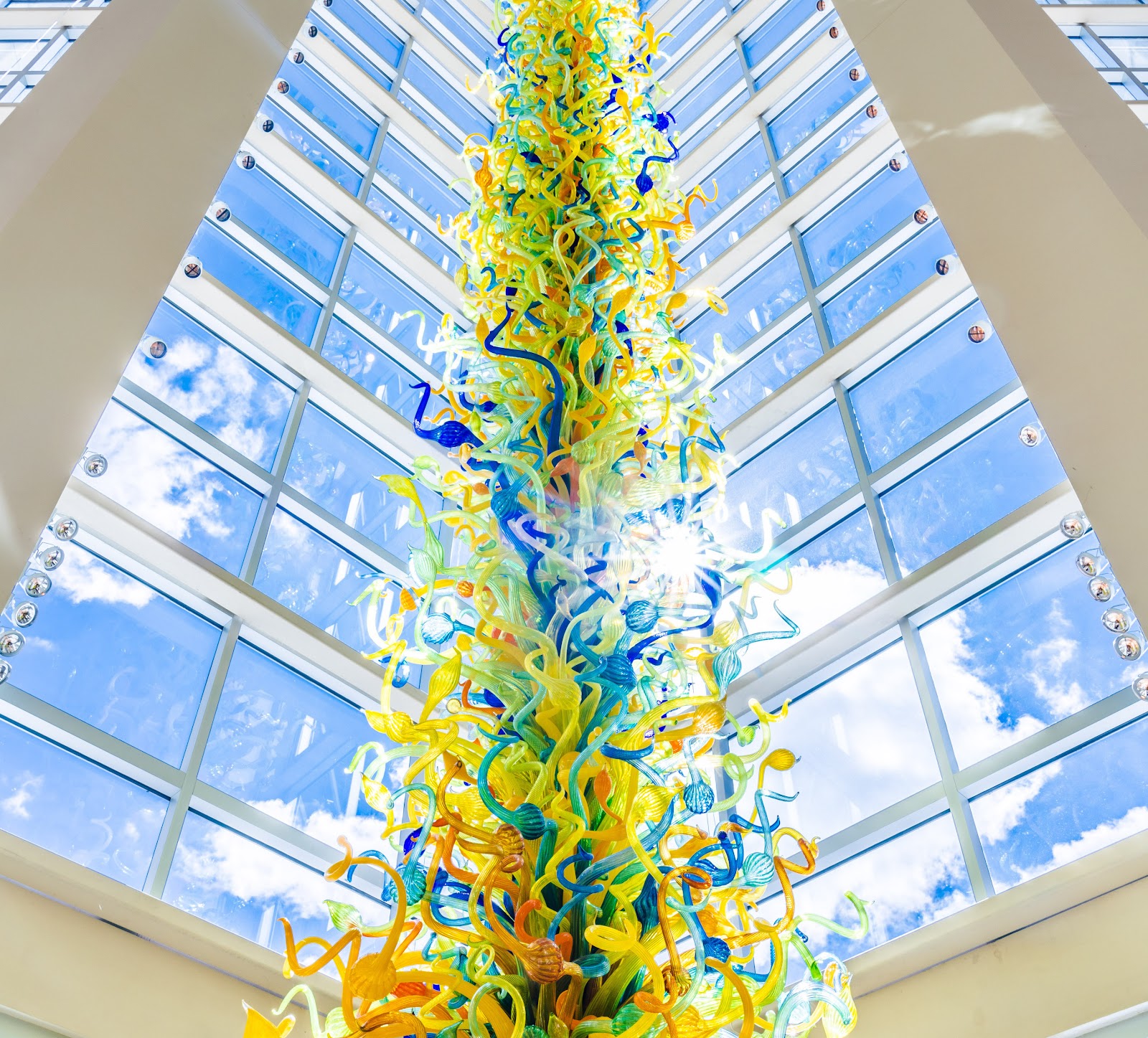
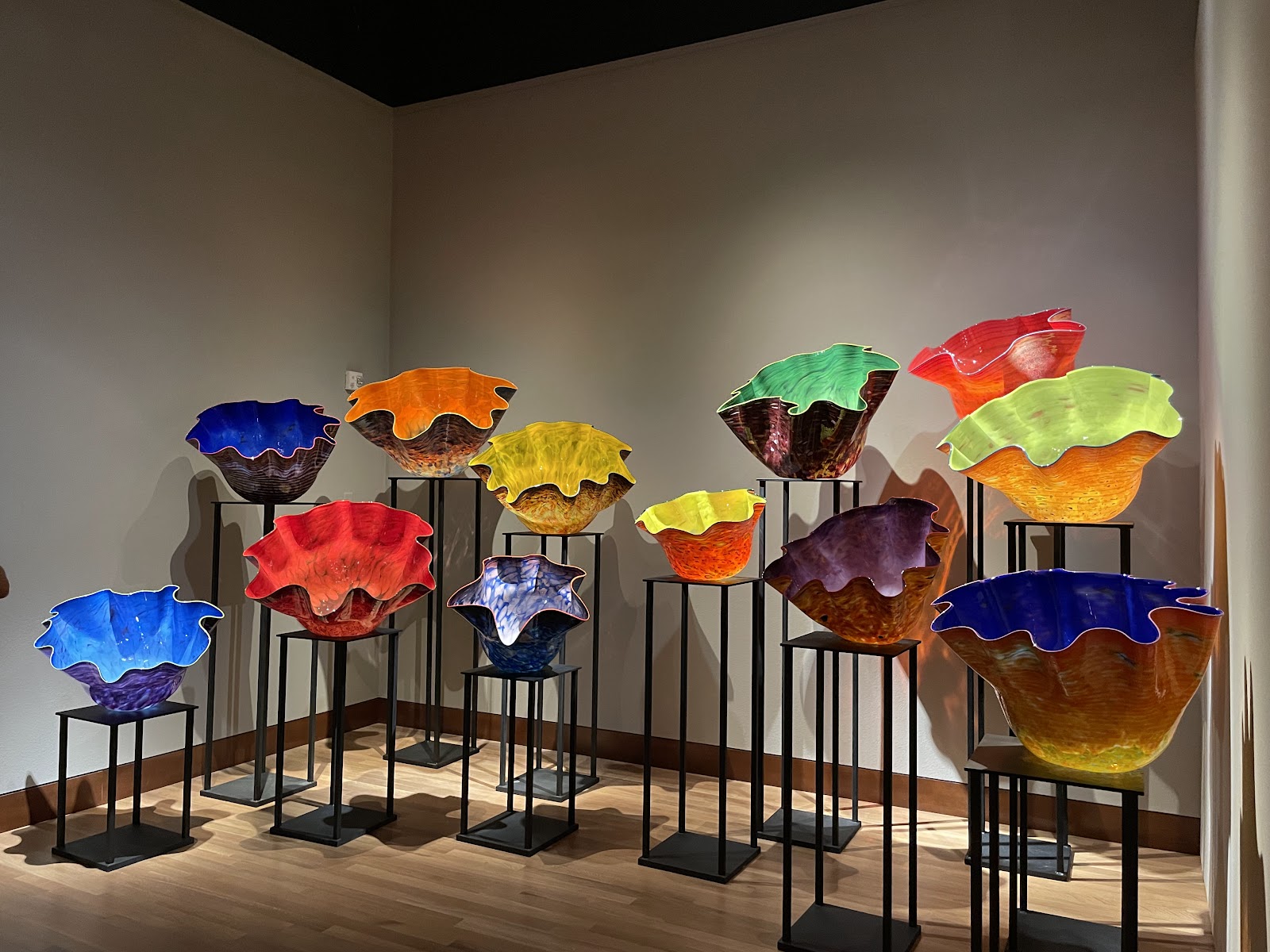
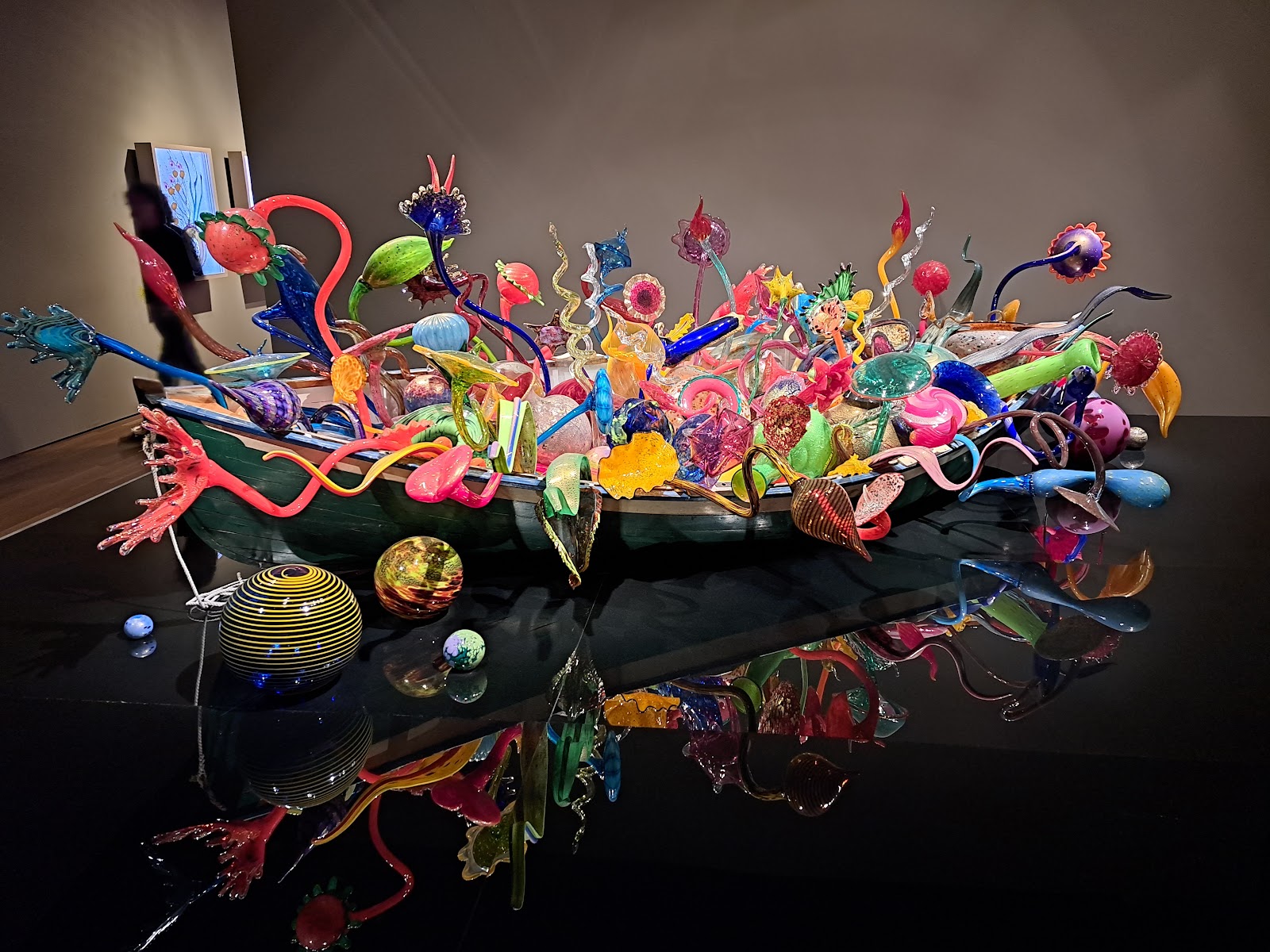
A monumental glass work is the opposite problem. Glass is transmissive and refractive, which means it does almost nothing under frontal light — a flash from the camera position passes straight through, catches a few surface highlights and leaves the form flat and grey. Lit from behind or within, the same piece glows: the colour saturates, the internal structure reads, and the edges refract into bright lines.
So the rule is backlight or nothing. Where the museum lights the work from within or above, that is your light and it is already correct — expose for the sculpture and let the surroundings fall away. Where you are adding light, put it behind the plane of the work relative to the camera, never in front of it.
That has a consequence for placing a couple: if the sculpture is backlit, anyone in front of it is by definition against a bright object and will silhouette unless lit separately. The answer is a small warm source on the faces at low power, off-axis, sufficient to bring them within a couple of stops of the glass without flattening it. Too much and the sculpture stops glowing.
Colour is the third element and it should be kept. A coloured glass work throws saturated light onto whatever is beneath it, and that is the effect the artist intended — set white balance for your own source so skin is right, and let the glass colour read as it is rather than correcting it towards neutral.
And permissions matter here more than for most backgrounds. A major installed sculpture is an identifiable work by an identifiable maker, and reproducing it prominently in published photographs can engage rights beyond the museum’s own preferences. One email beforehand settles what may appear in a portfolio.
- Take the atrium crossing from sunset; it is the only balanced window
- Shoot obliquely to architectural glass and add light sparingly
- Backlight glass sculpture, never front-light it
- Add a small off-axis source on faces so they do not silhouette
- Ask which works may appear in published photographs
Problem three: the galleries, and outside
Gallery floors bring the standard museum conditions. Exhibit lighting is directional and mixed and aimed at objects rather than people, so a face crossing a gallery passes through hot spots and several colour temperatures within a few metres — which is why sequences shot there refuse to match themselves. One gelled source of your own on the faces fixes it entirely.
Collection rules should be settled in writing and asked as separate questions, because the answers differ: flash, tripods, and publication permissions are three different policies and a venue may permit one while restricting another. A plan built around a gallery that turns out to be unavailable collapses at the worst moment.
Artworks are assertive backgrounds and need the standard decision: commit deliberately or subordinate with a long lens at a wide aperture. Half-in fails.
Outside, downtown Oklahoma City is the locating register, and the museum’s own position near the city centre means the towers are immediately available. A skyline frame wants a long lens — compression brings the buildings close where a wide lens reduces them to a strip — and the last forty minutes of daylight plus the twenty after sunset are the two windows worth using.
Oklahoma conditions apply outdoors. Summer heat is severe enough to keep outdoor blocks short and decisive, and the building’s own shadow is the dependable midday shade. Wind is a constant, so a veil is a held-or-removed decision and any stand needs weight. Severe convective storms build fast in spring and early summer, which makes a museum an unusually good fallback — it is a large weatherproof building with two genuinely good interior frames in it. And humidity fogs a lens carried from heavy air conditioning into outdoor air for ten to twenty minutes, so acclimatise before the outdoor block rather than during it.
More frames from The Oklahoma City Museum of Art
The Oklahoma City Museum of Art wedding photography: common questions
When does the atrium give a balanced frame?
Only at the dusk crossing — roughly twenty minutes when the sky outside falls to the brightness of the interior lighting. In daylight the view blows out or the couple silhouette; after dark the glass reflects the room instead.
How do you light glass sculpture?
From behind or within, never from the front. Glass is transmissive and refractive, so a frontal flash passes straight through and leaves the form flat. Backlit, the colour saturates and the edges refract into bright lines.
How do you stop the couple silhouetting against it?
A small warm source on the faces at low power and off-axis, enough to bring them within a couple of stops of the glass without flattening it. Too much light and the sculpture stops glowing.
Should the sculpture's colour be corrected?
No. A coloured glass work throws saturated light deliberately — that is the effect intended. Set white balance for your own source so skin is right and let the glass read as it is.
What should be asked about permissions?
Three separate questions: flash, tripods, and which works may appear in published photographs. The answers differ, and a major installed sculpture is an identifiable work whose reproduction can engage rights beyond the museum’s preferences.
Why is a museum a good storm fallback?
Because it is a large weatherproof building with two genuinely good interior frames in it — the atrium crossing and the sculpture — so a storm costs the exterior block rather than the wedding.
More Oklahoma venue guides
We are writing a photographer’s guide to every venue we would happily shoot in Oklahoma. Here are three more, plus the full index:
- The Packard Building: Photographing a Converted Car Showroom
- Paycom Center, Oklahoma City: What an Arena Suits and What It Does Not
- The Yale Theater, Oklahoma City: The One Decision That Governs Everything
Planning a wedding at The Oklahoma City Museum of Art?
Architectural glass is timed and sculptural glass is backlit. Tell us your date and we will plan both.