 Roxy’s Downtown: Photographing a Small Stage Room
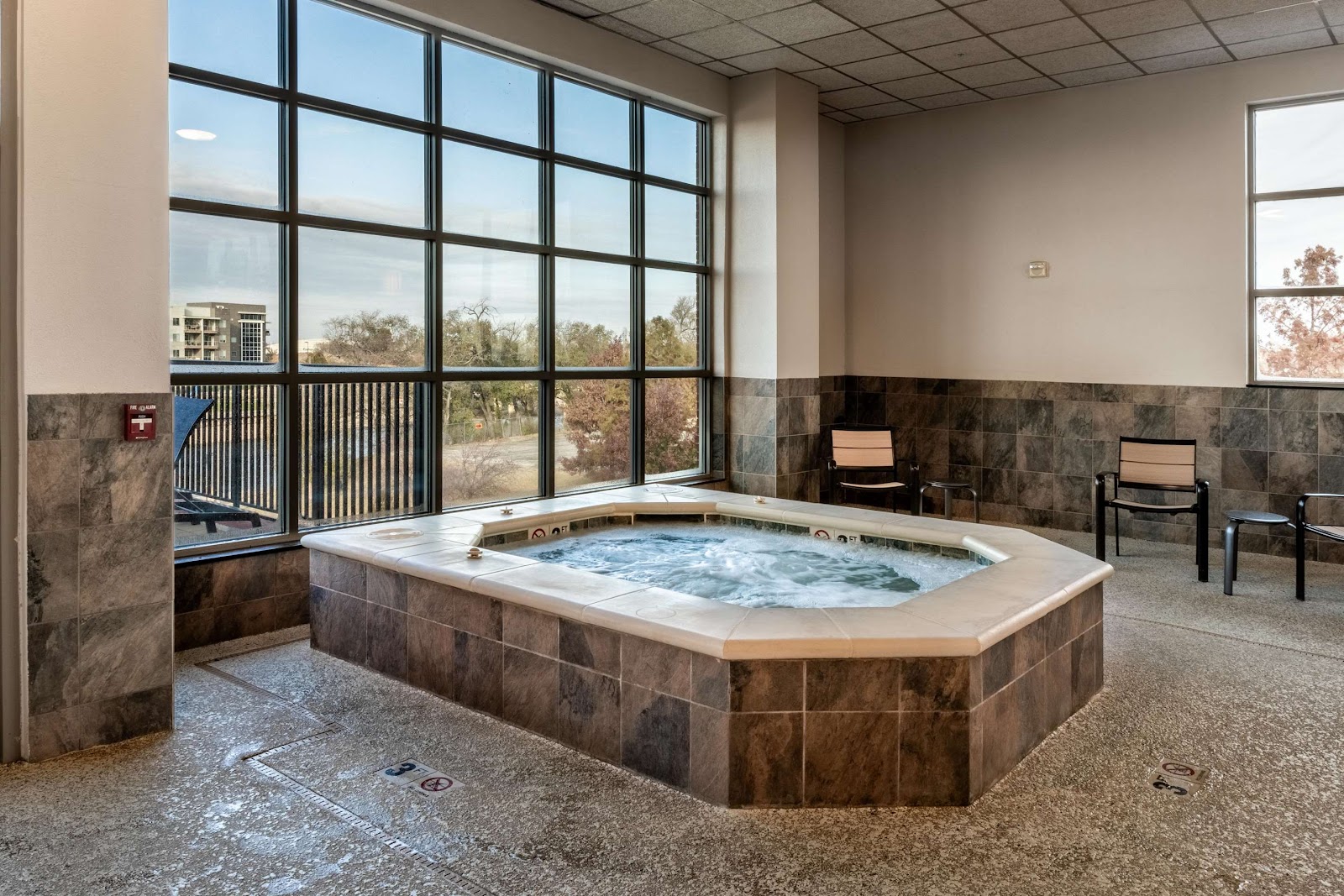
The Drury Plaza Broadview: One Decision About Which Way You Work
One half of this hotel ignores the sun completely. The other half is governed by it entirely.
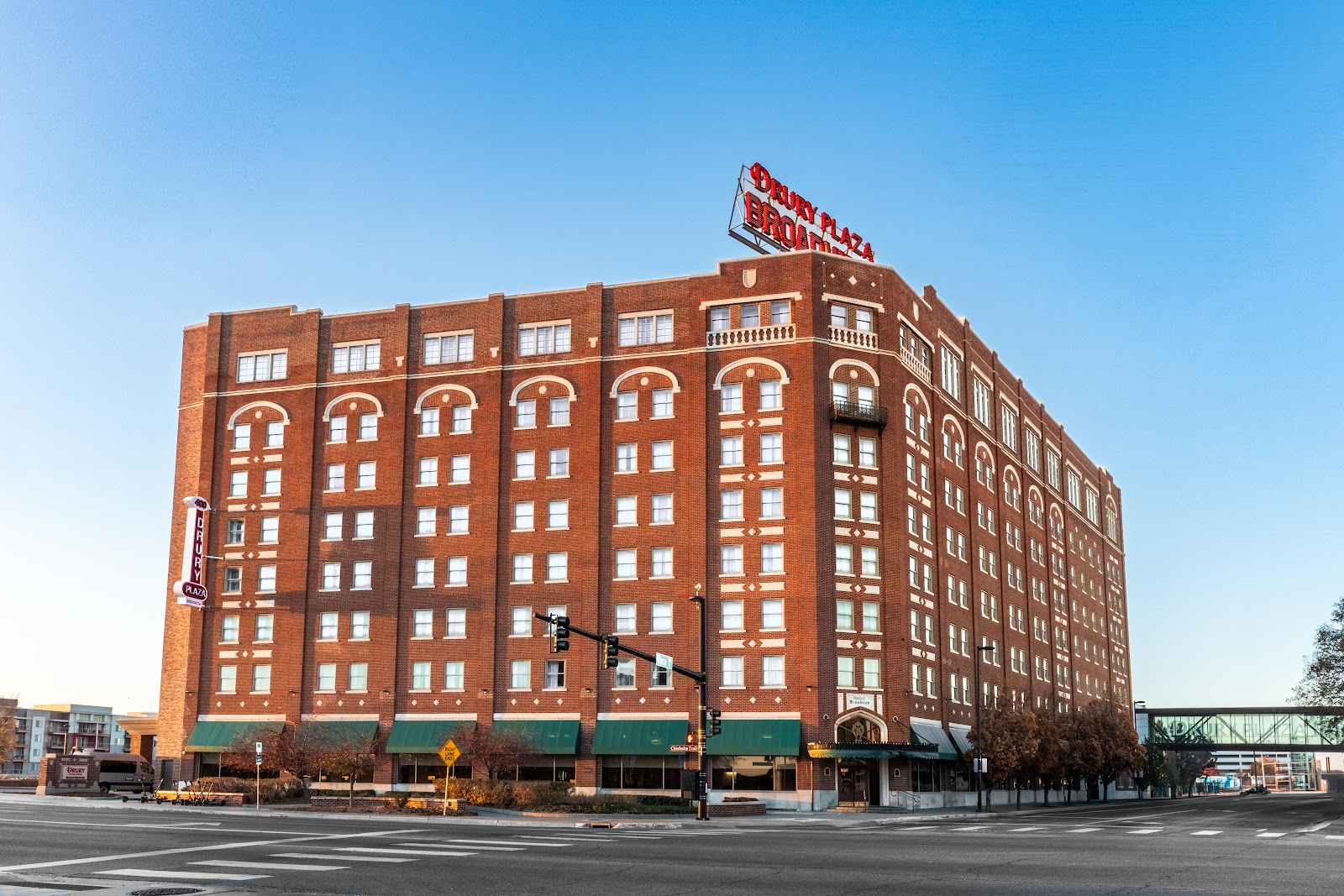
The Drury Plaza Hotel Broadview occupies a 1920s building beside the Arkansas River in downtown Wichita, Kansas, with period ballroom space, guest floors and rooms looking out over the water.
The decision here is which half of the hotel you are working, and it matters because the two halves operate on completely different rules. The ballroom is a sealed period room: no daylight, one fixed artificial condition that is identical at four in the afternoon and one in the morning, no weather dependency and no timing pressure whatsoever. The river-facing rooms and windows are the opposite: governed entirely by the sun, with one twenty-minute moment that is the best frame in the building and cannot be moved.
Understanding that split is what makes the timeline write itself. We have not photographed a wedding at the Broadview; sealed period ballrooms and river-facing windows behave the same wherever they meet. Which rooms are allocated and which way they face are questions for their events team, and the second is the one that matters.
The Drury Plaza Hotel Broadview at a glance
| Where | Beside the Arkansas River, downtown Wichita, Kansas |
| Character | A 1920s hotel with period ballroom space and river-facing rooms |
| The split | A sealed ballroom that ignores the sun, and windows governed by it |
| The frame | A river-facing window at the dusk crossing — about twenty minutes |
| Ask first | Which allocated rooms face the water |
The sealed half: why a windowless ballroom is useful
A period ballroom with no daylight has one lighting condition all day and night, and that is worth treating as a feature rather than a limitation. You light it once, confirm it on the back of the camera, and know the setup holds for hours. There is no convergence moment to hit, no window to balance, no glass turning into a mirror after dark, and no penalty whatsoever for the reception running forty minutes behind.
It also means the empty-room frame can be made at leisure rather than squeezed. Set, lit, symmetrical and pristine before the doors open, that image is in almost every gallery a couple keeps, and it exists only in those twenty minutes. Ask the coordinator for access; it costs nothing.
The lighting problem is the standard one. Period ballroom house lighting is warm, dim and comes from directly overhead, which shadows the eye sockets and drags facial lines downward — pleasant on the room, unkind on a person. One warm-gelled source at face height at about forty-five degrees fixes it and leaves the fixtures as glowing detail overhead; a second behind as a rim finishes the dance floor for the night.
A 1920s ballroom is also likely to have ornate plasterwork, which brings its own trap: uplit plaster sits stops above the people beneath it, so the rule is to raise the couple towards the ceiling rather than expose down to them. Bring them within two or three stops of the plaster, then expose for the plaster, and both survive.
The cost of all this is that nothing in a sealed room says where or when the wedding was. Ballrooms across the world look similar, which is precisely why the other half of the hotel matters.
The river half: one window and one moment
A window facing open water is a better light source than a window facing a street. Nothing tall opposite shadows it or bounces colour into it, the sky area it sees is large, and the water surface reflects a second softer source upward — which fills the eye sockets and the shadow under the chin that any overhead source carves. Front-and-below is an unusually flattering combination and the river supplies half of it free.
That makes a river-facing guest room the best preparation location in the building, and it is worth requesting specifically. Ask for the largest window on the shaded side facing the water, then switch off the overheads and move the lamps out — mixed tungsten and daylight in one room is the commonest cause of inconsistent skin tone across a morning.
The frame that matters is the dusk crossing. For roughly twenty minutes the sky outside falls to approximately the brightness of the room’s interior lighting, and for that period one exposure holds the lit room, the couple and the river with colour still in the sky. That is the photograph this building can make and a sealed ballroom cannot. It is dictated by sunset rather than the running order and it is gone ten minutes late, so take the clock time from sunset on the date and treat it as an appointment.
Two variables affect the river itself. The Arkansas through Wichita is a managed prairie river rather than a deep channel, so the water level and how much bank shows can vary — worth a look rather than an assumption if the water is meant to feature. And Kansas wind removes any reflection on the surface the moment it arrives, which means the mirror version of a river frame is an early-morning proposition, as it is everywhere in this state.
After dark the window inverts and becomes a mirror showing the lit room and your lights. Reposition so the reflected cone misses the lens, or place a source behind the plane of the subject — and used deliberately, a couple doubled in dark glass with the river beyond is one of the better frames available.
- Light the sealed ballroom once; the setup holds all evening
- Raise the couple towards ornate plaster rather than exposing down
- Request the largest shaded-side window facing the water for preparation
- Take the dusk crossing time from sunset and treat it as fixed
- After dark, check the glass for your own reflection before committing
Sequencing the two halves, and downtown outside
Because one half has no clock and the other is all clock, the plan is straightforward: put everything flexible in the ballroom and the interiors, and protect two fixed appointments — the dusk crossing at a river-facing window, and a short outdoor block in the last ninety minutes of daylight.
That also means the ballroom is what you move when the day slips. Nothing in it depends on the sun, so a delayed running order costs nothing there, whereas a delay of fifteen minutes can remove the window frame entirely. Knowing which block is expendable is the practical value of understanding the split.
Downtown Wichita outside is low-rise, which is more useful than it sounds. In a city of tall buildings the streets lose the sun by mid-afternoon and street-level golden hour never happens; here low evening sun reaches the ground and runs the length of a street, lighting one side and shading the other. Finding which streets run roughly east-west is a ten-minute site visit and the most useful preparation available.
The riverfront immediately outside adds water, an open aspect and a sight line along the channel. Shoot along the river rather than across it — a river is a corridor, so a long lens down its length stacks banks and bridges into layers and gives depth, where across it you have a strip of water with a bank behind.
Two Kansas notes that apply to any outdoor block here. Wind is a constant, so settle the veil as held or removed before the day and weight anything that stands up. And spring and early summer bring fast-building severe storms, which on a riverfront with little cover means a decision point rather than a hope — though at this venue the fallback is a large weatherproof hotel, which is about as comfortable a position as a plains venue offers.
More frames from The Drury Plaza Hotel Broadview
The Drury Plaza Hotel Broadview wedding photography: common questions
Is a windowless ballroom a disadvantage?
Less than it sounds. It removes the timing pressure, the window balance, the mirror problem after dark and the weather dependency — light it once and it holds for hours, and a late running order costs nothing. The cost is that nothing says where or when.
What is the frame worth protecting?
A river-facing window at the dusk crossing — roughly twenty minutes when the sky outside falls to the brightness of the interior, so one exposure holds the room, the couple and the river with colour in it. Take the time from sunset; it is gone ten minutes later.
Why is a river-facing window better than a street-facing one?
Nothing tall opposite shadows it or bounces colour into it, the sky area it sees is large, and the water reflects a second softer source upward — which fills the eye sockets and chin shadow that any overhead source carves.
How do you handle ornate 1920s plasterwork?
Raise the couple towards it rather than exposing down to them. Uplit plaster sits stops above the people beneath, so bring them within two or three stops with a warm-gelled key and then expose for the plaster. Both survive.
Which block should move if the day runs late?
The ballroom and the interiors, because nothing in them depends on the sun. Fifteen minutes of delay costs nothing there and can remove the window frame entirely, so knowing which block is expendable is the practical value of the split.
How should the river be photographed?
Along its length rather than across it, with a long lens, so banks and bridges stack into layers and give depth. And note that Kansas wind removes any surface reflection, so the mirror version is an early-morning proposition.
More Kansas venue guides
We are writing a photographer’s guide to every venue we would happily shoot in Kansas. Here are three more, plus the full index:
- Exploration Place: Photographing Curved Architecture on a River
- The Orpheum Theatre, Wichita: Photographing an Atmospheric Interior
- The Petroleum Club: Dark Panelling and a High Window
Planning a wedding at The Drury Plaza Hotel Broadview?
One half ignores the sun and the other is ruled by it. Tell us your date and we will protect the two appointments.