 The Omaha Children’s Museum: A Photographer Answers Your Questions
The Durham Museum, Omaha: One Frame, and How It Is Made
A railway concourse was built to move crowds under high light. That is exactly what it still does.
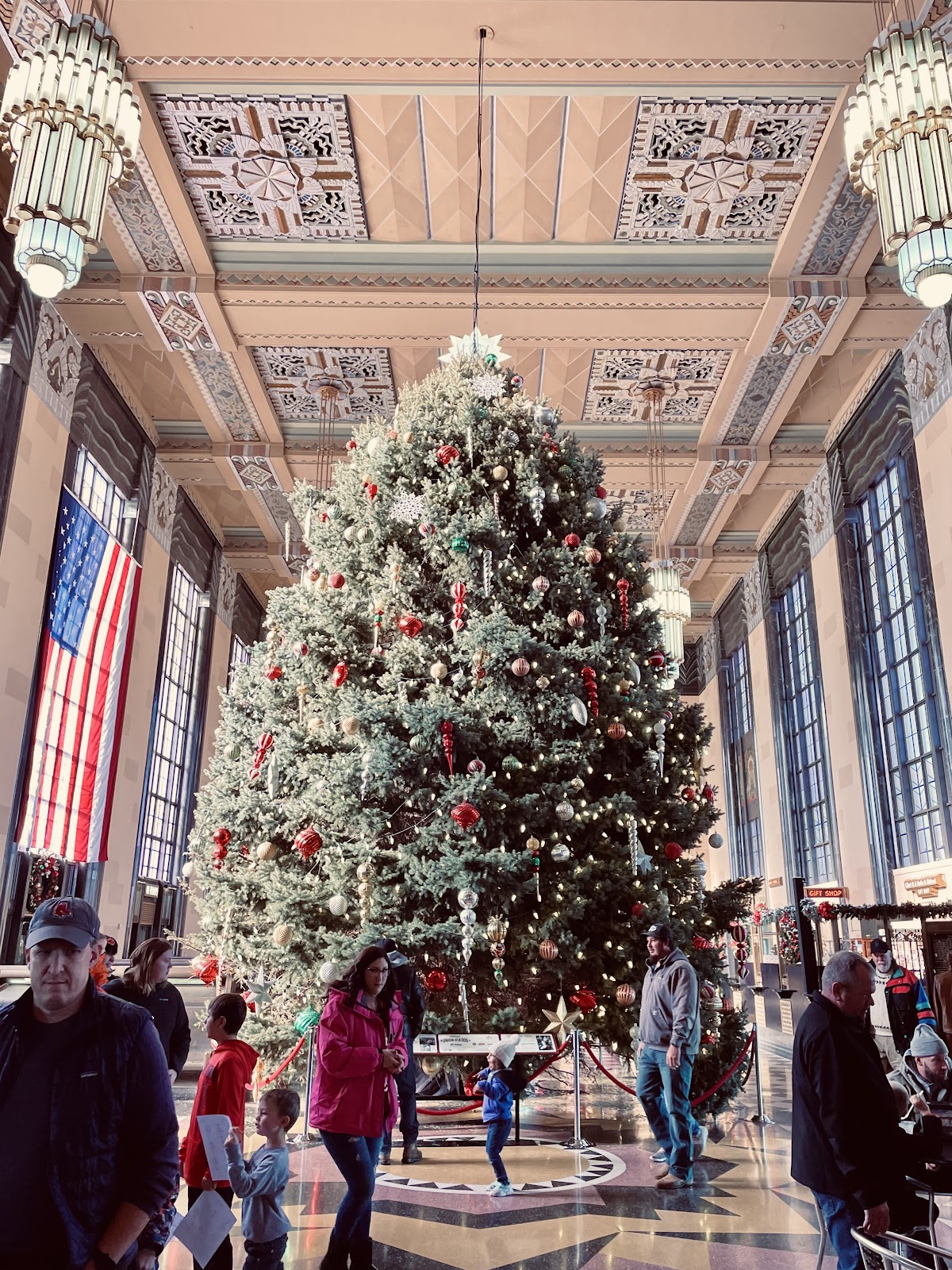
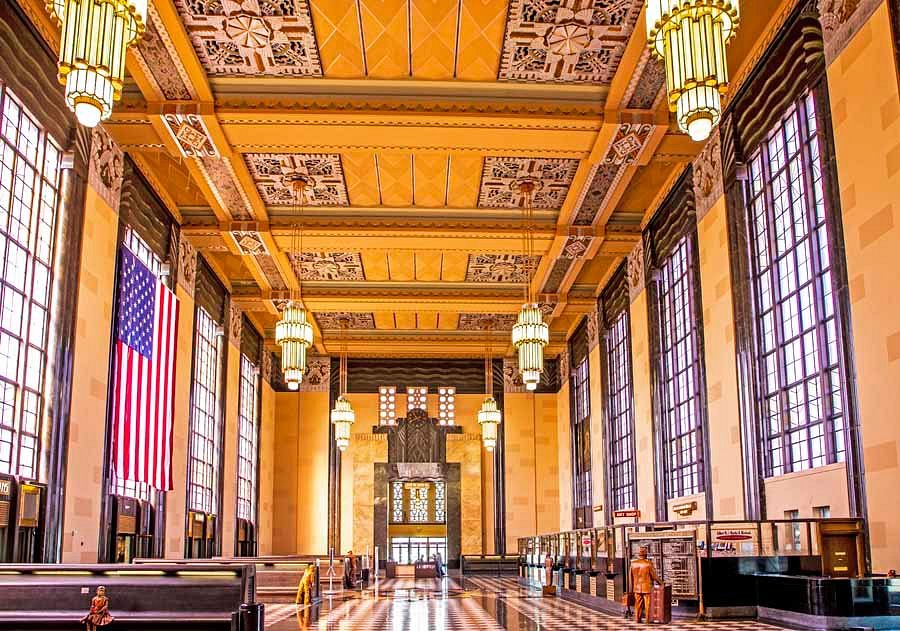
A great railway hall of the Art Deco period was built to do one thing: hold a large number of people under enough light to read a timetable, in a space grand enough to be worth arriving in. Both halves of that are still true, and they produce one frame the building exists to give.
The frame is this. A couple stands in the middle of a great hall. High windows above throw light down across the space in broad shafts. The floor is polished stone and returns it upward. The walls are moulded and patterned with Deco relief, receding into depth on both sides. And the volume above them is genuinely large, which a photograph can convey because there is nothing in the way.
The difficulty is that the light comes from high up, which is nearly the worst direction there is — and the solution is built into the building, because a polished stone floor is a very large reflector and it is directly beneath everyone.
Six decisions make the frame. We have not photographed a wedding at the Durham Museum; converted railway halls behave consistently. Which spaces are included, the rules on flash and proximity to collections, and whether the exhibits may appear in published photographs are questions for their team.
The Durham Museum at a glance
| Where | Omaha, Nebraska, in a former Art Deco railway station |
| The frame | A couple in a great hall under high window light, on polished stone |
| The difficulty | The light comes from high up, which is nearly the worst direction |
| The solution | The polished floor is an enormous reflector directly beneath them |
| Ask first | Spaces included, flash and collection rules, publication of exhibits |
Decisions one to three: the position, the floor, the exposure
The first decision is where in the hall to stand, and it is settled by where the window light actually lands rather than by where the room looks grandest.
High windows throw light in defined patches rather than evenly, and those patches move through the day. Standing in one is very different from standing beside it: in the patch the light is strong and comes from high above; beside it the light is ambient bounce from the floor and walls, which is soft and low. Neither is wrong and they are not the same picture.
The best position is usually at the edge of a patch — far enough in that there is directional light on the faces, far enough out that the top of the head is not the brightest thing in the frame. Two minutes of walking to find where the patches fall determines every position worth using, and the answer changes by the hour.
The second decision is the floor, and it is the reason this frame works at all. Polished stone is a strong reflector and it lies directly beneath everyone, which means high window light striking it comes back up — filling exactly the shadows that a high source carves under eyes and chins. That is the building solving its own problem, and it is worth standing where the floor is brightest rather than where it is shaded.
The floor is also a compositional element that most photographers exclude by standing up. A low camera uses it: as a reflector, as a texture, and as a plane receding into depth with the hall doubled in it. A polished stone floor under a great hall gives a mirror image of the architecture for nothing.
The third decision is the exposure and it is where this frame is usually lost. A great hall with high windows contains a very wide brightness range: the windows themselves, the lit patches on the floor, the shaded volume between, and the dark upper corners. A meter reading the whole scene averages all of that and underexposes the faces while still clipping the glass.
So the exposure is set on the faces, or off a hand in the same light, and the windows are allowed to clip — because they will, and because a great hall with correctly exposed windows has black faces in it, which is the wrong trade.
Working in manual is the practical answer, because the composition contains large bright and large dark areas and automatic exposure will chase whichever is dominant in a given frame. And the shafts of light are the subject as much as the couple, which means letting them read as bright rather than pulling them down to mid-grey.
Decisions four to six: the colour, the Deco, the exhibits
The fourth decision is the colour, and a converted station has a specific mixture.
The daylight from high windows is neutral to cool. The building’s own fittings — Deco-period or reproduction, plus whatever has been added — are warm. And exhibit lighting, where there is any, is chosen for the objects rather than the room. Three temperatures in one space, and they land on the same face from different directions.
The method is to pick the one that should be correct in the position being used and set white balance to it. In a lit patch under a window that is daylight; away from the windows, in the ambient, it is whatever the fittings are. And where an added source is used, it should be gelled to match whichever was chosen, with white balance set to that gel.
The commonest failure here is a daylight setting used across the whole hall, which renders the shaded parts orange, or a warm setting in a lit patch, which renders faces blue. One decision per position rather than one for the day.
The fifth decision is how to use the Deco, and it needs raking light. Moulded relief, cast stone, geometric ornament and patterned metalwork all read only when light runs along them — light facing a Deco panel flattens it into a field of one colour, while light skimming it lifts every step and chevron.
In a great hall the light that rakes comes from the high windows at an angle, which means the positions where ornament reads are specific and move through the day. And Deco suits tight framing: a couple against a single bay of patterned relief reads better than the same couple against a whole wall of it, because the pattern repeats and repetition at a distance becomes texture rather than subject.
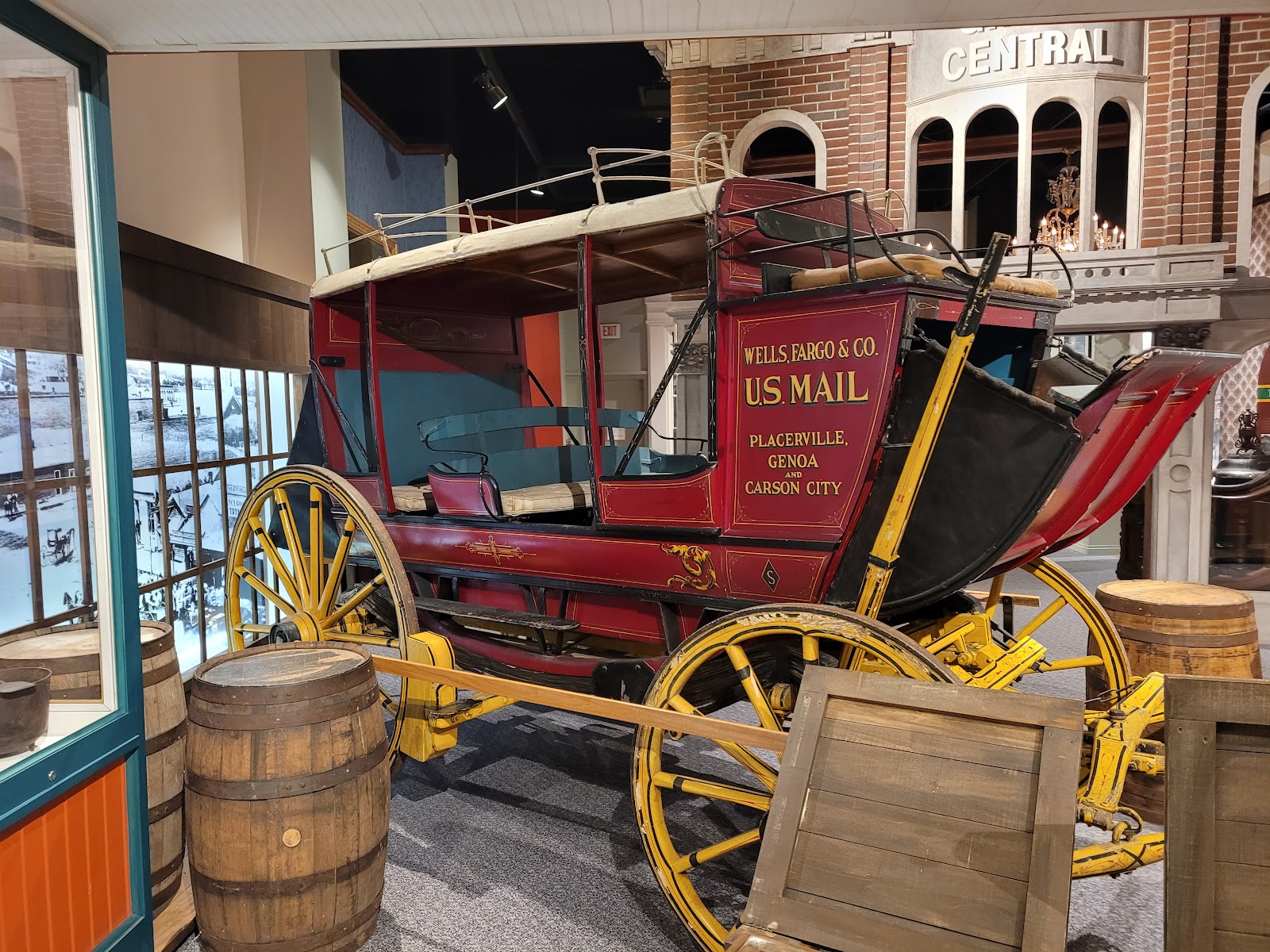
The sixth decision concerns the exhibits, because a museum in a converted station usually has large objects in it — rolling stock, vehicles, machinery — and those change the room.
Large exhibits are genuinely good backgrounds: they are big, dark, strongly shaped and they block light, which means a subject in front of one is separated by tone with no equipment. A subject beside one, in its shadow, is in directional shade of exactly the kind a great hall otherwise lacks.
They also carry glass. Display cases and vehicle windows behave like mirrors pointed wherever the camera is, showing the high windows and any added light at full brightness — so the fifteen-second check from the camera position applies: look at every glazed surface in the frame and place the source where none of them sees it.
And there is a rules dimension worth settling at booking rather than on the day. A museum restricts flash near objects, stands on floors, and numbers in a space, because those objects cannot be replaced — and it will have a position on whether particular exhibits may appear in published photographs. The working assumption is no stands, a source in a hand, and groups where the floor is clear.
- Find where the light patches fall; stand at the edge of one, not the middle
- Stand where the floor is brightest — it is the reflector that fixes high light
- Expose on the faces and let the windows clip; work in manual
- One white balance decision per position, not one for the whole hall
- Use large exhibits as dark backgrounds and as directional shade
Outside, and the Nebraska year
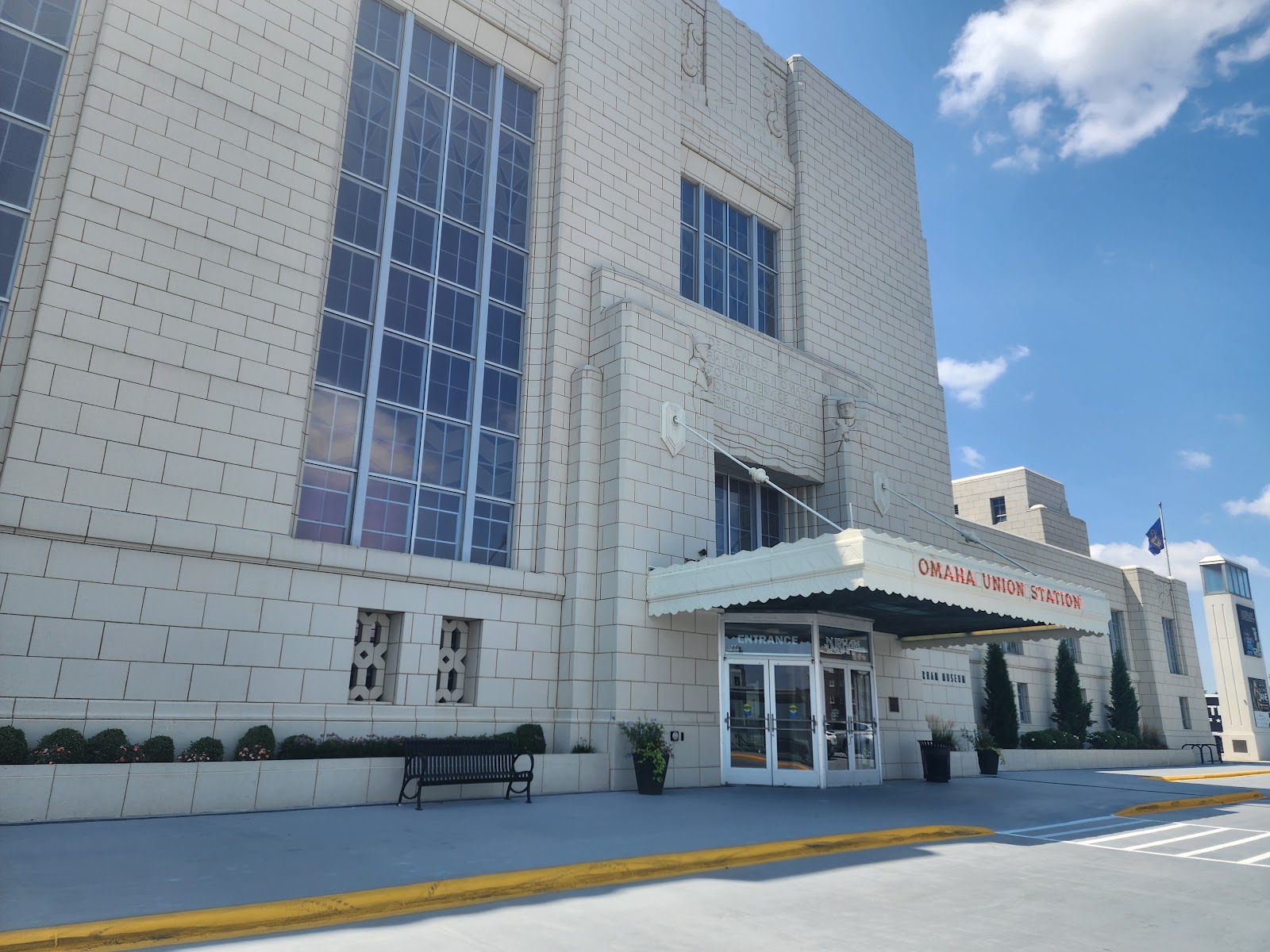
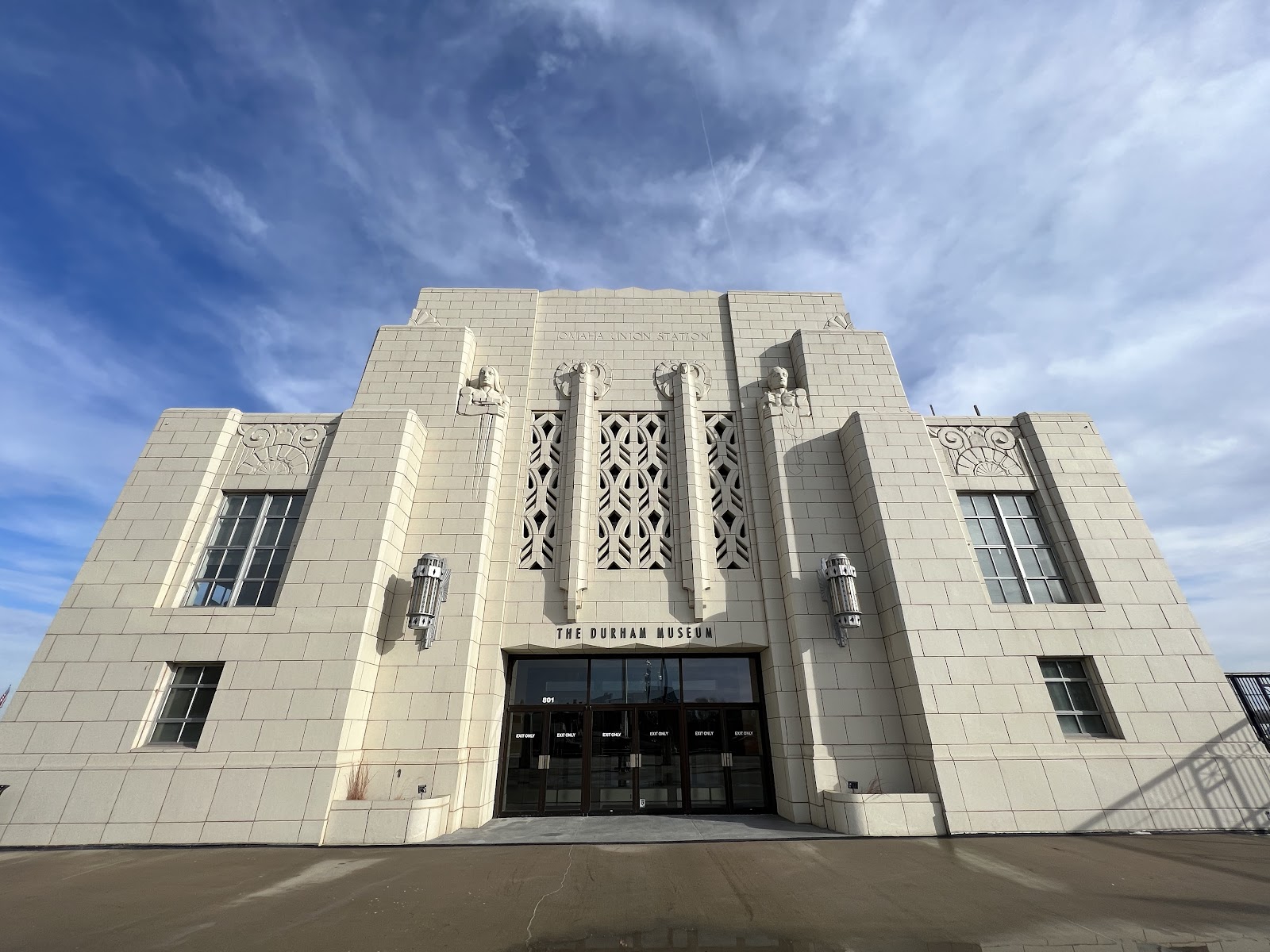
Outside, a converted station is usually a substantial building with room around it, which means it can be photographed whole — and a Deco station facade is worth one frame raked by low sun so the relief reads as ornament rather than as a flat wall.
Omaha sits on the Missouri River, on the west bank looking east across the water. That has one consequence worth planning around: the river is frontlit in the morning and backlit by the afternoon, which means the straightforwardly lit riverside frames belong to the first part of the day and the silver, rim-lit version to the second.
The Old Market district is the other exterior asset and it is a specific kind of good. Heavy timber and brick warehouse buildings with cobbled streets give texture in every direction, and brick is a warm mid-toned reflector rather than a dark absorber — which means a sunlit brick elevation is a genuine soft source, and a couple three or four metres out from one, facing it, is well lit for nothing. It needs a custom white balance set on a face, because brick bounce is markedly warmer than daylight.
Cobbles and brick paving both read only under raking light, and wet they read better still — so a shower is an opportunity delayed rather than a day lost.
The seasons here are four emphatic ones with one of the larger annual temperature ranges in the country. Summer is hot and genuinely humid, and the humidity rather than the heat is the photographic fact: moist air scatters light, which softens shadows and slightly flattens distance. Severe thunderstorms are a real possibility from spring through summer, which at an indoor venue costs a decision rather than a picture — and on the plains a storm is visible for a long time before it arrives.
The fogging problem is the equipment issue and a museum makes it worse, because galleries are climate-controlled for the collection: a body carried straight out into July air fogs on every surface at once and does not clear quickly, so a bag opened twenty minutes early is the whole fix.
Autumn is the best light of the year: humidity drops, the air clears, the cover along the river turns, and low sun arrives at a civilised hour, usually mid-to-late October. Wind is a constant on this edge of the plains, which means no lightstands outdoors and a veil that will not behave.
Winter is cold and frequently overcast, which for a building lit by high windows is genuinely good: overcast turns those windows into uniform soft sources rather than shaft-makers, which removes the patch problem entirely and lights the whole hall evenly. A grey January day in a great hall is one of the better interior conditions there is.
Snow compounds it. Snow on the ground turns the exterior into an enormous reflector, so the high windows admit more light and it arrives partly from below — and the December midday sun at this latitude, about forty-one degrees north, reaches only about twenty-five degrees above the horizon, which means it comes in through high windows at a low angle rather than from overhead. For a hall whose problem is high light, winter is the season it performs best.
More frames from The Durham Museum
The Durham Museum wedding photography: common questions
What is the frame?
A couple in a great hall under high window light, on polished stone, with Deco relief receding on both sides and real volume above them.
Why does the floor matter so much?
Because polished stone is a strong reflector lying directly beneath everyone, which sends high window light back up to fill the shadows it carves.
How should it be exposed?
On the faces, with the windows allowed to clip. A hall with correctly exposed windows has black faces in it, which is the wrong trade.
What about white balance?
One decision per position rather than one for the hall. Daylight in a lit patch, the fittings’ temperature away from the windows.
Are large exhibits useful?
Very. They are big, dark and block light, so they make both a background separated by tone and directional shade a great hall otherwise lacks.
When is the hall at its best?
Winter. Overcast turns high windows into uniform soft sources rather than shaft-makers, and snow outside sends more light in, partly from below.
More Nebraska venue guides
We are writing a photographer’s guide to every venue we would happily shoot in Nebraska. Here are three more, plus the full index:
- The Peregrine Hotel, Omaha: A Walk Through a Converted Building
- The Farnam Hotel, Omaha: The Light Through the Day
- The Holland Center: Building the Shot List in a Contemporary Concert Hall
Planning a wedding at The Durham Museum?
High light and a floor that fixes it. Tell us your date and we will use both.