 The Hoxton Chicago: Photographing a Wedding in Fulton Market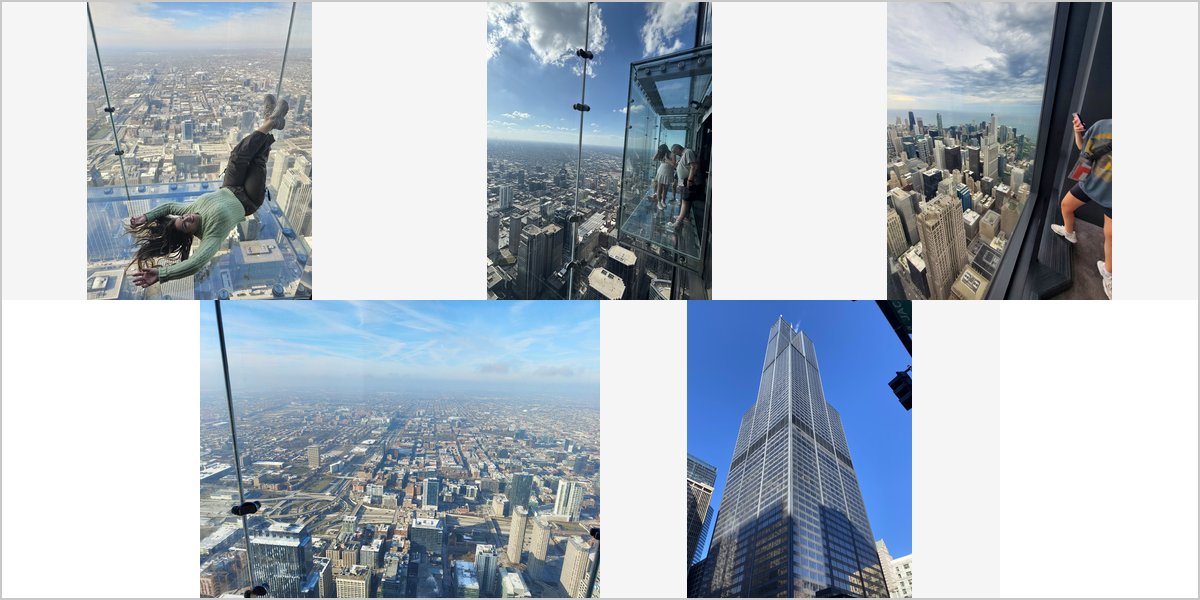
September 1, 2026
The Willis Tower Skydeck: Field Notes on Glass at 1,350 Feet
Every frame here is taken through glass, and glass at this height behaves in three specific ways you have to plan for.
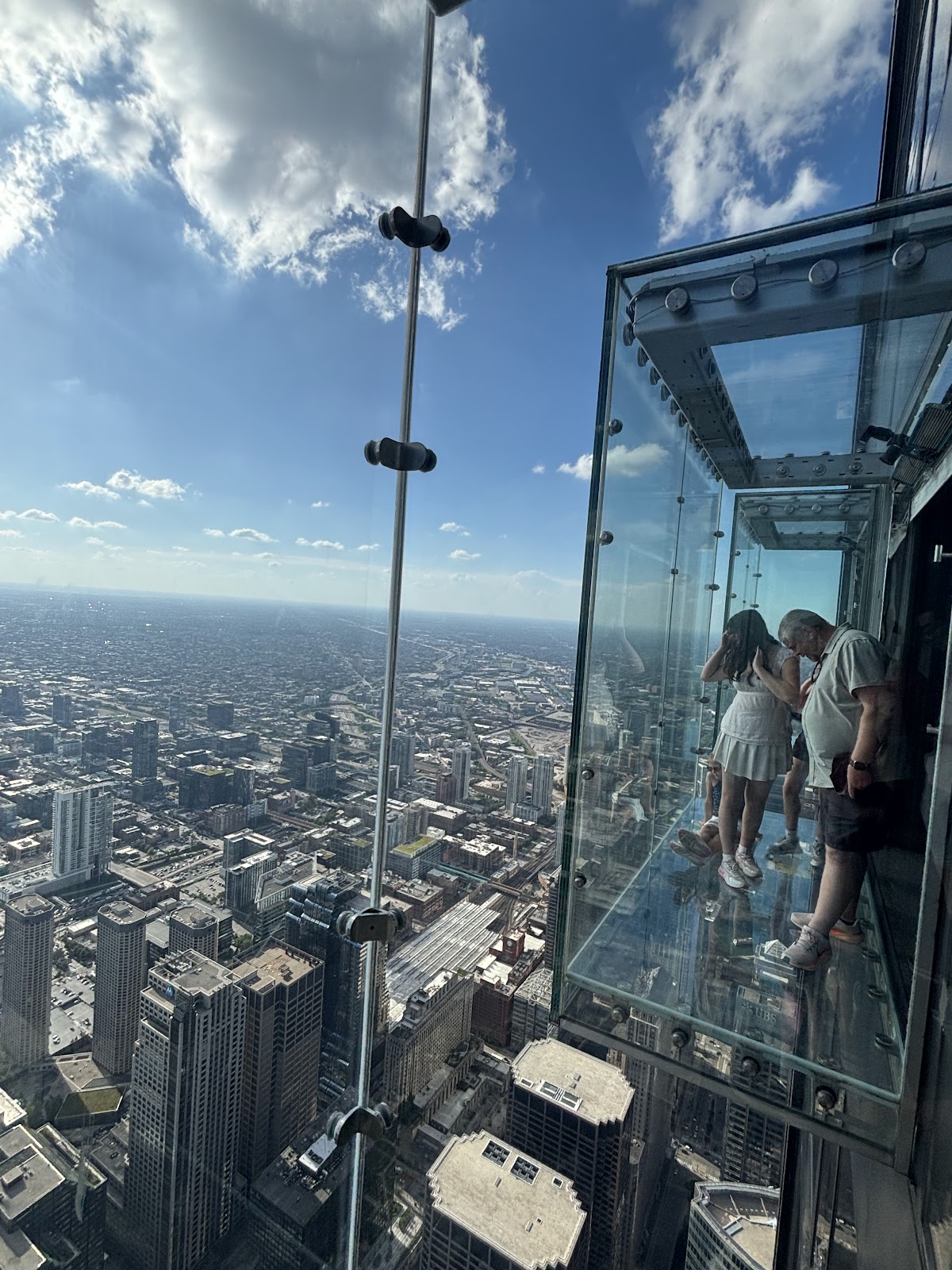
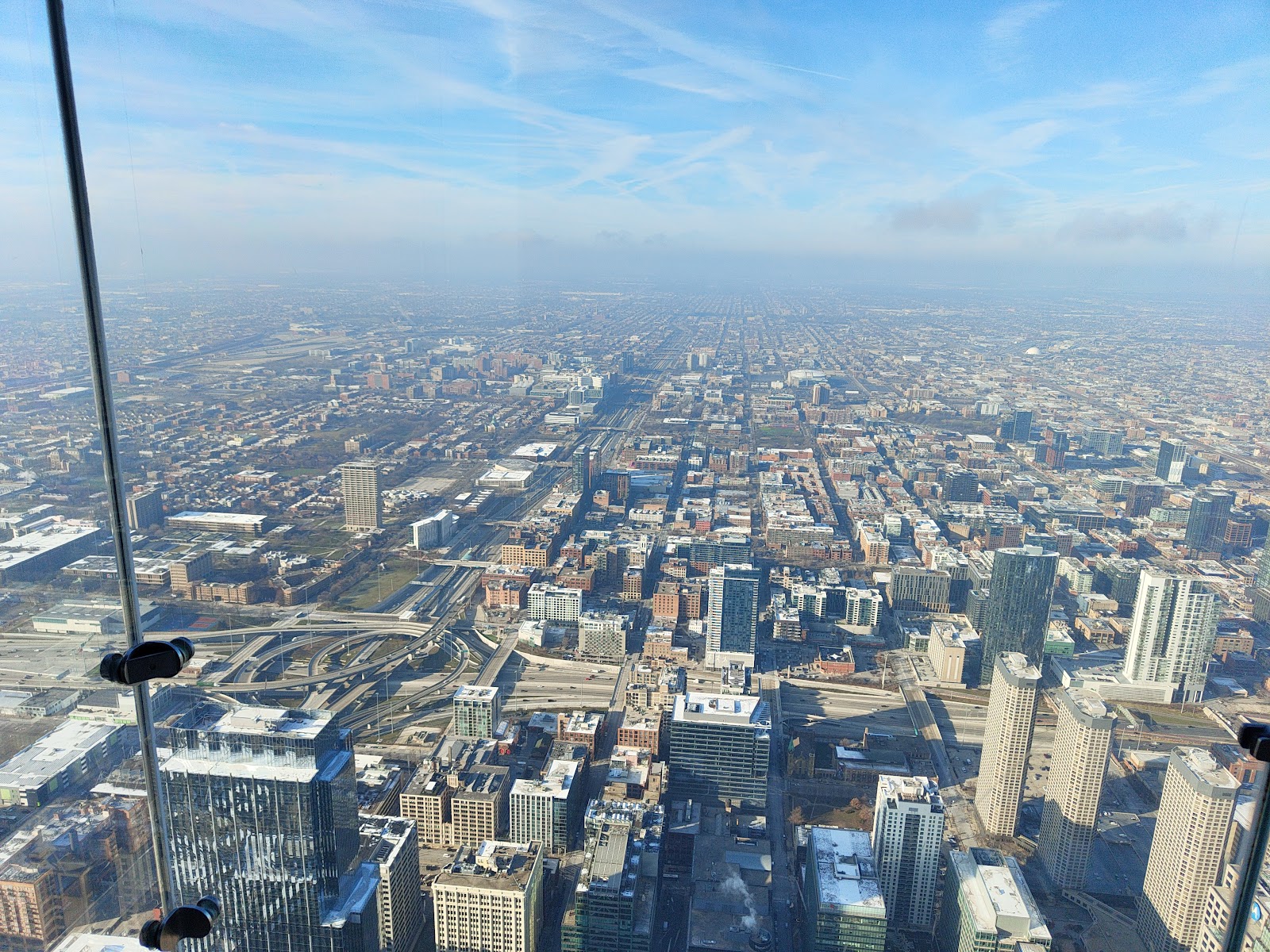
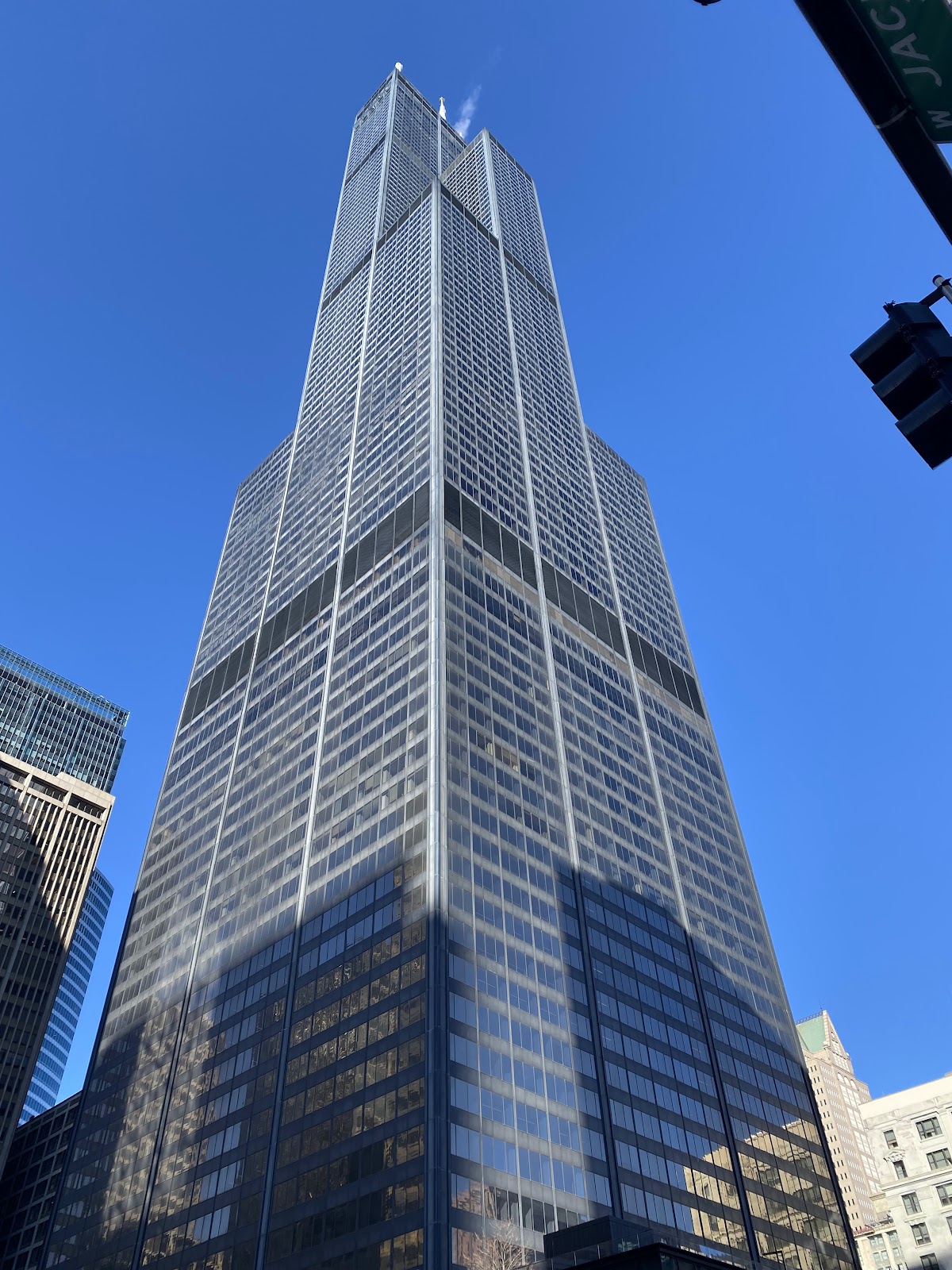
The Skydeck occupies the 103rd floor of the Willis Tower in Chicago’s Loop, an enclosed observation level with glazing on all sides and a set of glass-floored boxes projecting out from the building’s west face.
The photographic situation is unlike any other venue in the city because of one unavoidable fact: there is glass between the camera and everything worth photographing, on every side, with no exceptions. You cannot step outside, you cannot open a window, and you cannot avoid it by changing position. So rather than a tour of the space, these are field notes on the three things that glass at this height does, and what to do about each.
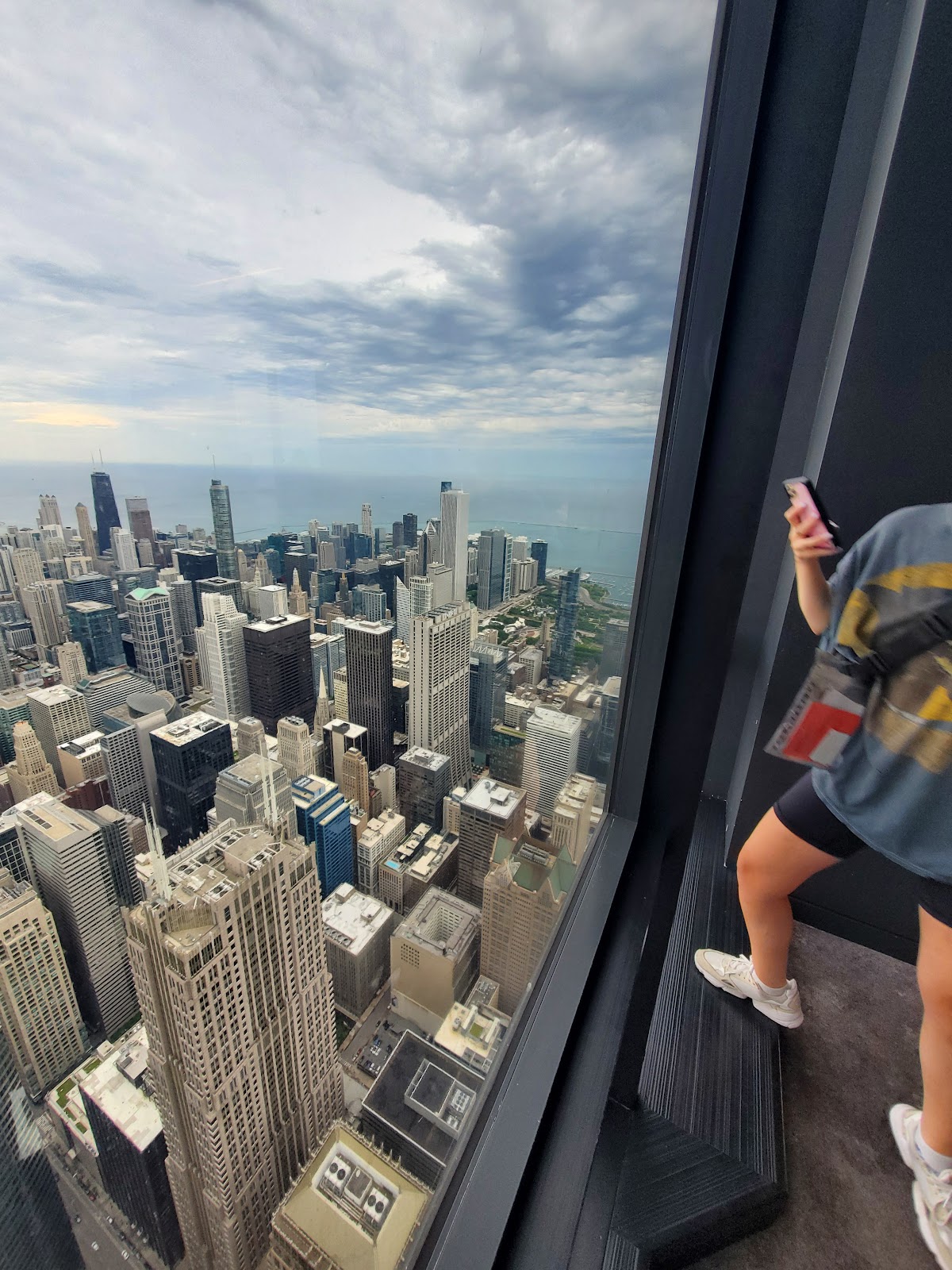
What it gives in return is a view that puts four states on the horizon on a clear day and turns the entire Loop into a model beneath you. We have not photographed a wedding at the Skydeck; shooting through architectural glazing at height behaves the same anywhere. What the venue permits, whether the deck can be private and how long access runs are questions for their events team — and the private-access question is the one that determines whether any of this is workable.
The Willis Tower Skydeck at a glance
| Where | 103rd floor, Willis Tower, the Loop, Chicago, Illinois |
| Character | Enclosed observation deck, glazed on all sides, with glass ledges |
| The constant | Every single frame is taken through glass. There is no alternative |
| The reward | The Loop as a model below, and a horizon across four states |
| Ask first | Whether the deck can be private, and how late access runs |
Problem one: the glass reflects the room you are standing in
Architectural glazing is a partial mirror, and the brighter the interior relative to the view, the more mirror it becomes. In daylight with a bright view outside this is mild. After dark, with interior lighting on and a dark sky outside, the glass shows the room far more strongly than it shows the city — your own reflection, the lights, the people behind you, and every bright surface in the space.
Three controls. Get the lens as close to the glass as it will go: pressing the front element almost against it removes the angle at which reflections enter, and a rubber lens hood pressed flat is the cleanest solution there is. Shoot perpendicular rather than obliquely, because an angled shot picks up reflections from a much wider cone of the room behind. And kill or shield anything bright behind you, which in practice means asking for interior lighting to be reduced if the venue will allow it.
For frames that include the couple rather than just the view, you cannot press against the glass, so reflections must be managed by light placement instead: keep every source well off the camera axis and, ideally, behind the plane of the subject. A flash anywhere near the lens axis will come straight back as a hard bright disc.
And used deliberately, the reflection is an asset. A couple’s reflection in dark glass with the lit city beyond is a double-exposure effect achieved in camera, and it is one of the strongest frames the venue offers. The difference between that and a spoiled frame is entirely whether it was intended.
Problem two: glass degrades the image, subtly and cumulatively
Thick architectural glazing is usually multiple laminated panes, often tinted, sometimes coated. That has real optical consequences: a slight loss of contrast, a colour cast that is commonly green or blue, reduced sharpness particularly at the frame edges, and occasional doubling on bright point sources where a highlight reflects between panes.
None of these are fatal and all of them are easier to handle if expected. Shoot at a moderate aperture rather than wide open, because a flat pane in front of the lens degrades edge performance and stopping down recovers some of it. Correct the cast deliberately by setting a custom white balance through the glass rather than in the room, since the glass is part of your optical path now. And accept slightly lower contrast as the price of the view — a small contrast adjustment afterwards restores it with no real cost.
Cleanliness is the unglamorous variable that matters most. At 1,350 feet the exterior face of the glass collects grime, and a smear or a streak in front of a bright sky is far more visible than it would be against a dark subject. Walk the perimeter and find a clean panel before you position anybody. Two minutes spent doing this improves a frame more than any setting.
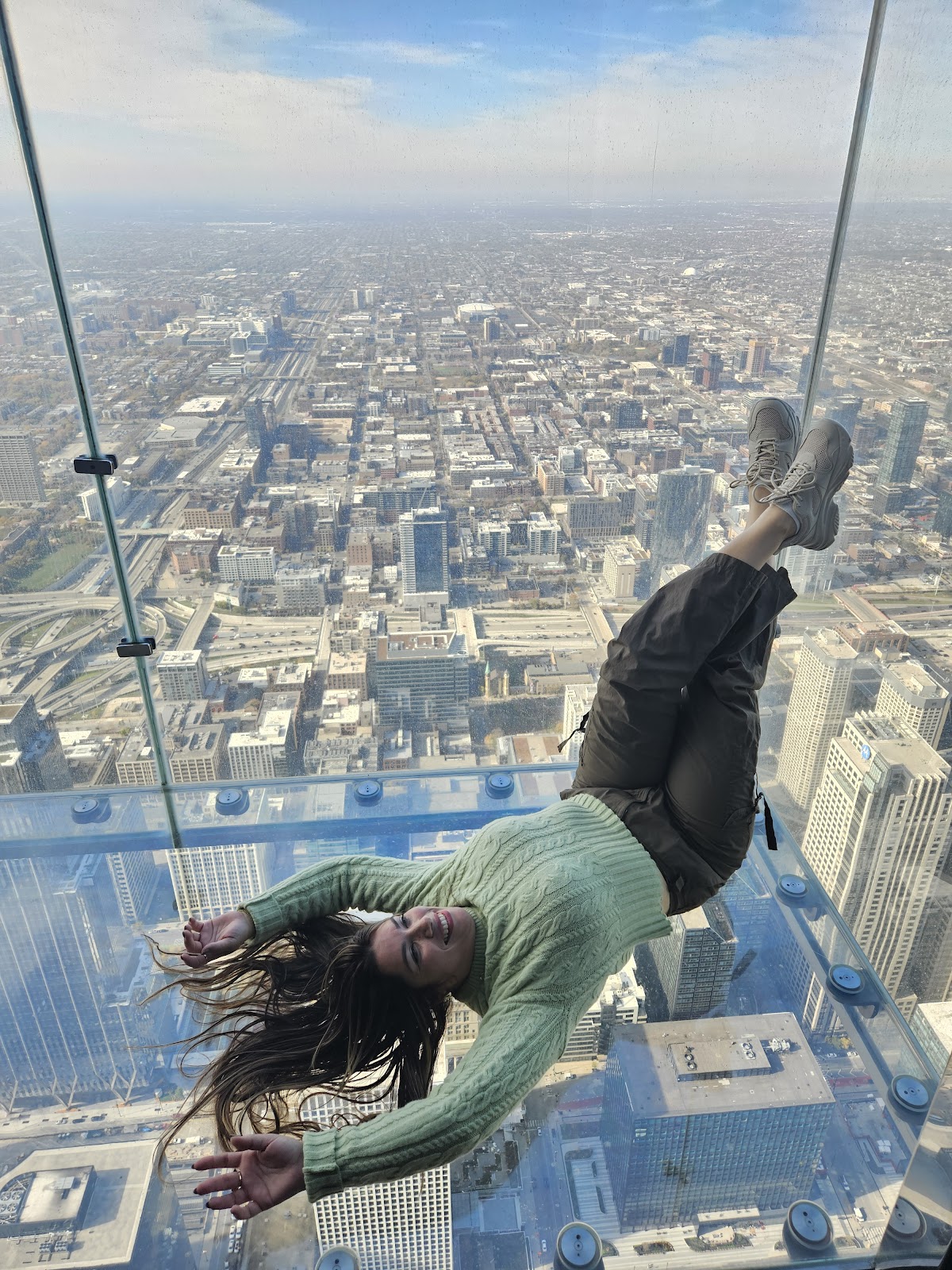
The glass-floored ledges are their own case. Looking straight down through a glass floor is a genuinely striking frame and it is optically the hardest one, because the floor takes the most wear, bears the most scuffing, and is lit from the interior above rather than from outside. Expect to work harder for that frame and to find the least scratched box.
- Press a rubber hood flat against the glass for view-only frames
- Shoot perpendicular; oblique angles collect reflections from a wide cone
- Set a custom white balance through the glass, not in the room
- Stop down moderately to recover edge sharpness lost to a flat pane
- Find a clean panel before positioning anyone — grime against sky is glaring
Problem three: the view is the light, and there is not much of it
At this height the only natural light is what comes through the glazing, and on the deck it is directional, tinted, and falls off rapidly as you move inward. After dark there is effectively none, because a city seen from above puts out very little usable light on a face. A couple against a night skyline, unlit, is a silhouette — which is sometimes exactly the frame you want, and otherwise a problem.
So plan two kinds of frame. The silhouette, which needs nothing: expose for the city, let the couple go black, and rely on the shape the two of them make. And the lit frame, which needs one warm off-camera source at a power balanced to the city — enough to render skin, not enough to overwhelm a view that is itself quite dim. Getting this balance right is the whole technical exercise of a night skyline portrait, and erring towards flash is the commoner mistake.
Daylight on the deck is easier than expected. Glazing on all sides means light comes from every direction, which is soft and flattering, and the deep interior gives you fall-off to work with. A couple placed a few metres in from a bright window, turned towards it, has a large soft key and a dark surround — good portrait light that needs nothing added.
Timing follows the same rule as every city-view venue: the half hour after sunset is when the sky still holds colour and the building lights are on, and it is the only time the view and the people can both be right in one frame. Everything else about a visit here can be flexible. That window cannot.
One last practical matter. Access is by lift, the deck is a ticketed public attraction, and moving a wedding party and equipment up is a staged operation with real time cost. Unless private access is arranged, the deck is busy and every frame contains visitors. Plan a short decisive block, carry the minimum, and know which panel you are using before you go up.
What works in your favour
- A view across the Loop and, on a clear day, four states
- Glazing on all sides gives soft light from every direction in daylight
- Reflections in dark glass produce in-camera double exposures
- Glass-floored ledges give a straight-down frame no other venue has
- Complete weather independence, and the view improves on windy days
What to plan around
- Every frame is through glass — reflections, tint and softness included
- After dark the glazing becomes a strong mirror of the interior
- Exterior grime at that height is very visible against a bright sky
- Almost no usable light on faces after dark; a source is mandatory
- A ticketed public attraction with lift access and real time cost
More frames from The Willis Tower Skydeck
The Willis Tower Skydeck wedding photography: common questions
How do you stop reflections in the observation glass?
Press the lens, ideally with a rubber hood, flat against the pane and shoot perpendicular — that removes the angle at which reflections enter. For frames including the couple, keep every light well off the camera axis and ideally behind the plane of the subject.
Does the glass hurt image quality?
Slightly and cumulatively: reduced contrast, a green or blue cast, softer edges, and occasional doubling on bright points. Stop down moderately to recover edge sharpness, and set a custom white balance through the glass rather than in the room.
What matters most practically?
Finding a clean panel. At that height the outside face collects grime, and a streak in front of a bright sky is glaring. Walk the perimeter before positioning anybody — two minutes there improves a frame more than any camera setting.
Can you photograph the couple against the night view?
Only two ways. As a silhouette, exposing for the city and letting them go black, which can be the better frame. Or lit, with one warm off-camera source balanced to the city — a view from up here is dim, so erring towards too much flash is the common mistake.
Is the daylight any good up there?
Better than people expect. Glazing on all sides means light arrives from every direction, which is soft, and the deep interior gives fall-off. A couple a few metres in from a bright window, turned into it, has a large soft key and a dark surround with nothing added.
When should we go up?
The half hour after sunset. That is the only time the sky holds colour while the building lights are on, so it is the only window where the view and the people can both be right. Everything else about the visit can flex; that cannot.
More Chicago, IL venue guides
We are writing a photographer’s guide to every venue we would happily shoot in Chicago, IL. Here are three more, plus the full index:
- The Adler Planetarium: One Decision Governs the Whole Day
- The Art Institute of Chicago: Reading a Museum Hour by Hour
- The Chicago Athletic Association: Dark Wood and Stained Glass
All Chicago, IL Wedding Venues →
Planning a wedding at The Willis Tower Skydeck?
Every frame here goes through glass, so the plan is made before the lift doors open. Tell us your date and we will sort the panel, the hour and the light.