 The Hoxton Chicago: Photographing a Wedding in Fulton Market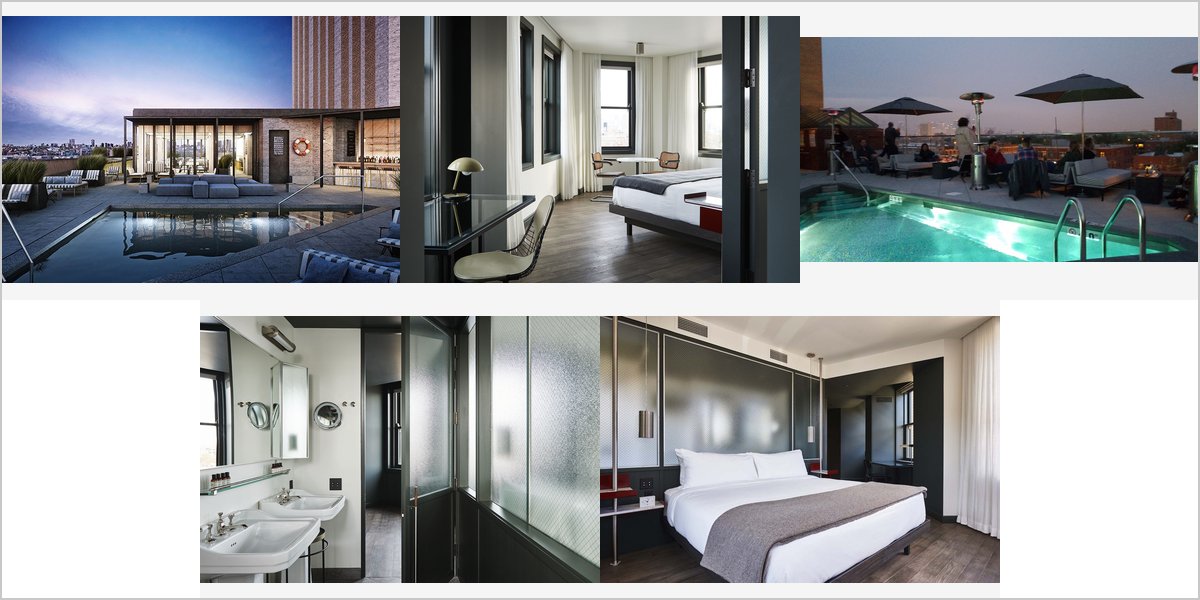
September 1, 2026
The Robey: How Light Moves Through a Narrow Tower
A narrow tower has windows facing every direction, so the best room in the building changes every two hours.
The Robey occupies a 1929 tower at the six-corners junction in Wicker Park, on Chicago’s Northwest Side — a slim Art Deco building of the period when Chicago built tall on small plots, with upper-floor rooms and a rooftop above a low-rise neighbourhood.
The photographic character of a building like this comes from its proportions. A narrow tower has a small floor plate and a large perimeter relative to its area, which means almost every room has an exterior window, and those windows face in every direction. In a wide building most rooms are interior and the light is broadly similar throughout. In a slim tower, the north rooms and the west rooms are completely different photographic environments at the same moment, and which one is good changes through the day.
So this follows the light around the building rather than through the schedule. We have not photographed a wedding at the Robey; slim period towers and low-rise surroundings behave the same anywhere. Which floors and rooms are allocated, and what the rooftop access allows, are questions for their events team — and asking which way the rooms face is the most useful question available.
The Robey at a glance
| Where | The six-corners junction, Wicker Park, Chicago, Illinois |
| Character | A slim 1929 Art Deco tower above a low-rise neighbourhood |
| The consequence | Nearly every room has a window, and they face every direction |
| The question | Which way does the allocated room face? It decides the hour |
| The bonus | Low surroundings, so even a modest roof clears the neighbourhood |
Morning: the east rooms, briefly and warmly
East-facing rooms in a tall narrow building get something low-rise buildings do not: direct morning sun arriving unobstructed, because there is nothing tall in the way. That produces hard, warm, strongly directional light early on — long shadows across a floor, a bright slab on a wall, and the kind of raking beam that reads as unmistakably morning.
It is dramatic rather than soft, and that needs handling. Direct sun through a window is a small hard source, so it gives crisp shadows and high contrast on a face. Used deliberately it is excellent — place a subject at the edge of the beam so half the face is lit and the rest falls into the room, and you get modelling that no soft source produces. Used carelessly it gives squinting and blown highlights on skin.
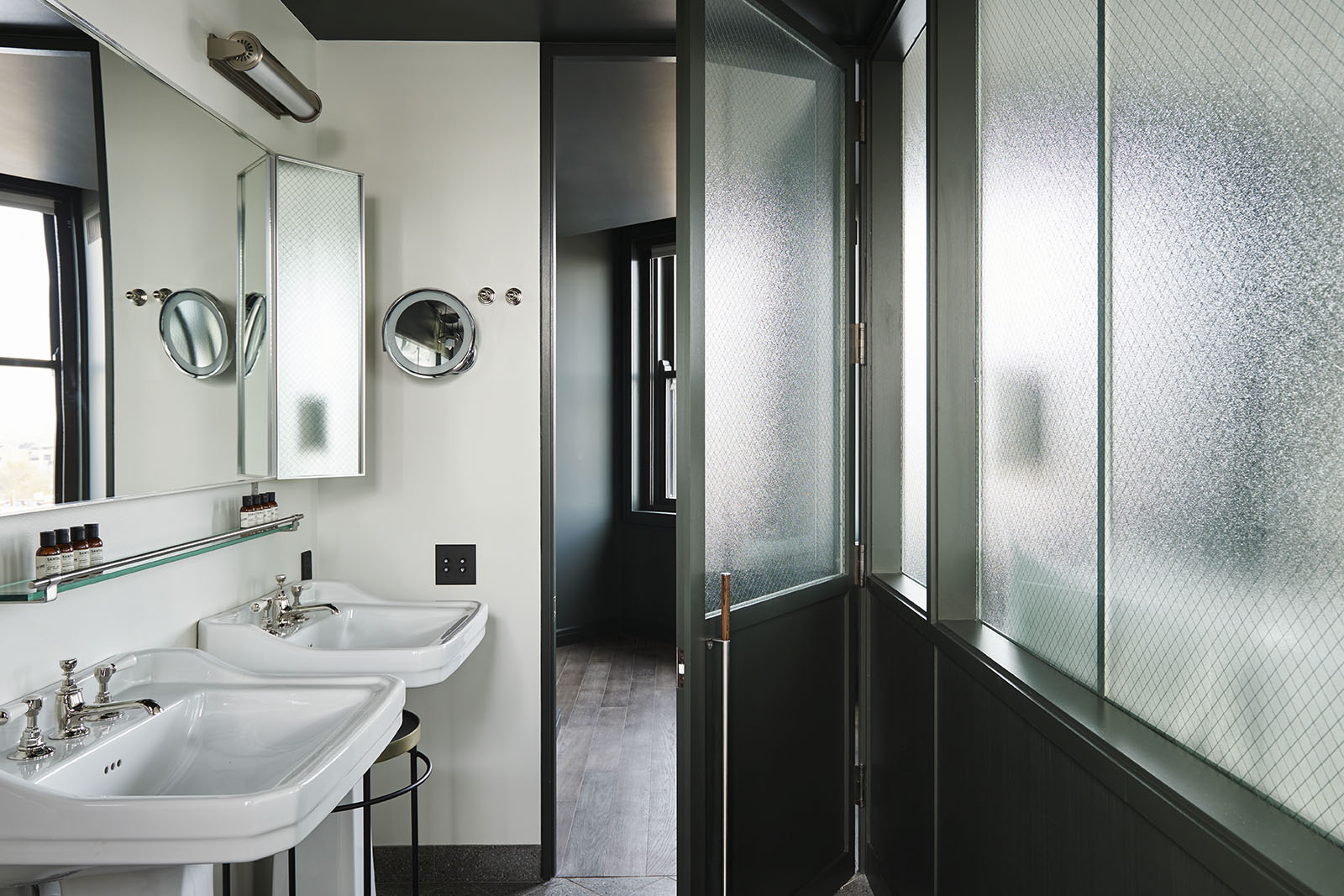
The simplest control is a sheer curtain, which most hotel rooms have and most photographers forget. Drawing a thin curtain across a sunlit window converts that small hard source into a large soft one instantly, at no cost, and it is the single most useful thing in a hotel room. Hard light when you want it, soft when you do not, decided by a curtain.
This is also the window of the day for the building’s Deco detail. Period metalwork, patterned stone and geometric relief all depend on raking light to read, exactly as carved stone does, so a low morning sun on an east elevation shows the architecture at its best.
Midday: the north rooms, which are the reliable ones
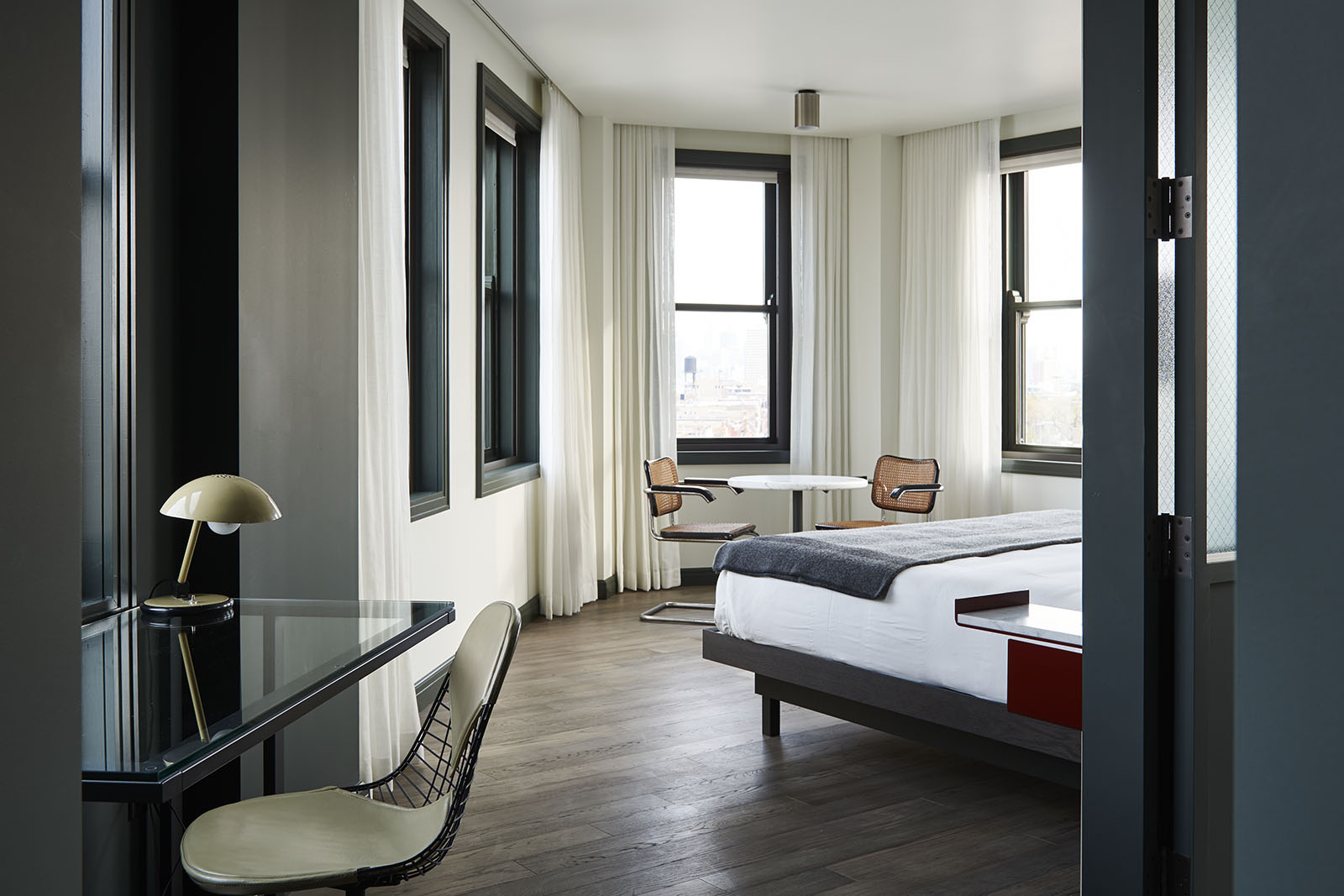
North-facing rooms never receive direct sun, which is why painters have wanted them for centuries. What they get instead is a large area of open sky, which is a soft, even, cool and remarkably consistent source — the same quality of light from morning to evening, unaffected by whether the sun is behind cloud.
For a photographer that reliability is worth more than drama during the middle of the day. When every other elevation of the building is either in hard sun or in deep shade, the north rooms are unchanged: a big soft key, a natural fall-off, no contrast problem and no timing pressure. Preparation coverage, dress and detail work, and any portrait that needs to be flattering rather than dramatic all belong there.
The one adjustment is colour. Skylight is cool — noticeably bluer than direct sun — so a north room needs a deliberate white balance rather than a carried-over one, and mixing it with a warm tungsten lamp in the same frame produces the familiar split cast. Switch the lamps off and work with the window alone, and the room resolves.
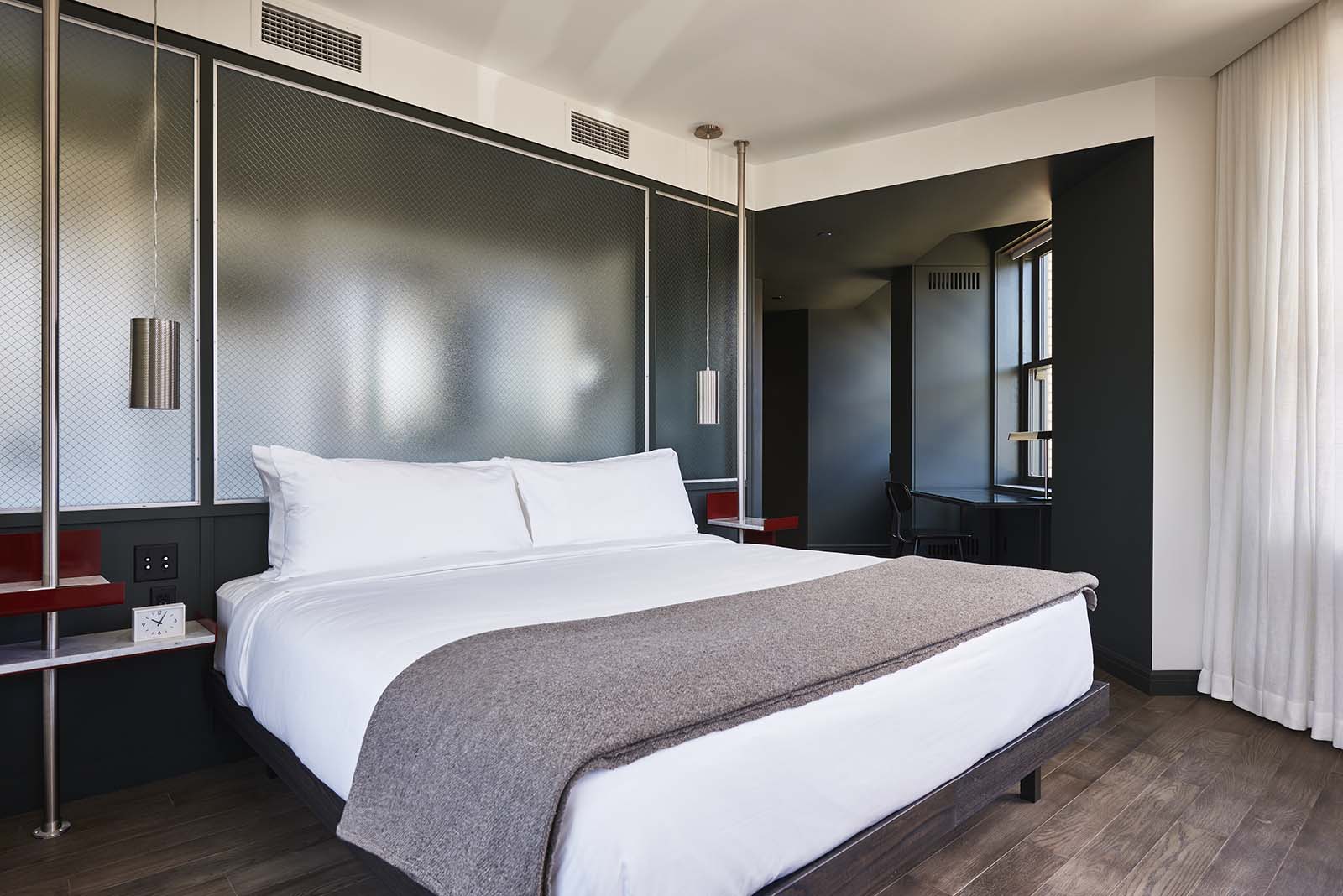
Across the day, then, the practical instruction at a narrow tower is to move rooms rather than to fight light. If the light in the allocated room is wrong at the hour you need it, another room two doors away is facing a different direction and may be exactly right. That option does not exist in a wide building and it is the real advantage of a slim one.
What works in your favour
- Nearly every room has a window, facing every direction
- North rooms give soft, even, reliable light all day
- East rooms give hard raking morning sun that shows Deco detail
- West rooms and the roof face the sunset directly
- A low-rise neighbourhood, so a modest roof clears the surroundings
What to plan around
- Small floor plates mean small rooms and restricted camera positions
- Rooms facing different ways will not match without adjustment
- Skylight in north rooms is cool and mixes badly with tungsten lamps
- West rooms are unusable in late afternoon without diffusion
- A busy junction below, with traffic and transit noise
Evening: the west side, the roof, and the neighbourhood below
West-facing rooms are the problem of the afternoon and the gift of the evening. Through the middle of the afternoon they take direct sun, and at a high level with nothing in the way that is a hard, hot, high-contrast condition that needs the curtain treatment or avoiding altogether. Then in the last hour the same window becomes the best light in the building — low sun raking horizontally into the room, warm, directional, filling it with colour.
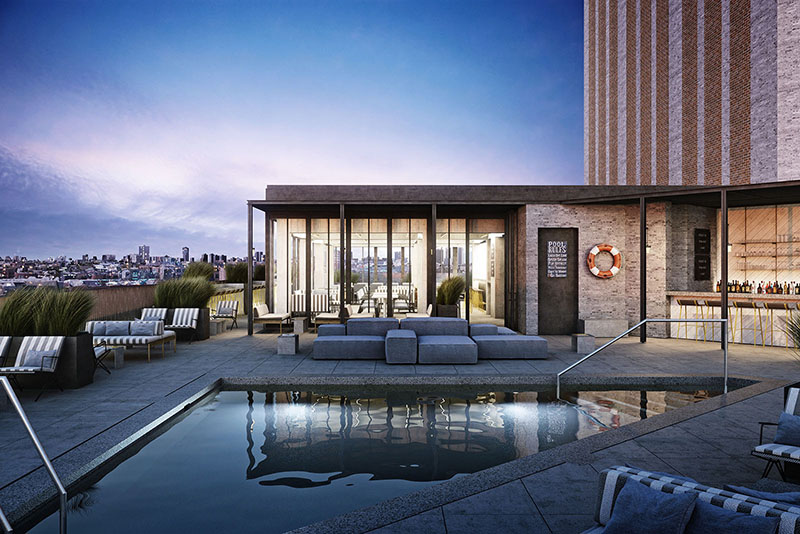
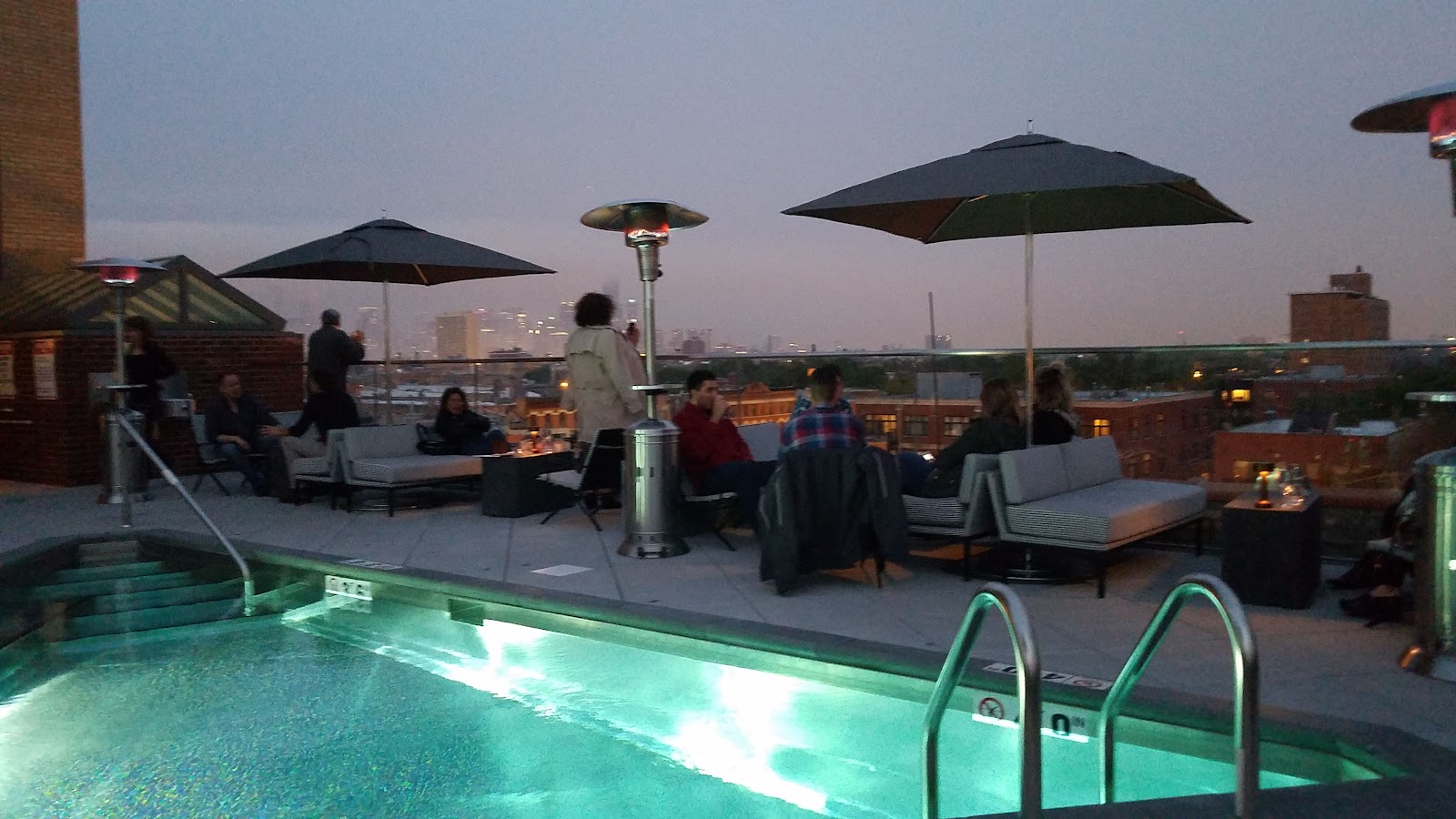
Above that, the roof. Wicker Park is low-rise, which has a disproportionate consequence: a rooftop only a few storeys up already clears its surroundings, where downtown you would need forty floors to see anything. So a modest roof on a slim tower in a low neighbourhood gives a genuine open horizon, a full sky, and the downtown skyline visible to the southeast.
That skyline view is the frame that places the whole gallery. It needs a long lens — compression brings the Loop towers up close behind the low neighbourhood rooftops, where a wide lens reduces them to a distant grey band and loses it. It is the same rule as every skyline frame and it is the one most often got wrong.
Down at street level, Wicker Park gives a genuinely different Chicago from downtown: the six-corners junction, low commercial frontages, painted signage, the elevated transit line, and residential streets with mature trees behind. Because the buildings are low, evening sun runs all the way down the streets, which is the frame a downtown block cannot produce. The district is busy but it is neighbourhood-busy rather than tourist-busy, which is a different and more workable kind of crowded.
The shape of a day here follows from all of that: east rooms and the Deco elevation early if the timeline allows, north rooms through the middle for preparation and anything that must be flattering, west rooms in the last hour, the roof for the twenty minutes around sunset, and the streets afterwards while the light is still running down them. The building does the scheduling for you if you know which way each room faces.
More frames from The Robey
The Robey wedding photography: common questions
Why does the room allocation matter so much here?
Because a slim tower has a small floor plate and a large perimeter, so nearly every room has a window and those windows face every direction. North and west rooms are completely different photographic environments at the same moment, and which is good changes through the day.
Which rooms are the most reliable?
North-facing. They never get direct sun, so they receive a large area of open sky — soft, even, cool and consistent from morning to evening regardless of cloud. Preparation, dress and detail work, and any flattering portrait belong there.
What do you do with hard sun through a window?
Draw a sheer curtain across it. That converts a small hard source into a large soft one instantly and costs nothing, and most hotel rooms have one. It is the most useful object in the room, and the most consistently forgotten.
Why do north rooms look cool and others warm?
Because skylight is noticeably bluer than direct sun. A north room needs its own white balance rather than one carried over from elsewhere in the building, and mixing it with a warm tungsten lamp in frame gives a split cast. Switch the lamps off.
When are west-facing rooms usable?
In the last hour, when they become the best light in the building — low sun raking horizontally into the room, warm and directional. Through the middle of the afternoon at a high level they are hard and hot, and need the curtain or avoiding.
Is a low rooftop worth using?
Here, yes, disproportionately. Wicker Park is low-rise, so a roof a few storeys up already clears its surroundings and gives a full sky and the Loop visible to the southeast. Downtown you would need forty floors for the same thing.
More Chicago, IL venue guides
We are writing a photographer’s guide to every venue we would happily shoot in Chicago, IL. Here are three more, plus the full index:
- Virgin Hotels Chicago: A Venue of Small Rooms Rather Than Large Ones
- The Waldorf Astoria Chicago: A Walled Courtyard in a City
- The Willis Tower Skydeck: Field Notes on Glass at 1,350 Feet
All Chicago, IL Wedding Venues →
Planning a wedding at The Robey?
In a narrow tower the building schedules the day for you. Tell us your date and which way your rooms face, and we will do the rest.