 The Hoxton Chicago: Photographing a Wedding in Fulton Market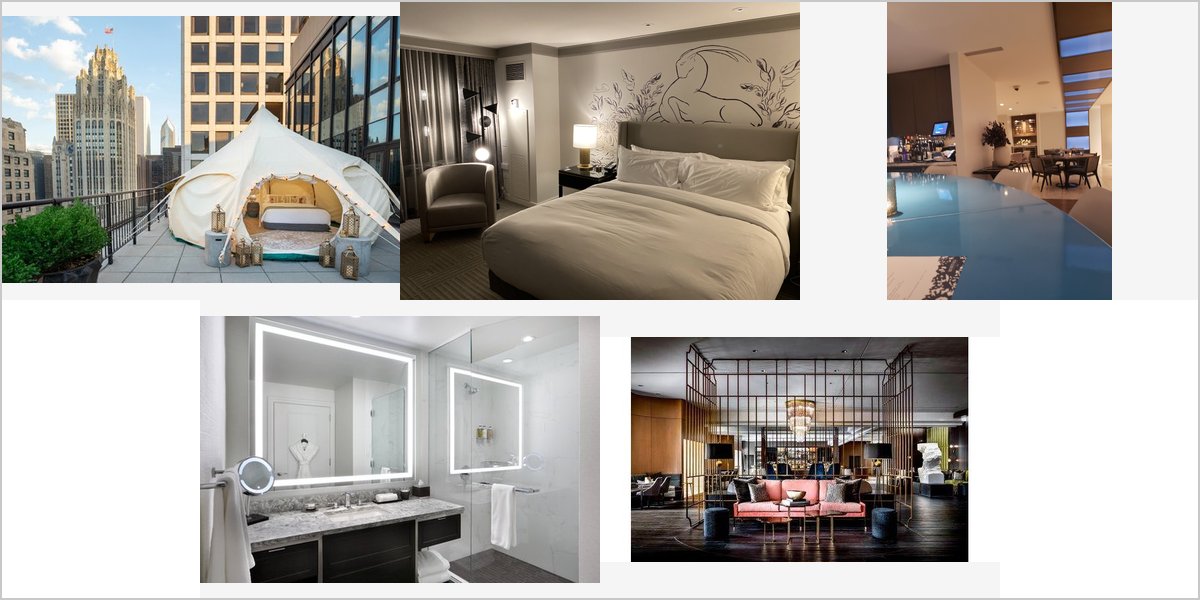
September 16, 2026
The Gwen: How the Carved Relief Frame Is Actually Made
Carved stone is the one subject that lives or dies entirely on the angle of the light. Get that wrong and it vanishes.
The Gwen occupies a 1920s building on North Michigan Avenue whose facade carries sculpted limestone relief — figural carving worked into the stone rather than applied to it — with hotel interiors behind and a terrace on an upper floor.
That carved facade is the venue’s distinguishing feature and it is a genuinely specialised photographic subject, because relief sculpture behaves unlike anything else a wedding photographer normally encounters. A painting is a flat surface that any light reveals. A carving is a surface of shallow depth that only exists as an image when light rakes across it at a low angle. Light it from the front and it disappears into a flat grey wall. Light it from the side and it becomes what the sculptor made.
So this is an account of building that one frame — the couple with the relief reading properly behind them — and then what the rest of the building offers. We have not photographed a wedding at the Gwen; carved limestone and street-level facades behave the same anywhere. Which rooms and what terrace access a wedding has are questions for their events team.
The Gwen at a glance
| Where | North Michigan Avenue, Chicago, Illinois |
| Character | A 1920s building with sculpted limestone relief and an upper terrace |
| The frame | Couple in front of carved stone, with the carving still reading |
| The rule | Relief needs raking light. Frontal light erases it completely |
| Timing | The facade’s own good hour depends on which way it faces |
Step one: find the hour the facade works
Relief carving is revealed by shadow. Each cut in the stone casts a small shadow when light arrives across it, and those shadows are what your eye reads as form. When light arrives straight on — a midday sun on a south-facing wall, or a flash from the camera position — the shadows vanish and so does the carving. This is the single most important fact about photographing sculpture and it is consistently ignored.
So the facade has a good hour and a bad one, determined entirely by orientation. On a Michigan Avenue elevation, the useful window is when the sun is low and coming along the street rather than at the wall, which rakes across the carving and lifts every cut into relief. Establish which end of the day that is on a site visit rather than guessing, because getting it wrong means the signature feature of the building photographs as a blank.
Overcast days are the difficult case, not the easy one. Soft even light is kind to faces and ruinous to carving, because it eliminates the directional shadow the stone depends on. On a grey day the honest assessment is that the relief will read weakly, and the frame should be built on something else — which is worth telling a couple in advance rather than discovering.
In artificial light the same rule applies with more control. If the facade is lit at night by the building’s own uplighting, that light comes from below and rakes upward, which is a strong and rather dramatic rendering of relief — often better than daylight. A night frame at a carved facade with the building’s uplighters doing the work can be the strongest version of this image.
Step two: place the couple so both subjects survive
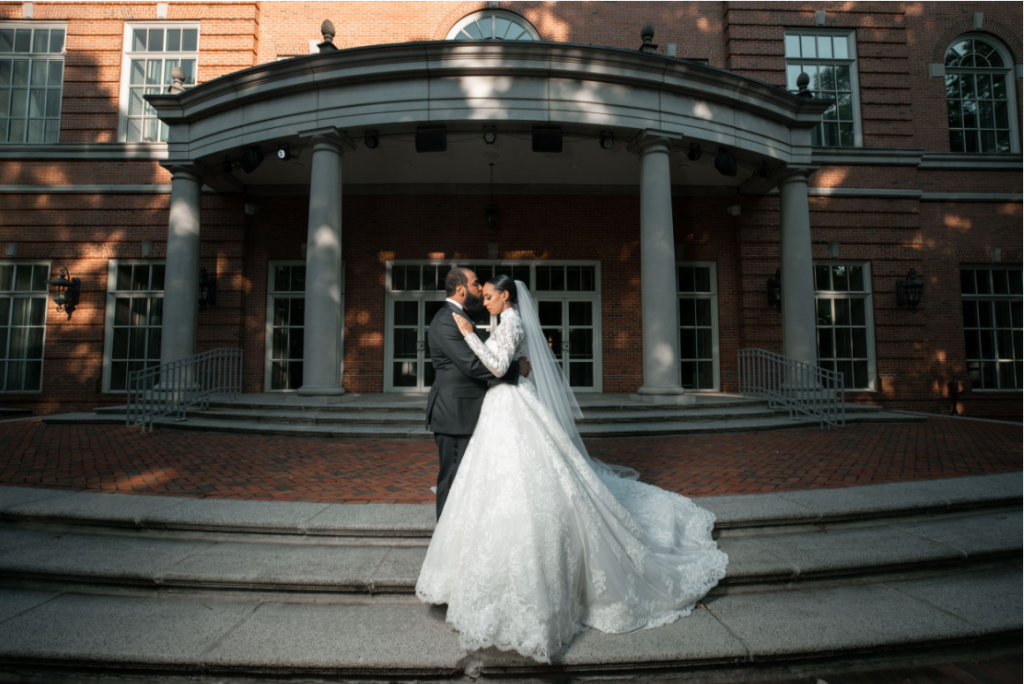
Carved stone is visually busy, and a busy background competes with faces. The instinct is to stand the couple directly in front of the carving, which produces a frame where the eye cannot settle: intricate stone behind two heads, at the same scale and similar tone.
Two placements work. Offset: put the couple to one side of the frame with a clean run of carving filling the other, so the composition has a quiet half and a busy half and the eye moves between them. Or scale separation: shoot from further back with a long lens, couple small in the lower frame, the carved elevation rising above them — which turns the building into the subject and the couple into the human reference that gives it scale.
Depth separation matters too. If the couple stand right against the stone, both are in the same focal plane and the background stays sharp and competitive. Bring them a couple of metres forward and use a wide aperture, and the carving softens just enough to recede while remaining legible. The difference is substantial and the adjustment takes ten seconds.
Your own light needs care here, because a flash from the camera position will flatten the carving even if the sun was raking it. Put the source off to the side, ideally on the same side the natural light is coming from, so it reinforces the existing shadow direction rather than filling it in. This is the case where a badly placed light does not merely look wrong — it deletes the subject.
- Establish the facade’s raking hour on a site visit; orientation decides it
- Expect overcast days to flatten the carving; plan another frame
- Offset the couple, or shoot small and let the elevation rise above them
- Bring them two metres off the wall so the stone softens and recedes
- Place your light on the same side as the raking sun, never on axis
Step three: the street, and what else the building gives
The facade is on one of the busiest pavements in the country, which sets the practical terms. You cannot control the street, you often cannot put a light stand on it, and there will be people and traffic in any wide frame. The workable method is a long lens from across the road — which compresses out the pedestrians, isolates a section of elevation, and lets you crop to exactly the run of carving you want. A wide lens at the base of the building includes a bus and a bin.
Early morning is the other lever. The same street that is impassable at four in the afternoon is quiet at seven, and if the facade’s raking hour happens to be the morning, that combination — low light and an empty pavement — is the best possible circumstance and worth building a timeline around.
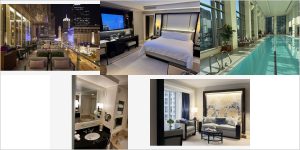
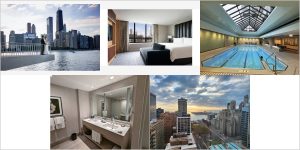
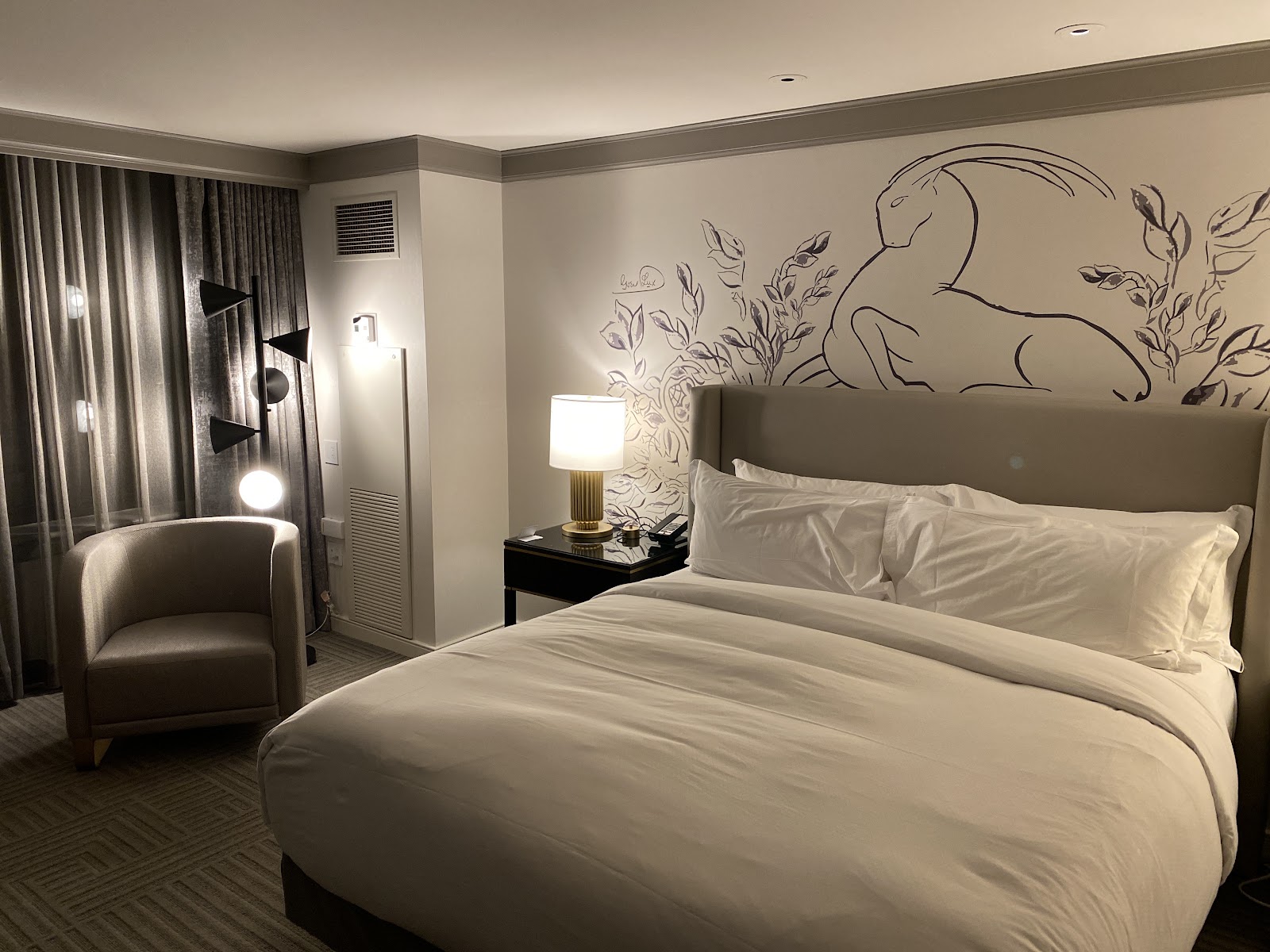
Inside, the hotel is a contemporary interior in a period shell, which brings the mixed-vocabulary question: period exterior, modern rooms. The practical resolution is the same as at any renovated building — let one register lead and use the other deliberately. Here the exterior carries the location and the interiors carry the preparation and detail work, which divides cleanly by time of day and needs no negotiation.
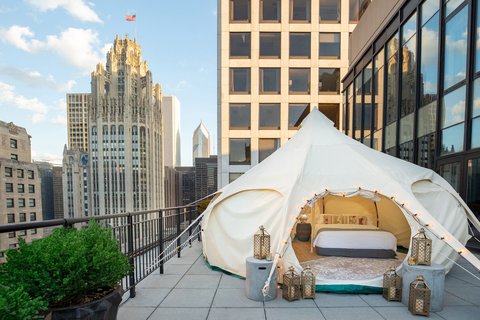
The upper terrace is the venue’s other asset and it solves a problem the street creates. At height there are no pedestrians, no traffic and no bins, the horizon drops, and you get sky — which is where evening colour lives. A terrace frame in the last half hour of light, with the Michigan Avenue towers around and above, is the natural companion to the raking-light facade frame at ground level. Between those two the gallery has both the building and the city in it, which is more than most downtown hotels manage.
What works in your favour
- Sculpted limestone relief, a subject almost no other venue offers
- Night uplighting rakes the carving from below, often better than daylight
- An upper terrace with no pedestrians, traffic or street clutter
- A Michigan Avenue address with everything walkable
- Modern interiors that suit preparation and detail coverage cleanly
What to plan around
- Relief disappears entirely under frontal or overcast light
- The good hour is fixed by the facade’s orientation, not by choice
- One of the busiest pavements in the country at the base of the building
- Carving competes with faces unless placement is deliberate
- A flash on the camera axis will erase the carving completely
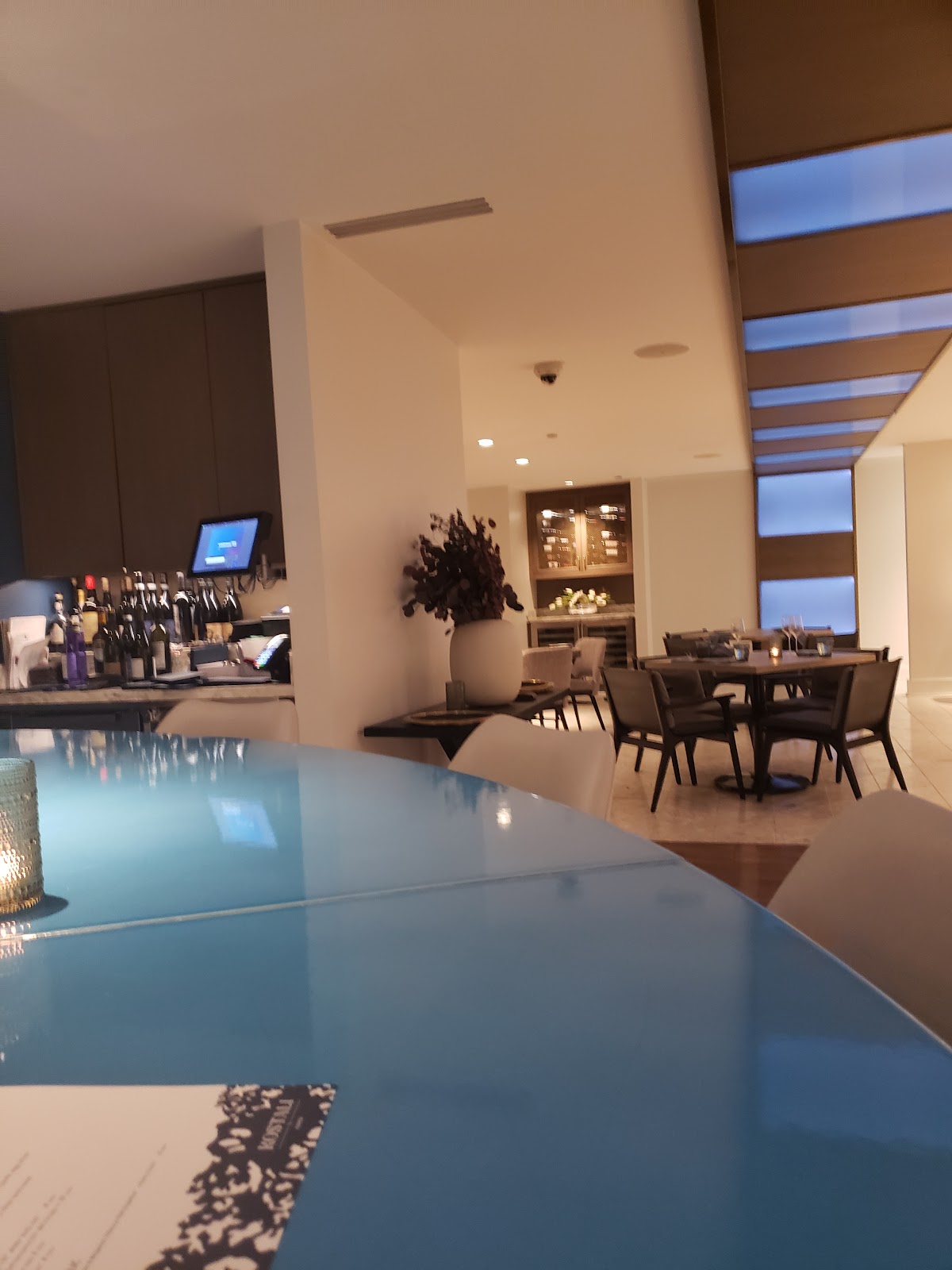
More frames from The Gwen
The Gwen wedding photography: common questions
Why does the carved stone look flat in my photos?
Because the light is hitting it frontally. Relief only reads as form when light rakes across it at a low angle and each cut casts a small shadow. Frontal sun, or a flash from the camera position, eliminates those shadows and the carving becomes a grey wall.
When is the best time to photograph the facade?
Whenever the sun is low and running along the street rather than striking the wall face-on — which end of the day that is depends entirely on orientation, so establish it on a site visit. Getting it wrong means the building’s signature feature photographs as a blank.
Is an overcast day easier or harder?
Harder, for the stone. Soft even light is kind to faces and ruinous to carving, because it removes the directional shadow the relief depends on. On a grey day the carving reads weakly and the frame should be built on something else.
Where should the couple stand?
Offset to one side with a clean run of carving filling the other half, or small in the frame with the elevation rising above them. And two metres off the wall rather than against it, so a wide aperture lets the stone soften and recede instead of competing.
Can you use flash at the facade?
Only off to the side, on the same side the natural light is coming from, so it reinforces the existing shadow direction. A flash on the camera axis will flatten the carving even if the sun was raking it beautifully a moment earlier.
Is the night version worth doing?
Often it is the strongest frame. If the building’s own uplighting washes the facade from below, that light rakes upward across every cut and renders the relief dramatically — frequently better than daylight, and with an empty pavement as a bonus.
More Chicago, IL venue guides
We are writing a photographer’s guide to every venue we would happily shoot in Chicago, IL. Here are three more, plus the full index:
- The Hoxton Chicago: Photographing a Wedding in Fulton Market
- The Langham Chicago: Photographing Inside a Modernist Building
- The Peninsula Chicago: Photographing Pale, Tonal Luxury
All Chicago, IL Wedding Venues →
Planning a wedding at The Gwen?
Carved stone has one good hour and it depends which way the wall faces. Tell us your date and we will find it before the day.