 The Hoxton Chicago: Photographing a Wedding in Fulton Market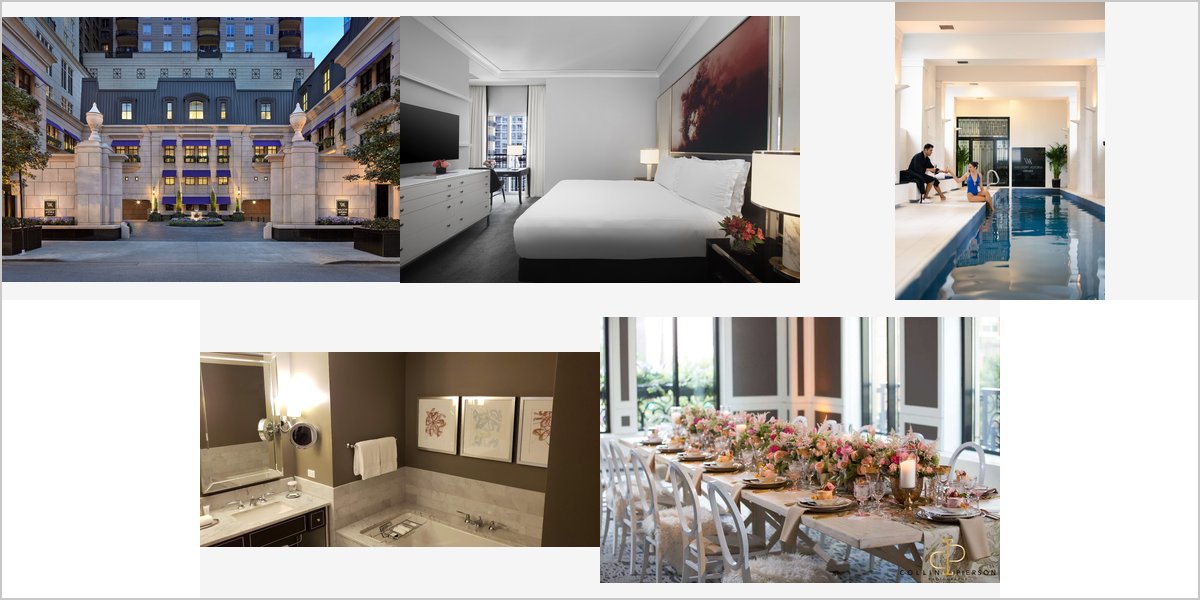
August 23, 2026
The Waldorf Astoria Chicago: A Walled Courtyard in a City
A private courtyard removes every crowd problem a downtown wedding has. It also removes most of your sky.
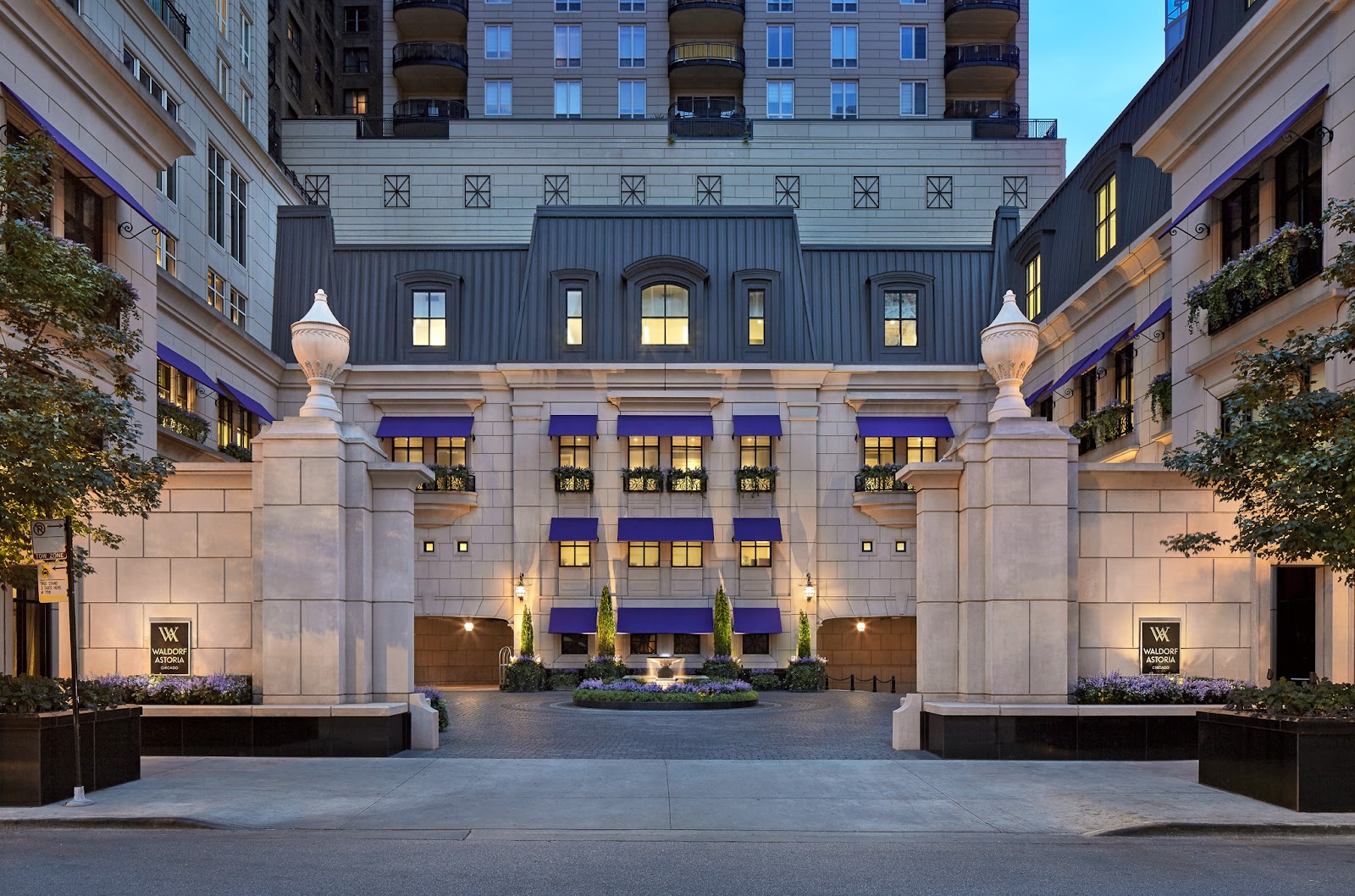
The Waldorf Astoria Chicago stands in the Gold Coast, a few streets back from the Magnificent Mile, a hotel in a French-influenced register whose entrance is through a private walled courtyard rather than off the pavement.
That courtyard is the decision this venue turns on. In a downtown wedding, the single most persistent practical problem is that outdoor space is public — every exterior frame contains strangers, traffic and street furniture, and every portrait block is a crowd-management exercise. A private walled courtyard removes that problem entirely: it is outdoor space that belongs to the event, with no passers-by, no traffic and nothing in the background that has not been chosen.
What it takes in exchange is sky and sun. A courtyard is a room with walls on all sides and a building above, and that changes the light fundamentally. The choice is whether to build the outdoor coverage around the courtyard’s enclosed light or to leave the courtyard for the sheltered frames and go out to the Gold Coast streets for open light. This is about that fork. We have not photographed a wedding here; enclosed urban courtyards behave the same anywhere. Which rooms and what courtyard access a wedding has are questions for their events team.
The Waldorf Astoria Chicago at a glance
| Where | The Gold Coast, Chicago, Illinois |
| Character | French-influenced hotel entered through a private walled courtyard |
| The gift | Outdoor space with no public in it — rare in any downtown |
| The cost | Walls and a building above take away sky and direct sun |
| The other option | Gold Coast streets — brownstones, mature trees, open light |
What an enclosed courtyard does to light
A courtyard with walls on four sides receives light through the opening above, which makes it behave like an enormous overhead softbox — soft, even, directionless, and coming from straight down. That has one very good consequence and one bad one. The good: there are no hard shadows anywhere, groups light evenly front to back, and the light is identical at every position in the space, which makes it exceptionally easy to work in quickly.
The bad: light from directly above shadows the eye sockets and marks the shadow under the nose and chin, which is the least flattering direction there is. A courtyard at midday is a beautiful even room in which everyone has dark eyes. Left uncorrected it is the characteristic flaw of courtyard photography and it is easy to miss on a small screen.
The corrections are simple and cheap. A reflector on the ground or held low bounces a little light back up into the face and fills the sockets, which is often all that is needed. A pose with the chin lifted and the face turned upward into the light does the same thing with no equipment. Or use a source of your own at face height, which overrides the geometry entirely.
Courtyard walls also throw colour. Pale stone bounces neutral and is a help; warm render, brick or painted surfaces bounce their own colour onto skin from the sides, which needs a custom white balance in the space. And if the walls are substantially glazed, they become large reflectors of sky, which is cooler than the overhead light and gives a subtle cross-cast worth being aware of.
One more effect that is specific to a courtyard in a city: for a brief window each day, direct sun clears the roofline and drops into the space, producing an intense shaft with hard edges in an otherwise soft room. That moment is dramatic and brief and its timing depends entirely on the courtyard’s orientation and the height of the surrounding building. Establishing it on a site visit at the ceremony hour is worth more than any other preparation here.
Building the day around the courtyard
If the courtyard is the outdoor venue, the day becomes remarkably low-risk. Soft even light all day means no bad hour, no scheduling around the sun and no weather anxiety beyond actual rain — and even rain is manageable, because the walls provide shelter at the edges and the building above provides overhangs.
That reliability is worth a great deal at a city wedding. It means the portrait block can be moved without consequence, which is exactly what a running order needs when the day slips, and it means group photographs can happen at any point with consistent results. For couples who want a wedding that photographs well without the timeline being an instrument of precision, this is the strongest argument the venue has.
It also means privacy in a place where privacy is scarce. A first look, a quiet moment, a few minutes alone between the ceremony and the reception — all of these are genuinely possible in a walled courtyard and effectively impossible on Michigan Avenue. Those are the frames couples value most and the ones downtown venues most often cannot deliver.
The limitation to acknowledge is variety. A courtyard is one space with one light, and a gallery made mostly there will be consistent to the point of sameness. It needs the interiors and a street block to give it range, which is the argument for the other branch of the fork.
What works in your favour
- Outdoor space with no public, traffic or street furniture in it
- Soft even light all day, so no bad hour and no scheduling pressure
- Genuine privacy for a first look or a quiet moment
- Sheltered edges and overhangs make it workable in rain
- Gold Coast brownstones and mature trees a short walk away
What to plan around
- Overhead light shadows eye sockets and needs a bounce or a lifted chin
- Walls bounce their own colour onto skin from the sides
- One space with one light, so a courtyard-heavy gallery lacks range
- Direct sun clears the roofline only briefly, on a fixed schedule
- Very little sky in frame, which removes sunset colour entirely
The other branch: the Gold Coast streets
The Gold Coast is one of the better residential districts in the city to photograph in, and it is a short walk. Brownstone and greystone terraces, mature street trees, ironwork, stone stoops and low-rise streets give you architecture at a human scale with open sky above — everything the courtyard does not have.
The specific asset is the combination of low buildings and mature trees. Because the streets are residential and not towered, low evening sun reaches street level and comes in under the tree canopy horizontally, backlighting leaves and putting rim light on hair. That is the frame the courtyard cannot produce, and it is available only in the last hour.
It is also quiet in a way that downtown never is. A residential street has residents on it rather than crowds, which means a portrait block genuinely works without crowd management — a rare combination of open light and near-privacy. The etiquette is to be unobtrusive: these are people’s homes, so working briefly and quietly on the pavement is the right approach rather than setting up an installation.
The sensible structure, then, uses both branches for what each does. Interiors and preparation through the middle of the day. The courtyard for groups, the ceremony and any private moments, at whatever time the running order dictates, because it does not matter. And the Gold Coast streets in the last hour of light for the couple portraits that need sky, backlight and a sense of place. That sequence uses the venue’s reliability where reliability matters and goes to find the drama where drama lives.
One practical note about the courtyard specifically: because it is enclosed and paved, sound reflects, and a ceremony in there is acoustically live. That is a coordinator’s problem rather than a photographer’s, but it affects where people are placed, and where people are placed is a photographer’s problem.
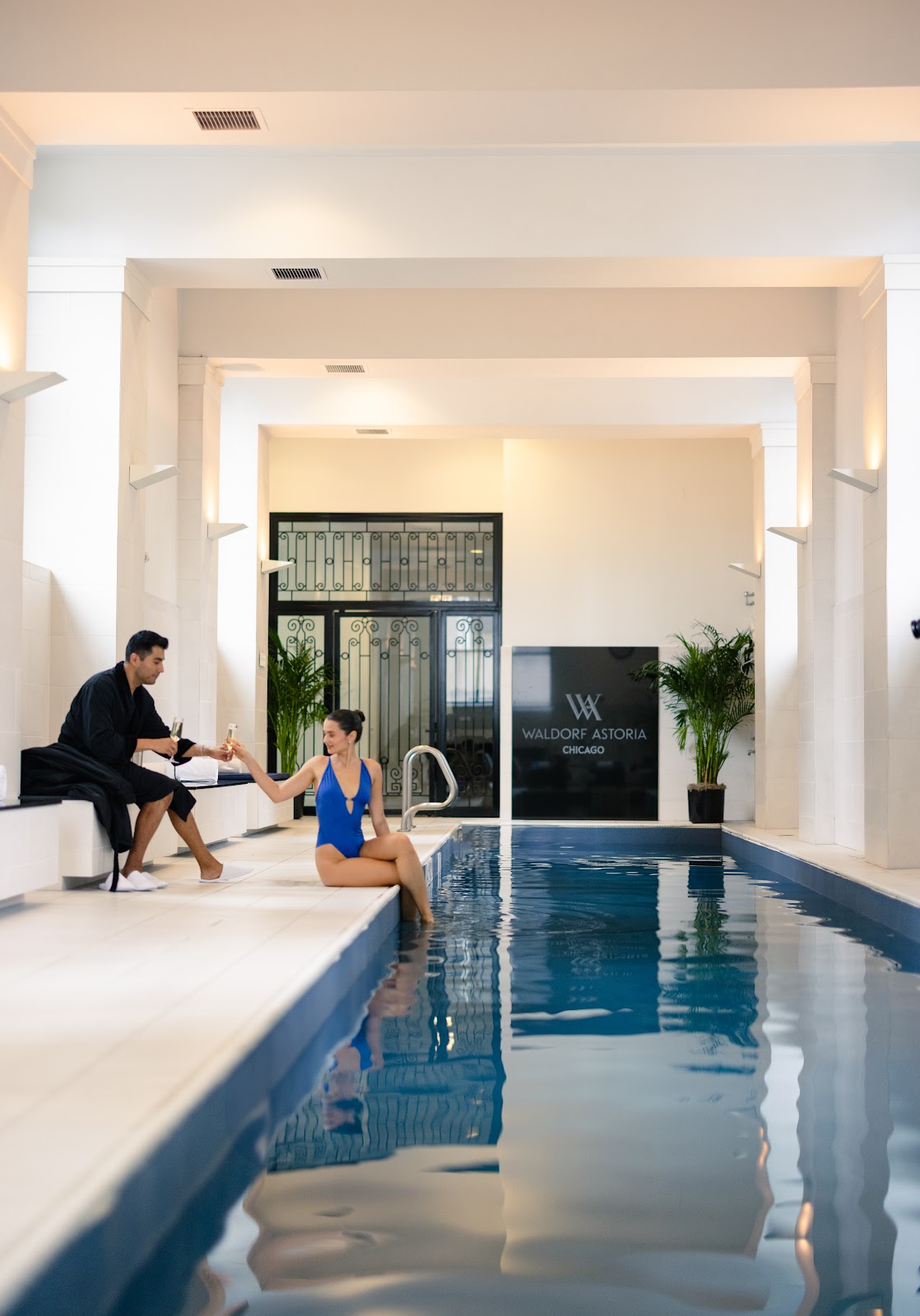
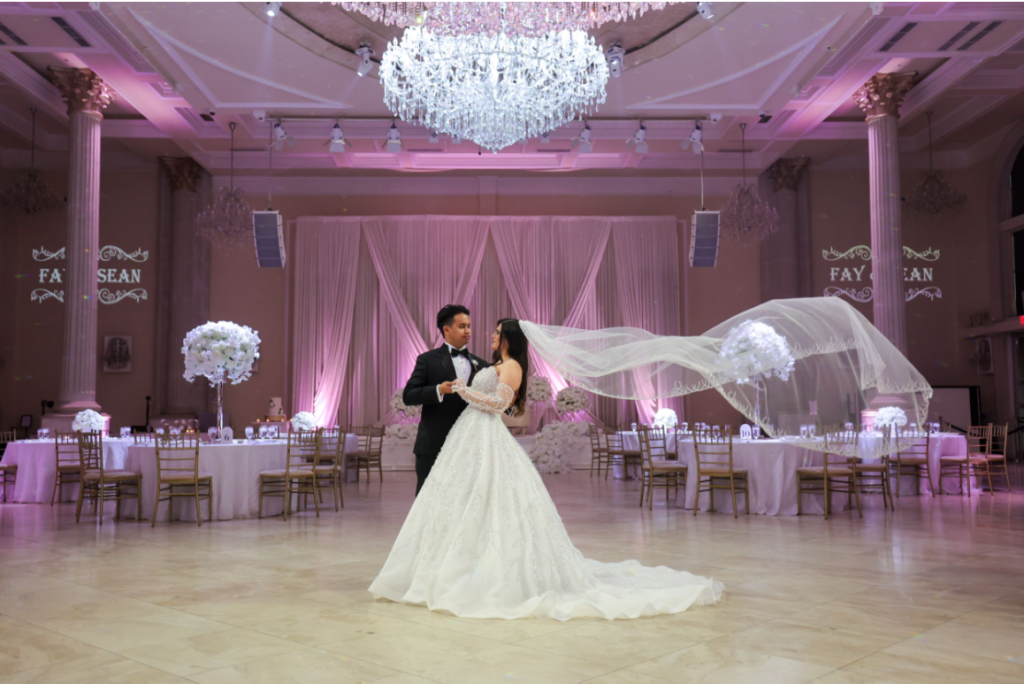
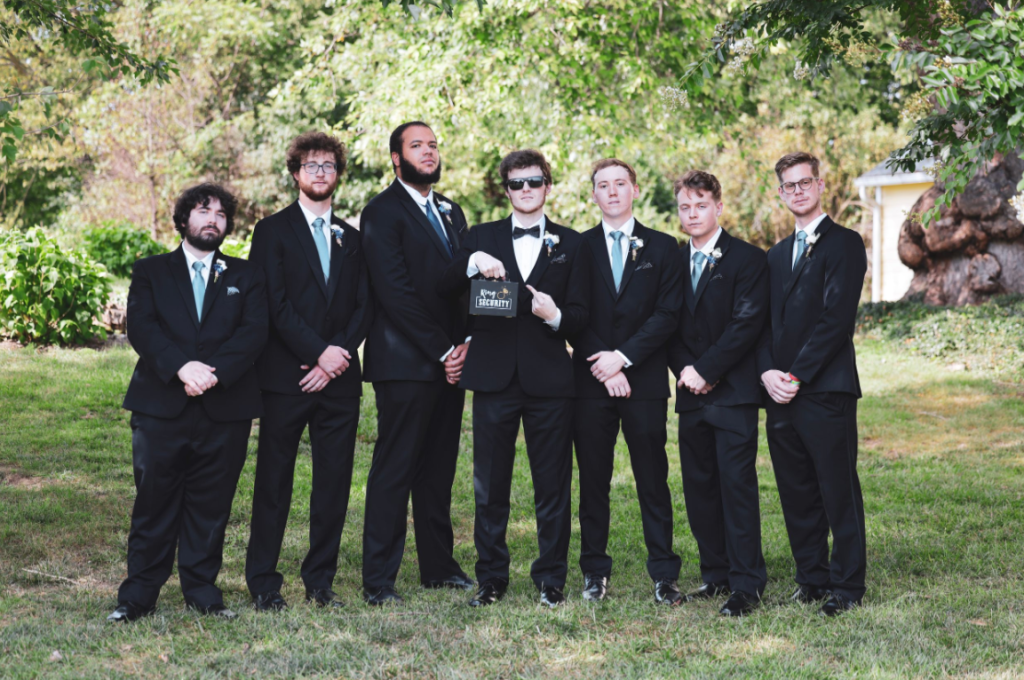
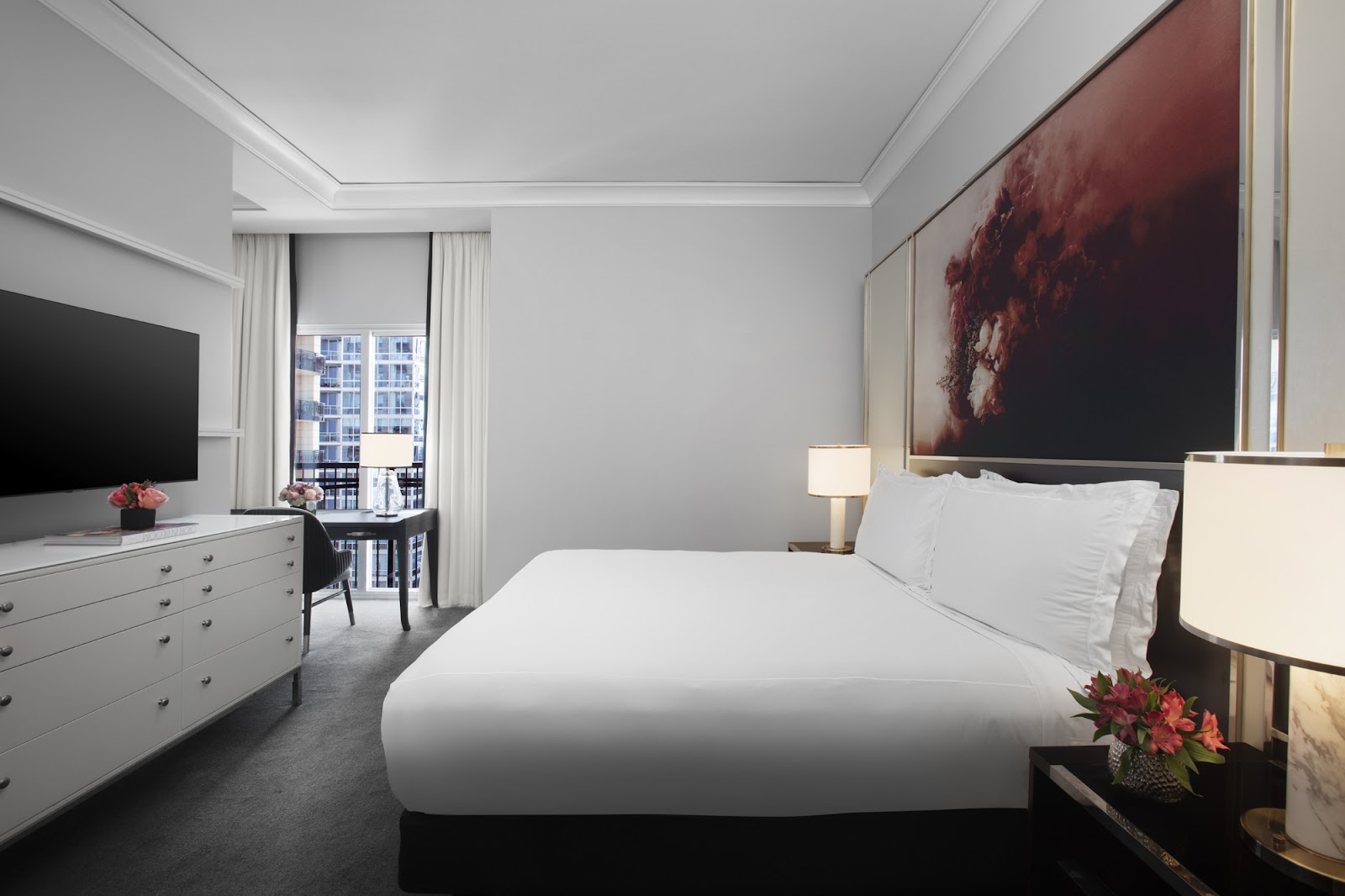
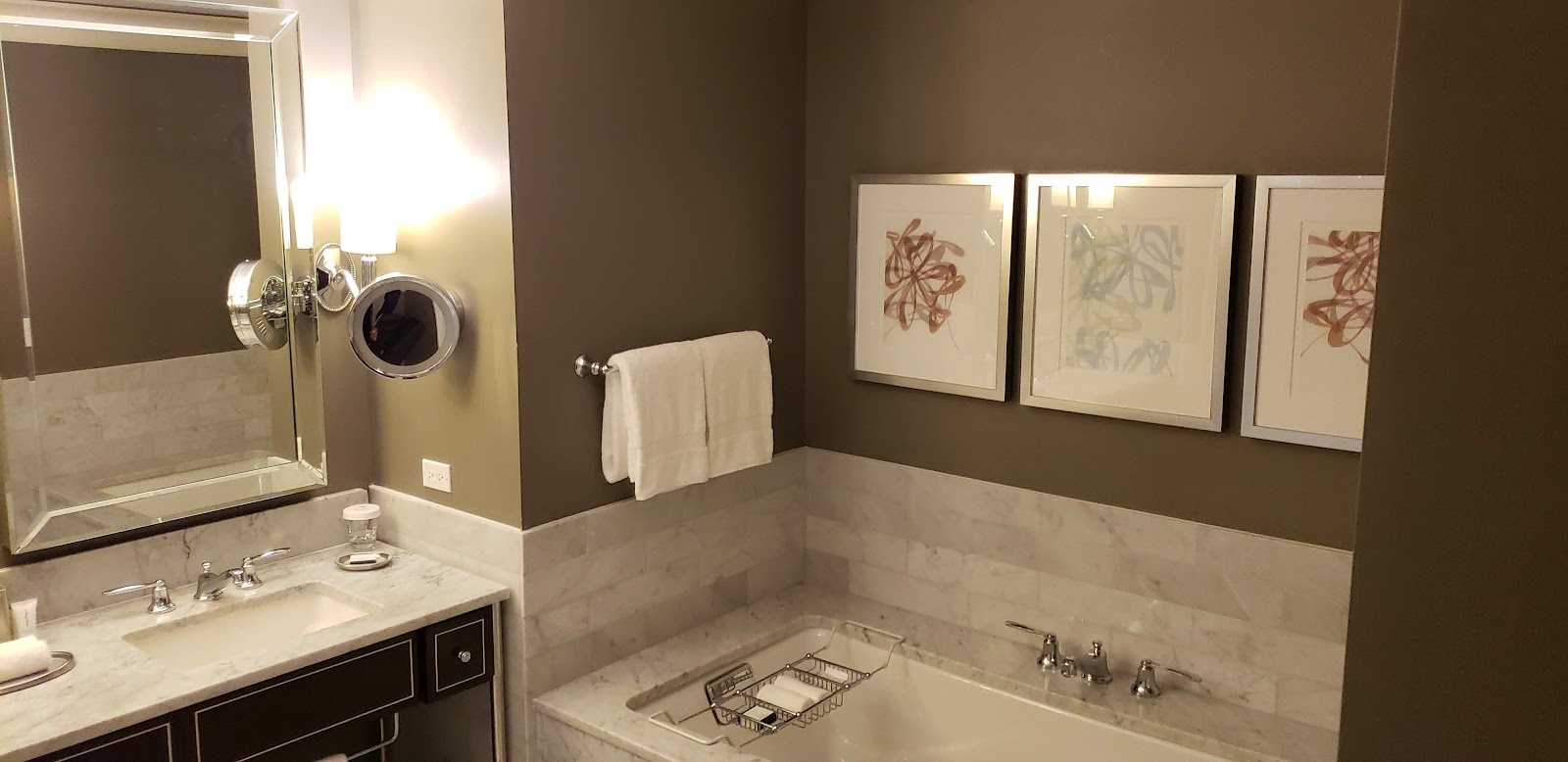
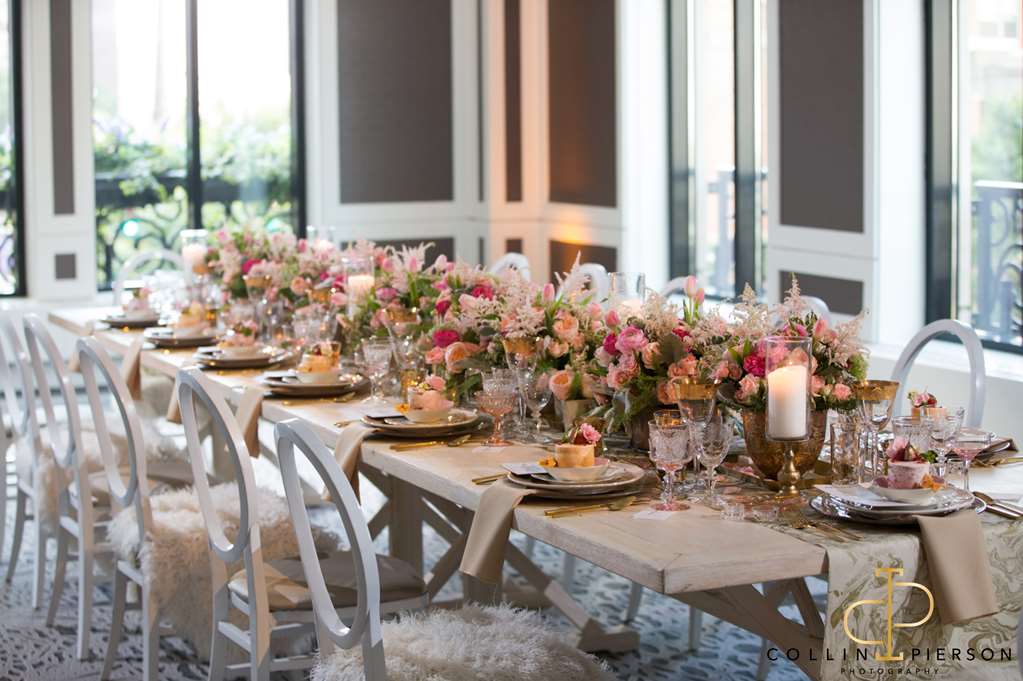
More frames from The Waldorf Astoria Chicago
The Waldorf Astoria Chicago wedding photography: common questions
Why do people have dark eyes in courtyard photographs?
Because a walled courtyard lights from directly overhead, and overhead light shadows the eye sockets and marks the shadow under nose and chin. A reflector held low, or simply a lifted chin with the face turned up into the light, fixes it at no cost.
What is the advantage of a private courtyard downtown?
It removes the single most persistent problem of a city wedding: that outdoor space is public. No passers-by, no traffic, nothing in the background that was not chosen — and genuine privacy for a first look or a quiet moment, which Michigan Avenue cannot give.
Does the timeline matter in a courtyard?
Much less than elsewhere, which is the point. Soft even light all day means no bad hour and no scheduling around the sun, so the portrait block can move when the day slips without any cost to the photographs. That reliability is worth a lot at a city wedding.
What is the catch?
Sky and variety. Walls and the building above remove most of the sky, which removes sunset colour entirely, and a courtyard is one space with one light — so a gallery weighted towards it becomes consistent to the point of sameness. It needs the interiors and a street block for range.
Does direct sun ever reach the courtyard?
Briefly, when it clears the roofline, producing a hard-edged shaft in an otherwise soft room. The timing depends on the courtyard’s orientation and the height of the building above, so it is worth establishing on a site visit at the ceremony hour.
What do the Gold Coast streets add?
Everything the courtyard lacks. Low residential buildings and mature trees mean evening sun reaches street level and comes in under the canopy, backlighting leaves — with brownstones, ironwork and stoops for architecture, and residents rather than crowds.
More Chicago, IL venue guides
We are writing a photographer’s guide to every venue we would happily shoot in Chicago, IL. Here are three more, plus the full index:
- The Willis Tower Skydeck: Field Notes on Glass at 1,350 Feet
- The Adler Planetarium: One Decision Governs the Whole Day
- The Art Institute of Chicago: Reading a Museum Hour by Hour
All Chicago, IL Wedding Venues →
Planning a wedding at The Waldorf Astoria Chicago?
A private courtyard makes the day reliable and the street makes it beautiful. Tell us your date and we will use both for what each does best.