 The Whitby, New York: A Walk Through a Midtown Hotel
The McKittrick Hotel, New York: Field Notes on a Deliberately Dark Venue
Dark wood and velvet are chosen to absorb light. That is the effect working, and it is the whole problem.
The indoor spaces, with their dark wood and velvet accents, provide a rich textural backdrop ideal for detailed shots — from the lace of a gown to the sparkle of champagne glasses, as the venue’s own description has it.
That is an accurate description and it names the materials that create the problem. Dark timber and velvet are the two most absorbent surfaces a venue can have: velvet in particular is engineered to absorb rather than reflect, which is why it looks deep and rich to the eye and why it returns almost nothing to a camera. A room finished in both is not merely dim but structurally dim — the level is low because the surfaces refuse to give light back, and no amount of adding fittings changes that much.
It is also, as the description says, excellent for detail. A dark absorbent background makes a small bright object — lace, glass, a ring, a face — separate absolutely, which is free and dramatic and unavailable in a pale room.
So the venue is a set of specific problems with specific answers, and a rooftop above them that follows entirely different rules. These are field notes. We have not photographed a wedding at the McKittrick; deliberately dark theatrical venues behave consistently. Which spaces are included, whether the rooftop is exclusive and at what hour, whether the house lighting is adjustable, and what may be attached to fabric are the questions for their team.
The McKittrick Hotel at a glance
| Where | New York, New York |
| Character | Dark wood and velvet interiors with rooftop space above |
| The condition | Surfaces chosen to absorb, so the room is structurally dim |
| The gift | Absolute separation for anything small and bright |
| Ask first | Spaces included, rooftop access and hour, lighting control, fixings |
What you meet, and what each one needs
Absorption is the first condition and its consequences are mechanical. Usable room light is mostly bounced light, and in a room where the surfaces absorb there is almost none — so the ambient is far below what the fitting count suggests, bounce flash returns essentially nothing, and every source must be direct and modified. Test bounce with one frame on arrival to confirm rather than to hope.
The compensation is steep fall-off and it is genuinely valuable: a subject three metres in front of anything else sits against natural darkness with no equipment at all. In a velvet room that fall-off is steeper than anywhere else in this series, which means separation is free and dramatic — and it is the reason the venue is so good for detail.
Detail work is the second condition and it is worth planning deliberately rather than treating as filler. Against dark absorbent fabric, a small bright object reads with absolute clarity: lace, glassware, rings, flowers, a hand. One small source, close and modified, at a shallow angle so the texture of the fabric behind still reads rather than going flat black, is the whole technique — and at this venue it produces the frames the description promises.
Texture is the third condition and it needs raking light like any material. Dark timber shows grain and mouldings only when light runs along it; velvet shows its pile only when light crosses it at a shallow angle, which is why a velvet chair lit from the front looks like a black shape and lit from the side looks like velvet. That is a specific and useful distinction: velvet is the one material where the angle matters more than the level.
Colour is the fourth. Dark timber bounces warm, velvet bounces its own colour — deep red, green or blue as the case may be — and both casts are localised, so global white balance cannot separate them from a subject. Let one gelled source be the authority on faces, with white balance set to it, and allow the room to be as coloured as it is.
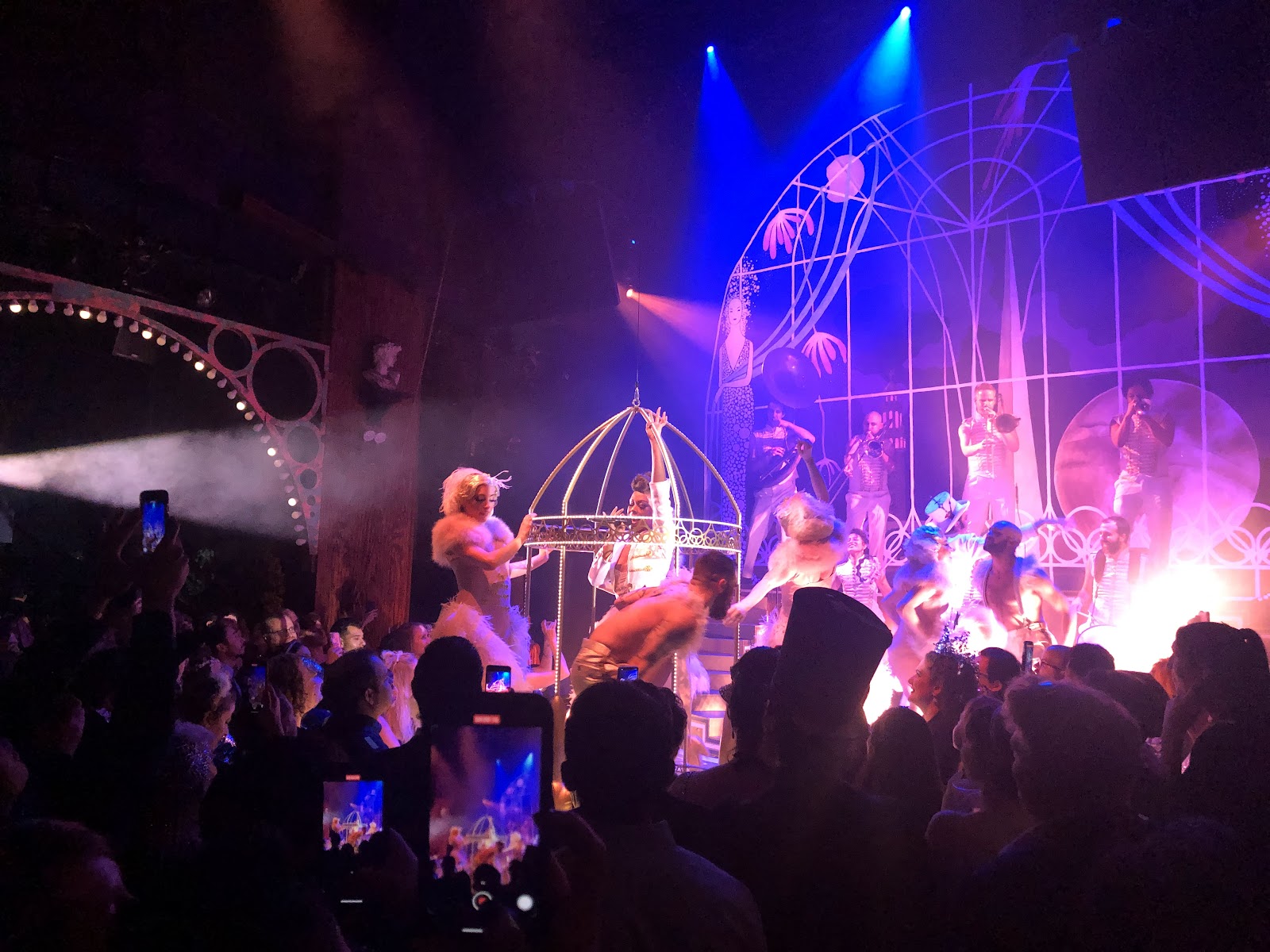
And theatrical lighting is the fifth, because a venue of this character usually has some. Coloured and directional lighting installed for atmosphere is not portrait lighting: a saturated wash renders skin unrecoverably in its own colour, and two coloured sources on one face have no single correction. Under one, commit to shape and silhouette deliberately, or add a neutral source on the faces and let the wash light the room behind.
The most valuable request is whether any of the house lighting can be adjusted or raised plain for a few minutes before guests arrive — which in a room designed for atmosphere is the only chance to see the architecture rather than the effect.
The rooftop, and the shape of the day
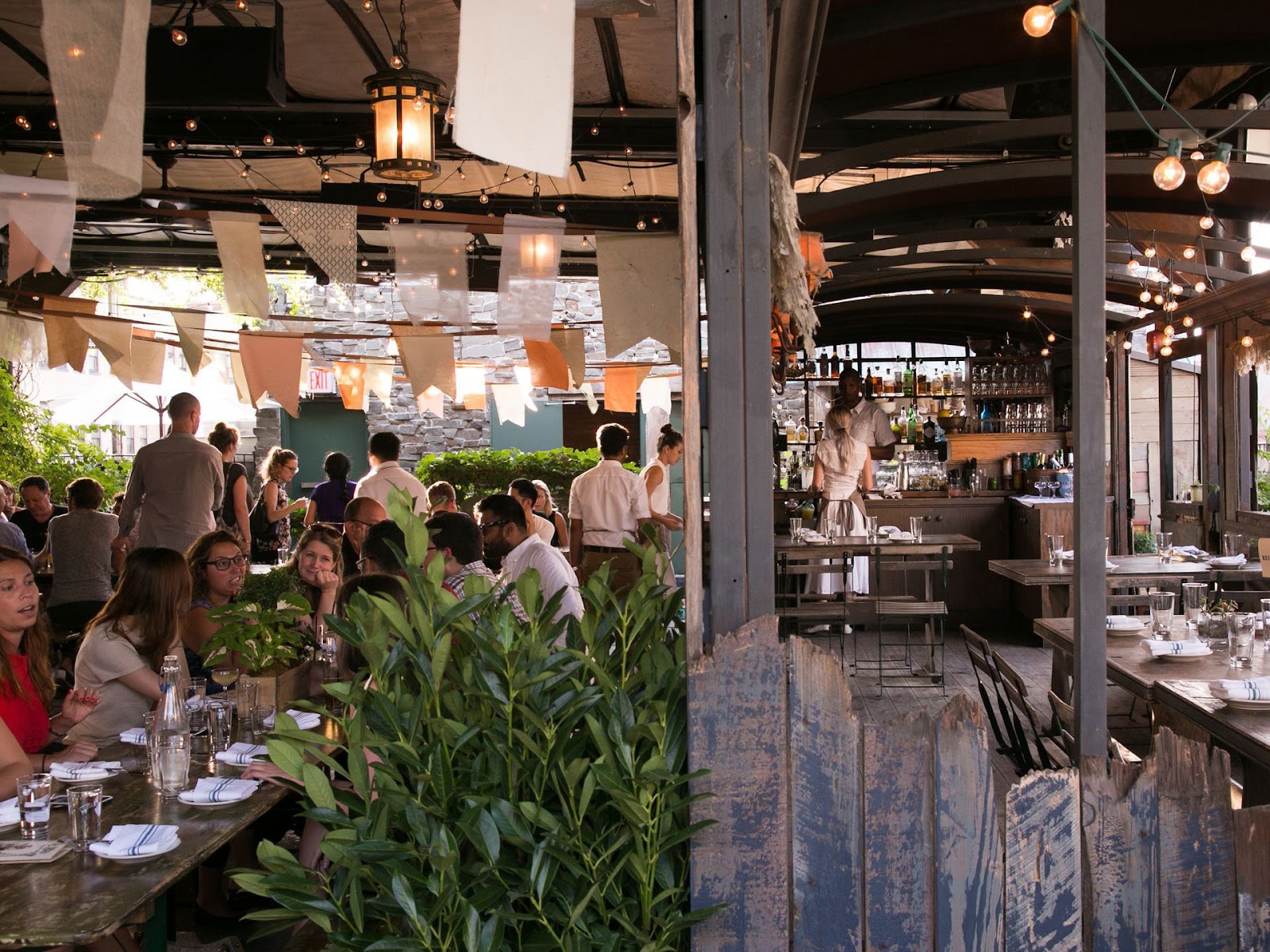
A rooftop above a dark interior is the sharpest contrast in this whole series, and it follows outdoor rules entirely. Nothing bounces, so every source is direct. The ambient after dark is close to zero, because a roof has no reflecting surfaces and no spill from windows. And the good light is confined to two narrow windows rather than spread across an afternoon.
The first is the last forty minutes of daylight, and on a roof it starts earlier than at street level because the surrounding roofline is below — thirty extra minutes worth building into the schedule. Long lenses matter, because compression brings the city close behind a couple where a wide lens reduces it to a strip under a large empty sky; and a low camera puts decking or parapet into the frame as a leading line and lifts the couple against sky.
The second is roughly twenty minutes after sunset, and it is the frame the roof exists for: the couple, the city and a sky still holding colour in one exposure, with one warm-gelled source at face height about a stop under the sky, or they silhouette. Sunset plus fifteen, in position, couple already there, bracketed as the sky falls.
Rooftop wind is stronger and gustier than at street level, so a veil becomes a held-or-removed decision and any stand needs a sandbag rather than an intention.
The running order follows from the asymmetry. The interior does not change at all through the day, so it can be photographed whenever; the roof has two windows and neither can be moved. That makes the roof the fixed points and everything else the filler — which is the reverse of how most schedules are built, and worth agreeing in advance.
In a New York summer the crossing falls late enough to land well into the reception, which needs agreeing as a short deliberate excursion. In winter it falls in the middle of the afternoon and the roof itself may be a two-minute proposition in the cold, which means the frame must be ready before anyone goes out.
And moving between a warm dark interior and a cold roof fogs a lens comprehensively in both directions — which at a venue whose one unmissable frame is outdoors is a real risk. Get a body to ambient temperature well before the window rather than carrying it up cold.
- Assume no bounce; velvet returns less than any other surface
- Light detail small and close, at a shallow angle so the fabric still reads
- Rake velvet rather than facing it; angle matters more than level
- Under a coloured wash: commit to shape, or add neutral light on faces
- Build the schedule around the roof’s two windows; the interior can wait
Outside, and New York's year
At street level New York imposes the constraint that defines it: there is no room to stand back, so a facade cannot be photographed whole and the exterior frames are fragments, details and looking up rather than establishing views. At a venue of this character that suits rather than limits, because the register is close and dark anyway.
Manhattan’s street grid is rotated about twenty-nine degrees from true north, which means the cross streets run roughly east-north-east to west-south-west, so low sun runs down their length while the avenues stay in shadow — with the alignment closest around the ends of May and the middle of July.
Most street-level light here is bounced down from lit facades above rather than direct, which is soft, directional and available for much of the day. It is genuinely good portrait light and it is not golden-hour light, and saying so in advance saves a conversation afterwards.
Recessed doorways and awnings are the small-scale assets: a roof above with walls to the sides and one open face makes a directional soft source at exactly the right size for two people, and it works in rain.
New York’s seasons are four real ones. Summer is hot and humid with afternoon thunderstorms a real possibility — for the interior that is irrelevant, and for the roof it needs a fallback with a capacity and a decision time. Autumn gives the clearest air and the best light of the year, and it is the season the roof is at its best in, with stable weather for a frame timed to the minute.
Winter is cold with short days, sunset in the middle of the afternoon in December, which moves the crossing early and may put it before the ceremony. Cold clear air gives the deepest and longest-lasting sky colour of the year, so the crossing itself is better then if anyone is willing to stand in it.
Snow is the compensation and it does something particular at a venue like this: snow on a roof with a lit city behind it is a frame very few venues can offer, and snow at street level is the best natural fill there is, fooling a meter by about two stops.
Indoors, snow makes almost no difference, because a room finished in dark timber and velvet has little daylight to improve — which is the one place in this series where the winter reflector effect does not apply. The interior is the same in February as in July, and that constancy is the thing to plan around.
More frames from The McKittrick Hotel
The McKittrick Hotel wedding photography: common questions
Why is velvet so difficult?
Because it is engineered to absorb rather than reflect, which is why it looks deep and rich to the eye and returns almost nothing to a camera. A room finished in it is structurally dim.
What does that give you?
Absolute separation. A small bright object — lace, glass, a ring, a face — reads with total clarity against dark absorbent fabric, which is free and unavailable in a pale room.
How do you photograph velvet itself?
By raking it. Velvet shows its pile only when light crosses it at a shallow angle — lit from the front it is a black shape, lit from the side it is velvet. Angle matters more than level.
What about theatrical lighting?
Treat it as an effect. A saturated wash renders skin unrecoverably in its own colour, so commit to shape and silhouette or add a neutral source on the faces.
How should the schedule be built?
Around the roof’s two windows, because the interior does not change at all and neither roof window can be moved. That is the reverse of how most schedules are built.
Does winter change the interior?
No, and that is unusual. A room of dark timber and velvet has little daylight to improve, so it is the same in February as in July — and that constancy is what to plan around.
More New York venue guides
We are writing a photographer’s guide to every venue we would happily shoot in New York. Here are three more, plus the full index:
- The Metropolitan Museum of Art: Photographing a Very Large Museum
- The New York Botanical Garden: Four Ways Out of the Scale Problem
- The New York Public Library: Photographing a Building Made of Marble
Planning a wedding at The McKittrick Hotel?
Build the day around the roof’s two windows. Tell us your date and we will time them.