 The Hoxton Chicago: Photographing a Wedding in Fulton Market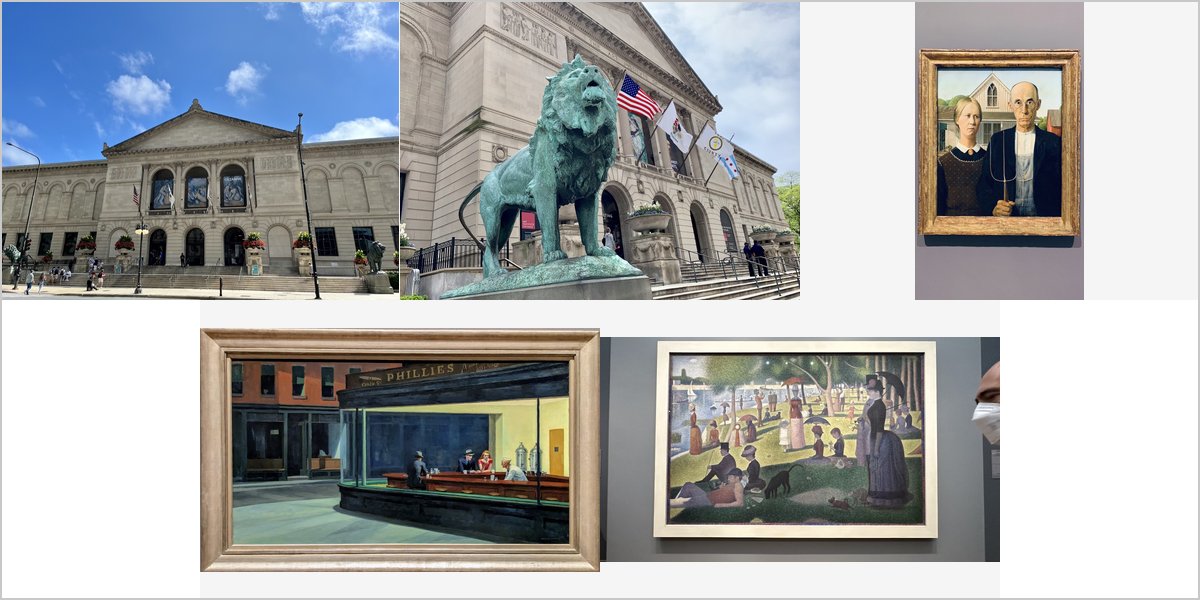
July 24, 2026
The Art Institute of Chicago: Reading a Museum Hour by Hour
Three different buildings in one institution, each with its own light. Knowing which is good when is the entire job here.
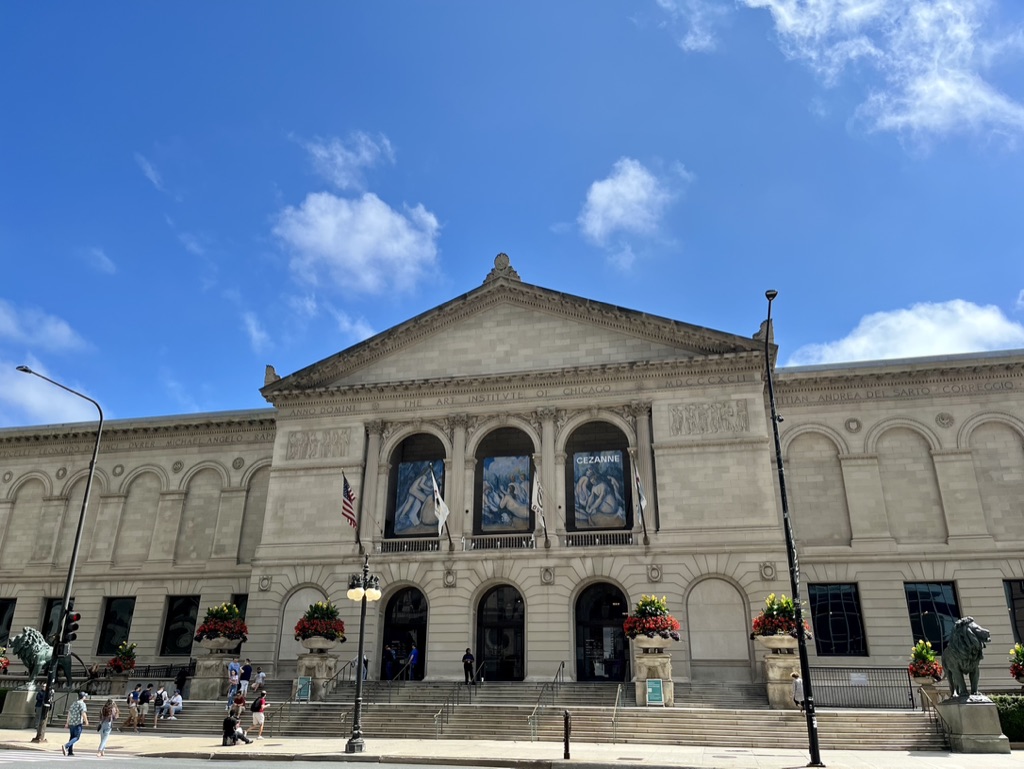
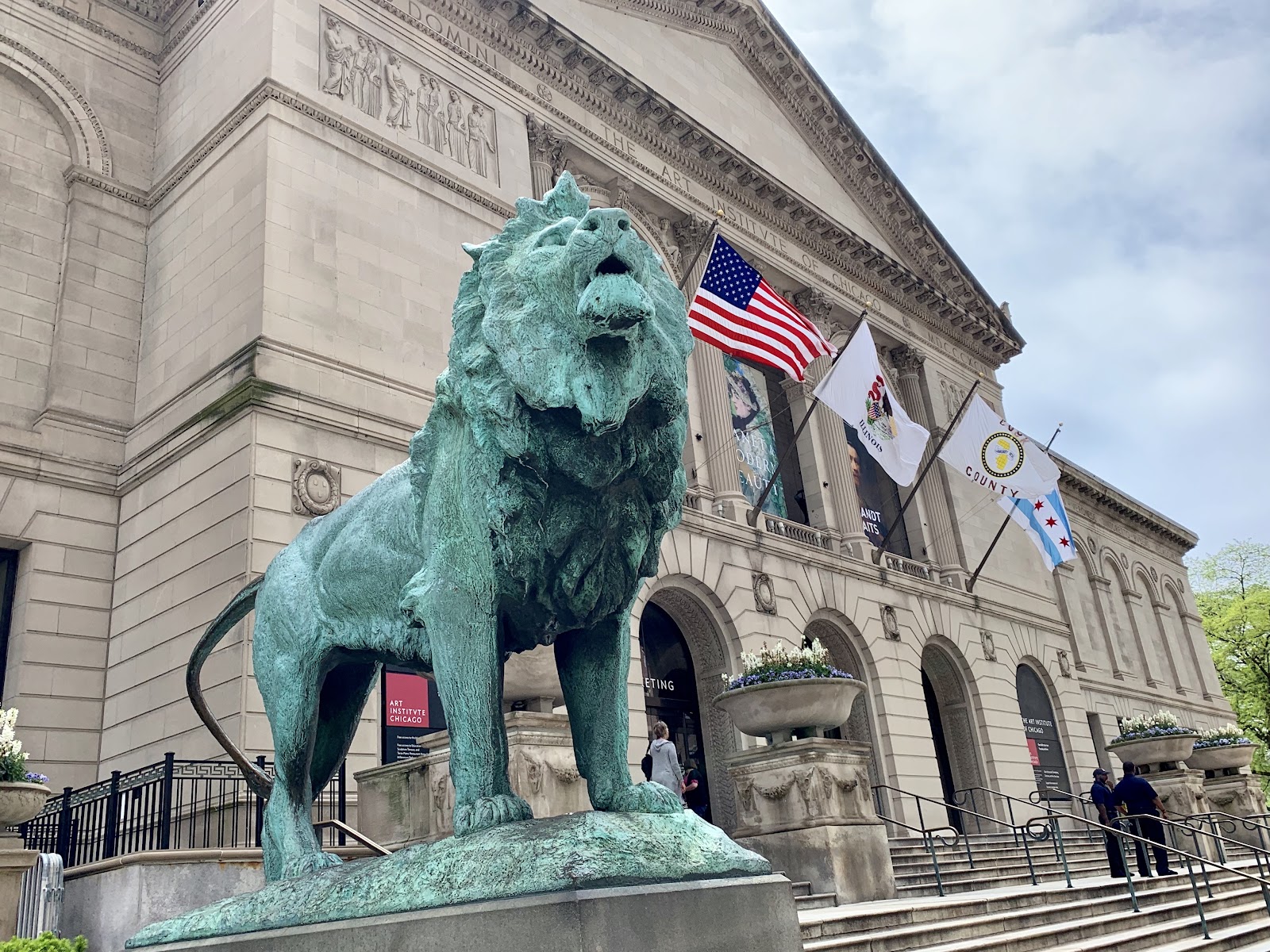
The Art Institute of Chicago fronts Michigan Avenue at Adams Street, a Beaux-Arts building of 1893 with classical stone, a grand staircase and bronze lions at the door. Behind and beside it are two quite different structures: the walled South Garden with its reflecting pools and honey locust trees, and the later glass-and-steel wing whose upper galleries are roofed in light.
That variety is the venue’s strength and the reason a plan matters. A stone Beaux-Arts hall, a walled garden and a glass-roofed modern gallery are three separate lighting problems that happen to share an address, and each is good at a different hour. Work them in the wrong order and you spend the afternoon fighting conditions that would have been easy two hours either side.
So this walks the day through, room by room and hour by hour. We have not photographed a wedding at the Art Institute; stone interiors, walled gardens and glass roofs behave the same anywhere. Which spaces host events, what the gallery rules are and whether the garden is available are questions for their events team — and gallery rules matter more here than at most venues.
The Art Institute of Chicago at a glance
| Where | Michigan Avenue at Adams Street, Chicago, Illinois |
| Character | 1893 Beaux-Arts stone, a walled garden, and a modern glass wing |
| Morning | The South Garden, before the sun clears the surrounding walls |
| Midday | The glass-roofed galleries, when a hard sun becomes a huge softbox |
| Ask first | Gallery photography rules — they vary by room and by loan |
Morning: the walled garden, while the walls still help
The South Garden is enclosed on its sides, planted with honey locusts and set with a reflecting pool. Early in the day the surrounding walls and the building itself keep direct sun off the whole space, which makes it a large open-shade room with a sky-blue fill from above and a bright warm rim on the tops of the trees. That is the single best light the venue offers for groups, and it is available for about the first two hours only.
Honey locust is worth naming because of what its canopy does. The leaves are small and finely divided, so the shade it throws is light and broken rather than dense — which means less of the heavy green cast that a maple or a conifer would give you, and a more forgiving dapple if you do end up under it. It is an unusually photographer-friendly tree.
The reflecting pool is the compositional gift. Still water in a walled garden doubles the trees, the stone and the sky, and a couple placed at its edge gets a second version of themselves for free. Shoot low so the water occupies the lower third, and keep the far edge of the pool out of frame so it reads as depth rather than as a rectangle.
Midday: the glass wing, when everything else is at its worst
Midday is when most venues become unusable and this one becomes excellent, because a glass-roofed gallery converts the worst light of the day into the best. A hard overhead sun hitting a diffusing glass roof arrives as a vast, even, directionless source — the same physics as a softbox, at the scale of a room. Faces have no hard shadows, groups light evenly front to back, and you can work anywhere in the space rather than hunting for a patch.
It is also the light that shows a dress properly. Fine fabric, lace and beadwork need soft light from a large source to read as texture rather than as a white shape, and there is no better natural version of that than a diffused glass ceiling at noon. If there is one block to schedule deliberately, it is the dress-and-detail work under that roof at the middle of the day.
Two cautions. Glass roofs are usually paired with pale walls and floors, so the whole space is bright and your meter will want to darken it — expect to add a stop or more, exactly as you would for snow. And a modern gallery is visually spare, which means nothing in the frame supplies character; the light does all the work and the composition has to come from architecture, lines and gesture rather than from decor.
The gallery-rules question belongs here too. Museums commonly restrict tripods, flash and sometimes any photography in rooms holding loaned works, and those restrictions vary room to room and change with exhibitions. That is not an obstacle so much as something to establish in writing beforehand, because discovering it on the day rearranges the timeline at the worst possible moment.
What works in your favour
- A glass-roofed gallery turns midday sun into a room-sized softbox
- A walled garden with a reflecting pool that doubles everything
- Honey locust canopy gives light, finely broken shade with little green cast
- Beaux-Arts stone, grand stairs and columns for formal architectural frames
- Three genuinely different looks without leaving the address
What to plan around
- The garden’s good light lasts roughly two morning hours
- Gallery photography rules vary by room and change with loans
- Bright glass-wing interiors will fool a meter by a stop or more
- Modern galleries supply no character; light and lines must carry it
- A Michigan Avenue frontage means crowds in every exterior frame
Afternoon and evening: stone, stairs and the Michigan Avenue problem
The historic building is the afternoon and evening venue. Stone interiors with high ceilings and classical detail hold light differently from the glass wing: windows are punched openings rather than roofs, so the light is directional and falls off quickly, and the pale stone bounces enough to fill the shadow side without help. A couple placed three or four metres inside a tall window gets a soft directional key and a free fill off the opposite wall, which is close to studio light arriving for nothing.
The grand staircase is the obvious set piece and it works for the obvious reason: a stair is the only architectural element that arranges people at different heights automatically, which solves the row-behind-row problem that ruins most large group photographs. Put the group on the stair, get slightly above the front row, and the composition sorts itself out.
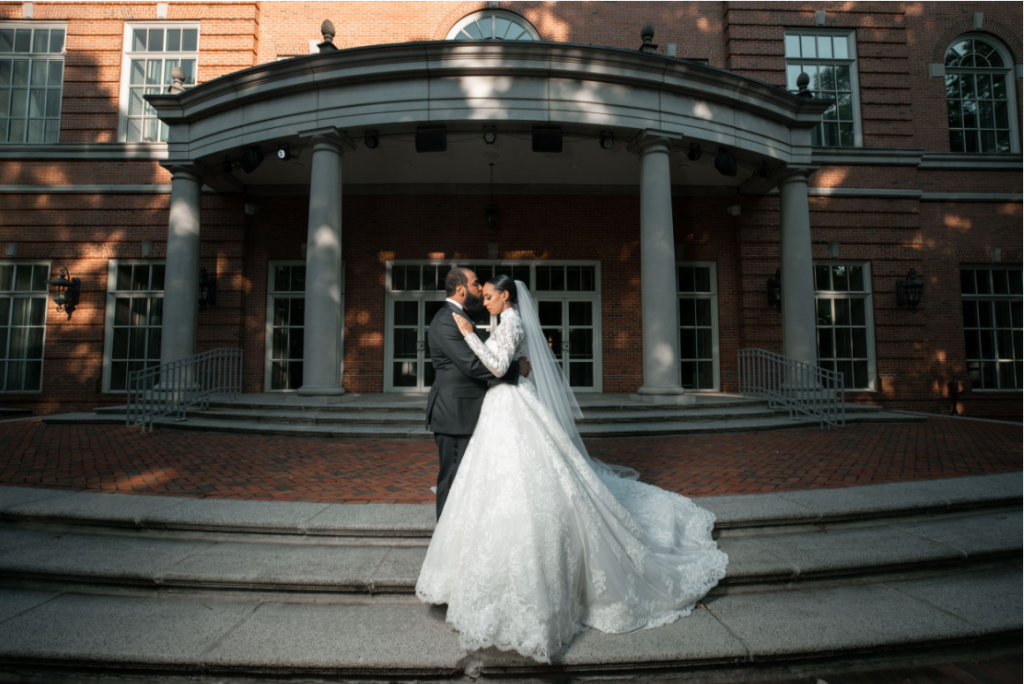
Outside on Michigan Avenue you have the lions, the classical facade and one of the busiest pavements in the city. The facade frames are worth having and they are a crowd-management exercise rather than a lighting one: shoot tight to exclude the street, shoot long to compress the passers-by into unreadable background, or shoot early enough in the morning that the pavement is still relatively empty. A wide lens on Michigan Avenue at four in the afternoon includes a bus.
As the light goes, the building’s own lighting takes over, and it is warm tungsten against cool blue windows — the standard mixed-source evening problem. Decide that your own light owns the faces and let the house fixtures be atmosphere, and the whole evening resolves. Trying to balance a tungsten hall against a blue window at dusk produces frames that are neither.
More frames from The Art Institute of Chicago
The Art Institute of Chicago wedding photography: common questions
What is the best time to use the South Garden?
The first two hours of the day, while the surrounding walls and the building still keep direct sun off the whole space. That gives you a large open-shade room with sky fill from above — the best light here for groups. Later the sun clears the walls and it becomes a contrast problem.
Is midday really a good time at this venue?
Yes, uniquely. A glass-roofed gallery turns a hard overhead sun into a vast even source, which is the same physics as a softbox at room scale. It is also the best light for the dress, because fine fabric and beadwork need a large soft source to read as texture.
Do museums let you photograph in the galleries?
Rules vary by room and change with exhibitions and loans — tripods, flash and sometimes photography altogether can be restricted. Establish it in writing beforehand. Finding out on the day rearranges the timeline at the worst possible moment.
Why do my photos in the bright modern wing look dark?
Because a glass roof with pale walls and floors makes the whole space bright, and a meter reads bright as overexposed and compensates downward. Add a stop or more, the same way you would for snow, and check that the highlights still hold detail.
What is the best option for a large group?
The grand staircase. A stair is the one architectural element that puts people at different heights automatically, which solves the problem that ruins most big group photographs — back rows disappearing behind front rows. Get slightly above the front row and it composes itself.
How do you handle the Michigan Avenue crowds?
Treat it as composition rather than lighting. Shoot tight to exclude the street, or long so passers-by compress into unreadable background, or early while the pavement is still quiet. A wide lens out there in the afternoon will include a bus.
More Chicago, IL venue guides
We are writing a photographer’s guide to every venue we would happily shoot in Chicago, IL. Here are three more, plus the full index:
- The Chicago Athletic Association: Dark Wood and Stained Glass
- The Chicago History Museum: Making the Glass-Dome Frame
- The Field Museum: Four Ways Out of the Big-Room Problem
All Chicago, IL Wedding Venues →
Planning a wedding at The Art Institute of Chicago?
Three buildings, three lighting problems, one address. Tell us your date and we will sequence the day so each space gets the hour it deserves.