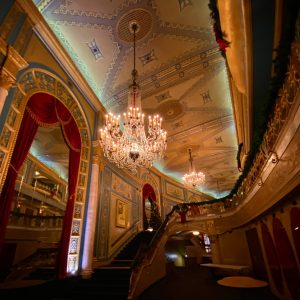
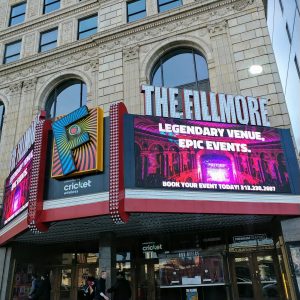
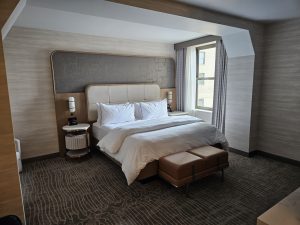
 The Westin Book Cadillac, Detroit: A Walk Up Through a Restored 1924 Hotel
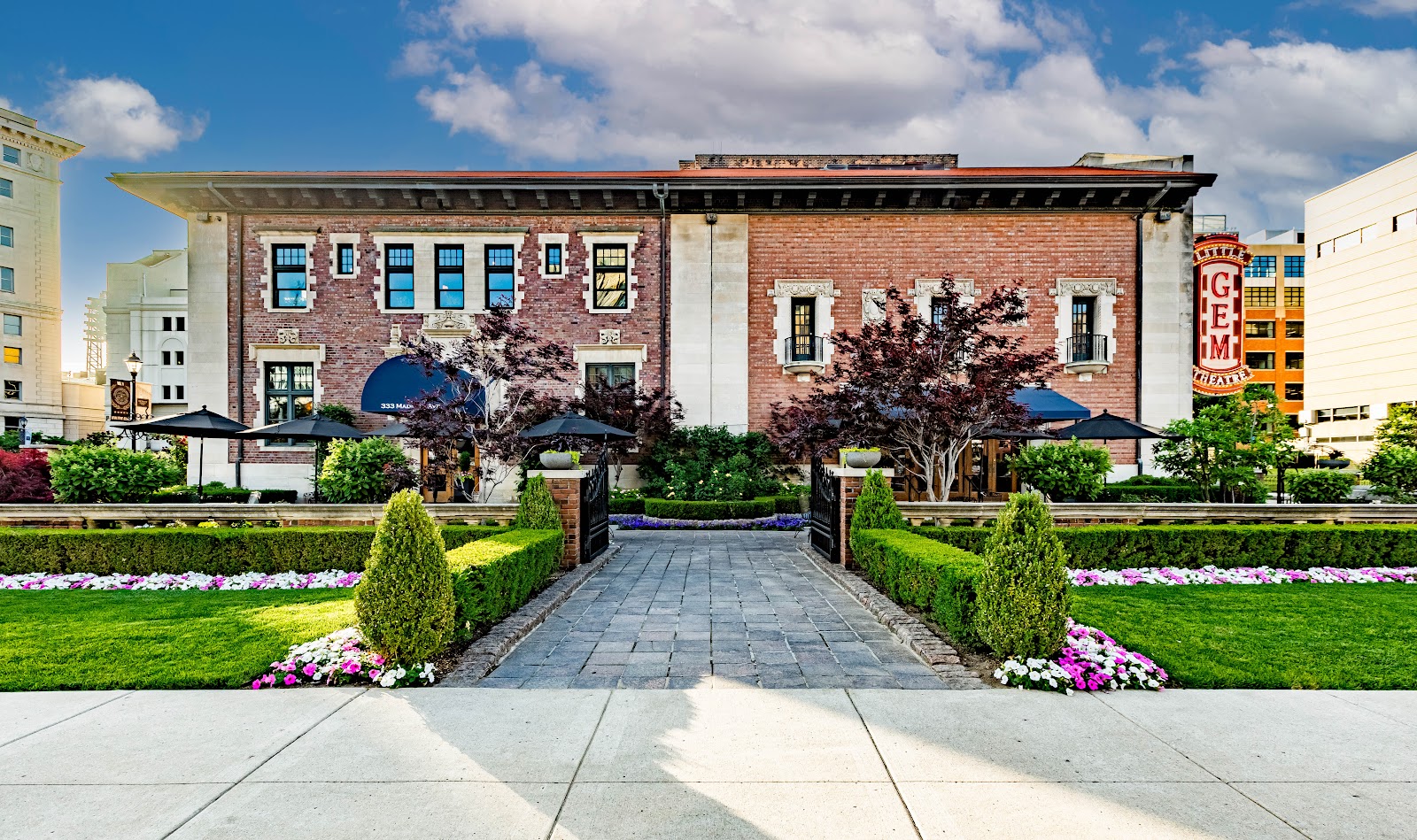
The Gem Theatre, Detroit: The One Decision That Governs Everything
A small theatre is a small theatre. Whether that is the point decides everything about the day.
The Gem promises a backdrop that is both dramatic and intimately nostalgic, as its own description has it, in the city’s downtown.
Intimately is the operative word and it contains the one decision that governs the day. A small historic theatre is an unusual venue because it is genuinely small — the auditorium, the lobby and the circulation are all sized for an earlier and more modest idea of a theatre — and no amount of technique makes a small room large. So the question is whether the intimacy is what the wedding is for.
If it is, the venue gives something almost nothing else does: ornate period architecture at a scale where a couple is never far from anything, where the decoration is close enough to read in a portrait rather than only in a wide frame, and where a guest count small enough to fit means every frame is full rather than sparse.
If it is not — if the brief wants scale, wide establishing frames or a large formal group — the building cannot supply it, and that is worth establishing before the day rather than discovering at the group photograph.
This is written around that decision. We have not photographed a wedding at the Gem; small historic theatres behave consistently. What the comfortable capacity is rather than the maximum, whether the house lights can be brought up plain, whether the stage rig is available, and where a photographer may stand are the questions for their team.
The Gem Theatre at a glance
| Where | Downtown Detroit, Michigan |
| Character | A small historic theatre, ornate and intimate in scale |
| The decision | Whether the intimacy is the point |
| What it gives | Ornament close enough to read in a portrait; frames that are never sparse |
| Ask first | Comfortable capacity, plain house lights, stage rig, permitted positions |
What a small theatre gives that a large one cannot
Proximity to ornament is the first thing and it is genuinely valuable. In a large picture palace the decoration is thirty metres away, which means it only appears in wide establishing frames; in a small theatre it is two or three metres away, which means it can be behind a couple in a portrait and still read as ornament rather than as texture. That is a different kind of photograph and it is unavailable in a bigger room.
It also means the grazing technique works at portrait distances. Ornament reads only when light crosses it at an angle and casts small shadows beside every element — and in a small theatre one source placed close to parallel with a wall lights both the ornament and the subject in the same move, which in a large hall would require two setups and much more power.
The second thing is that frames are never sparse. A small room with a guest count that fits is full, which means wide frames read as occupied rather than as half-empty — the failure mode of a large ballroom below capacity. That is worth stating because it is the single commonest photographic disappointment at grand venues and this building type structurally avoids it.
The third is that the distances are workable. In a large dark auditorium every source has to be direct with enough power for real distance, and a small flash is lost; in a small theatre the same flash is adequate, and even a dark room can be lit without a substantial kit. Bounce may also work where the ceiling is not too high and not too dark, which is worth testing with one frame on arrival.
The fourth is that a small theatre still has a stage, which means it still gives the frame a theatre gives: a couple standing in a single pool of light on an otherwise dark stage in front of empty seating. That is one of the strongest frames any venue produces, it needs a board operator rather than equipment, and in a small house the seating behind reads clearly rather than disappearing into distance — which arguably makes it better than the same frame in a larger theatre.
The limits are the obvious counterparts. There is no working distance, so the wide frame and the portrait frame are two different photographs and shooting through a doorway from the lobby into the house is the way to buy back depth. There is little room to stand without being in a frame or in the way, so the positions have to be learned on arrival. And a large formal group has nowhere to go except the stage, the lobby steps or the street — which needs deciding rather than improvising.
The conditions, and the requests worth making
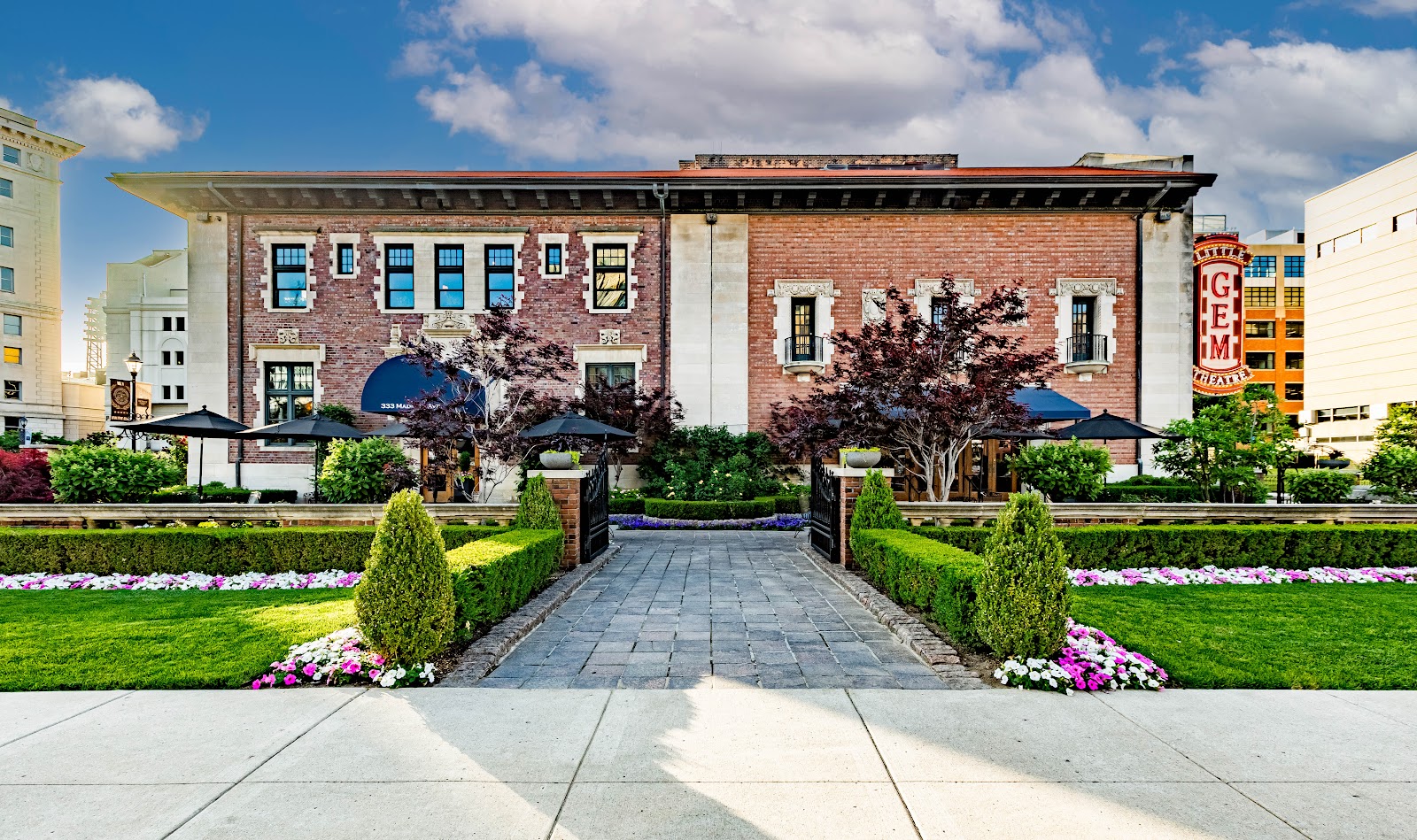
The auditorium is a dim ornate room and the conditions are predictable: deep-toned surfaces absorb rather than return light, house lighting is low, warm and overhead, and the ornament flattens under it. One warm-gelled source at face height, off the camera axis, exposed so the room still reads as the dim ornate space it is, is the whole approach — the aim being a catchlight and a shoulder edge rather than an evenly lit theatre. A theatre lit to an even brightness stops being a theatre.
The steep fall-off in a dark room is free separation and should be exploited rather than filled in.
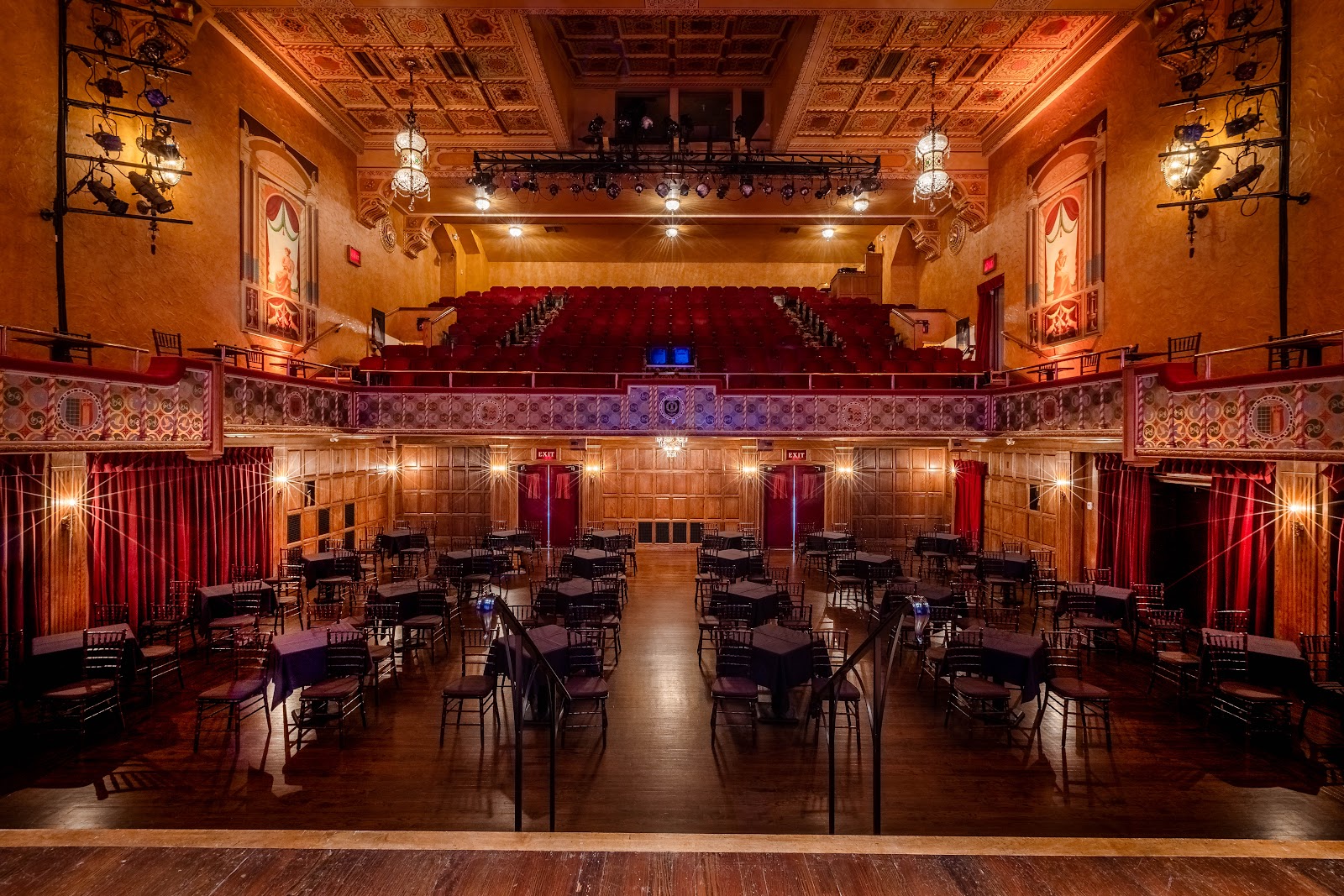
The lobby is the other space and in a small theatre it is small too — but it frequently has street-facing glazing, which makes it the only daylight in the building and therefore the best light available. Two metres inside a window on the shaded elevation is the position, and in a small lobby that may be most of the room, which is fine.
Two requests are worth making and both cost a conversation rather than equipment. The first is whether the house lights can be brought up plain — white, undimmed, no colour — for a few minutes before guests arrive, which is the only chance to photograph the auditorium as a room rather than as a dim volume. In a small theatre that is particularly worthwhile, because the whole room fits in one frame when it is lit.
The second is whether the stage rig is available with someone to operate it, because the pool-of-light frame is the strongest thing the building offers and it is entirely a matter of permission rather than equipment.
Coloured washes, where they are used, need treating as an effect rather than a portrait source: a saturated wash renders skin unrecoverably in its own colour, so commit to shape and silhouette or add a neutral source on the faces and let the wash light the set behind.
A balcony, if there is one, is worth the two minutes even in a small house: from its front the whole room reads at once, which in a small theatre means a single frame containing the stage, the seating and the ornament together — a complete portrait of the building that a large theatre cannot give in one picture.
And the seating itself is a compositional asset at this scale. Rows of period seats receding are strong repetition, and in a small house they are close enough to read as individual seats rather than as a grey field — which makes the long view down the room more interesting here than in a larger one.
- Settle the comfortable capacity first; a small theatre cannot be made large
- Graze the ornament at portrait distance; in a small house one source does both
- Ask for the house lights up plain for five minutes — the whole room fits
- Ask for the stage rig and an operator; it is the strongest frame here
- Go up to the balcony once; the whole building fits in one frame
The street, and Detroit's year
Because the interior is small, the street does more of the work than it would at a larger venue, and downtown Detroit is unusually well suited to that.
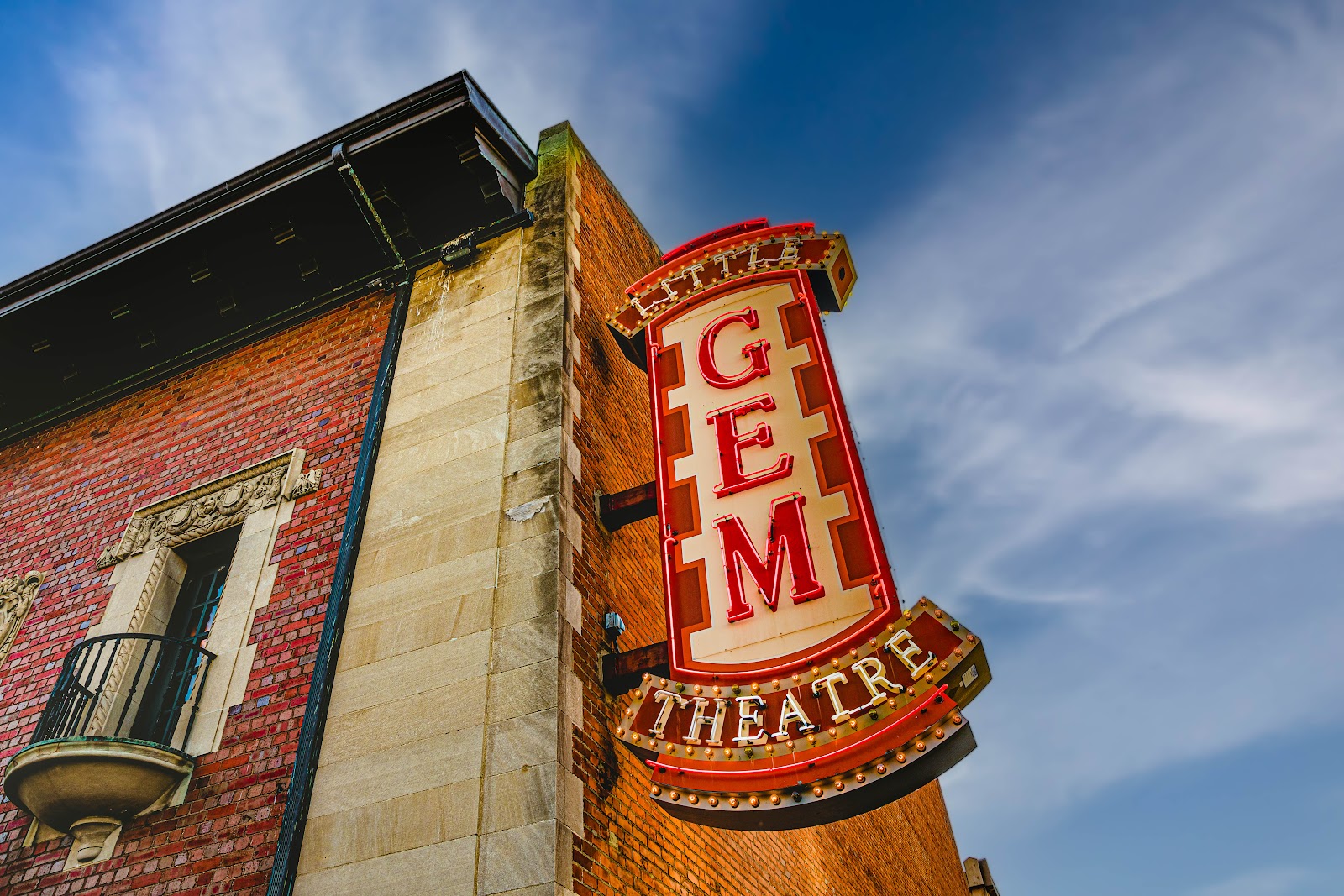
Detroit gives an advantage almost no other American city does: there is room to stand back. Substantial open ground and surface parking mean a whole theatre facade and its signage can be photographed entire from across the street rather than in fragments — which for a small ornate theatre is exactly the frame that shows what it is, and which a denser city makes impossible.
A lit marquee or sign against a sky that still holds colour is the time-critical frame: it exists only in the twenty to thirty minutes after sunset, because before that the sign is invisible against a bright sky and after it the sky is black. Take the sunset time, add fifteen minutes, be in the street with the couple already there — and confirm in advance that the sign will be lit, because outside performance hours that is a request rather than a given.
That openness also means low sun reaches street level across a wider area than in a canyon city, so the last ninety minutes give raking light on masonry from more positions. Stone, brick and terracotta show their texture only when light runs along them, so a short walk to find which side is being raked is worth more than any accessory — and Detroit’s radiating boulevards mean some streets run diagonally and take low sun at angles the grid streets do not.
Recessed doorways and alleys are the small-scale assets and they suit a small venue: a recessed doorway has a roof above with walls to the sides and one open face, which makes a directional soft source at exactly the right size for two people and works in rain; and an alley gives directional light from walls on both sides with a contained background.
Michigan’s seasons are four real ones. Summer is warm and humid with afternoon thunderstorms a real possibility, which for a sealed theatre is irrelevant indoors — the casualty is the marquee frame, so on an unsettled evening take it early and take it twice.
Autumn gives the clearest air and the best raking light of the year on masonry, which is the season the facade is at its best in.
Winter is cold and snowy with short days, sunset falling in the middle of the afternoon in December, which moves the marquee window early and compresses the street block into a few minutes. Snow is the compensation and it is the best natural fill there is, lifting exactly the shadows a low sun carves while fooling a meter by about two stops — and snow falling through the light of a lit theatre sign is one of the best frames a small theatre can give.
Indoors, snow turns the street into a very large reflector, so lobby glazing gives softer, brighter and more even light in February than at any other time of year. And the fogging risk is severe in both directions, so get a body to ambient before the marquee window rather than carrying it out cold.
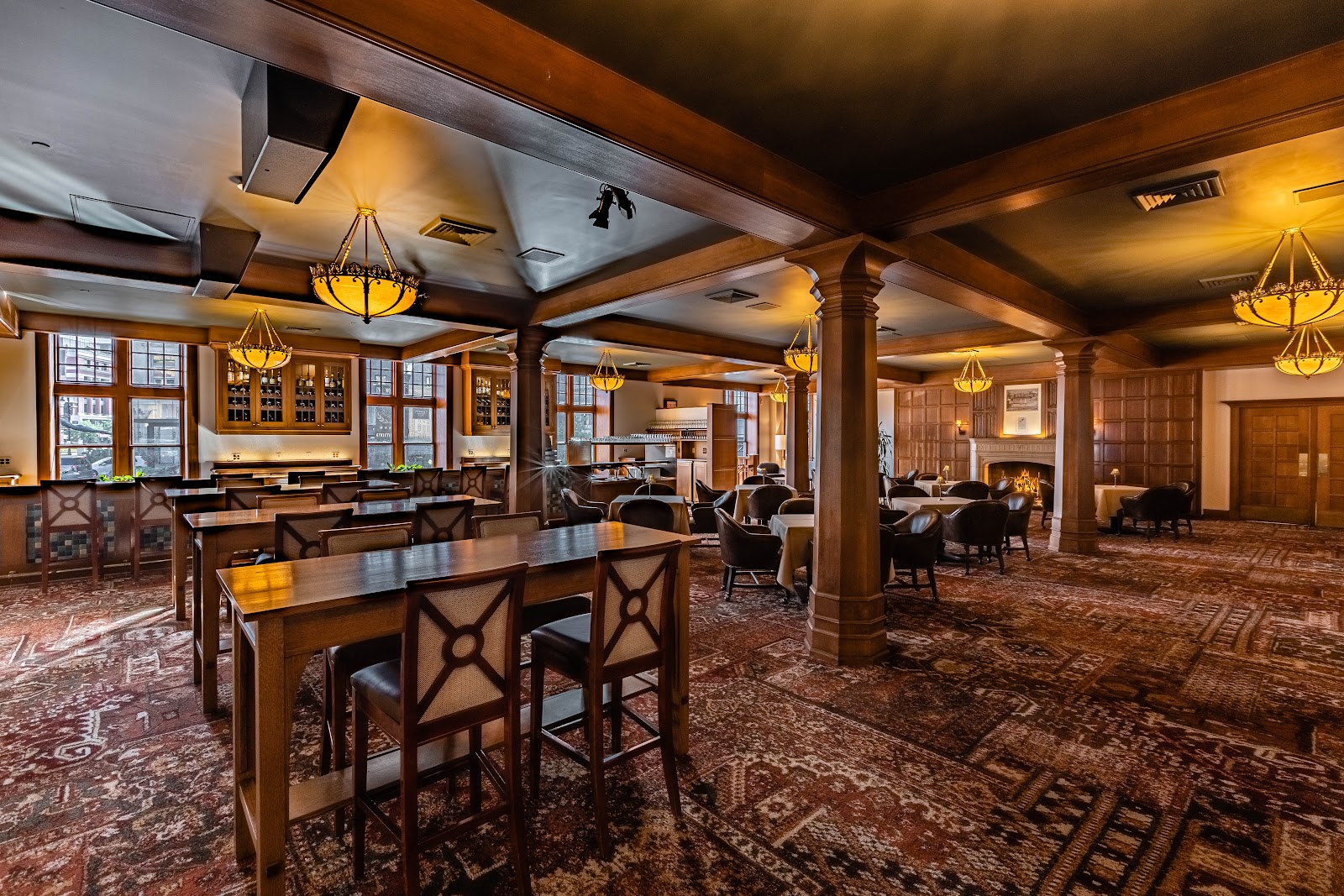
More frames from The Gem Theatre
The Gem Theatre wedding photography: common questions
What is the one decision?
Whether the intimacy is the point. A small historic theatre cannot be made large, so the question is whether a close, full, ornate setting is what the wedding is for.
What does a small theatre give that a large one cannot?
Ornament at portrait distance, so decoration reads behind a couple rather than only in wide frames — and frames that are full rather than sparse, because the room matches the guest count.
Does that make the lighting easier?
Yes. The distances are workable, so one modest source is adequate where a large auditorium would swallow it — and bounce may work, which is worth testing with one frame.
What is the strongest frame here?
A couple in a single pool of stage light before empty seating. In a small house the seating reads clearly rather than disappearing, which arguably makes it better than in a larger theatre.
What are the two requests worth making?
Plain house lights for five minutes before guests arrive, and the stage rig with an operator. Both cost a conversation rather than equipment.
What does Detroit add outside?
Room to stand back. A whole ornate theatre facade with its signage can be photographed entire from across the street, which a denser city makes impossible.
More Detroit, MI venue guides
We are writing a photographer’s guide to every venue we would happily shoot in Detroit, MI. Here are three more, plus the full index:
- The Masonic Temple, Detroit: One Frame and How It Is Made
- The Motown Museum, Detroit: One Frame and How It Is Made
- The Roostertail, Detroit: How the Light Moves
All Detroit, MI Wedding Venues →
Planning a wedding at The Gem Theatre?
If intimacy is the point, this is the venue. Tell us your date and we will confirm the rest.