 The Whitby, New York: A Walk Through a Midtown Hotel
The Lowell, New York: One Frame, and How It Is Made
A small hotel does not give you the grand frame. It gives you a better one, if you know which it is.
The frame a small hotel gives is not the one a ballroom gives, and photographers who go looking for the ballroom version in a townhouse-scaled building come away disappointed for no good reason.
The frame is this. Two people close together in a room that is plainly a room rather than a hall — furniture at domestic scale, a window on one side doing most of the work, walls near enough to return the light, and nothing in the picture that could not be in somebody’s home. It reads as intimacy rather than occasion, and it is a harder frame to make well than the grand one because there is nowhere to hide a mistake.
It requires six decisions, and most of them are about restraint rather than addition.
We have not photographed a wedding at the Lowell; small, well-appointed, domestically scaled hotels behave consistently and their light is predictable. Which rooms are included, whether there is a terrace or outdoor space, and whether the lighting is adjustable are questions for their team.
The Lowell at a glance
| Where | The Upper East Side, New York |
| The frame | Two people close, in a room at domestic scale, lit mostly by one window |
| Why it is harder | Nothing in a small room can be hidden or thrown out of focus by distance |
| The main tool | The window, and which side of the building it faces |
| Ask first | Rooms included, terrace access, lighting control |
Decisions one to three: the window, the distance, the tidying
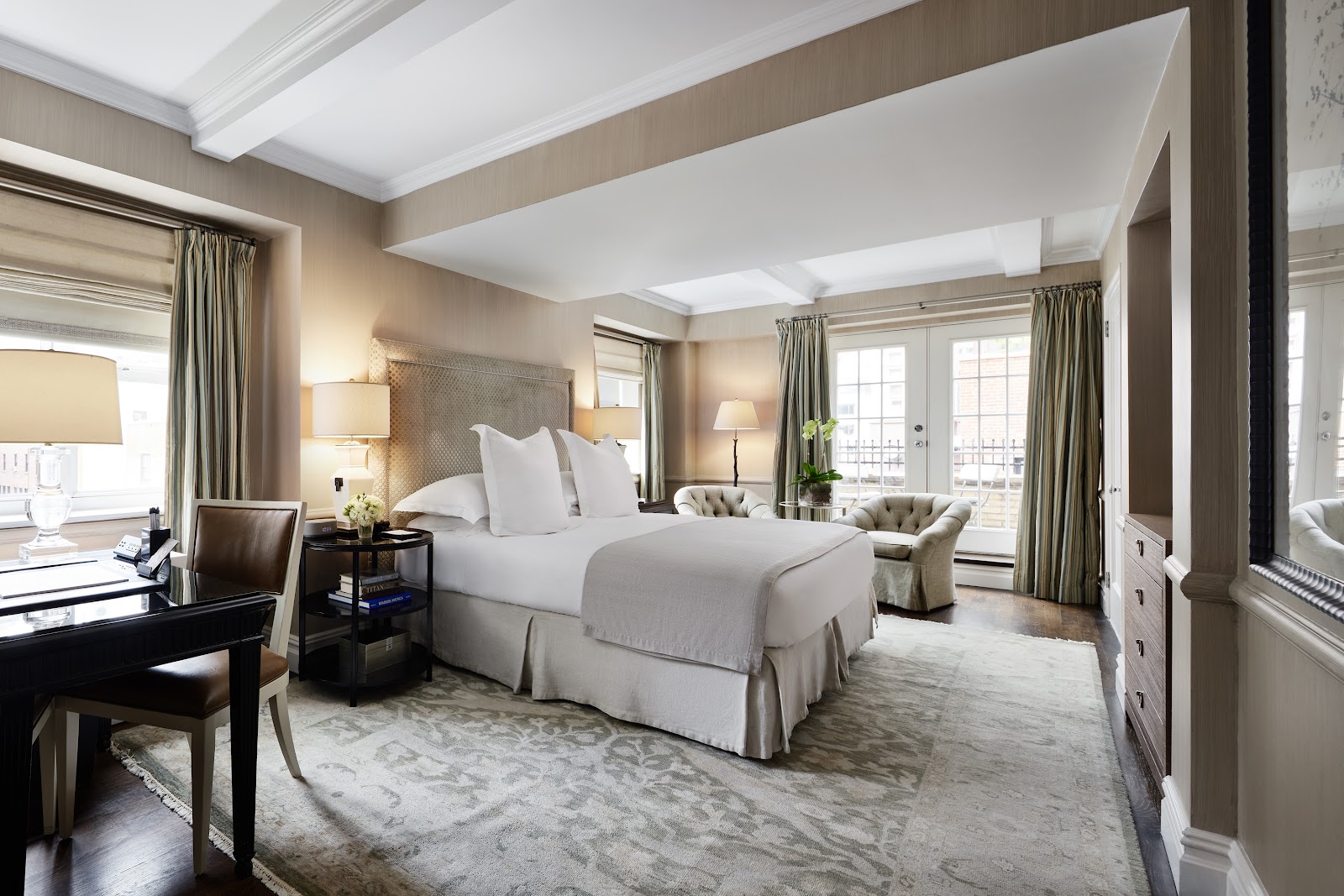
The first decision is which window, and in a small hotel it is the decision that determines everything else. A domestic-sized window is a soft source about the right size for two people at two or three metres, which is precisely the geometry this frame needs — but only if it is not carrying direct sun, which turns the same window into a hard source with a hard edge.
So the window that works is on the shaded side of the building, and finding it means knowing which way the building faces and what time it is. In Manhattan the grid is rotated about twenty-nine degrees from true north, which means a nominally north-facing room actually looks north-north-west and a nominally east-facing one looks east-north-east — enough of a shift to matter when the sun is low. The practical version is to look, not to calculate.
There is a second question specific to New York and it is worth asking the hotel directly: which floor. A high room has more sky reaching its window than a low one, because the buildings opposite block less of it, and on the Upper East Side the buildings opposite are tall and close. The difference between a third floor and a tenth can be more than a stop, and it changes the quality as well as the quantity — more sky means softer and more even.
The second decision is the distance from the window, and closer is not better. At half a metre the fall-off across two faces is severe enough that the far one goes dark; at two to three metres the light is still directional but even across both, which is what this frame needs. The near wall does the rest, returning enough to open the shadow side without any equipment.
The third decision is tidying, and in a small room it is not optional. A grand room hides clutter in its own scale and a domestic one does not: a cable, a bag, a clothes hanger, a bedside tray are all fully legible in a frame like this, and none of them can be removed afterwards without visible repair. The habit that works is to look at the four edges before the exposure rather than at the centre, because the centre is where attention already is.
Decisions four to six: the fittings, the flash, the reception rooms
The fourth decision is the room’s own lighting, and the answer is nearly always off. A domestic-scaled room lit by both daylight and warm lamps has two colour temperatures in it, and in a frame this close the mixed cast lands on skin where it is most obvious — a warm patch on one cheek and a neutral one on the other, which cannot be fixed globally. Switching the fittings off gives one colour of light and a cleaner picture immediately.
The exception is a lamp used deliberately as a background element rather than as illumination: at a wide aperture, out of the way and well behind the subject, it becomes a warm point in the depth. Illuminating with it is the mistake; including it is not.
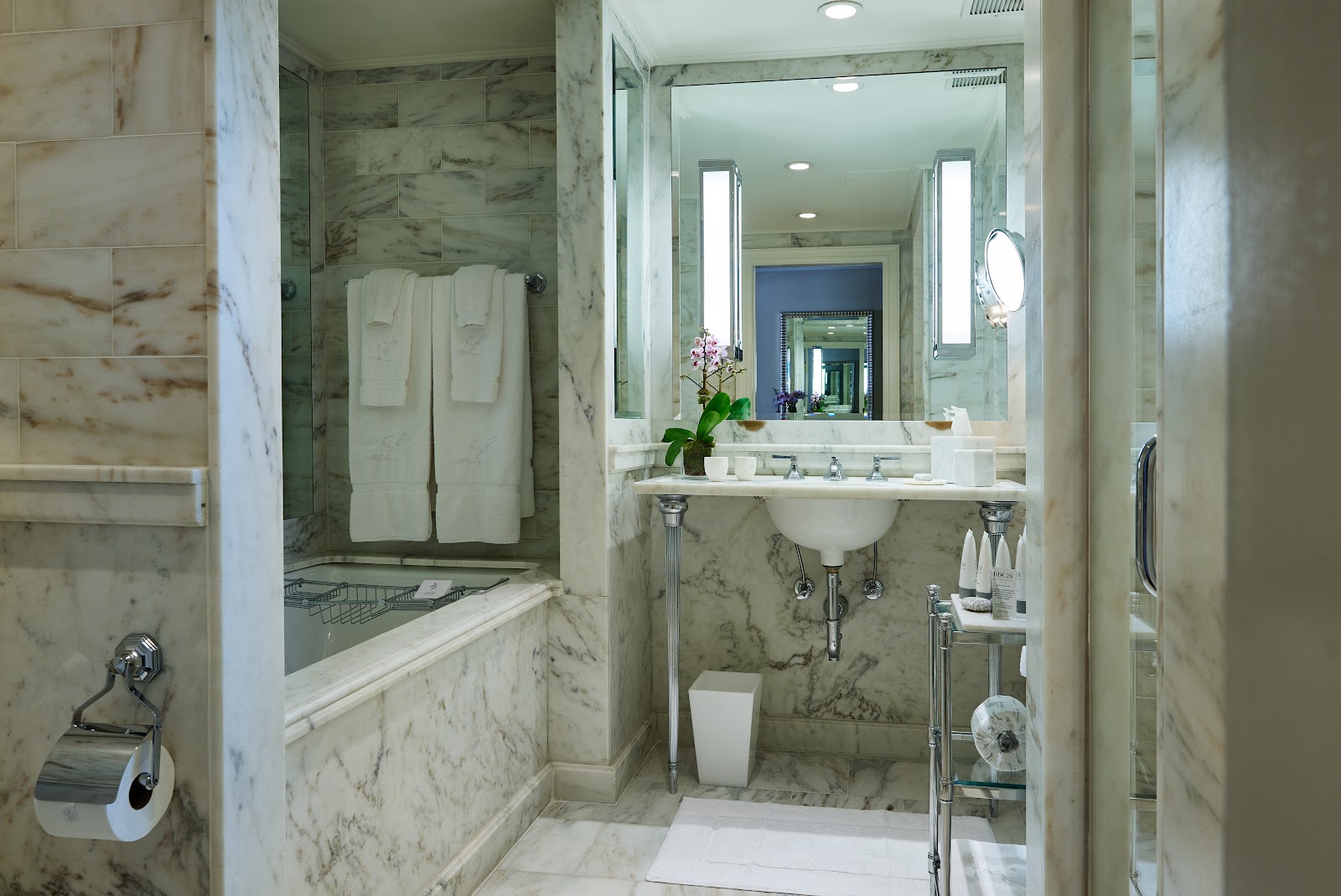
The fifth decision is whether to add flash at all, and in this frame the honest answer is usually no. The window plus a near wall is already the right size and direction, and an added source in a small room is hard to place without either doubling the shadows or showing itself in a mirror or a polished surface, both of which a well-appointed small room has plenty of.
Where it earns its place is after dark, when the window stops working and the room falls to lamp level. Then one source, gelled warm to match the fittings, bounced off the ceiling if it is low enough — and in a domestic-scaled room it usually is, which is the one lighting advantage a small hotel has over a grand one. A ceiling two and a half metres up is a large soft source; a ballroom ceiling five metres up is nothing.
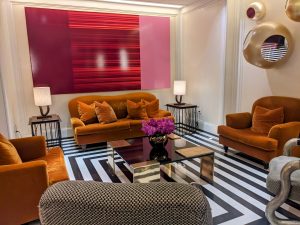
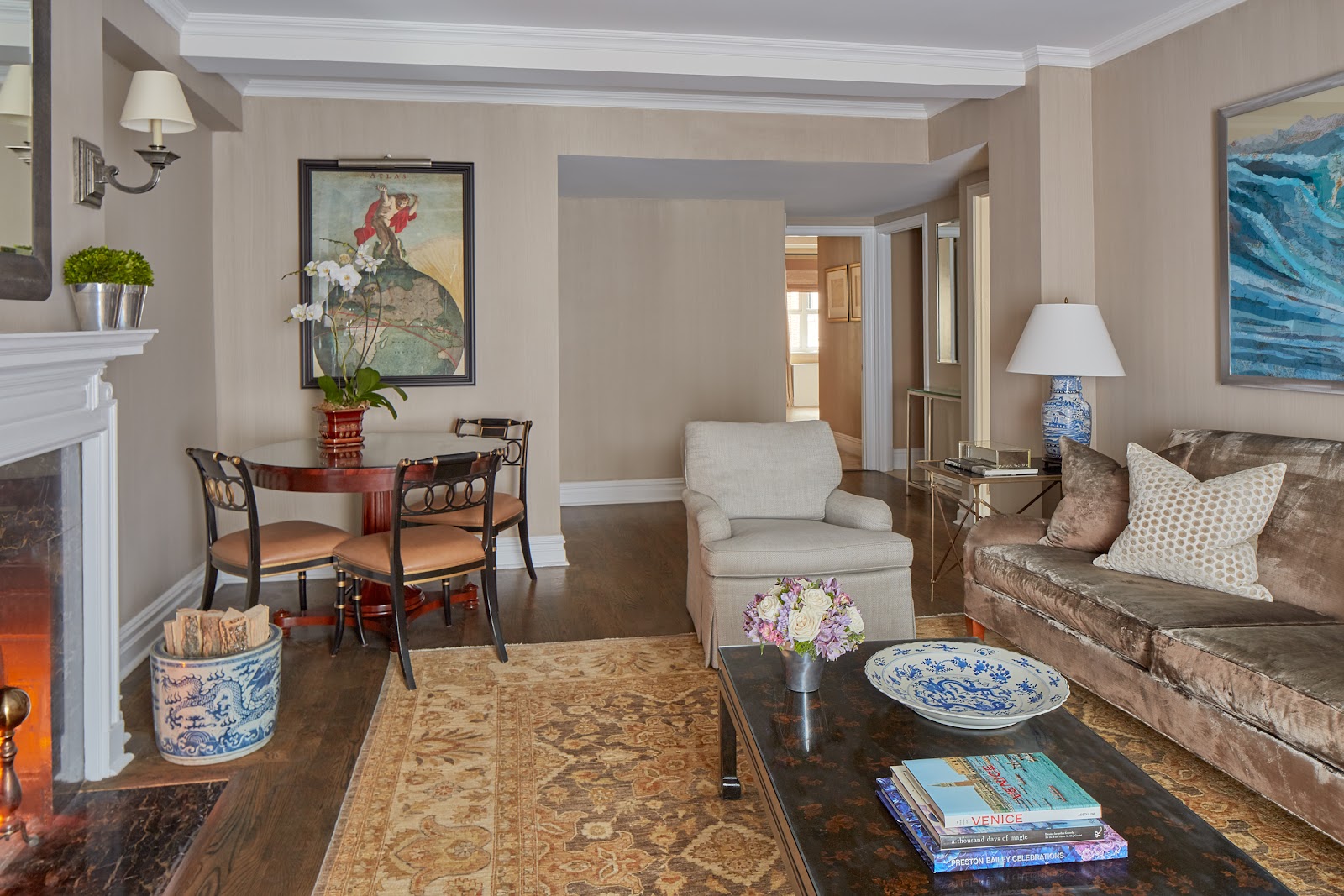
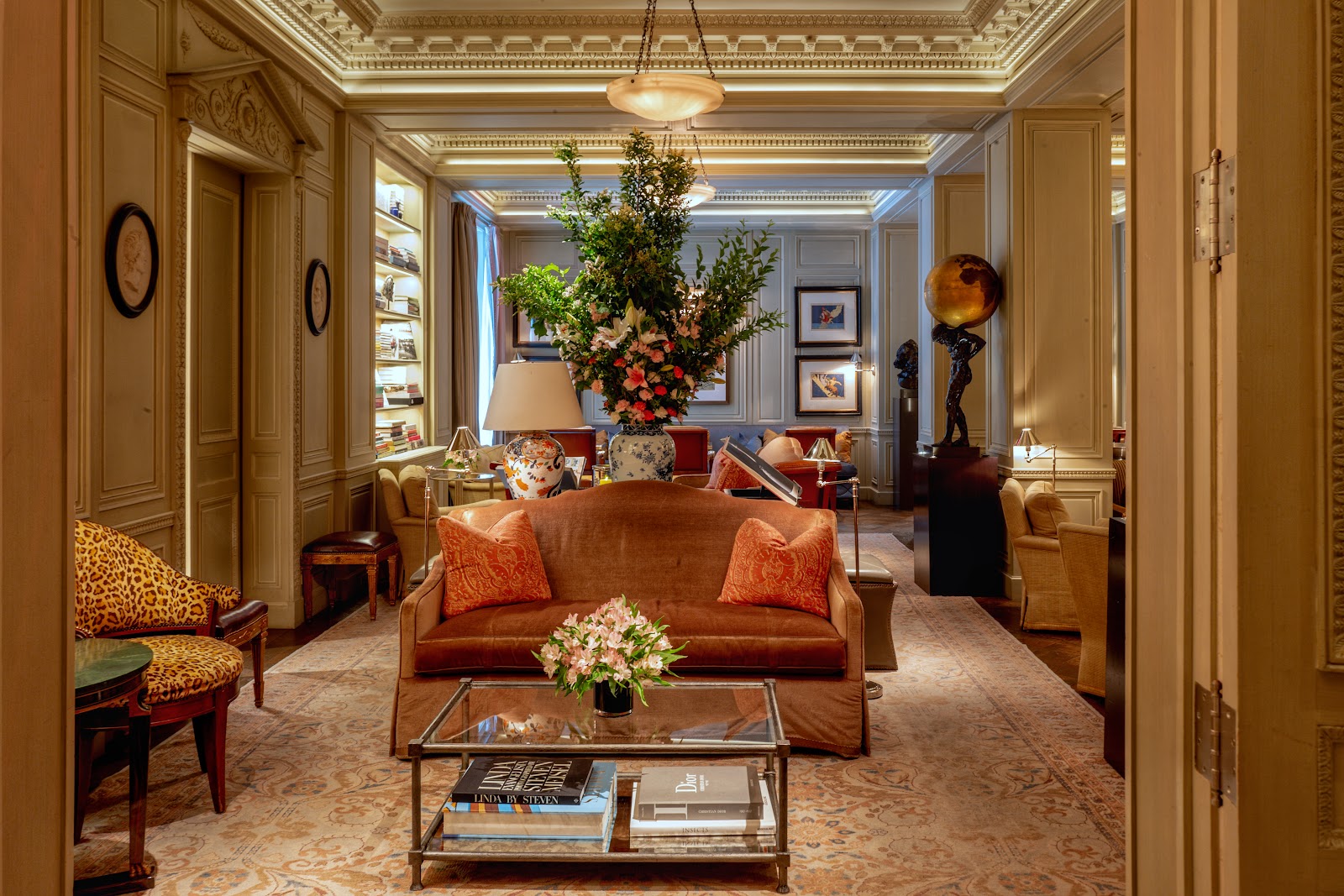
The sixth decision concerns the reception rooms, which in a hotel of this scale are richly furnished and low-lit rather than grand. Three things follow. The ambient is lower than it appears, because timber, deep colour and heavy textiles absorb rather than bounce — test it with one frame on arrival. Fall-off is steep, which gives free separation for anyone standing a few metres in front of anything else. And texture needs raking light, because panelling and patterned fabric read only when light runs along them rather than at them.
Where the hotel has a terrace or outdoor space, it follows outdoor rules entirely — nothing bounces, the ambient after dark is near zero, and the good light is the last forty minutes of daylight plus roughly twenty minutes after sunset. Above the surrounding roofline low sun arrives earlier than at street level, which is worth thirty extra minutes in the schedule and is the one thing worth building a running order around.
- Find the shaded-side window; direct sun turns it into a hard source
- Two to three metres from it, so the light is even across both faces
- Switch the room’s fittings off; mixed colour lands on skin at this distance
- Skip the flash by daylight; add one warm-gelled bounce after dark
- Look at the four edges before the exposure, not the centre
Outside, and New York's year
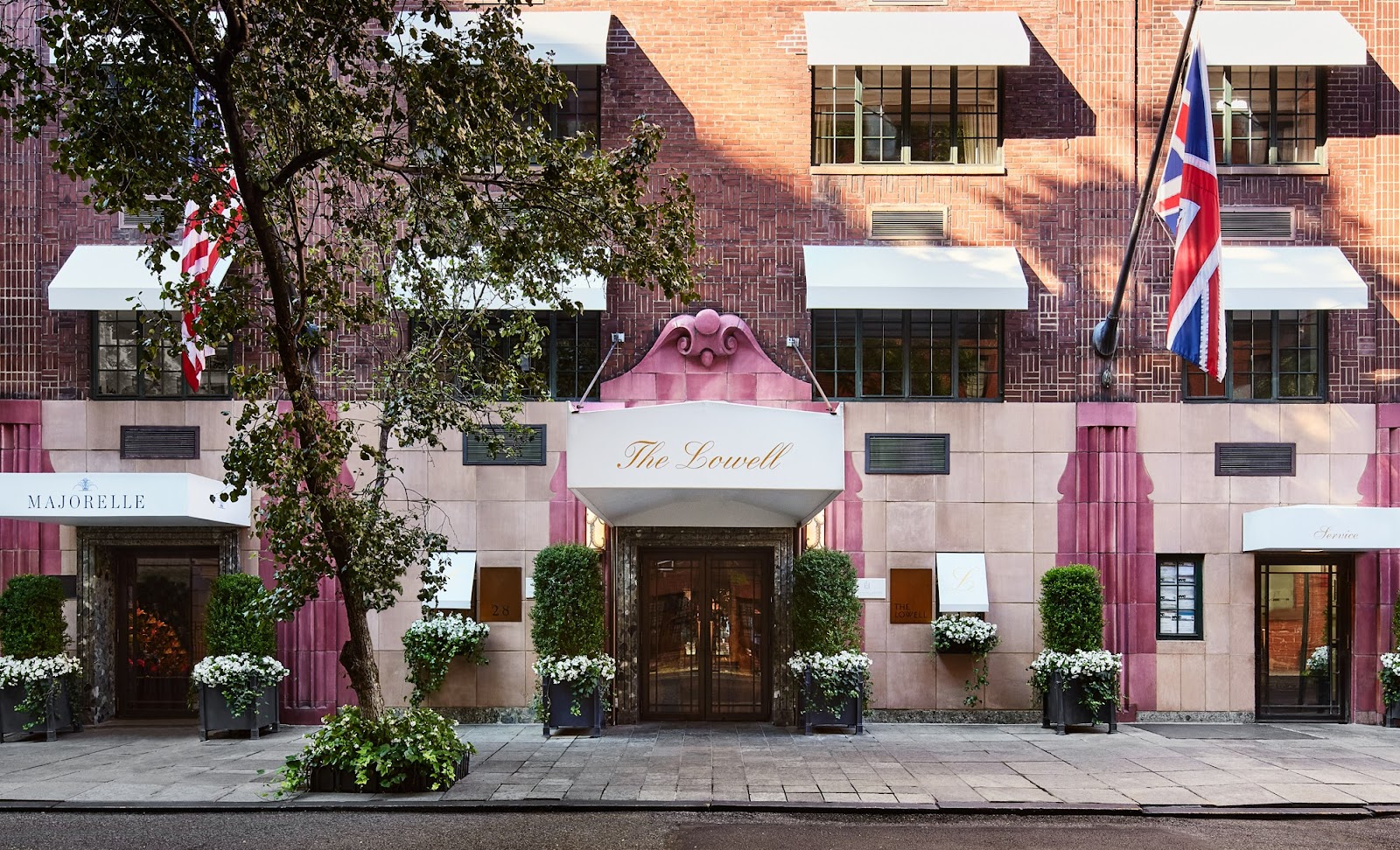
At street level New York imposes the constraint that shapes every exterior frame here: there is no room to stand back, so a facade cannot be photographed whole. At a small hotel that is barely a loss, because the register is intimate anyway and fragments suit it — a doorway, an awning, a detail, a couple on a step.
Most street-level light in Manhattan is bounced down from lit facades above rather than direct, which makes it soft, directional and available for much of the day. It is genuinely good portrait light and it is not golden-hour light, and saying so in advance prevents a disappointed conversation later. Where the grid does line up — low sun down the cross streets, closest to exact around the ends of May and the middle of July — the effect is dramatic and brief.
The Upper East Side gives two assets a small hotel can use in a ten-minute walk. Townhouse frontage, which is brownstone and limestone and ironwork, all of it needing raking light to read; and the park edge, which is the one place in this part of the city with room to stand back and trees rather than facades overhead.
Recessed doorways and awnings are the reliable small-scale position: a roof above with walls to the sides and one open face makes a directional soft source at exactly the right size for two people, and it works in rain — which for a plan that includes a short walk is the difference between having the walk and cancelling it.
New York’s seasons are four real ones. Summer is hot and humid with afternoon thunderstorms a real possibility, which in a small hotel is almost no inconvenience, because the frame this building gives is an interior one. Autumn gives the clearest air and the best light of the year on brownstone.
Winter is cold with short days, sunset in the middle of the afternoon in December, which compresses any outdoor block into a couple of hours and means the walk should be decided in advance.
Snow is the compensation and in this particular frame it is a large one. Outdoors it is the best natural fill there is, lifting exactly the shadows a low sun carves while fooling a meter by about two stops. Indoors it turns the street into a very large reflector, so a guest room window gives softer, brighter and more even light in February than at any other time of year — which is to say the central frame of this venue is at its best in the season most people avoid.
And the fogging risk applies in both directions, so let a body come towards the temperature of where it is going before it gets there, and plan one excursion rather than several.
More frames from The Lowell
The Lowell wedding photography: common questions
What is the frame a small hotel gives?
Two people close together in a room at domestic scale, lit mostly by one window, with walls near enough to return the light. Intimacy rather than occasion.
Why is it harder than the grand frame?
Because nothing in a small room can be hidden. Clutter is fully legible, mirrors show the lighting, and there is no distance to throw anything out of focus.
How far from the window?
Two to three metres. At half a metre the fall-off across two faces is severe enough that the far one goes dark.
Should the room lights be on?
No. Daylight plus warm lamps puts two colour temperatures on skin at this distance, which cannot be corrected globally. Use a lamp as a background element, not as illumination.
Is flash needed?
Rarely by daylight. After dark, one warm-gelled source bounced off the ceiling — a domestic ceiling is low enough to work as a large soft source, which is a small hotel’s one lighting advantage.
Does the floor of the guest room matter?
Yes. A high floor gets more sky past the buildings opposite, which on the Upper East Side can be worth more than a stop and makes the light softer as well as brighter.
More New York venue guides
We are writing a photographer’s guide to every venue we would happily shoot in New York. Here are three more, plus the full index:
- The Ludlow, New York: Field Notes on a Lower East Side Hotel
- The Mark, New York: A Walk Through an Upper East Side Hotel
- The McKittrick Hotel, New York: Field Notes on a Deliberately Dark Venue
Planning a wedding at The Lowell?
The small frame, made properly. Tell us your date and we will find the window.