 The Whitby, New York: A Walk Through a Midtown Hotel
The St. Regis New York: One Frame, and How It Is Made
A gilded room gives you one frame worth planning. Here is how it is built, decision by decision.
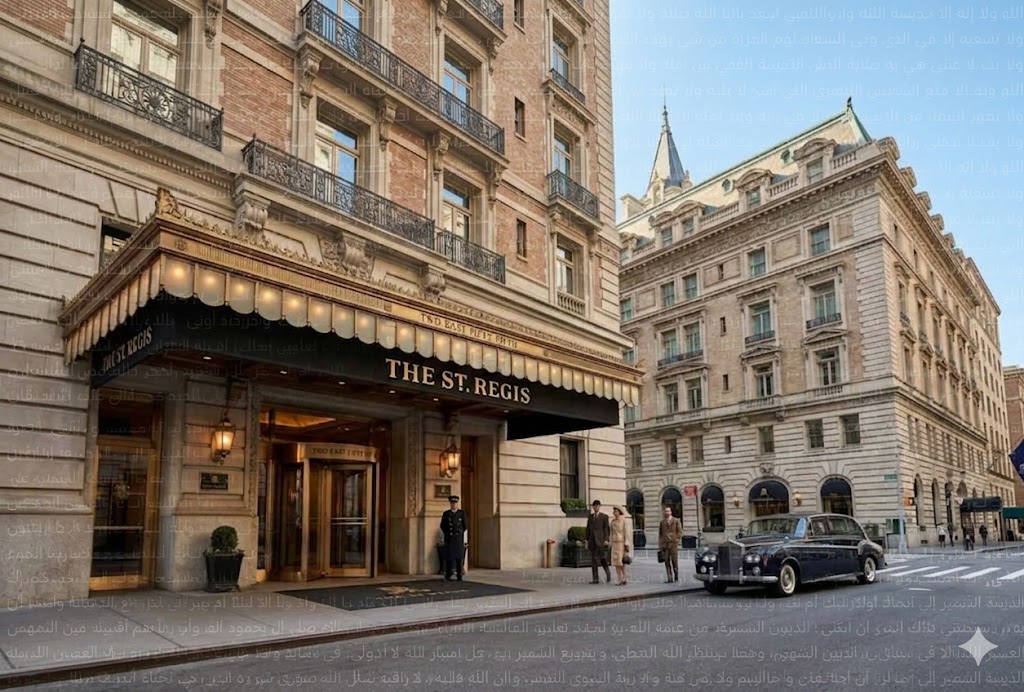
There is one frame this kind of building exists to give and it is worth describing exactly, because building it deliberately is a different activity from hoping for it.
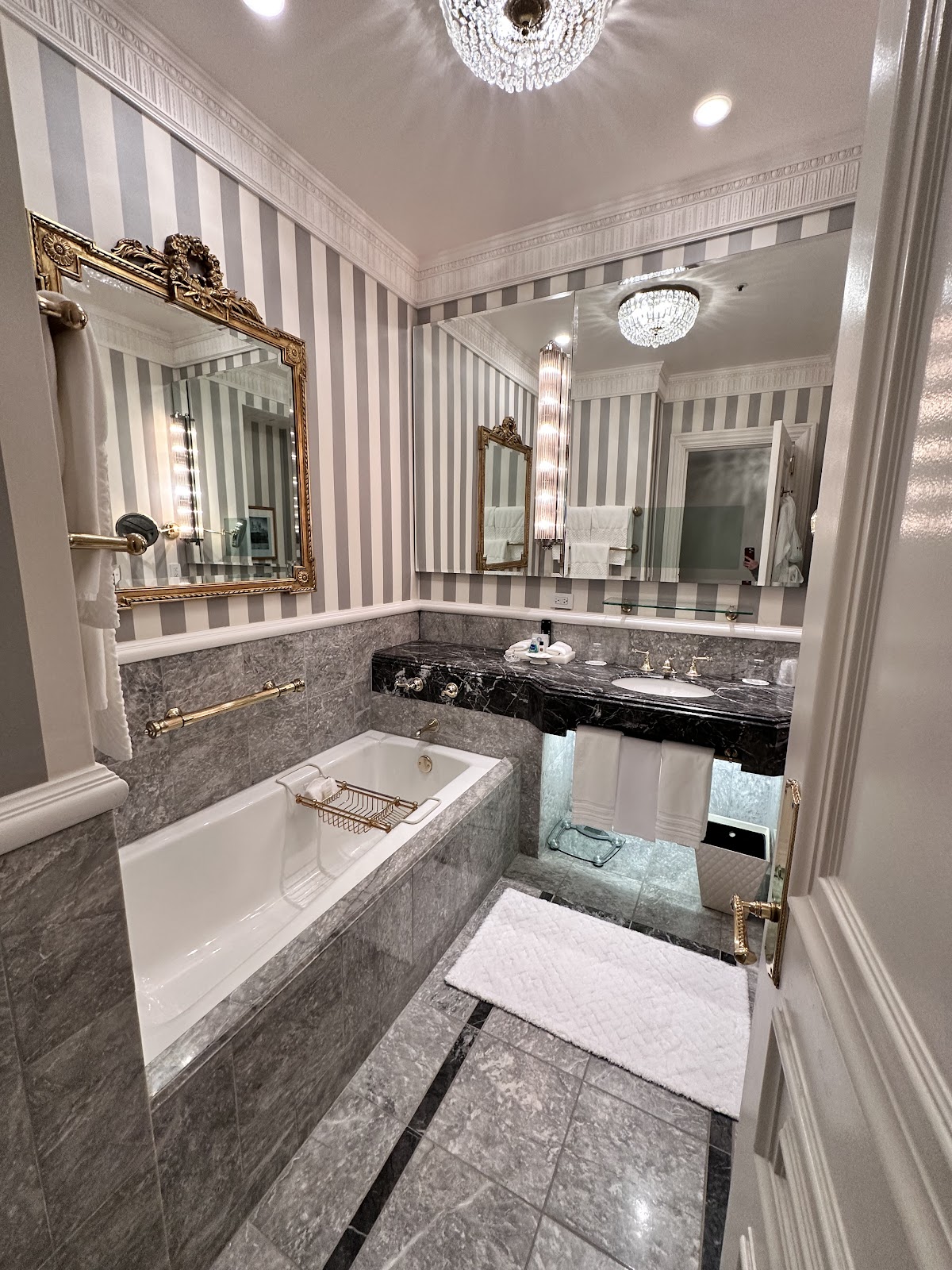
A couple stands in a gilded room. Behind them the plaster carries its own light — gold leaf, mirrors, chandeliers — receding into depth. The faces are lit by one soft source that reads as though it belongs to the room. Nothing behind them is brighter than they are, and the gold is warm rather than yellow.
That frame requires seven decisions and none of them can be made afterwards. This is an account of all seven rather than a tour of the hotel.
We have not photographed a wedding at the St. Regis; what follows is how gilded rooms behave, which is consistent, and what their light demands. Which rooms are included, whether the lighting is adjustable and what may be attached to plaster are questions for their team.
The St. Regis New York at a glance
| Where | Fifth Avenue, New York |
| The frame | A couple in a gilded room, the plaster carrying its own light |
| The first decision | Where the axis runs, because gilding reads down a room and not across it |
| The hardest | Colour, because gold is the least forgiving surface there is |
| Ask first | Rooms included, lighting control, fixings on plaster |
Decisions one to four: position, depth, level, colour
The first decision is where the axis runs, and it is the one that most often goes wrong. A gilded room is built along a line — the plasterwork, the mirrors and the chandeliers repeat down its length, not across its width. Standing on that line gives receding depth and a background that organises itself; standing across it gives a flat wall of ornament with no structure in it. Find the axis on arrival by standing in the doorway, because that is usually where the room was designed to be seen from.
The second is where the couple stands along that axis, and the answer is further forward than instinct suggests. A subject placed well in front of the background lets the plaster fall softer and darker, which is what makes it read as a setting rather than a competitor. Three or four metres of separation changes the frame completely, and in a room of this kind the space is usually there.
The third is the height of everything. Gilded rooms have tall ceilings and the ornament is concentrated high, so a camera at standing eye level puts the plaster above the heads and the frame fills with empty wall. Dropping the camera slightly and stepping back brings cornice and chandelier into the top of the frame where they belong — and the reverse error, going low to catch the ceiling, stretches the couple and puts them under the ornament rather than in front of it.
The fourth is colour, and gold is the least forgiving surface in the business. Gold leaf reflects strongly and selectively warm: every gilded surface in the room is throwing a hue onto anything near it, from several directions at once, and because it is localised and bounced rather than global, white balance in editing cannot separate it from skin.
The consequence is that the light on the faces must be made to match the room rather than corrected against it. One source, gelled warm to the temperature of the room’s own light, with white balance set to that gel — which puts the skin correct while leaving the gold warm. Correcting globally for the gold instead turns skin grey and the plaster the colour of brass.
There is a related trap. Gold that is correctly exposed reads as gold; gold that is half a stop over reads as yellow, and once it clips there is nothing to recover — the leaf is a specular surface and it loses its variation before anything else in the frame does. Expose for the brightest gilding rather than for the faces, then bring the faces up with the source.
Decisions five to seven: the source, the mirrors, the ambient
The fifth decision is the source, and one is enough. A single soft source, off the camera axis by thirty or forty degrees, at face height, in a modifier large enough to be soft at the distance being used, warm-gelled as above, set to expose the faces about half a stop above the room. That combination reads as light belonging to the space, which is the whole objective.
Two sources ruin it. A second light fills the shadows that give a gilded room its depth, and a gilded room without shadow is a flat gold field. If something must be added, add it behind rather than opposite — a low source skimming the plaster behind the couple lifts the ornament without touching the faces.
Bounce is usually unavailable and it is worth knowing why rather than discovering it. Ceilings in rooms of this kind are high, and a flash aimed at a ceiling four or five metres up returns almost nothing; worse, what it does return arrives coloured by whatever the ceiling is painted or gilded. Direct into a modifier, always.
The sixth decision is the mirrors, and they are the reason this frame is difficult rather than merely careful. A mirrored room shows the camera, the photographer, the stands and the source — and it shows them at full brightness, which means one badly placed light produces a bright rectangle in the frame that cannot be removed.
The method is to check the mirrors before the light goes on rather than after: stand where the camera will stand, look at every reflective surface in the frame, and move the source until none of them shows it. Usually that means the light sits forward of the mirror plane and outside the frame edge on the side away from the reflection. And the shot where a mirror is used deliberately — the couple seen twice, once direct and once reflected — needs the source even further forward, because both versions of the face have to be lit by it.
The seventh is the ambient, and it is the one that makes the frame look like the room. A gilded interior at reception hour is lit by chandeliers and sconces, which are warm, dim and beautiful, and the temptation is to overpower them. Don’t: set the exposure so the room’s own light is visible and correct first, then place the source to lift the faces out of it. At a wide aperture the chandeliers become warm points of light in the depth behind, which is the best thing the room gives — and a fitting sitting immediately beside a head ruins that every time, which is a matter of moving the couple a step, not of moving the chandelier.
Done in that order — room first, faces second — the frame holds. Done the other way it becomes a portrait in front of gold.
- Stand on the room’s axis; gilding reads down a room, not across it
- Put the couple three or four metres forward of the plaster
- Expose for the brightest gilding; half a stop over turns gold to yellow
- One warm-gelled source off-axis, and nothing opposite it
- Check every mirror from the camera position before the light goes on
Where else the frame can be made, and New York's year
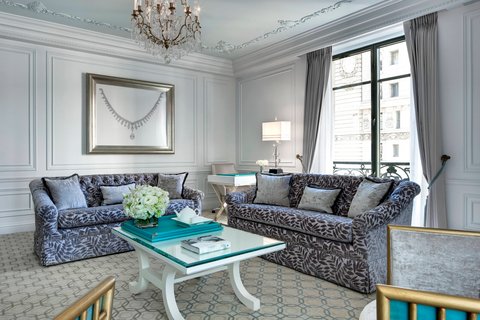
The same frame exists in miniature in the smaller rooms and it is frequently better there, because a lower ceiling brings the ornament closer to head height and the walls are near enough to do some of the bouncing. If there is a choice of rooms for the portraits, the smaller gilded one usually beats the grand one.
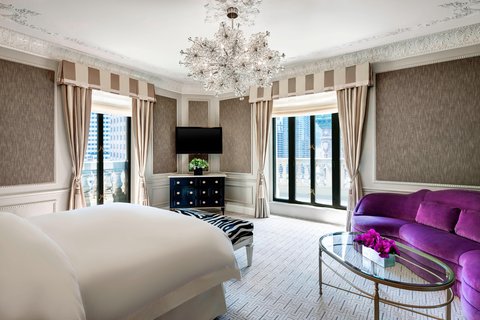
Guest rooms are where the daylight is and they deserve one group of frames rather than being skipped. Largest window on the shaded side, every overhead fitting off so the room has one colour of light, lamps moved out of frame. In Manhattan it is worth asking for a high floor, because a high room has more sky reaching its window than a low one, and on Fifth Avenue — where the buildings opposite are very tall and close — that difference is larger than in most cities.
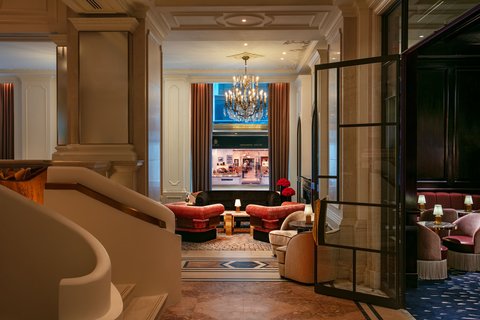
Where any public room has a window, it is the most valuable position in the building: directional daylight with a dark gilded surround is the most flattering combination available here, and it needs no equipment at all. Find it on arrival.
The one timed frame is the dusk crossing at such a window. For roughly twenty minutes after sunset the street falls to about the brightness of the interior, and one exposure holds the gilded room, the couple and the avenue beyond. It happens once and it cannot be rescheduled.
At street level New York imposes its own constraint: there is no room to stand back, so the facade cannot be photographed whole and the exterior frames are fragments and looking up. Most street light here is bounced down from lit facades above rather than direct — soft, directional, available for much of the day, genuinely good, and not golden-hour light. Manhattan’s grid is rotated about twenty-nine degrees from true north, so low sun runs down the cross streets while the avenues stay in shadow, closest to exact around the ends of May and the middle of July.
New York’s seasons are four real ones. Summer is hot and humid with afternoon thunderstorms a real possibility, which for a hotel is nearly all upside — the day continues indoors without a decision. Autumn gives the clearest air and the best street light of the year.
Winter is cold with short days, sunset in the middle of the afternoon in December, which compresses the outdoor window into a couple of hours. Snow is the compensation twice over: outdoors it is the best natural fill there is, lifting exactly the shadows a low sun carves while fooling a meter by about two stops, and indoors it turns the street into a very large reflector, so the guest room windows and any public-room window give softer and brighter light in February than at any other time of year.
And the fogging risk applies in both directions, so let a body come towards the temperature of where it is going before it gets there.
More frames from The St. Regis New York
The St. Regis New York wedding photography: common questions
What is the one frame?
A couple standing on the room’s axis, three or four metres forward of the gilded plaster, lit by one warm-gelled source, with the room’s own chandeliers visible behind them as warm points of light.
Why does the axis matter?
Because gilded rooms are built along a line. Standing on it gives receding depth and an organised background; standing across it gives a flat wall of ornament.
How should gold be exposed?
For the brightest gilding, not for the faces. Gold half a stop over reads as yellow and clips before anything else, because leaf is a specular surface.
Why only one light?
Because a second source fills the shadows that give a gilded room its depth. If something must be added, put it behind to skim the plaster, not opposite the key.
What about the mirrors?
Check them from the camera position before the light goes on. A badly placed source puts a bright rectangle in the frame that cannot be removed.
Where is the daylight?
Guest rooms, and any public room with a window. Directional daylight with a dark gilded surround is the most flattering combination in the building.
More New York venue guides
We are writing a photographer’s guide to every venue we would happily shoot in New York. Here are three more, plus the full index:
- The Whitby, New York: A Walk Through a Midtown Hotel
- The William Vale, New York: How the Light Moves
- The Brooklyn Museum, Brooklyn: A Walk Through the Building
Planning a wedding at The St. Regis New York?
Seven decisions, made before the room fills. Tell us your date and we will make them.