 The Whitby, New York: A Walk Through a Midtown Hotel
The Brooklyn Museum, Brooklyn: A Walk Through the Building
Vertical glass at the bottom, a skylight at the top. Two different rooms.
This building is best described by walking it, because it contains two opposite lighting conditions a hundred and seven years apart, and a wedding day here runs between them.
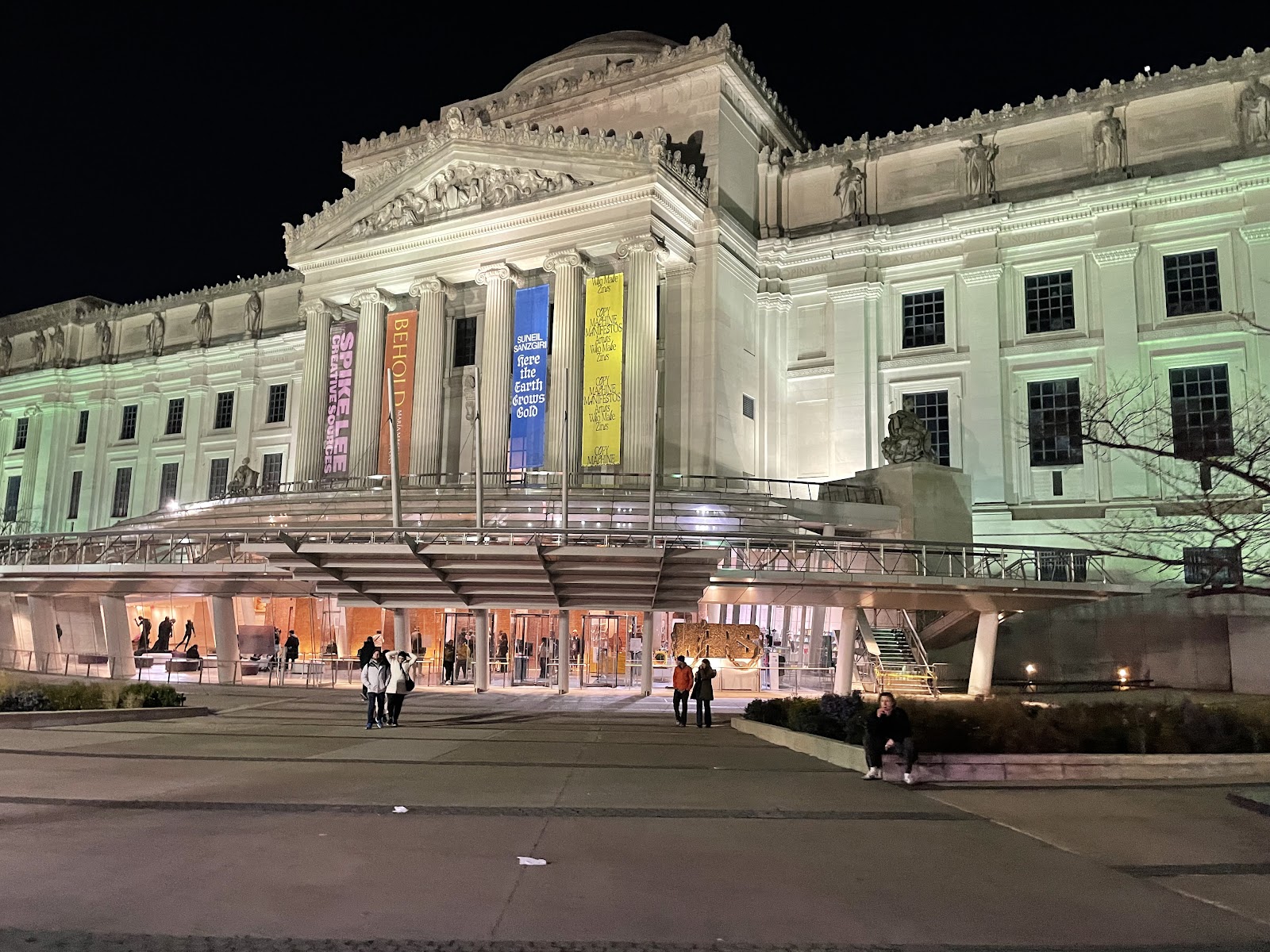
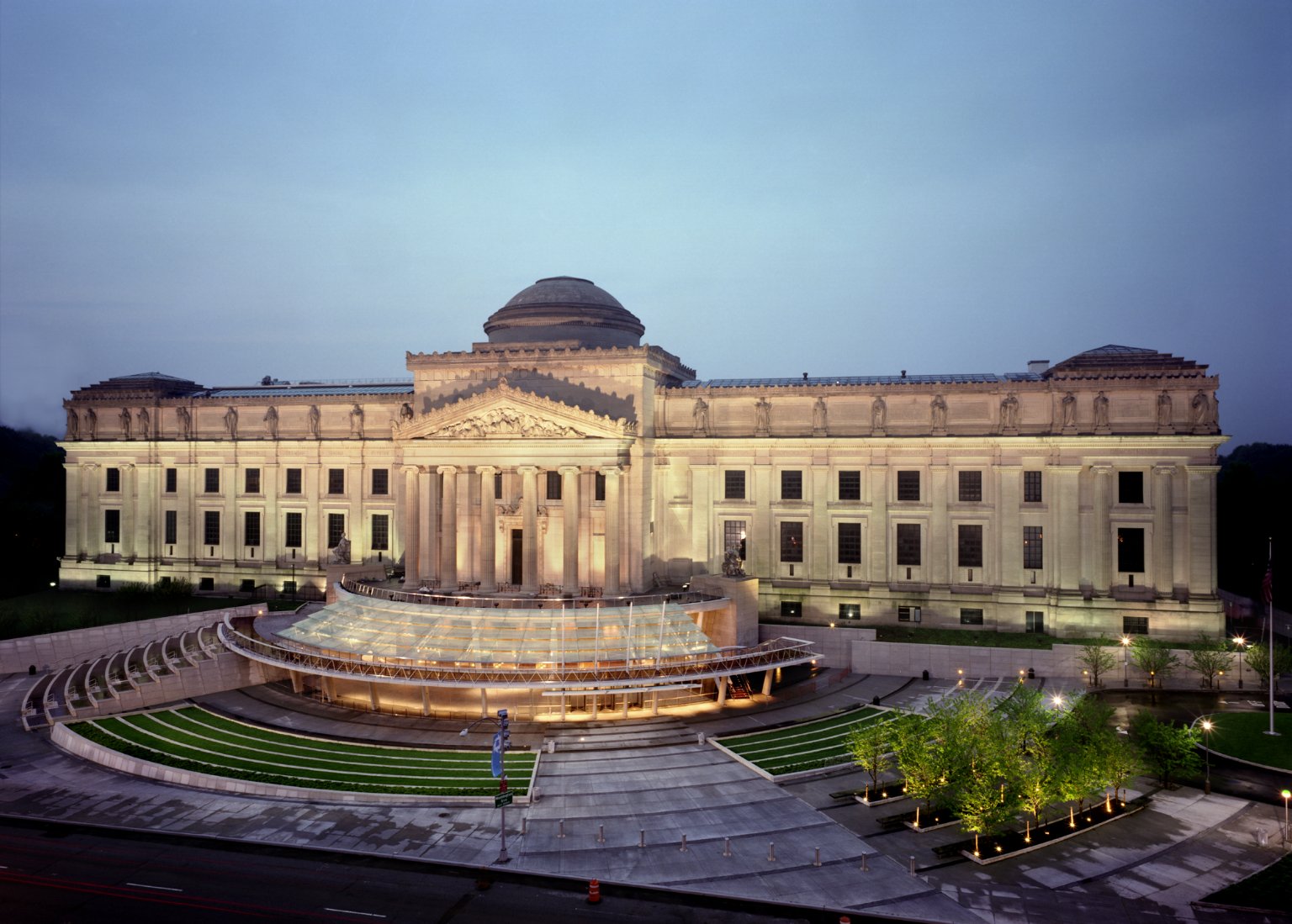
The Brooklyn Museum opened in eighteen ninety-seven to a Beaux-Arts design by McKim, Mead and White — and only a fraction of the intended scheme was ever built, which is why the building reads as grand and slightly truncated at once. The original monumental front steps were removed in the nineteen-thirties, and in two thousand and four a glass and steel entrance pavilion with a plaza and fountains was added at ground level.
So the arrival is modern and transparent and the interior is nineteenth-century and monumental, and the two want completely different handling.
Before the walk, the question that governs everything at any art museum. What a wedding may do, and where, is set by conservation and by loan agreements rather than by an events team’s goodwill, and the answers are firmer than at a hotel.
Gallery lighting is held at conservation levels — typically around fifty lux for works on paper and two hundred for oil paintings — and those figures are not adjustable for an event, because light damages pigment cumulatively and irreversibly. Fifty lux is roughly a dim corridor and several stops below what a camera wants. Flash near artwork is normally prohibited for the same reason, tripods are usually not permitted in galleries because of the risk to objects and people, and individual works on loan may not be photographable at all under terms the museum cannot waive.
None of that is unreasonable. What it means is that a museum wedding is photographed in the circulation spaces, the lobby, the courts, the event rooms and outside — and that galleries, if they feature, feature on the museum’s terms.
Ask for those terms in writing, room by room, before the timeline exists.
With that established, the walk goes: the plaza and the glass pavilion, the lobby and the stairs, the top-lit court, and then outside again, because this museum sits directly beside a botanic garden and a very large park.
One general note. Brooklyn is at about forty and three quarter degrees north, which gives civil twilight of about thirty minutes in midsummer, a midsummer noon sun near seventy-three and a half degrees and a midwinter one near twenty-six. The usable balance point at the end of the day runs twelve to fifteen minutes, and at this venue it belongs to the plaza.
The Brooklyn Museum at a glance
| Where | An 1897 Beaux-Arts museum in Brooklyn with a 2004 glass entrance pavilion |
| The two lights | Vertical glass at the entrance; a diffuse skylight over the upper court |
| Ask first | Gallery access, flash and tripod rules, and restricted works, in writing |
| The constraint | Conservation lighting of roughly fifty to two hundred lux in the galleries |
| Next door | A botanic garden and a very large park, both separate organisations |
The plaza, the pavilion and the stairs
Start outside on the plaza, and start by noticing what is not there.
The monumental flight of steps that originally climbed to the first floor was taken away in the nineteen-thirties, which means the building no longer has the classic museum arrival — a couple ascending a great stair toward a portico. What it has instead is a level plaza with fountains and a low glass pavilion in front of a tall classical elevation.
That is a genuinely different and rather good arrival frame, and it should be photographed as a contrast rather than as a compromise. The glass is horizontal, transparent and modern; the stone behind it is vertical, solid and classical. Position so both are in the frame and the hundred years between them is the subject.
Get low and go wide for that. From a low camera the pavilion’s glazing reads as a band across the bottom of the frame with the older facade rising behind, which makes the layering legible. From standing height they overlap and fight.
The fountains are worth using. Moving water in a foreground gives you a choice — frozen into droplets at a fast shutter, or a soft veil at a slow one on a tripod — and either puts something alive in front of an otherwise static building. At dusk with the plaza lit, wet paving around a fountain reflects everything and doubles the frame for free.
The classical elevation above takes low raking light extremely well, because a Beaux-Arts front is all relief: columns, entablature, pediment, carved detail. At noon it is a flat pale plane; in the last hour it becomes a surface with depth in it. Establish which way it faces on a scout, because that determines whether the good light is morning or evening and it is the single most useful thing to know about the exterior.
Photograph the facade either dead on the centre line or firmly off axis, never two or three degrees off. A symmetrical classical front shot slightly askew reads as an error; from twenty degrees off it reads as a decision and the columns separate into distinct verticals instead of merging.
Inside the pavilion, the light is the opposite of everything above it: a wall of vertical glass giving soft, even, directional daylight from one side. That makes the entrance lobby the best natural-light portrait space in the building, and it is available all day because a low pavilion with a plaza in front of it sees a large area of open sky rather than direct sun for most hours.
Put the subject side-on to the glazing at a metre and a half and work. Two corrections: the light is cool, because it is skylight through coated glass, so warm the whole block consistently rather than frame by frame; and there is little ground bounce off a paved plaza compared with a pale interior floor, so a white card at waist height earns its place.
Then the stairs, and this building has them because a museum of this date is organised vertically around a ceremonial route.
A stair is the most useful interior structure at any wedding: a height difference, a diagonal, a leading line, a reason for somebody to be looking somewhere other than at the lens, and a way to arrange a group at several levels with no riser. Photograph from the bottom looking up for drama and from the top looking down for pattern — they are different pictures — and do it in the first twenty minutes while everybody is still tidy.
Museum stairs are also usually the darkest circulation in the building, lit by wall fixtures at low level. That is an advantage rather than a problem: one light placed at the top or bottom, aimed back along the flight, with the subject on ambient plus a touch of fill, gives a strong graphic frame where the perspective does all the composing.
The top-lit court, the galleries and the event rooms
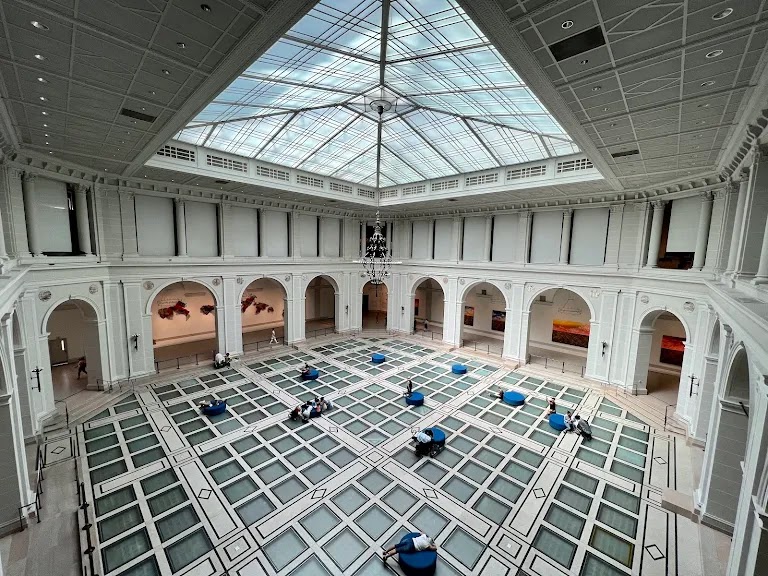
The upper court is the building’s great room and its light is the opposite of the entrance pavilion’s, in a way that matters.
A Beaux-Arts court of this kind is top-lit — a large skylight or glazed roof over an open volume — which gives a very large diffuse source directly overhead. That has one great virtue and one specific fault.
The virtue is consistency and softness. A skylight is a softbox the size of the room, so the light is even, shadowless and identical at ten in the morning and three in the afternoon, and on an overcast day it is exactly as good as on a clear one. There is no bad hour in a top-lit court and no weather that spoils it, which makes it the most reliable interior space in the building.
The fault is direction. Light from straight above puts shadow in eye sockets, under the brow and under the nose and jaw, and it does so to everybody regardless of how they stand. That is the signature failure of a top-lit space and it is why photographs made in atria often look slightly heavy without anybody being able to say why.
The fix is a fill from below or from the side, and it takes almost nothing. A white card at waist height held by an assistant lifts eye sockets immediately. A pale wall a couple of metres to one side does it passively, so position for that where possible. Or one small light at low power from a shallow angle, warmed slightly because skylight is cool.
Position matters more than equipment here. Walk the court and find where the light is not purely vertical — near a wall that bounces, under an arcade or colonnade if there is one, at the edge rather than the centre of the volume. The middle of a top-lit court is the worst place to stand in it, and it is where people naturally go.
For wide frames the court is superb without any intervention, because an open multi-storey volume with a glazed roof photographs as architecture and needs nothing from you. Shoot it from an upper level looking down, and from the floor looking up, and include the roof structure — the glazing pattern overhead is usually the most interesting thing in the room.
The galleries need the expectations set in the lede. At fifty to two hundred lux you are working hand-held, wide open, at a sensitivity you would not choose, without flash and without a tripod. That is entirely feasible with a fast normal or short telephoto at f/1.4, and a slightly noisy frame that exists beats a clean one that does not.
Shoot for the light that is already there. Museum lighting is directional by design — objects are lit and their surroundings are not — so a dark gallery contains small pools of usable light, and a subject at the edge of one is directionally lit with a black background behind them. That is a good portrait condition and it costs nothing. Set a white balance per room, because a gallery lit for paintings and one lit for textiles can be a full correction step apart.
Respect the restricted works. If a piece cannot appear in a photograph, that is a legal obligation the museum has taken on. Ask for the list; if there is no list, ask which rooms are restricted.
Event rooms in a museum are usually purpose-built and conventional — rectangular, flexible, with a dimmable scheme and often no exterior glazing at all. That last point is the one to check, because a windowless function room and a daylit one are two completely different days. If windowless, plan the whole block: two lights bounced into opposite corners for ambient if the ceiling is pale, one directional source for the key, and a single white balance throughout.
And check the ceiling colour in every room on arrival. It decides whether you spend the evening bouncing or on a modifier, and it is a ten-second question that saves half an hour.
Outside again, and the year
This museum’s greatest asset may be its neighbours, and they are a separate conversation.
Immediately beside it is a botanic garden, and beyond that a very large nineteenth-century park. Both are within a few minutes’ walk and neither is the museum. They will have their own rules, their own opening hours and, very probably, their own permit requirement for commercial photography — a requirement that is not waived by a wedding. Ask each organisation directly and ask early.
If the garden is available, it solves everything the museum cannot: open sky, mature canopy for the middle of a summer day, seasonal colour, and soft green backgrounds at a long focal length. A botanic garden beside a museum is an unusually complete pairing and it is worth the permit paperwork.
If it is not, the park is public and large, and the streets around the museum have mature street trees and nineteenth-century brownstone, which is a warm textured material palette the museum’s stone does not offer. A ten-minute walk gives an entirely different register for the set.
The plaza is where the end of the day belongs. At the balance point — twelve to fifteen usable minutes after sunset — the facade lighting and the pavilion’s interior glow read against a graduated sky, the fountains are lit, and wet paving doubles all of it. That is the strongest frame this venue offers and it needs the position marked in daylight, the tripod set, the couple already standing there, and one small warmed light on them, because at any exposure holding the lit building a face is dark.
Ask whether the facade and plaza lighting runs and from what time, because in some months it will come on well after the sky has gone.
Now the year, briefly, since most of what matters here is indoors.
Late September into early November is the strongest window. The metro-area humidity drops out so the air is clear and a wide exterior frame resolves, temperatures are comfortable on an open plaza, sunset lands around six so the balance point falls at a civil hour, and the street trees and the garden next door turn through the second half of October — later here than inland, because the surrounding water keeps the coastal boroughs warmer into autumn.
Late April into May is the other good window, with the garden at its best and lengthening evenings. Spring here also runs slightly later than inland for the same maritime reason, so a couple booking early May for full foliage should know it may not have arrived.
Summer is long and hazy. Sunset after eight in late June puts the balance point near half past eight, comfortably inside a reception. The middle of a July day on an open paved plaza is hot and top-lit with no shade, so that block belongs indoors — which at this venue is no hardship at all, since the top-lit court is at its most useful precisely then. Metro humidity produces real haze, which softens a wide exterior frame and washes the sky, and it fogs a lens within seconds coming out of an air-conditioned gallery into July air. Keep the body warm.
Storms move through quickly in the warm months and the half hour afterwards is the best exterior light of the year: washed air, wet paving reflecting the sky and the fountains, carved stone at full saturation, and a low sun under a broken ceiling. Wet Beaux-Arts stonework is a considerably better material than dry. If a cell goes through at six, do not pack.
Winter is short and it suits the building. Sunset before half past four puts the balance point before five, during cocktails, which needs to be a named item on the timeline. In exchange: the clearest air of the year, a midwinter noon sun near twenty-six degrees raking the carved facade from the south through the whole afternoon, bare street trees letting the elevation stand clear, and a top-lit court that does not care what month it is. Snow on a classical plaza is superb. Against it, nor’easters bring wind and heavy wet snow to this coast and are a travel problem for guests and suppliers rather than a photographic one.
The closing instruction: walk it upward, use the pavilion glass for anything that needs to look considered, fill from below in the court, keep the galleries on the museum’s terms, and protect fifteen minutes for the plaza at dusk.
More frames from The Brooklyn Museum
The Brooklyn Museum wedding photography: common questions
What should we ask the museum before booking?
Gallery access and on what terms; flash and tripod rules room by room; whether any works are restricted from photography under loan agreements; which event room you have and whether it has exterior glazing; and — separately — whether the botanic garden and the park next door are available, because they are different organisations with their own permit requirements. Those answers shape the day more than the weather does.
Why are museum galleries so dark?
Conservation. Works on paper are typically held around fifty lux and oil paintings around two hundred, because light damage to pigment is cumulative and irreversible, and those levels cannot be raised for an event. Fifty lux is roughly a dim corridor. Plan for a fast normal or short telephoto at f/1.4, hand-held, and accept some noise — and look for the pools of directional light that museum lighting creates, because a subject at the edge of one is well lit with a black background for free.
What is the light like in the top-lit court?
A softbox the size of the room, and the most reliable interior space in the building — even, shadowless, and identical at ten in the morning and three in the afternoon, on a grey day as on a clear one. Its fault is direction: light from straight above puts shadow in eye sockets, under the brow and under the jaw, to everybody. Fill from below or the side — a white card at waist height, a pale wall two metres off, or one small warmed light at a shallow angle. And work at the edge of the volume, not the middle, where the light is purely vertical.
What is the best exterior frame?
The plaza at the balance point, twelve to fifteen minutes after sunset, with the classical facade lit, the glass pavilion glowing, the fountains on and wet paving doubling all of it. It needs the position marked in daylight, a tripod, the couple already in place, and one small warmed light on them, because at any exposure holding the lit building a face is dark. Ask whether the facade lighting runs and from what time, since in some months it comes on after the sky has gone.
How should the facade be photographed?
Either dead on the centre line or firmly off axis, never two or three degrees off — a symmetrical classical front shot slightly askew reads as a mistake, while from twenty degrees off the columns separate into distinct verticals. And photograph it in low raking light, because a Beaux-Arts front is all relief: at noon it is a flat pale plane and in the last hour it is a surface with depth. Establish which way it faces on a scout, since that decides whether the good light is morning or evening.
When is the best time of year?
Late September into early November: the metro humidity drops out so exterior frames resolve, the plaza is comfortable, sunset around six puts the dusk window at a civil hour, and the garden next door turns through the second half of October — later here than inland, because the coast stays warmer into autumn. Summer is fine but hazy, with the middle of the day belonging indoors, which is no hardship since the top-lit court is at its most useful precisely then.
More New York venue guides
We are writing a photographer’s guide to every venue we would happily shoot in New York. Here are three more, plus the full index:
- The Oheka Castle, Huntington: The Venue’s Own Logic
- The Queens Museum, Queens: The One Decision That Governs Everything
- The Snug Harbor Cultural Center, Staten Island: The Light Through the Day
Planning a wedding at The Brooklyn Museum?
Glass at the bottom, a skylight at the top, and the plaza at dusk. Tell us your date.