 The Redd on Salmon Street: Building the Shot List
The Woodlark Hotel, Portland: How the Light Moves
Nothing in a boutique hotel’s public rooms changes from morning to midnight. That is the planning fact.
The Woodlark Hotel’s lobby, by its own description, combines contemporary elegance with local artwork on the walls and planting adding vitality to the space.
That is a recognisable boutique register and it produces a consistent photographic situation. The lighting is designed, which means low, warm and carefully placed rather than bright and general. The artwork is assertive, which means it competes for attention with anything in front of it. The planting is the darkest thing in most of the rooms, which makes it unexpectedly useful. And none of it changes at all through the day — so all the variation available is outside.
This is written as a day, because the running order is the most useful instrument at a hotel of this kind. We have not photographed a wedding at the Woodlark; downtown boutique hotels behave consistently. Which spaces are included, which works may appear in published photographs, and what the evening lighting can be set to are the questions for their team — the middle one is worth asking and often forgotten.
The Woodlark Hotel at a glance
| Where | Downtown Portland, Oregon |
| Character | A boutique hotel with designed interiors, local artwork and planting |
| The constant | The public rooms, from morning to midnight |
| The variable | Downtown Portland, a short walk away |
| Ask first | Spaces included, artwork permissions, evening lighting control |
Morning and daytime: guest rooms, lobby, artwork
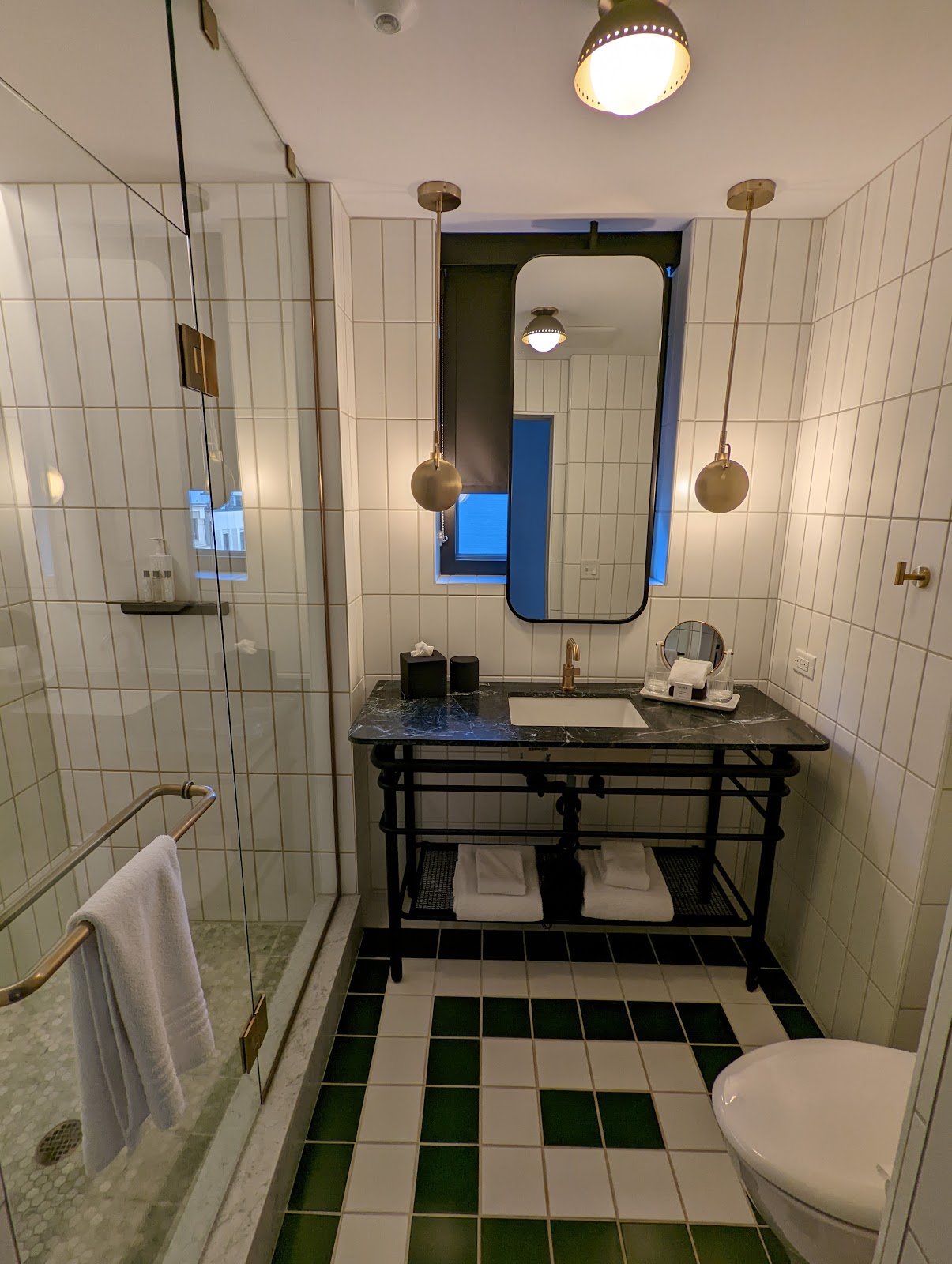
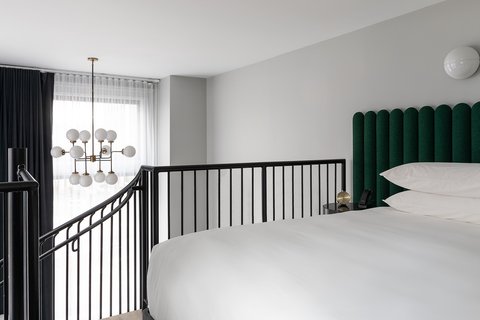
Morning belongs to the guest rooms, because in any hotel they are the best portrait light in the building. Windows are domestic in scale but generous relative to the floor area, the walls are close enough to bounce, and the ceilings are low enough that a flash aimed upward returns something usable.
The setup is three moves and they never change. Ask for the largest window on the shaded side of the building. Switch off every overhead fitting so the room has one colour of light rather than three. Move the lamps out of frame. Mixed sources are the commonest single reason preparation coverage looks worse than the room did.
In a boutique hotel there is a fourth move: find the plainest patch of wall in the room for the dress and the detail shots. Designed rooms have pattern, colour and art, and a strong background behind a hanging dress competes with it in a way that cannot be removed afterwards.
The lobby is the character of the building and it is worth treating carefully. Designed hotel lighting is low, warm and placed rather than general, which means the ambient is lower than it appears, the fall-off between lit and unlit areas is steep, and there may be two or three colour temperatures in the same frame. Pick the source that should be correct, set a manual white balance to it, and switch off or overpower whatever else lands on skin.
Local artwork is an assertive background and it needs the standard decision: commit to one work deliberately, placing the couple so both read, or subordinate it with a long lens at a wide aperture so it becomes a soft field of colour. Half-in — partly sharp, partly cropped — fails. And a large saturated work throws its own colour onto a nearby face, which is another reason to let a gelled source own the skin.
There is also a permissions layer here that a plain hotel does not have. Commissioned or collected works have makers, and reproducing a work prominently in published photographs can engage the artist’s rights as well as the hotel’s preferences. One email beforehand asking which works may appear in a published gallery settles it and costs nothing.
Planting is the underrated asset. In a pale designed interior a mass of foliage is usually the darkest element in the room, which makes it the natural background for a portrait — it gives separation that pale walls refuse to provide, and texture that clean surfaces cannot. The caution is the usual one: dense foliage bounces green onto nearby skin, so set a custom white balance on a face in the position being used.
Late afternoon into dusk: downtown, and one timed frame
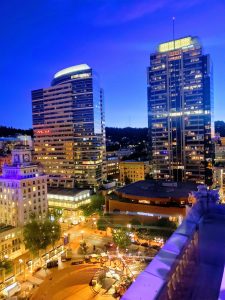
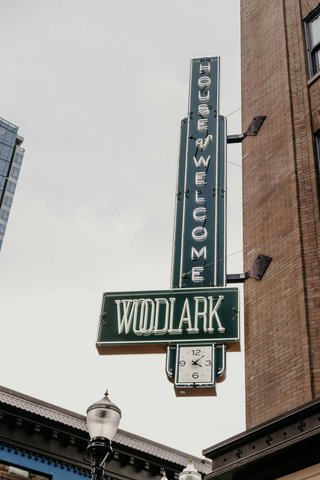
From about two hours before sunset the outside becomes the reason to leave the building, and downtown Portland is good material. The older commercial core is brick, stone and cast iron at a largely low-rise scale on a regular grid, which means low sun reaches street level and runs the length of a street rather than being cut off by towers.
Brick and cast iron both show their texture only when light runs along them, so a short walk to find which side is being raked is worth more than any accessory. Alleys and side streets are the most dependable positions: walls on both sides give directional light, a contained background with nothing distracting in it, and shelter. Service elevations hold the most texture because nobody tidied them.
Portland’s light needs treating differently from most cities in this series, because overcast is the default for much of the year rather than an occasional inconvenience. An overcast sky is an enormous diffuser: soft even light with open shadows and no hard edge anywhere, which is the best portrait light there is. Position stops mattering, groups are easy, nothing needs carrying.
Two adjustments come with it. Add half a stop to a stop over the metered reading when a bright grey sky fills part of the frame. And bring shape back subtractively rather than additively — placing the couple beside a dark doorway, under an awning edge or next to anything dark removes light from one side and restores a gradient across the face. In flat light, subtracting works and adding usually does not.
The dusk crossing is the one timed frame in a hotel of this kind. For roughly twenty minutes after sunset the street outside falls to about the brightness of the interior lighting, and one exposure at a window or in the lobby holds the lit room, the couple and the city beyond. Take the sunset time, add fifteen minutes, and be in position with the couple already there.
Portland’s seasons move that frame dramatically. In June sunset falls late enough that it lands well into the reception, which is worth agreeing in advance as a short deliberate excursion because it cannot be moved. In December it happens in the late afternoon, which means it may fall before or during the ceremony — and the whole daylight component of the day may be over before guests sit down.
- Guest room: biggest shaded window, overheads off, lamps out of frame
- Find the plainest wall in a designed room for the dress and details
- Commit to a work of art or dissolve it with a long lens; half-in fails
- Ask which works may appear in a published gallery — one email
- Sunset plus fifteen for the crossing; in June it lands during dinner
Evening, and the wet half of the year
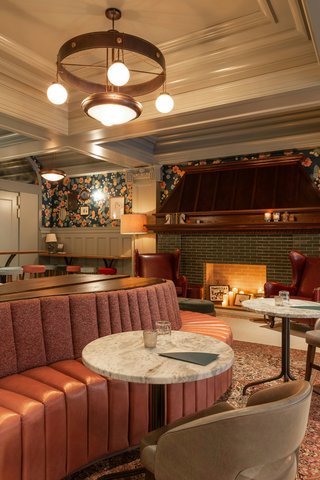
After dark the hotel is a warm low-light interior and should be allowed to look like one. Fast lenses wide open at a raised ISO give frames that match the rooms; one small warm-gelled source at face height fixes the overhead problem wherever legibility matters; and white balance wants setting for the faces and holding through the block, because everything in a warm designed interior bounces warm and auto white balance drifting between frames is the usual reason a sequence fails to match itself.
Ceiling height should be tested once with a single frame, because a boutique hotel may have a normal ceiling where bounce works or a double-height lobby where it does not, and the answer determines the approach for the whole evening.
Steep fall-off in a low-lit designed room is free separation and should be exploited rather than filled in: a couple three metres in front of anything else sits against natural darkness with no equipment at all.
Decorative fittings at a wide aperture become warm points behind a subject, which is the one thing designed hotel lighting does beautifully — provided a bright fitting is not sitting immediately beside a head, where it pulls the eye off the face every time.
Window glass after dark becomes a mirror, because the lit interior is brighter than the street. Lights go off the camera axis, frames go oblique rather than square to the glazing, and the reflection becomes material rather than damage. In a lobby with planting and warm fittings, a doubled reflection is frequently a better frame than the direct one — after checking that no light stand is in it.
Rain in the wet half of the year is workable rather than disabling, which is a genuine difference from most cities in this series. Portland rain tends to be persistent and light rather than violent, so it can be photographed in over hours: wet brick and wet pavement returning reflections of lit windows and signage are good frames, and a couple in a doorway or under an awning with rain beyond is better than the dry version.
A downtown hotel also means shelter is always a few steps away, so an outdoor block does not need abandoning when it starts raining — it needs a different set of positions, and those are the doorways, awnings and alleys that were already the best ones. That is the practical argument for a city-centre venue in Portland between October and May.
More frames from The Woodlark Hotel
The Woodlark Hotel wedding photography: common questions
Why is the running order the main tool?
Because nothing in a boutique hotel’s public rooms changes from morning to midnight, so all the variation available is outside. Put the outdoor block where the light is and fit the interior around it.
Where is the best portrait light?
A guest room. Domestic windows with close walls that bounce and ceilings low enough to return a flash give soft directional light with usable fill.
What extra step does a designed room need?
Finding the plainest patch of wall for the dress and details. Pattern, colour and art behind a hanging dress compete with it and cannot be removed afterwards.
How do you handle the artwork?
Commit to one work deliberately so both it and the couple read, or subordinate it with a long lens at a wide aperture. And ask in advance which works may appear in a published gallery.
Why is the planting useful?
Because in a pale designed interior a mass of foliage is usually the darkest element in the room, which makes it the natural portrait background — separation that pale walls will not give.
How do the seasons move the dusk frame?
A long way. In June the crossing lands well into the reception and needs agreeing in advance; in December it may fall before or during the ceremony, with the whole daylight component over before guests sit down.
More Oregon venue guides
We are writing a photographer’s guide to every venue we would happily shoot in Oregon. Here are three more, plus the full index:
- The McMenamins Edgefield, Troutdale: Field Notes, Problem and Solution
- The Smith Rock State Park, Terrebonne: The Problem, and Four Ways Out of It
- Ainsworth House: Who This Venue Suits, and Who It Doesn’t
Planning a wedding at The Woodlark Hotel?
One outdoor block, timed to the season. Tell us your date and we will place it.