 The Redd on Salmon Street: Building the Shot List
April 26, 2026
Ainsworth House: Who This Venue Suits, and Who It Doesn’t
This is a venue that rewards a guest list under about a hundred and punishes one over it. The photographic case for and against, without the brochure language.
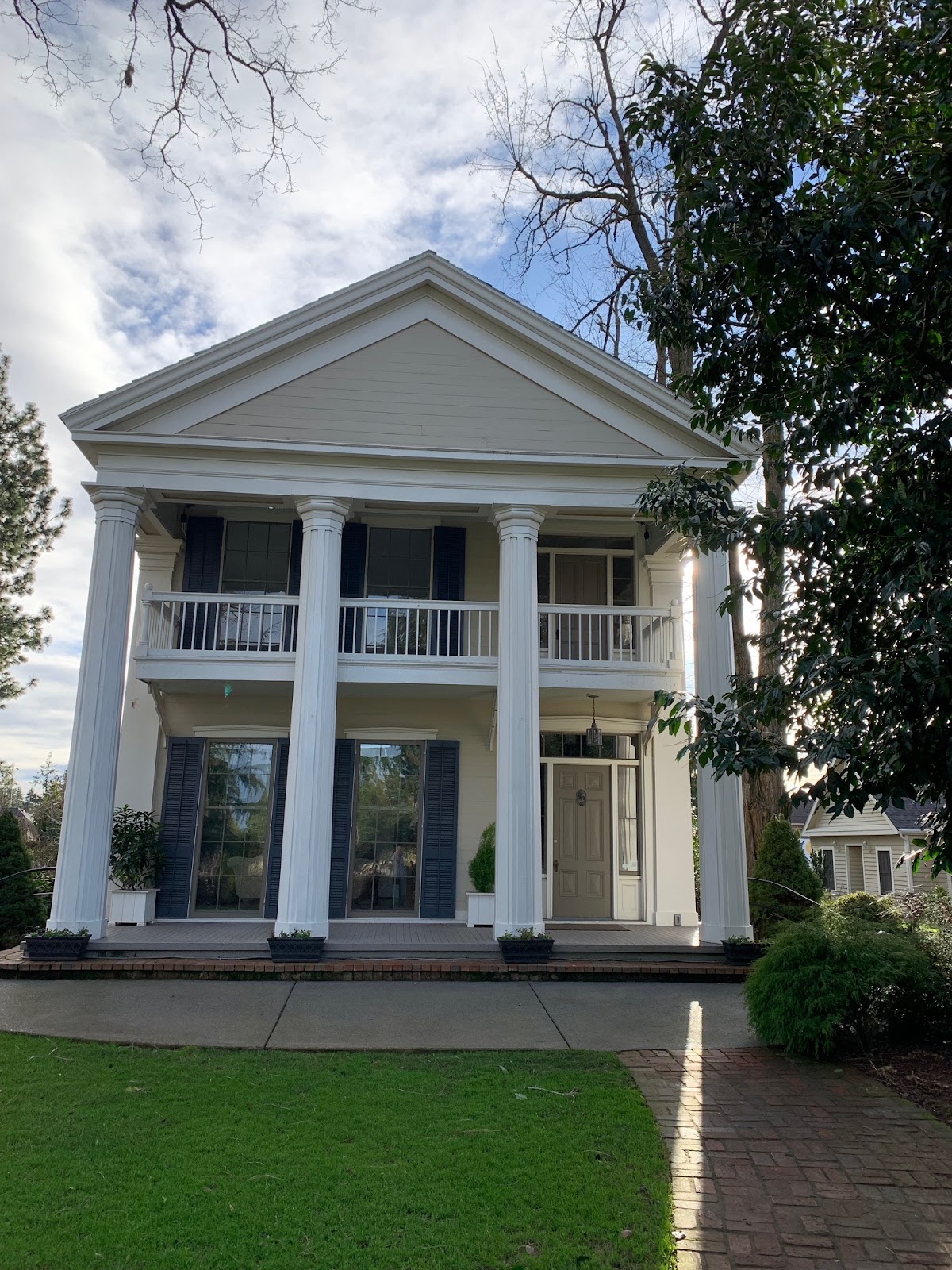
Ainsworth House in Oregon City dates to the early 1850s, which makes it one of the oldest buildings you can get married in anywhere in the Pacific Northwest. It is Classical Revival, white, symmetrical, and — this is the important part — domestic in scale. It was built as a family home, not an institution, and no amount of event styling changes that.
For photographs, small and old is a genuinely different proposition from large and old. You trade grand sweeping frames for intimacy and texture. You trade flexibility for character. Some couples get a gallery out of this venue that a grand hotel could never produce; others spend the day feeling crowded. Which one you are is largely predictable in advance, and that is what this guide is for.
We have not shot here. This is a fit assessment based on the building’s scale and period, the mature garden setting, and how those specific conditions behave photographically — plus Willamette Valley light and weather, which are a matter of record. Capacity, pricing and what the house allows are for their team to confirm.
Ainsworth House at a glance
| Where | Oregon City, Oregon — roughly 25–35 minutes south of downtown Portland |
| Built | Early 1850s, Classical Revival — among the oldest event venues in the region |
| Scale | Domestic. Intimate is the defining characteristic, for better and worse |
| Grounds | Mature garden planting — the strongest photographic asset on the property |
| Light | Soft Willamette Valley overcast much of the year; garden shade in summer |
| Lens plan | 35mm does most of the work; 85mm for garden portraits; skip the long glass |
What the scale actually does to your photographs
In a small period house, the camera is always close to the subject. That is not a limitation so much as a stylistic commitment: you get faces, hands, texture, reaction — the vocabulary of documentary photography — and you do not get the wide establishing frames that make a venue look imposing.
The practical version: a 35mm lens will do most of the work indoors, a 50mm will feel tight, and anything longer is unusable in the rooms. Group photographs are the pinch point. A family of thirty does not fit comfortably in a domestic room, which means groups happen outside, which means groups depend on weather. That single dependency is the biggest planning risk at this venue and it is worth solving early.
The compensation is real. Small rooms with period windows produce beautiful directional light and natural vignetting. You get closeness in the photographs because there is closeness in the room. Guests cannot hide at the back, so the candid coverage is unusually good.
The garden is the reason to book it
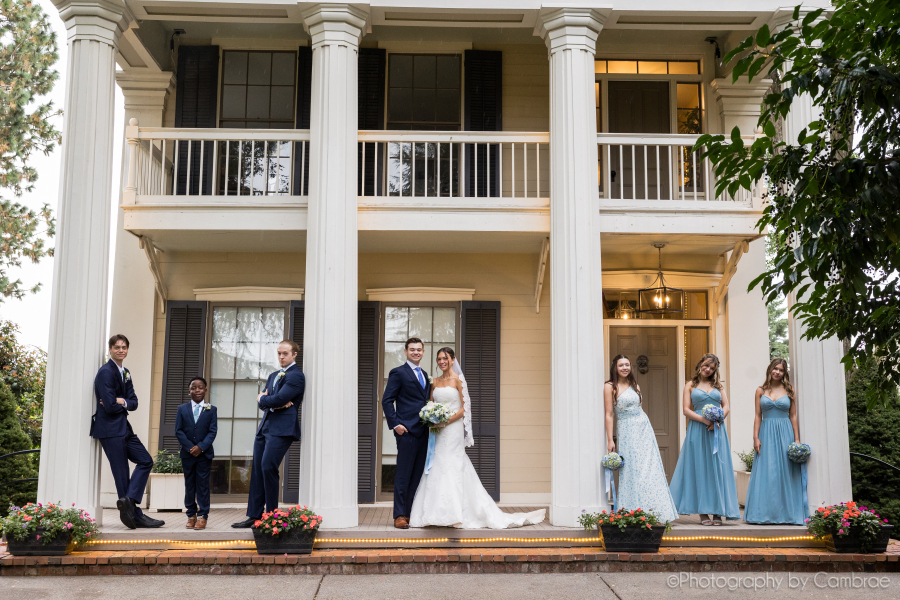
Mature planting is not something a venue can install. It takes decades, and where it exists it is worth more photographically than any built feature. Established trees give you high open shade — the most flattering outdoor light there is — and layered planting gives you depth, so a portrait has foreground, subject and background instead of a flat green wall.
Work the garden in the second half of the afternoon, when the sun is low enough to come through the planting rather than down onto it. Backlight through leaves, shot at a wide aperture, is the single most reliable beautiful frame available in a garden like this. Midday is the time to avoid: high sun through a canopy gives you the hard dappled patches that no sensor can hold.
One caution that applies to all Oregon garden venues: watch for the green colour cast that foliage bounces onto skin. Set white balance in the spot you are shooting rather than trusting auto, and keep a small warm fill on hand to separate faces from all that green.
Who this venue suits
Being specific is more useful than being encouraging. Four kinds of couple do unusually well here.
- Under about a hundred guests, and genuinely happy about it. Everything good about this venue comes from its scale. If the number is creeping upward, the venue will be the thing that breaks.
- Couples who want documentary coverage over formal portraiture. Close quarters produce reaction and interaction. If your reference images are candid and warm rather than grand and posed, this is your building.
- Anyone drawn to texture and period detail. An 1850s house has surfaces a new-build cannot fake — worn timber, old glass, real mouldings. If that is what you like, you will get a great deal of it.
- Couples willing to commit to a covered plan. Not a vague hope that it stays dry, but an actual decided-in-advance answer for where the ceremony and the groups happen in rain.
Who should look elsewhere
The honest inverse, because booking the wrong venue is an expensive mistake and nobody benefits from a soft answer.
- Large guest lists. Past a certain number this stops being intimate and becomes cramped, and cramped photographs badly — people in every frame, nowhere to place a group, no clean backgrounds.
- Couples who want grand, architectural, wide-angle imagery. The building will not give you that. A downtown hotel ballroom or a museum atrium will.
- Anyone planning a late-night, high-energy reception. Assume a residential setting brings sound and finish-time constraints, and confirm them before you plan a band.
- Couples with no tolerance for a weather-dependent day. When the groups have to go outside and it is raining, someone has to make a decision. If that prospect bothers you, pick a venue with a large indoor alternative.
The rain question, answered properly
Western Oregon gets rain on a large share of days outside high summer, and at a venue whose indoor space is domestic in scale, rain is not a cosmetic issue — it changes where people physically stand.
So the plan needs to be concrete before the day. Where does the ceremony happen if it is wet? Where do thirty relatives stand for a group photograph? Is there covered outdoor space, and how much? These are questions for the venue, and the answers should be specific enough to draw on a plan.
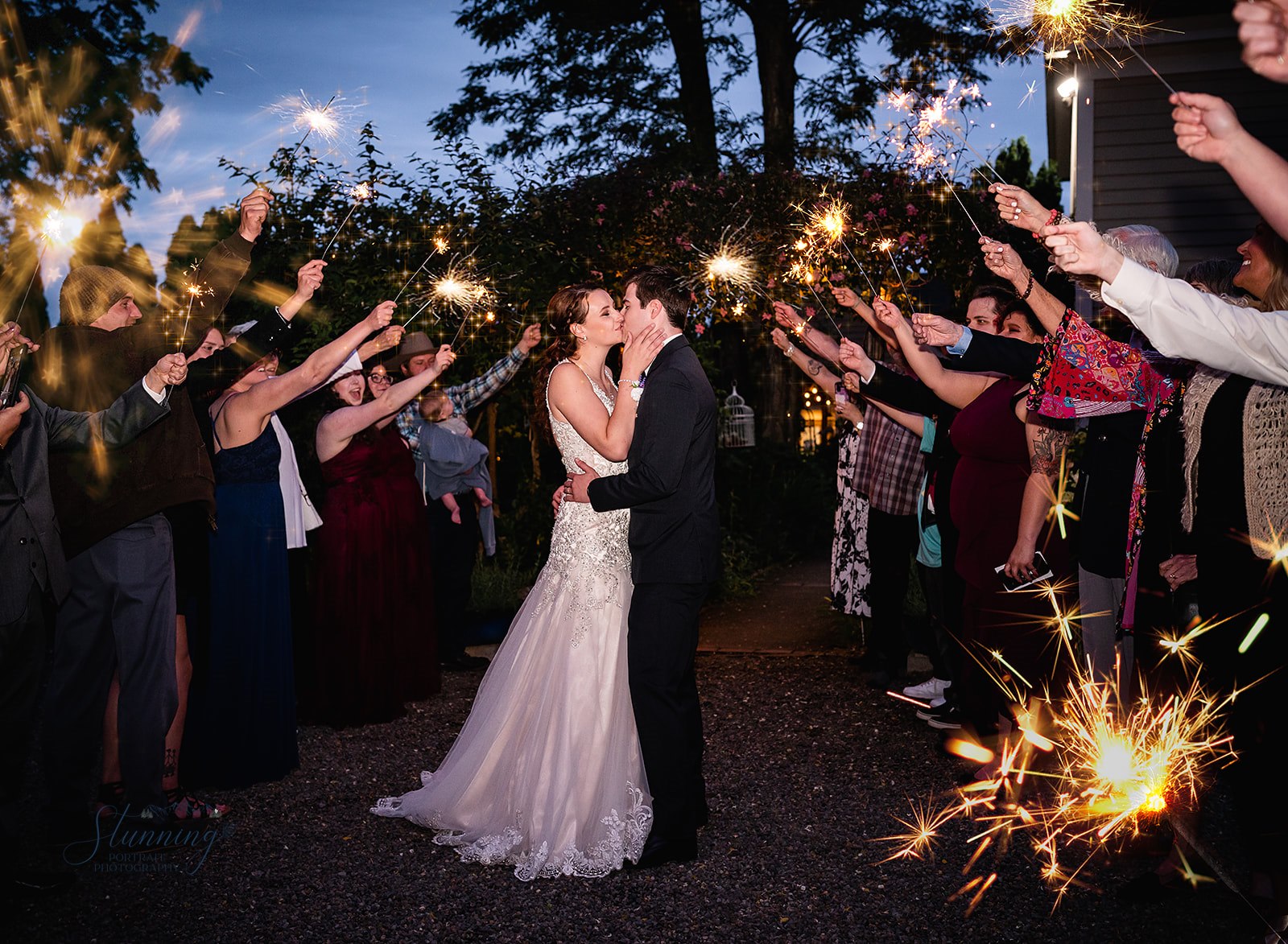
Photographically, rain at a garden venue like this is not a disaster at all. Wet foliage saturates, light goes soft and even, and an old white house against a grey sky is a perfectly good photograph. Clear umbrellas keep the light on faces neutral. The problem rain creates is logistical, not aesthetic — which is precisely why it is solvable in advance.
What works in your favour
- Genuine 1850s architecture — among the oldest wedding venues in the Pacific Northwest
- Mature garden planting that no newer venue can replicate, giving high open shade and real depth
- Intimate scale produces unusually strong candid and documentary coverage
- Soft regional overcast is naturally flattering light for most of the year
- Close to Portland without being in it
What to plan around
- Domestic room sizes make large group photographs difficult or impossible indoors
- Weather-dependent in a climate that does not cooperate — the covered plan matters more here than at most venues
- Wide architectural frames are not available; the building is not built for them
- Green colour cast from heavy planting needs managing on the day
- Assume noise and end-time limits in a residential setting until confirmed otherwise
Ainsworth House wedding photography: common questions
How many guests does Ainsworth House photograph well with?
Our honest read is that the photographic sweet spot is under about a hundred, because everything that makes the venue special comes from its domestic scale. Confirm the actual permitted capacity with the venue — but capacity and the number it looks good with are different questions, and the second one matters for your gallery.
Can we do large family group photos there?
Not comfortably indoors. The rooms were built for a family, not for a thirty-person group shot, so groups realistically happen in the garden. That makes them weather-dependent, which is why we would settle the wet-weather location for groups at the planning stage rather than on the day.
Is the garden better than the house for portraits?
For portraits, generally yes. Mature planting gives you high open shade and layered depth, which is the most flattering and most interesting outdoor light available. Work it in the later afternoon so the sun comes through the planting rather than straight down onto it, and avoid midday when dappled light is at its harshest.
What happens if it rains?
Aesthetically, very little — wet foliage saturates, the light goes soft and even, and an old white house under grey sky photographs well. Logistically it matters a lot, because a small house has limited indoor room. Ask the venue exactly where a ceremony and a group photograph happen in rain, and get an answer specific enough to plan around.
What lenses suit this venue?
A 35mm will do most of the indoor work, with an 85mm for garden portraits. A 50mm feels tight in the rooms and anything longer is unusable indoors. It is a close-quarters venue, which is exactly why the candid coverage tends to be strong.
More Portland, OR venue guides
We are writing a photographer’s guide to every venue we would happily shoot in Portland, OR. Here are three more, plus the full index:
- Shooting a Wedding at the Crystal Ballroom: The Technical Side
- Hoyt Arboretum: A Season-by-Season Photography Guide
- Leftbank Annex: Field Notes on an Industrial Venue
All Portland, OR Wedding Venues →
Planning a wedding at Ainsworth House?
If you are weighing Ainsworth House, the two things worth settling first are your final guest number and where everyone stands if it rains. Send us your date and your rough headcount and we will tell you honestly whether this venue will flatter your day or fight it.