 The Redd on Salmon Street: Building the Shot List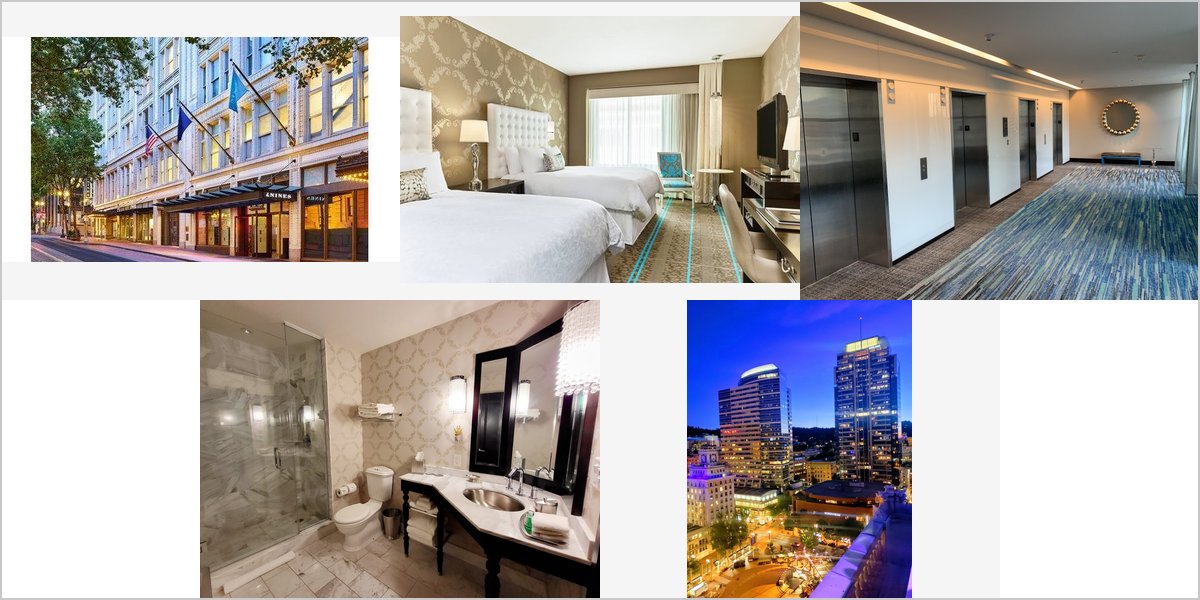
June 21, 2026
The Nines: A Walk-Through for Wedding Photographs
One architectural feature defines this venue: a covered atrium lit from above through glass. That gives you weather-proof daylight, which almost no downtown hotel can offer.
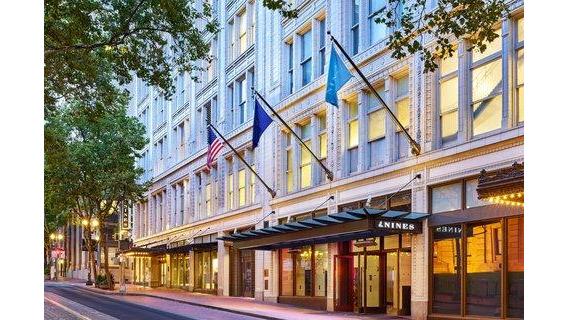
The Nines occupies the upper floors of the former Meier & Frank department store on Southwest Morrison in downtown Portland, a building whose lower floors still trade as a department store. The hotel’s defining move is an atrium cut through the centre of the floorplate and roofed in glass, with the guest rooms looking inward onto it and the restaurant and lounge sitting at its base.
For a wedding photographer that atrium is genuinely unusual and genuinely valuable. It is interior space — so it is weather-proof, private and unaffected by wind — lit from directly above by daylight through glass. Most downtown hotels give you a windowless ballroom and nothing else. This one gives you a naturally lit room that rain cannot touch.
What follows walks through the building in the order you would shoot it. We have not photographed a wedding here; the atrium’s behaviour is predicted from what overhead glazing does to light, which is thoroughly predictable. Which spaces your event includes, and what the hotel permits, are for their events team.
The Nines Hotel at a glance
| Where | SW Morrison, downtown Portland — upper floors of the historic Meier & Frank building |
| Defining feature | A central atrium roofed in glass, with rooms looking inward onto it |
| Light | Overhead daylight through glass — soft, top-down, and weather-independent |
| Main challenge | Top-down light makes deep eye shadows; needs fill or careful positioning |
| Why it matters in Portland | Natural light that rain cannot cancel |
The atrium: what overhead glazing actually does
Light from directly above is soft in quality and difficult in direction. Because it comes straight down, it lands on foreheads, noses and cheekbones and leaves eye sockets in shadow — the same problem as museum track lighting, but broader and gentler. Left uncorrected, portraits in a top-lit atrium look slightly sunken and tired.
The corrections are easy once you know to make them. Have people tilt their chins up very slightly, which lifts the eyes into the light. Use a reflector on the floor or a white surface to bounce light back upward. Or position subjects near one of the atrium’s vertical surfaces so light bouncing off the wall becomes a side source. Any of the three turns awkward top light into flattering light.
The quality of that light changes sharply with the weather, and in a useful way. Overcast — which Portland supplies most of the year — turns the glass roof into an enormous diffuser and produces beautifully even illumination. Bright sun is harder: it throws the shape of the glazing bars across the floor as hard-edged stripes, and a stripe across a face is unusable. On sunny days work in the shaded portions and treat the patterned light as background.
Guest rooms: the inward-facing quirk
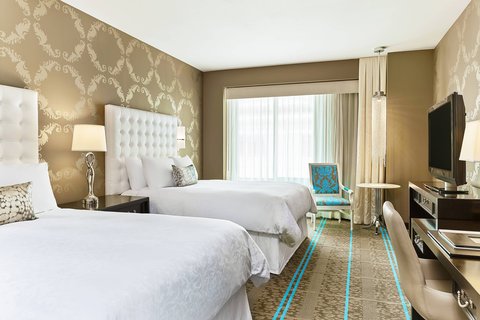
Because many rooms look into the atrium rather than out at the city, the getting-ready light here has an unusual character: it is borrowed daylight, already diffused twice, arriving through the room’s inward window. It is soft and even but not very bright, and it has almost no direction.
That suits some coverage and not others. It is forgiving for detail photographs — rings, shoes, invitations, dress hanging — where softness is welcome. For portraits it can be too flat, so it is worth asking whether an outward-facing room with a street view is available, since a window onto downtown gives directional light and a city backdrop.
Either way, the routine is the same as any hotel: turn off the room lights so you are not mixing tungsten with daylight, move the clutter, and work close to the glass.
Ballroom and event rooms: assume you are the light
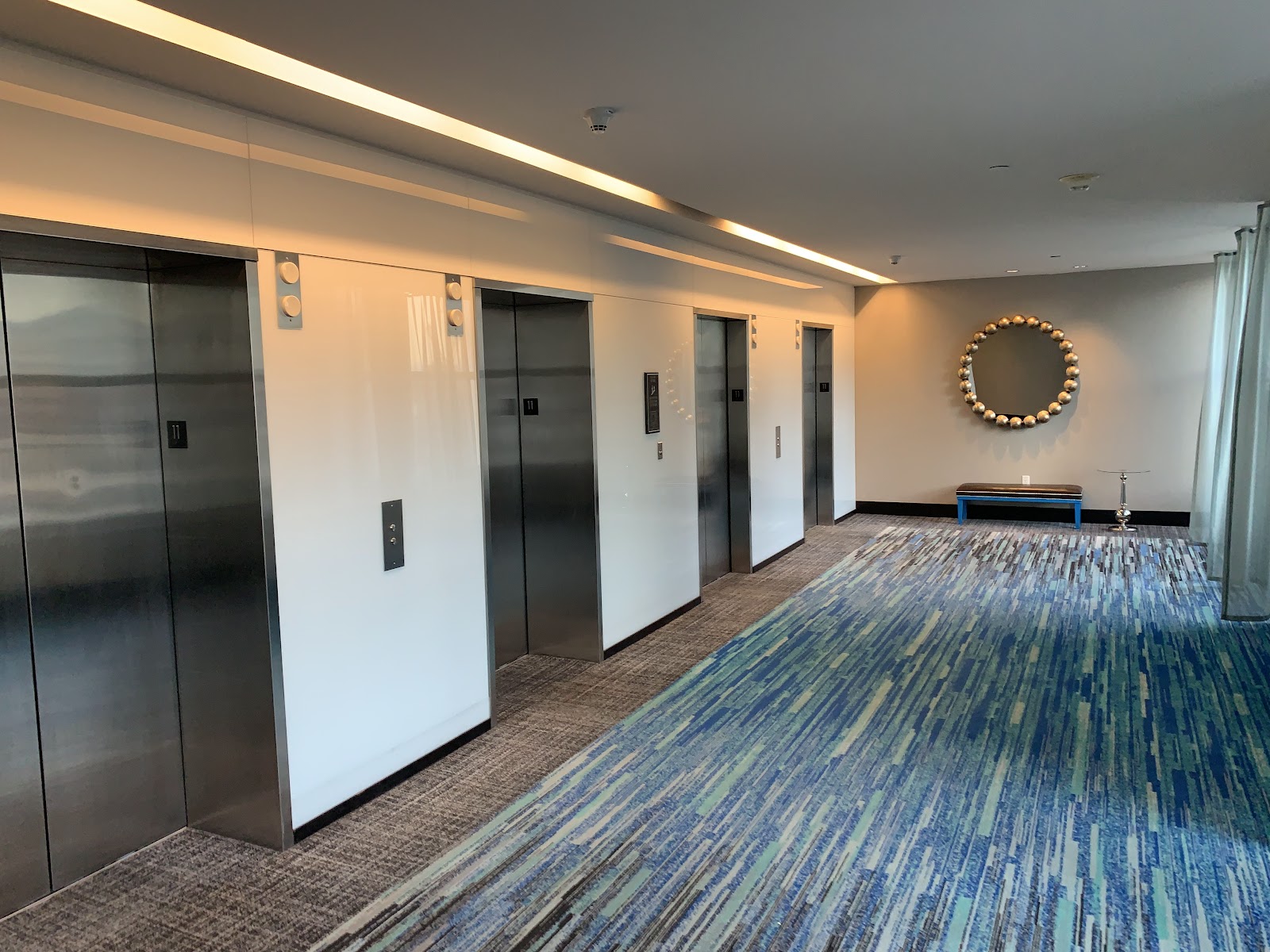
The function rooms are conventional modern hotel spaces — good ceiling height, neutral finishes, recessed and decorative fixtures, no daylight to speak of. That means the reception is an artificial-light assignment, and a fairly standard one.
The advantage of neutral modern rooms over ornate historic ones is that they take added light well. Pale ceilings and walls actually return a bounced flash, so ceiling bounce works here in a way it does not in a dark 1914 ballroom. One or two off-camera units, gelled to match the room’s warmth, will produce clean directional light without a fight.
The disadvantage is the familiar one: the room will not identify itself in a photograph. So the atrium and the building’s historic bones carry the venue’s visual identity, and the function rooms carry the party. Plan the portraits for the atrium and do not expect the ballroom to do that work.
Outside: a downtown block with real history
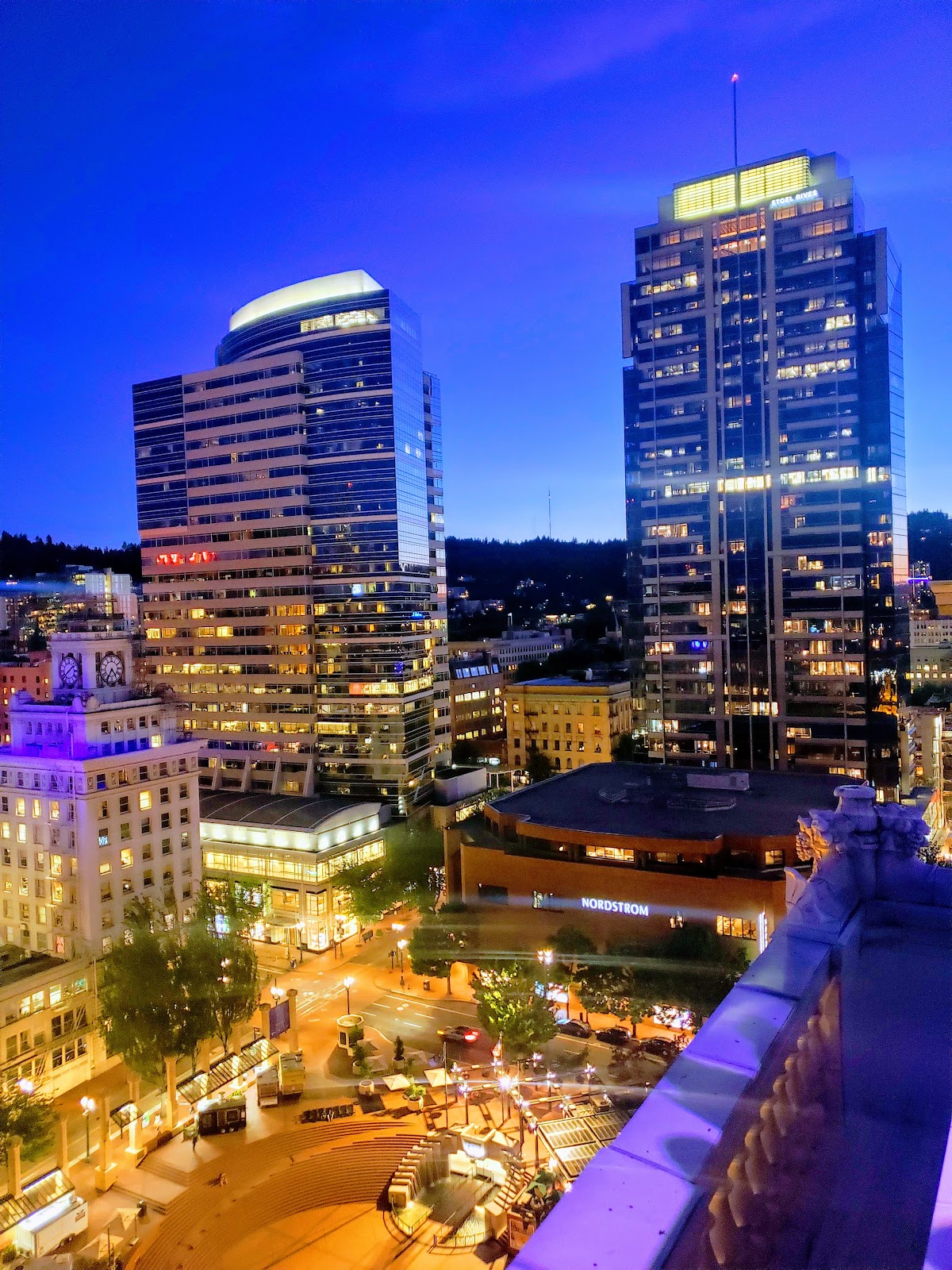
The Meier & Frank building is a significant piece of Portland architecture, and the surrounding blocks are dense, detailed and walkable. That gives you a genuine exterior option within a minute of the lobby, which matters when the alternative at many hotels is a car park.
The best exterior window is the twenty minutes after sunset, when streetlight and sky balance and the terracotta and stone hold their colour. Wet pavement, which is the default for much of the year, doubles every light source and makes a night street portrait considerably better rather than worse.
A practical note: this is a busy retail core, so there will be people and traffic. Longer lenses and shallow depth of field handle that, and the crowds thin markedly on a Sunday evening or after around nine o’clock.
A last practical point about working a busy retail block: the department store below and the offices around it empty out on a schedule, and that schedule is your friend. A Saturday evening after about seven, or any Sunday, gives you the architecture without the foot traffic, and the difference in how clean the frames look is substantial. If your timeline has any flexibility about when the couple steps outside, spend it here rather than on the ceremony hour.
What works in your favour
- A glass-roofed atrium giving natural light that is completely weather-independent
- Overcast conditions, the Portland default, turn the atrium roof into an enormous softbox
- Neutral modern function rooms accept bounced and off-camera flash easily
- Historic Meier & Frank architecture and a dense walkable downtown block outside
- Accommodation on site, simplifying the getting-ready logistics
What to plan around
- Overhead atrium light creates deep eye shadows unless actively corrected
- On sunny days the glazing bars throw hard stripes that are unusable across faces
- Inward-facing guest rooms give soft but flat and fairly dim light, with no city view
- Function rooms are visually anonymous and will not carry a frame alone
- A busy retail core outside means crowds and traffic in exterior frames
More frames from The Nines Hotel
The Nines Hotel wedding photography: common questions
What makes The Nines unusual for wedding photographs?
The glass-roofed central atrium. It is interior space, so it is private, windless and weather-proof, but it is lit by daylight from above. Very few downtown hotels can offer natural light that rain cannot cancel, and in Portland that is a real advantage.
Is the atrium light flattering?
Soft, but directionally awkward — it comes straight down, so it lands on foreheads and leaves eye sockets in shadow. Three easy fixes: have people lift their chins slightly, bounce light back up from a reflector or pale floor, or position them near a wall so bounced light acts as a side source.
Is overcast or sunny better there?
Overcast, clearly. Cloud turns the glass roof into an enormous diffuser and gives beautifully even light. Bright sun casts the shape of the glazing bars onto the floor as hard stripes, and a stripe across a face cannot be used — on sunny days work in the shaded areas and treat the pattern as background.
Do the guest rooms have good light?
It depends which way they face. Many look inward onto the atrium, giving soft but flat and fairly dim borrowed daylight — forgiving for detail shots, less good for portraits. If you can request an outward-facing room with a street view, you get directional light and a city backdrop instead.
Where are the best outdoor portraits?
On the surrounding downtown blocks in the twenty minutes after sunset, when streetlight and sky balance and the historic stonework holds its colour. Wet pavement improves it. Use longer lenses to manage the crowds, which thin considerably late in the evening.
More Portland, OR venue guides
We are writing a photographer’s guide to every venue we would happily shoot in Portland, OR. Here are three more, plus the full index:
- A Photographer’s Walk-Through of Pittock Mansion
- Portland Art Museum: Planning the Shot List
- Photographing a Wedding at the Portland Japanese Garden
All Portland, OR Wedding Venues →
Planning a wedding at The Nines Hotel?
The atrium is the reason to shoot here, and it behaves completely differently on a cloudy day than a sunny one. Tell us your date and we will plan the portrait timing around what the glass roof will actually be doing.