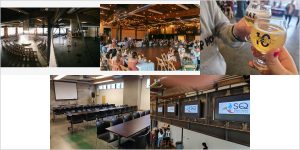
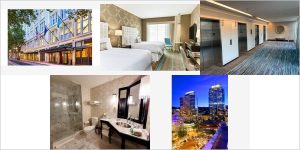
 The Redd on Salmon Street: Building the Shot List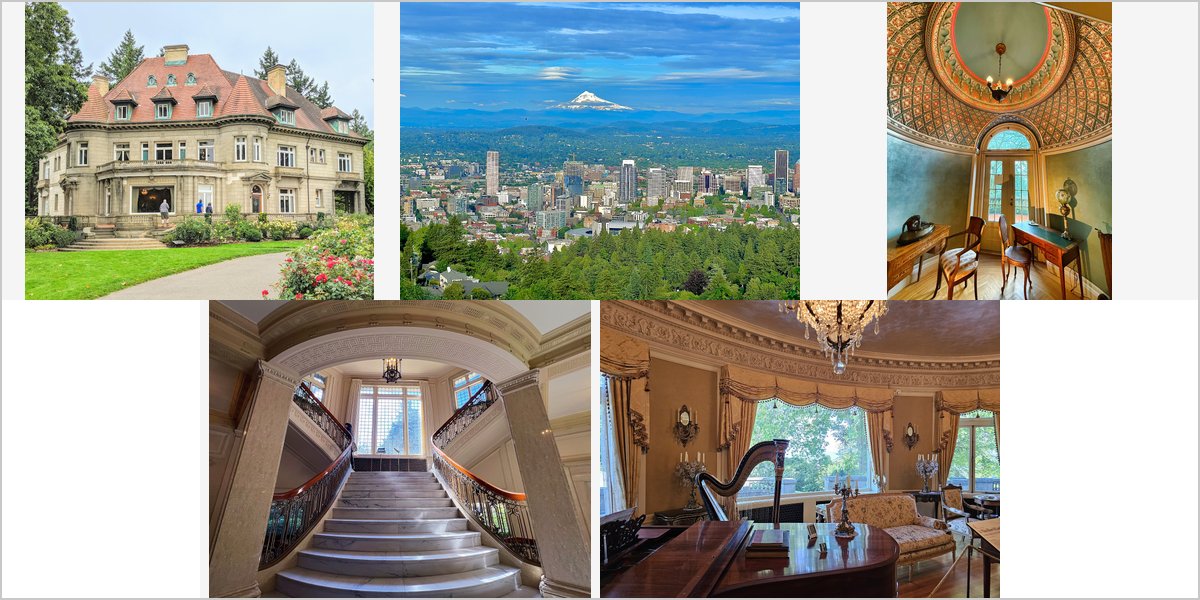
April 19, 2026
A Photographer’s Walk-Through of Pittock Mansion
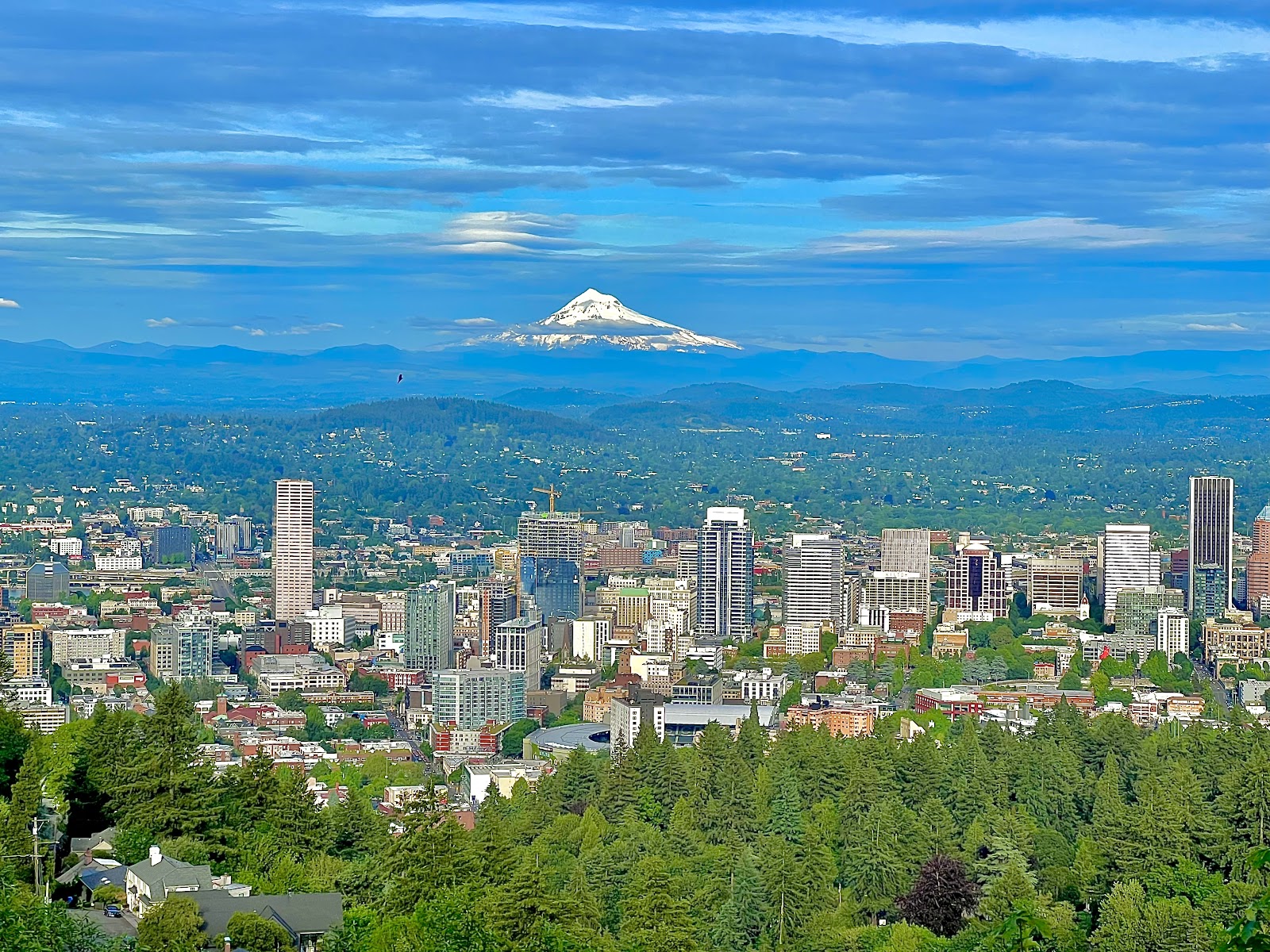
Two things define photography here: the view west over Portland, and the fact that a 1914 mansion has small windows and dark wood. Plan for both and it is one of the finest venues in the Pacific Northwest.
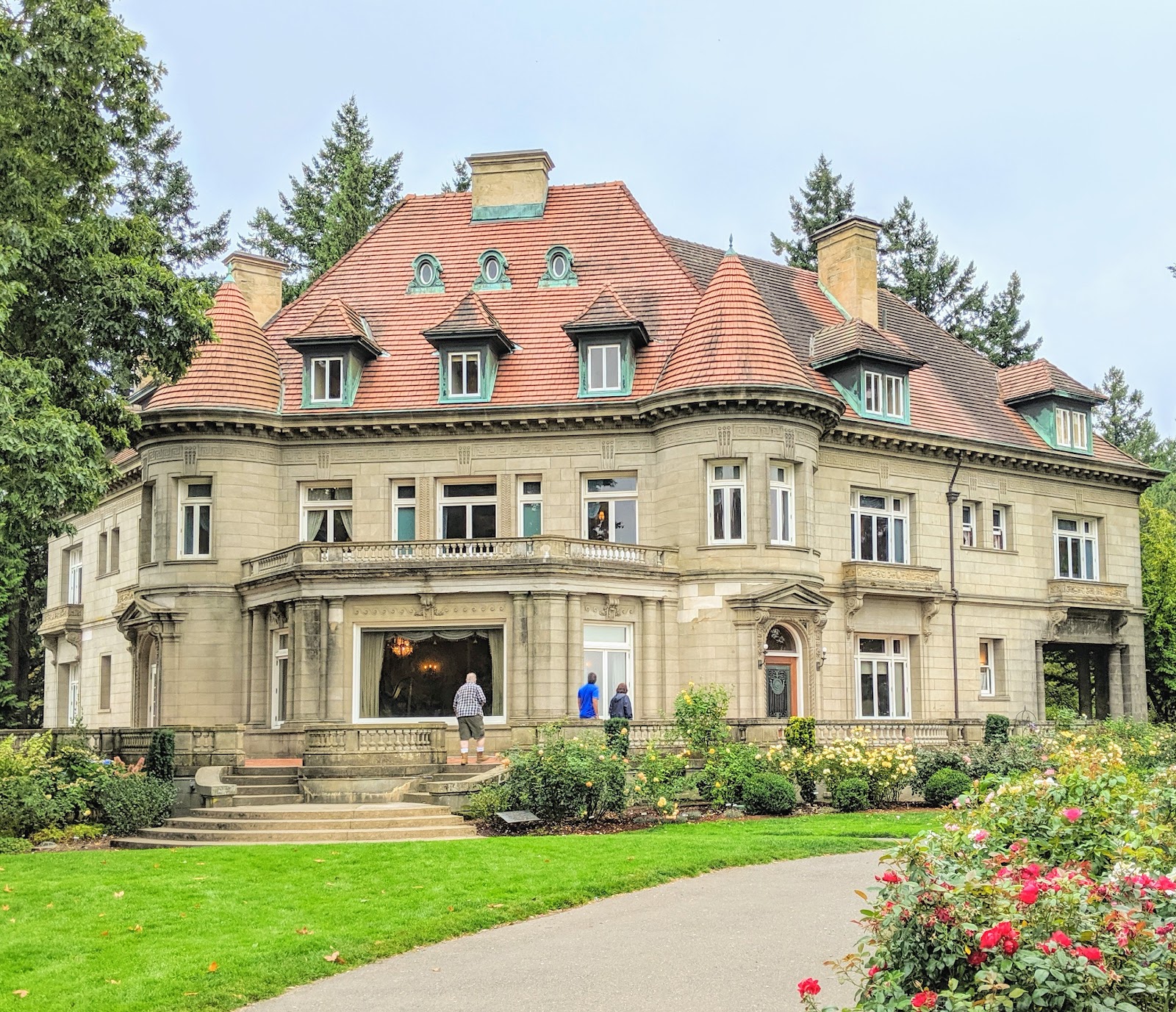
Pittock Mansion sits at roughly 1,000 feet in the West Hills, which makes it the highest-profile view in Portland and the coldest, windiest venue in the city on any given afternoon. Henry and Georgiana Pittock’s 1914 house is French Renaissance in style, 23 rooms, and built at a moment when large plate glass was expensive — so the windows are generous by 1914 standards and modest by modern ones.
That combination is the whole photographic story. Outside, a panorama over the city with Mount Hood behind it on a clear day. Inside, richly panelled rooms that swallow light. A photographer who treats those as two different assignments does well here; one who wanders in expecting a bright modern venue does not.
We have not photographed a wedding at Pittock. What follows is a walk-through built on the architecture, the elevation and the craft of shooting period interiors — plus the local light behaviour, which is knowable. Anything about what the house permits, ask their events office; a historic property with museum status tends to have firm and changing rules.
Pittock Mansion at a glance
| Where | 3229 NW Pittock Drive, West Hills, Portland, Oregon |
| Built | 1914, French Renaissance revival, 23 rooms |
| Elevation | About 1,000 feet — expect wind and a 5–8°F drop versus downtown |
| The signature frame | West-facing city panorama, Mount Hood behind on a clear day |
| Hardest thing | Dark panelled interiors with modest windows; mixed tungsten and daylight |
| Lens plan | 24mm for the rooms, 85mm for the terrace, and something fast for everything |
Arriving: the approach and the terrace
The drive up is a winding climb through Forest Park, and it takes longer than a map suggests. Build in the extra fifteen minutes — nothing sours a timeline faster than a wedding party arriving hot and late at a venue with a hard end time.
The terrace and lawn on the city side are where the venue earns its reputation. The view faces broadly west over Portland, which has a precise consequence: this is a sunset venue, not a sunrise one, and the golden hour here is genuinely golden rather than an abstraction. On a clear evening the light comes in low and sideways across the whole party, rimming everyone, and the city behind goes hazy and warm.
It also means the sun is in your subjects’ eyes and in your lens. Backlighting a couple against that view is the shot everyone wants, and it requires either a fill source or an acceptance that the city will blow out. We would bring a small flash on a stand and feather it, exposing for the sky and lifting the faces — the one place at this venue where artificial light genuinely earns its keep.
Inside: shooting a 1914 interior honestly
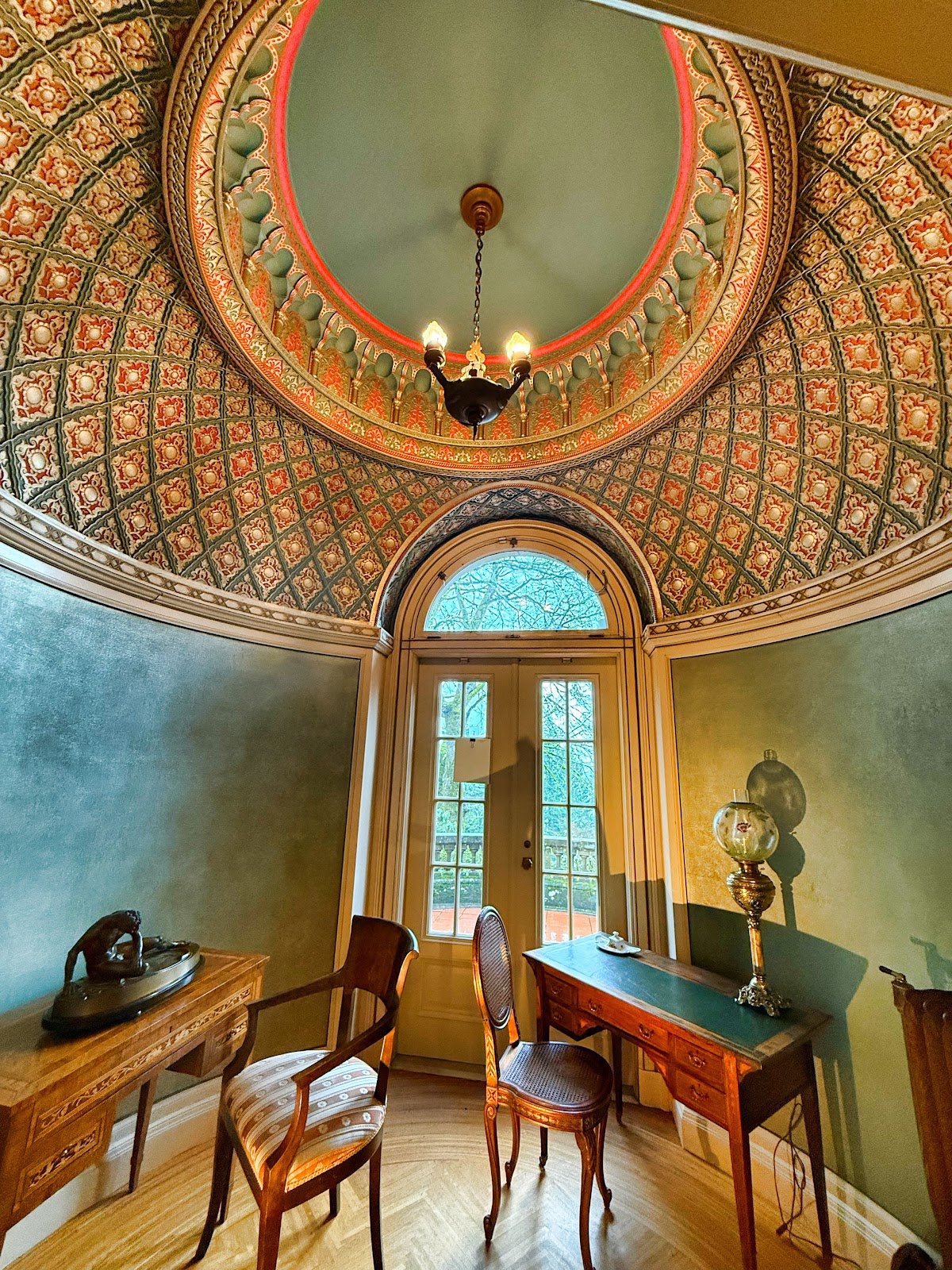
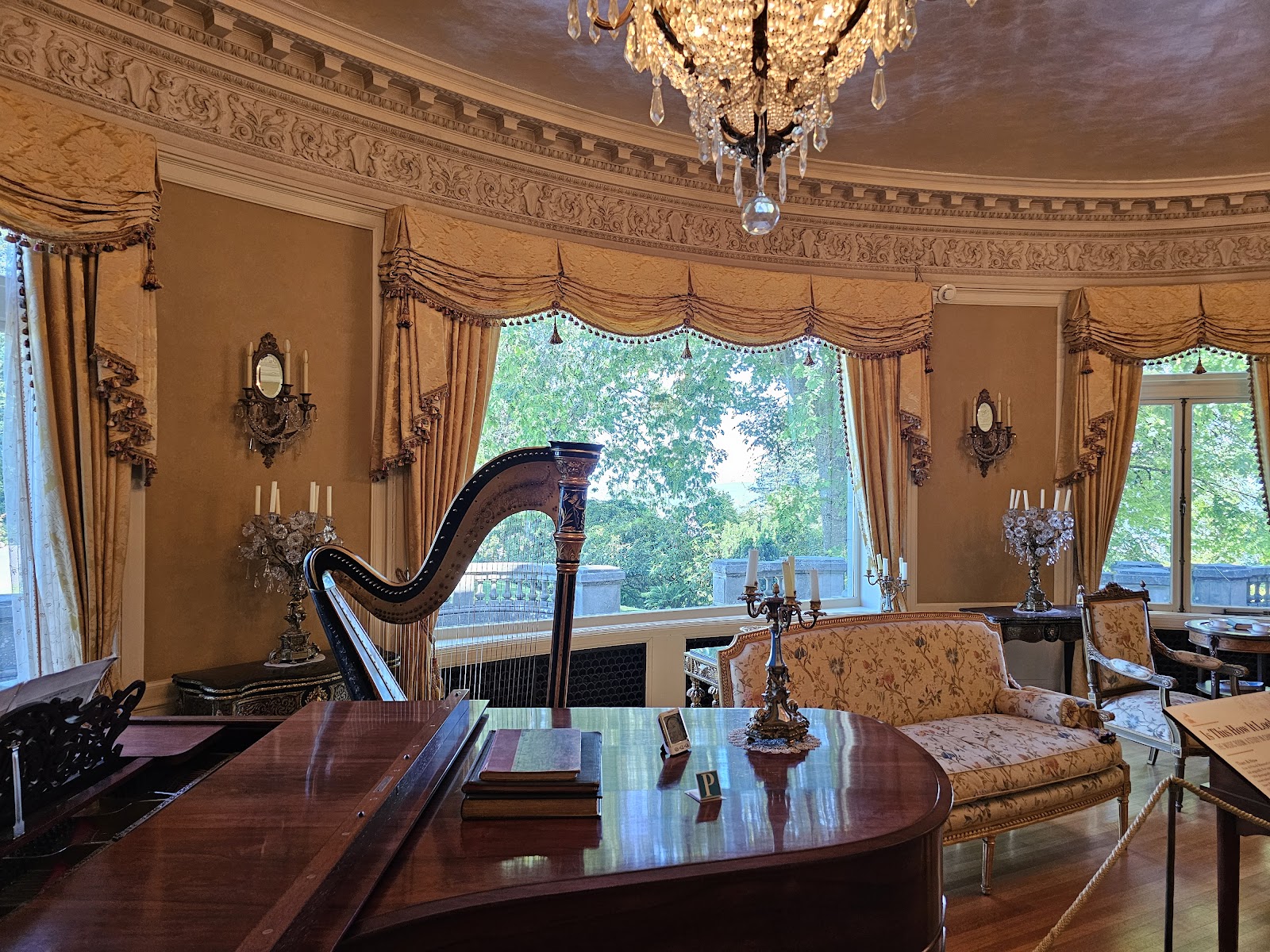
Period interiors are a specific technical problem. The panelling is dark and drinks light, the ceilings are high enough that bouncing a flash into them does very little, and the fixtures are warm tungsten sitting alongside cool daylight from the windows. Point a flash at that and you get the flat, two-temperature look that makes historic houses read as hotel conference rooms.
The better method is to use the windows as your key and work close to them. Put the couple within a metre of the glass, turn them into it, and you have soft directional light with genuine falloff — the look those rooms were designed for. Then expose for their faces and let the depth of the room go properly dark. Underexposed shadow is not a fault in a house like this; it is the character.
Where you do need to add light, gel it to match the tungsten and bounce it off something pale rather than firing direct. And shoot the architecture as architecture: a staircase, a plaster ceiling, a window seat, all worth frames of their own. Detail photographs of a house this good give a gallery somewhere to breathe between portraits.
- Work within a metre of a window — the single highest-value habit in any historic interior
- Let the room fall off into shadow rather than lifting it flat with bounce
- Gel any added light to tungsten so it sits inside the existing colour rather than fighting it
- Expect to shoot wide open at ISO levels that would look alarming outdoors
- Ask about tripods and stands early — museum-status properties commonly restrict both
The elevation is a wardrobe problem before it is a photographic one
A thousand feet of elevation and an exposed hilltop means it is reliably several degrees cooler than downtown Portland and considerably windier. In May and October that gap is the difference between comfortable and miserable, and it shows in photographs immediately — hunched shoulders, hair across faces, a bride gripping a wrap.
The practical answer is to tell people in advance and plan the outdoor portion in a tight block rather than spreading it across the evening. Wind also rules out most light modifiers; a softbox on a stand at this elevation is a sail, and a weighted stand is the minimum if you use one at all.
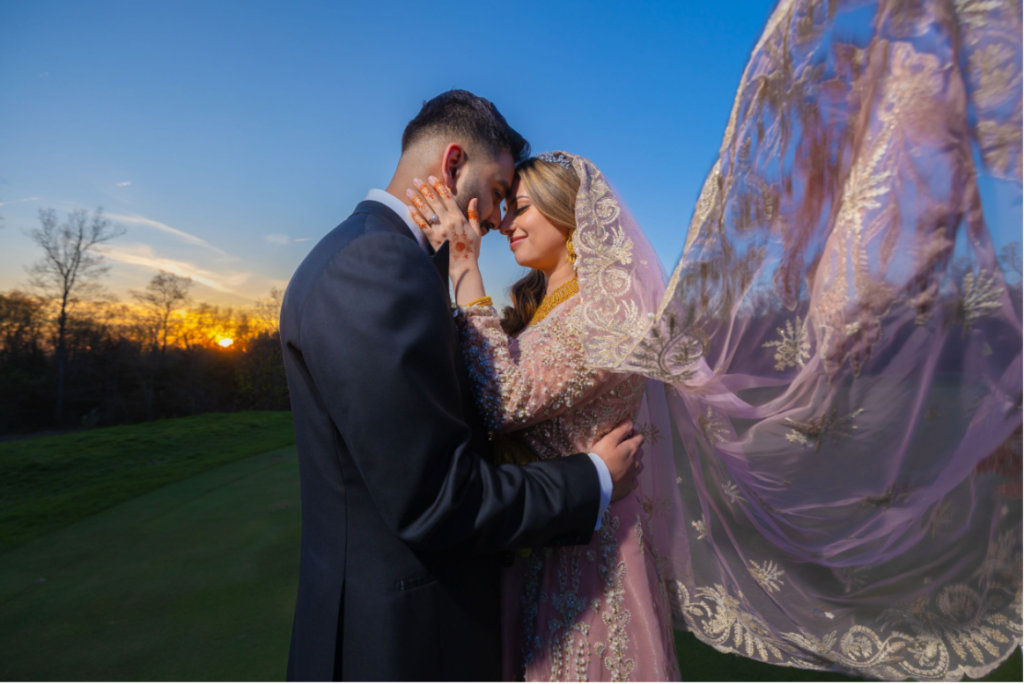
There is an upside. Wind moves veils and dress fabric in ways you cannot fake, and on a hilltop it does so consistently. A veil shot here is easier than at a sheltered venue — you simply have to be ready for it rather than fighting for it.
When to schedule, month by month
Portland’s cloud cover is the dominant variable, and at this venue it cuts both ways: overcast flatters the interiors and the portraits, and ruins the view that you came up the hill for.
June through September gives the best odds of a clear evening and a visible Mount Hood, along with the longest usable light. Late spring and early autumn trade view reliability for better colour in the grounds and fewer visitors. The winter months are genuinely difficult — short days, frequent cloud sitting at exactly this elevation, and a real chance the city simply is not there.
Whatever the month, we would put the couple’s portraits in the final ninety minutes of daylight and keep a fallback interior location chosen in advance. Deciding where to go when the hilltop clouds in is a conversation to have at the planning stage, not while everyone stands in it.
What works in your favour
- The best elevated city view available at any Portland wedding venue, facing west into the sunset
- Genuinely beautiful period architecture that photographs as a subject in its own right
- Two completely different looks — grand exterior panorama and intimate dark interior — in one location
- Wind gives you veil and fabric movement most venues cannot
What to plan around
- Interiors are dark; this is a high-ISO, fast-glass venue and there is no way around it
- Mixed tungsten and daylight indoors needs deliberate handling or skin tones go strange
- Exposed hilltop: cold, windy, and hard on both guests and light modifiers
- Cloud at 1,000 feet can erase the view entirely, especially outside summer
- A winding uphill approach that eats more time than anyone budgets
- Museum-status property — assume restrictions on tripods, stands and room access until told otherwise
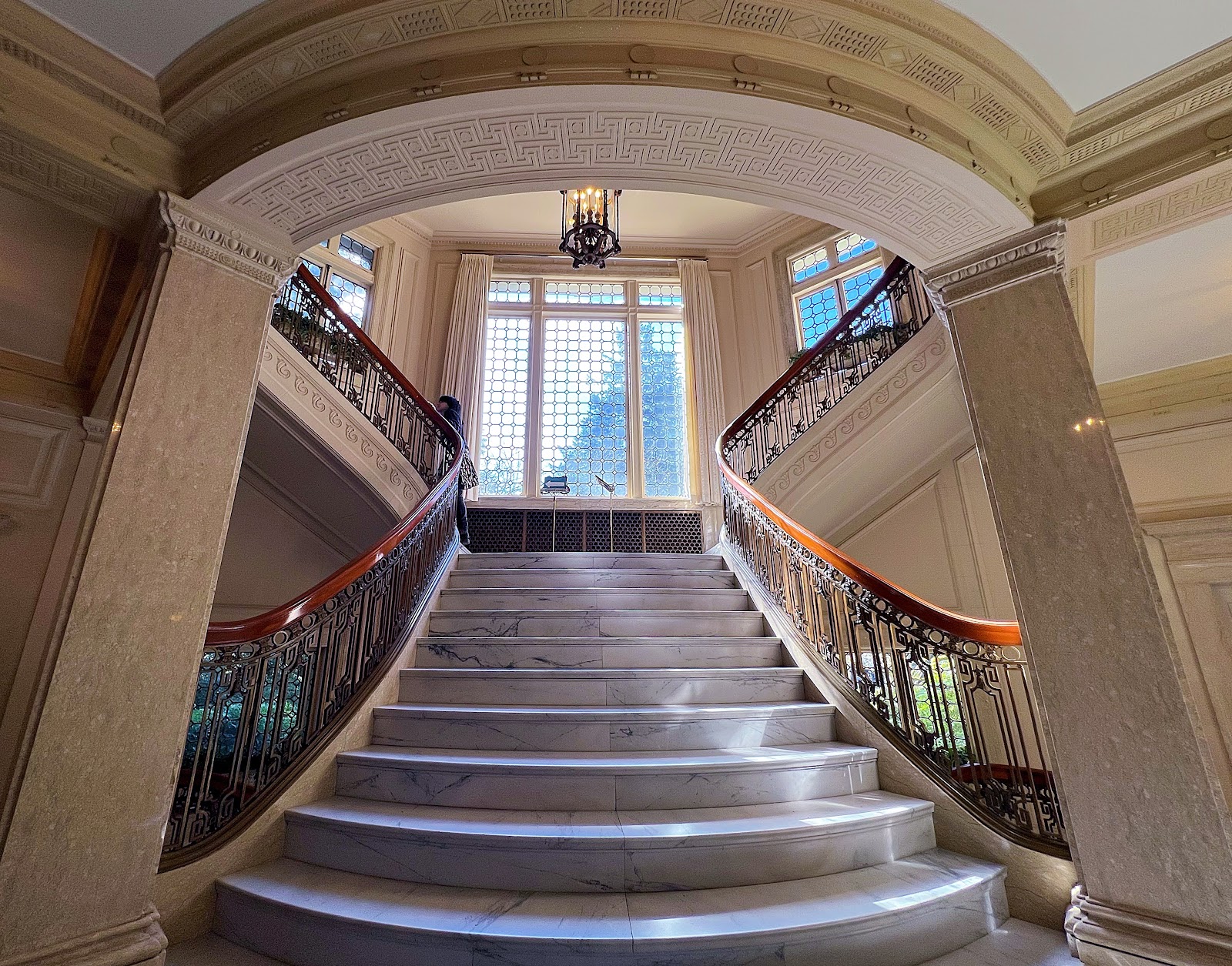
More frames from Pittock Mansion
Pittock Mansion wedding photography: common questions
Is Pittock Mansion a dark venue for wedding photos?
Indoors, yes. It is a 1914 house with dark panelling, high ceilings and windows that are modest by modern standards, so the interiors need fast lenses and high ISO. The working method is to use the windows as your key light and let the depth of the rooms fall into shadow rather than flattening everything with bounced flash.
What time of day is best at Pittock Mansion?
The last ninety minutes of daylight. The terrace faces broadly west over Portland, so this is a sunset venue and the low sideways light across the city is the reason to be there. It does mean shooting into the sun for the signature frame, which is where a small fill light earns its place.
Can you see Mount Hood from the venue?
On a clear day, yes — it sits behind the city in the view. Your odds are best from June to September. Outside those months cloud frequently sits at the mansion’s own elevation of roughly 1,000 feet and the view can disappear completely, so always plan an interior fallback.
How much colder is it than downtown Portland?
Typically several degrees, and noticeably windier because the site is exposed. In spring and autumn that is the difference between comfortable and cold for guests in formalwear. Tell people in advance, and keep the outdoor portion to a tight block rather than spreading it out.
Are tripods and lighting stands allowed?
Treat that as unknown until the venue confirms. Historic houses operating as museums commonly restrict tripods, light stands and access to particular rooms, and those rules change. Plan a natural-light approach for the interiors and check before committing to any lit setup.
More Portland, OR venue guides
We are writing a photographer’s guide to every venue we would happily shoot in Portland, OR. Here are three more, plus the full index:
- Portland Art Museum: Planning the Shot List
- Photographing a Wedding at the Portland Japanese Garden
- The Redd on Salmon Street: Building the Shot List
All Portland, OR Wedding Venues →
Planning a wedding at Pittock Mansion?
If Pittock Mansion is on your list, the two questions worth answering early are what the light will be doing on your date and where you go if the hill clouds in. Tell us your date and we will walk you through both, honestly, before you commit.