 The Redd on Salmon Street: Building the Shot List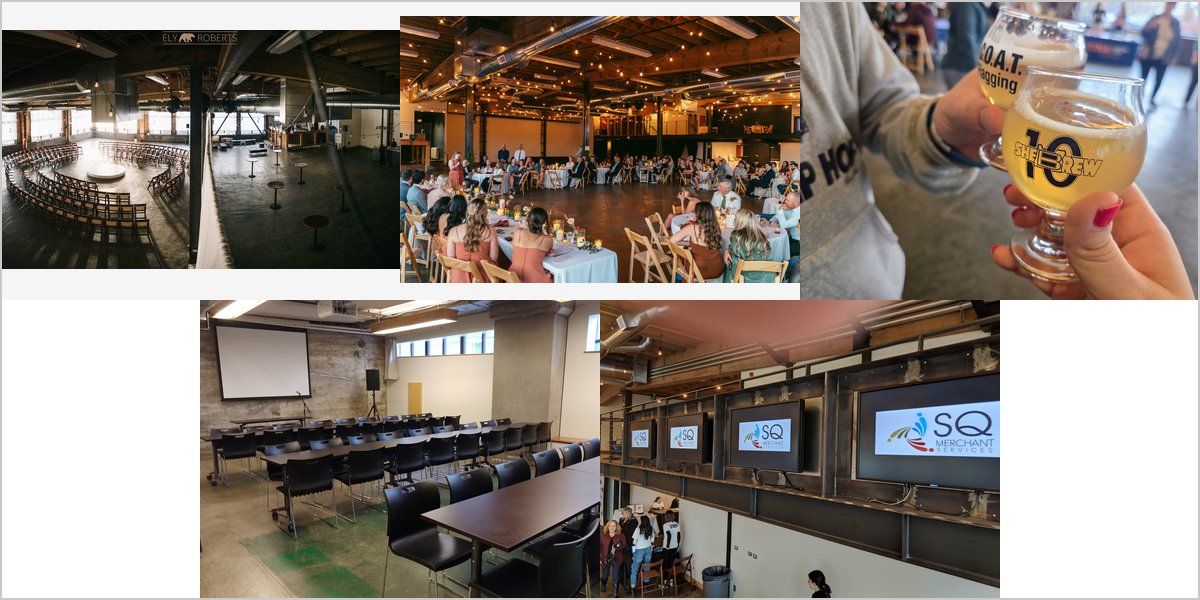
June 28, 2026
Leftbank Annex: Field Notes on an Industrial Venue
A blank industrial box is the most flexible venue type and the least forgiving. Nothing is provided — not the light, not the backgrounds, not the atmosphere.
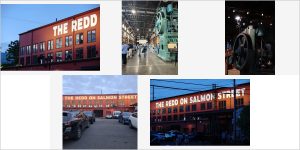
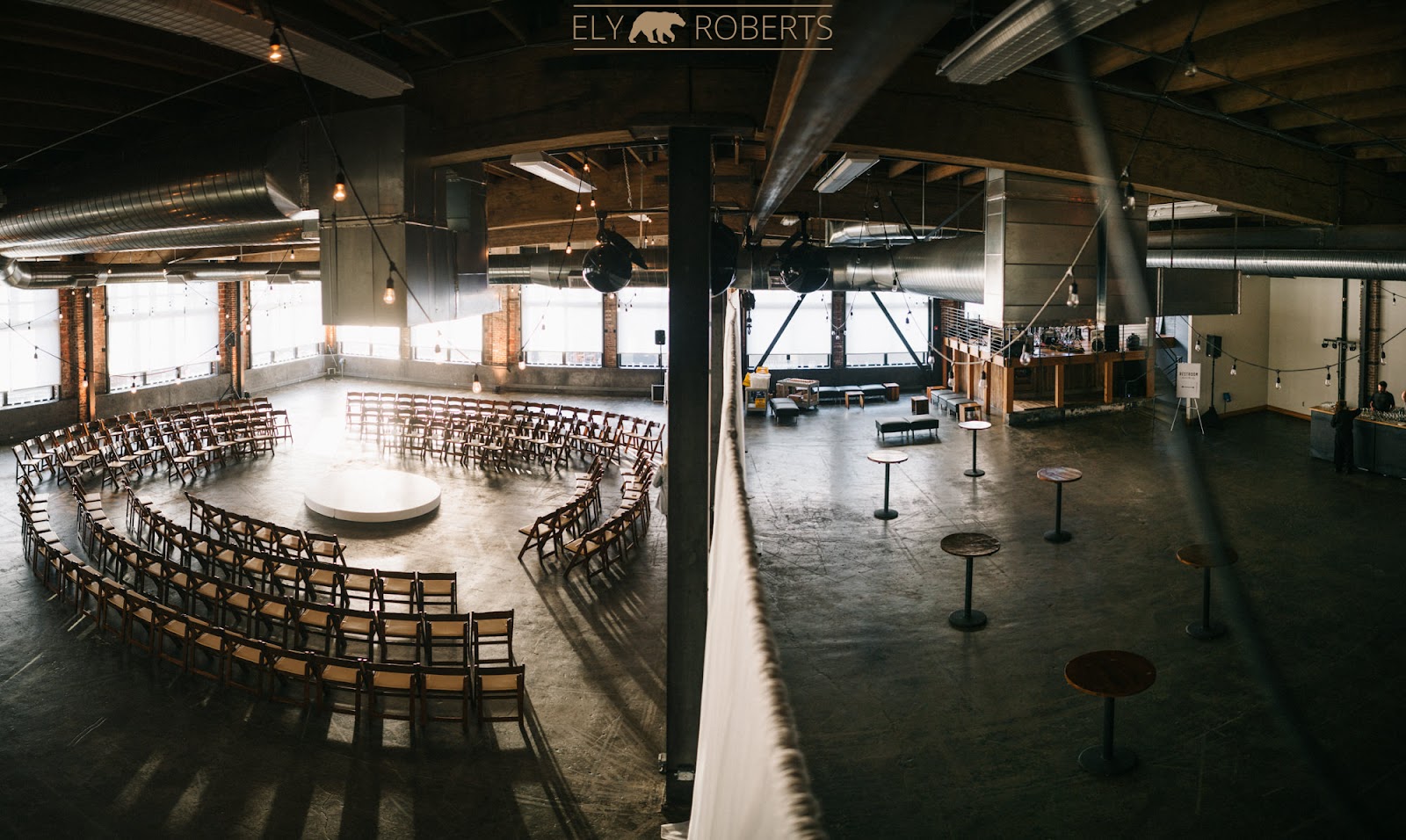
Leftbank Annex sits in a former industrial building on Portland’s inner east side, near the Willamette. It is the archetype of a category that has become the default choice for design-minded couples: a large open room with high ceilings, exposed structure, concrete or timber floors and big industrial windows, with almost nothing else in it.
Photographically these venues are simultaneously the best and the worst thing that can happen to you. Best, because there is nothing ugly to exclude from frames, ceilings are high enough to light properly, and the aesthetic is genuinely contemporary. Worst, because a blank room provides no atmosphere, no intimate corners and no interesting light of its own. Everything you see in a good photograph of a venue like this was put there deliberately.
These are field notes on the three problems that define the category, and what we would do about each. We have not shot here, and we make no claims about the room’s dimensions, configuration or what the venue allows — ask them, and ask specifically about rigging and power, because in an industrial space those two answers shape everything.
Leftbank Annex at a glance
| Where | Inner east side, Portland, Oregon — a converted industrial building near the Willamette |
| Character | Large open room, high ceilings, exposed structure, industrial windows |
| Light | Big windows give extreme contrast by day; almost nothing by night |
| The core issue | A blank room supplies no atmosphere — the photographer and planner create all of it |
| Ask first | Rigging points and available power circuits |
Problem one: industrial windows create a ten-stop room
Large single-glazed industrial windows in a deep room produce the widest contrast range you will meet at any wedding venue. Stand someone a metre from the glass and the window behind them is eight to ten stops brighter than their face. Expose for the face and the window becomes a white void; expose for the window and the face is a silhouette.
There are three legitimate answers and they are all choices rather than fixes. Embrace the silhouette — a couple against a bright industrial window is a strong graphic image and costs nothing. Or light the face with flash to bring it within a few stops of the window, which gives you the editorial look these rooms are built for. Or turn people away from the window and use it as a giant soft side light, which is the most flattering option and the one photographers reach for most.
That third option is worth stating precisely because it is so useful: place the couple parallel to the window wall, a couple of metres in, facing along it rather than at it. The window becomes a huge softbox raking across them, the far side of the room falls into shadow, and you get genuinely beautiful light for free. It is the single best frame an industrial venue offers.
Problem two: after dark, the room has no light at all
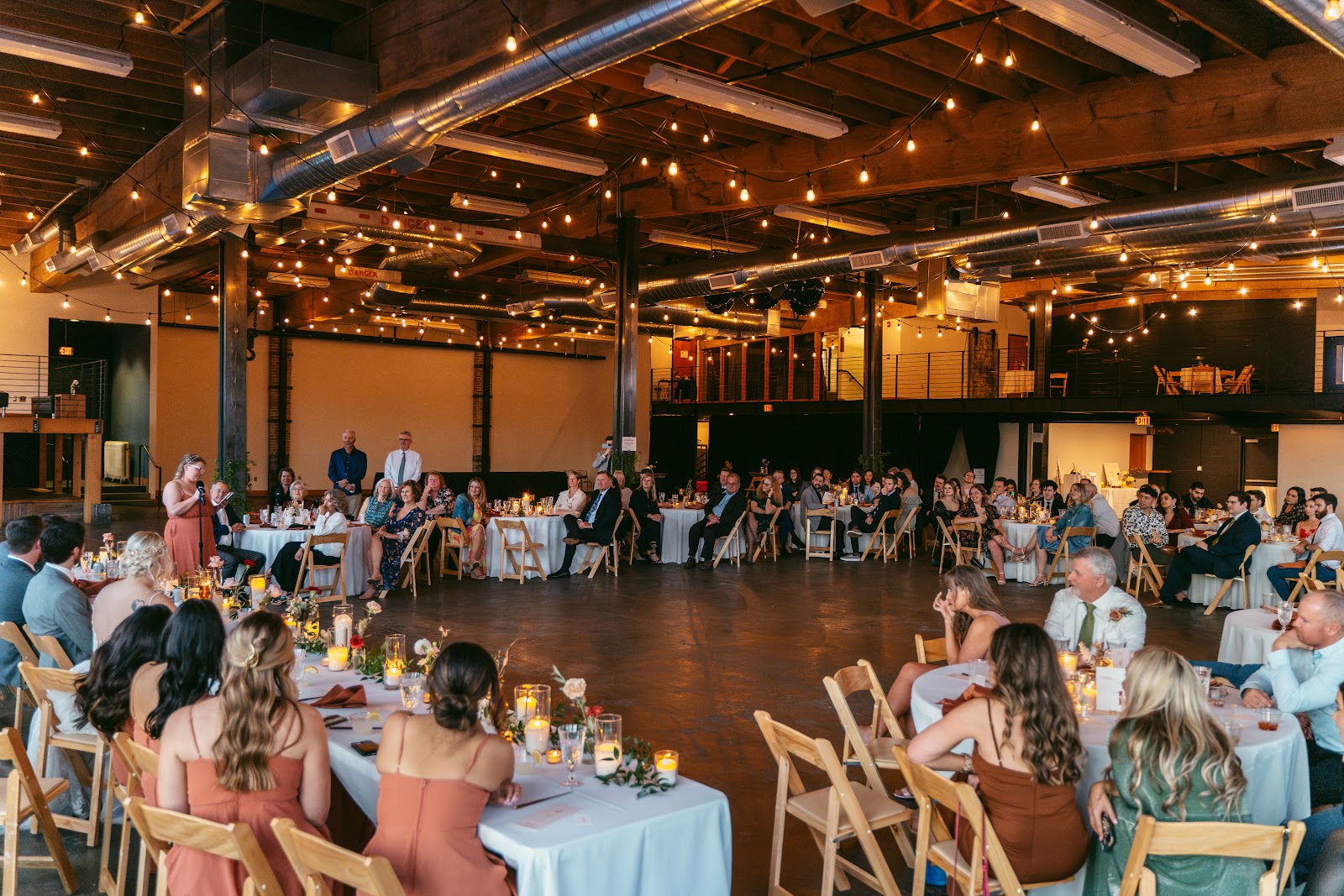
The corollary of a room defined by its windows is that when the windows go dark, there is nothing. Industrial spaces typically have minimal or unflattering house lighting — high-bay fixtures, bare bulbs, or whatever the event supplier hangs. That means the evening look of the venue is entirely a lighting design question, decided weeks in advance.
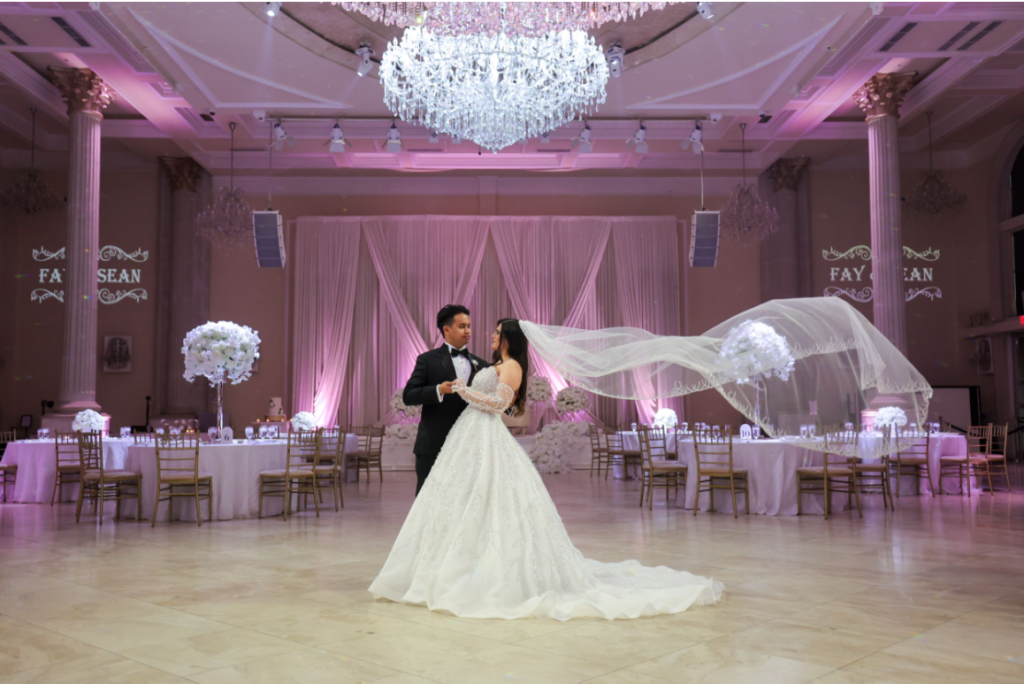
This is the conversation to have with your planner early, because it determines what the photographs look like more than any other decision. Festoon strings across the ceiling give warm, even, flattering ambient light and read beautifully in camera. Uplighting on the walls gives shape and colour. Candlelight on tables gives intimacy. A room with none of these is a black box, and no photographer can conjure atmosphere that was never installed.
From the camera side: expect to bring two off-camera flashes, gelled warm to match whatever ambient has been installed, and to work at higher ISO than a hotel would need. High ceilings mean bounce is unavailable, so light is direct and modified, as in any large dark room.
Problem three: there are no built-in backgrounds
A historic mansion hands you a staircase, a fireplace and a panelled room. A garden hands you planting. An industrial box hands you a concrete wall and a steel column. That is not nothing — texture and neutrality are genuinely useful, and a raw wall is a better portrait background than a patterned hotel carpet — but it is a much shorter list, and repetition becomes a real risk across a full gallery.
The solution is partly in the building and partly outside it. Inside, work the architecture hard: columns for framing, the ceiling structure for scale, doorways for compositional edges, the floor for reflections if it is polished. Change the light rather than the location — one wall lit three different ways produces more variety than three walls lit identically.
Outside is where these venues earn back their flexibility. An inner east side industrial neighbourhood offers loading docks, brick walls, murals, bridges, rail lines and river frontage within a short walk, and none of it requires permission. Budget twenty minutes for a walk and the gallery stops looking like it happened in one room.

What to settle before the day
Four specific questions, because in a blank-box venue the answers are the difference between a strong gallery and a flat one.
- What ambient lighting is being installed? Festoons, uplighting, candles — the evening look is decided here, not in camera.
- Where are the power circuits and rigging points? This determines what can be lit and where, and it is the first thing any lighting supplier will ask.
- Which wall is the ceremony backdrop? In a room with no focal point, someone has to choose one, and it should be chosen for the light as well as the look.
- What is the outdoor walk? Ten minutes of scouting the surrounding blocks in advance turns a one-room gallery into a varied one.
What works in your favour
- Complete creative freedom — nothing ugly to work around, and a genuinely contemporary look
- Window-parallel light is among the most flattering available at any venue type
- High ceilings allow proper lighting setups that low-ceilinged venues cannot take
- An industrial neighbourhood outside supplies varied exterior backgrounds, permission-free
- Weather-independent indoors, with the windows still providing daylight
What to plan around
- Extreme window contrast — eight to ten stops — must be managed as a deliberate choice
- No usable house light after dark; the entire evening look must be installed in advance
- Very few built-in backgrounds, so gallery variety takes deliberate work
- High ceilings rule out bounce flash; lighting is direct, modified and equipment-heavy
- Success depends on decisions made weeks earlier by the planner and lighting supplier
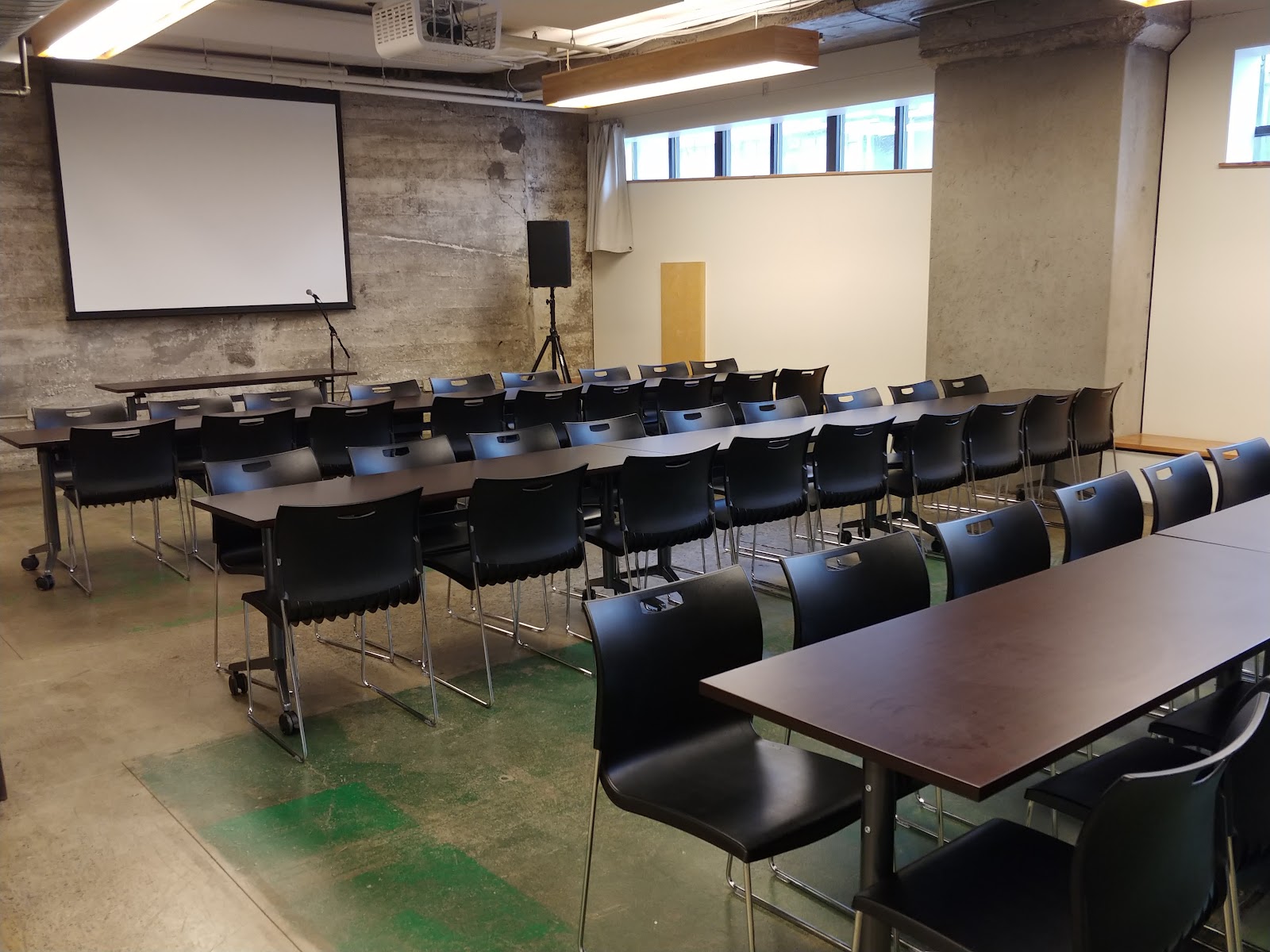
More frames from Leftbank Annex
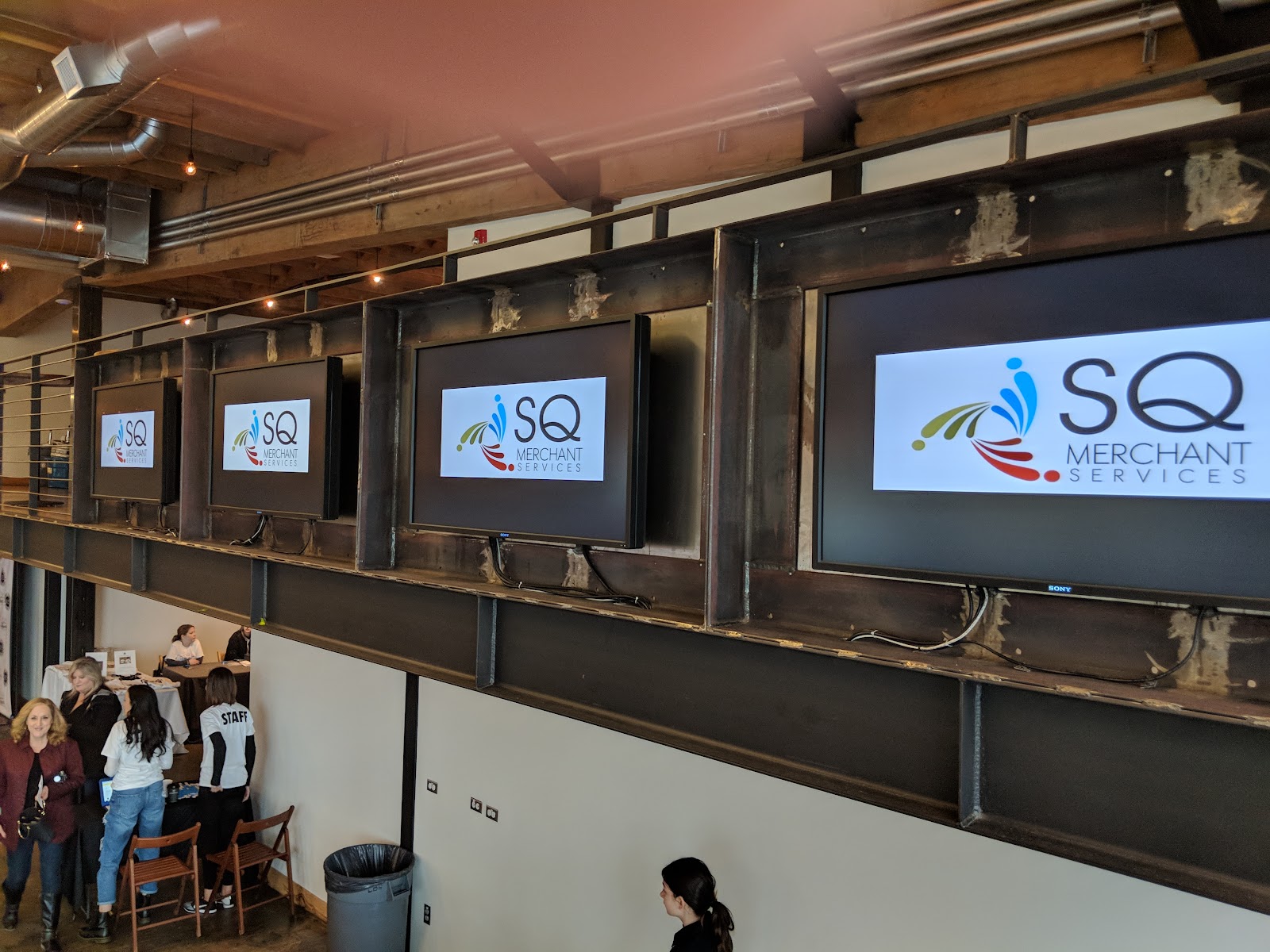
Leftbank Annex wedding photography: common questions
What is the best light at an industrial venue like Leftbank Annex?
Place the couple parallel to the window wall, a couple of metres inside it, facing along the glass rather than at it. The window becomes an enormous softbox raking across them while the far side of the room falls into shadow. It costs nothing and it is the single best frame this venue type offers.
Why do industrial venues look bad in some wedding photos?
Usually because no ambient lighting was installed. These rooms have little or no usable house light, so once the windows go dark the space is a black box. Festoon strings, uplighting and candlelight are what make the evening photograph well, and that is a decision made weeks in advance rather than something a camera can fix.
How do you handle the bright windows?
Pick one of three deliberate approaches: shoot the silhouette and let it be graphic; light the faces with flash to bring them within a few stops of the window; or turn people away from the glass and use it as a giant side light. The contrast range is eight to ten stops, so there is no exposure that holds both ends.
Is there enough variety for a full gallery?
Not from the room alone — a blank box has very few built-in backgrounds and repetition is a real risk. The answers are to change the lighting rather than the location, work the columns and ceiling structure for scale, and spend twenty minutes outside. The surrounding inner east side blocks have brick, murals, docks and river frontage within a short walk.
What should we ask the venue first?
Rigging points and available power circuits. In an industrial space those two answers determine what can be lit and where, and every lighting supplier will ask them immediately. After that, which wall serves as the ceremony backdrop, since a room with no focal point needs one chosen deliberately.
More Portland, OR venue guides
We are writing a photographer’s guide to every venue we would happily shoot in Portland, OR. Here are three more, plus the full index:
- McMenamins Kennedy School: Field Notes for a Wedding Photographer
- Multnomah Athletic Club: Is It Right for Your Photographs?
- The Nines: A Walk-Through for Wedding Photographs
All Portland, OR Wedding Venues →
Planning a wedding at Leftbank Annex?
Industrial venues live or die on decisions made before the day — ambient lighting, power, and which wall becomes the backdrop. Tell us your date and who is handling your lighting, and we will make sure those choices serve the photographs.