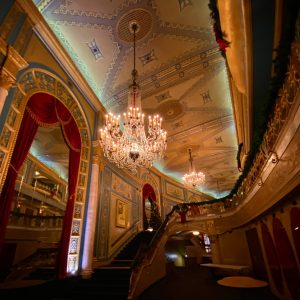
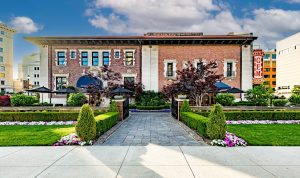
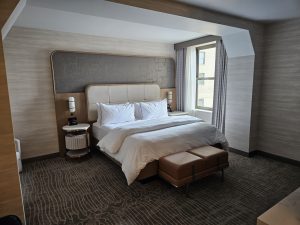
 The Westin Book Cadillac, Detroit: A Walk Up Through a Restored 1924 Hotel
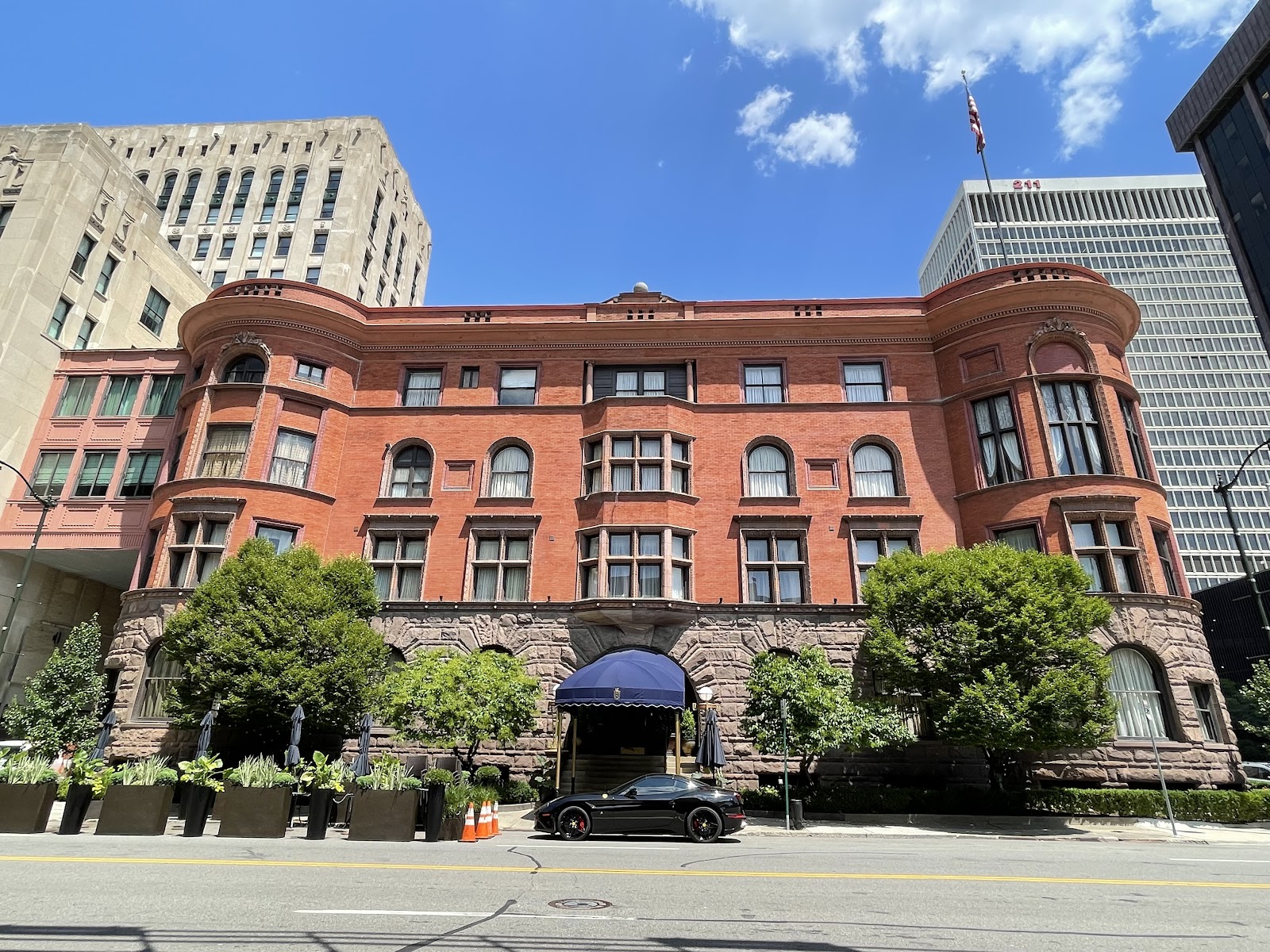
The Detroit Club: Photographing a Restored Private Club
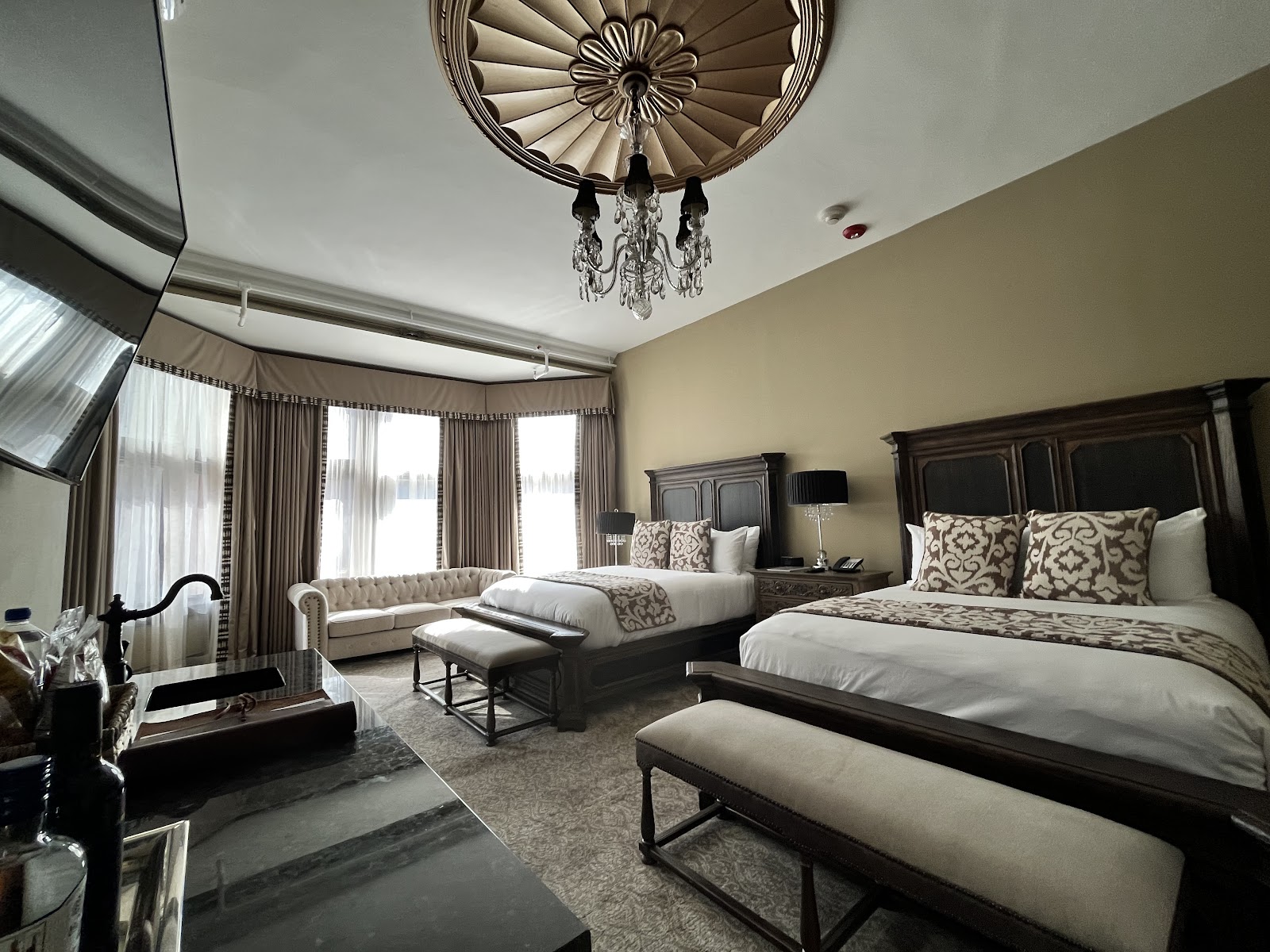
Historic charm with modern amenities is two things at once. One of them absorbs light and the other flattens it.
The Detroit Club’s historic charm integrated with modern amenities provides a seamless experience, as its own description has it.
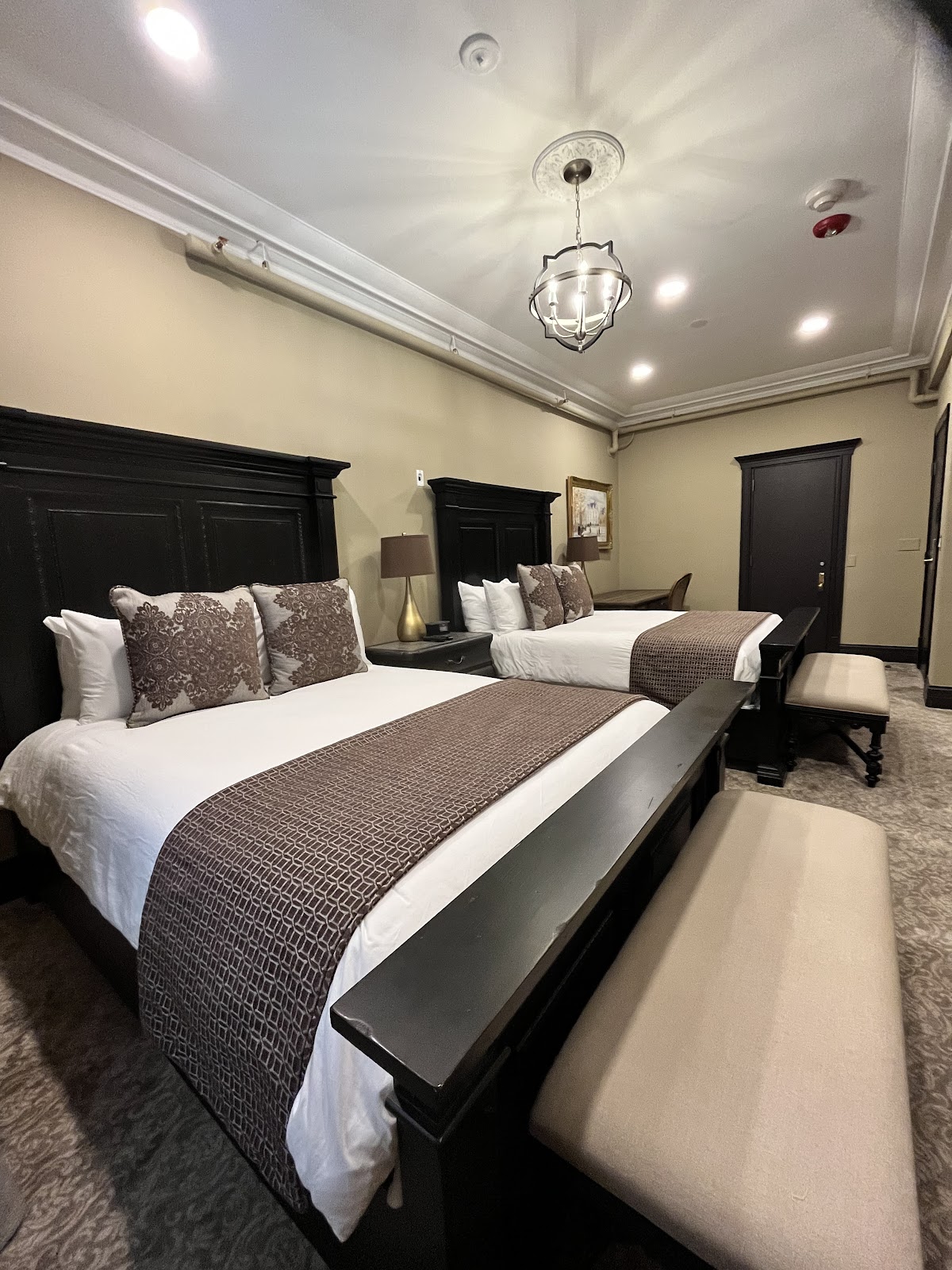
Seamless is the right word for a guest and the wrong one for a photographer, because the two halves of that sentence are photographic opposites. Historic charm in a club of this kind means a fixed vocabulary — panelled or dark-painted walls, timber joinery, deep carpet, heavy textiles, portraits, and warm lamps rather than bright overhead lighting. Modern amenities means, among other things, modern lighting: even, controlled, unobtrusive, and installed to make the rooms usable rather than to make them photograph.
The first absorbs light; the second flattens the ornament the first is made of. So the club’s own logic is enclosure and permanence, and the technique follows from that rather than from anything the fit-out provides.
This follows the venue’s own logic. We have not photographed a wedding at the Detroit Club; historic city clubs behave consistently. Which rooms a wedding includes, which elevation the main windows are on, whether the lighting can be adjusted, and what may be attached to panelling are the questions for their team — panelling almost never takes a fixing.
The Detroit Club at a glance
| Where | Downtown Detroit, Michigan |
| Character | A historic private club with panelling, timber and warm lamps |
| The logic | Enclosure and permanence, built from light-absorbing surfaces |
| The friction | Modern even lighting flattens the ornament it was installed to show |
| Ask first | Rooms included, window orientation, lighting control, fixings |
Absorbing surfaces: what they take and what they give
The first consequence is that bounce flash does very little, and it is worth establishing with a single test frame on arrival rather than discovering when a bounced frame looks unlit. A flash aimed at a timber ceiling or a panelled wall returns a fraction of what the same flash returns in a white-walled room, and what does come back arrives strongly warm.
So the method is to light directly and modestly. One source, off the camera axis, at face height, in a modifier large enough to be soft at the distance being used, gelled warm to match the room’s own light with white balance set to the gel. Expose so the room still reads as the warm dim panelled space it is, and add only enough to put a catchlight in the eyes and separate a shoulder from the background.
The frequent error is lighting a face correctly and losing the room, which produces a portrait that could have been made anywhere. A club interior lit to an even brightness stops being a club interior, and the whole reason for choosing it goes with it.
The second consequence is warmth on skin. Timber, brass, deep carpet and warm lamps all reflect warm, and the cast arrives on the shadow side of a face from several directions at once. Because it is bounced and localised, global white balance cannot separate it from the subject — which is why the gelled-source approach matters rather than being a refinement.
The third works in your favour: steep fall-off. In a dark absorbing room light drops away quickly, so a subject three metres in front of anything else sits against natural darkness with no equipment at all. That is free separation, the opposite of the pale-modern-venue problem, and it should be exploited rather than filled in.
The fourth is that texture is everywhere and all of it needs raking light. Panelling, joinery, plasterwork and patterned textiles read only when light runs along them — a source pointed at panelling turns it into a flat brown field, while the same source placed to skim it lifts every moulding and grain line. The positions worth finding are those where the key grazes a surface rather than facing it.
And the fifth is the modern lighting itself, which is the friction rather than the help. Where a restoration has installed even downlighting, the ornament it was meant to reveal disappears — so the most valuable request in the building is whether some of it can be switched off. Reducing the number of competing sources beats adding another one, and it is a conversation rather than an equipment problem.
Portraits and framed pictures are a further condition specific to clubs: they compete as backgrounds and they are glazed, so they reflect. Commit to one deliberately or subordinate with a long lens, and keep sources well off the camera axis.
Windows, stairs and the rooms
Windows in a club building of this period are usually tall, which is genuinely good news in a dark interior: a tall window sends light further into a room and higher up a standing figure than a small one, and where the surfaces bounce nothing, depth of throw is what makes a position workable at all.
Two or three steps back from the window is the position rather than beside it. There the light has softened but is still clearly directional, and the fall-off behind gives the separation the room otherwise needs work to produce.
Which elevation the windows are on decides the day, and it is worth establishing in advance. A shaded elevation gives soft directional light all day with no hotspots; a sunlit one gives a hard patch several stops above the room and, through glazing bars, a hard grid of shadow.
A grand staircase is the single most useful feature in a club building: elevation, a diagonal or a curve, a handrail as a leading line, and rows for a group automatically, which a flat dining room floor never provides. Almost every group photograph in a building of this kind belongs on its stairs — and the frame from the top looking down, with the couple small inside the sweep, is the one most often missed because it means climbing.
Stair halls are also frequently the tallest spaces in a club, which means no bounce and a lantern or chandelier lighting from above, so the overhead fix should be ready: a reflector held low, a lifted chin, or one source at face height raised slightly and placed near the camera position for a group.
Rooms will vary from a large dining room to small lounges and a library, and the small ones are better than they look. Where the walls are close, even dark ones return some light, and the intimacy suits the material: a library photographs as a place somebody actually sits, which a function room does not.
Mixed sources are certain in a building of this age — daylight, warm table and wall lamps, and cooler modern downlights added in restoration. Three colour temperatures in one frame cannot be resolved afterwards, so pick the one that should be correct, set a manual white balance to it, and switch off or overpower whatever else lands on skin.
And a working club has members: parts of the building may be in use on any given date, which is not obvious from a site visit on a quiet morning. Asking which areas will be available, and when, turns a possible surprise into a known boundary.
- Test bounce once; panelling and timber return almost nothing
- One warm-gelled source at face height, a stop under the room
- Graze the panelling rather than facing it, or it goes flat brown
- Two or three steps back from a tall window is the position
- Put the group on the stairs, and take the frame from the top
Outside, and Detroit's year
Downtown Detroit is the outdoor counterweight and it has an advantage almost no other American city offers: room to stand back. Substantial open ground and surface parking mean a whole building can be photographed entire from across the street rather than in fragments — and for a historic club in a district of early-twentieth-century towers, that means the architecture reads as architecture rather than as a doorway.
That openness also means low sun reaches street level across a wider area than in a canyon city, so the last ninety minutes give raking light on masonry from more positions. Brick and stone show their texture only when light runs along them, so a short walk to find which side is being raked is worth more than any accessory.
Detroit’s plan overlays radiating boulevards on a grid, which means some streets run diagonally and take low sun at angles the grid streets do not — worth a look at a map before the day rather than a walk on it.
Alleys are the dependable fallback in any downtown: walls on both sides give directional light and a contained background with nothing distracting in it, plus shelter.
Michigan’s seasons are four real ones and this venue suits the cold half of the year particularly well. Winter is cold and snowy with short days, sunset falling in the middle of the afternoon in December, which compresses the outdoor window into a couple of hours — and a warm dark panelled interior is exactly the right place to spend a short cold day, with the building carrying more of the gallery without that being a compromise.
Snow is the compensation and it does two things. Outdoors it is the best natural fill there is, lifting exactly the shadows a low sun carves while fooling a meter by about two stops. Indoors it does something more useful in a dark club: snow on the ground turns the outside into a very large reflector, so daylight through a tall window arrives softer, brighter and more even than at any other time of year. A panelled room that is difficult in July is genuinely easier in February.
Summer is warm and humid with afternoon thunderstorms a real possibility, which for a club with several indoor rooms is almost entirely an advantage — the day continues without a decision.
Autumn gives the clearest air and the best raking light of the year on masonry, which is the season the exterior is at its best in. And a heated period interior with cold outside air fogs a lens in both directions, and a masonry building holds cold longer than a modern one — so let equipment come towards the temperature of where it is going before it gets there, and plan one excursion rather than several.
More frames from The Detroit Club
The Detroit Club wedding photography: common questions
Why is a club interior so dark?
Because panelling, timber, deep carpet and heavy textiles absorb rather than return light, and usable room light is mostly bounced. Identical windows in a panelled room and a pale one differ by two stops.
What is the friction with modern amenities?
Modern even lighting flattens the ornament it was installed to reveal. Three-dimensional panelling and plasterwork read only when light crosses them at an angle.
What is the most valuable request?
Whether some of the modern lighting can be switched off. Reducing competing sources beats adding another one, and it is a conversation rather than an equipment problem.
What works in your favour?
Steep fall-off. In a dark absorbing room a subject three metres in front of anything else sits against natural darkness, which is free separation.
Where is the best natural light?
Two or three steps back from a tall window on the shaded elevation. Historic buildings have tall windows because they predate reliable artificial light, and that throw is what makes a position workable.
Why is a panelled room easier in February?
Because snow turns the ground outside into a very large reflector, so daylight through a tall window arrives softer, brighter and more even than at any other time of year.
More Detroit, MI venue guides
We are writing a photographer’s guide to every venue we would happily shoot in Detroit, MI. Here are three more, plus the full index:
- The Detroit Institute of Arts: Four Ways Out of the Gallery Problem
- The Detroit Marriott at the Renaissance Center: What It Suits and What It Does Not
- The Detroit Opera House: A Walk Through a Restored Opera House
All Detroit, MI Wedding Venues →
Planning a wedding at The Detroit Club?
One light placed well, and a few lamps switched off. Tell us your date.