 The Iowa Events Center: Four Ways Out of the Blank-Hall Problem
Terrace Hill: Reading a Victorian House on High Ground
A house on a rise gets light earlier and keeps it later than anything around it. That shapes the whole day.
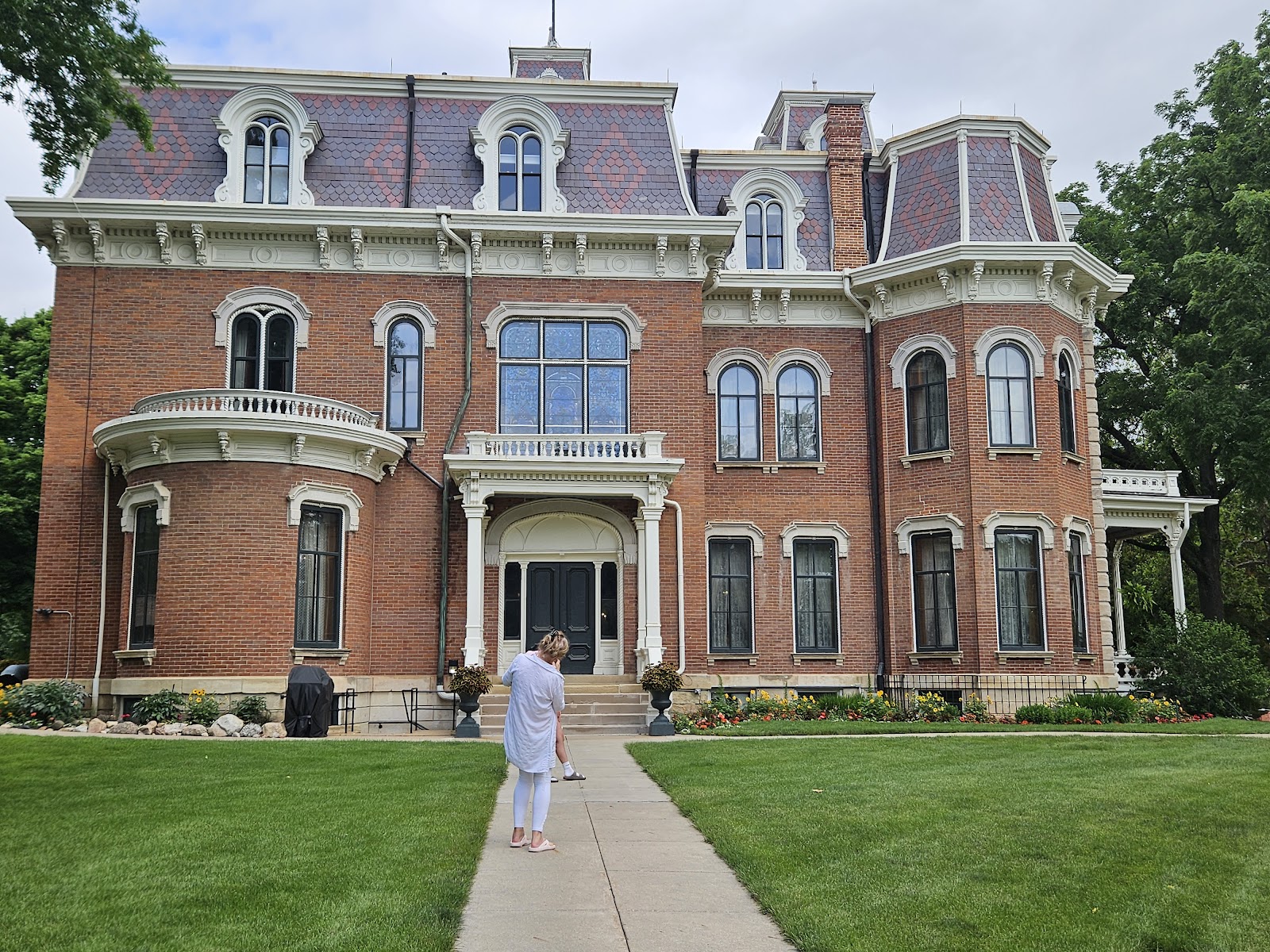
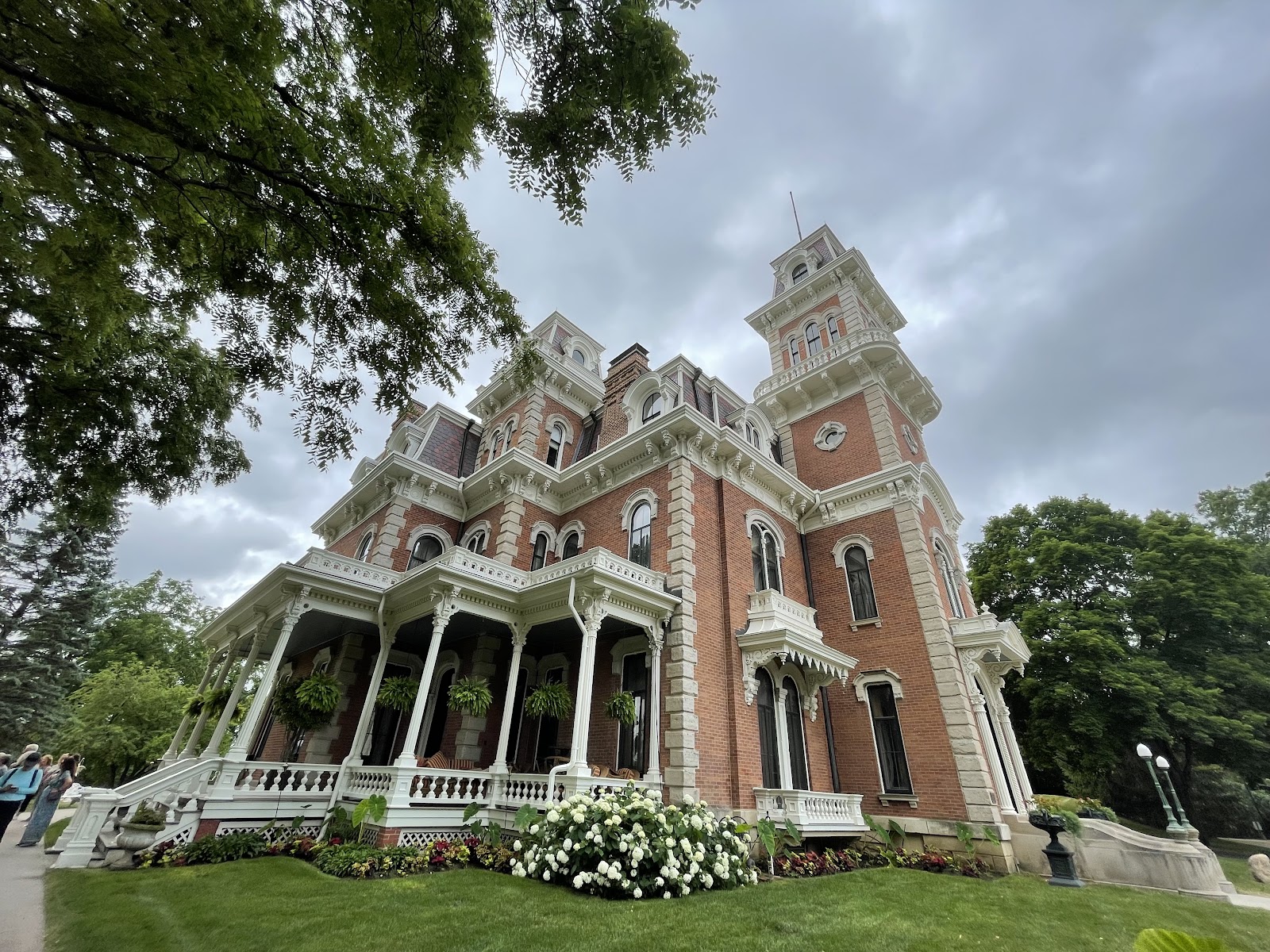
Terrace Hill stands on elevated ground in Des Moines, Iowa, a Second Empire Victorian mansion of the 1860s with a tower, tall windows, ornate interiors and formal grounds falling away around it.
The elevation is the fact worth building a plan on, and it is easy to overlook because it is not a feature of the architecture. Ground that sits above its surroundings receives direct sun earlier in the morning and holds it later in the evening than the land below, because there is nothing nearby high enough to intercept a low sun. That extends the useful light at both ends of the day, which for a venue whose best frames are outdoors is a material advantage.
It also gives sight lines out and downward, which changes what a background can be. This walks the day through. We have not photographed a wedding at Terrace Hill; Victorian interiors and elevated grounds behave the same wherever they meet. Which rooms are available, what the interior restrictions are and what the grounds permit are questions for their events team — the house is a significant historic property, so interior rules are usually specific.
Terrace Hill at a glance
| Where | Elevated ground in Des Moines, Iowa |
| Character | 1860s Second Empire mansion with a tower and formal grounds |
| The advantage | High ground keeps low sun earlier and later than the land below |
| Inside | Tall windows and ornate interiors — large soft sources, steep fall-off |
| Ask first | Interior access and restrictions; the house is historically significant |
Morning: tall windows, and three setups from each
Victorian houses of this class were built with tall windows because artificial light was unreliable, and those windows are the best light in the building. In lighting terms a tall window is a very large source at a short distance, which makes it soft, bright and steeply falling — and the fall-off is the useful part, because a subject a metre from the glass is well lit while the room three metres behind is markedly darker, separating them from the background at no cost.
One window gives three setups for the price of a change in stance. Facing it: a broad soft key with catchlights. Side-on: strong modelling with a shadow side. Back to it: a rim and a silhouette. That is more variety than most lighting kits provide, and it needs nothing carried.
Two cautions common to the period. Direct sun through a window is a small hard source rather than a soft one; a sheer curtain drawn across converts it instantly and is the most useful object in any Victorian room. And shutters or blinds in direct sun print hard slatted stripes across a face, which cannot be corrected, so open them fully or close them enough to diffuse.
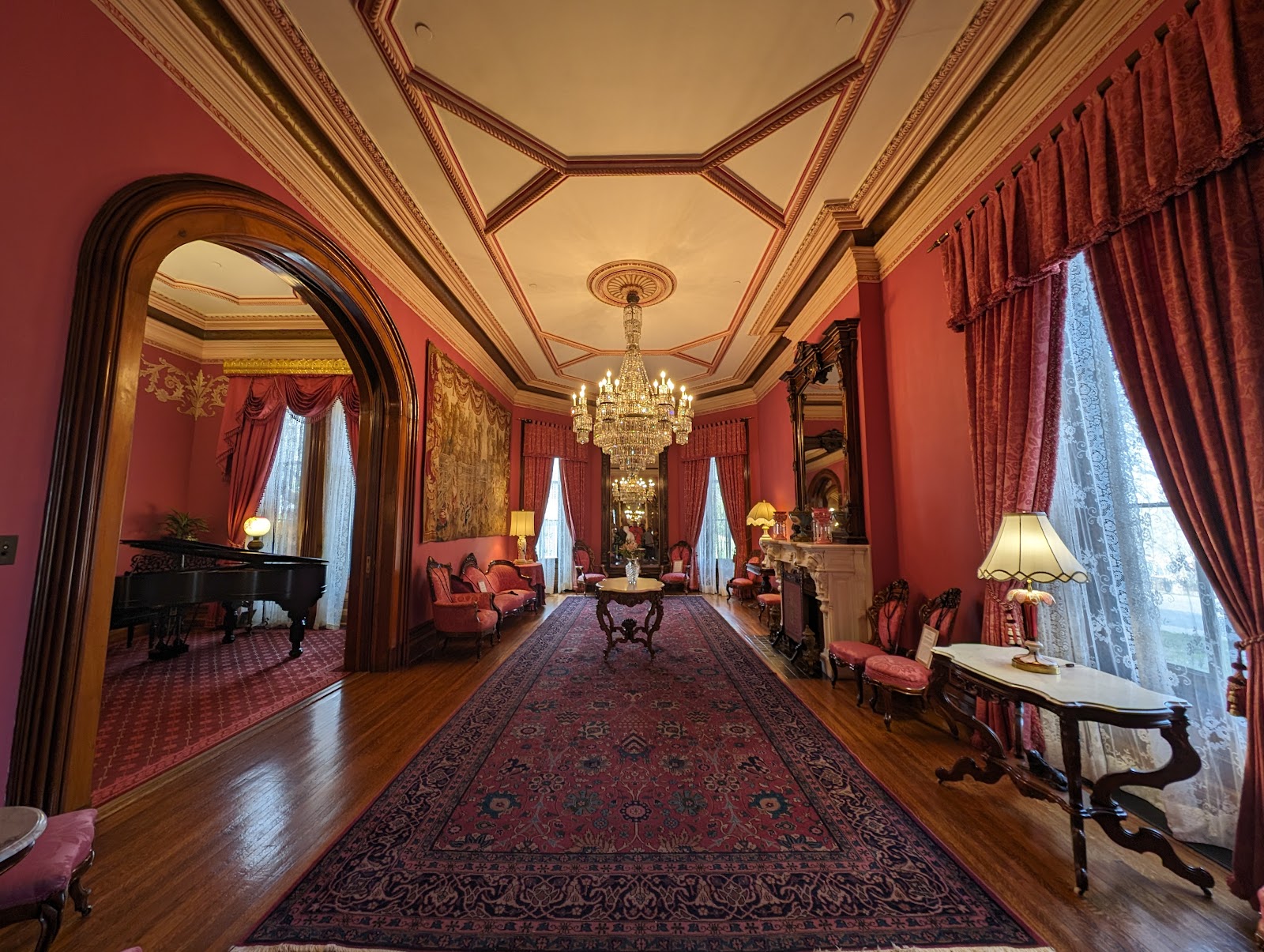
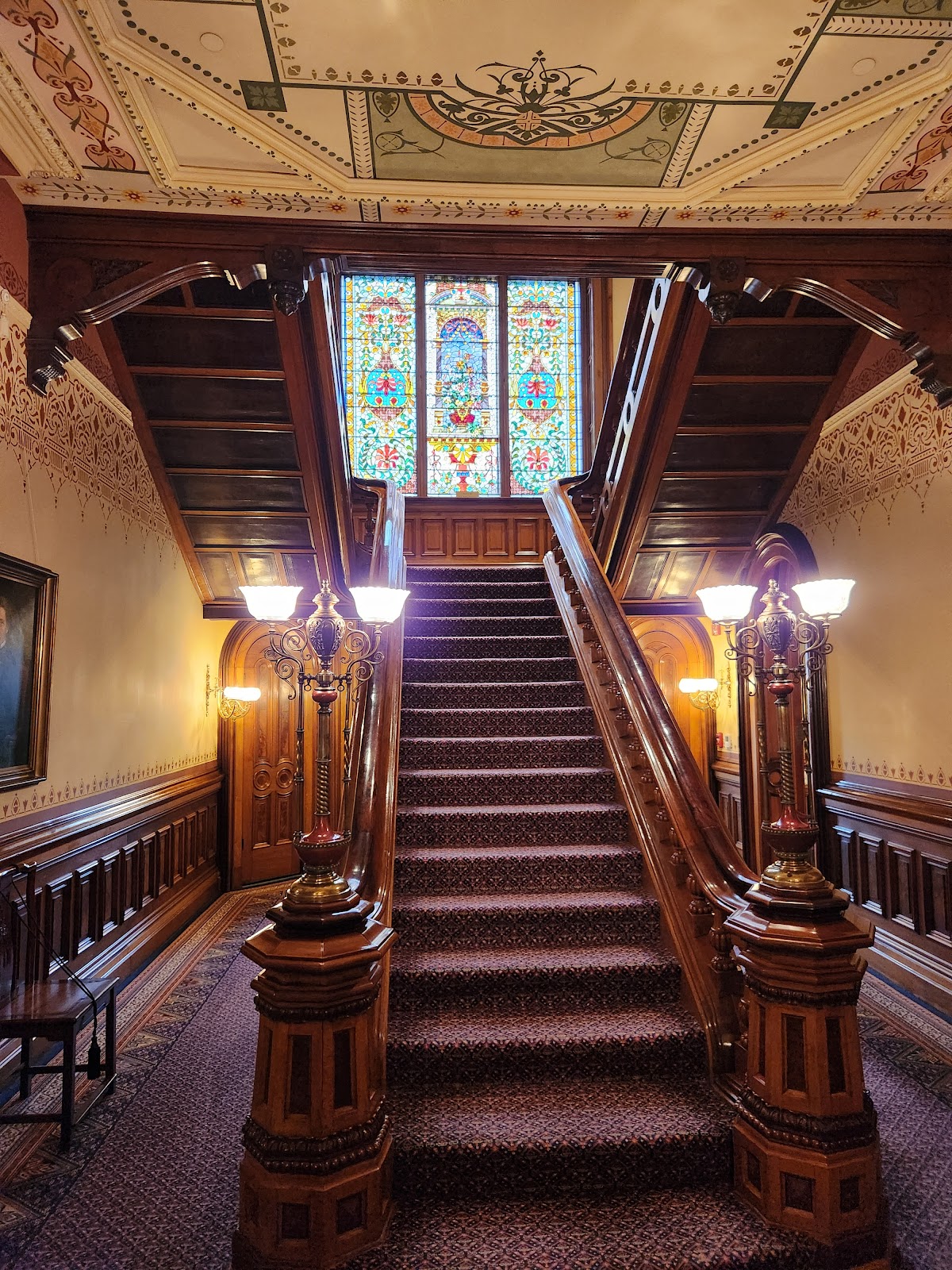
Ornate interiors bring the ceiling trap: plaster cornices and centre roses are pale and often uplit, so they sit stops above the people beneath them. Raise the couple towards the ceiling with a warm-gelled source rather than exposing down to them, then expose for the plaster — both survive, and the relief is what makes the room worth photographing.
Midday: the tower, the shadow and the interiors
Through the middle of the day the grounds are the hardest place on the property, as at any formal garden: high sun, and mature planting that gives dapple rather than cover. Dapple is several stops across a face, random, shifting with any breeze, and correctable only by moving — so the reliable midday shade is the house’s own shadow, and on elevated ground that shadow is long and clean.
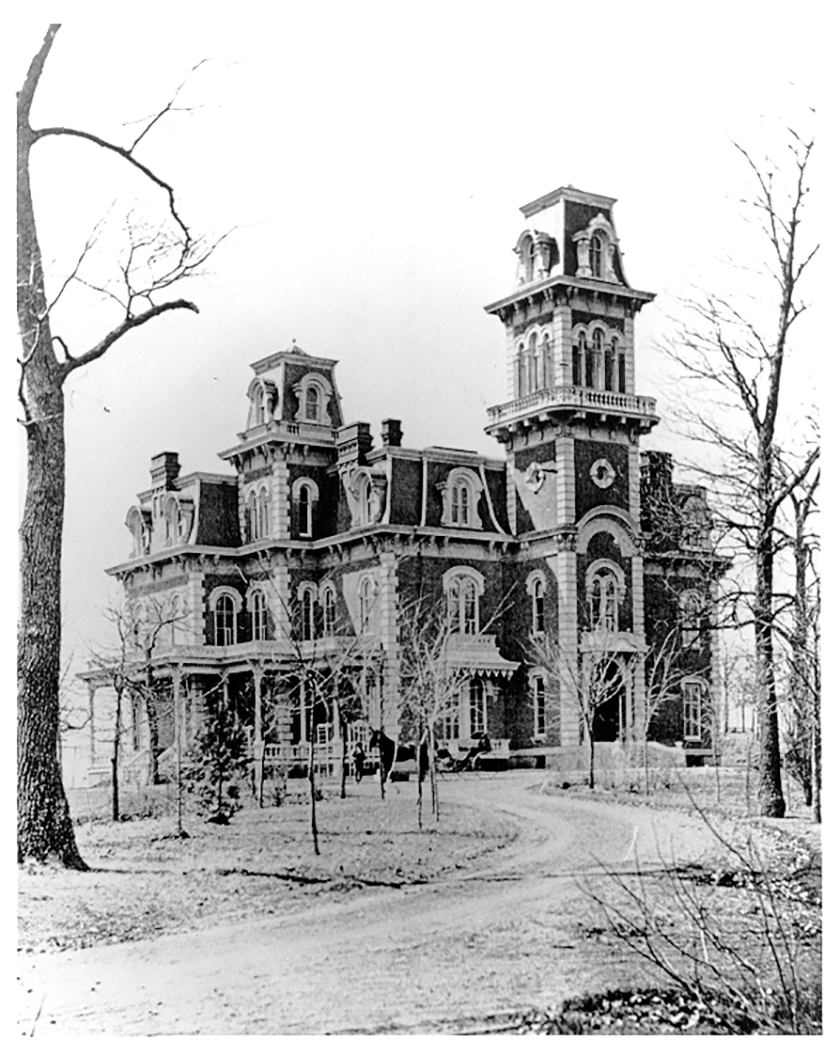
A Second Empire house has a tower, and a tower is worth asking about. If it is accessible it gives a view out over the grounds and the city, which is a frame no ground-level position offers and which places the gallery in Des Moines rather than in a generic garden. It also usually has windows on several sides, which means whatever the hour there is a side facing away from the sun with good soft light in it.
The interiors are the midday and weather answer, and in a house of this significance the restrictions are usually specific: which rooms may be used, whether anyone may sit on furniture, whether flash and tripods are permitted. Those should be established in writing rather than on the day, because a plan built around a room that turns out to be off limits collapses at the worst moment.
Where light is permitted, keep it modest. Ornate Victorian rooms are dense with pattern and surface, and a flooded room loses the depth that makes it interesting. One source at face height with the room falling away behind produces a better frame than an evenly lit interior, and it is also the more respectful way to work in a collection house.
- Draw a sheer curtain to turn hard window sun into a large soft source
- Raise the couple towards ornate plaster rather than exposing down
- Use the house’s shadow at midday; on a rise it is long and clean
- Ask about tower access — a view out that ground level cannot give
- Establish room-by-room restrictions in writing, not on the day
Evening: why high ground holds the light
This is where the elevation pays. On flat ground, the last of the direct sun is cut off by whatever stands to the west — trees, buildings, a ridge — so the practical golden hour ends before the calendar sunset. On a rise there is nothing near enough to intercept it, so low sun reaches the house and the grounds right down to the horizon. The usable window is longer and the light at the end of it is lower and more raking than the land below is getting.
Lower light is better light for two reasons that matter here. It rakes across the stone, brick and ornamental detail of the elevation, lifting texture that flat sun erases. And it comes in under mature planting horizontally rather than down through it, turning leaves translucent and rimming every figure — which is the most reliable beautiful frame on any planted site.
The sight lines are the other elevated advantage. Looking out and down from a rise gives a background that is neither sky nor wall but landscape, with the city beyond, and it lets you place a couple against depth rather than against a hedge. A long lens compresses that depth into layers; a wide lens flattens it into a distant strip, so the frame wants compression.
After sunset, high ground with open aspect means the sky is visible across a wide arc rather than in gaps, so the twenty minutes of colour after the sun goes are genuinely usable — another block most people pack up before.
Two Iowa practicalities. Winter here is cold and the days are short, but the sun stays low all day, which suits ornamental stonework and brickwork far better than summer’s high sun — a winter wedding at a house like this photographs unusually well, with the caveat that the daylight block must be planned early. And summer humidity will fog a lens carried from an air-conditioned interior into garden air for ten to twenty minutes, so acclimatise before the outdoor block rather than during it.
More frames from Terrace Hill
Terrace Hill wedding photography: common questions
Why does elevation matter photographically?
Because nothing nearby is high enough to intercept a low sun, so high ground receives direct light earlier and holds it later than the land below. The usable window at both ends of the day is longer, and the light at the end of it is lower and more raking.
How many setups can one tall window give?
Three, by changing stance alone. Facing it gives a broad soft key with catchlights; side-on gives modelling with a shadow side; back to it gives a rim and a silhouette. More variety than most lighting kits, with nothing carried.
What do you do with hard sun through a window?
Draw a sheer curtain across it — that converts a small hard source into a large soft one instantly. With shutters, open them fully or close them to diffuse, because hard slatted stripes across a face cannot be corrected.
How do you keep ornate plasterwork from blowing out?
Raise the couple towards it with a warm-gelled source rather than exposing down to them, then expose for the plaster. Cornices and centre roses are pale and often uplit, so they sit stops above the people beneath.
Is the tower worth asking about?
Yes. If accessible it gives a view out over the grounds and city that no ground-level position offers, and it usually has windows on several sides — so whatever the hour, one side faces away from the sun with good soft light in it.
Is winter a bad time here?
No, often better. The days are short and cold but the sun stays low all day, which suits ornamental stone and brick far better than summer’s high sun. Plan the daylight block early and a winter wedding at a house like this photographs unusually well.
More Des Moines, IA venue guides
We are writing a photographer’s guide to every venue we would happily shoot in Des Moines, IA. Here are three more, plus the full index:
- The Des Moines Art Center: A Building by Three Architects
- Greater Des Moines Botanical Garden: Four Ways Out of the Dome Problem
- The Historic Pappajohn Center: Field Notes on a Restored Interior
All Des Moines, IA Wedding Venues →
Planning a wedding at Terrace Hill?
High ground gives you longer light at both ends of the day. Tell us your date and we will use both.