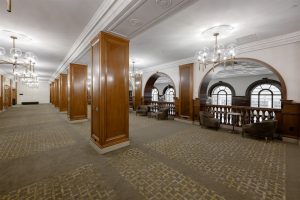
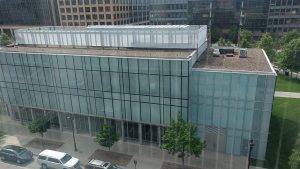
 The Historic Pappajohn Center: Field Notes on a Restored Interior
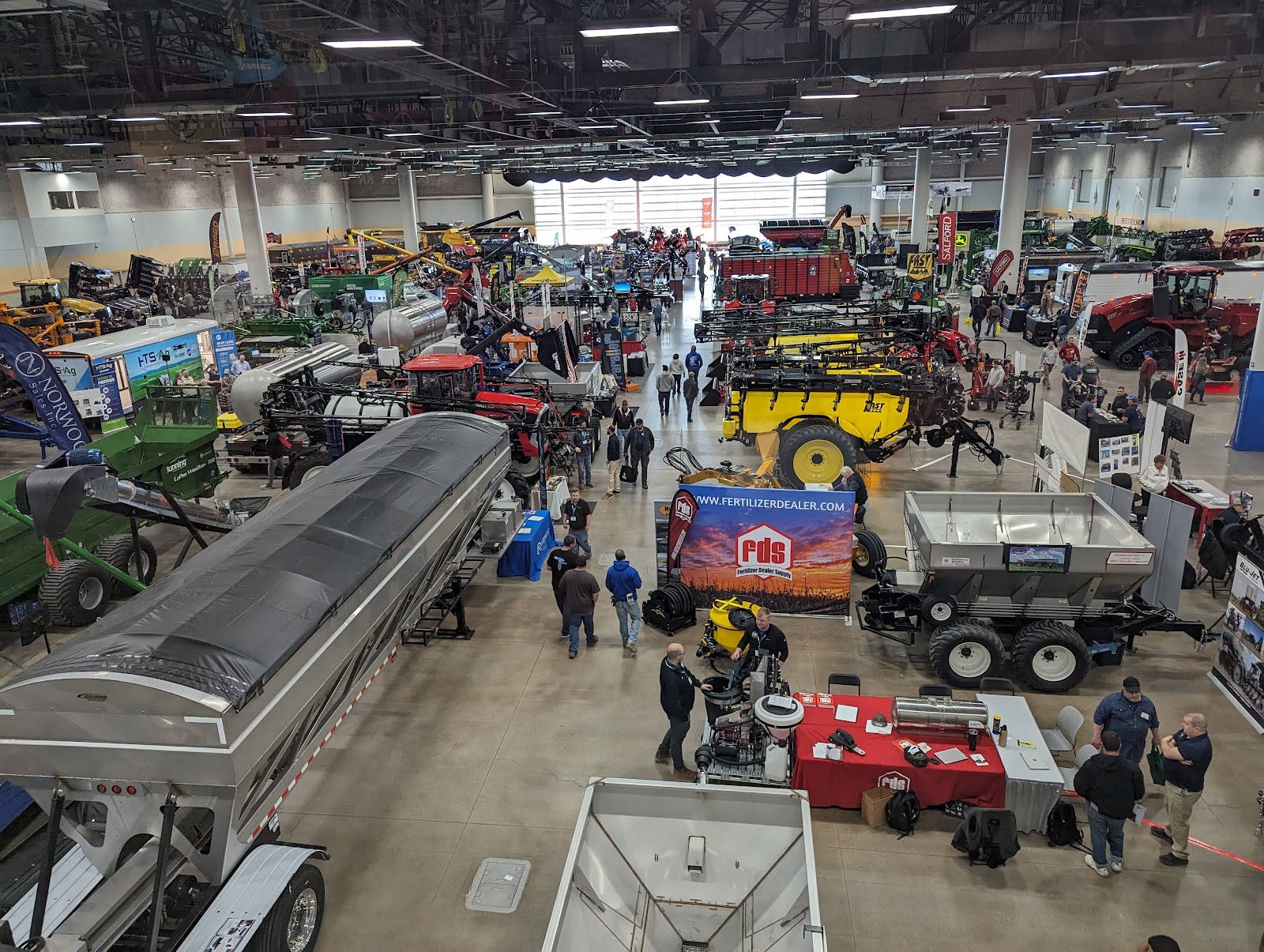
The Iowa Events Center: Four Ways Out of the Blank-Hall Problem
A hall built for trade shows is large, neutral and unlit, which is the hardest combination there is.
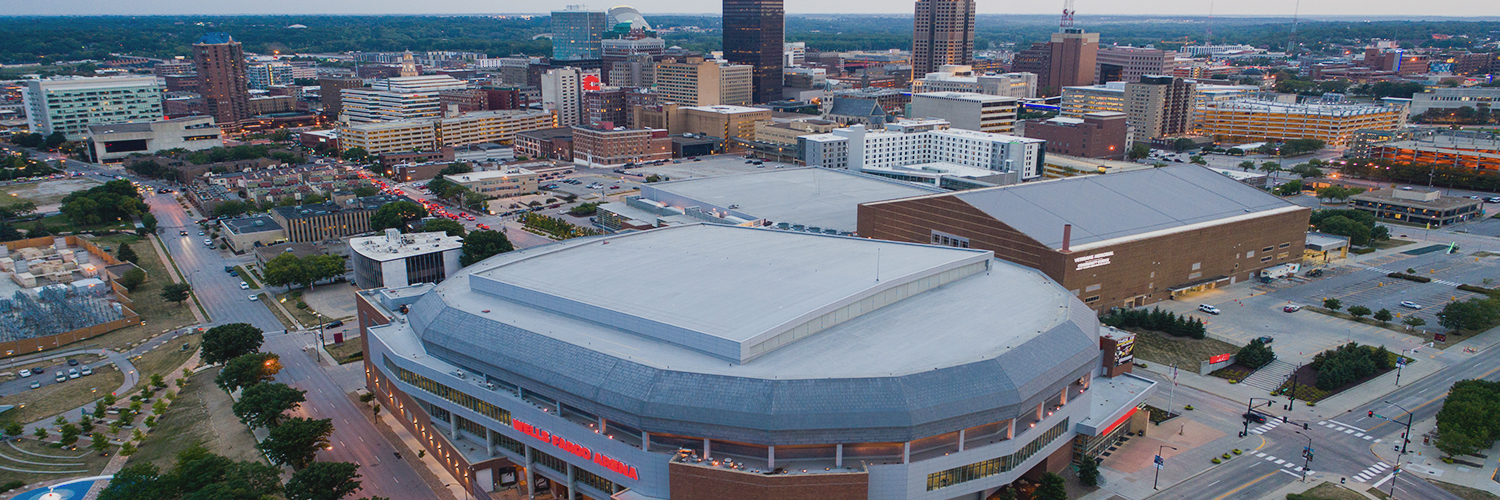
The Iowa Events Center occupies a site in downtown Des Moines, with large divisible halls, ballroom space and glazed public concourses, built for conventions and events at scale.
It is worth being straightforward about what a complex like this asks of a photographer, because the honest answer is the hardest thing in this series: large and neutral at once. A large ornate room is difficult to light but supplies character in return. A small neutral room is characterless but at least the walls are close enough to bounce off. A large neutral hall gives neither — the volume defeats lighting because nothing is near enough to return spill, and the surfaces defeat composition because there is nothing in frame to build on.
That is workable and there are four ways through it, but it requires accepting the premise rather than fighting it. We have not photographed a wedding at the Iowa Events Center; large divisible halls and glazed concourses behave the same wherever they are built. Which halls are allocated, how they can be divided and what rigging is permitted are questions for their events team — and the division question matters most.
The Iowa Events Center at a glance
| Where | Downtown Des Moines, Iowa |
| Character | Convention complex with divisible halls and glazed concourses |
| The problem | Large and neutral together — defeats lighting and composition |
| The lever | How the hall is divided; a smaller partition is a better room |
| Where the light is | The glazed concourses, not the halls |
Why large and neutral is the hardest combination
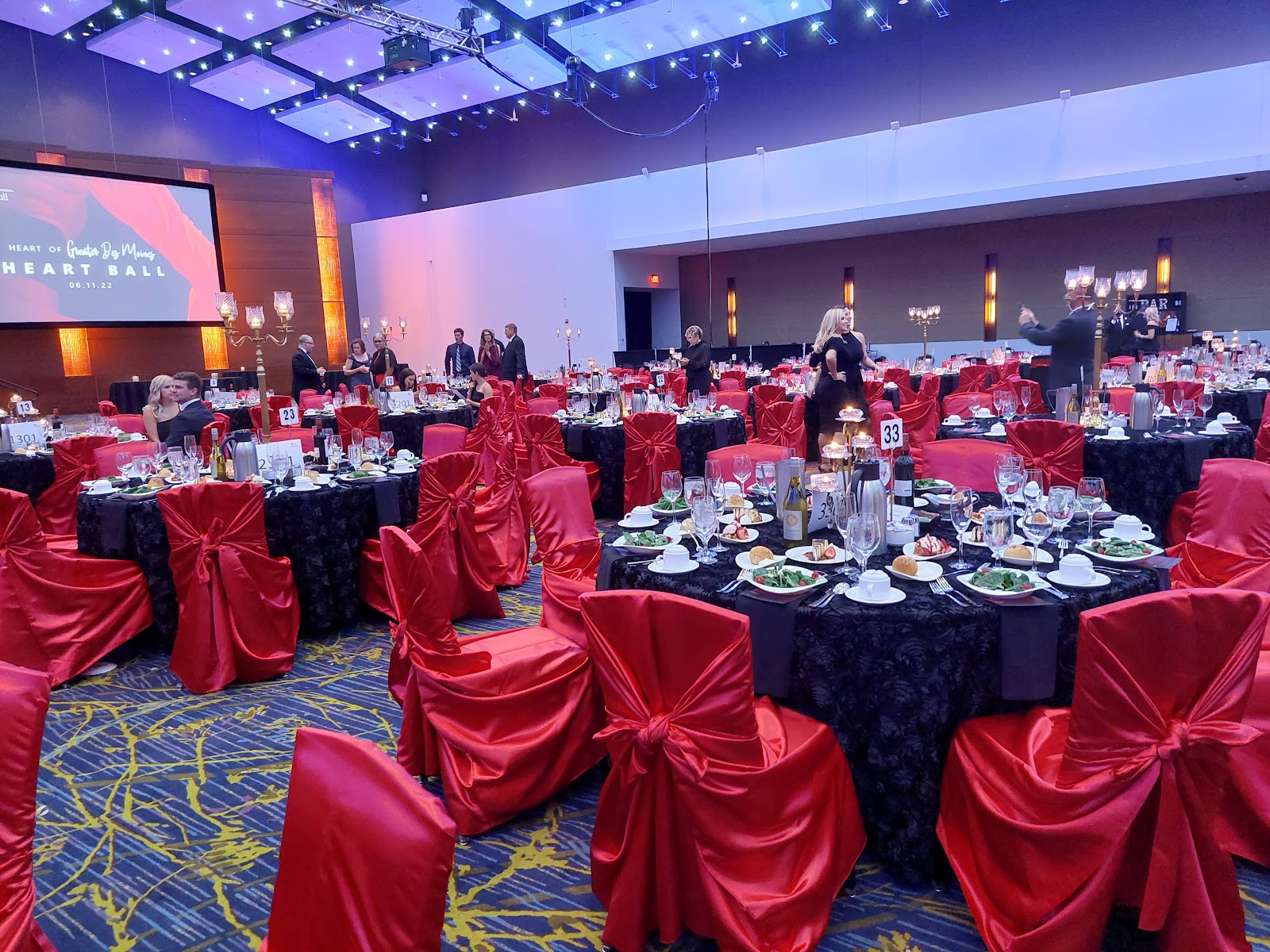
Light falls off with the square of distance. In an ordinary room that hardly matters because walls and ceiling return the spill and lift the whole space; in a hall built for trade shows there is nothing close enough to return anything, so the spill travels outward and never comes back. A strobe that fills a hotel function room simply disappears.
The visible result is two brightly lit people in an enormous dark cavity — the exposure on the couple is correct and the photograph is wrong, because the room has vanished. Adding power makes the couple brighter and the hall no more visible, because the hall was never being lit.
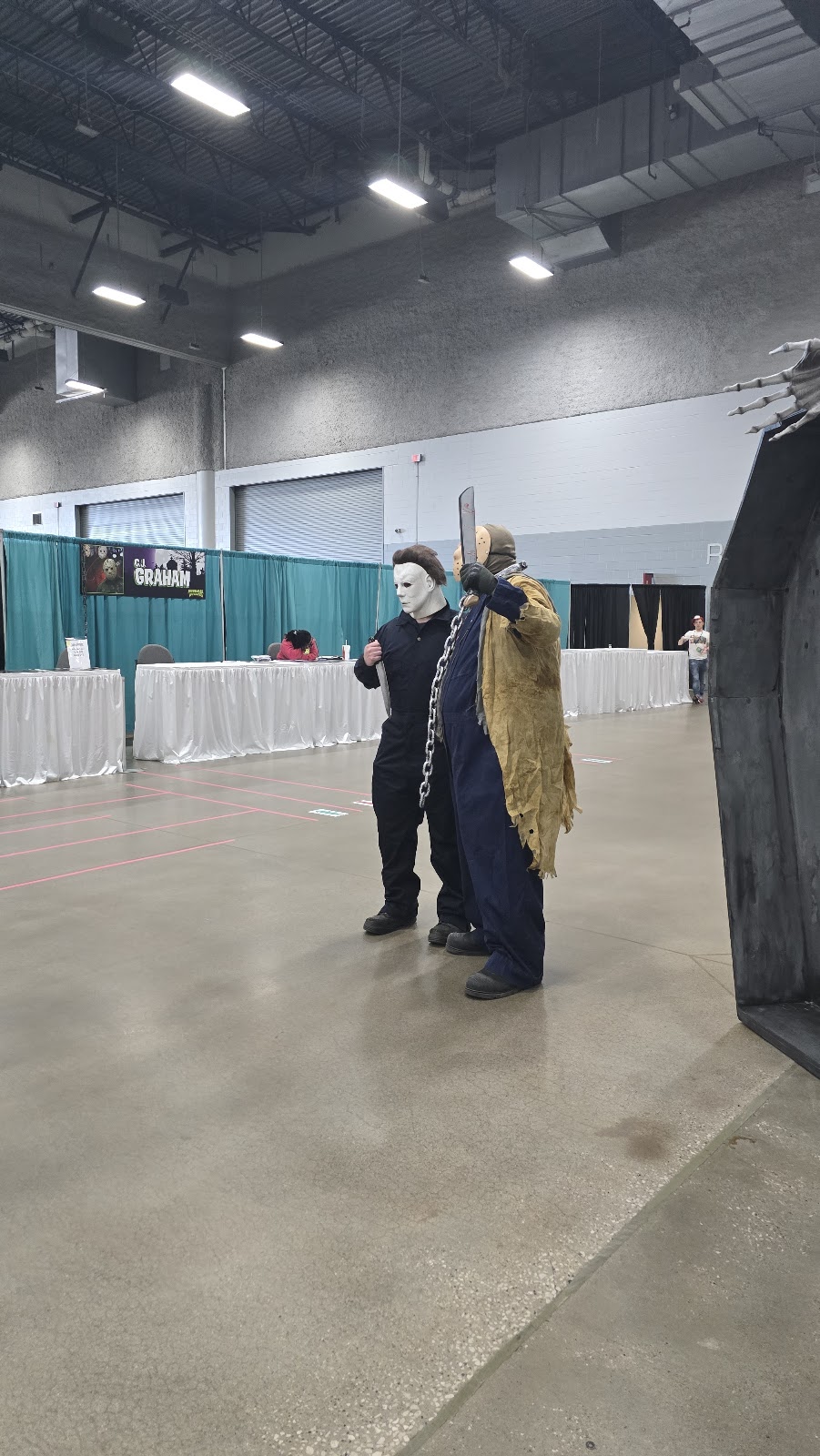
Neutrality removes the other escape route. In a cathedral or a grand hall you can expose for the architecture and let the scale be the subject, because the architecture rewards being seen. In a blank hall there is nothing to expose for: plain walls, a suspended or exposed services ceiling, patterned carpet and air walls do not reward a wide frame. So the technique that rescues a vast ornate interior does not rescue this one.
Which gives a clear conclusion: do not photograph the room. Photograph what is in it, and use the building’s other spaces for anything that needs a background.
Ways one and two: divide the room, and fill the frame
The first lever is division, and it is the single most useful request available at a venue like this. Convention halls are built to be partitioned, and a smaller partition is a materially better photographic room — the walls come closer, bounce becomes possible again, and the space stops swallowing light. Asking for the smallest configuration that fits the guest count improves the photographs more than any equipment decision, and it costs nothing.
It is worth framing that request in the couple’s terms rather than the photographer’s: a smaller room feels fuller, warmer and more intimate to guests as well as photographing better. Those interests align, which makes the conversation easy.
The second approach is density. A neutral room photographs badly empty and well full, because people supply the texture, colour and incident the architecture lacks. So the frames that work are tight and populated — a packed dance floor, a table mid-toast, a crowd reacting — and wide frames showing the room are the ones to avoid rather than attempt.
That has a scheduling consequence worth flagging: the parts of the day when the room is busiest are the parts that photograph best here, which is the reverse of most venues. Ceremony and reception coverage will be strong; the quiet moments need to happen somewhere else.
- Ask for the smallest partition that fits the guest count
- Shoot tight and populated; avoid wide frames of the room
- Treat the couple’s styling as the set, and shoot it before doors open
- Use the glazed concourses for anything needing daylight or a background
- Take the concourse dusk crossing; it is the one timed frame here
Ways three and four: the styling, and the concourse
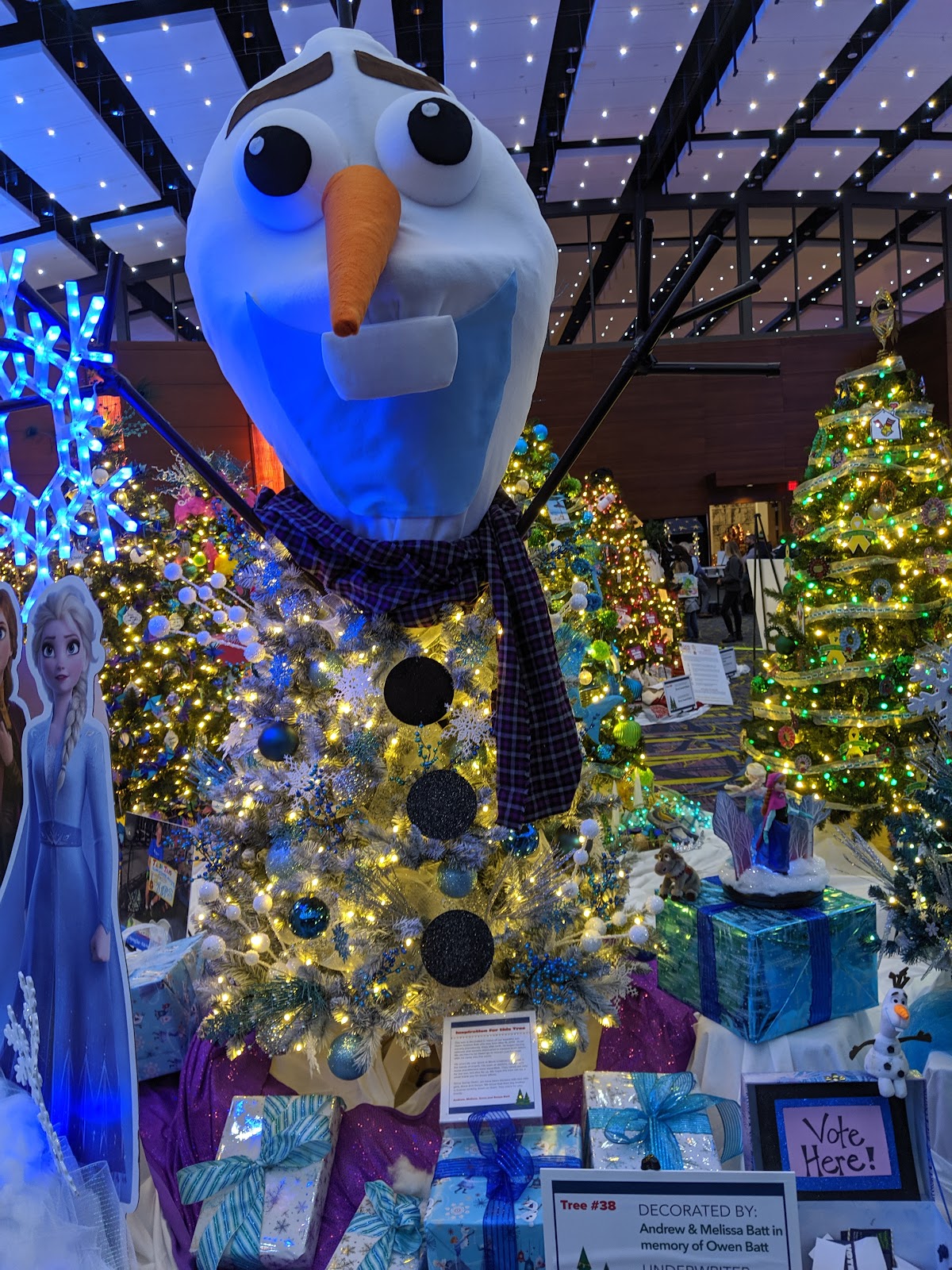
The third approach recognises that in a blank room the couple’s styling is the only visual content, and it should be treated as the set rather than as decoration. Lighting design, drapes, florals, a feature wall — whatever has been brought is what the room is, and it deserves photographing properly while it is pristine. That means the twenty minutes before guests enter, which is the only time it exists as designed.
That frame benefits from a tripod and a couple of bracketed exposures, since nothing is moving: it gives a ceiling or a lighting rig with detail and a floor that still reads. It is an architectural technique rather than a wedding one, and the empty-room image is in almost every gallery a couple keeps.
The fourth approach is to leave the hall. Glazed public concourses are where the light is, because circulation space in a convention building is generously glazed — and a large window facing open ground with nothing tall opposite gives clean, strong, directional daylight. A couple a metre back from the glass, turned into it, has the best portrait light in the building and the only natural light in it.
The concourse also gives the one timed frame the venue has. At dusk, for roughly twenty minutes, the sky outside falls to approximately the brightness of the interior lighting, and a single exposure holds the concourse, the couple and the city beyond with colour still in the sky. Take the clock time from sunset and treat it as an appointment; after that every pane becomes a mirror showing the lit interior.
Outside, downtown Des Moines is low-rise in parts, so low evening sun reaches street level and runs the length of a street. That is where the frames that locate the gallery get made, because a convention hall could be anywhere on earth — and finding which streets run roughly east-west takes ten minutes on a site visit. Iowa winters are cold with short days, so that block needs scheduling early rather than assuming it will still be there at the end of the afternoon.
More frames from The Iowa Events Center
The Iowa Events Center wedding photography: common questions
Why is a convention hall so difficult?
Because it is large and neutral at once. The volume means nothing is close enough to bounce spill back, so lighting disappears, and the plain surfaces mean there is nothing worth exposing for — so the wide frame that rescues a cathedral does not rescue this.
What is the single most useful request?
The smallest hall configuration that fits the guest count. Partitioning brings the walls closer, makes bounce possible again and stops the space swallowing light. It improves the photographs more than any equipment, and guests prefer it too.
How do you photograph a blank hall?
You do not. Photograph what is in it — tight, populated frames where people supply the texture the architecture lacks. A packed dance floor works; a wide frame of the room does not.
What about the couple's styling?
It is the only visual content in a blank room, so treat it as the set. Photograph it while pristine in the twenty minutes before guests enter, ideally from a tripod with a couple of bracketed exposures since nothing is moving.
Where is the light in the building?
The glazed concourses. Circulation space in a convention building is generously glazed, and a window facing open ground with nothing tall opposite gives clean strong directional daylight — the only natural light on site.
Is there one frame worth timing?
Yes — the concourse at dusk. For about twenty minutes the sky outside falls to the brightness of the interior, so one exposure holds the concourse, the couple and the city. After that the glass becomes a mirror.
More Des Moines, IA venue guides
We are writing a photographer’s guide to every venue we would happily shoot in Des Moines, IA. Here are three more, plus the full index:
- Salisbury House: Field Notes on Stone Walls and Carved Oak
- The Science Center of Iowa: Glass, Steel and the Screen Problem
- The Surety Hotel: Photographing a Converted Office Building
All Des Moines, IA Wedding Venues →
Planning a wedding at The Iowa Events Center?
Ask for the smallest hall that fits, and give us twenty minutes in the concourse at dusk. Tell us your date and guest count.