 The Iowa Events Center: Four Ways Out of the Blank-Hall Problem
Salisbury House: Field Notes on Stone Walls and Carved Oak
Stone outside and carved oak inside. Both absorb light, and both disappear under flat lighting.
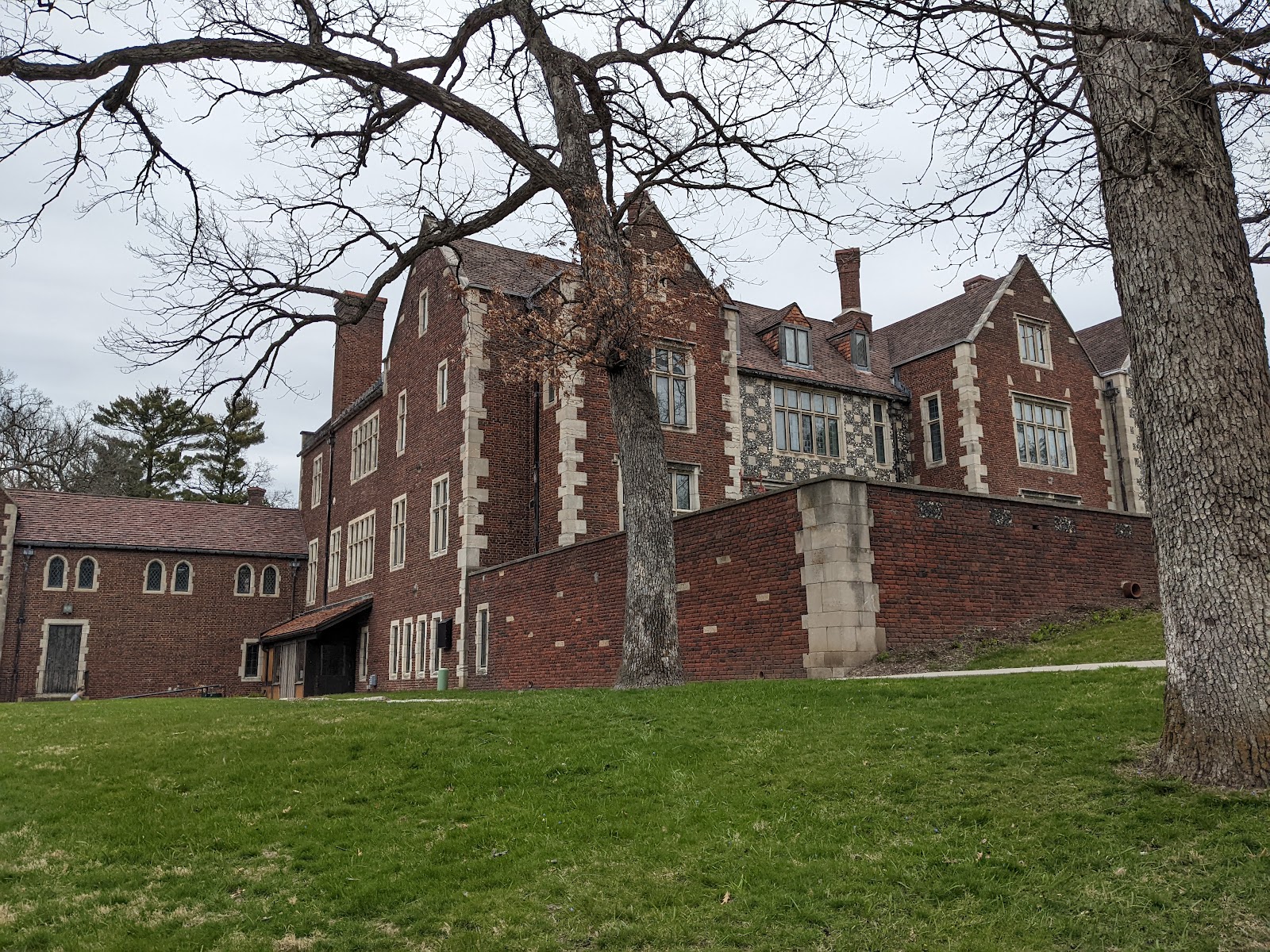
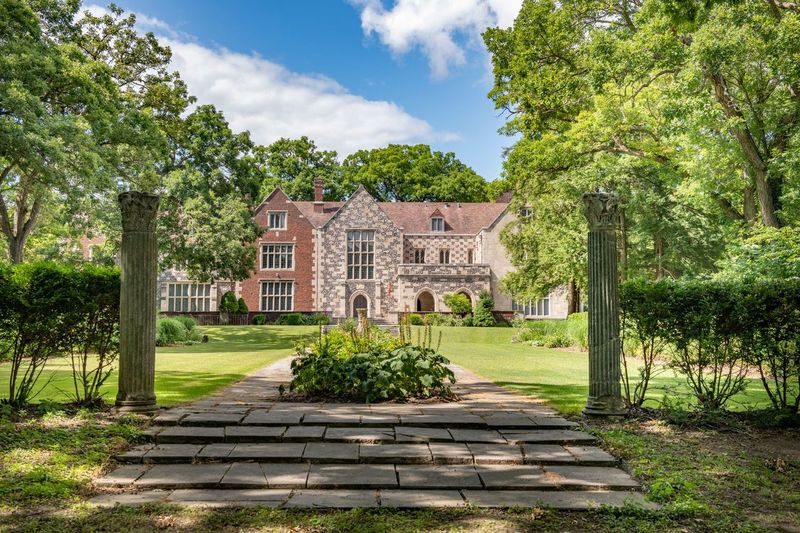
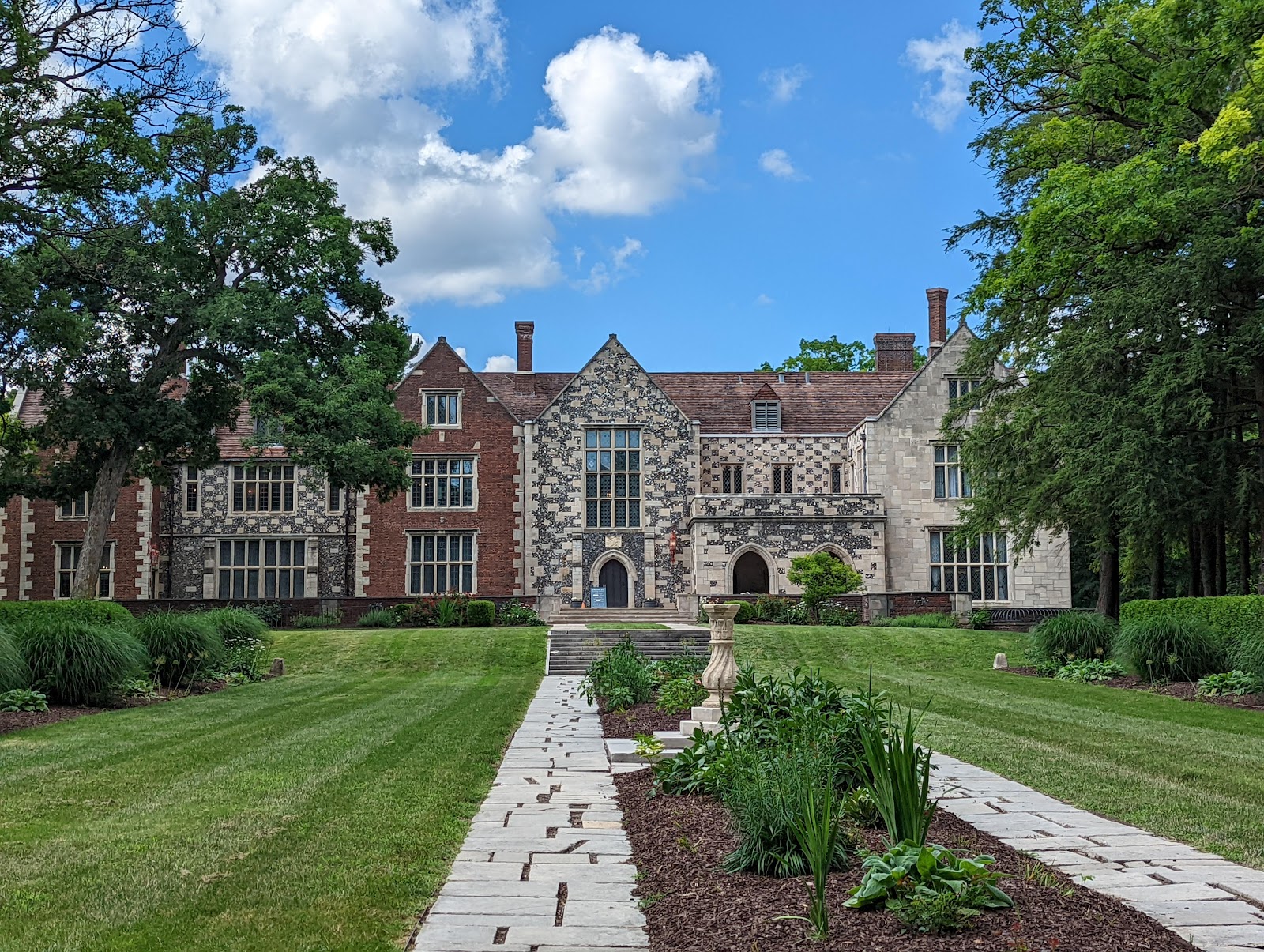
Salisbury House stands on grounds in Des Moines, Iowa, a 1920s house built in the English Tudor-revival manner — stone walls, leaded windows, carved oak interiors and formal gardens around it.
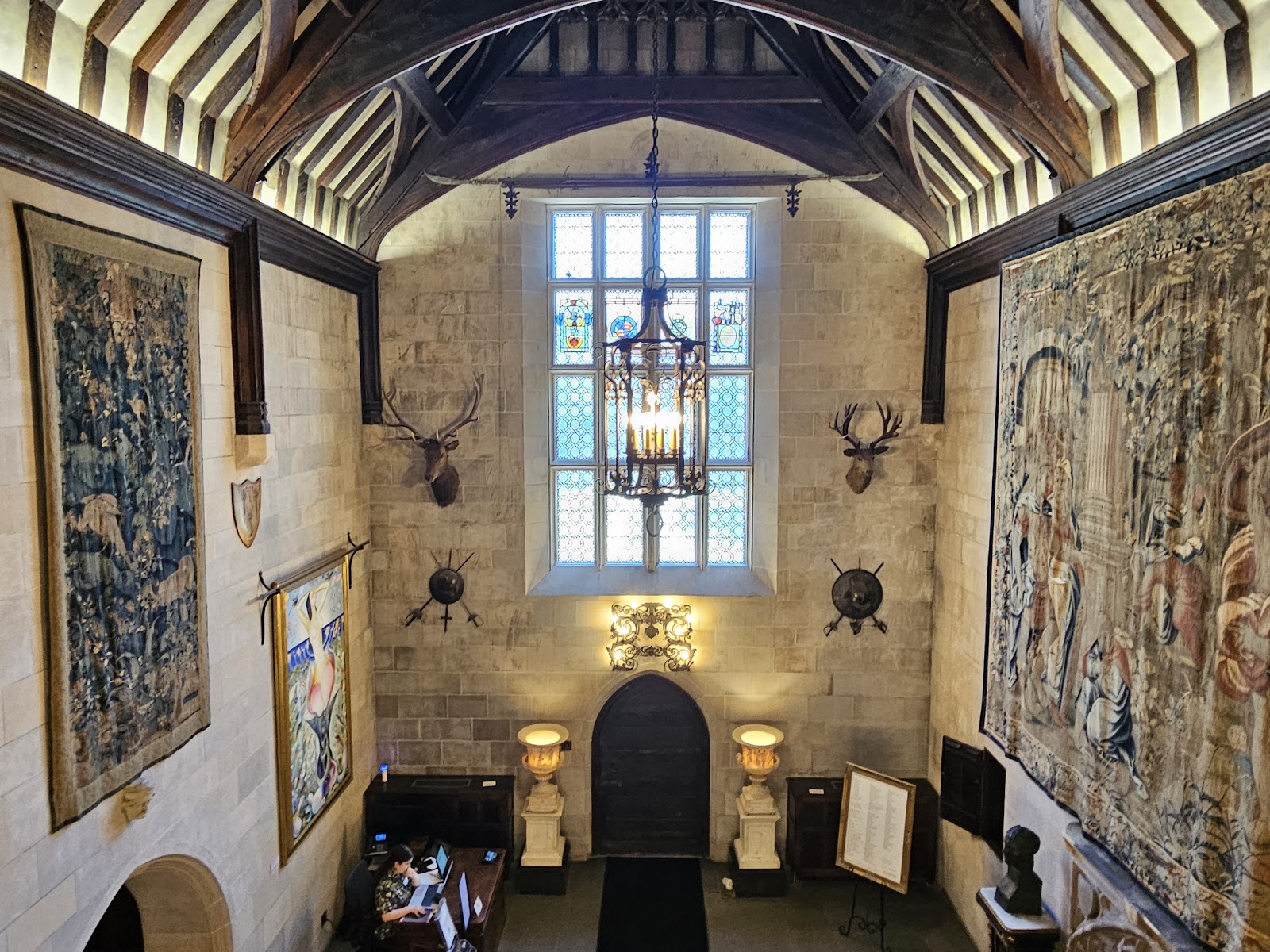
Two materials govern how this building photographs and they behave the same way as each other. Stone and dark carved oak both absorb a great deal of the light that lands on them rather than returning it, so the ambient is low and the fall-off from any source is steep. And both are textured in relief — a carved panel, a moulded stone surround, a linenfold door — which means they only read as three-dimensional work when light rakes across them. Frontal light flattens both into plain dark surfaces, and that is the single most common failure in a house of this kind.
So the work here is about direction as much as exposure. These are field notes on three conditions: the stone exterior, the oak interiors, and the leaded glass that connects them. We have not photographed a wedding at Salisbury House; Tudor-revival stone and carved oak behave the same wherever they were built. Which rooms may be used, what the collection restrictions are and whether flash is permitted are questions for their events team — the house holds a collection, so the answers are specific.
Salisbury House at a glance
| Where | Des Moines, Iowa |
| Character | A 1920s Tudor-revival manor in stone, with carved oak interiors |
| Both materials | Absorb light, and need raking light to show relief |
| Consequence | Bounce flash barely works; light directly and from the side |
| Ask first | Collection restrictions, and whether flash is allowed inside |
Problem one: carved oak absorbs, and flattens
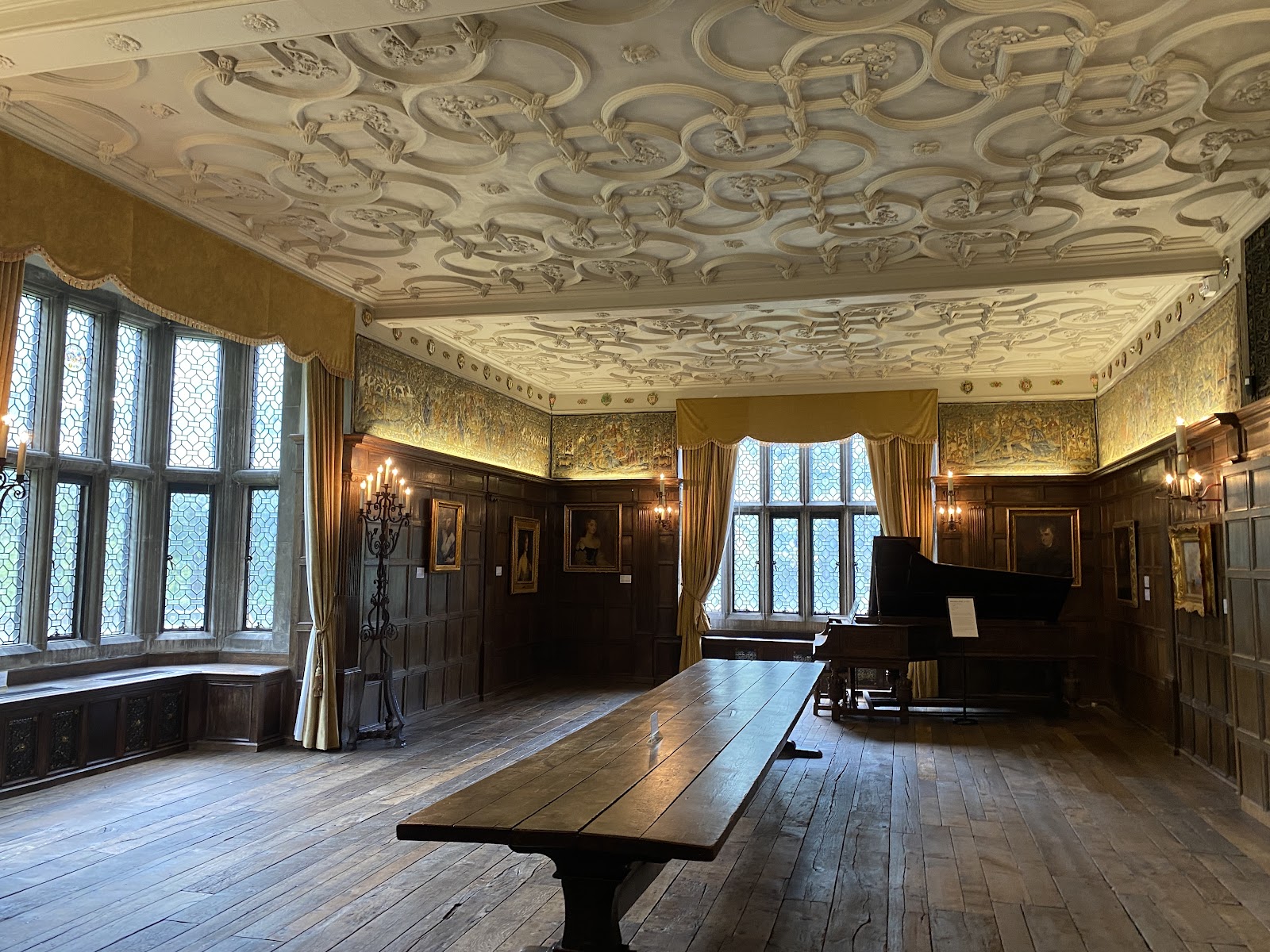
Dark oak panelling returns very little of the light that reaches it, so an interior lined with it is dim and any source falls off steeply. A flash aimed at an oak ceiling sends almost nothing back, which means bounce — the reflex move indoors — is close to useless here. Light directly, with your own modifier pointed where you want light, and accept that the room will not help distribute it.
The relief problem is separate and matters as much. Carved oak is worth photographing because it is carved, and carving reads by casting small shadows. Light it from the camera position and every cut fills in, leaving a flat brown panel where a moment earlier the eye saw linenfold, tracery or foliage. So when panelling or a carved door is the subject of a frame, the light belongs well off to one side, raking across the surface.
That gives a useful working rule with two settings. For faces, a source at roughly forty-five degrees at face height. For the woodwork, the same source moved further round towards ninety degrees, which rakes the carving and reveals it. Those are different positions and a frame that wants both needs a compromise around sixty degrees, or two sources.
Colour: oak reflects strongly warm, so the little bounce there is arrives orange, and mixed with tungsten fittings and a cool leaded window it is three sources that no single white balance serves. Decide which owns the faces — normally your own light or the window — set for that, and let oak read as warm oak. Correcting panelling to grey makes a Tudor room look wrong.
Problem two: leaded glass is a small hard source
Leaded windows are divided into small panes by lead cames, and the glass itself is often slightly irregular. Two consequences follow. The window transmits less light than its area suggests, because the lead occupies a real proportion of it — so a large leaded window is dimmer than a plain one of the same size. And the pattern of the lead prints itself: in direct sun a leaded window throws a grid of hard shadow across a face and a dress, which cannot be corrected.
The remedies are position and timing. Work at the window when it is in shade rather than direct sun, which gives a soft directional source with a natural fall-off and no pattern. When the sun is on it, either move out of the pattern or use it deliberately on a surface rather than on skin — a grid of light across a stone floor or an oak table is attractive, across a face it is not.
Irregular glass also scatters, which softens the light slightly and can add a faint warm or green cast depending on the glass. It is small but real, and another reason to set white balance in the room rather than carry one in.
One advantage worth using: because leaded windows are usually deep-set in thick stone walls, the reveal acts as a snoot. Light entering is already restricted to a narrower cone than an open window would give, so it falls off fast and produces a naturally dramatic, contained light — a subject a metre inside a deep window reveal sits in a pool of light with the room going dark around them, with no equipment at all.
- Light directly; bounce off oak returns almost nothing
- Faces at forty-five degrees, carving nearer ninety — different positions
- Work leaded windows in shade; in sun the lead prints a grid on faces
- Use deep window reveals as natural snoots for contained light
- Set white balance in each room and let oak read warm
Problem three: stone outside needs the same treatment
The exterior is the same problem at a larger scale. Stone is a mid-to-dark tone with real surface texture, and it needs raking light to read as stone rather than as a flat grey field. Low sun across an elevation lifts every course, every tool mark and every moulded surround into relief; flat midday sun erases all of it. So the building photographs well in the first and last ninety minutes and poorly in the middle of the day, which happily coincides with when faces work best outdoors.
Stone also gives no free fill. Unlike a pale rendered or painted building, it reflects very little, so a couple standing beside a stone wall in open sun gets hard light on one side and almost nothing returned on the other. That is a case for a reflector, a fill source, or turning the couple so the open sky rather than the wall is doing the filling.
A Tudor-revival elevation is also visually busy — gables, mullions, chimneys, varied stonework — which means it competes with a couple placed in front of it. The usual decision applies: subordinate with a long lens at a wide aperture so the facade becomes texture, or commit by going wide and placing the couple deliberately small within the composition. Half-in fails, as it does with any assertive background.
The formal gardens give the outdoor register and the usual conditions. Mature planting means dapple at midday, which is several stops across a face, moving with any breeze, and correctable only by moving people — so the reliable midday shade is the house’s own shadow. And the last ninety minutes give backlit planting and light raking along the stone at the same time, which is why that block is worth protecting above anything else.
Two Iowa notes. Winters are genuinely cold and the light is low and raking for much of a short day, which suits stone and oak better than summer’s high sun does — a January wedding here photographs unusually well. And summer humidity is high enough that a lens carried from an air-conditioned interior into garden air will fog for ten to twenty minutes, so acclimatise the body you intend to use outside before you need it.
More frames from Salisbury House
Salisbury House wedding photography: common questions
Why does bounce flash fail in an oak-panelled house?
Because dark oak absorbs the light that reaches it rather than returning it, so a flash aimed at a panelled ceiling sends almost nothing back. The ambient is low and fall-off is steep, so everything has to be lit directly with your own modifier.
Why does the carving look flat in my photos?
Because the light is coming from the camera position and filling every cut. Carving reads by casting small shadows, so when panelling or a carved door is the subject, the light belongs well off to one side — nearer ninety degrees than forty-five.
What about the leaded windows?
They transmit less light than their area suggests, because the lead occupies a real proportion of the opening. And in direct sun they print a grid of hard shadow across faces that cannot be corrected — work them in shade, or use the pattern on a floor or table instead.
Is there an advantage to leaded windows?
Yes. They are usually deep-set in thick stone walls, and the reveal acts as a snoot — light is already restricted to a narrow cone, so it falls off fast. A subject a metre inside a deep reveal sits in a pool of light with the room going dark around them, with no equipment.
When does the stone exterior photograph best?
The first and last ninety minutes, when low sun rakes across the elevation and lifts every course and tool mark into relief. Flat midday sun erases the texture entirely and the building reads as a grey field.
Does the stone help with fill?
No, the opposite. Unlike a pale rendered building it reflects very little, so a couple beside a stone wall in sun gets hard light on one side and almost nothing back on the other. Use a reflector, add fill, or turn them towards open sky.
More Des Moines, IA venue guides
We are writing a photographer’s guide to every venue we would happily shoot in Des Moines, IA. Here are three more, plus the full index:
- The Science Center of Iowa: Glass, Steel and the Screen Problem
- The Surety Hotel: Photographing a Converted Office Building
- The Temple for Performing Arts: Photographing a Former Masonic Temple
All Des Moines, IA Wedding Venues →
Planning a wedding at Salisbury House?
Stone and oak both need light from the side, not the front. Tell us your date and we will plan the direction as well as the hour.