 The Van Dusen Mansion, Minneapolis: A Walk Through House and Grounds
The F. Scott Fitzgerald House: Photographing a Narrow Row House
A terraced house has walls on two sides and windows on the other two. That single fact governs the whole day.
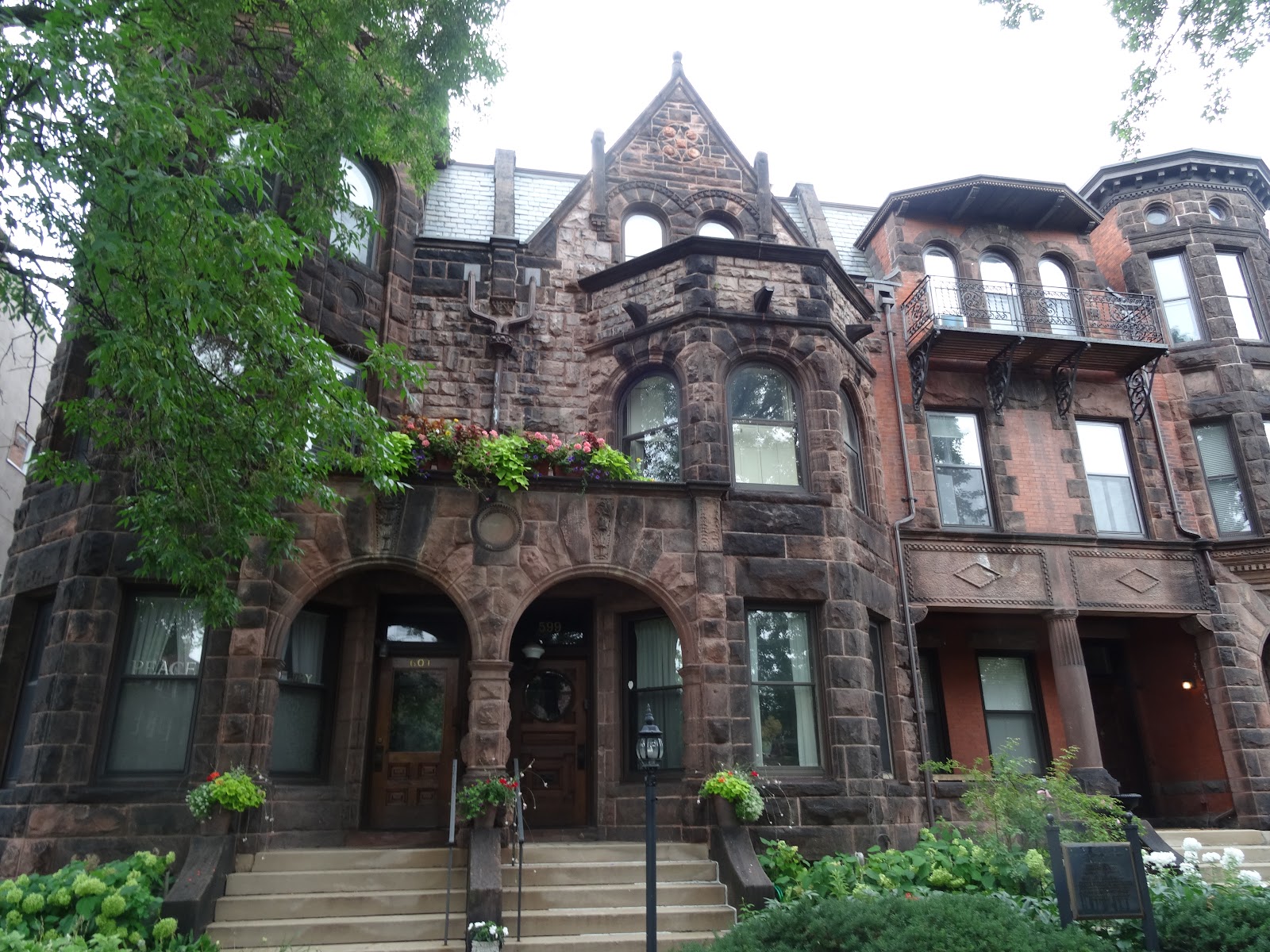
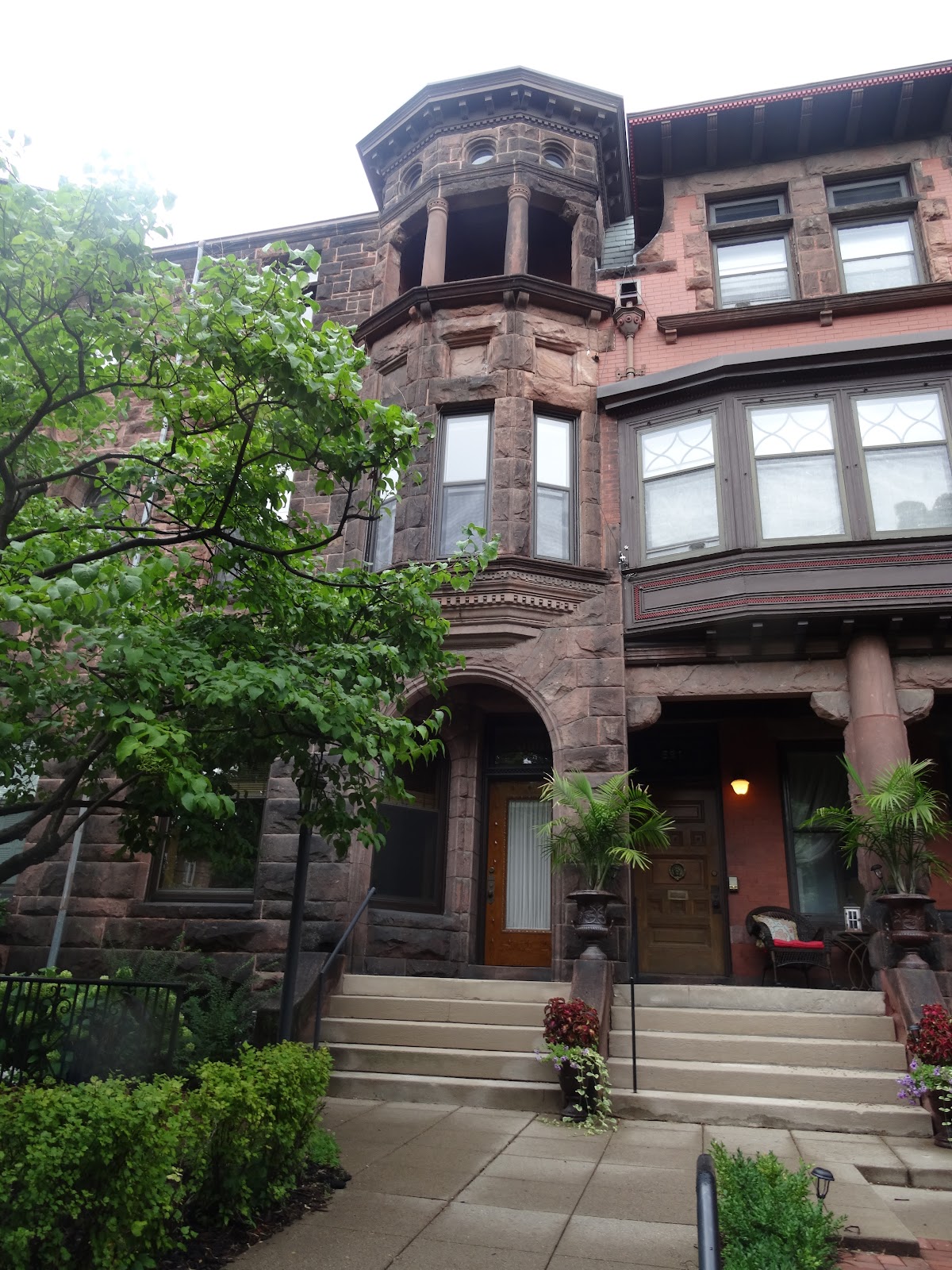
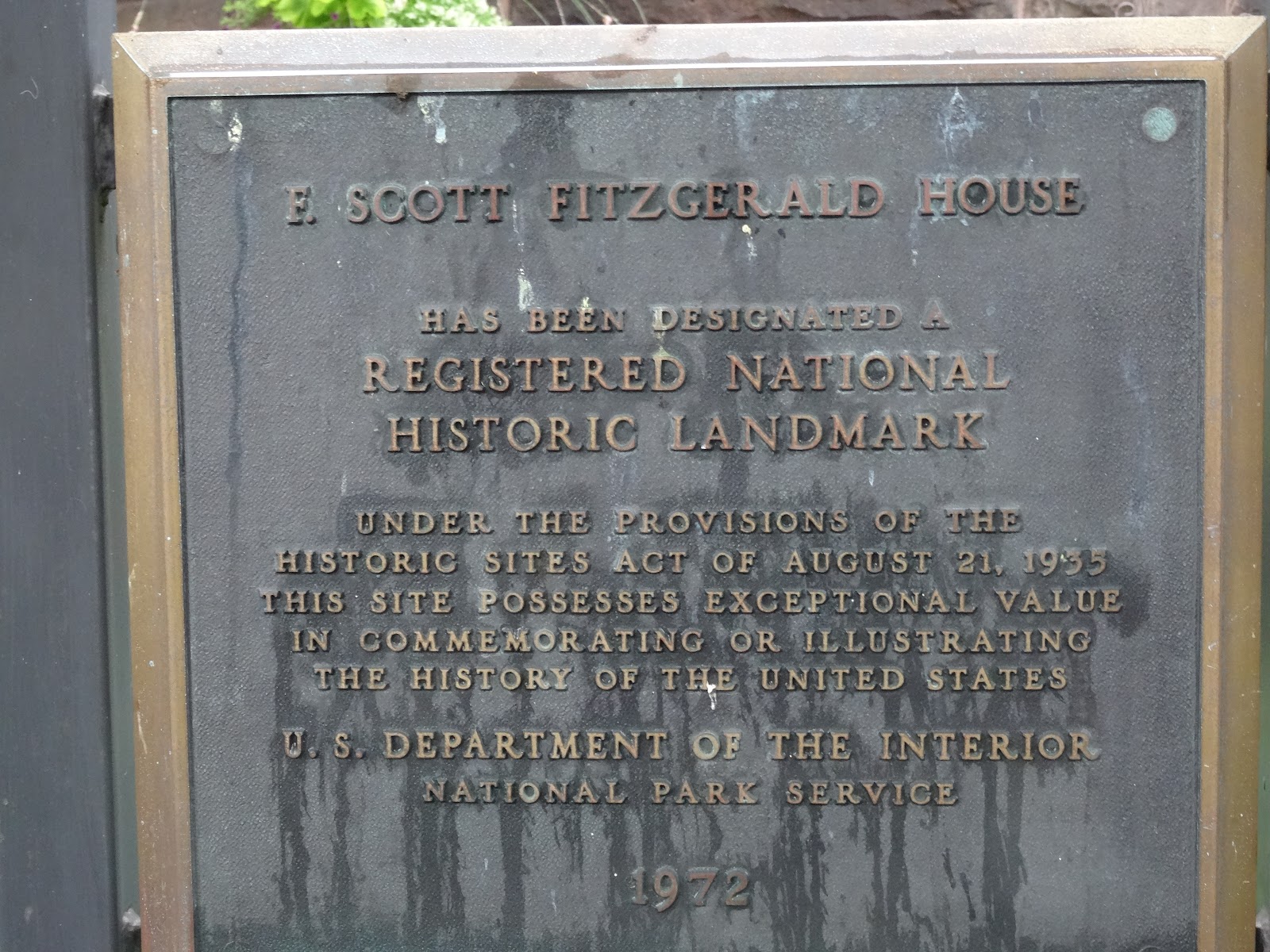
The F. Scott Fitzgerald House stands on Summit Avenue in St Paul, Minnesota, a brownstone row house of the 1890s with period interiors, stained glass and detailed woodwork — one of a continuous terrace rather than a free-standing mansion.
Row houses are a distinct type and the difference from a detached house is structural rather than decorative. A free-standing house has windows on four elevations, so at any hour some side is lit and some is shaded and a photographer chooses by walking round. A terraced house is attached on two sides, which means it has windows at the front and the back and solid party walls between. There is no choosing: the light comes from two directions only, and the middle of the house is furthest from both.
That governs the whole day and it is worth planning for rather than discovering. These are field notes on it, on the stained glass, and on the street outside. We have not photographed a wedding at the Fitzgerald House; row houses and period stained glass behave the same wherever they occur. Real capacity, which rooms may be used and what interior restrictions apply are questions for their team — and capacity is the first one, because a row house is small.
The F. Scott Fitzgerald House at a glance
| Where | Summit Avenue, St Paul, Minnesota |
| Character | An 1890s brownstone row house with stained glass and woodwork |
| The constraint | Windows front and back only; party walls on the other two sides |
| Consequence | The middle of the house is the darkest part of it |
| Ask first | Real capacity, and which rooms may be used |
Problem one: light from two ends only
In a terraced house the plan is usually long and narrow, with rooms front and back and a stair or a corridor between them. Light enters at both ends and falls off towards the middle, which means the darkest part of the house is its centre — often three or four stops below the front room on a bright day.
That is a gradient to use rather than to fight. A subject placed in the front room near the window has a large soft key with the depth of the house going dark behind them, which is separation for free and rather beautiful. The same subject placed in the middle of the plan has neither a key nor a background, which is why the centre of a row house is where photographs go wrong.
The practical rule is simply to work at the ends. Front room for the brighter, more open frames; back room for whatever the rear aspect gives, which in a row house is often a garden or a yard and therefore a softer, greener light; and the middle for movement and connection rather than for portraits.
It also means the two ends do not match. A front window facing a street and a back window facing a garden give different colour and different quality, so a custom white balance at each end rather than one carried between them, and expect a sequence moving front to back to need a small adjustment.
Problem two: stained glass is a coloured source
Period stained glass is not a window with a pattern on it; it is a coloured light source. Light passing through red, amber or green glass arrives on whatever is beneath it carrying that colour, and in a small room with a stained panel on one side the cast on a face can be strong and quite specific.
The instinct is to correct it, and that is a mistake for the same reason it is at any coloured venue: neutralising the cast drags everything else towards the complement and the glass stops looking like stained glass. The better approach is to add a source that owns the faces — a modest warm-gelled light at face height, with white balance set to it — so skin has a dependable base and the coloured light reads as a deliberate accent.
Used deliberately it is one of the best things in a house like this. A patch of coloured light falling across a floor, a dress or a hand is a frame that only exists where there is period glass, and it moves through the day as the sun does. Worth finding on a site visit at roughly the ceremony hour, because its position is entirely predictable and entirely specific to the time.
Stained glass also transmits far less light than clear glass, so a window that looks generous is dimmer than its area suggests. In a narrow house that compounds the fall-off problem, which is another argument for working close to the openings.
- Work at the ends of the plan; the middle is the darkest part
- Custom white balance front and back — they will not match
- Let an added warm source own the faces; keep the glass coloured
- Find where the coloured patch falls at the ceremony hour
- Expect stained glass to transmit far less light than it looks like it should
Problem three: it is a small house, and the street is the garden
Row house rooms are small, which means camera position is decided by the walls rather than chosen — a 28mm or 35mm covers anything with more than two people in it, with the usual caution that wide lenses stretch whatever sits near the frame edge. Keep faces towards the centre and arrange groups in a shallow arc rather than a line.
Modifiers do not fit and do not need to. In a small room with pale surfaces, a bare flash bounced off a wall or ceiling turns the whole space into a source larger than anything that would come through the door — so the kit needed is very small. Check what you are bouncing off, though: dark period woodwork absorbs and tints, and a pale wall or ceiling is the better surface.
Groups past about a dozen will not work indoors. The front steps are the answer and they are a good one, because steps arrange people at different heights automatically and a period doorway frames them — which solves the two hardest things about a group photograph at once.
Summit Avenue itself is the garden, and it is an unusually good one. A long street of substantial period houses at consistent scale behaves like an outdoor room with matched walls: the buildings bounce light between them and replace a blown sky in the background with mid-toned architecture. Because it is residential and low-rise, low sun reaches street level and runs the full length of the street. Finding which stretch runs roughly east-west is the most useful preparation available.
Two Minnesota notes. Autumn colour on a tree-lined avenue is intense and short, and a late-September or early-October date is arguably the strongest outdoor combination the city offers. And in winter the sun stays low all day, so brownstone is raked throughout a short afternoon while snow supplies the fill that dark stone and woodwork refuse — overexpose by about two stops so the snow holds texture, plan the outdoor block early because the days are short, and acclimatise a camera rather than cycling it between subzero air and a heated house.
The F. Scott Fitzgerald House wedding photography: common questions
What makes a row house different?
It is attached on two sides, so it has windows front and back only and solid party walls between. A detached house lets you choose a lit or shaded elevation by walking round; a terrace gives you two directions and nothing else.
Where is the worst place to stand?
The middle of the plan. Light enters at both ends and falls off towards the centre, which can be three or four stops below the front room. Work at the ends and use the middle for movement rather than portraits.
Do the front and back match?
No. A front window facing a street and a back window facing a garden differ in colour and quality, so set a custom white balance at each end rather than carrying one between them.
How do you handle stained glass?
Treat it as a coloured light source rather than a window with a pattern. Add a modest warm source that owns the faces, balance to that, and let the coloured light read as a deliberate accent — correcting it out makes the glass stop looking like glass.
What kit does a row house need?
Very little. Small rooms with pale surfaces mean a bare flash bounced off a wall is a larger source than anything that would fit through the door. Just avoid bouncing off dark period woodwork, which absorbs and tints.
Where do group photographs go?
The front steps, past about a dozen people. Steps sort out the heights automatically and a period doorway frames the group, which solves the two hardest problems at once. Beyond that, Summit Avenue itself does the work.
More Minnesota venue guides
We are writing a photographer’s guide to every venue we would happily shoot in Minnesota. Here are three more, plus the full index:
- The InterContinental St. Paul: What a Modern Hotel Actually Buys
- The James J. Hill House: Field Notes on Red Sandstone and Dark Oak
- The Landmark Center: How the Indoor Courtyard Frame Is Made
Planning a wedding at The F. Scott Fitzgerald House?
A row house has two directions of light and a very good street outside. Tell us your date and we will plan for both.