 Dry Tortugas National Park: A Walk Through an Island Fort
Fort Zachary Taylor, Key West: What It Suits, and What It Does Not
Thick brick arches and open beach, at the latitude with the most vertical sun in the country.
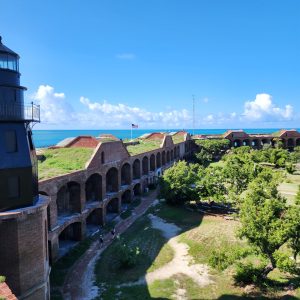
A nineteenth-century masonry fort beside a beach is an unusual pairing and both halves need separate treatment, because one solves the region’s central problem and the other is exposed to it entirely.
The problem is the latitude. Key West is at about twenty-four and a half degrees north, further south than anywhere else in the continental United States, and at midsummer the midday sun here is within roughly a degree of vertical. That means no shadow side to a face, black eye sockets, and a bright patch on the top of the head for anyone standing in the open.
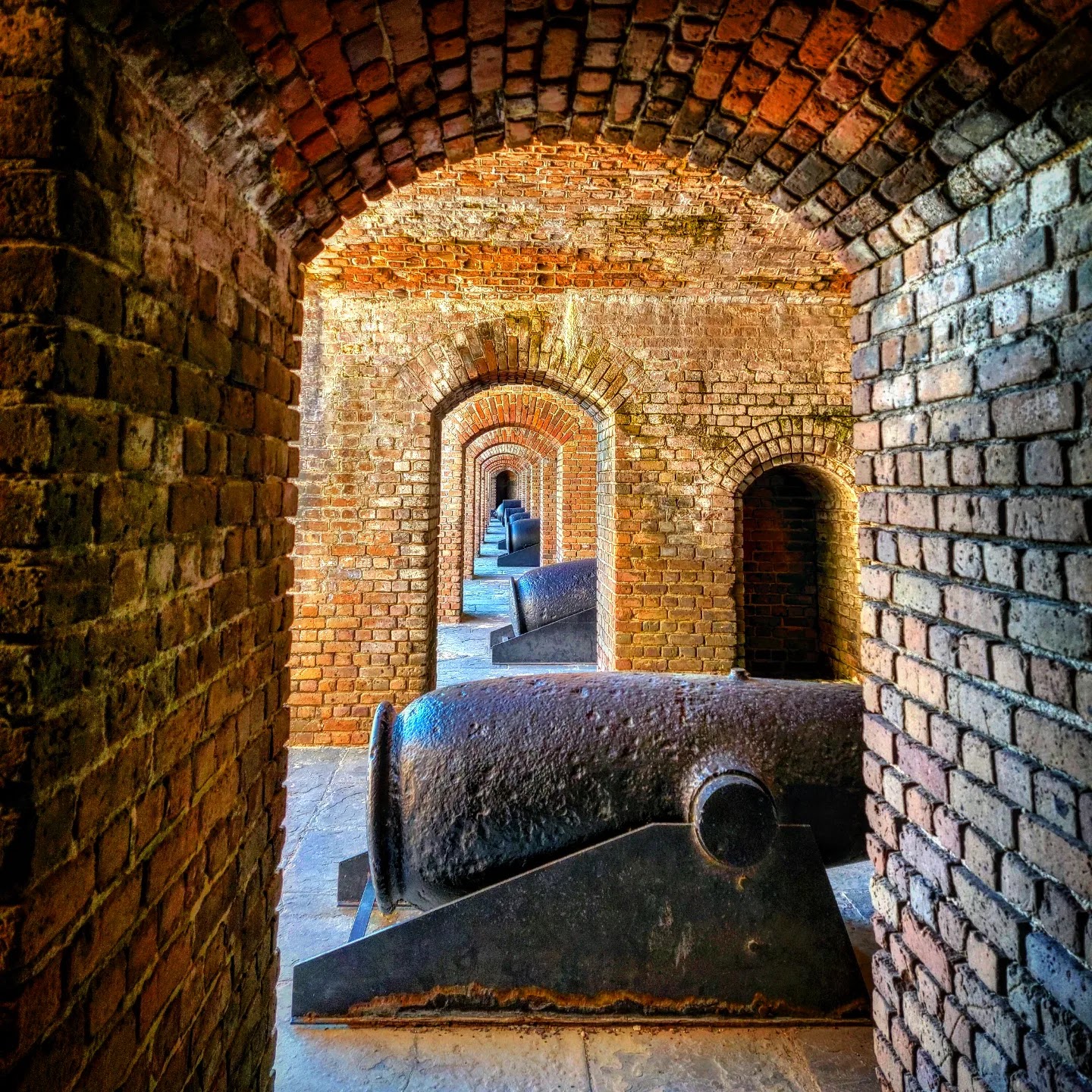
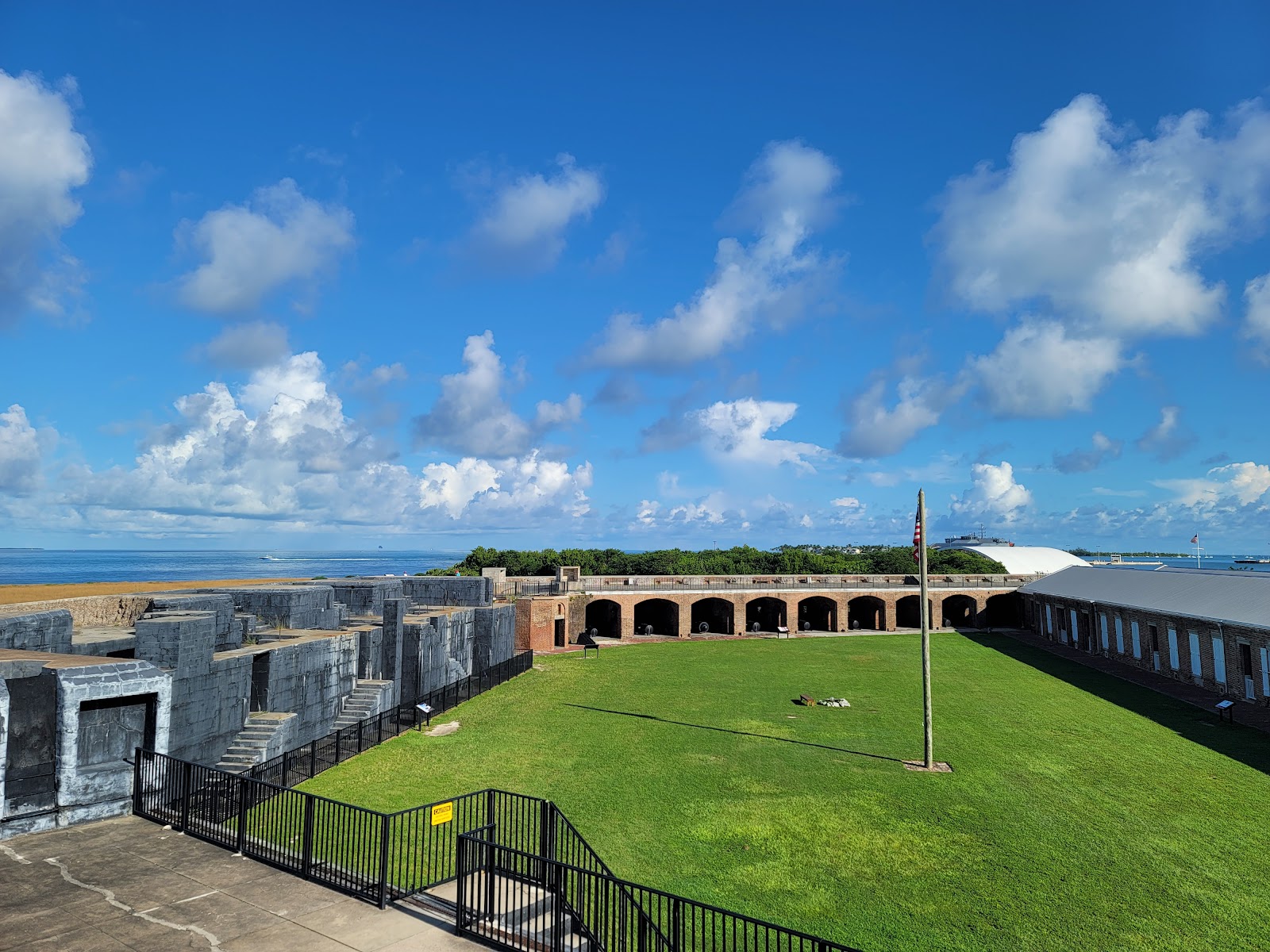
The fort is the answer. Thick masonry with deep arches, casemates and vaulted openings is essentially a set of built caves: the structure blocks the vertical component completely, the openings admit light horizontally, and the brick floors and walls bounce it back. That is good light at any hour of any day, which almost nothing else in this landscape offers.
The beach is the opposite: open, bright, reflective and entirely exposed, which makes it a two-window location rather than an all-day one.
We have not photographed a wedding at Fort Zachary Taylor; masonry forts and Florida beaches behave consistently. Permits, access, group limits and which areas are usable are questions for the managing authority rather than for a photographer, and at a historic site within a state park those answers govern the day.
Fort Zachary Taylor at a glance
| Where | Key West, Florida, at about 24.5 degrees north |
| Suits | Masonry arches and casemates: good light at any hour |
| Resists | Open beach at midday, and a twilight of about twenty-two minutes |
| The best frame | An arch used as a frame, with a couple in its light |
| Ask first | Permits, access, group limits, which areas are usable |
What it suits
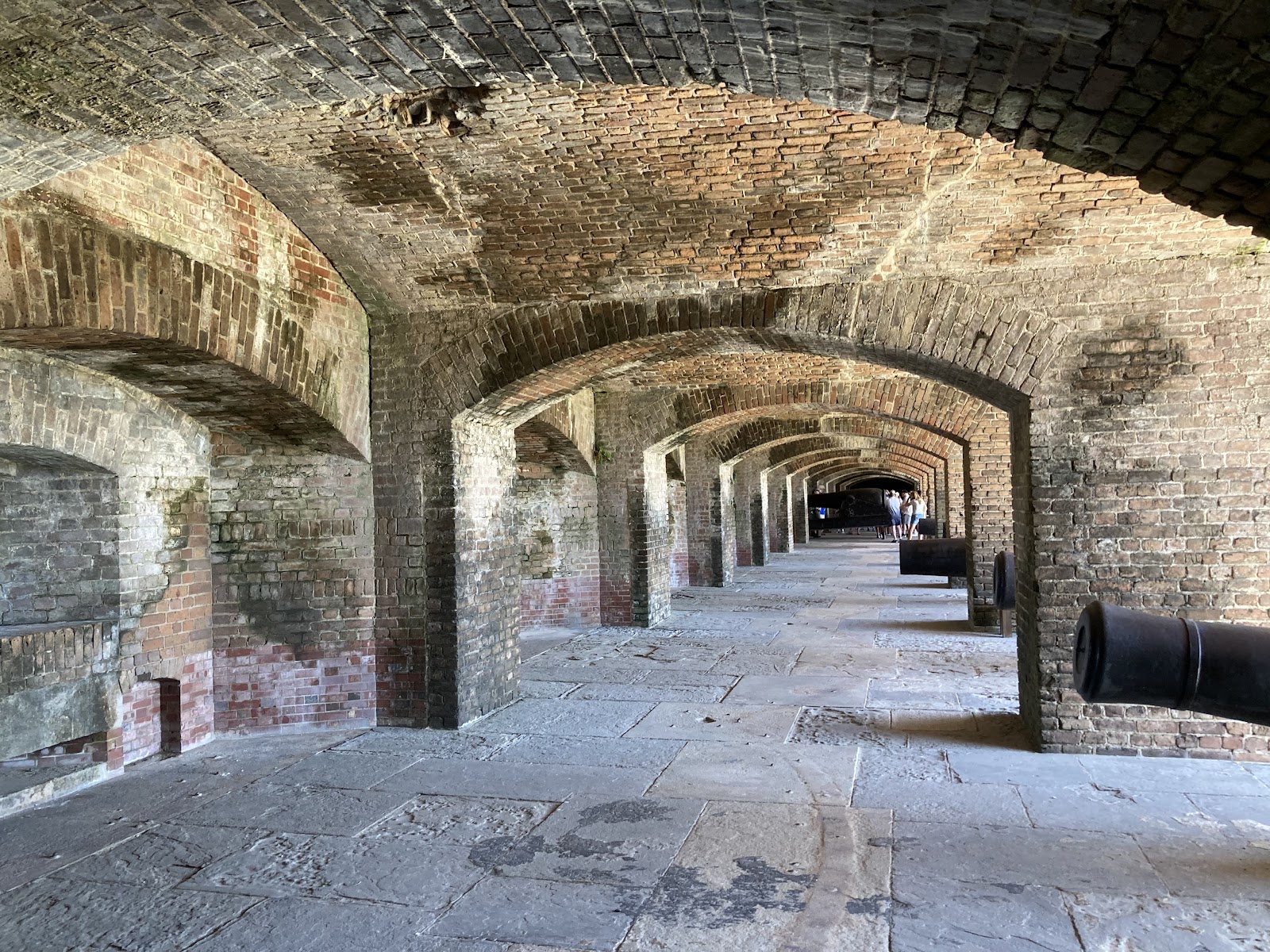
The arches are the fort’s best asset and they work on the same physics as a veranda, at a heavier scale. An arched opening in thick masonry has a solid top, solid sides and one open face — which blocks the vertical sun, restricts the light to a horizontal band, and bounces it off the floor and reveals to fill under the chin.
That produces good directional light at any hour of any day, which in a landscape with a near-vertical sun is close to miraculous. The working position is two or three metres inside the opening, facing out, and the test is a catchlight in the eyes with no bright patch on the top of the head. One test frame at three depths settles it.
The arch is also a framing device, which a veranda is not. An arch around a couple, photographed from inside or outside, places them in a picture within a picture — and brick or masonry arches in series give repetition and recession, so looking along a row of them gives depth that darkens by itself. That is the frame the fort exists to give.
Masonry texture suits raking light. Brick and cut stone read only when light runs along them, lifting every course and every irregularity; the same light facing them flattens the surface into a field of one colour. So the positions where the light is skimming a wall are the ones worth using, and in a structure of arches there are always several.
Brick is also a warm mid-toned reflector rather than a dark absorber, which means it returns a useful amount of light with a warm cast. That is helpful — it is what fills the shadow side of a face in an arch — and it needs a custom white balance set on a face in the position, because the cast arrives from one side and global correction cannot separate it.
The deep interiors suit fall-off, which is free separation. A casemate or vaulted room goes genuinely dark a few metres back from its opening, so a subject standing in the light of an arch with the interior behind them is separated by three or four stops with no equipment at all. That is the steepest separation available on this island.
And the site suits the two ends of the day outdoors. The first hour after sunrise and the last hour before sunset, when the sun is low enough to come across faces rather than down onto them, and when it rakes the masonry into texture — those are the windows for the beach and for the fort’s exterior, and they are the only ones.
What it does not suit
The open beach at midday is the first refusal and it is absolute. Pale sand under a near-vertical sun is the brightest and least directional environment a photographer meets: the sun comes straight down, the sand reflects straight back up, and the result is a face lit from above and below with no modelling at all, with black eye sockets and bright nostrils.
There is no technique for it. The sand’s upward bounce, which at lower sun angles is genuinely useful — filling the shadows a low sun carves — becomes the problem when the sun is overhead, because both directions are wrong at once.
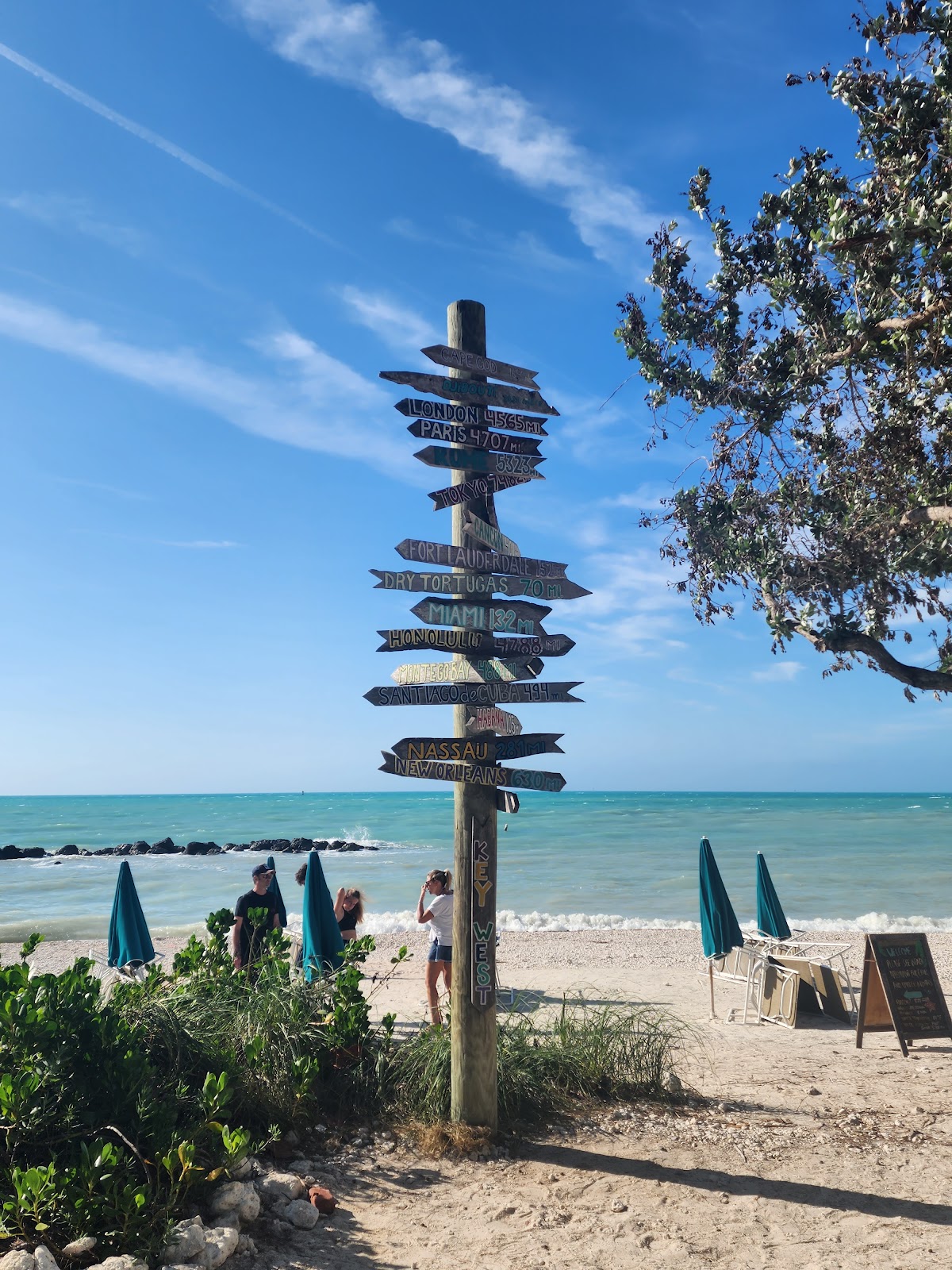
So the beach is a two-window location: the first hour and the last hour, when sidelight is available and the sand rakes into texture. And in those windows it is excellent, with the same rules as any beach — ninety degrees to the sun, look at the chin in the first frame, and expose for the faces or the sky but never compromise between them.
A polariser earns its place, because water in sun produces specular highlights several stops above everything else that clip and fool a meter, and because it deepens the sky. Shallow Florida water is also unusually clear and turquoise, which means camera height decides between a mirror and a view through to the bottom — and here the view through is frequently the better picture, which reverses the usual advice.
The short twilight is the second refusal and it catches northern photographers out. Because this latitude is so far south, the sun sets at a steep angle rather than a shallow one, which means civil twilight lasts roughly twenty-two to twenty-five minutes — against well over an hour on the northern plains in June.
That makes the crossing frame a genuinely brief window that has to be scheduled with the couple already in position. A photographer who drifts towards it will find the colour gone, and there is no second attempt.
The third is the rules, which at a historic site inside a state park shape the day more than any technique. Permits, group size limits, vehicle access, where people may walk and what may be set up are all governed, and masonry of this age is a conserved structure rather than a backdrop. Those answers belong to the managing authority and should be settled well in advance — the working assumption being no stands, nothing set against the fabric, a source in a hand, and small numbers at any one position.
The fourth is the humidity, which at these dew points is the most severe equipment condition in the country. A body carried from an air-conditioned vehicle into July air fogs on every surface at once, inside and out, and it does not clear quickly — so a bag opened twenty minutes before going out is the whole fix. Inside a thick-walled masonry fort the air is also markedly cooler than outside, which makes the same problem occur moving from an arch into the sun.
And salt is the cumulative one: airborne salt settles on a front element and on exposed metal and etches coatings over time, so a damp cloth at the end of the day is routine rather than optional.
- Two or three metres inside an arch, facing out, at any hour of any day
- Look along a row of arches for depth that darkens by itself
- The beach is a two-window location: first hour and last hour only
- Twilight is about twenty-two minutes — be in position before it starts
- Settle the permit and access rules with the managing authority first
The Florida year
The seasons here are two rather than four and they are wet and dry, which makes the choice of date unusually consequential.
The dry season, roughly December into April, is the good one by a wide margin. Lower humidity means clearer air and less severe fogging; comfortable temperatures mean a party can stand outdoors; and the December midday sun at about forty-two degrees above the horizon is a genuinely usable angle rather than a vertical one — which means open ground and the beach work in the middle of the day for the only time in the year.
That last point is worth emphasising, because it inverts the usual expectation about a tropical venue. A December wedding here has a usable full day of outdoor light; a June one has two hours of it.
The dry season also brings the clearest water and the cleanest long views, which for a site with sea on one side matters. And the twilight, though still short, falls at a civilised hour rather than late in the evening.
The wet season, roughly May into October, is hot, very humid and afternoon-thundery. Thunderstorms build most afternoons, which at an outdoor site is a genuine interruption needing a named covered alternative — and at a masonry fort the arches and casemates are that alternative, which is one of the type’s quieter advantages.
The hurricane season runs from June into November and peaks from August into October. That is a planning fact rather than a photographic one and it belongs in the conversation when a date is chosen, because it affects whether a wedding happens at all rather than how it is photographed.
The trade winds are the constant and they are the reason this climate is tolerable. A persistent easterly breeze moderates the heat and keeps the air moving, which makes shaded positions genuinely comfortable even in August. It also means a veil will not behave and a lightstand outdoors is a liability, so the source goes in a hand or on a bracket — which is the correct configuration at a conserved site anyway.
Wind also means the beach is frequently choppy rather than glassy, so the mirror frames on water are less available here than on a sheltered bay. The compensation is surf and movement, which with a long exposure becomes a smooth field and with a short one holds every droplet.
Two closing notes specific to the light. The near-vertical midsummer sun means a hat or a parasol casts a shadow straight down, which is unflattering in a way it is not further north — worth mentioning to anyone planning one. And because the sun passes so close to overhead, its azimuth changes very quickly around noon, which means a shaded position can become an unshaded one within twenty minutes. Checking rather than assuming is the habit.
More frames from Fort Zachary Taylor
Fort Zachary Taylor wedding photography: common questions
Why are the arches so good?
An arched opening in thick masonry blocks the vertical sun, admits light horizontally and bounces it off the floor — good directional light at any hour of any day.
Where should the couple stand?
Two or three metres inside the opening, facing out. The test is a catchlight in the eyes and no bright patch on the top of the head.
Why is the beach unusable at midday?
Because a near-vertical sun comes straight down and pale sand reflects straight back up, so a face is lit from above and below with no modelling at all.
How long is twilight here?
About twenty-two to twenty-five minutes, because the sun sets at a steep angle at this latitude. Be in position before it starts.
What has to be settled first?
Permits, group limits and access with the managing authority. Masonry of this age is a conserved structure, so assume no stands and nothing against the fabric.
Which season should be chosen?
December into April. Lower humidity, clearer air, and a midday sun at about forty-two degrees — which makes the full day usable rather than two hours of it.
More Florida venue guides
We are writing a photographer’s guide to every venue we would happily shoot in Florida. Here are three more, plus the full index:
- The Key West Butterfly Conservatory: The One Decision That Governs Everything
- The Biltmore Hotel, Coral Gables: The Logic of a Pre-Air-Conditioning Building
- Busch Gardens Tampa Bay: What It Suits and What It Does Not
Planning a wedding at Fort Zachary Taylor?
Arches for the day, the beach for two hours. Tell us your date.