 Dry Tortugas National Park: A Walk Through an Island Fort
The Key West Butterfly Conservatory: The One Decision That Governs Everything
A glasshouse full of butterflies is a room where the usual first question is whether to add light at all.
In a conservatory housing live butterflies, the governing photographic decision is not where to stand or what lens to use. It is whether to use flash at all — and the answer is very likely no, for reasons that belong to the venue rather than to a photographer.
Repeated flash near small living creatures is a welfare question, and a facility that keeps them will have a clear policy about it. That policy is not a house preference to be negotiated; it is the condition of working there, and a photographer who treats it otherwise is the wrong photographer for the room.
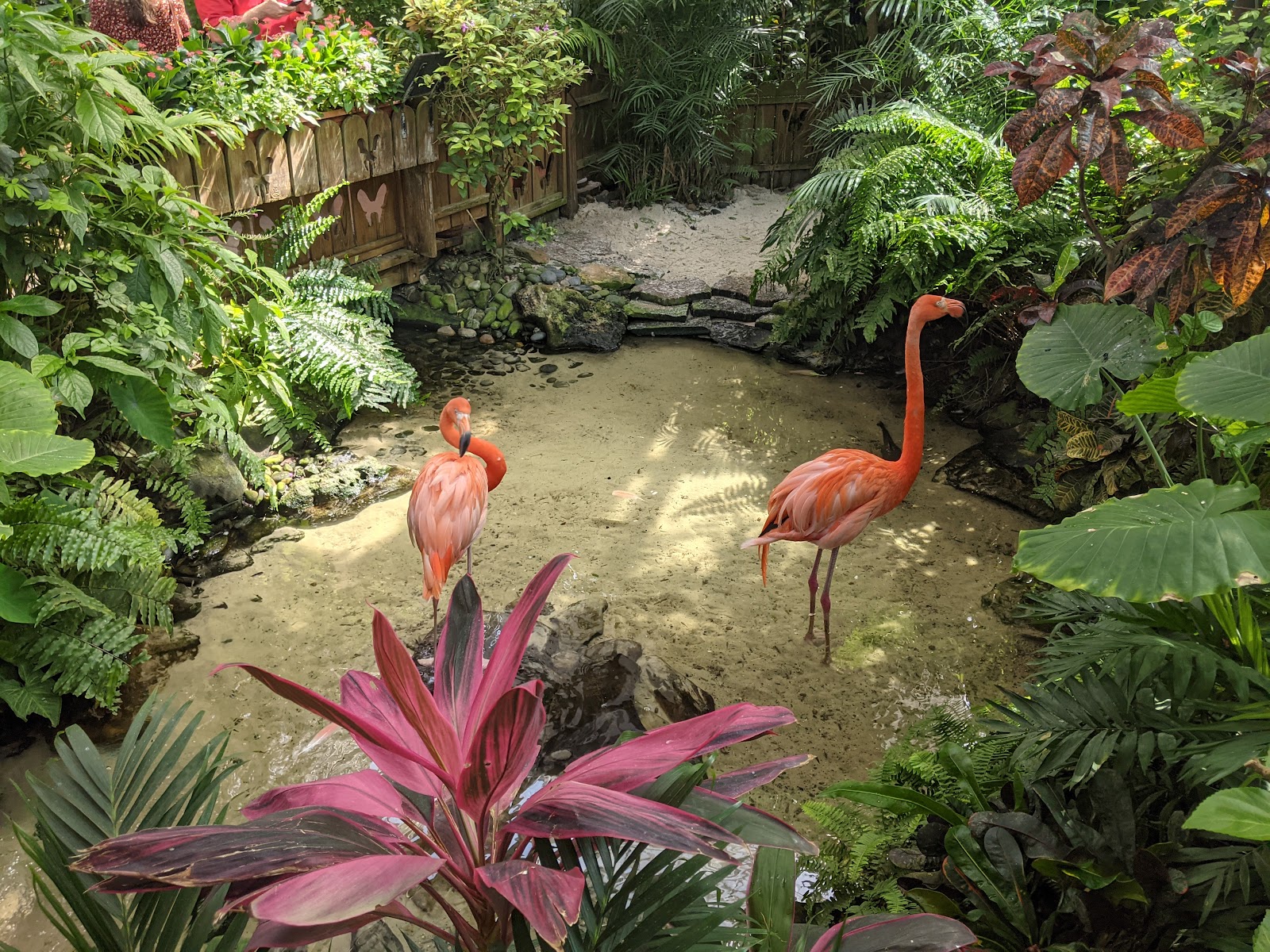
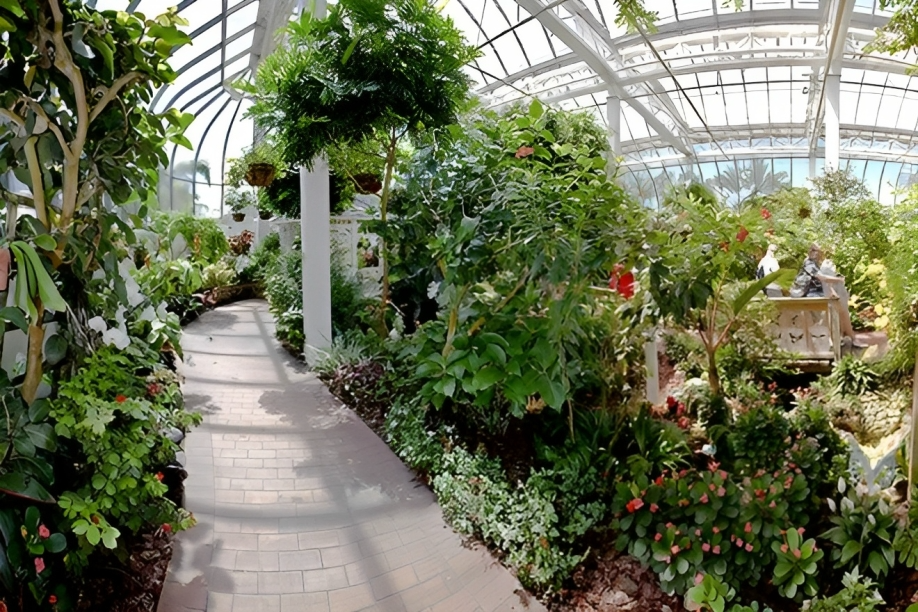
Which is genuinely fine, because the room does not need flash. A glasshouse is a building whose entire envelope is a light source: glazing overhead and on all sides, which at this latitude admits a great deal of light. And the planting inside is dense, which means there is full shade available wherever the canopy has closed.
So the decision is settled before arrival, and everything else follows from working with what the glass and the planting give. We have not photographed a wedding at the Key West Butterfly Conservatory; glasshouses with dense planting behave consistently. The flash policy, permitted areas, group limits and whether a ceremony is possible inside are questions for their team, and the first of those is the one that shapes the day.
The Key West Butterfly Conservatory at a glance
| Where | Key West, Florida |
| The decision | Whether flash is used at all — and the venue answers it, not you |
| Why it is fine | A glasshouse envelope is a light source; dense planting gives full shade |
| The conditions | Green cast, high humidity, condensation, and glass that reflects |
| Ask first | Flash policy, permitted areas, group limits, ceremony feasibility |
Working without flash
A glasshouse is an unusually generous room to work in without added light, and the reason is that the envelope is the source. Glazing overhead and on every side means light arrives from all directions at once — which at this latitude, where the sun is high for much of the year, means a great deal of it.
Where the glazing is diffusing — fritted, whitewashed for shading, or simply dirty — it is better still, because a diffused panel is a soft source with no hard edge. And where it is clear with a high sun behind it, the result is the one problem: hard direct light coming almost straight down through the glass, which produces dappling under the planting and hard top-light in the open spaces.
So the working positions are where the internal canopy has closed. Dense planting under glass gives genuinely full shade, which is soft, even and free — and the test is the universal one: look at the face rather than the ground, and any bright spot means move a metre.
The green cast is the first condition and in a glasshouse it is stronger than in any outdoor woodland, because the light is bouncing between foliage and glass repeatedly before it reaches a face. Every surface in the room is a leaf, which means the light arriving on skin has passed through or off green several times.
A custom white balance set on a face in the actual position being used is the only fix that works. Not a grey card in the middle of the path — on a face, in position, because the cast varies from one part of the room to another. And a global correction afterwards neutralises the face and turns the planting grey, which removes the whole point of the room.
Standing back from the densest foliage helps: a metre further out roughly halves what it throws, and a position on a path rather than in the planting is materially cleaner.
The second condition is the ambient level, which is lower than it feels because eyes adapt and meters do not. Dense planting under glass can be two or three stops below what the brightness of the glazing suggests — so the first frame on arrival should be a measurement, and a fast lens and a high ISO are the working configuration.
The third is that without flash there is no fill, which means the direction of the light is whatever the room gives. Standing near a path edge, a wall or a structural post blocks the light from one side and restores modelling; standing in the middle of an open planted space gives flat light from everywhere.
And the fourth is subject movement. Without flash the shutter is doing the work, and living creatures move — so a frame that includes a butterfly needs a shutter fast enough to hold it, which at a low ambient means accepting noise rather than motion blur. That is a straightforward trade and it should be made deliberately.
The glass, the humidity, and the rest of the day
The glass is the second half of the room’s character and it behaves in two ways that need managing.
It reflects. From many camera positions the glazing will show the interior behind the camera, the sky, or the photographer — and a curved or angled pane shows them from a wide range of angles. The fifteen-second habit applies: stand where the camera will stand, look at the glass in the frame, and move whatever is showing.
Used deliberately, though, glass reflections are one of the room’s better effects: planting reflected in a pane alongside planting seen through it gives a doubled, layered image specific to a glasshouse.
And it colours. Glazing that has been shaded, coated or painted — as glasshouse glazing frequently is, to control heat — shifts the light passing through it, usually towards green or blue, which compounds the foliage cast. One test frame on arrival rather than a discovery in editing.
The humidity is the condition that most affects equipment and in a glasshouse in Key West it is as severe as it gets. A conservatory is kept warm and very humid for its inhabitants, and the outside air in the dry season is cooler — which means a body carried in from outside fogs immediately, and a body carried out fogs again.
The fix is the ordinary one applied more strictly: let equipment come towards the temperature of where it is going before it gets there, which means twenty minutes with a bag open rather than twenty seconds at the door. In practice at a venue like this it means arriving early and letting everything sit, and accepting that a mid-session dash outside and back will cost several minutes of fogged glass.
It also means condensation on a front element repeatedly through a session rather than once, so a cloth in a pocket is worth more than any accessory.
The rest of the day happens outside the glasshouse and the Key West conditions apply, which are extreme in one specific respect: the island is at about twenty-four and a half degrees north, further south than anywhere else in the continental United States, and at midsummer the midday sun is within roughly a degree of vertical. That means no shadow side to a face in the open, black eye sockets and a bright patch on the top of the head.
The local architecture is the answer and it is everywhere: deep verandas, wide eaves and shaded galleries, which block the vertical component entirely while the open side supplies direction and a pale painted floor bounces back to fill. Two or three metres in from a veranda’s open edge is the best outdoor light on the island at any hour.
Palms are not shade — long stiff fronds with wide gaps make hard moving dapple, which under a vertical sun lands straight down on faces. Gumbo limbo, banyan and other broad-crowned trees do give full shade, and those are the ones worth finding.
And twilight is short here: because the sun sets at a steep angle at this latitude, civil twilight lasts roughly twenty-two to twenty-five minutes rather than the hour-plus of northern summers. Any dusk frame has to be scheduled with the couple already in position.
- The flash policy is the venue’s to set, and it settles the whole approach
- Work where the internal canopy has closed; look at the face, not the ground
- Custom white balance on a face in position — the green cast varies room to room
- Check the glass from the camera position, then use reflections deliberately
- Arrive early and let equipment acclimatise; fogging here is repeated, not once
The Florida year
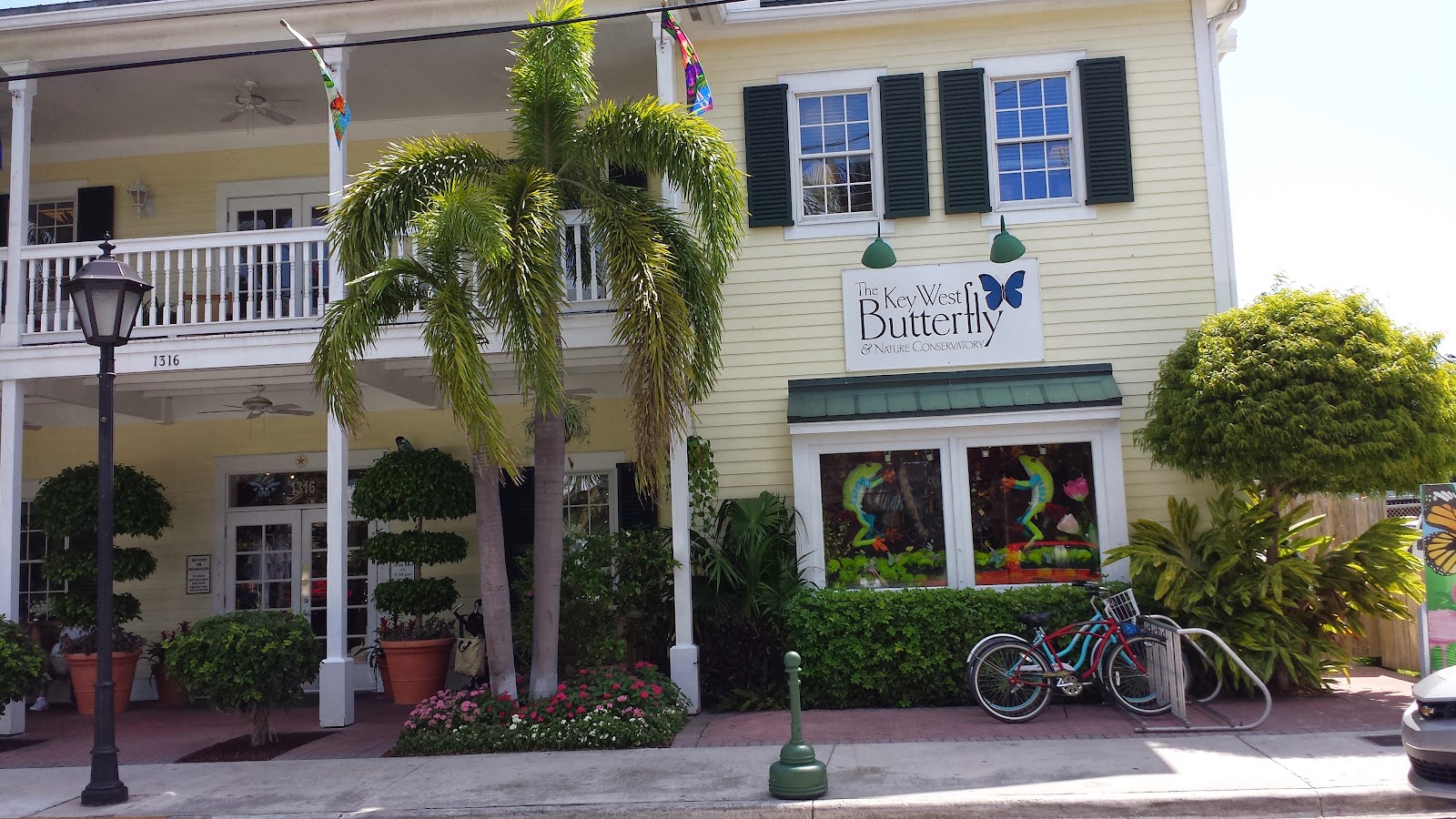
A glasshouse flattens the seasons more than any other venue type, which is one of its quiet advantages: the interior is warm and humid year-round by design, the planting is evergreen, and the light comes through the same envelope in January as in July.
What changes is the sun’s angle, and that changes the quality inside. In midsummer, with the sun within a degree or so of vertical, light comes almost straight down through the roof glazing — which gives the strongest top-light and the worst dappling under thin planting. In midwinter, with a December midday sun at about forty-two degrees above the horizon, it comes in at an angle through the side glazing as well, which is more directional and considerably more flattering.
So the interior is better in winter than in summer, which is the opposite of what a glasshouse in a northern climate would do. And it is better under overcast than under clear sky at any time of year, because cloud turns the whole envelope into a uniform diffuser.
Outside, the seasons are two rather than four and they are wet and dry. The dry season, roughly December into April, is the good one by a wide margin: lower humidity means less severe fogging and clearer air, comfortable temperatures mean a party can stand outdoors, and the lower sun means the open ground works in the middle of the day for the only time in the year.
The wet season, roughly May into October, is hot, very humid and afternoon-thundery, with thunderstorms building most afternoons. At a glasshouse that is barely a problem for the interior — the light softens and the drumming on the glass is atmospheric — but it removes the outdoor block, so a named alternative matters.
The hurricane season runs June into November and peaks from August into October. That is a planning fact rather than a photographic one and it belongs in the conversation when a date is chosen.
The trade winds are the constant outside and they are why the climate is tolerable: a persistent easterly breeze moderates the heat and keeps the air moving. They also mean a veil will not behave and a lightstand outdoors is a liability, so any source goes in a hand or on a bracket — which at a venue where flash is likely restricted indoors anyway is the natural configuration.
Two closing notes about the room itself. The glazing gets dirty, and dirty glazing is better light than clean, because it diffuses — so a slightly grubby glasshouse is a photographer’s friend rather than a problem to be apologised for.
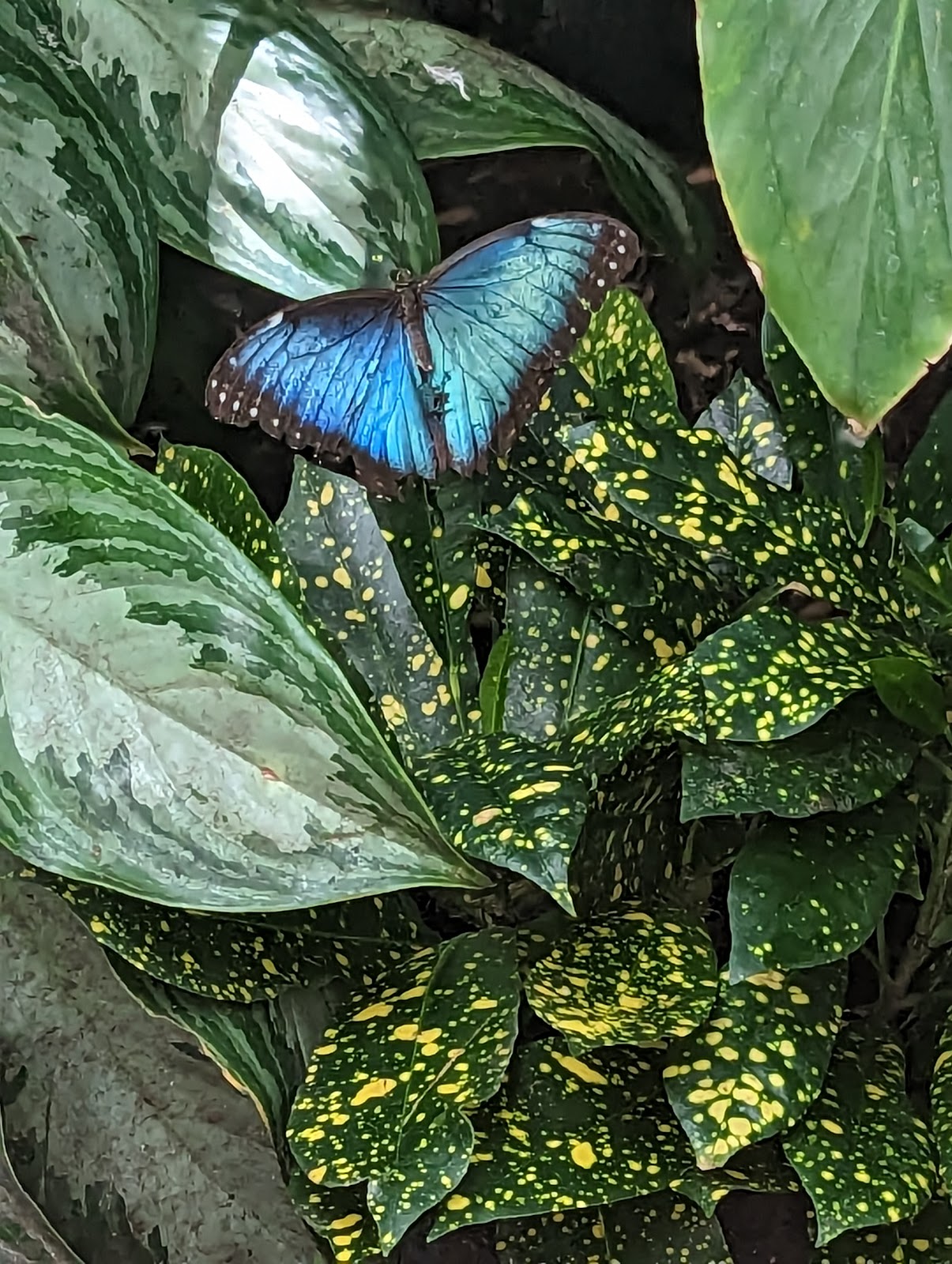
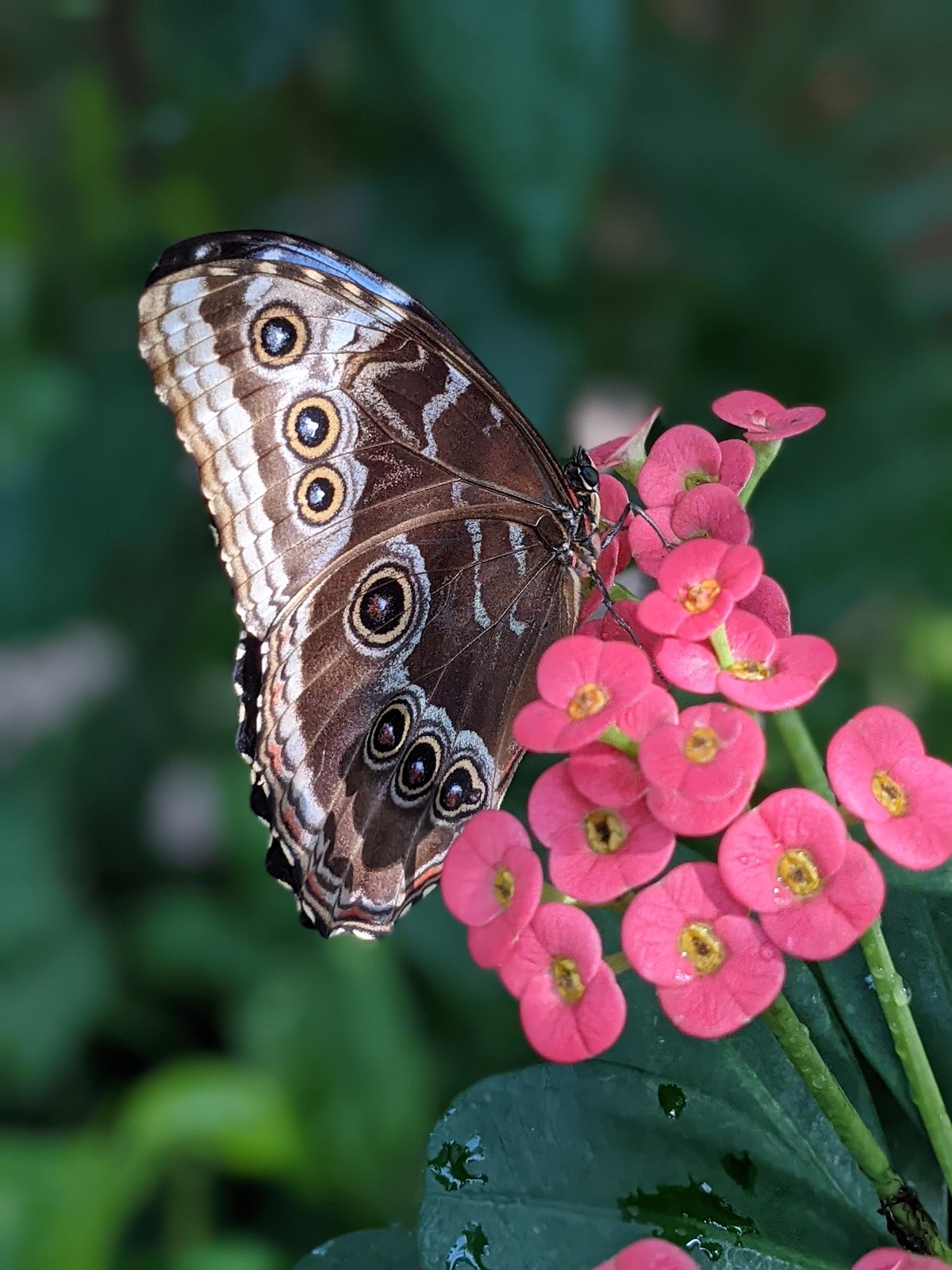
And the inhabitants are the subject the room exists for, which means patience rather than technique is what produces a frame with a butterfly in it. They settle where they settle, they move when they move, and a photographer who waits near a flowering plant with a fast shutter and a known exposure will get one — while a photographer who chases them around the room will not, and will annoy everybody.
More frames from The Key West Butterfly Conservatory
The Key West Butterfly Conservatory wedding photography: common questions
What is the one governing decision?
Whether flash is used at all — and the venue answers that, not the photographer. Repeated flash near small living creatures is a welfare question.
Is working without flash a problem?
No. A glasshouse envelope is a light source on all sides, and dense planting gives genuinely full shade. The configuration is a fast lens and a high ISO.
Why is the green cast so strong here?
Because the light bounces between foliage and glass repeatedly before reaching a face. A custom white balance set on a face in position is the only fix.
How should the glass be handled?
Check it from the camera position before committing — and where reflections cannot be avoided, use them: planting reflected alongside planting seen through is specific to a glasshouse.
What about the humidity?
It is as severe as it gets. Arrive early and let equipment acclimatise, because fogging here happens repeatedly through a session rather than once.
Is the interior better in a particular season?
Winter. A lower sun comes in through the side glazing as well as the roof, which is more directional and considerably more flattering than a vertical midsummer one.
More Florida venue guides
We are writing a photographer’s guide to every venue we would happily shoot in Florida. Here are three more, plus the full index:
- The Biltmore Hotel, Coral Gables: The Logic of a Pre-Air-Conditioning Building
- Busch Gardens Tampa Bay: What It Suits and What It Does Not
- The Cummer Museum of Art & Gardens, Jacksonville: How the Light Moves
Planning a wedding at The Key West Butterfly Conservatory?
The room does not need flash. Tell us your date and we will work with the glass.