 The Riverside Hotel, Boise: The Light Through a Day
Roseberry Church, Donnelly: One Frame, and How It Is Made
A small window in a high dry valley delivers more light than it looks like it should.
There is one frame a small historic church gives, and in a high dry western valley it is stronger than the same frame would be at sea level — for reasons that are atmospheric rather than architectural.
The frame itself is the classic one. A subject stands a metre from a tall window in a plain timber-boarded room, turned into the light, with the church’s interior falling away behind them. The light arrives horizontally at head height, crosses the face rather than falling on it, and the room does the separating.
What the altitude adds is intensity and clarity. At around five thousand feet there is roughly a sixth less atmosphere overhead to scatter light, which means the light arriving at a window on a clear day is harder, brighter and more directional than it would be lower down — so a modest opening delivers more usable light than its size suggests.
The dry air adds to it. Without moisture to diffuse the light, the beam entering a window has a harder edge and a clearer direction — which makes the fall-off across a face steeper and the modelling more pronounced. A high-country church interior is a more dramatic light than a coastal one.
And the third factor is what is outside. A window facing snow, pale sagebrush ground or a bright high-altitude sky delivers light that is both very bright and markedly cool — which means the colour needs setting deliberately rather than assumed, and the exposure is higher than instinct suggests for a dim-looking room.
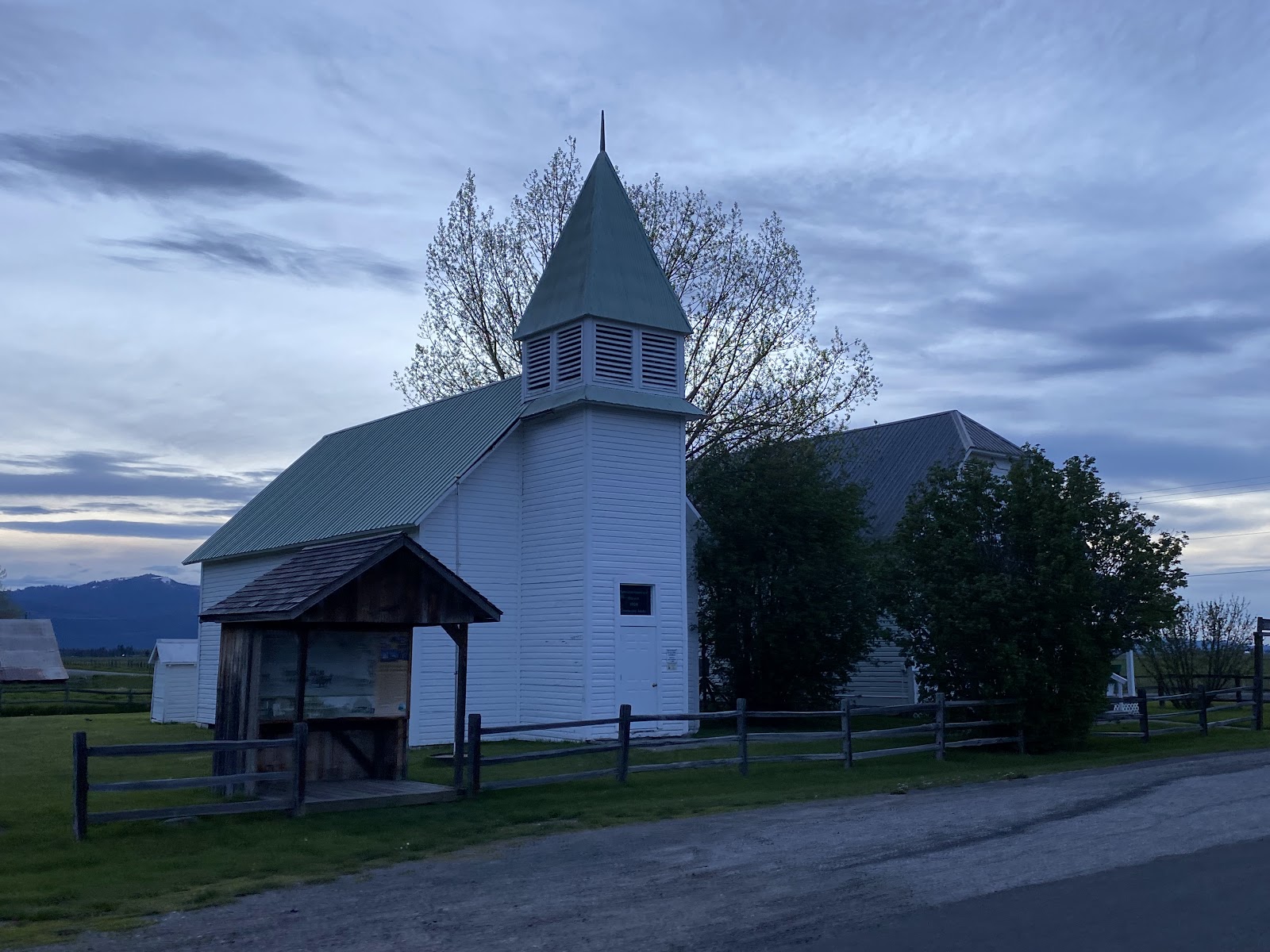
The fourth element is the building. A small historic church in a western valley is timber, frequently boarded inside and either painted white or left as bare wood — and which of those it is inverts the whole approach, because white bounces and bare timber absorbs.
We have not photographed a wedding at the Roseberry Church; small historic western churches behave consistently. Capacity, whether photography is permitted during the ceremony and from where, whether flash is allowed, what the lighting can be set to, whether the building is heated, and what access there is before and after are questions for their team.
Roseberry Church at a glance
| Where | A small historic timber church in a high valley near Donnelly, Idaho |
| The frame | A face a metre from a tall window in a plain boarded room |
| The altitude | Roughly a sixth less atmosphere: harder, brighter, more directional light |
| The variable | Whether the interior is painted white or bare timber — it inverts everything |
| Ask first | Capacity, photography positions, flash, heating, access times |
How the frame is made
The position is the first decision and a metre from the glass is the working distance, turned about forty-five degrees into it. That gives a lit side, a shadowed side and a gradient between them — real modelling — and the catchlight confirms it: broad and low on the window side of each eye.
In a high dry valley that gradient is steeper than it would be at sea level, which means the difference between a metre and two metres is more pronounced. Stepping back loses more light and more modelling here than it would elsewhere, which argues for standing closer than instinct suggests and then not drifting.
The exposure is the second decision and it depends entirely on the interior finish, which is why establishing that first matters.
In a bare timber church, the walls absorb: the ambient is a stop or two below what the eye estimates, the background behind the subject drops away to near-black, and a meter looking at the room tries to lift it toward mid-grey — which overexposes a face by two stops or more. So metering goes on skin, in manual, with the timber allowed to go dark. That near-black is the picture.
In a white-painted church, everything inverts. The walls bounce, which fills the shadow side of the face, lifts the background and reduces the contrast — and a meter looking at the walls pulls them toward mid-grey, which underexposes the whole frame and gives grey boards and dark faces. So the correction is brighter than the camera suggests, often by a stop, with the check being that the boards read white with texture visible in them.
Both are good frames and they are different pictures: the bare version is low-key and dramatic, the painted version is soft, bright and even. What fails is applying one building’s correction to the other, and a look at the walls on arrival settles it.
The white balance is the third decision and at altitude it matters more than at sea level, because the light entering the window is further from neutral. A window facing snow or a deep blue high-altitude sky delivers markedly cool light; one facing pale sage ground or a sunlit timber wall delivers warm. A custom setting made on a face in position handles it; a daylight preset renders skin visibly cold in the first case.
Any interior lighting should be switched off if it can be. Warm bulbs against cool high-altitude daylight put two colours on one face and no white balance renders both, and in a small building a single fitting is enough to matter.
Direct sun is the fourth consideration and in this climate it is likely, because a high dry valley has a high proportion of clear days. Hard-edged sunlight through a window in dry air is a sharper beam than in humid country, which means the patch on a face is more defined and more damaging — and where the window has glazing bars it is cut into several patches at once.
A sheer curtain turns the window into a diffuser; a shaded or north-facing window avoids it; and half a metre either way usually clears it. The shaft itself is worth photographing as a subject: in dry dusty air it can be visible in the room, which is a frame in its own right.
Where the light is not enough — which in a bare timber church on an overcast winter afternoon it will not be — one source added just off the camera axis at about half a stop under the window fills the shadow side without destroying the direction. It must be close, because nothing in a timber room bounces, and gelled to sit in the room’s own colour.
And the frame is worth making from both sides. Standing so the window is behind the subject rather than beside them gives a silhouette against a bright high-altitude sky, which in a plain small church is a strong graphic picture — and it is exposed for the window with the figure allowed to go dark, deliberately rather than by accident.
What breaks it, and the valley outside
Capacity breaks the frame in planning rather than in technique. A small historic church seats a small number, which means a large wedding does not fit and the group photographs happen outside — and in a high valley that means in whatever the weather and the altitude are doing.
That shifts the balance of the coverage outward, and it is a question with a definite answer worth establishing early.
Heating breaks it in winter. A small historic timber building in a high Idaho valley is cold, and whether it is adequately heated is a practical question that decides whether a February ceremony is comfortable — and at this elevation the answer matters more than it would further south.
Restrictions break it and they should be established first. Many churches limit where a photographer may stand during a ceremony and prohibit flash, and in a small room both matter more than they would in a large one. Where movement is not permitted, the frames have to be made before or after with the couple placed deliberately.
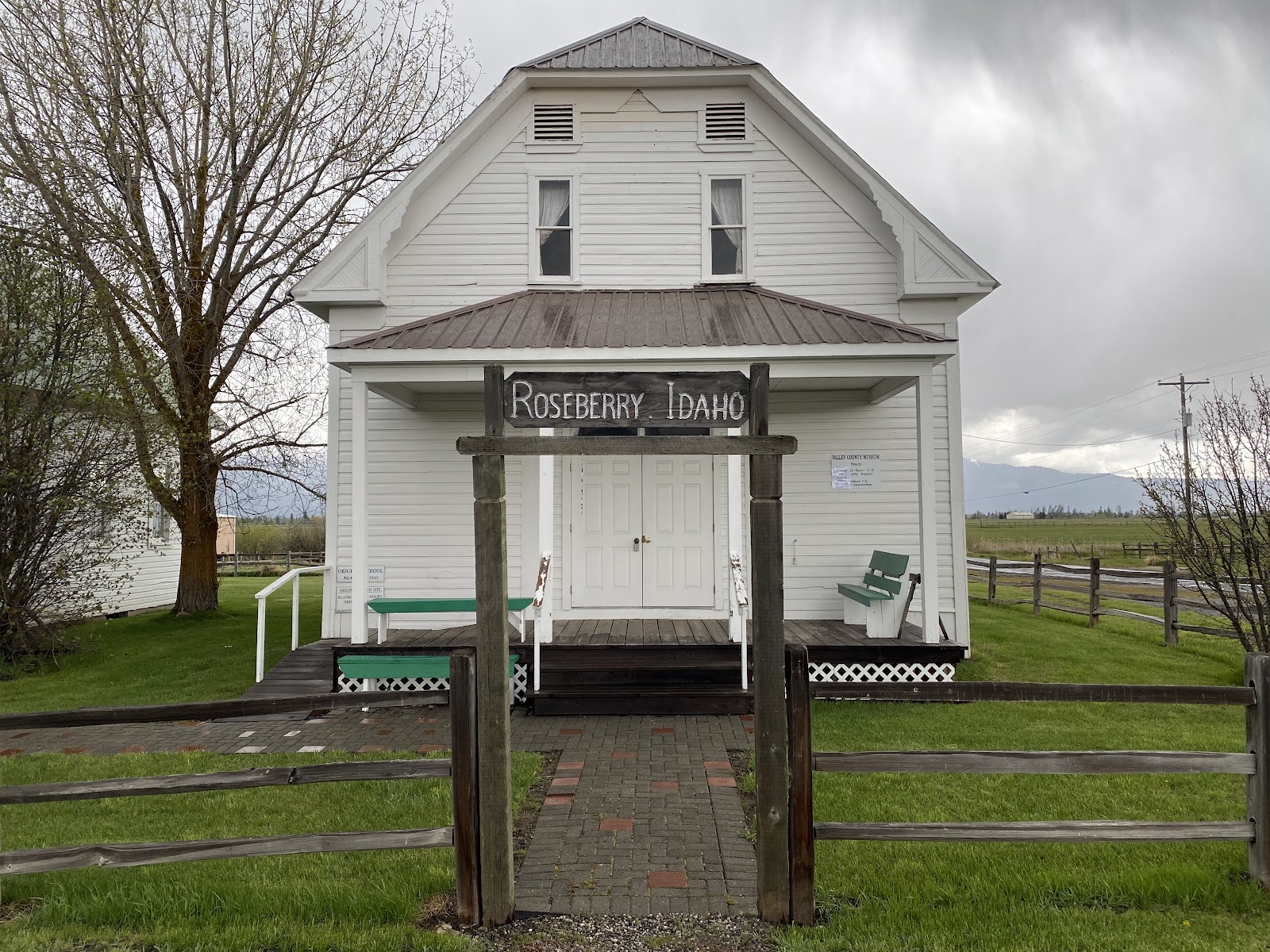
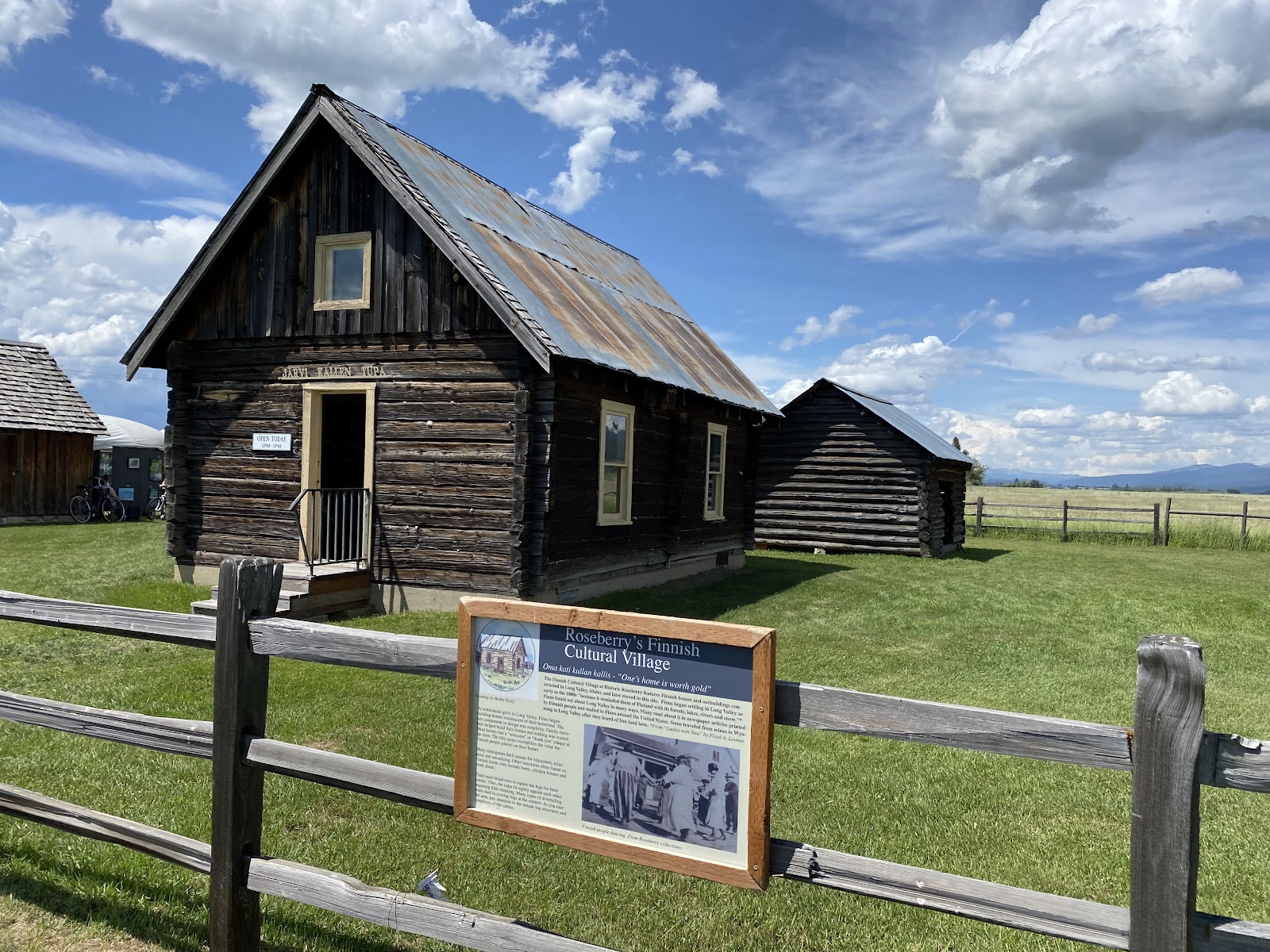
Outside, the valley is a high dry western landscape and the exterior of a small church in it is a strong subject in its own right.
If the building is white-painted, the exposure correction applies outdoors too: meter on skin and go brighter than the camera suggests, checking that the boards read white with texture. And a large sunlit white wall is one of the best soft sources anywhere — a subject in shade on the shaded side, facing a lit wall, gets soft directional neutral light for nothing.
The building’s own shaded side is the reliable outdoor position at any hour in any weather, and any porch or covered entrance is better still: a solid roof restricting light to a horizontal band, bouncing off the boards to fill, and incapable of dappling.
That matters more at altitude than it would lower down, because the difference between sun and shade at five thousand feet is larger than at sea level — a face half in sun here is unrecoverable rather than difficult, which makes the covered positions disproportionately valuable.
The valley’s own vegetation is the other resource. This is high country: sagebrush steppe on the dry open ground, aspen in the draws, Douglas fir and lodgepole pine on the slopes, and cottonwood and willow along the creeks.
Fir is the shade and the dark background — a metre or two inside a stand at the margin of an opening gives soft directional light in front and near-darkness behind. Lodgepole dapples and is a background rather than a shade. Aspen is a bright background of pale verticals, and the leaves transmit light, which means a backlit canopy glows — and because a grove is clonal, genetically one organism, a whole stand turns at once.
Sagebrush is the ground and it is worth using: silver-grey, fine-textured, and with texture in every bush in low raking light. A low camera with sage across the bottom of the frame and the church or the mountains behind is the composition this valley gives.
The metering trap is severe in high dry country and it runs both ways: dark fir overexposes a meter, and pale sage, white paint or snow underexposes it. Manual, metered on skin, reset at every transition — and a custom white balance in each place, because high-altitude shade is markedly cool and sunlit sage is warm.
The ranges close the day early. Mountains on both sides of a high valley mean the floor loses the sun well before the published time, which brings the evening forward and produces the interval frame: the valley in soft even shade while the upper slopes are still lit. And the days are long at this latitude in summer, which means the light runs until well past nine and the good hour arrives late.
Ultraviolet at this elevation is the practical note, because a party outdoors for an hour burns faster than expected, including under cloud and over snow. And the diurnal swing is large: a warm July afternoon can be followed by a night in the forties Fahrenheit, which means coats matter more than a summer date suggests.
- A metre from the window at forty-five degrees, and closer than instinct says
- Establish the interior finish first: bare timber and white paint invert the correction
- Set the white balance on a face; high-altitude window light is markedly cool
- Direct sun in dry air is a harder beam than in humid country — curtain or move
- Covered positions matter more at altitude, where half-lit faces are unrecoverable
The high valley year
A high Idaho valley at around five thousand feet has a short warm summer and a long cold snowy winter, and the season decides what is possible as much as what it looks like.
Winter is long and snowy, with substantial snowfall and cold temperatures — and the first practical question is whether the church is heated and accessible, because a small historic building in this climate may be neither.
Where it is available, winter gives the best interior light of the year. The December sun at this latitude reaches only about twenty-two degrees above the horizon, which means it enters a tall window almost horizontally and travels much further into a room than a high summer sun does — and snow outside reflects light up into every window, which brightens a dim interior measurably, sometimes by a stop.
So the frame this guide is built around is at its strongest in January, which is the opposite of the intuition.
Outdoors, snow is the best natural fill available and against near-black fir it gives the widest brightness range in this guide: expose for the snow and let the conifer go black, overexposing deliberately relative to the meter, which snow fools by about two stops. A small white church in deep snow with mountains behind it is one of the cleanest frames in these pages.
The costs are cold, a short day, batteries draining faster, a camera that fogs badly when carried into a heated building, and road access that depends on conditions.
Spring is late and slow at this elevation and it is the weakest part of the year: snow lies into April or May, break-up is muddy, the sage is grey and the aspen bare. Early spring here is not a wedding season in any recognisable sense.
June is when it turns. The valley greens, the creeks run hard with snowmelt, the aspen leaf out in a pale fresh green that transmits light beautifully, and the ranges still carry snow. The days are very long at this latitude — light until past nine — and mosquitoes are a consideration near water in June and early July.
July and August are the season and the most reliable weather of the year: warm days, cold nights, dry air and a high proportion of clear skies. The diurnal swing is large and the good low light arrives after eight.
The honest late-summer note is wildfire smoke. Idaho’s fire season runs from roughly July into September, and smoke from fires anywhere in the region can fill a mountain valley for days — turning the sun orange, flattening contrast, removing the ranges entirely, and shifting everything warm in a way no white balance resolves.
It also changes the interior frame: smoke reduces the intensity and hardens the colour of the light entering a window, which weakens exactly the quality that makes a high-altitude church interior strong. It cannot be planned for, only acknowledged.
Late September into early October is the best window of the year. The aspen turn gold — and because a grove is clonal the whole stand turns at once, giving blocks of uniform gold in the draws against dark fir and silver sage — the first snow returns to the peaks, the air reaches its clearest, and the smoke risk has usually passed.
A small church with gold aspen behind it, dark fir above, silver sage in front and fresh snow on the ranges is the strongest exterior frame this site produces, and the window is about two weeks.
By then the sun is low enough that the interior light is improving again, which means late September gives the best of both. October brings hard frost and the end of the season, and by November the valley is in winter.
More frames from Roseberry Church
Roseberry Church wedding photography: common questions
Why is the window light stronger at altitude?
There is roughly a sixth less atmosphere overhead to scatter it, and dry air diffuses it less — so the light is harder, brighter and more directional.
What should I establish first?
Whether the interior is bare timber or painted white. Bare absorbs and makes a meter overexpose; white bounces and makes it underexpose.
How far from the window should I stand?
A metre, and closer than instinct suggests — because the fall-off is steeper at altitude, stepping back loses more here than elsewhere.
Why set the white balance on a face?
At altitude the light entering a window is further from neutral: snow or a deep blue sky makes it markedly cool, and sunlit sage makes it warm.
What breaks the frame?
Direct sun, which in dry air is a harder beam than in humid country — plus capacity, which pushes the group photographs outside.
When is the frame strongest?
January. A low sun enters the window almost horizontally and snow outside reflects light in, brightening a dim interior by up to a stop.
More Idaho venue guides
We are writing a photographer’s guide to every venue we would happily shoot in Idaho. Here are three more, plus the full index:
- Sawtooth Lodge, Lowman: What It Suits and What It Does Not
- Schweitzer Mountain Resort, Sandpoint: The One Decision That Governs Everything
- Shore Lodge, McCall: The Light Through the Day
Planning a wedding at Roseberry Church?
A small church and a lot of light. Tell us your date and your numbers.