 The Iowa Events Center: Four Ways Out of the Blank-Hall Problem
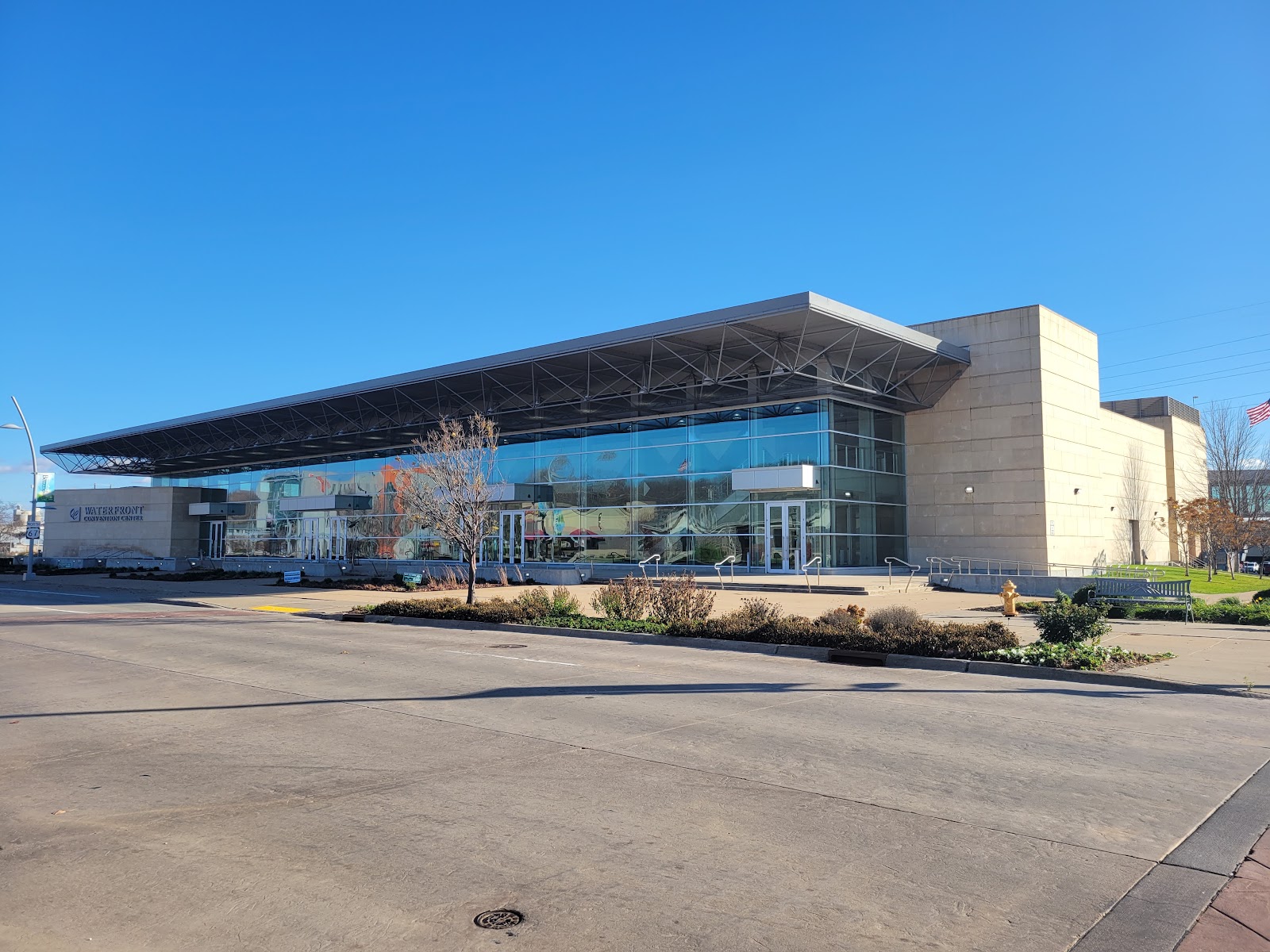
The Quad Cities Waterfront Convention Center: The One Decision That Governs Everything
The Mississippi runs east-west here. That changes everything.
There is one decision at this venue and it comes from a geographical accident: the Mississippi runs east and west here, not north and south.
For most of its length the river runs broadly north to south, which means a riverside venue looks east or west across the water and the sun crosses the river rather than travelling along it. At the Quad Cities the river makes a long east-west reach — one of the few places it does — so a venue on the Iowa bank looks south across the water, and the sun travels the length of the river rather than across it.
That single fact changes every lighting decision, and it is the thing to understand before anything else.
Looking south across water means the sun is behind or beside the view for the entire day rather than in front of it. So the water is back-lit or side-lit continuously — never front-lit — which produces specular glitter for most of the day and a sun path that runs along the river’s axis at the ends of it.
The consequence is a decision: whether to work with the sun on the water, which gives high-contrast rim-lit and silhouette frames, or to turn away from it entirely and use the building and the north bank, which gives conventional front-lit portraits.
Those are two different days and choosing one commits the schedule.
The second consequence is genuinely valuable and specific to this reach. Because the sun rises and sets close to the river’s axis for part of the year, there are days when a sunrise or a sunset lines up along the water — which on a north-south river never happens. A sun setting down the length of the Mississippi with the water carrying its reflection the whole way to the camera is a frame that geography permits here and forbids almost everywhere else.
Bettendorf sits at about forty-one and a half degrees north at roughly five hundred and eighty feet. The June noon sun reaches around seventy-two degrees, the December noon sun about twenty-five, days run from about nine hours ten to fifteen hours fifteen, and civil twilight is roughly thirty-one minutes.
We have not photographed a wedding here. Which spaces are bookable, what each faces and the permitted hours are questions for their team.
The Quad Cities Waterfront Convention Center at a glance
| Where | A convention centre on the Mississippi at Bettendorf, Iowa |
| The geography | The river runs east-west here — one of the few places it does |
| The decision | Work with the sun on the water, or turn away from it entirely |
| The prize | A sunset running down the river’s axis, which a north-south reach forbids |
| Ask first | Which spaces are bookable and what each one faces |
Working with the sun on the water
If the sun is in the frame, the pictures are high-contrast and graphic, and there are three that work.
The specular path is the first and the most reliable. A low or mid sun on rippled water produces a field of bright highlights running from the sun toward the camera, and the length and density of that path is controlled almost entirely by camera height.
From standing height it is a short bright patch. From a few inches above the water it stretches the full depth of the frame into a continuous shimmering corridor. Dropping the camera to knee height or lower is the single cheapest and largest improvement available at any water venue, and it matters more here than usual because the sun is on the water all day rather than for an hour.
A subject silhouetted against that path is the frame. Expose for the water, let them go dark, and the shape reads cleanly because there are only two tones. It is technically trivial and it is strong.
The second is the rim. With the sun behind them and the water behind that, a couple picks up a hard rim on hair and shoulders against a bright background — and the decision is whether to fill their faces or not. Filled to within about a stop and a half of the water, they read normally in a bright frame; unfilled, they silhouette.
A fill here needs real output, because the water is very bright. An on-camera flash at any distance will not do it, and a modifier on a stand is the realistic approach.
The third is the axial sunset, and it is the one worth planning a date around. Because the river runs east-west, there are periods in the year when the sun sets close to the river’s line — and a sun going down the length of the water, with its reflection running unbroken toward the camera, is a frame that only an east-west reach permits.
The alignment shifts through the year, because the sun sets further north in summer and further south in winter. The equinoxes put it close to due west, which on an east-west river is close to the axis — so late March and late September are the periods to ask about, and a site visit or a sun-path application will confirm it for a specific date.
Two practical matters about the water itself. The Mississippi here is a working river with commercial barge traffic, and a tow pushing fifteen barges is a genuinely photogenic subject as well as an occasional obstruction — worth waiting for rather than avoiding.
And the river is wide. That means the far bank is distant, which is good for a clean horizon and bad for detail: a compressed frame of the Illinois shore will read soft, particularly in humid summer air. The long-lens frames belong in autumn when the air is clearest.
The bridges are the other element. The Quad Cities has several crossings, and a bridge running across an east-west river is oriented north-south — which means it is side-lit at the ends of the day rather than front-lit, and it reads as structure rather than as a flat plane. A moderate telephoto compresses the trusses; a wide lens renders a bridge as a thin line and wastes it.
Turning away from the sun
If the decision is to avoid the contrast, the venue has a conventional day available and it is worth knowing where.
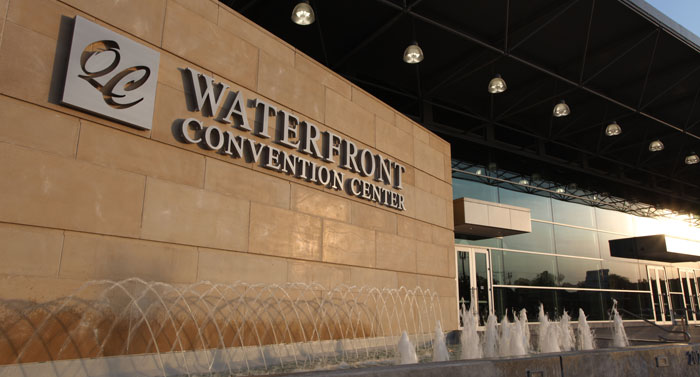
With the sun to the south, anything on the north side of the building or facing north is in soft even shade all day — which is the easiest portrait light there is and the most consistent. A north-facing terrace or forecourt is a large soft source with no direction to manage, and it does not change through the day.
The cost is colour. Light on a north-facing surface comes almost entirely from the sky, and at this latitude a clear sky reads distinctly cool — so a warm gel on any added source and a warmer white balance than the meter suggests are both required. An ungelled flash in north shade gives faces that read slightly green against warm brick or timber.
Front-lit portraits mean putting the sun behind the camera, which on a south-facing site means facing away from the river and toward the building. That is the trade: conventional flattering light, with a convention centre as the background instead of the Mississippi.
Where the building has glazing, use it. A large glazed elevation is a very large side source, and three or four metres in from it gives clear modelling with no top light — the best unassisted light in any modern building. Arrange groups parallel to the glass, never across the room, because perpendicular puts one end of a row three stops below the other.
The exposure trap is the river beyond. A camera metering an interior with bright water outside will either hold the room and blow the view or hold the view and lose the room — and on this site the water is the brightest thing available, being back-lit all day. Holding both means adding light inside to within about a stop and a half of the exterior, or letting the glazing blow and composing so it reads as a clean shape.
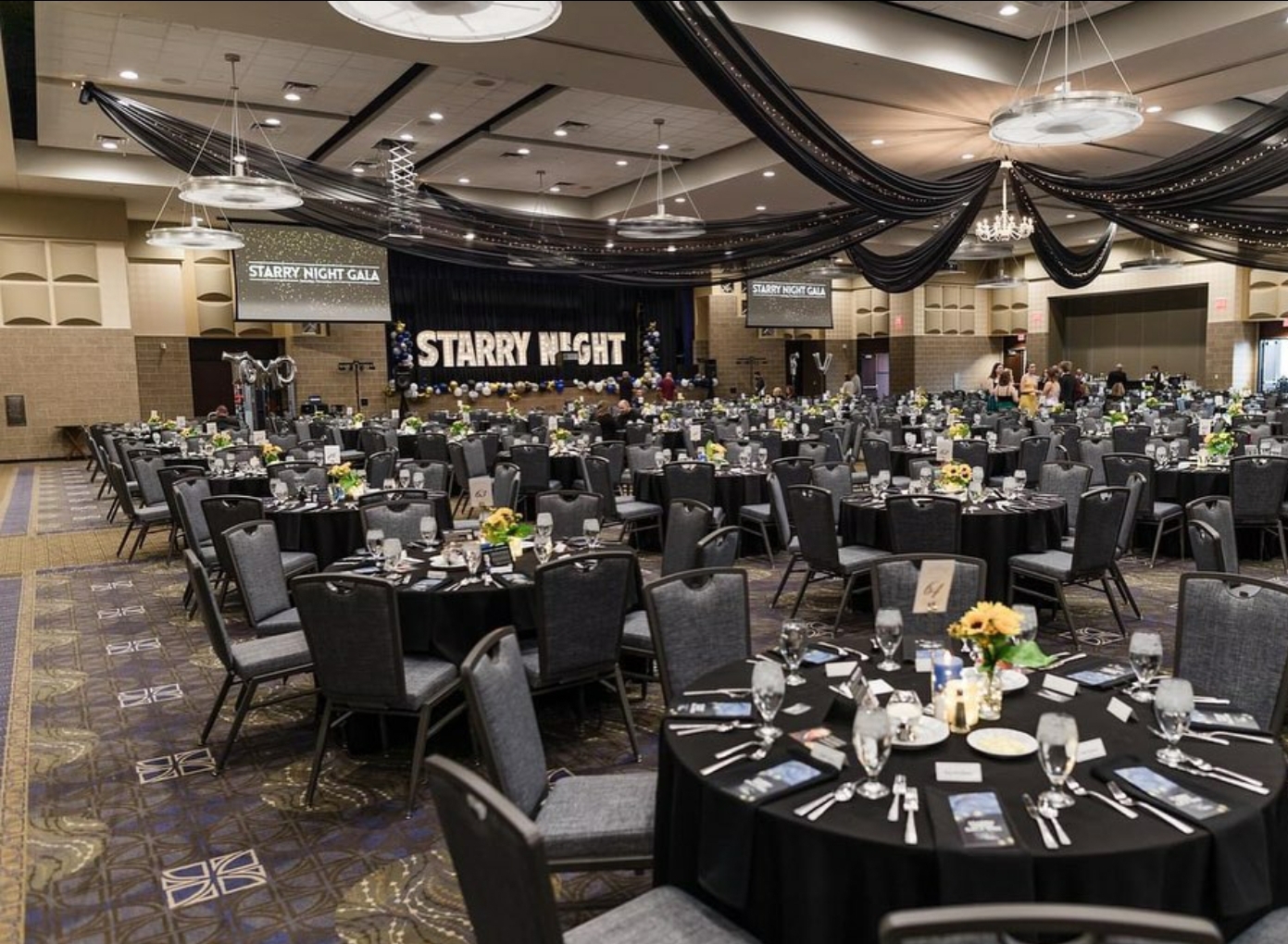
Indoors, the building is a purpose-built convention centre and the usual approach applies. Recessed downlights on a dimmer give strong top light with shadowed eye sockets — so never key from them. Bounce a warm-gelled source off a pale wall for a directional key, drag the shutter to a thirtieth or sixtieth so the room’s own light registers, and use two or three sources for a large room because a single one set for three metres is four stops down at twelve.
A rim light matters more in a neutral room than a busy one, because a frontally lit subject sits in the same tonal band as a pale wall and loses their edges.
The riverside path is the third option and it is public. A working waterfront in a mid-size metropolitan area has a trail, which means cyclists and walkers in the background of any frame at water level — normal, and worth expecting rather than resenting.
The bank itself needs scouting, because a Mississippi town’s riverside is engineered. Flood protection means levees, floodwalls, revetment and riprap in places, and planted park in others — and the difference between a landscaped embankment and a concrete floodwall is considerable. Both may exist within a few hundred metres, and only a site visit distinguishes them.
The trees along the bank are worth knowing. Eastern cottonwood is the signature Mississippi bottomland tree — enormous, broad-crowned, with leaves that rustle audibly and turn clear yellow in October — and silver maple and hackberry fill in. Those cast solid shade with no dapple, unlike the filigree canopies of arid regions, so a bankside tree is a workable midday position.
- Drop the camera to knee height — it matters more here because the sun is on the water all day
- Late March and late September put the sunset near the river’s axis
- North-facing surfaces are in soft shade all day, and need a warm gel
- Arrange interior groups parallel to the glazing, never across
- Scout the bank: planted park and concrete floodwall may be metres apart
The river's year
A Mississippi venue has a calendar driven by the river as much as by the sun, and the river’s is worth knowing.
Spring is the flood season and it is not an abstraction here. Snowmelt from the upper basin plus spring rain raises the Mississippi through March into June most years, and the Quad Cities has a long history of significant high water. For a waterfront venue that means the riverside path and any low-lying bank may simply be underwater or closed on a spring date.
That is worth asking about rather than assuming, because it removes the site’s main asset. The building itself will be fine — convention centres on this river are built above the flood plain — but the frames at water level may not exist.
High water has its own photographic character, to be fair: a swollen brown river running fast and wide is more dramatic than a placid one, and a frame that includes the flood’s extent is honest about where it is.
Summer is humid and long-lit, with fifteen hours fifteen of daylight at the solstice. Water vapour scatters light and fills shadows, so a sunlit bank in July carries perhaps a stop and a half less contrast than the same sun angle in a dry climate — which helps with the back-lit water problem, because the fill reduces the ratio between a subject and the specular field behind them.
It also hazes distance badly. The Illinois shore across a wide river will read soft in August, and a compressed frame of a bridge will lose contrast. The long-lens work belongs in autumn.
Mid to late October is the best fortnight of the year here, for three reasons at once. The hardwoods along the bluffs and the bank turn — cottonwood to clear yellow, sugar maple to scarlet, oak to russet. The air reaches its clearest, which restores the long-lens frames across the river. And the sun’s setting position is close to the river’s axis, which is the alignment that makes this reach special.
That combination — colour, clarity and an axial sunset — is a genuinely strong argument for a late-September or October date, and it is specific to an east-west river.
Autumn is also when the river is typically at its lowest and most placid, which means the still-water reflections that spring and early summer do not offer. A mirror-calm Mississippi at dawn in October, doubling the far bank and the bridges, is the best water frame the site can produce.
Winter brings the river’s most unusual condition: ice. The upper Mississippi ices substantially in a cold winter, and the navigation season closes on the upper river — which means a frame of an ice-covered Mississippi with no barge traffic on it, which is both striking and rarely photographed at a wedding.
Winter light is short — about nine hours in December — and frequently flat grey, which is soft and kind to faces and gives architecture nothing. But the low December sun at twenty-five degrees means that when the sky is clear the light rakes all day, and on an east-west river a low sun on the water is available continuously rather than for an hour.
That is an underrated winter advantage: on a north-south river a December day gives one good hour, and here it gives most of a short day.
Civil twilight runs about thirty-one minutes, a generous working window. The frame worth scheduling is the building lit from within with the river in front of it, fifteen to twenty minutes after sunset — glazing glowing, water doubling it, and any bridge lighting adding structure. On a waterfront venue that is the best exterior frame available and it takes ten minutes.
More frames from The Quad Cities Waterfront Convention Center
The Quad Cities Waterfront Convention Center wedding photography: common questions
Why does the river's direction matter?
The Mississippi runs east-west here, so the sun travels along it rather than across it. The water is back-lit or side-lit all day, never front-lit.
What is the frame worth planning a date for?
An axial sunset — the sun setting down the length of the river with its reflection running unbroken to the camera. Late March and late September come closest.
How do I improve a water frame?
Drop the camera. From knee height or lower the specular path stretches the full depth of the frame instead of sitting as a short bright patch.
What if I want conventional portraits?
Turn away from the river. North-facing surfaces are in soft even shade all day — and they need a warm gel, because the light is all sky.
Is spring a risk?
Yes. Snowmelt and spring rain raise the Mississippi from March into June most years, and the water-level frames may simply not exist.
What is the winter advantage?
A low December sun at twenty-five degrees rakes all day, and on an east-west river that means good light on the water for most of a short day rather than one hour.
More Iowa venue guides
We are writing a photographer’s guide to every venue we would happily shoot in Iowa. Here are three more, plus the full index:
- The Cedar Valley Sportsplex, Waterloo: One Frame, and How It Is Made
- The Electric Park Ballroom, Waterloo: The Light Through a Day
- The Five Sullivan Brothers Convention Center, Waterloo: The Problem, and Four Ways Out
Planning a wedding at The Quad Cities Waterfront Convention Center?
A river that runs the wrong way, to your advantage. Tell us your date.