 The Iowa Events Center: Four Ways Out of the Blank-Hall Problem
The Cedar Valley Sportsplex, Waterloo: One Frame, and How It Is Made
A very large room offers one picture no small room can. It also punishes every lighting habit you brought with you.
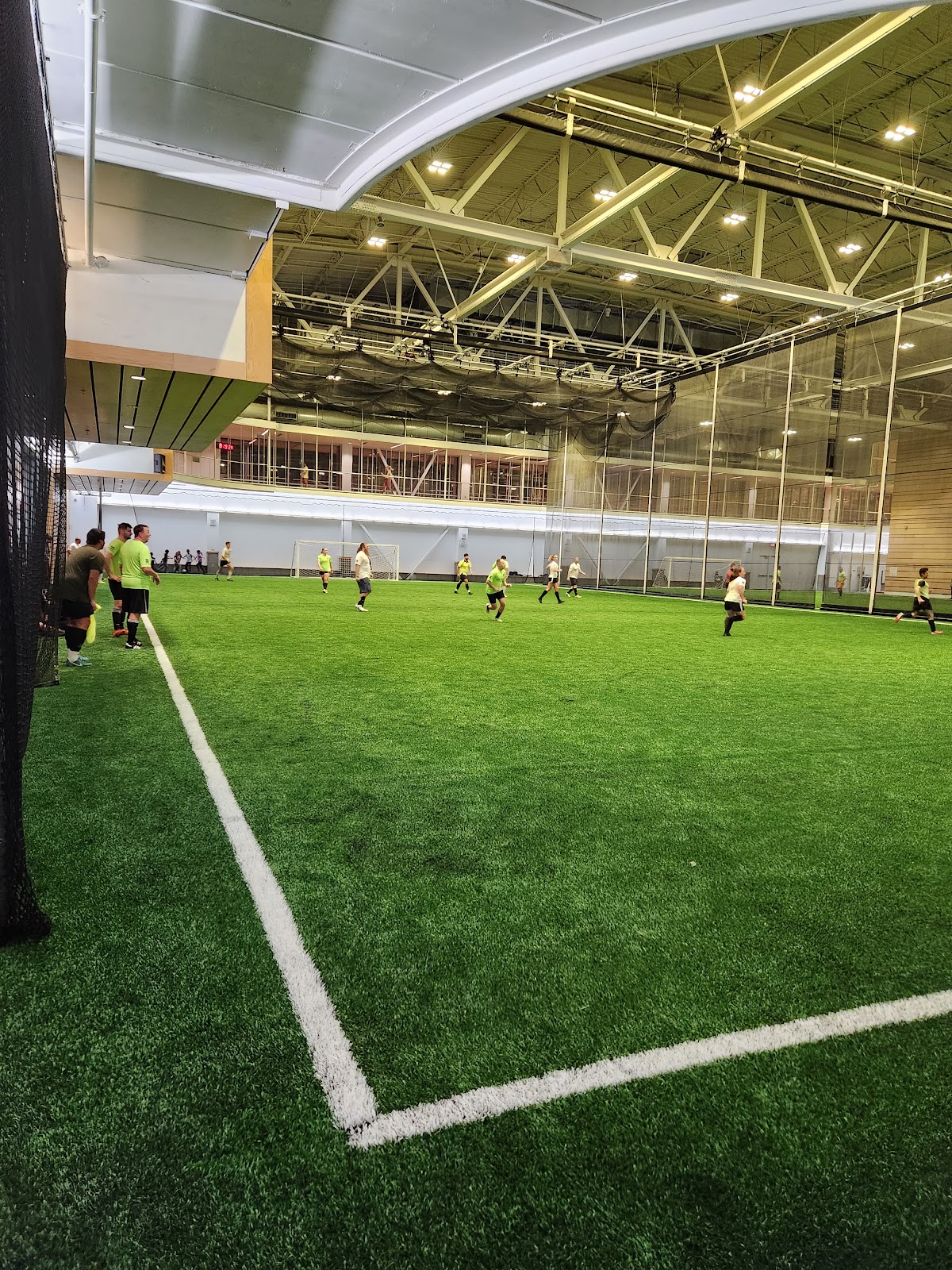
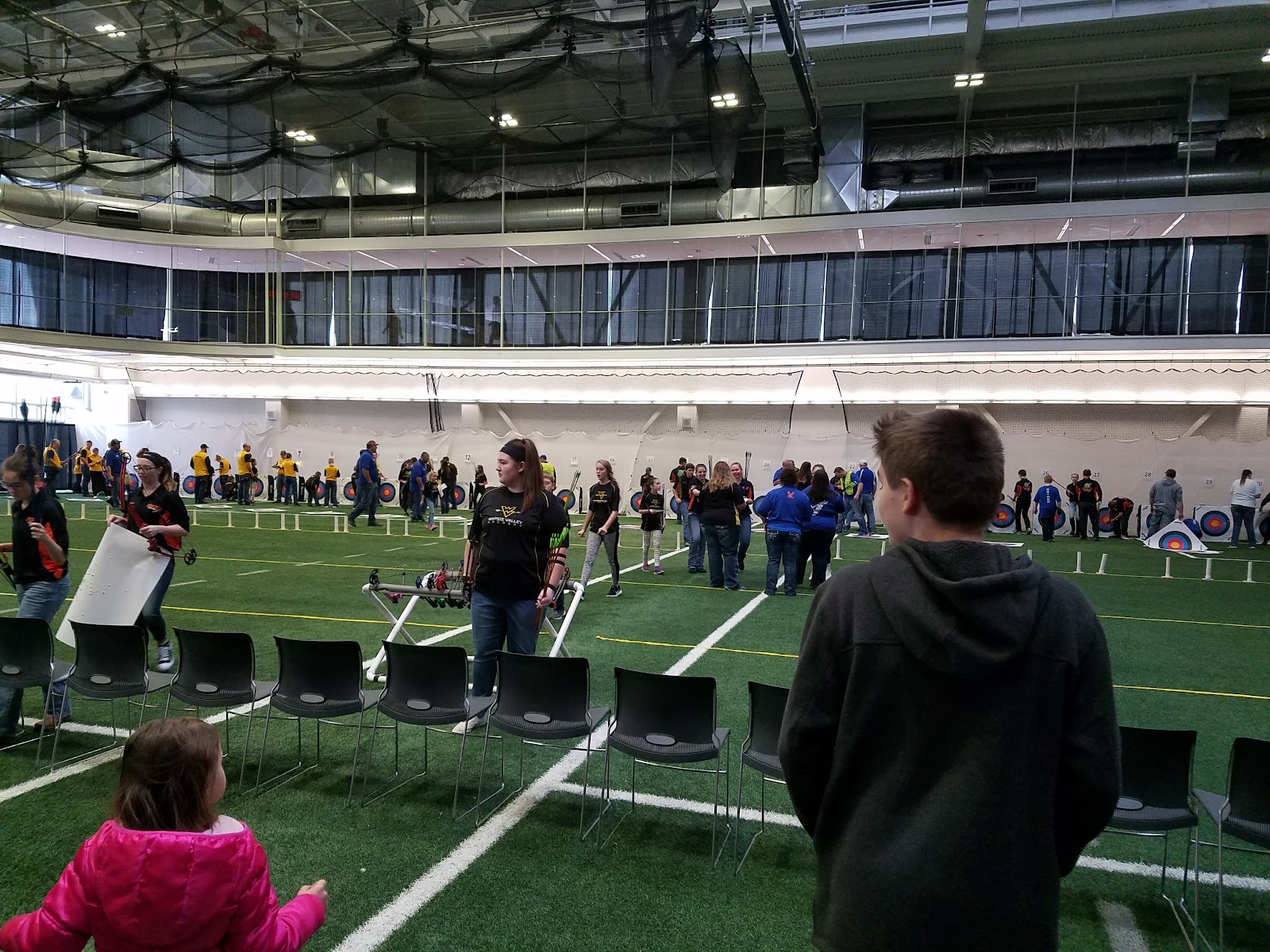
A large clear-span building — a sports hall, a field house, an arena floor — gives one frame that nowhere else does, and it is worth describing precisely because the accidental version of it is a disappointment.
The frame is two people in a great deal of space. Not two people in a room, but two people with volume around and above them: a floor running away in every direction, a structural roof visible overhead, and scale that a photograph can actually convey because there is nothing in the way to break it up.
Getting it right needs five decisions, and most of them are about doing less rather than more. The instinct in a very large space is to bring more light, and that instinct is exactly wrong.
We have not photographed a wedding at the Cedar Valley Sportsplex; large clear-span buildings behave consistently and the physics of lighting them is unforgiving. Which spaces are included, whether the lighting is adjustable and what may be brought onto a sports floor are questions for their team.
The Cedar Valley Sportsplex at a glance
| Where | Waterloo, Iowa |
| The frame | Two people with genuine volume around and above them |
| The counter-intuitive part | Bring less light, not more, and get closer with it |
| The governing fact | Light falls off with the square of distance |
| Ask first | Spaces included, lighting control, floor protection rules |
Decisions one to three: the source, the distance, the ceiling
The first decision is where the source goes, and the governing fact is the one every photographer knows and few apply: light falls off with the square of the distance. Doubling the distance from a subject costs two stops, which in a large room means a source three metres away is four times the light of one six metres away.
In a big space the temptation is to put the light back so it covers more, and that is the error. A source close to the subject is bright, soft relative to its distance, and leaves everything beyond it dark — which is exactly what the frame needs, because the darkness is what makes the volume read. A source far back is dim, hard, and lights a patch of floor that has nothing on it.
So: close, modest, off the camera axis, at face height. One source in a modifier at two or three metres is a large soft light and it does not need much power. That is the whole lighting plan, and it is less than most photographers would carry to a hotel ballroom.
The second decision is the distance between the subject and everything behind them, and here more is better without limit. In a clear-span building there is no wall to worry about — that is the point of the type — so the couple can stand twenty metres from anything, and at that distance the background is genuinely dark and genuinely deep. Nowhere else offers that.
It also solves the separation problem outright, without equipment. In a conventional venue a photographer spends effort building distance between subject and background; here the distance is already there, and the only thing needed is to use it rather than standing a metre from the nearest wall out of habit.
The third decision is the ceiling, and it needs one test frame rather than an assumption. Clear-span roofs are high — frequently eight metres or more — and the structure is usually exposed steel or timber. A flash aimed upward in such a space returns essentially nothing, because the light travels sixteen metres round trip and arrives back at a fraction of a percent of what left.
So bounce is not available, which for a photographer accustomed to lower rooms is the habit that has to be broken. Direct into a modifier is the only method that works here.
The compensation is that the roof structure is itself a subject. Exposed trusses, purlins and lighting rigs are strong graphic elements, and a frame that includes them overhead tells the viewer what kind of building this is — which is the whole point of the picture described at the top.
Decisions four and five: the existing light, and the floor
The fourth decision is what to do about the building’s own lighting, and the answer depends on what it is. Large halls are typically lit by high-bay fittings, which historically meant metal halide or high-pressure sodium and increasingly means LED — and the difference matters.
Older discharge fittings have two properties worth knowing. They render colour poorly, because they put their energy into a few narrow parts of the spectrum rather than across it, which means skin lit by them does not look right and cannot be fully corrected. And some of them flicker at a rate that interacts with a fast shutter, producing frames that differ in brightness and colour from one another in a burst.
The practical answer to both is the same: let your own gelled source own the faces, set white balance to that source, and treat the building’s lighting as background illumination rather than as the key. If the frames in a burst are inconsistent, a slower shutter averages the flicker out.
Modern LED high-bay fittings are much better on colour and usually flicker-free, but they are also cooler in register and very directional from above — which returns to the overhead problem and the same answer: one source from the side.
Where the lighting can be switched in banks, that is the most valuable control in the building. Turning off half the hall gives exactly the darkness the frame wants behind the couple, at no cost. It is worth asking about specifically.
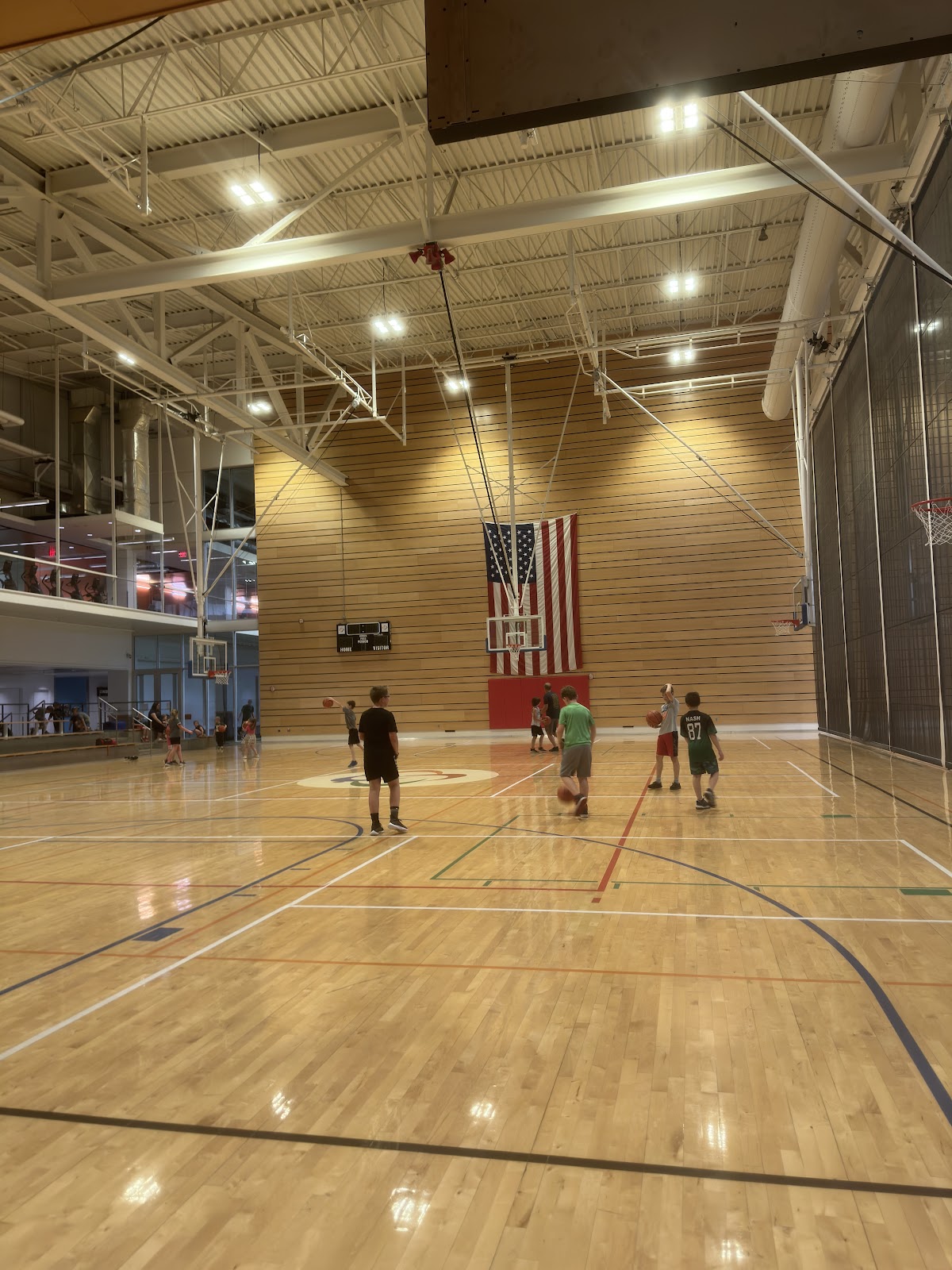
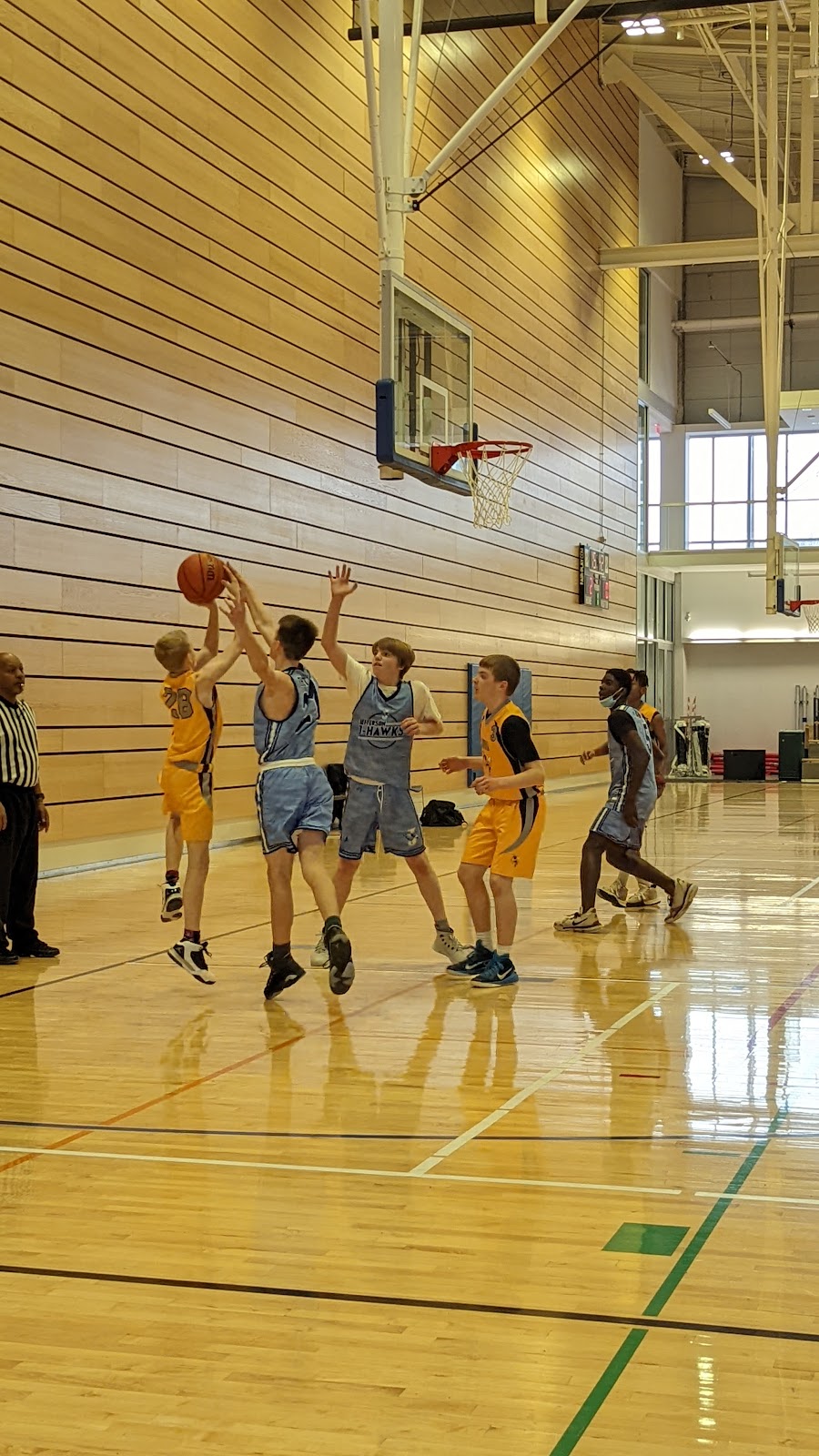
The fifth decision is the floor, and in a sports building the floor is both the best surface available and the most restricted. A sprung timber court, a poured sports surface or an ice sheet are all large, even, reflective and characterful, and a low camera position uses them — as a reflector that returns the overhead light, as a texture, and as a graphic plane receding into depth. The markings are part of it: court lines are strong graphic elements and either they belong in the frame deliberately or the camera height excludes them.
The restriction is that sports floors are protected surfaces, and venues generally have rules about footwear, stands and anything with a point on it. Those rules exist because the floor is expensive and easily damaged, and they should be established in advance rather than negotiated on the day — which also means the lighting plan should assume a source in a hand or on a bracket rather than on a spiked stand.
One last thing about scale: the frame only works if the figures are readable. Two people at twenty metres in a dim hall are a smudge, so they must be lit, they must be placed where the eye lands, and the composition has to be deliberate. A wide frame with two people lost in the middle is the failure this whole approach is trying to avoid.
- Get the light close — two or three metres, not eight
- Use the distance behind: twenty metres of darkness is free separation
- Don’t bounce; a clear-span roof returns almost nothing
- Ask whether the hall lighting switches in banks
- Use the floor and its markings, or exclude them by camera height
The rest of the day, and Iowa's year
Beyond the main hall these buildings have the spaces that carry the rest of the day, and they are worth locating on arrival: a glazed entrance or lobby, which is usually the only significant daylight; meeting or function rooms with normal ceilings where bounce works; corridors, which give depth and repetition and are the cheapest separation available anywhere; and a stair if there is one, which gives elevation, a line and rows of faces rather than the backs of heads.
The glazed entrance deserves attention because it behaves like a very large window and it is the best natural light in the building. The conditions are the usual ones: shaded side or overcast rather than direct sun, which turns a soft source into a hard one with a hard edge; and about three metres back from the glass, so the fall-off is even across a group rather than dropping off the far side. Commercial glazing is frequently coated for solar control, which throws a localised green or blue cast on anything near it — worth one check frame rather than a discovery in editing.
At Waterloo’s latitude, about forty-two and a half degrees north, the midday sun reaches roughly seventy-one degrees above the horizon in June and barely twenty-four in December. So a north-facing glazed wall is shaded all day in summer, while a south-facing one is a low, directional and genuinely useful source through a winter afternoon.
Outdoors, the landscape has very little relief, which means the horizon is low and open and sky occupies more of any wide frame than it would in hilly country. The Cedar River is the one piece of topography and a riverside position is the strongest exterior option — water reflects, doubles whatever is lit, and gives a background that is not simply more parking.
The seasons are four emphatic ones with one of the larger annual temperature ranges in the country. Summer is hot and humid, and the humidity is the photographic fact rather than the heat: moist air scatters light, softening shadows and slightly flattening distance. Severe afternoon thunderstorms are a real possibility from late spring, which at an indoor venue costs a decision rather than a picture.
The humid fogging problem is the equipment issue that matters here, and a large sports building makes it worse, because these halls are cooled or heated well away from the outside temperature. A body carried straight out into July air fogs on every surface at once and does not clear quickly; opening a bag twenty minutes early is the whole fix.
Autumn is the best light of the year — humidity drops, the air clears, the river cover turns, and low sun arrives at a civilised hour, usually mid-to-late October. Winter is cold and frequently overcast, which suits a glazed entrance perfectly: overcast is the best soft source there is, and snow turns the ground into an enormous reflector so that glazing gives softer, brighter and more even light in February than in June.
The short December day compresses the outdoor block into a couple of hours, which at a venue whose indoor frames are all movable is straightforward to plan around.
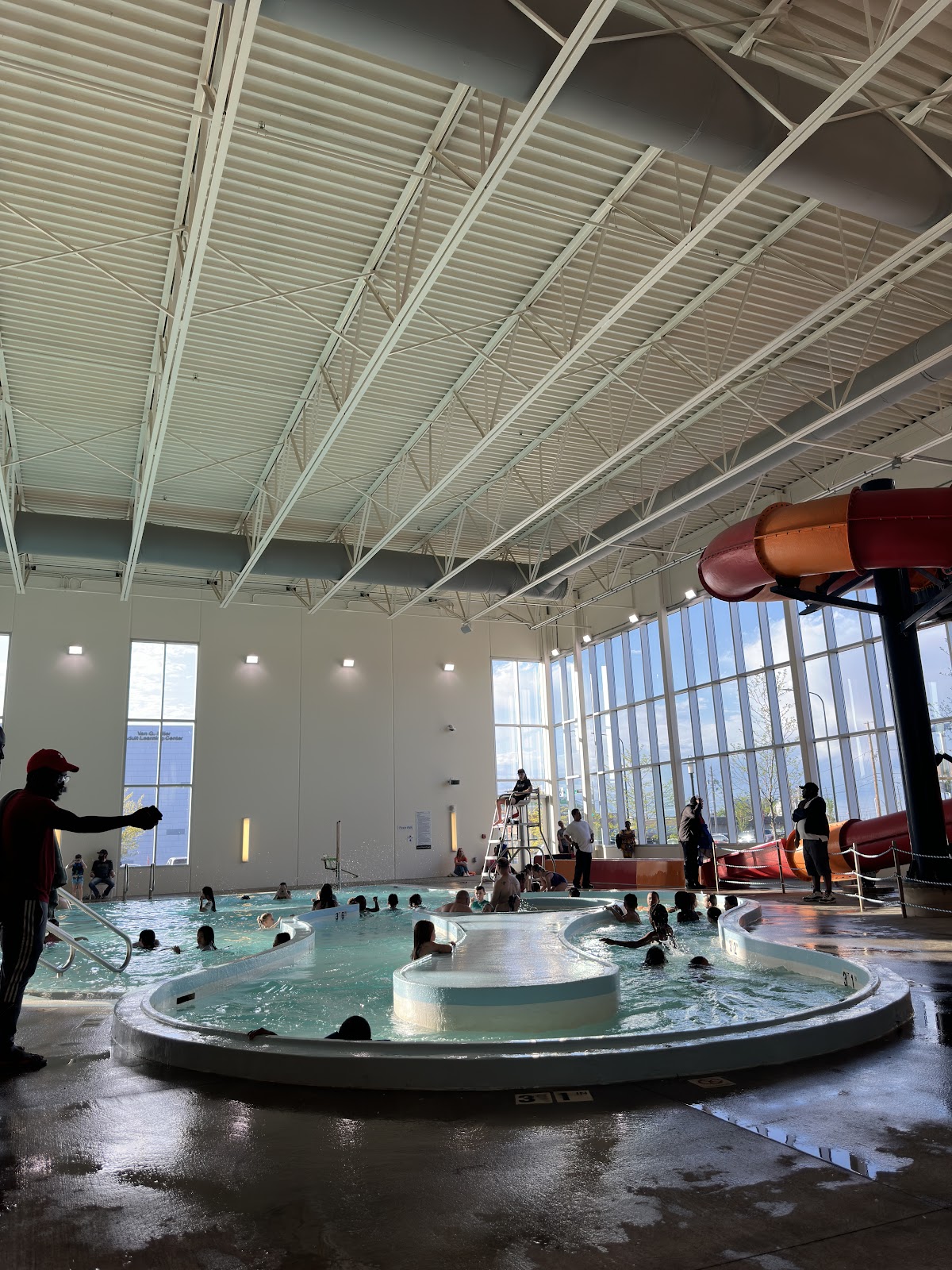
More frames from The Cedar Valley Sportsplex
The Cedar Valley Sportsplex wedding photography: common questions
What frame does a very large room give?
Two people with genuine volume around and above them — floor running away in every direction and structure visible overhead, at a scale a photograph can convey.
Why bring less light rather than more?
Because light falls off with the square of distance. A source at three metres is four times as bright as the same source at six, and the darkness beyond is what makes the volume read.
Can you bounce off the roof?
No. A clear-span roof is often eight metres or more up, so a bounced flash travels sixteen metres round trip and returns almost nothing.
What is the problem with older high-bay lighting?
It renders colour poorly, because its energy sits in a few narrow parts of the spectrum, and some fittings flicker enough to make frames in a burst differ from one another.
What is the most valuable control in the building?
Bank switching. Turning off half the hall gives exactly the darkness the frame wants behind the couple, at no cost.
Are there rules about the floor?
Usually. Sports surfaces are protected, so footwear, stands and anything with a point are commonly restricted — assume a source in a hand or on a bracket.
More Iowa venue guides
We are writing a photographer’s guide to every venue we would happily shoot in Iowa. Here are three more, plus the full index:
- The Electric Park Ballroom, Waterloo: The Light Through a Day
- The Five Sullivan Brothers Convention Center, Waterloo: The Problem, and Four Ways Out
- The Grout Museum District, Waterloo: A Venue Built to Preserve
Planning a wedding at The Cedar Valley Sportsplex?
Less light, more space. Tell us your date and we will make the big frame.