 The Redd on Salmon Street: Building the Shot List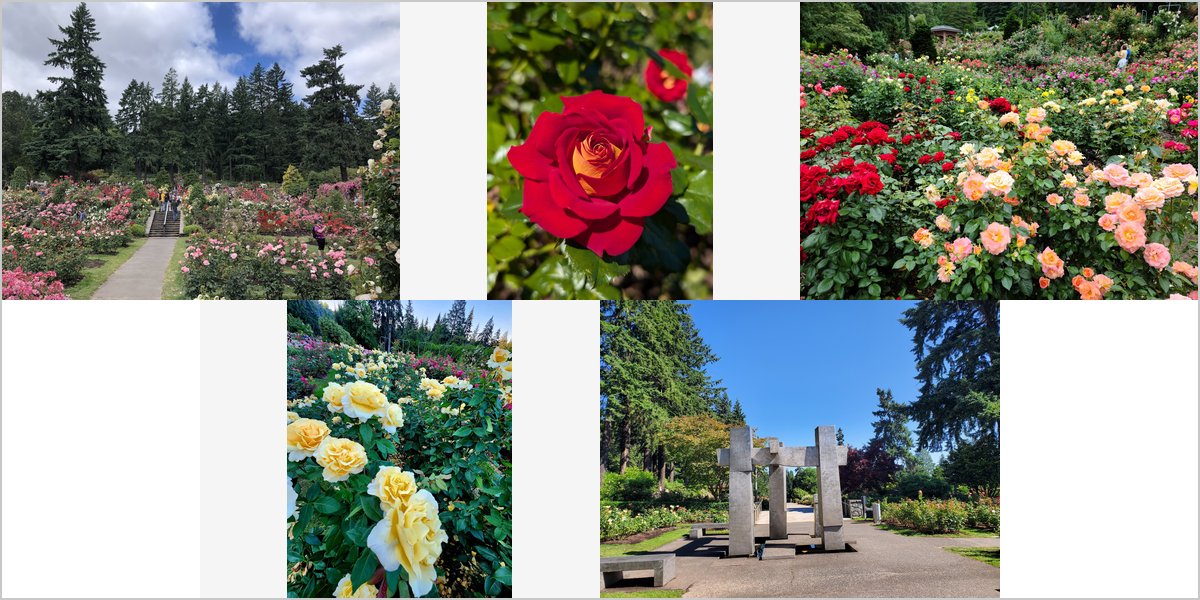
May 10, 2026
Rose Test Garden Weddings: A Photographer Answers the Real Questions
Everything good and everything difficult about this venue comes from the same fact: it is free, public, famous and beautiful. Plan around the crowds and the midday sun and it delivers.
The Portland International Rose Test Garden has been operating in Washington Park since 1917, which makes it the oldest continuously operating public rose test garden in the United States. It holds several thousand rose bushes across terraced beds, and it looks west and north over the city with Mount Hood on the horizon when the weather permits.
It is also free to enter, extremely popular, and photographed constantly. That is the tension every couple marrying here has to manage. The garden gives you a backdrop that a private venue could not build for any money, and it gives it to several thousand other people on the same afternoon.
We have not photographed a wedding here. Below are the questions couples genuinely ask, answered from the craft side and from what is verifiable about the site and Portland’s light. Reservations, which areas are bookable and what equipment is permitted are for the Portland Parks office to confirm.
Portland International Rose Test Garden at a glance
| Where | Washington Park, Portland, Oregon — above downtown, west-facing terraces |
| Established | 1917 — the oldest continuously operating public rose test garden in the US |
| Peak bloom | Typically June, with a useful second flush into September |
| The view | West and north over Portland, Mount Hood on the horizon on clear days |
| Biggest issue | Crowds, and hard high sun on open terraces with almost no shade |
When do the roses actually look their best?
June is the reliable answer, and it is reliable enough that the city builds a festival around it. That is when the beds are fullest and the colour is at its most saturated. There is usually a worthwhile second flush later in the season, often into September, which can be a smarter booking: the garden still reads as a rose garden, the light is lower and kinder, and the crowds have thinned considerably.
What you should not do is book for the roses in April or late October and expect them. Bloom timing shifts with the year, and a rose garden out of bloom is simply a well-kept set of green beds with a very good view. If the roses are the point, June or early September; if the view is the point, the roses matter less than you think.
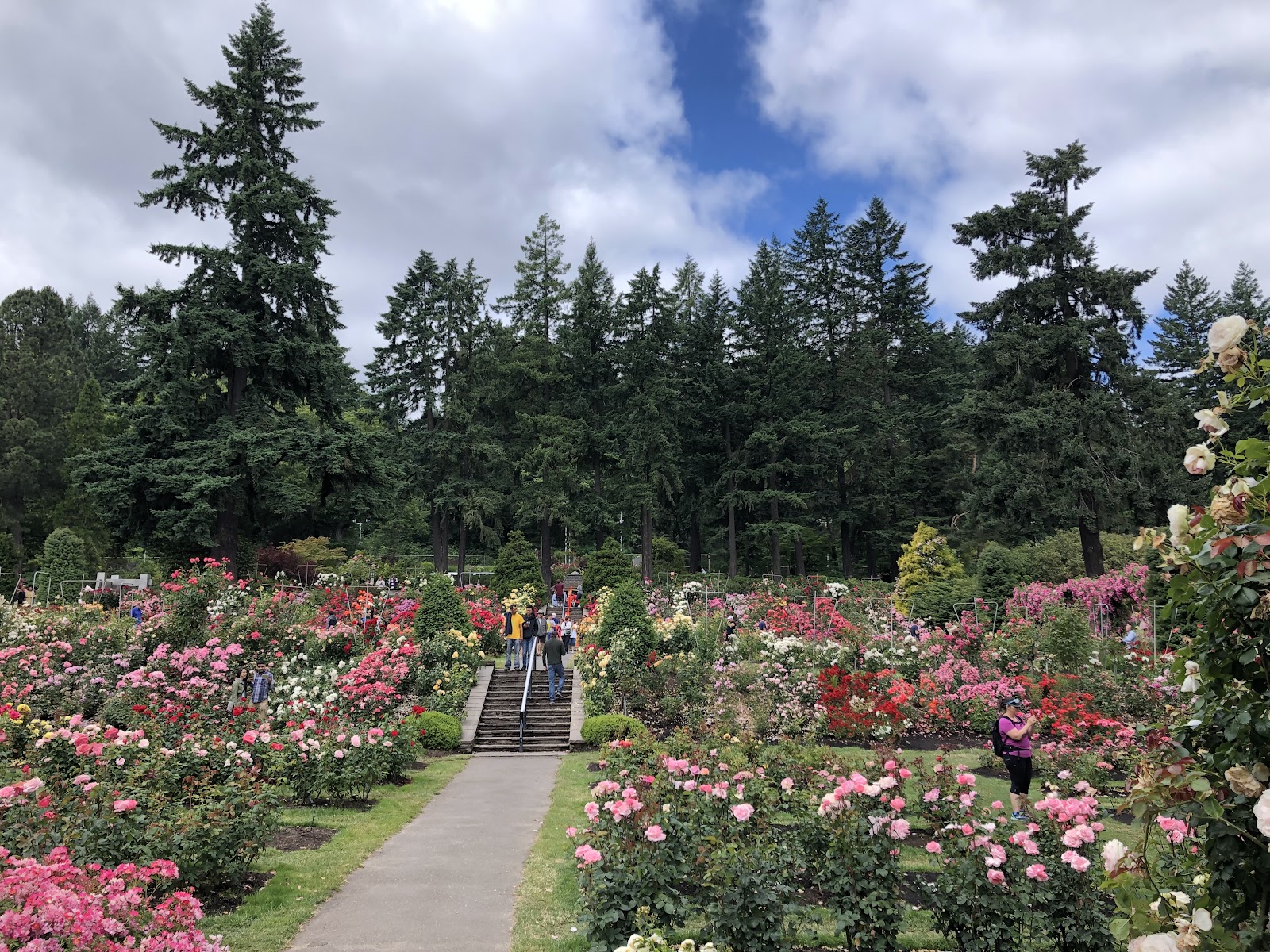
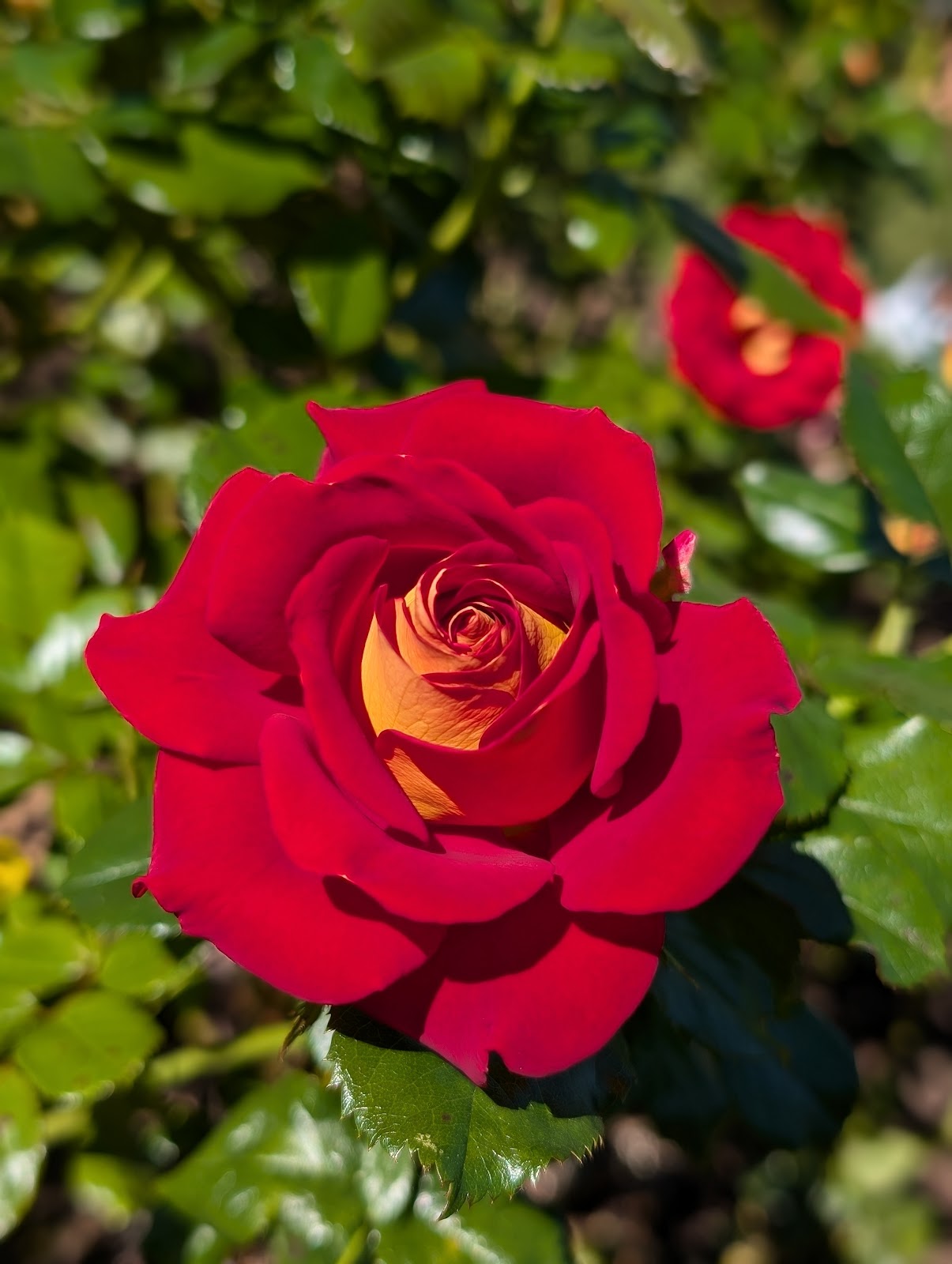
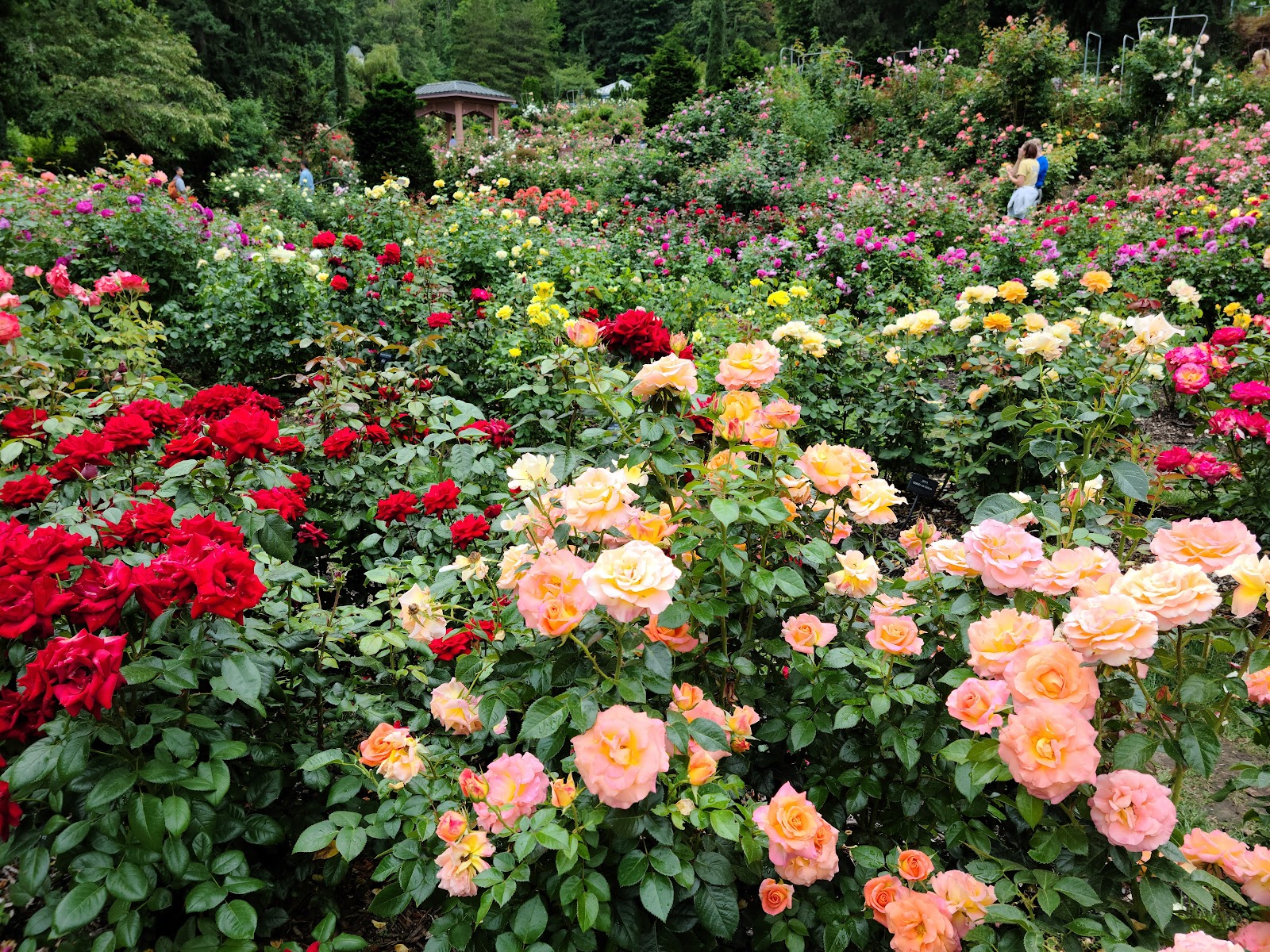
One photographic note: roses are small, and a bed of them photographs as texture rather than as subject. The frames that work are either tight — a couple with one bed genuinely close behind them — or wide enough to include the terraces, the city and the sky. The in-between distance, where the roses become an indistinct mush, is the one to avoid.
How bad are the crowds, really?
On a fine June weekend, busy enough that it shapes the entire approach. This is a free public garden at peak bloom in a city that loves it. There will be visitors in the background of most wide frames, and there is no arrangement that changes that.
The practical answers are time of day and lens choice. Early morning is transformatively quieter — the garden at eight o’clock on a weekday is close to empty and the light is soft and low. Evening thins out too, though less so. And a longer lens at a wide aperture compresses the background into colour and shape, so distant visitors become bokeh rather than people.
The other answer is to accept it and choose frames that use the terraced geometry, shooting slightly downward across beds so the crowd line sits above the frame edge. A photographer who knows the site can work around a great deal; a photographer who expected privacy cannot.
What about the light on an open terrace?
This is the part couples underestimate. The garden is open, terraced and almost entirely unshaded. Between roughly eleven and four on a clear summer day, the sun is high and hard, and there is nowhere to hide from it. High sun produces raccoon-eye shadows, squinting, blown highlights on a white dress, and the flattest, least attractive light of the day.
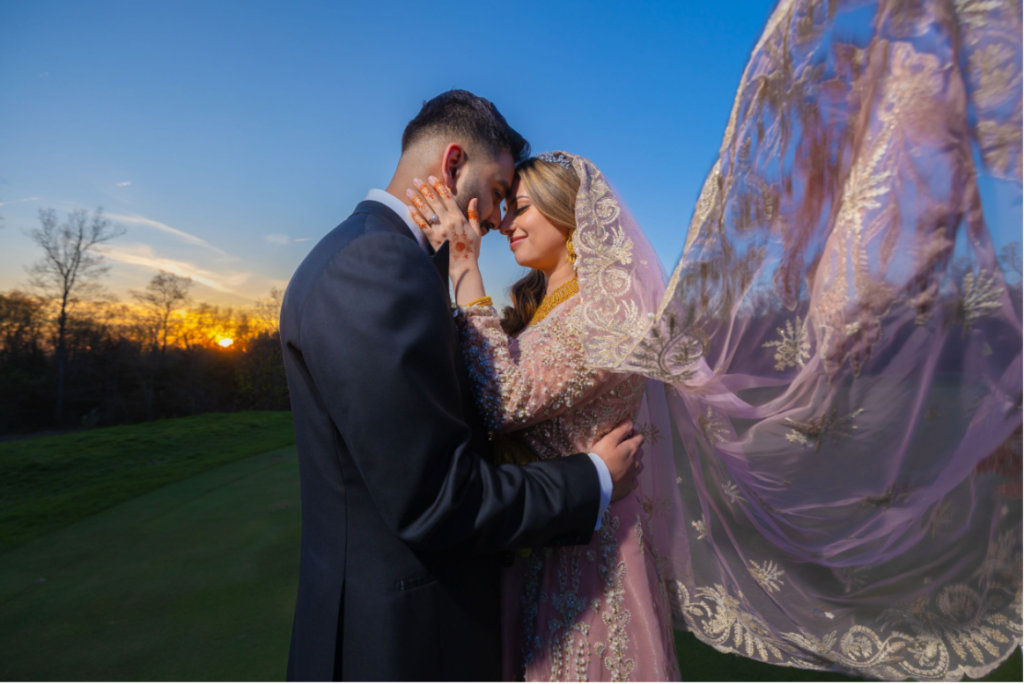
Because the terraces face broadly west and north, the venue comes alive in the last two hours before sunset. Then the light rakes across the beds, the city goes hazy and warm, and the whole place stops looking like a public park and starts looking like the photographs that made you want to marry here.
If a midday ceremony is fixed, the technique is backlighting and fill: put the sun behind the couple, expose for their faces, and use a reflector or a flash to lift the shadows. Overcast days, which Portland supplies generously, are genuinely better here than clear ones for everything except the mountain view.
Is this a whole-wedding venue or a ceremony-and-photos venue?
Treat it as the second. It is a public park with a famous view, not a reception venue, and there are no walls, no shelter of consequence and no infrastructure for a long celebration. Couples who do well here hold a short ceremony, take portraits, and move on to somewhere with a roof.
That is worth planning positively rather than treating as a limitation. A thirty-minute ceremony at the best hour of the day on one of the finest terraces in the Pacific Northwest, followed by dinner somewhere indoors, is an excellent structure — and it avoids the two real risks of the site, which are weather and daylight.
Weather deserves one flat statement: there is effectively no rain cover. In a city that averages rain on a large share of days outside high summer, that means a genuine alternative plan, decided in advance, for a ceremony that cannot happen on an exposed terrace.
What works in your favour
- A backdrop no private venue could construct: terraced beds, the city, and Mount Hood beyond
- Peak bloom in June is genuinely spectacular, with a second flush into September
- Free and public, which keeps the venue cost out of the budget entirely
- West and north-facing terraces make the last two hours before sunset outstanding
- Early weekday mornings are quiet, soft-lit and almost private
What to plan around
- Crowded at peak bloom — visitors in the background of wide frames are unavoidable
- Almost no shade: midday sun on open terraces is the harshest light you will face
- No meaningful rain cover, in a city where rain is the default outside summer
- Not a reception venue; assume you are moving on afterwards
- Roses photograph as texture, so the mid-distance frames rarely work
- Reservations and equipment rules are set by Portland Parks — confirm before planning
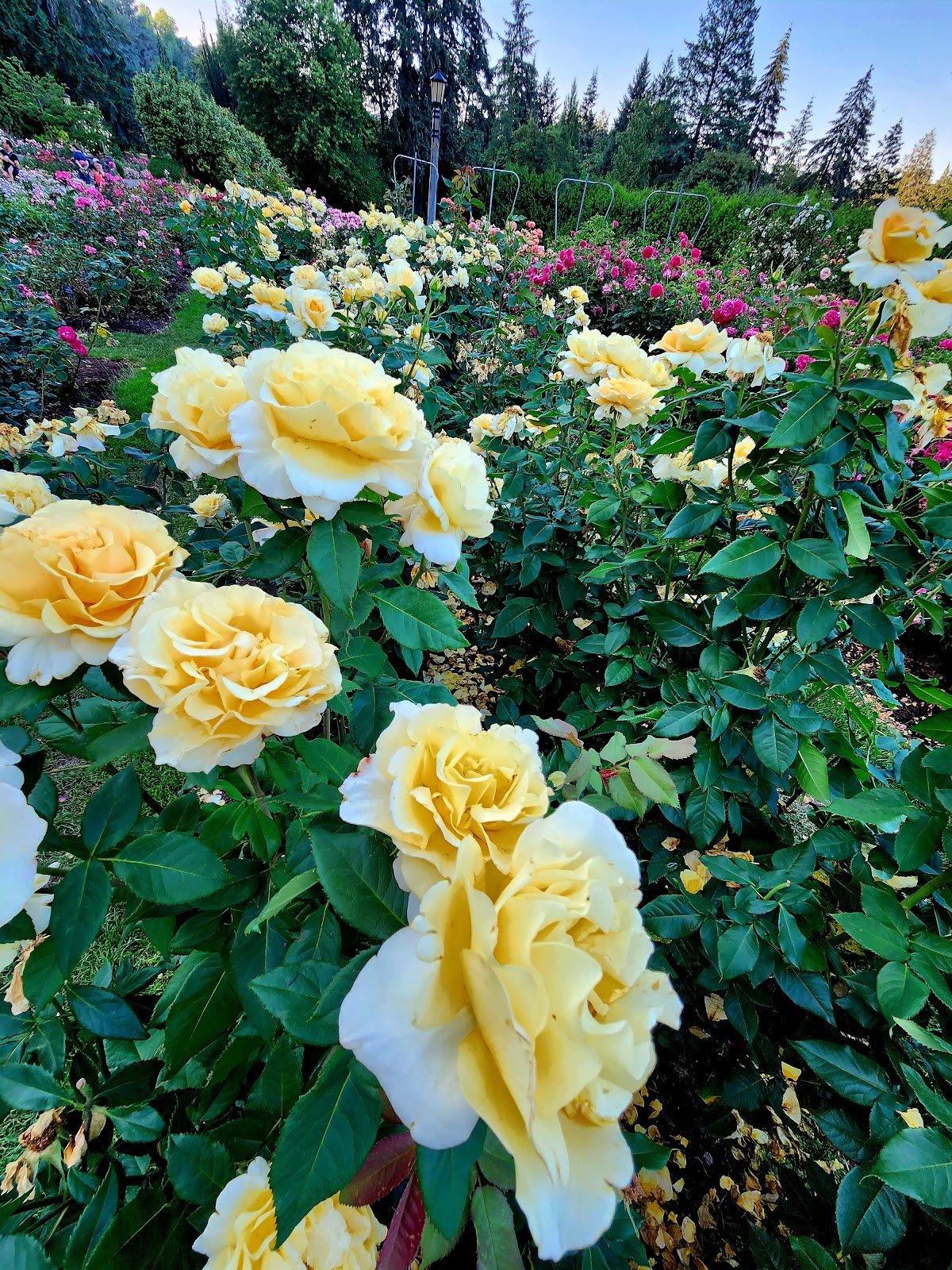
More frames from Portland International Rose Test Garden
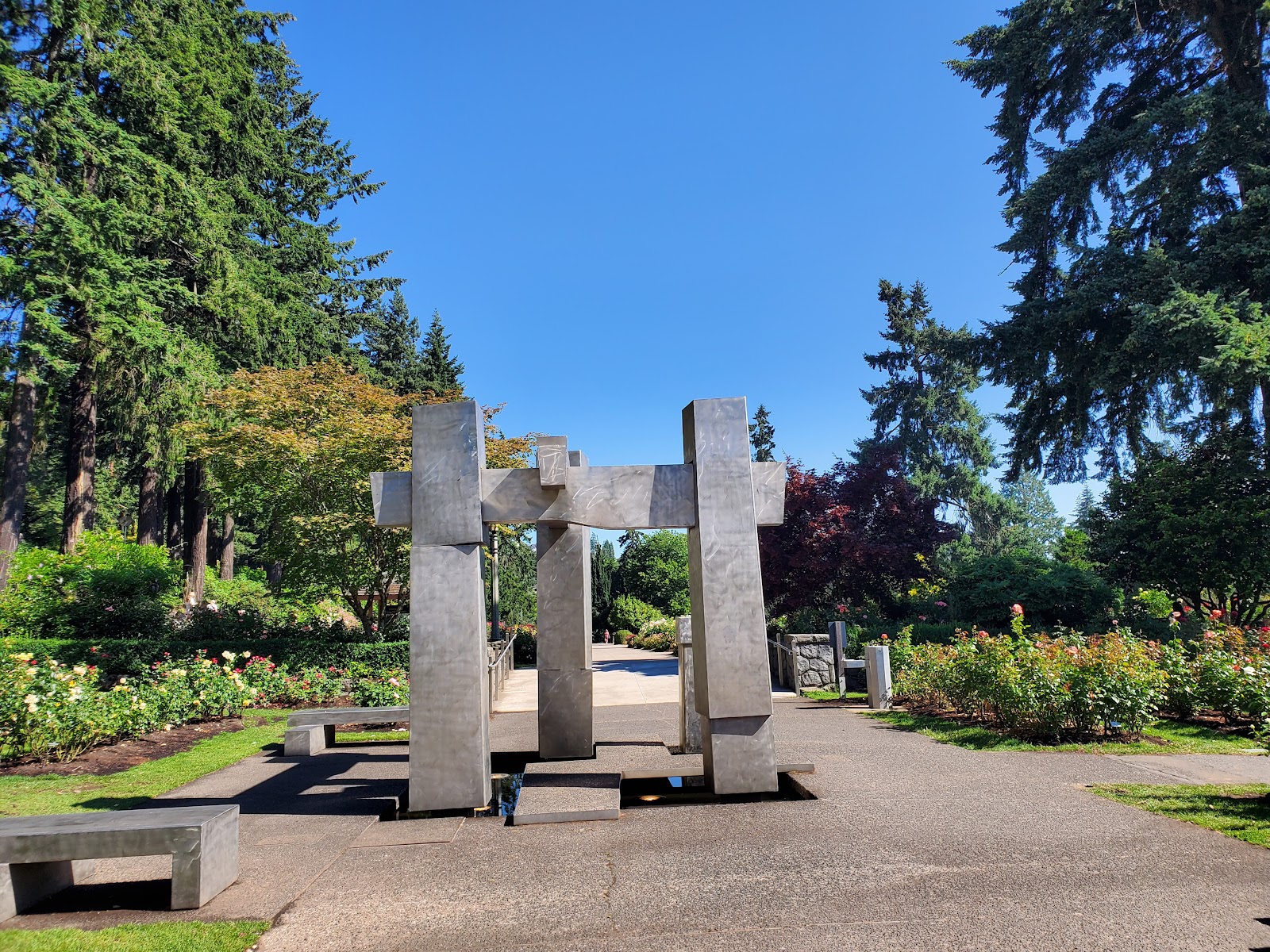
Portland International Rose Test Garden wedding photography: common questions
When do the roses peak at the Rose Test Garden?
June is the dependable peak, and there is usually a strong second flush into September. The later window is often the smarter booking: the garden still reads as a rose garden, the sun sits lower and kinder, and the crowds are much thinner than at the June high point.
How crowded is it for a wedding ceremony?
At peak bloom on a fine weekend, very. It is a free, famous public garden, and visitors will appear in the background of wide frames. Early weekday mornings are dramatically quieter, evenings somewhat quieter, and a long lens at a wide aperture turns distant people into background colour rather than faces.
What is the best time of day to photograph there?
The last two hours before sunset. The terraces face broadly west and north, so late light rakes across the beds and the city behind goes warm and hazy. Avoid roughly eleven until four on clear days — the garden is almost entirely unshaded and high sun is unforgiving on an open terrace.
Can we hold the reception at the Rose Test Garden?
Realistically no. It is a public park with no walls and no shelter of consequence. The structure that works is a short ceremony at the best hour, portraits straight afterwards, then dinner at an indoor venue. Plan it that way deliberately rather than treating it as a compromise.
What happens if it rains?
There is effectively no cover, so you need a real alternative decided in advance — not a hope that it holds off. Portland sees rain on a large share of days outside high summer. Overcast without rain, incidentally, is excellent light here; it is only the mountain view that suffers.
More Portland, OR venue guides
We are writing a photographer’s guide to every venue we would happily shoot in Portland, OR. Here are three more, plus the full index:
- Sentinel Hotel: Reading the Light, Building the Timeline
- Ainsworth House: Who This Venue Suits, and Who It Doesn’t
- Shooting a Wedding at the Crystal Ballroom: The Technical Side
All Portland, OR Wedding Venues →
Planning a wedding at Portland International Rose Test Garden?
The Rose Test Garden works beautifully with a plan and poorly without one. Tell us your date and we will tell you where the bloom is likely to be, how busy that hour will be, and what the backup looks like if it rains.