 The Redd on Salmon Street: Building the Shot List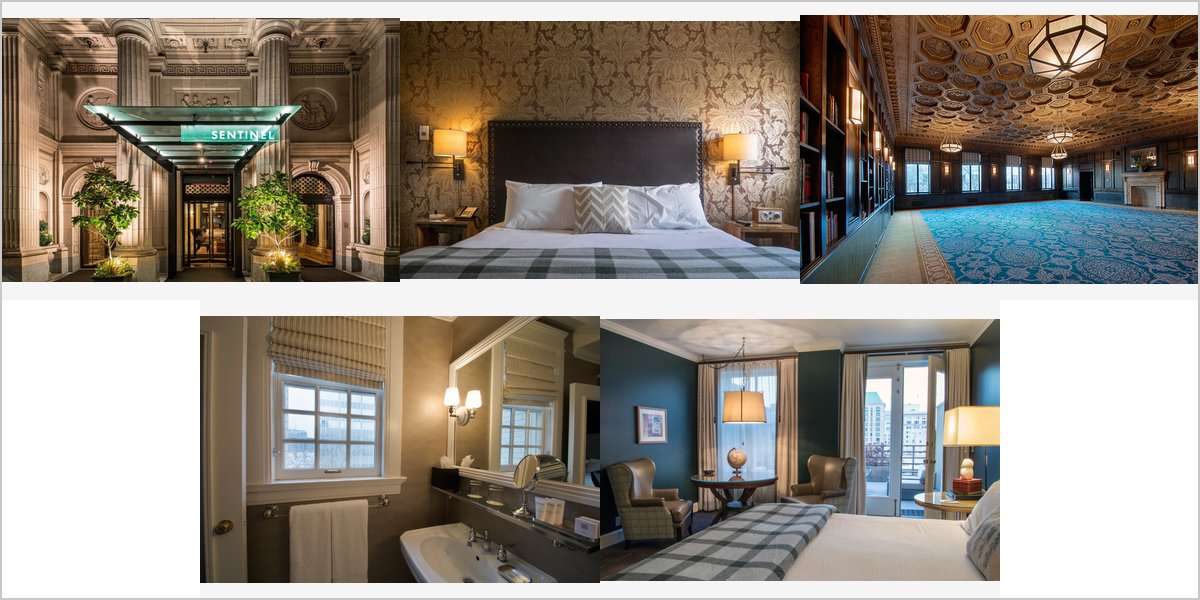
June 7, 2026
Sentinel Hotel: Reading the Light, Building the Timeline
The ballroom is the reason to book it and the hardest thing in the building to photograph. Everything in the timeline should be arranged around that one fact.
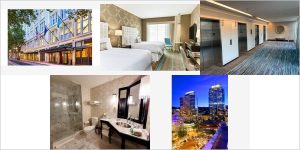
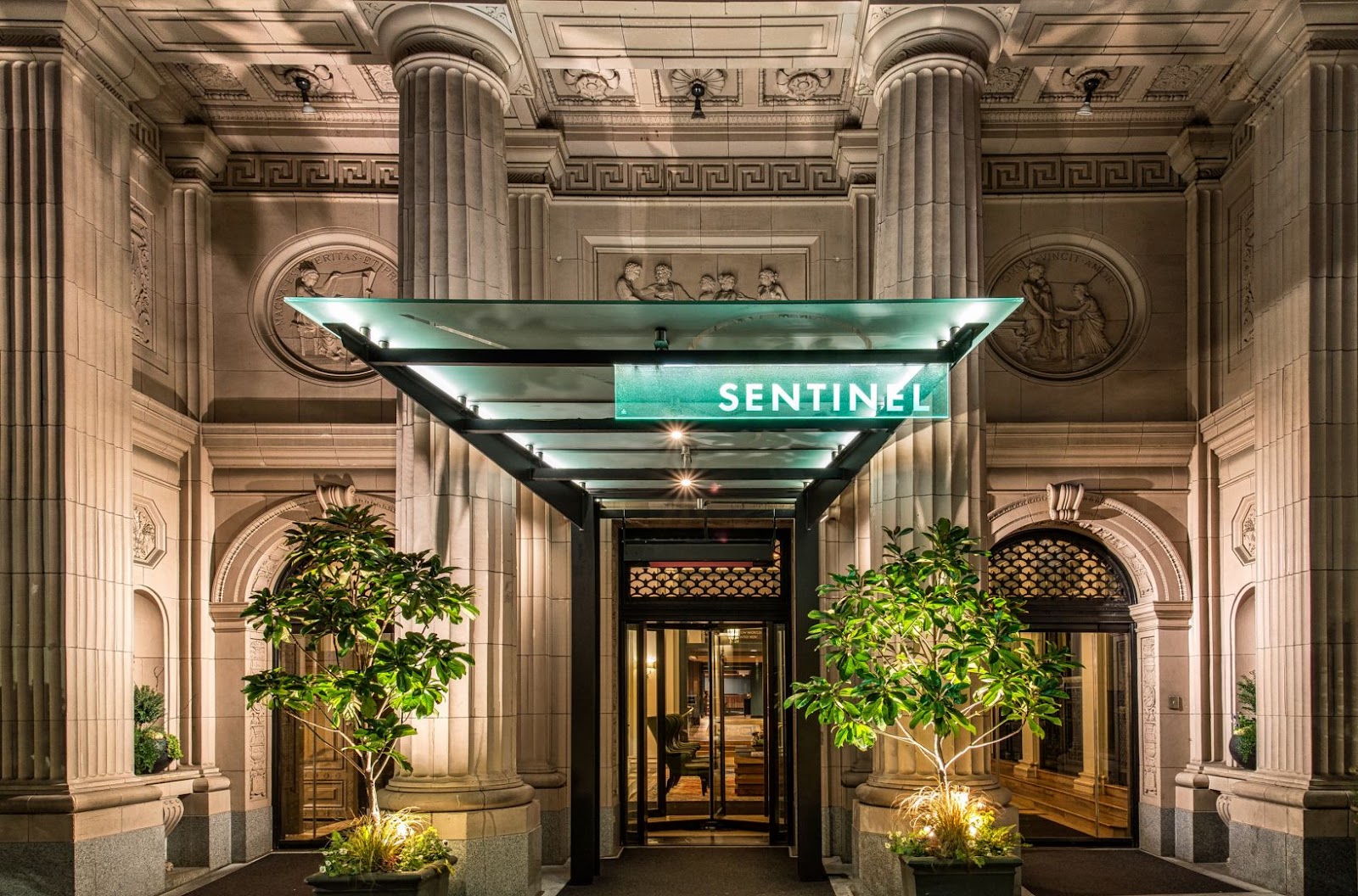
The Sentinel occupies two adjoining early-twentieth-century buildings in downtown Portland, one of which was built as an Elks lodge and carries the ornate, high-ceilinged ballroom that gives the hotel its reputation as a wedding venue. The exteriors are richly detailed in the Portland manner — terracotta, arched openings, heavy stonework.
Photographically this is a classic historic-hotel problem, and it has a classic shape. The public rooms are grand, ornamented and almost entirely lit by warm artificial fixtures. The guest rooms have the windows. The street outside has the architecture. A good day here uses all three deliberately and does not try to make any one of them do a job it cannot.
We have not photographed a wedding at the Sentinel. This is a light-and-timeline guide built from what the building is — two historic downtown structures with an ornate lodge ballroom — and from how those conditions behave. Room configurations, which spaces you get and what the hotel permits are questions for their events team.
Sentinel Hotel at a glance
| Where | Downtown Portland, Oregon — two adjoining early 1900s buildings |
| Heritage | One building was constructed as an Elks lodge; the ballroom survives from it |
| Interiors | Ornate, high-ceilinged, warm artificial light, very little daylight |
| Best natural light | Guest rooms with street-facing windows |
| Plan around | A daylight-free ballroom and a downtown block that photographs well at dusk |
Morning: the guest rooms are your daylight
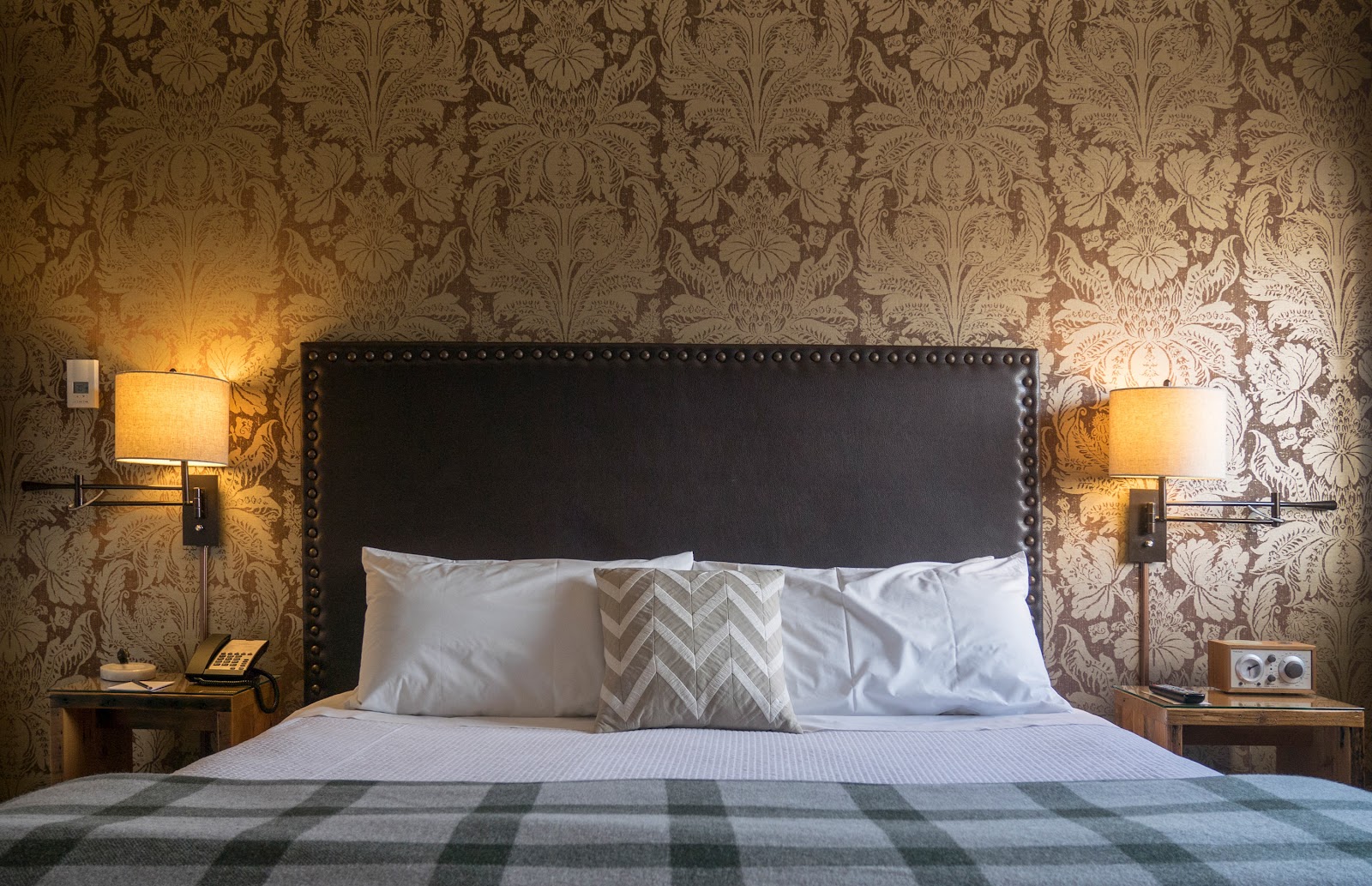
In a historic downtown hotel, the getting-ready photographs are the only part of the day with genuinely good natural light, and they are also the part most often shot badly — in a dim corner, with the curtains half closed and a television in frame.
The method is simple and it matters. Ask for a room on a higher floor facing the street, pull everything away from the window, turn every artificial light in the room off, and work within a metre or two of the glass. Portland’s overcast is effectively a giant softbox, so a cloudy morning is better for this than a sunny one. Clear the room of clutter first; ninety seconds of tidying improves the pictures more than any lens.
If the window light is weak, the corridors of an ornate hotel are often a better option than a dark room — long lines, repeating doors, patterned carpet, and usually a window at the end acting as a key light.
Afternoon: the ballroom, and why it fights you
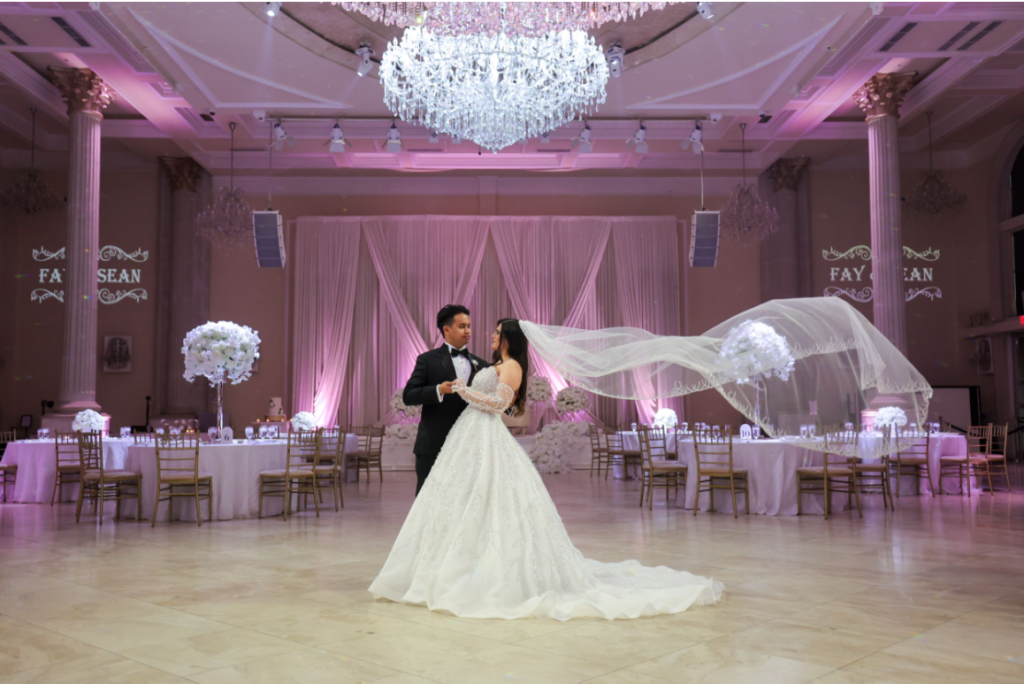
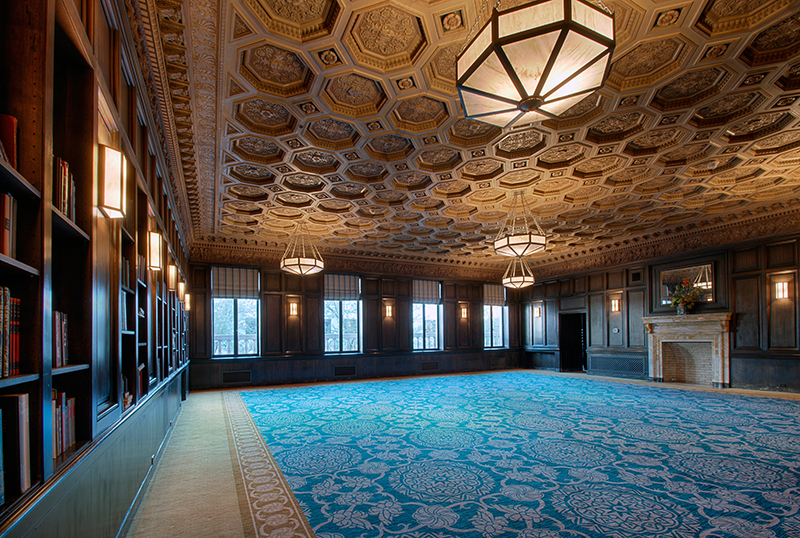
An early-1900s lodge ballroom is built for grandeur: high ceilings, heavy plasterwork, dark woodwork, chandeliers. Every one of those features is a problem for a camera. High ceilings put any bounce surface too far away to be useful. Dark woodwork absorbs light instead of returning it. Chandeliers are warm tungsten, beautiful to the eye and a colour-balance headache when mixed with anything else.
Treat the room as a space you light rather than a space with light in it. One off-camera flash on a stand, gelled warm to match the chandeliers, bounced into a pale wall or through a modifier, gives you a key with direction and keeps the room’s own warmth intact. Expose so the chandeliers read as glowing points rather than blown white holes — that usually means letting the overall frame sit darker than your instinct wants.
And shoot the ornament. Plasterwork, a ceiling rose, the detail on a balcony rail: these are what distinguish the venue from a modern function room, and a gallery that omits them omits the reason you chose the place.
Dusk: the downtown block is the best light of the day
This is the timeline decision that matters most. For roughly twenty minutes after sunset, the sky brightness falls to match the streetlights and window light, and a richly detailed downtown block becomes the best portrait location available anywhere near the hotel. Terracotta and stone hold colour beautifully at that level, wet pavement doubles every light source, and the ambient becomes soft and directional.
That window is short and it does not wait. It needs to be in the schedule as a fixed item — ten minutes, stepped outside between courses if necessary — rather than something attempted if there is time. Couples who protect it get their best two frames of the day; couples who do not lose them entirely.
Rain, which is likely for much of the year, improves this rather than ruining it. Reflections on wet asphalt are the single most flattering thing that can happen to a night street portrait, and a clear umbrella keeps faces lit neutrally.
One more thing about the dusk window that couples rarely anticipate: it gets better as the year gets worse. In June, sunset in Portland is late and the sky stays bright long after dinner has started, which pushes the good window awkwardly past the speeches. In October and November it lands at a genuinely convenient hour, often right between the ceremony and the meal. A historic hotel in the wet season is an easier venue to schedule well than the same hotel in high summer, which inverts most couples’ assumptions about when to book.
The timeline, stated plainly
Working from the constraints above rather than from a generic template.
- Preparation in a street-facing upper room, artificial lights off, everything moved to the window. The best natural light you will get.
- Portraits before the ceremony if the schedule allows, using corridors and the architectural interiors while there is still daylight bleeding in.
- Ceremony and reception in the ballroom, lit deliberately, exposed for glowing chandeliers rather than an evenly bright room.
- Ten minutes outside at dusk. Non-negotiable. Set the time in advance and hold it.
- Detail frames of the plasterwork and ornament whenever the room is empty — usually just before guests are seated.
What works in your favour
- Genuinely ornate historic interiors of a kind new hotels cannot replicate
- Accommodation on site, which makes the getting-ready coverage straightforward
- A richly detailed downtown block immediately outside, outstanding at dusk
- Completely weather-independent for the ceremony and reception
- Rain actively improves the street portraits rather than preventing them
What to plan around
- Almost no daylight in the event spaces; the ballroom must be lit by the photographer
- High ceilings and dark woodwork make bounce flash largely ineffective
- Warm chandeliers mixing with any other source demands manual white balance
- The best outdoor light lasts about twenty minutes and must be scheduled, not hoped for
- A working downtown hotel — expect other guests and limited exclusive access
More frames from Sentinel Hotel
Sentinel Hotel wedding photography: common questions
Where is the best natural light at the Sentinel?
A higher-floor guest room facing the street. Turn off every artificial light, move everything away from the window and work within a metre or two of the glass. Portland’s overcast acts as a giant softbox, so a cloudy morning is better for this than a bright one.
Why is the ballroom difficult to photograph?
High ceilings put any bounce surface too far away to help, dark woodwork absorbs light rather than returning it, and warm chandeliers clash with any other source you introduce. It needs to be treated as a room you light — one gelled off-camera flash as key — rather than a room that already has usable light.
What is the single most important timeline item?
Ten minutes outside at dusk. For roughly twenty minutes after sunset the sky matches the streetlights and the detailed downtown architecture becomes the best portrait light of the entire day. It is short, it does not wait, and it has to be a fixed appointment rather than an aspiration.
Does rain ruin the outdoor portraits?
No — it improves them. Wet asphalt reflects every light source and doubles the illumination on a night street, which is the most flattering thing that can happen to a dusk portrait. Bring a clear umbrella so the light on faces stays neutral.
How should the chandeliers be exposed?
So they read as glowing points rather than blown white holes, which usually means letting the overall frame sit darker than instinct suggests. A room like this is supposed to look warm and pooled; correcting it to an evenly bright space removes exactly the quality you booked it for.
More Portland, OR venue guides
We are writing a photographer’s guide to every venue we would happily shoot in Portland, OR. Here are three more, plus the full index:
- Ainsworth House: Who This Venue Suits, and Who It Doesn’t
- Shooting a Wedding at the Crystal Ballroom: The Technical Side
- Hoyt Arboretum: A Season-by-Season Photography Guide
All Portland, OR Wedding Venues →
Planning a wedding at Sentinel Hotel?
The Sentinel rewards a timeline with one fixed appointment in it: ten minutes outside at dusk. Tell us your date and we will send you the exact window for that evening, plus a lighting plan for the ballroom.