 Dry Tortugas National Park: A Walk Through an Island Fort
Miami Seaquarium: What It Suits and What It Does Not
The best light here comes out of the water, and it is cyan.
A marine park is a particular proposition and the honest way to describe it is by what illuminated water, glass and a causeway setting suit and do not suit.
The setting first. The Miami Seaquarium sits on Virginia Key, on the causeway between mainland Miami and Key Biscayne, which puts it on a narrow strip of land with Biscayne Bay on one side and the Atlantic beyond the next island. That is an unusual position: water on both sides, a long low horizon, and the Miami skyline visible across the bay to the west.
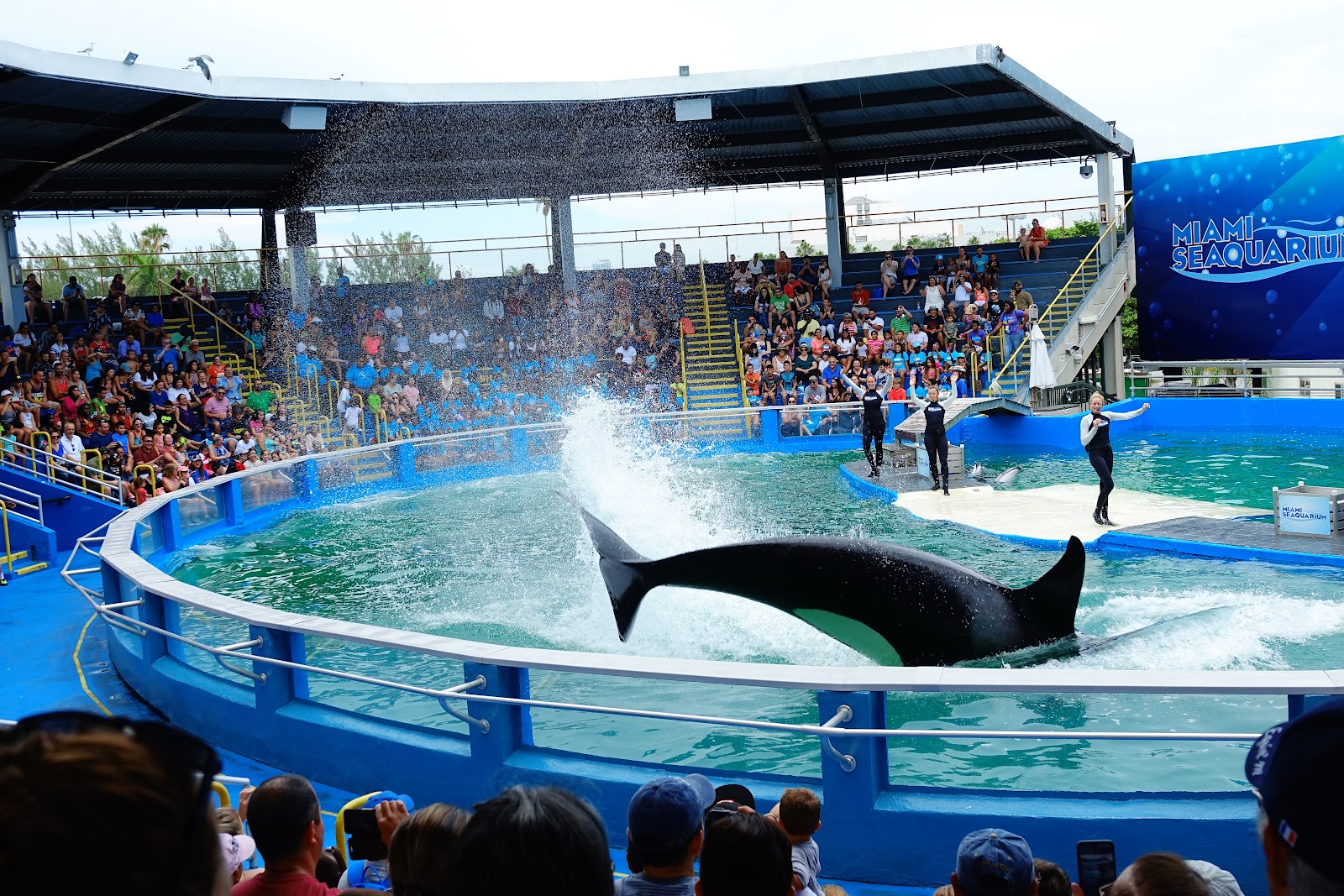
The site itself combines outdoor pools and stadium seating, indoor exhibits with glazed tanks, planting, hard landscaping and a waterfront edge. Photographically it divides into three environments that behave completely differently: bright open hardstanding, illuminated water behind glass, and a causeway shoreline.
The defining technical fact is the colour of the water light. A large illuminated tank or pool is, optically, a very big source — and it is not white. Water absorbs the long wavelengths first, so light that has travelled through any depth of it arrives depleted in red and dominated by blue and green. A pool lit from within or lit from above through depth returns strongly cyan light, and anything close to it is lit in that colour.
This is the site’s signature and it is not neutral. A subject standing beside a large tank gets a striking cyan key on one side, which is either a distinctive photograph or an unwell-looking face, depending entirely on whether the photographer chose it. There is no accidental middle that works.
Miami sits at about twenty-five and three-quarter degrees north, two degrees from the tropics, which means the June noon sun reaches around eighty-eight degrees — within two degrees of vertical, the highest in this guide.
We have not photographed a wedding at the Seaquarium. Which areas are included, what the restrictions are on flash and access near the animals and the tanks, whether the waterfront is available and what the permitted hours are, are questions for their team — and the flash restriction near animals is the one most likely to shape the approach.
Miami Seaquarium at a glance
| Where | A marine park on Virginia Key, on the causeway between Miami and Key Biscayne |
| Suits | Cyan-keyed portraits, water reflections, the bay edge, a skyline background |
| Does not suit | Neutral colour, quiet, midday hardstanding, or people against tank glass |
| The water light | Strongly cyan — water absorbs red first. Commit to it or override it |
| Ask first | Flash and access restrictions near the animals, waterfront access, hours |
What it suits
It suits the cyan portrait, and this is the frame that exists nowhere else in this guide. A subject standing beside a large illuminated body of water, lit predominantly by it, is keyed in a saturated blue-green that no gel and no location can imitate convincingly.
Making it work requires committing to it rather than correcting it. White balance goes on the room or on the sun, not on the face, so the cyan is preserved as a colour rather than neutralised into grey. The skin then reads cool, and the fix is not a global correction but a second source: a small warm-gelled light on the face at about a stop under the cyan key, which restores enough warmth in the skin to look alive while leaving the frame’s colour intact.
That two-source setup — cool key from the water, warm fill on the face — is the best photograph available at this venue and it is worth building the schedule around.
It suits reflections. Large still water surfaces are horizontal mirrors, and an outdoor pool at a marine park is bigger and cleaner than most garden water. It reflects the sky, which at Miami’s latitude is a saturated blue, and it fills faces from below, which is precisely where a near-vertical sun leaves them dark.
Still means early. The air over a causeway moves as the day heats and the trade-wind flow builds, so the mirror belongs to the morning and is usually gone by mid-afternoon.
It suits the causeway setting, which is the most underused asset here. A narrow key with water on both sides gives something no inland venue can: both an east-facing and a west-facing shoreline within a short walk. That means the sun rising out of the Atlantic side and setting across Biscayne Bay are both available on the same day from the same property, which removes the either-or that defines every other coastal venue in this state.
Practically, it means the evening frames go to the bay side and the morning frames go to the ocean side, and both get direct low light onto faces.
It suits the skyline. The Miami skyline across Biscayne Bay to the west is a background of real graphic strength, and at dusk it is a field of lit verticals. A couple on the bay shore with that skyline behind them, exposed for the city and lifted by a close warm-gelled source, is the strongest exterior frame the site offers — and, because the city is to the west, it comes with the sunset behind it.
The crossing point applies as it does at any lit background: the sky and the city lights sit within about a stop of each other for roughly ten minutes, and that is the frame. At twenty-six degrees north civil twilight runs a little over twenty minutes, so the whole window is short and has to be planned rather than waited for.
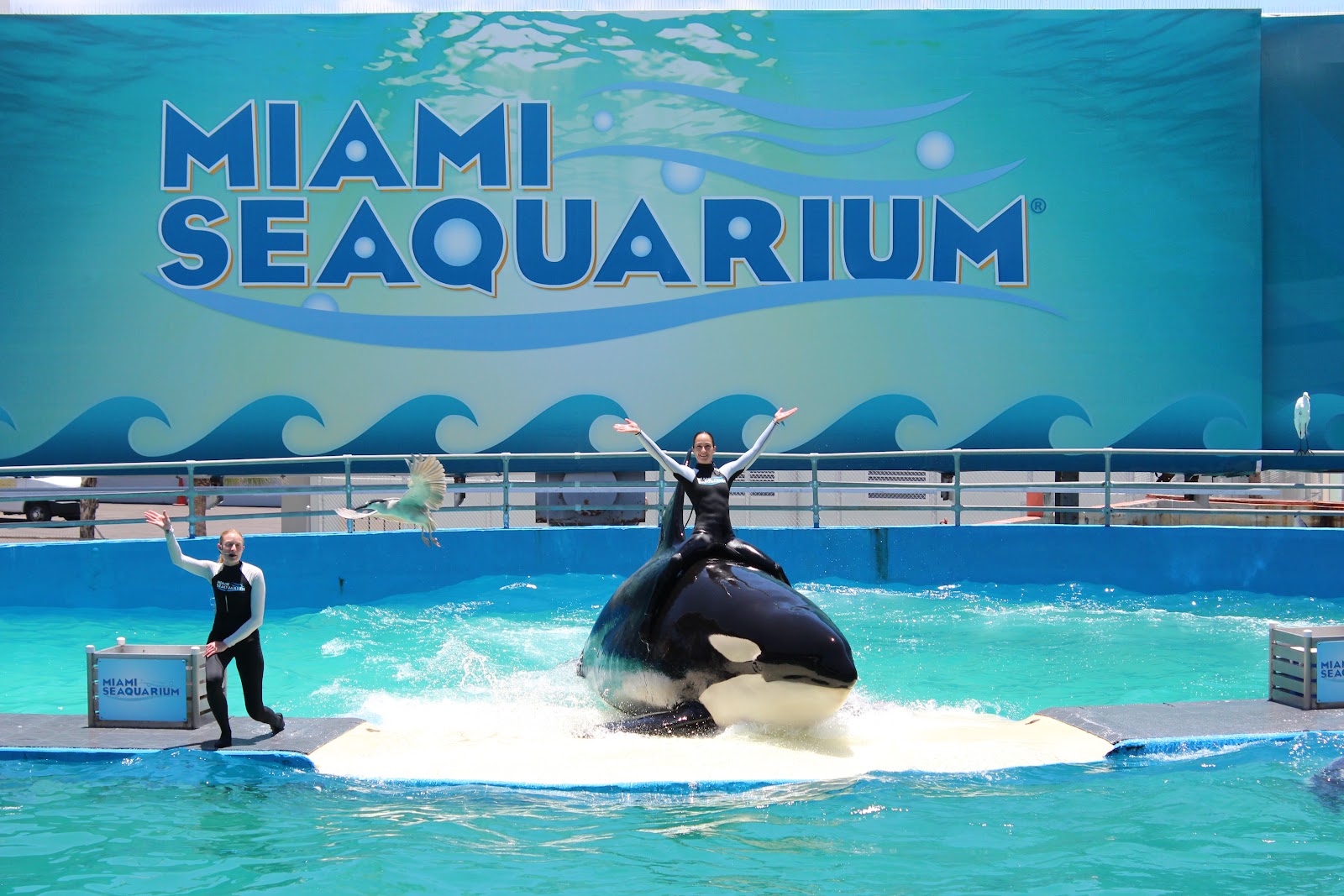
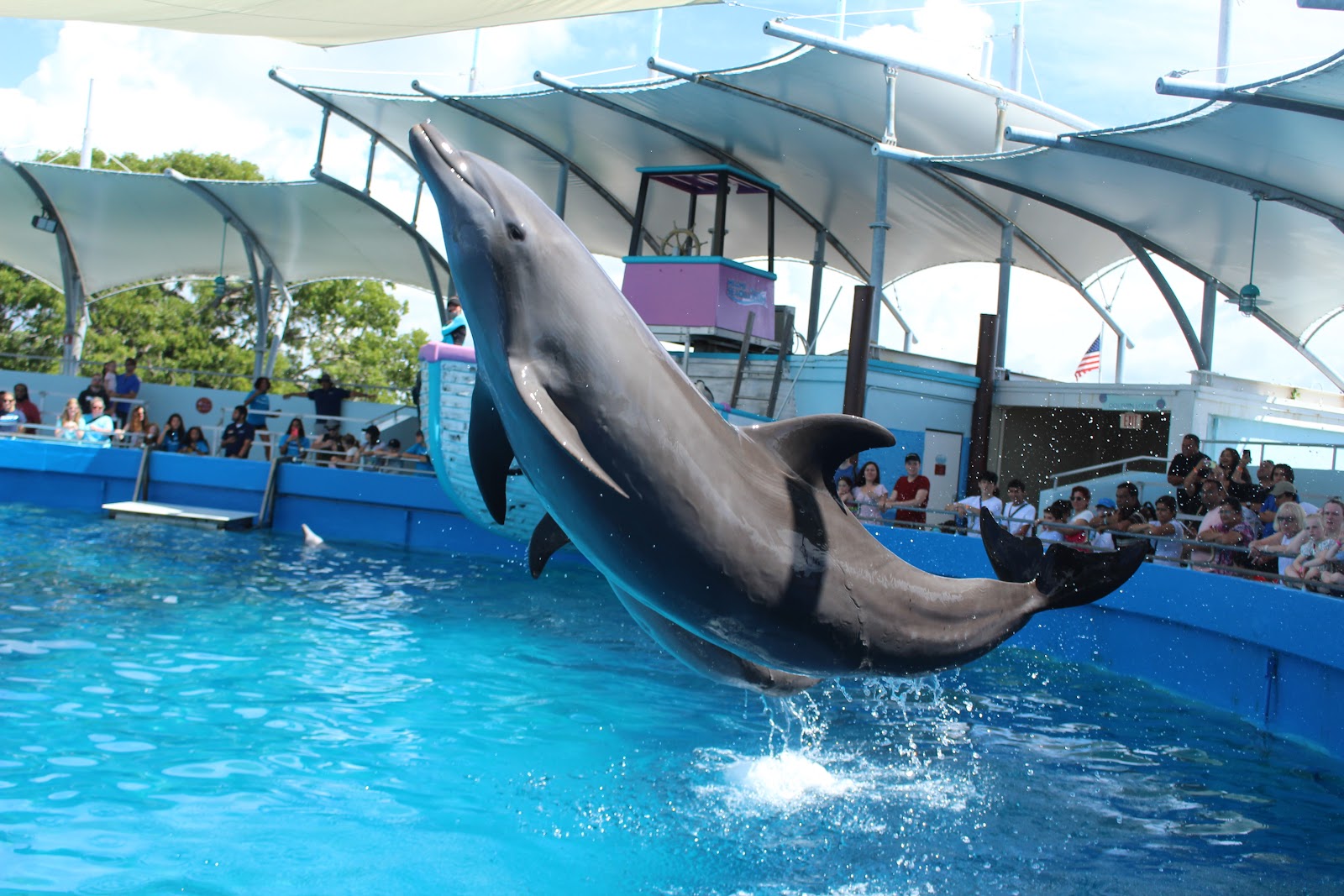
And it suits the animal frames under the same rule that governs any zoo or marine park: an animal in the frame is the subject, because attention finds animals first. It has to be fully visible, clearly placed and given the time it needs, and the photographs succeed when the couple are looking at it rather than at the camera.
What it does not suit
It does not suit neutral colour. Almost every interesting light source here is tinted — cyan from the water, mixed artificial in the exhibit buildings, saturated blue sky outside — and the site offers very little that is simply white. A couple who want a set of warm, neutral, classically lit photographs will find this an uphill venue, and the honest answer is that the colour is the point and fighting it produces a worse result than embracing it.
It does not suit people against tank glass, which is the specific frame everybody wants and which usually fails. A glazed tank reflects everything in front of it, including the couple, the photographer and any light in use. A lens hood pressed against the glass eliminates the reflection for a frame of the tank alone; it cannot eliminate a reflection of the people, because the people are on the reflecting side.
The workable versions are: the couple beside the glass rather than in front of it, lit by it, with the tank as a colour field at the edge of the frame; or the couple photographed at an oblique angle so the reflected image falls outside the frame; or the tank photographed alone as a separate picture. What does not work is two people centred against a large sheet of illuminated glass.
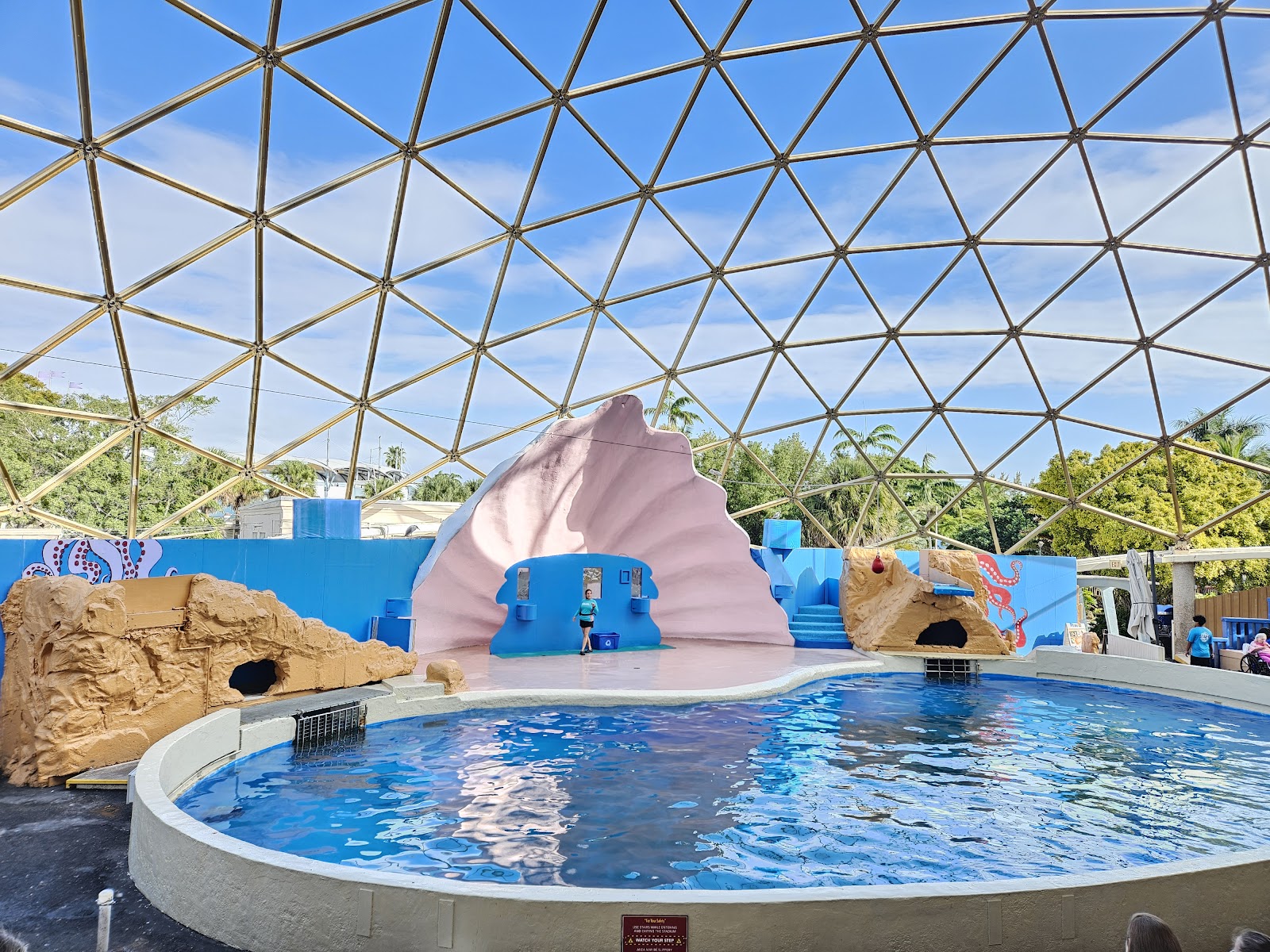
It does not suit the middle of the day on open hardstanding. A marine park has stadium seating, wide walkways and poolside paving, all of it open and pale. Under a sun within two degrees of vertical that produces the worst light in this guide — eyes in shadow, forehead lit, and enough uplight from the paving to fill without softening.
The answers are the indoor exhibits, any roofed structure, and the planted margins. The planting caution is the standard Florida one: broadleaf canopy blocks and gives soft reliable shade, while palm fronds throw a hard slatted shadow, and a causeway site has a great many palms.
It does not suit quiet. A marine park during opening hours contains a public, scheduled presentations, announcements and movement, and a wedding party is inside all of it. Long lenses that compress a crowd into texture, and timing at the ends of the day, are the real answers. Whether access outside public hours is available is the question that most changes what the day can be.
It does not suit low-light work without fast glass. The indoor exhibit spaces are dim by design and the colour temperature is mixed and far from daylight. Where flash is restricted near animals — and it often will be — the only approach is a fast lens, a high sensitivity setting, and acceptance of the room’s colour rather than a fight with it.
Three further practical notes. Salt aerosol on a causeway settles on front elements within minutes and softens contrast in a way that looks like atmospheric haze but is on the glass; a cloth and a habit matter more here than inland. Wind across a narrow key is close to constant, which makes a lightstand a liability and means every source is handheld or held down. And the standing Florida hazard is acute here: an air-conditioned exhibit building sits far below the outdoor dew point in the warm half of the year, so a lens carried outside fogs at once and clears in ten to twenty minutes — which, with a twenty-minute twilight, is the entire window.
- Cool cyan key from the water, warm-gelled fill on the face
- Beside the tank, not in front of it
- Morning on the ocean side, evening on the bay side
- Long lenses to compress the public into texture
- Handhold every light; a causeway is always breezy
The causeway year
Two seasons, and on a narrow key between two bodies of water the difference is mostly about air clarity.
The dry season, roughly November to April, is the better half and the reason is the skyline. The strongest exterior frame here looks west across several kilometres of Biscayne Bay at the city, and that view is entirely dependent on how much moisture is in the air between the camera and the buildings. In February the skyline is a hard-edged field of lit verticals; in August it is a pale suggestion.
The dry season also brings the end of the afternoon storms, a December noon sun of around forty-one degrees that models faces rather than flattening them, and comfortable temperatures for a party in formal clothes on open paving.
Days are short and barely vary at this latitude: about ten and a half hours at the winter solstice against thirteen and three-quarters in June. There is no long northern evening here in any month, which means the low light always arrives at a reasonable hour.
The wet season, roughly May to October, is hot and humid, and the haze is the problem. Dew points in the mid-twenties Celsius put enough moisture into the air to strip contrast from anything at distance — which on this site removes the skyline frame, softens the bay horizon and blooms every light source in the frame.
It also brings the afternoon convergence storm. Sea breezes push inland from the Atlantic and from the Gulf, colliding over the peninsula and lifting air — the mechanism that makes Florida the most lightning-prone state. On an exposed causeway with open water on both sides and stadium seating in the open, that is a real safety consideration rather than a photographic inconvenience, and a named indoor alternative between June and September is a requirement.
What the wet season gives back is the sky. Towering convective cloud over Biscayne Bay, and the half hour after a cell has passed offshore, are the best exterior light this site produces all year — broken cloud lit from beneath, wet paving returning it, and the whole property usable at once including the areas shaded only by palms.
Hurricane season runs June to the end of November and peaks mid-August to mid-October. On a causeway site that is a logistics question as much as a weather one, because access depends on a bridge.
One local seasonal detail. Sargassum — free-floating brown seaweed carried in on the currents — reaches Florida’s Atlantic-facing shores most heavily between roughly April and August, and in a heavy year it lines the high-water mark in brown windrows that no framing hides. It varies greatly year to year and it is worth a question close to the date.
The planting gives no seasonal signal at all: palms, sea grape and salt-tolerant evergreens look the same in January as in July. Which means the only thing in a photograph made here that says what month it is, is how clearly the city across the water can be seen.
More frames from Miami Seaquarium
Miami Seaquarium wedding photography: common questions
What is the signature frame here?
A portrait keyed by the cyan light off a large illuminated body of water, with a small warm-gelled fill on the face a stop under it.
Why is the water light cyan?
Water absorbs the long wavelengths first, so light that has passed through any depth of it is depleted in red and dominated by blue and green.
Can I photograph the couple against a tank?
Not centred in front of one. The glass reflects the people and the photographer, and pressing a hood to the glass only helps for a frame with nobody in it.
What does the causeway setting give me?
Both an east-facing and a west-facing shoreline within a short walk — so sunrise over the Atlantic and sunset across the bay are both available on the same day.
What is the best exterior frame?
The couple on the bay shore with the Miami skyline behind at dusk, exposed for the city and lifted by a close warm source.
Which season is best?
November to April. The skyline frame depends entirely on clear air, and in summer haze removes it.
More Florida venue guides
We are writing a photographer’s guide to every venue we would happily shoot in Florida. Here are three more, plus the full index:
- Morikami Museum & Japanese Gardens, Delray Beach: One Frame and How It Is Made
- Naples Grande Beach Resort, Naples: The Problem and Four Ways Out of It
- The Ringling, Sarasota: How the Light Moves Across the Estate
Planning a wedding at Miami Seaquarium?
Cyan light, two shorelines and a skyline. Tell us your date and we will use all three.