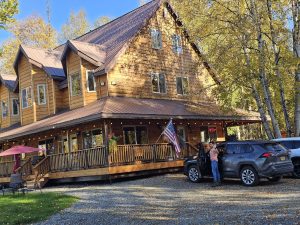
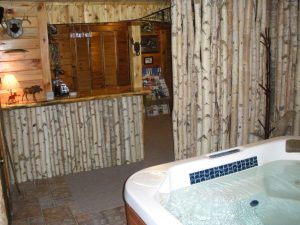
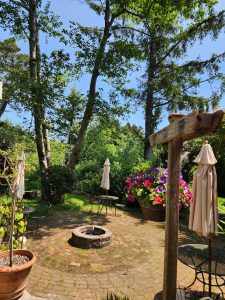
 Salmonberry Inn, Anchorage: One Frame, and How It Is Made
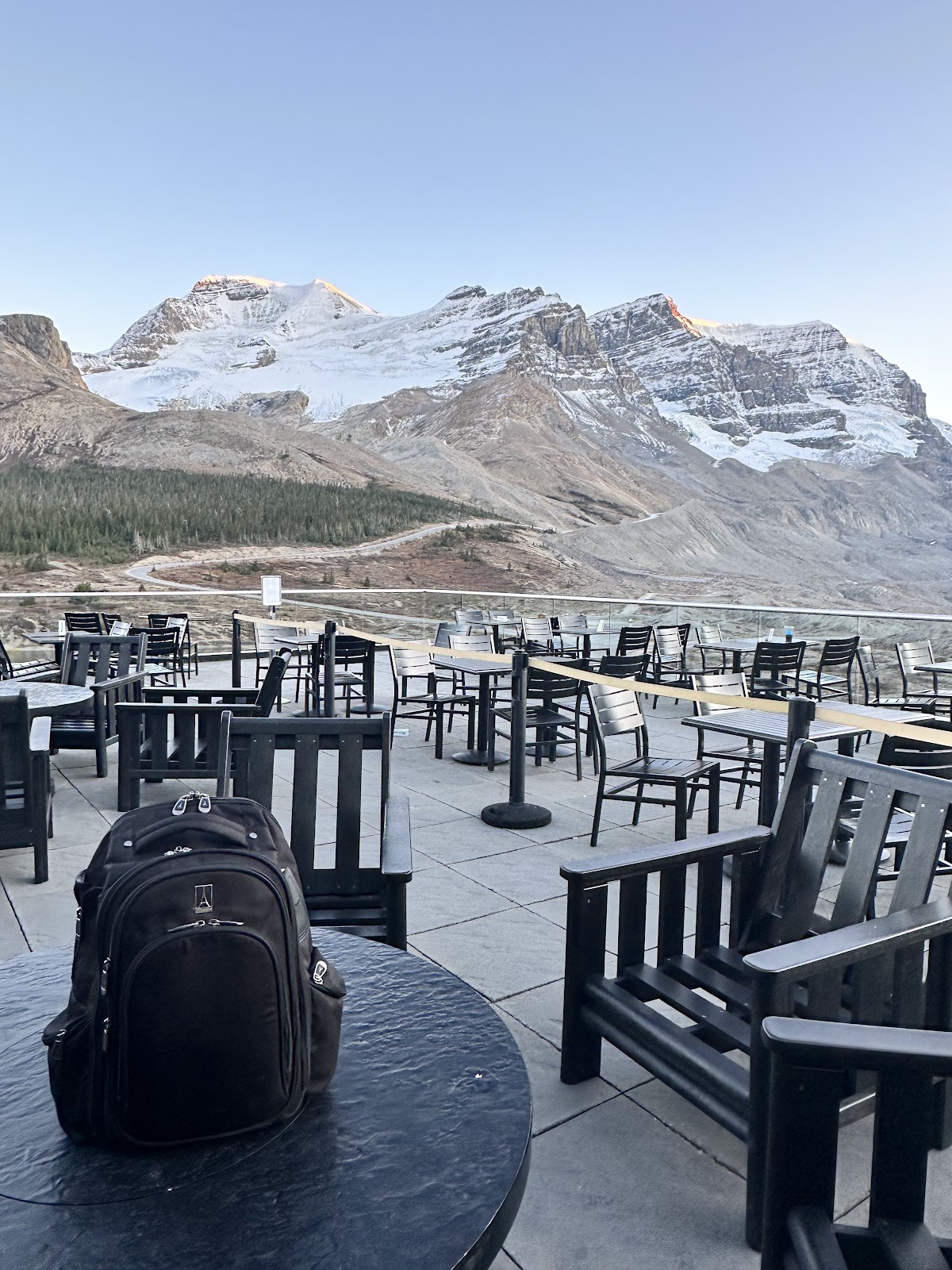
Glacier View Lodge, Glacier View: One Frame, and How It Is Made
Glacier ice is blue because ice absorbs red light. Expose it wrong and it goes white.
There is one frame this place exists to give, and it is worth building properly because it is genuinely unique in this guide and it is easy to lose.
A couple stands in an Alaskan valley with a glacier behind them: a wall of crevassed ice descending between mountains, the moraine below it, and nothing else in the frame that could be anywhere else.
The thing that makes it work is the colour of the ice, and the reason for that colour is worth understanding because it governs the exposure. Glacier ice is blue because ice absorbs the long-wavelength red end of the spectrum and scatters the short-wavelength blue end — and the deeper and denser the ice, the more red is absorbed, which is why the ice in a crevasse is a stronger blue than the ice at the surface.
The practical consequence is that the blue only reads if the ice is exposed correctly. Overexpose it by a stop and the colour washes out to white, because the highlight clips before the blue can register — and that is exactly what a meter does when it sees a large bright surface and pulls it toward mid-grey from the other direction.
So the frame is made by exposing for the ice and lifting the faces to match, which is the opposite of the instinct when a couple’s faces are the subject.
The second thing that makes it work is that the light at this latitude rakes rather than falls. At around sixty-one degrees north the sun reaches only about fifty degrees above the horizon at midsummer noon and far less the rest of the year, which means a glacier is side-lit for most of the day — and side light is what reveals the surface structure, the crevasses and the depth of the ice. A vertical sun would flatten it.
We have not photographed a wedding at the Glacier View Lodge; valley lodges with glacier views behave consistently. Which spaces are included, the covered alternative, what access there is toward the glacier and under what supervision, and what the wildlife guidance is are questions for their team — and glacier access in particular is a safety matter rather than a photographic one.
Glacier View Lodge at a glance
| Where | The Matanuska valley at Glacier View, southcentral Alaska |
| The frame | A couple with a crevassed glacier and its moraine behind them |
| Why it's blue | Ice absorbs red light; the denser the ice, the stronger the blue |
| The exposure | For the ice. A stop over and the blue washes out to white |
| Ask first | Spaces included, covered alternative, glacier access and supervision |
How the frame is made
The exposure is the first decision and it is the whole frame. Meter on the ice rather than on skin, and set it so the brightest part of the glacier holds texture rather than clipping — which in practice means the frame will look dark on the back of the camera and the faces will be underlit.
That is correct at this stage. The check is the ice: crevasse walls should read as graded blue with structure visible in them, and surface ice should be pale blue-white with texture rather than a featureless white shape. If the ice is white, the frame has already failed and no amount of adjustment recovers the colour.
Then the faces are lifted by a close source, gelled to whatever the ambient is doing — warm in low sun, neutral under overcast. Close matters because nothing in a glacial valley bounces usefully: the moraine is dark rock and the air is clear, so the light reaching a face is only the light aimed at it, falling off with the square of distance. A source at two metres needs roughly a quarter of the output of the same source at four.
The alternative, which is legitimate and simpler, is to expose for the faces and let the ice go bright. That makes the picture about the couple with a suggestion of glacier behind them, and it is the right call when the light is flat or the glacier is distant. It is not the frame described here.
What fails is the average, which gives a white glacier and slightly dark faces — and it is what every automatic mode produces, which is why this frame is made in manual.
The lens is the second decision and it is counterintuitive. The instinct at a glacier is to go wide, because the thing is enormous — and a wide lens is what destroys the frame. It renders the ice as a small pale band between two dark slopes, loses the scale entirely, and fills the foreground with grey moraine.
A longer lens does the opposite. It compresses the valley, brings the ice wall forward so it fills the frame behind the couple, and squeezes out the intervening ground — which is what makes the glacier read as a presence rather than a distant feature. In the exceptionally clean cool air here that compression holds detail with almost no haze, which is why the frame works in Alaska and would not in humid country.
The scale problem is worth naming because it is the hardest thing about photographing ice. A glacier is far larger than a photograph conveys, and the only honest way to show it is to include something of known size — a figure small in the frame with the ice wall rising behind, or a recognisable feature on the moraine. A frame with the couple large and the ice as a background gives no sense of it at all.
So the answer is usually two frames: one with the couple close and the ice compressed behind them, and one with them small and the scale legible. Both are worth making and they are different pictures.
The colour balance is the third decision and it needs a deliberate choice. Glacier ice is blue and snow under a blue sky is also blue, which means a white balance set to render the ice neutral will render the whole frame warm and wrong, while one set for the faces leaves the ice as blue as it actually is.
Set it for the faces. The ice being blue is the subject rather than a cast, and correcting it out destroys the frame — which is the same rule that applies to stained glass and firelight elsewhere in this guide.
And the moraine is worth using rather than avoiding. The grey rubble below a glacier is unattractive at close range and excellent as a foreground layer on a longer lens: it gives a middle distance between the couple and the ice, which is what makes the compression read as depth rather than as a flat backdrop.
What breaks it, and what else the valley gives
Flat overcast breaks the frame, and in southcentral Alaska it is the likeliest condition. Under a uniform grey sky the ice has no side light on it, which means the crevasses and the surface structure disappear and the glacier reads as a pale flat mass — and the blue is weaker, because it depends on light penetrating the ice at an angle.
That is not a failed day, it is a different picture: the valley in soft even light with the ice as a cool grey-blue presence, which is atmospheric rather than dramatic. It also removes every other problem — no squinting, no dappling, no clipped highlights — and the whole valley becomes usable at any hour.
Interestingly, bright overcast is better for the blue than either full sun or heavy cloud. A thin high overcast still puts directional light into the ice while removing the extreme brightness range, which is why some of the strongest glacier frames are made on grey days rather than sunny ones.
Rain and low cloud break the frame completely by removing the glacier from view, and in this valley that happens. A named covered alternative matters, and so does having a plan for a day on which the ice is simply not visible — which is where the valley’s other subjects come in.
Wind is the practical constraint and a glacial valley has a specific version of it: cold air flows downhill off the ice, which means there is frequently a persistent cold wind blowing out of the valley even on a warm day. That is a welfare matter for a party in formal clothes and a technical one for equipment: a lightstand is a liability, so handheld or bracketed sources are the working configuration.
Safety is the last thing that breaks the frame and it belongs in a planning conversation rather than a footnote. Glacier ice, crevasses, moraine and the meltwater river below are genuinely hazardous ground, and approaching any of them is a matter for the venue’s guidance or a guide rather than a photographer’s judgement. A photograph is not worth a step onto ice.
What else the valley gives is considerable. The river below a glacier carries rock flour, which makes it grey-tan and opaque rather than blue — and the braided channels of a glacial river seen from above on a longer lens are a graphic subject in their own right.
The valley walls are steep and they decide the timing. A mountain on the western side takes the sun well before a table says, which brings the evening forward and produces the interval frame: the valley floor in soft even shade while the ice and the upper slopes are still lit, for twenty or thirty minutes. That is the best glacier frame of the day and it is made by exposing for the lit ice and lifting the faces with a close warm-gelled source.
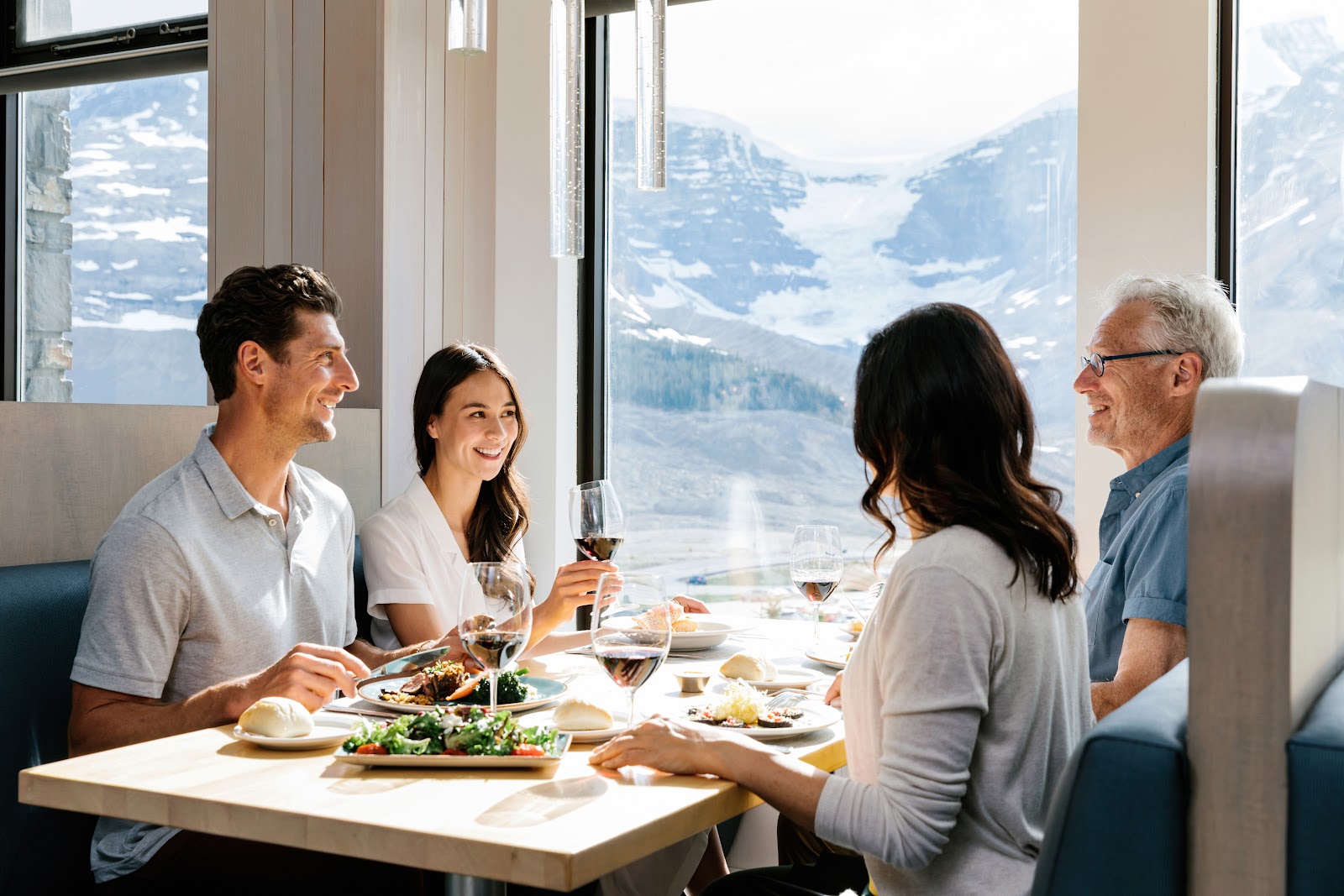
The vegetation is boreal and subalpine: spruce, birch, cottonwood, alder and willow. Spruce is the shade and the dark background — a canopy edge a metre or two inside a stand gives soft directional light in front and near-darkness behind, three or four stops of free separation. Birch and cottonwood transmit light rather than blocking it, which gives soft green-tinged light beneath them and needs a custom white balance.
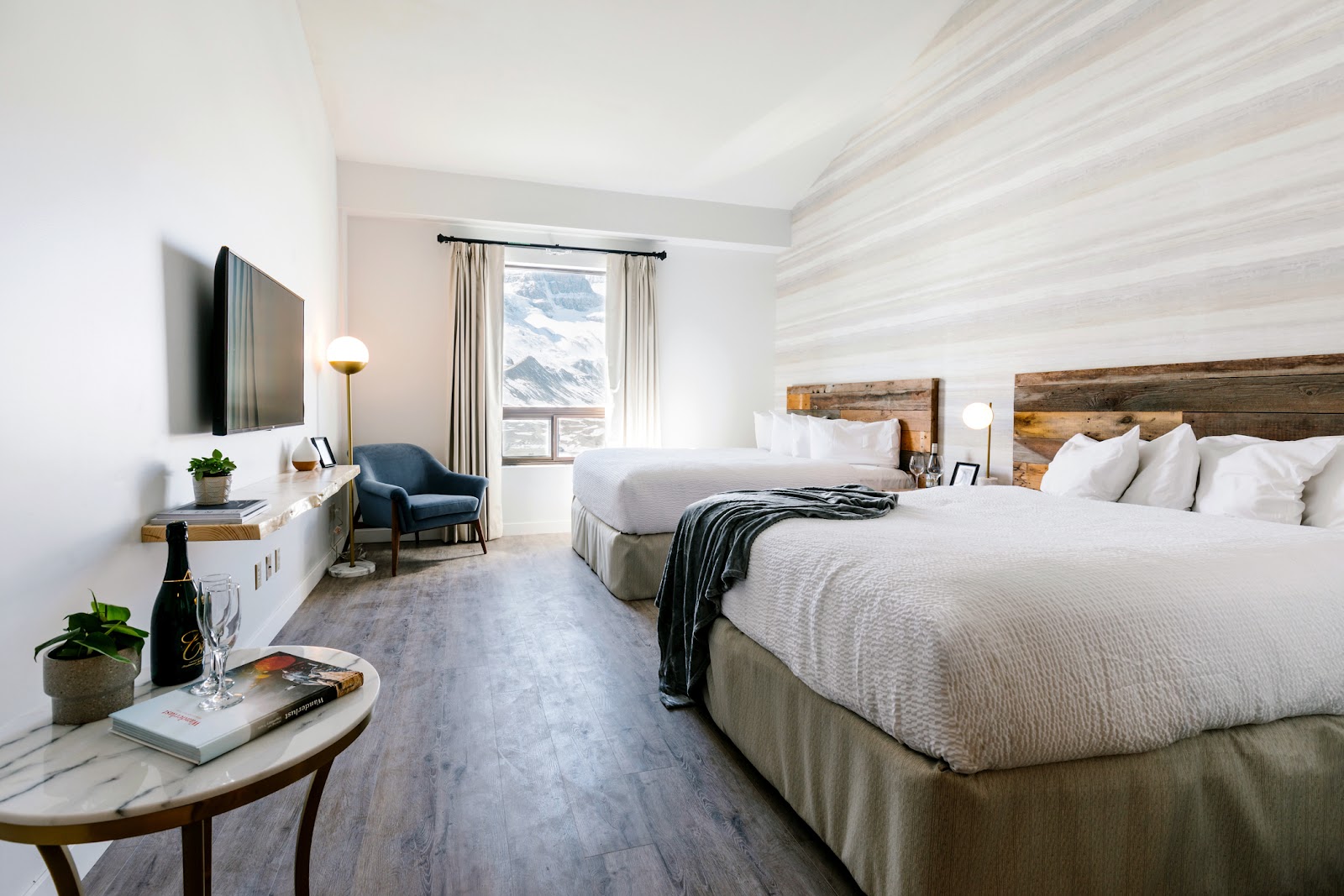
And the lodge itself is the weather-independent part. A timber building in this climate absorbs, which means the ambient indoors is a stop or two below what the eye estimates and the background behind a subject drops away for free. A subject a metre from a window turned about forty-five degrees to it gets horizontal light with steep fall-off — and because the sun is low at this latitude, that light travels much further into the room than it would further south.
Room lights off, and a custom white balance set on a face, because a window facing a glacier delivers markedly cool light.
- Meter on the ice, not on skin — a stop over and the blue goes white
- Longer lens: compression makes the glacier a presence, wide loses it
- Make two frames — one close, one with the couple small enough to show scale
- Set white balance for the faces; the ice being blue is the subject
- Bright overcast gives better blue than full sun. Flat grey gives none
The Matanuska valley year
This valley’s year is more extreme than anywhere else in this guide except the Alaskan interior, and the calendar runs several weeks earlier than a photographer from further south will expect.
Midwinter gives about five and a half hours of daylight, with the sun reaching only about five degrees above the horizon — which in a steep-walled valley means it may not clear the ridgeline at all for weeks. The light that does arrive is entirely soft, entirely raking and strongly blue, and against snow and ice that is genuinely beautiful rather than merely dim.
Winter is the best season for the ice on the light alone, because the sun is at its lowest and therefore most side-on — which is exactly what reveals crevasse structure and depth. A clear winter afternoon gives the strongest glacier frames of the year.
Snow is the compensating asset: the best natural fill available outdoors, lifting every shadow and throwing light upward into faces. Snow and ice against dark spruce and dark moraine is the widest brightness range in this guide — expose for the snow and let the rest go near-black, overexposing deliberately relative to the meter, which snow fools by about two stops.
Winter is also aurora season, and a frame with northern lights over a glacier is available nowhere else. It needs a tripod, a wide fast lens, a few seconds to half a minute, a dark clear sky, and a party willing to stand still in serious cold — and it cannot be promised, only planned for.
The costs of an Alaskan winter here are real: temperatures well below freezing, wind flowing off the ice, batteries draining fast, a camera that fogs badly when carried into a heated lodge, a very short day, and road access that depends on conditions. Spares in an inside pocket and bodies bagged until they warm.
Break-up in April and May is the least attractive time of year and it deserves stating plainly: dirty patchy snow, mud, bare trees, and a river running high and grey with melt. Early May in this valley is not spring in any recognisable sense.
June is when it turns and it turns fast. Under twenty hours of daylight the green arrives within a fortnight, and the day is enormous — the low warm light that lasts forty minutes further south lasts two or three hours here, and the usable light runs until near midnight. A ceremony at six and portraits at nine is entirely reasonable, and the light at nine will be better than the light at two.
The costs of June and early July are mosquitoes, which are a genuine consideration, and cloud.
July is the warmest month and the greenest, with fireweed — tall magenta spires that come up across cleared ground in quantity — giving the strongest colour of the Alaskan summer and a genuine foreground rather than a detail.
Late August into September is the best season overall and it is not close. Birch and cottonwood turn gold in late August at this latitude, weeks before foliage anywhere in the lower forty-eight; the alpine tundra on the valley walls turns red and orange; the first snow appears on the peaks, locally called termination dust; and the nights are dark enough for aurora while the days are still long enough to work in.
Gold birch, red tundra, a blue glacier, fresh snow above and northern lights after dark, all available on one date, is unique in this guide. The window is short — roughly the last week of August through the middle of September — and it is the single strongest argument for a date here.
October brings rain, dark and the first establishing snow, and by November the valley is in winter.
More frames from Glacier View Lodge
Glacier View Lodge wedding photography: common questions
Why is glacier ice blue?
Ice absorbs the red end of the spectrum and scatters the blue. The denser and deeper the ice, the more red is absorbed — which is why crevasses are the strongest blue.
How do I expose it?
For the ice, so the brightest part holds texture. A stop over and the blue clips to white, and no adjustment afterwards recovers it.
What lens should I use?
A longer one. Compression brings the ice wall forward so it fills the frame; a wide lens reduces it to a pale band between two dark slopes.
Should I correct the blue?
No. Set the white balance for the faces and let the ice be blue — the colour is the subject, not a cast.
Is an overcast day bad?
Bright high overcast is often better than full sun, because it keeps directional light in the ice while removing the extreme brightness range. Flat grey gives no blue.
When is the frame strongest?
A clear winter afternoon, when the sun is lowest and most side-on — and late August into September, when the glacier has gold birch and red tundra around it.
More Alaska venue guides
We are writing a photographer’s guide to every venue we would happily shoot in Alaska. Here are three more, plus the full index:
- Hearthside Lodge, Talkeetna: The Building’s Own Logic
- Inn at Tern Lake, Cooper Landing: A Walk Through the Site
- Kenai Fjords Lodge, Seward: The One Decision That Governs Everything
Planning a wedding at Glacier View Lodge?
One frame, and it starts with the ice. Tell us your date.