 Susitna River Lodge, Talkeetna: What It Suits and What It Does Not
Salmonberry Inn, Anchorage: One Frame, and How It Is Made
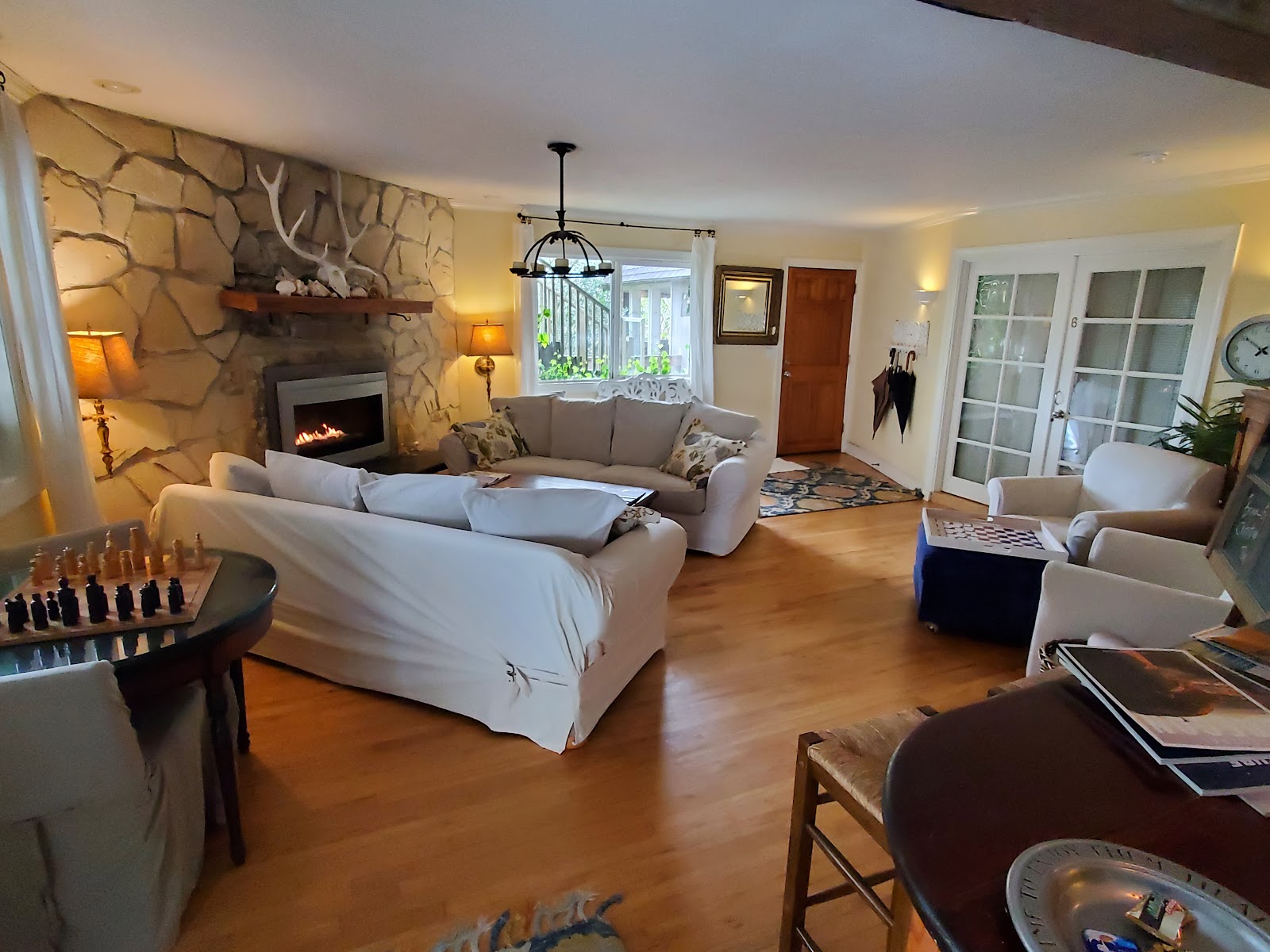
At sixty-one degrees north a small window lights a whole room. That is the frame.
There is one frame a small building at a high latitude gives that the same building further south does not, and it is worth building properly because the reason for it is not obvious.
A subject stands two or three metres inside a room, well back from a modest window, and is lit by it as cleanly and as directionally as if they were a metre from it. The room behind them falls away to near-black, the light crosses the face horizontally, and the whole thing works at a distance that would be unusable in Arizona.
The reason is the sun’s angle. At around sixty-one degrees north the sun reaches only about fifty degrees above the horizon at midsummer noon, about twenty-seven in the equinoxes, and about five in midwinter — which means that for most of the year the light entering a window travels almost horizontally rather than steeply downward.
A steep sun puts a bright patch on the floor just inside the glass and nothing beyond it. A shallow sun sends the light across the room — three or four metres rather than one — which means the usable band beside a window is several times wider here than at a temperate latitude, and the light arrives at exactly head height rather than from above.
That is the single most useful thing to know about photographing indoors in Alaska, and it is the reason a small inn with ordinary windows photographs better than its glazing suggests.
The second element is what the window faces. Anchorage sits between Cook Inlet and the Chugach mountains, which means a window may look at water, at a mountain wall, or at spruce and birch — and each of those delivers a different colour of light.
We have not photographed a wedding at the Salmonberry Inn; small Anchorage inns behave consistently. Which rooms are included, what the windows face and on which floor, whether the lighting can be dimmed, the capacity, and what the covered alternative is are questions for their team.
Salmonberry Inn at a glance
| Where | A small inn in Anchorage, between Cook Inlet and the Chugach |
| The frame | A face lit by a modest window from three metres inside a dark room |
| Why it works | At 61° north the light enters almost horizontally and crosses the room |
| The colour | Water, mountain and forest each deliver a different light through glass |
| Ask first | Rooms and window aspects, floor, capacity, lighting control, alternative |
How the frame is made
The position is the first decision and here it is further from the window than a photographer from further south would choose. Two or three metres in is the working distance for most of the year, and the test is simply to look: if the light is reaching the face cleanly at that distance, it will hold at that distance.
Standing closer still works and it gives more light, but it loses the frame’s main advantage — which is the amount of dark room behind and around the subject. Further back means more near-black in the picture, which is the separation this frame depends on.
The turn is the second decision. Turned about forty-five degrees to the window, the light crosses the face and gives a lit side, a shadowed side and a gradient between them — which is real modelling. Facing the window squarely gives flat even light, which is a legitimate look and a much less interesting one.
The catchlight is the diagnostic and at this latitude it is unusually informative. A broad low catchlight on the window side of each eye means the light is arriving horizontally, which is what the shallow sun angle produces. A catchlight high in the eye means the sun is higher than usual — midsummer, near noon — and the position should move closer to the glass.
The background is the third and in a small dark room it is the easiest decision in this guide. Almost anything qualifies: a dark wall, an unlit doorway, a piece of furniture, a corner. The choice is which dark thing is behind, and a step to one side is the whole adjustment.
The exposure is the fourth and it runs the dark-room way. A meter looking at a dim interior tries to lift it toward mid-grey, which overexposes a face by two stops or more — and the correct frame has a great deal of near-black in it, because that is what the room is. Metering on skin, in manual, with the room allowed to stay dark.
The white balance is the fifth and it matters more in Anchorage than in most cities, because the three things a window can face here give three different colours. A window facing Cook Inlet delivers cool grey-tinged light, because the water is silt-laden and it reflects a northern sky. One facing the Chugach delivers light off rock and, in most of the year, snow — which is cool and bright. And one facing spruce and birch delivers green-filtered light in summer and neutral light in winter when the leaves are down.
Setting the balance on a face in position rather than trusting a preset is thirty seconds that changes every frame after it, and it needs resetting when the room changes.
Turn the room lights off, because warm bulbs against cool northern daylight put two colours on one face and no white balance renders both. In a small building a single fitting is enough to matter, and switching it off is free.
Where the light is not quite enough — which in an Anchorage December it will not be — one source added just off the camera axis at about half a stop under the window fills the shadow side without destroying the direction. It must be close, because nothing in a small dim room bounces much: a source at two metres needs roughly a quarter of the output of the same source at four. And it must be gelled to sit in the room’s own colour.
And the seasonal note is the one that completes the frame: this position is better in winter than in summer. A December sun at five degrees above the horizon sends light straight across a room; a June sun at fifty sends it down onto the floor. The frame described here is at its strongest between September and April, which is the opposite of what most people assume.
What breaks it, and what Anchorage gives outside
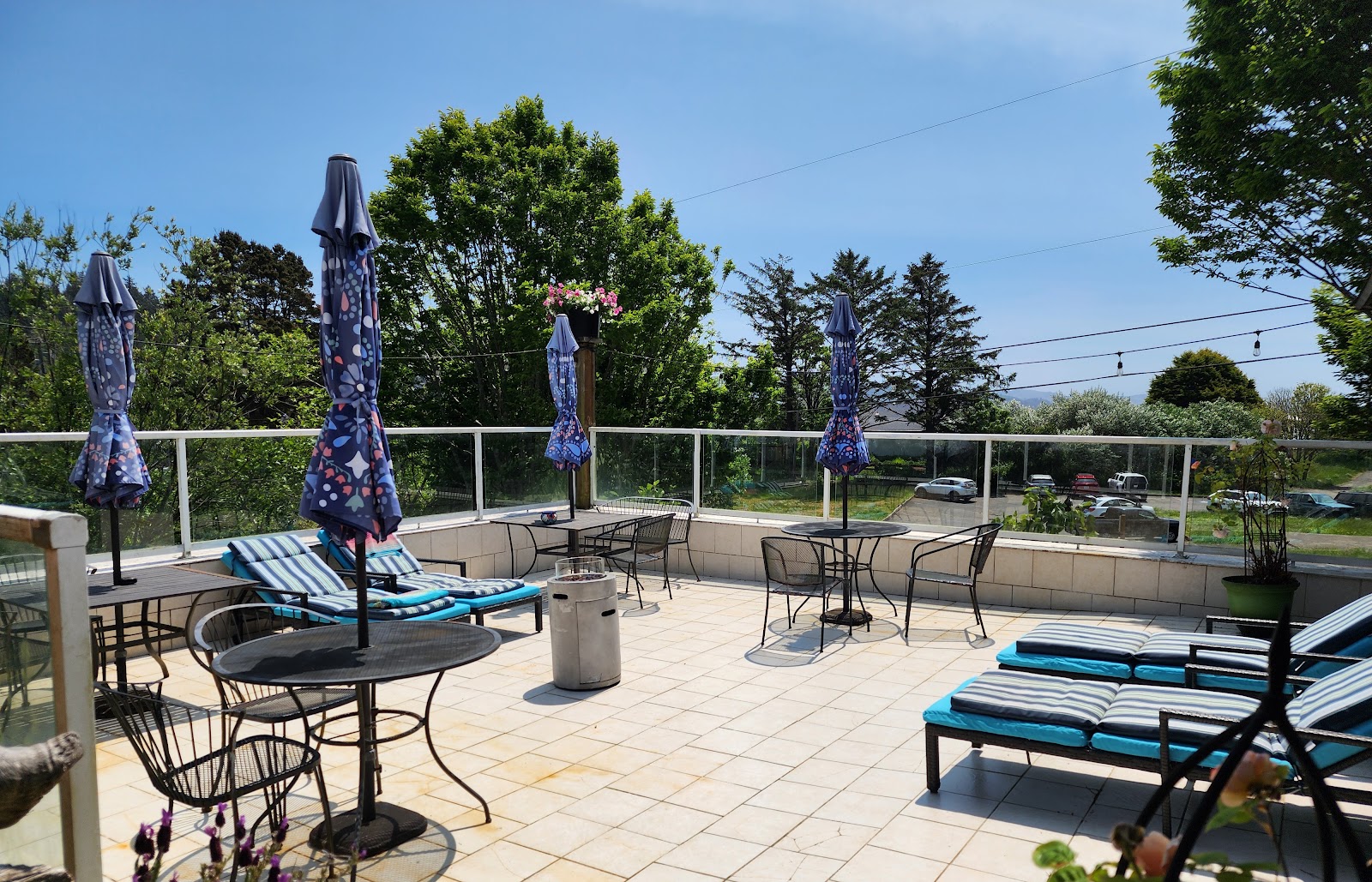
Midsummer breaks the frame, or at least weakens it, and it is worth knowing because it is counterintuitive. In June the sun is as high as it gets here — about fifty degrees at noon — which means the light enters more steeply and reaches less far into the room. Three metres becomes one, and the wide usable band narrows.
The fix is simply to move closer to the glass and to accept a smaller amount of dark room in the frame. It is still a good position; it is just less remarkable.
Direct sun through the window is the second thing that breaks it, and at this latitude direct low sun is a long, raking, hard-edged beam rather than a small patch — which means it crosses a whole room and lands on a wall rather than a floor. On a wall that is beautiful and on a face it is not. A sheer curtain turns the window into a diffuser; moving half a metre usually solves it.
A pale-painted room breaks it completely. Pale walls bounce the window light back, fill the shadow side of the face and lift the background — so the modelling flattens and the separation disappears. The frame is not available in a white room, and finding a darker one is faster than fighting a light one.
Overhead fittings break it in the other direction: a downlight in a small room puts a hard band on the top of a head and leaves the eyes dark, and it is usually a different colour from the daylight. Switching it off is the fix.
The last thing that breaks it is capacity, which is a planning matter rather than a technical one. A small inn holds a small number, which means a large wedding does not fit and the group photographs happen outside — and in Anchorage that means in whatever the weather is doing.
What Anchorage gives outside is more than people expect from a city.
The Chugach mountains rise directly at the eastern edge of the city, which means they are close and steep enough to fill a frame from many positions in town — and a longer lens brings them forward as a wall behind a couple, where a wide lens reduces them to a band above rooftops. The air here is clean and cool, so that compression holds detail well.
Cook Inlet is at the western edge and it has an enormous tidal range, which means the shoreline visible from the city changes dramatically through the day — broad grey mudflats at low water, a full arm at high. The flats are genuinely dangerous ground rather than merely soft, and that belongs in a planning conversation as a safety matter.
The city’s own trees are birch, spruce, aspen and cottonwood, planted and self-seeded in quantity, which means the canopy edge — the most reliable outdoor position in Alaska — is available in parks and on residential streets within a short walk of most places. Soft directional light in front, near-darkness behind, three or four stops of free separation.
And the light outdoors needs no management in the way it does further south. At this latitude the sun never gets high enough to flatten a face, which means there is no hour to avoid and the position matters rather than the clock — and in June the good warm light lasts two or three hours and runs until near eleven at night.
The city’s practical notes are the ordinary urban ones. A street is a canyon, so the light on the pavement depends on which way it runs; doorways, recessed entrances and awnings are the midday shade; and overhead wires are invisible to the eye and unmissable in a photograph, so looking at the sky in the viewfinder before the first frame is worth the second it takes.
- Two or three metres in for most of the year, closer in midsummer
- A broad low catchlight means the northern sun is doing the work
- Meter on skin and let the room go black; that near-black is the frame
- Set the white balance per window — water, mountain and forest all differ
- This frame is stronger in December than in June. That is not a mistake
The Anchorage year
Anchorage has a southcentral Alaskan climate moderated by Cook Inlet, with the enormous daylight swing that defines the state.
Midwinter gives about five and a half hours of daylight with the sun reaching only about five degrees above the horizon — and as described above, that is when the interior frame is at its best, because the light enters almost horizontally and crosses the whole room.
The honest limitation is quantity. Five degrees of elevation and five and a half hours of it is not much light, which means a December wedding indoors is a fast-lens, raised-sensitivity proposition — and the window position is the difference between a workable frame and an impossible one.
Snow is the compensating asset and it matters indoors as well as out: a snow-covered city reflects light up into every window and measurably brightens a dim room, sometimes by a stop. Outdoors it is the best natural fill available, lifting every shadow, and snow against near-black spruce is the widest brightness range in this guide — expose for the snow and let the conifer go black, overexposing deliberately relative to the meter, which snow fools by about two stops.
Winter is aurora season from roughly September to April on clear nights. Anchorage itself has too much light pollution for good aurora frames, but a short drive to darker ground makes it possible — which is a logistical conversation rather than a photographic one.
The costs of an Anchorage winter are cold, a short day, batteries draining faster, and a cold camera fogging when carried from the street into a heated inn. Spares in an inside pocket and bodies bagged until they warm.
Break-up in April and May is the least attractive time of year: dirty patchy snow, grit and sand on the roads from winter treatment, mud, bare trees and nothing green. Early May in Anchorage is not spring in any recognisable sense, and it is the one part of the year when neither the interiors nor the exteriors are at their best.
June is when it turns and it turns fast. The green arrives within a fortnight, the days are enormous, and the city is at its most comfortable. The costs are mosquitoes in the wooded parks and the weakening of the interior frame as the sun climbs.
July is the warmest month and fireweed gives the strongest colour of the Alaskan summer — tall magenta spires on every piece of cleared ground in the city, a genuine foreground rather than a detail.
The great summer asset is the length of the day: the low warm light lasts two or three hours rather than forty minutes and runs until near eleven at night, which means a portrait session at ten in the evening is entirely reasonable, better lit than one at two, and takes place in a quiet city.
Late August into September is the best season overall. Birch, aspen and cottonwood turn gold across the whole city — Anchorage has a great deal of urban tree cover and the effect is substantial rather than incidental; the alpine tundra on the Chugach immediately above the city turns red and orange; the first snow appears on the peaks, locally called termination dust; and the nights lengthen enough for aurora while the days are still long.
Gold city birch against the red Chugach with termination dust above it, and an interior frame that is beginning to strengthen again as the sun drops, makes late August and early September the best fortnight of the year here on every count.
October brings the rain and the dark, and by November the snow is establishing and the interior frame is back at its best.
More frames from Salmonberry Inn
Salmonberry Inn wedding photography: common questions
Why does a small window work so well here?
At sixty-one degrees north the sun is low, so the light enters almost horizontally and crosses three or four metres of room rather than landing just inside the glass.
How far from the window should I stand?
Two or three metres for most of the year, and closer in midsummer when the sun is highest. The catchlight tells you which.
Is the frame really better in winter?
Yes. A December sun at five degrees sends light straight across a room; a June sun at fifty sends it down onto the floor.
What is the catch in winter?
Quantity. Five and a half hours of low light is not much, so it is a fast-lens and raised-sensitivity proposition — but the position still works.
Why set white balance per window?
Because what a window faces here changes the colour: Cook Inlet is cool grey, the Chugach is cool and bright, and summer foliage is green.
What is outside worth?
More than a city suggests — the Chugach rise at the city’s edge, Cook Inlet at the other, and a canopy edge is within a short walk of most places.
More Alaska venue guides
We are writing a photographer’s guide to every venue we would happily shoot in Alaska. Here are three more, plus the full index:
- Settlers Bay Lodge, Wasilla: Field Notes
- Snowgoose Restaurant, Juneau: The Building’s Own Logic
- Stillpoint Lodge, Halibut Cove: A Walk Through the Site
Planning a wedding at Salmonberry Inn?
One frame, and a latitude that gives it. Tell us your date.