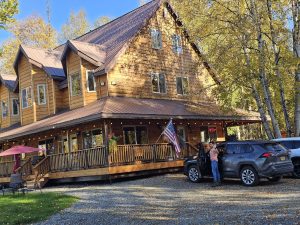
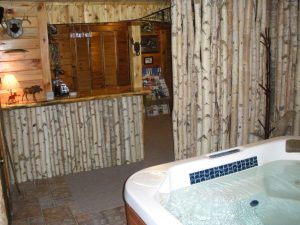
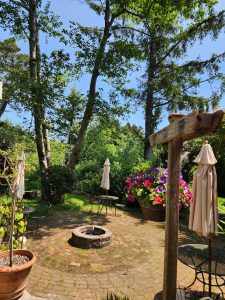
 Salmonberry Inn, Anchorage: One Frame, and How It Is Made
The Chena Hot Springs Resort, Fairbanks: The One Decision That Governs Everything
At this latitude the season is not a detail. It is the plan.
At every other venue in this collection the season is a preference. Here it is the plan, and choosing it wrongly removes the two things most couples come for.
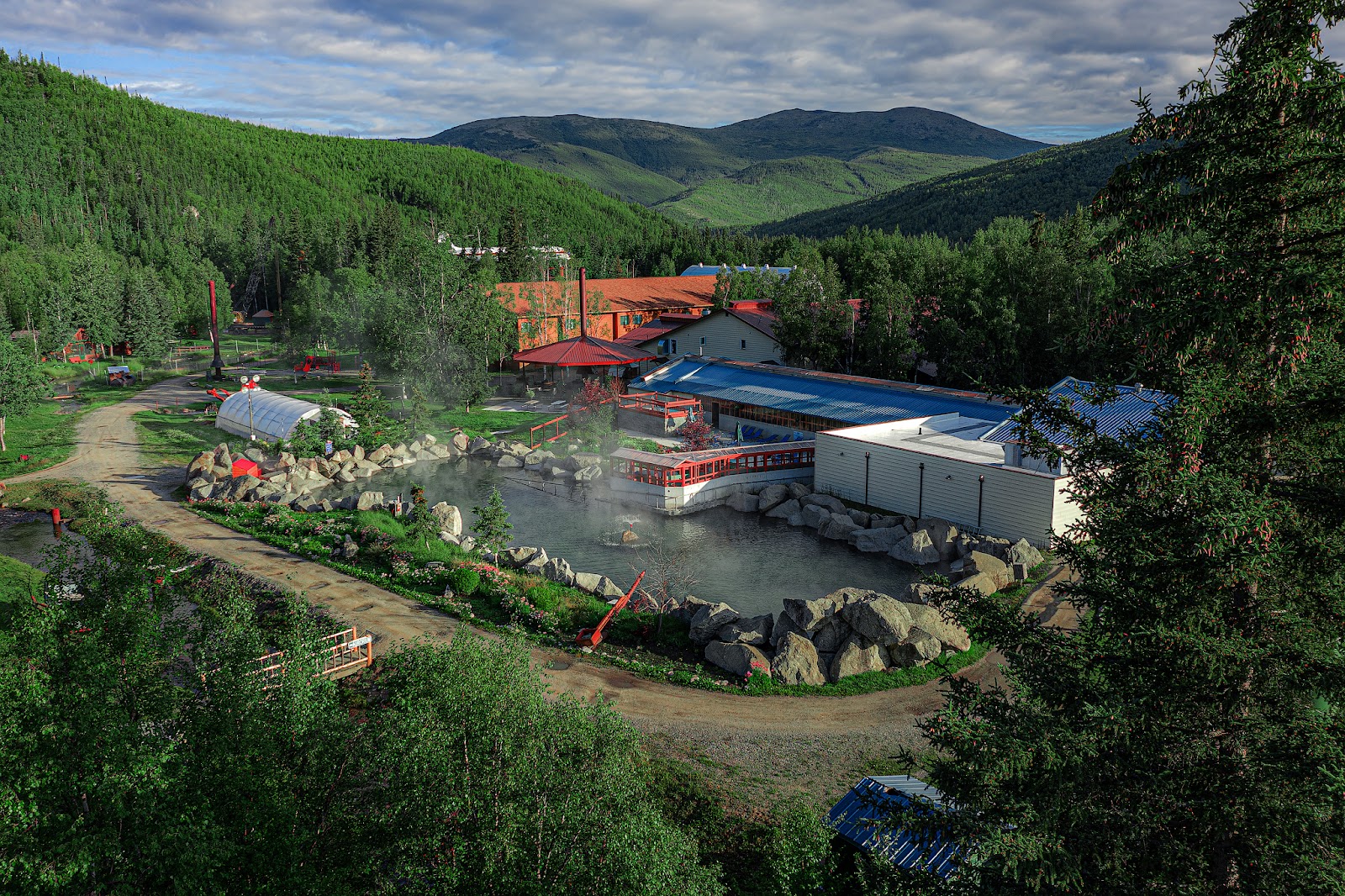
Chena Hot Springs Resort sits some distance north-east of Fairbanks, at a little under sixty-five degrees north, at the end of a road up a river valley in interior Alaska. It is a geothermal site — natural hot water at bathing temperature — with accommodation, a lodge, an ice structure kept frozen all year by refrigeration, and a location under the auroral oval.
So it has three distinctive assets and each has a completely different relationship with the calendar.
The aurora requires darkness. Fairbanks is one of the more reliable places on the planet to see it, but from roughly mid-May to late July there is no true darkness at this latitude at all — the sun does not go far enough below the horizon. The aurora season runs approximately late August to mid-April. A couple who want it in their wedding photographs must marry in the cold half of the year. There is no way round that and it should be said in the first conversation.
The steam requires cold. Water at bathing temperature in air at minus twenty-five produces dense visible steam that rises, drifts and catches any light passing through it, and that steam is the most atmospheric subject on the property. The same pool in July is water with a faint haze over it. A steaming geothermal pool is a winter photograph.
The ice structure requires nothing. It is refrigerated, so it is identical in every month, which makes it the only element here that is genuinely season-proof.
Set against those, summer offers something the winter cannot: twenty-two hours of daylight, warmth, the boreal forest in leaf, and a landscape you can actually walk into for hours rather than minutes.
So the decision is not aesthetic. It is a straight choice between two different venues that happen to share a location.
Winter gives you the aurora, the steam, snow as a giant natural reflector, a three-to-four-hour day of permanently golden light, and a genuine welfare limit on anything outdoors measured in minutes.
Summer gives you unlimited working light, comfortable conditions, mosquitoes, green forest, and neither the aurora nor the steam.
And there is a third answer that most people do not consider, which is the shoulder — late August into early September, or March into early April — where several of the assets overlap. The last section argues that one of those is the correct answer for most couples.
What follows is what each season actually gives, then what the site offers regardless, then the practical business of working here.
The Chena Hot Springs Resort at a glance
| Where | A geothermal resort north-east of Fairbanks, interior Alaska, just under 65°N |
| The decision | Which season — and it removes assets rather than merely changing them |
| Winter gives | Aurora, dense steam, snow as fill, a permanently golden three-hour day |
| Summer gives | Twenty-two hours of light and no darkness, so no aurora and little steam |
| The better answer | Late August to early September, or March into early April |
Why the season governs, and what each one gives
Take winter first, because it is the version of this venue that people have seen photographs of.
At the December solstice there are under four hours between sunrise and sunset and the sun peaks at about two degrees of elevation. It skims the horizon and never properly rises. What that produces is not a short bad day; it is a short extraordinary one. Everything is side-lit, all day. Shadows stretch across the entire frame. The colour is warm and rose and it lasts for hours rather than minutes. There is no flat light and no harsh light, because there is only one kind of light.
The practical shape of a winter day is therefore a ceremony and the outdoor photographs inside a single window in the middle of the day, which is the reverse of everywhere else in this collection. Sunset before four means the schedule runs early, and the aurora session happens later, after dark, as a separate exercise.
Snow is the second transformation and it is the best natural fill light there is. Fresh snow reflects a very high proportion of the light falling on it, so a snow-covered landscape is a reflector the size of the world, throwing light upward into faces from below. Eye sockets fill, jaws soften, and a portrait outdoors in snow needs no card, no reflector and no flash. That is the exact opposite of the desert, where nothing comes back at all.
Two technical notes on snow. It fools a meter badly — a mostly white scene reads as mid-grey and comes back one to two stops under, so add exposure compensation and check a histogram rather than trusting a screen. And snow in shade is genuinely blue, strongly, because it is reflecting a blue sky. That is correct rather than an error, and neutralising it makes the snow grey and dead. Let shaded snow be blue and warm only the faces.
The steam is the third and it is specific to this site. In deep cold, water at bathing temperature produces a dense column of visible vapour, and vapour is a subject in its own right: it takes light, it holds shape, and it makes any light source passing through it visible as a beam. Backlight it — sun, a lamp, anything behind it — and expose for the bright steam rather than for the surroundings, letting everything else go dark. That produces the single most atmospheric photograph the property offers, and it exists only when it is genuinely cold.
In extreme cold, below about minus thirty-five, suspended ice crystals in the air produce halos around the sun, bright spots either side of it and vertical pillars of light above lamps. Ice fog forms wherever there is moisture, which at a hot springs means locally and reliably, and it turns the air itself into a diffuser. None of these can be planned and all are worth recognising and photographing immediately.
The cost of winter is welfare, and it is a hard constraint rather than a discomfort. At minus twenty-five, a couple in wedding clothes have minutes rather than an hour, and a bride in a sleeveless dress has fewer minutes than that. Every outdoor sequence has to be planned as a five-minute operation with positions already chosen and coats waiting. That is achievable and it needs to be understood before the day rather than discovered on it.
Now summer, which is the version nobody photographs and which has real advantages.
At the June solstice there are close to twenty-two hours between sunrise and sunset and the sun peaks at about forty-nine degrees — which means this latitude never experiences the near-overhead sun that ruins the middle of the day at every southern venue. There is no bad hour in a Fairbanks summer. A midday ceremony in June here is a perfectly good photographic proposition and a couple advised otherwise has been advised from a general rule that does not apply.
The best light in that summer day is between roughly nine in the evening and one in the morning, when the sun is at its lowest while still up — a golden hour extended to the length of a working shift. The constraint is human: it is the middle of the night by the clock and the party has been awake since seven. Plan a short deliberate session at eleven with two or three people, put it on the timeline with an explanation, and it happens.
What summer removes is worth stating plainly. No aurora, because there is no darkness. Very little visible steam. And no dusk in the usual sense, because the sky never reaches the deep blue that a balance-point frame requires — so the technique that structures the end of a day at every other venue in this collection simply does not exist here in June.
Summer also brings mosquitoes in the interior in numbers that are not exaggerated in the stories, and they will determine how long anybody stands anywhere outdoors between June and August.
What follows from it: the site, whatever the season
Once the season is chosen, the property offers four things and they need the same handling in any month.
The ice structure is the season-proof one. It is a building of ice and snow held below freezing by refrigeration, lit from within by coloured light, and it is a genuinely unusual photographic environment. Ice transmits and refracts rather than reflecting, so a lit block glows all the way through with the light distributed by every crack and bubble in it, and the room is effectively the light source.
The frame to make in there is the couple lit warm by a source you brought, with the ice left exactly as blue as it is — so they are the only warm thing in a room made of cold light. Do not correct the blue: skin lit by saturated blue LED light has almost no red falling on it, and correcting toward warm amplifies noise in an empty channel while turning the ice muddy grey. Commit to the contrast instead.
Expose the ice two thirds to one stop under the meter, because saturated colour reads strongest slightly under, and watch the blue channel on a histogram because it clips first. Stop down to f/4 or f/5.6, because the internal structure of the ice is what makes it read as ice rather than as a blue wall.
Keep your light small and gelled strongly warm. A large modifier in a small ice room fills the space, lifts the ice toward neutral and destroys the contrast, and a big source reflects off every specular surface in there. And keep the couple a couple of metres off a strongly lit wall, because close to it they pick up blue on the shadow side whatever your key is doing.
Time in there is limited by the couple rather than the camera: in ordinary wedding clothes below freezing, ten or fifteen minutes is the comfortable maximum. Plan it as a five-minute sequence with the wall chosen and the exposure set before they come in.
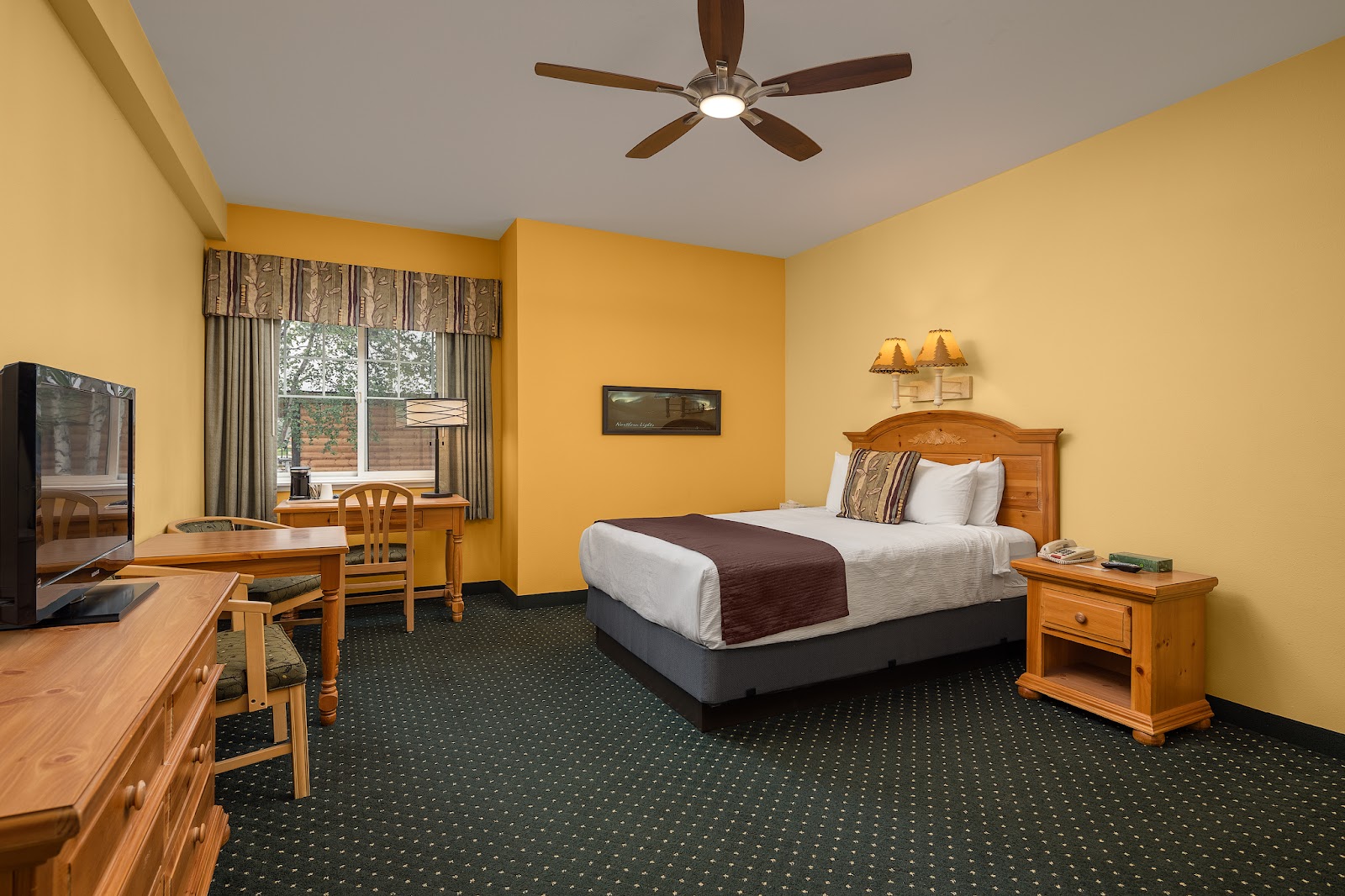
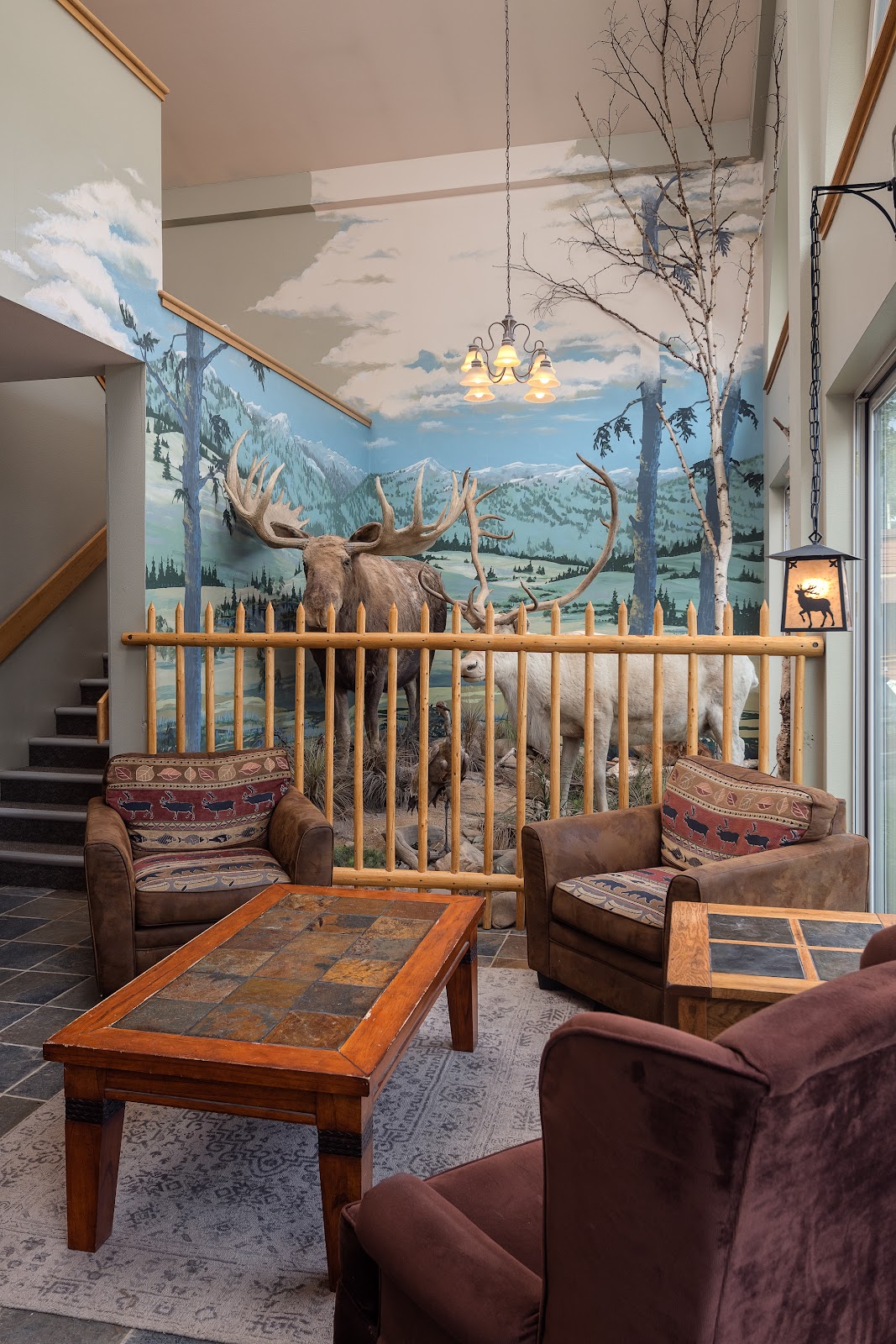
The lodge and interiors are the second asset and the question to ask is what they hold, as a number, and whether they have exterior glazing. At this latitude in winter the heated interior is not a bad-weather contingency — it is the venue, and everything outdoors is an excursion from it. Establish the capacity before the deposit.
Interiors here are likely to be timber, which is a dark, matte, warm-toned material reflecting perhaps ten or fifteen per cent of the light falling on it against eighty for a plastered wall. That means bouncing does not work: light aimed at timber comes back weak and orange, and most does not come back at all. Light directly instead, with one modifier close and feathered and a good depth of dark room behind, which separates the subject completely because the background sits four or five stops down. Warm your light, because a neutral flash in a timber room reads cold and inserted.
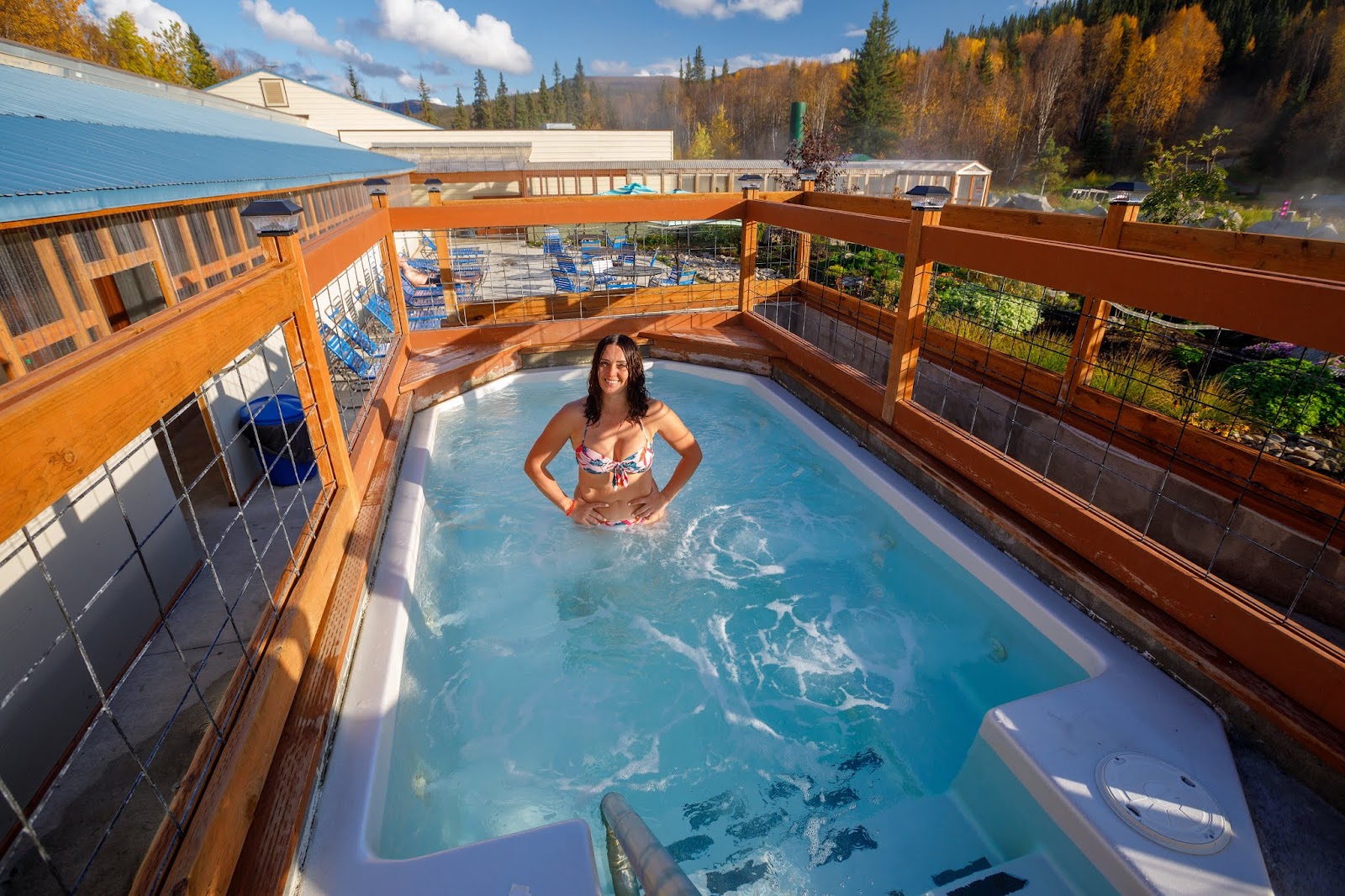
The pools are the third and they need a decision about whether anybody gets in. A geothermal pool is a genuine and distinctive location, and a couple in the water is a strong and very specific frame — but wet hair, wet fabric and a cold transition afterwards are real, and in winter the transition is serious. If it is happening, make it the last thing rather than the first, and have the route back indoors short and planned.
Photographically, water at bathing temperature is a low reflector: it throws light upward into faces from underneath, which is the one direction nothing else on the property provides. Use it deliberately — a subject on the poolside with the water between them and a low sun picks up an uplift that fills eye sockets for free.
The fourth asset is the road in, and it is worth naming as both a constraint and a subject. This is a real drive from Fairbanks up a river valley, which in winter means winter driving conditions for every guest and supplier and a genuine contingency in the plan. It also means a forested valley approach that is photogenic in its own right — and if the wedding party is travelling anyway, one deliberate stop on the way is worth more than an hour hunting for a location on site.
Ask what is actually open and operating in the season chosen, because a remote resort at this latitude may run a different operation in January than in July, and outdoor spaces, trails and facilities may simply not be available.
Interior Alaska, and the working craft
Photographing here in the cold half of the year is a genuinely different craft and a handful of practical facts matter more than any aesthetic advice.
Cold kills batteries. Lithium cells lose a large part of their capacity at low temperature, and at minus thirty a battery that lasts a day in a temperate climate may last an hour. Carry several times what seems necessary, keep spares in an inside pocket against your body, and rotate them — a cell that reads dead when cold will often recover once warmed.
Condensation is the serious equipment risk and the rule is counter-intuitive. Going from cold into warm causes it: a camera at minus thirty carried into a heated lodge will condense moisture on and inside it, including on the sensor and within the lens, and repeated cycles can cause real damage. Seal the camera in a plastic bag while still outside, carry it in sealed, and let it reach room temperature over an hour before opening. Do that every time rather than when you remember.
Going the other way is easier: a warm camera taken into extreme cold fogs briefly, then clears, and the focus and zoom rings stiffen. The practical consequence is to carry equipment out early — into the cold, or into the ice structure — fifteen minutes before you need it, or it will fog exactly as the wedding party arrives.
Your hands are the limiting factor. At minus thirty, bare skin on metal is an injury risk and dexterity disappears within a minute. Thin liner gloves under heavier mitts, operating in liners for short bursts only. This is the reason a winter session is planned as minutes rather than an hour, and it applies far more to the couple, who are dressed for photographs rather than for the weather. Be the person who insists on coats between frames.
For the aurora specifically: a fast wide lens, manual focus set to infinity in advance because autofocus will not work on a dark sky, a sturdy tripod, high sensitivity and exposures of a few seconds. Longer exposures blur the aurora’s structure, and the structure is the subject, so shorter and noisier beats longer and smooth. To include the couple, light them briefly at low power during the exposure — a small flash or a short burst of continuous light freezes them while the sky records, and warming that light separates their skin from the green.
Two people can hold still for four seconds. Ten is unrealistic, and at minus twenty-five so is standing there for long. Agree the number of attempts in advance.
The boreal forest around the site is the landscape. White spruce, paper birch, quaking aspen and balsam poplar on the better ground; black spruce on permafrost — stunted, thin and often leaning at odd angles because the ground beneath thaws unevenly, which produces a genuinely strange and very northern-looking forest that is worth photographing for what it is. Pale birch trunks against snow are a superb graphic background, and they are the most reliably good background on the property in winter.
Autumn is very early and very short. Birch and aspen turn gold in the second half of August and are largely down by mid-September, so the whole colour season is two to three weeks — and it coincides with the return of darkness and therefore the start of the aurora season.
Which is the argument for the shoulder, and it is the recommendation this guide ends on. Late August into early September gives gold birch, dark spruce, a proper evening with a genuine dusk, the first aurora of the season, mild enough conditions for an unhurried outdoor session, and an ice structure that does not care what month it is. The only thing missing is snow and dense steam.
March and early April is the other shoulder and the favourite among people who work here: full snow cover, aurora season still running, the steam still dense on cold mornings, and a rapidly lengthening day with far less severe cold than midwinter. If a couple wants the winter version of this venue without the three-hour day and the forty-below hands, that is the answer.
The two periods to be careful about are deep midwinter, where the light is permanently beautiful and the welfare constraint is severe, and break-up in late April and May, which is mud and grey snow and the least attractive weeks of the year. Break-up is the one window to advise against.
So: decide the season first, in the first conversation, on the basis of whether the aurora and the steam matter. Then everything else about the day follows from it, and the ice structure is there either way.
More frames from The Chena Hot Springs Resort
The Chena Hot Springs Resort wedding photography: common questions
Why does the season matter so much?
Because it removes assets rather than merely changing the look. The aurora requires darkness, and from about mid-May to late July there is no true darkness at this latitude at all — so a couple who want it must marry between roughly late August and mid-April. The steam requires cold: water at bathing temperature in air at minus twenty-five produces dense visible vapour, and the same pool in July is water with a faint haze. Only the refrigerated ice structure is genuinely season-proof.
Is a winter wedding here viable?
Yes, with the welfare constraint understood in advance. Under four hours of daylight at the solstice, with the sun peaking at about two degrees — which sounds terrible and is in fact extraordinary, because everything is side-lit all day with shadows across the whole frame and warm colour lasting hours. But at minus twenty-five a couple in wedding clothes have minutes rather than an hour. Every outdoor sequence has to be planned as a five-minute operation with positions chosen and coats waiting.
And a summer wedding?
Genuinely good, with two things missing. Twenty-two hours of daylight, warmth, green forest, and a sun that never exceeds about forty-nine degrees — so this latitude never gets the near-overhead midday sun that ruins the middle of the day further south, and a June midday ceremony is a fine proposition. The best light runs from about nine in the evening to one in the morning. What you lose is the aurora, most of the steam, and any dusk at all, because the sky never reaches the deep blue a balance-point frame needs.
What is the best compromise?
One of the two shoulders. Late August into early September gives gold birch — the whole autumn here is two to three weeks — dark spruce, a proper evening with a real dusk, the first aurora of the season, and mild enough conditions for an unhurried session. March and early April is the favourite among people who work here: full snow, aurora season still running, dense steam on cold mornings, and a rapidly lengthening day without midwinter’s severity. Break-up in late April and May is the one period to advise against.
What does snow do for the photographs?
It is the best natural fill light there is. Fresh snow reflects a very high proportion of the light falling on it, so the ground becomes a reflector throwing light upward into faces — eye sockets fill and jaws soften with no card or flash at all, which is the exact opposite of a desert. Two notes: a mostly white scene gets metered as mid-grey and comes back one to two stops under, so add compensation; and snow in shade is genuinely blue because it reflects a blue sky, which is correct and should be left alone.
What equipment problems should we expect?
Batteries and condensation. Cold cuts battery capacity severely — at minus thirty a cell may last an hour, so carry several times what you expect and keep spares against your body. And going from cold into warm is the damaging direction for condensation: seal the camera in a bag while still outside, carry it in sealed, and let it warm over an hour before opening. Also carry equipment out early, because a warm camera taken into the cold fogs briefly and will do so exactly when the wedding party arrives.
More Alaska venue guides
We are writing a photographer’s guide to every venue we would happily shoot in Alaska. Here are three more, plus the full index:
- The Northern Lights Estate, Fairbanks: The Light Through the Day
- 49th State Brewing Co, Healy: The Building’s Own Logic
- Alaska Botanical Garden, Anchorage: A Walk Through the Site
Planning a wedding at The Chena Hot Springs Resort?
Tell us which season you want and we will tell you what comes with it.