 Salmonberry Inn, Anchorage: One Frame, and How It Is Made
The Northern Lights Estate, Fairbanks: The Light Through the Day
There is no golden hour here. There is a golden day, or none.
Everything a photographer knows about the shape of a day stops applying at this latitude, and that is the whole of this guide.
The Northern Lights Estate is a venue in the Fairbanks area, in interior Alaska, at a little under sixty-five degrees north. That is the highest latitude of any venue in this collection by a very wide margin, and the numbers it produces are not adjustments to the usual pattern — they are a different pattern.
Three of them matter and each is worth stating plainly.
At the summer solstice, Fairbanks gets something close to twenty-two hours between sunrise and sunset, and the sun does not go far enough below the horizon for astronomical night to occur at all. From roughly mid-May to late July there is no true darkness here. The sun sets shortly after midnight and rises again before three, and the hours in between are a prolonged civil twilight.
At the same solstice, the highest the sun gets is about forty-nine degrees above the horizon. That is its noon maximum on the longest day of the year — which means Fairbanks never experiences the near-overhead sun that ruins the middle of the day at every venue in the southern half of this library. There is no bad hour here in summer, because the sun never gets high enough to make one.
And at the winter solstice, there are under four hours between sunrise and sunset, and the sun’s maximum elevation is barely two degrees. On the shortest day the sun skims along the horizon and never properly rises. The entire daylight period is a low-angle, long-shadowed, warm-toned condition that a photographer anywhere else waits all day for and gets for twenty minutes.
So the honest summary of this venue’s light is that there is no golden hour at Fairbanks. In summer there is a golden evening that runs for six or seven hours. In winter there is a golden day that runs for three. And in the shoulder seasons there is something closer to a normal day, which is when most people photograph here and which is, photographically, the least interesting option.
That inverts every scheduling instinct. Elsewhere the job is to protect twelve minutes. Here the job is to decide which of several hours to use, and to understand that the constraint is the wedding party’s stamina rather than the sun’s position.
What follows is the day hour by hour in each season, then what to do about the aurora, then the practical business of working in interior Alaska — which at forty below is a genuinely different craft.
The Northern Lights Estate at a glance
| Where | A venue in the Fairbanks area, interior Alaska, just under 65°N |
| Midsummer | About twenty-two hours of daylight and no true darkness at all |
| The key number | The sun never exceeds about forty-nine degrees — no overhead sun, ever |
| Midwinter | Under four hours of daylight, with the sun peaking at about two degrees |
| Ask first | What is available in which season, and whether interiors are winterised for a large party |
The summer day, and why it has no middle
Start with the fact that changes the most: in a Fairbanks summer, the middle of the day is usable.
A forty-nine degree sun is roughly what a Gulf South venue gets at nine in the morning in June, or in the last hour of an afternoon in March. It models a face rather than flattening it, it produces shadows with direction and length, and it comes into a vertical window rather than skimming over the top of it. Every complaint in this library about black eye sockets and top light at one in the afternoon simply does not apply here.
So a midday ceremony in a Fairbanks June is not a compromise. It is a perfectly good photographic proposition, and that is worth telling a couple who have been advised otherwise by someone working from a general rule.
What replaces the midday problem is a different one: the day has no shape. When the sun circles the sky for twenty-two hours without getting high or setting properly, there is no single moment that is obviously better than the others, and a photographer used to building a day around one window can find the lack of structure disorienting.
The structure is there, though, and it is in the azimuth rather than the elevation. The sun travels an enormous arc here: in midsummer it rises in the north-north-east, swings all the way round through east and south, and sets in the north-north-west, covering something close to three hundred degrees of horizon. That means the direction the light comes from changes constantly and dramatically, and a position that is beautifully side-lit at four in the afternoon is backlit by nine and front-lit by midnight.
That is the thing to plan around. Walk the property and note which elevations and which positions work at which hours, because the answer changes more here than anywhere. And it means that almost every position on the property is good at some point in a twenty-two-hour day — you simply have to know when.
The best light in a Fairbanks summer is between roughly nine in the evening and one in the morning. The sun is at its lowest while still up, the colour is warm, the shadows are at their longest, and the whole landscape takes a raking light for hours rather than minutes. It is golden hour extended to the length of a working shift.
That is a genuine opportunity and it comes with a genuine constraint, which is that it is the middle of the night by the clock and a wedding party has been awake since seven. Plan for a short deliberate session at eleven with two or three people rather than a full group session, and make it a named item on the timeline with an explanation attached, or nobody will be awake for it.
Around midnight the sun sets and does not go far. Civil twilight runs on until it rises again, which means there is never a moment where you need a light to make a frame outdoors — and also that there is no dusk in the usual sense, because the sky never goes to the deep blue that an artificial-light frame needs. Balance-point photography, the technique that structures the end of a day at every other venue in this collection, does not exist at Fairbanks in June.
Two practical consequences of continuous light. Interiors are lit through the night, so a reception that runs until two has daylight coming through its windows the whole time, which is either charming or needs curtains depending on the room. And people do not sleep. That affects how a wedding party looks by the second day, and it is worth a word.
One more summer note. Interior Alaska gets genuinely warm in summer — high twenties Celsius is normal and the record is higher — which surprises people, and combined with continuous daylight it produces mosquitoes in numbers that are not exaggerated in the stories. They will determine how long anybody stands anywhere outdoors between June and August. Plan for it and warn the couple.
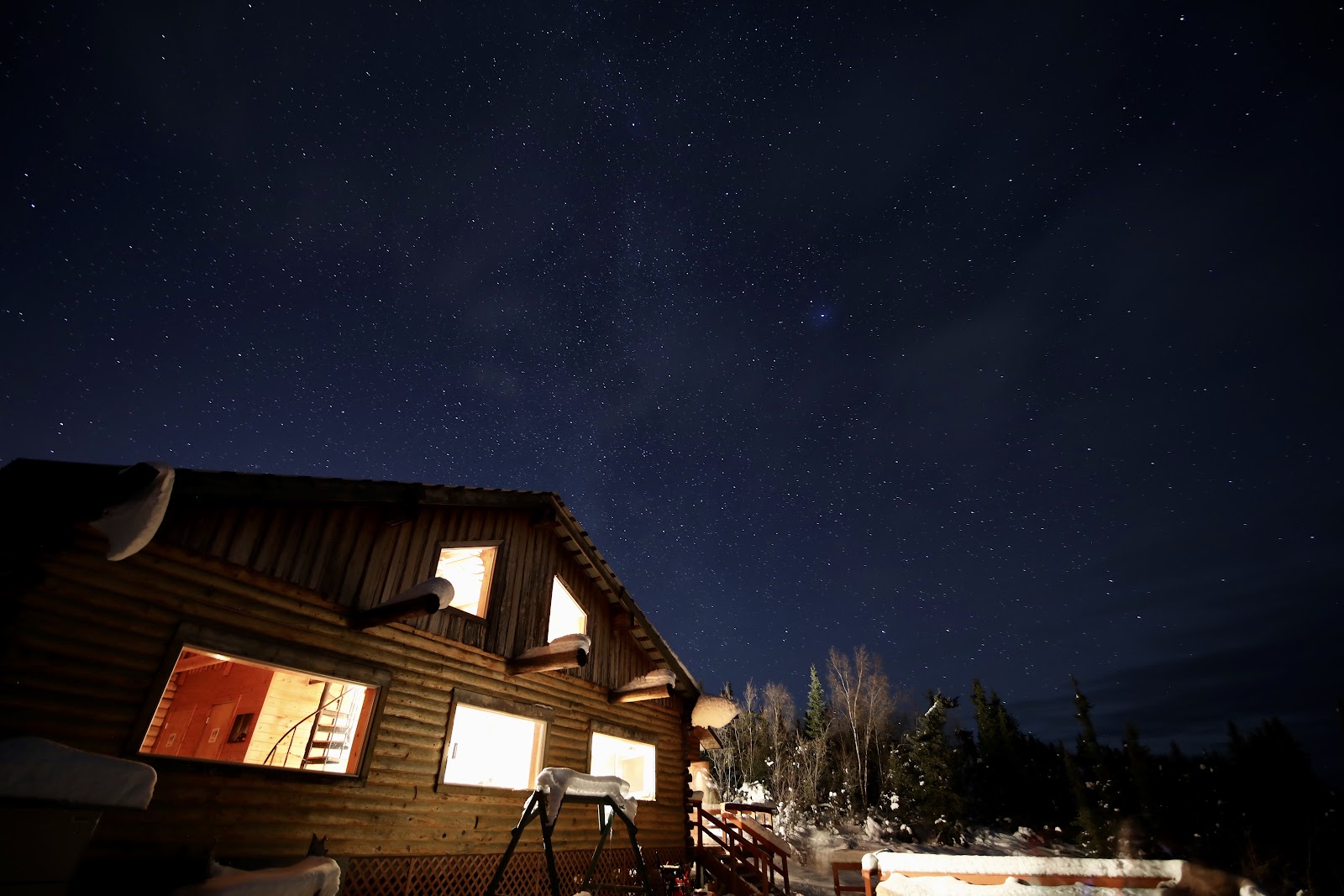
The winter day, and the aurora
Winter here is the opposite condition and it is, photographically, the more remarkable one.
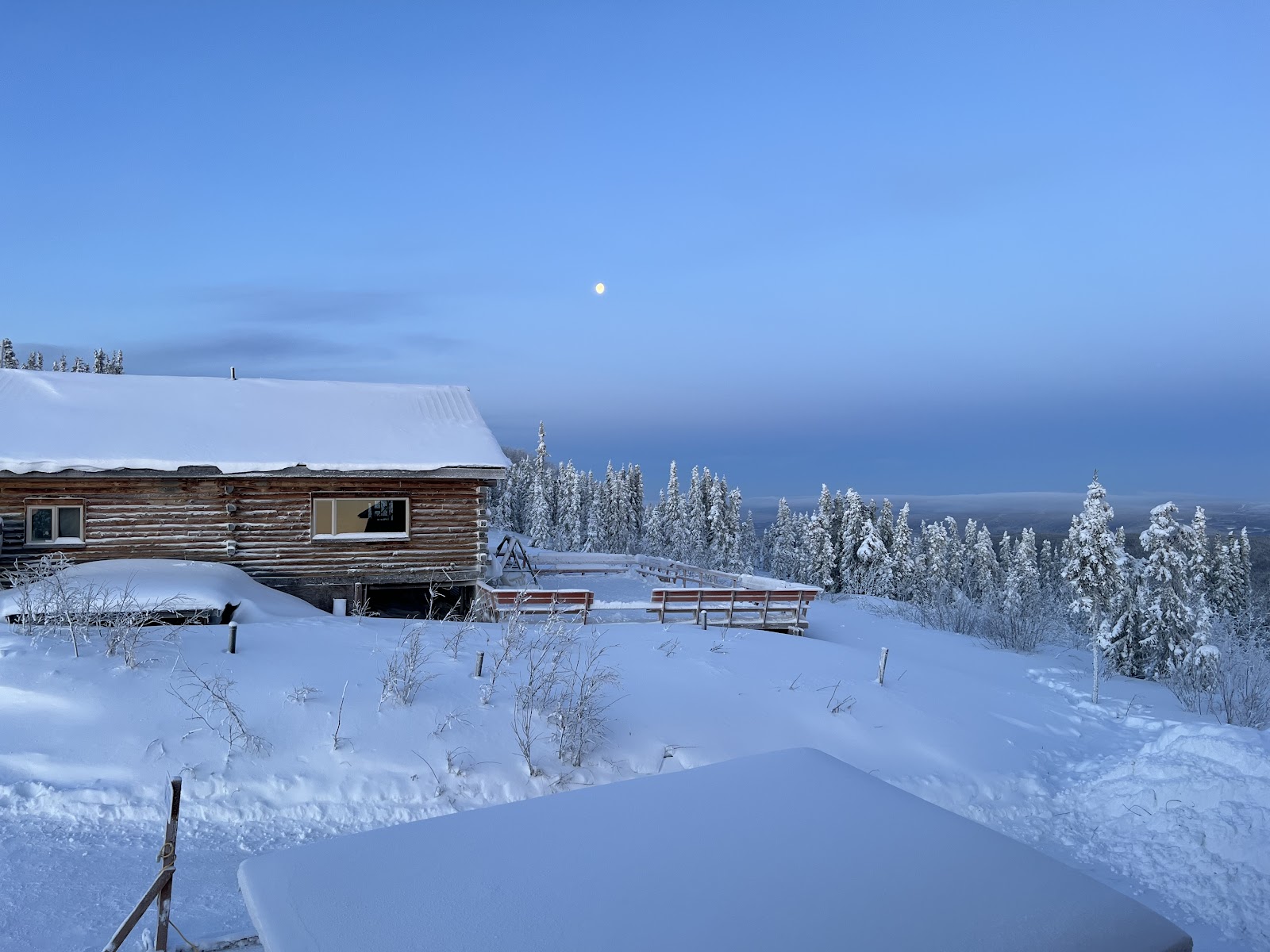
At the December solstice the sun rises late in the morning, peaks at about two degrees of elevation, and sets in the early afternoon. Under four hours of daylight, and all of it at an angle that would be the last minutes of a sunset anywhere else.
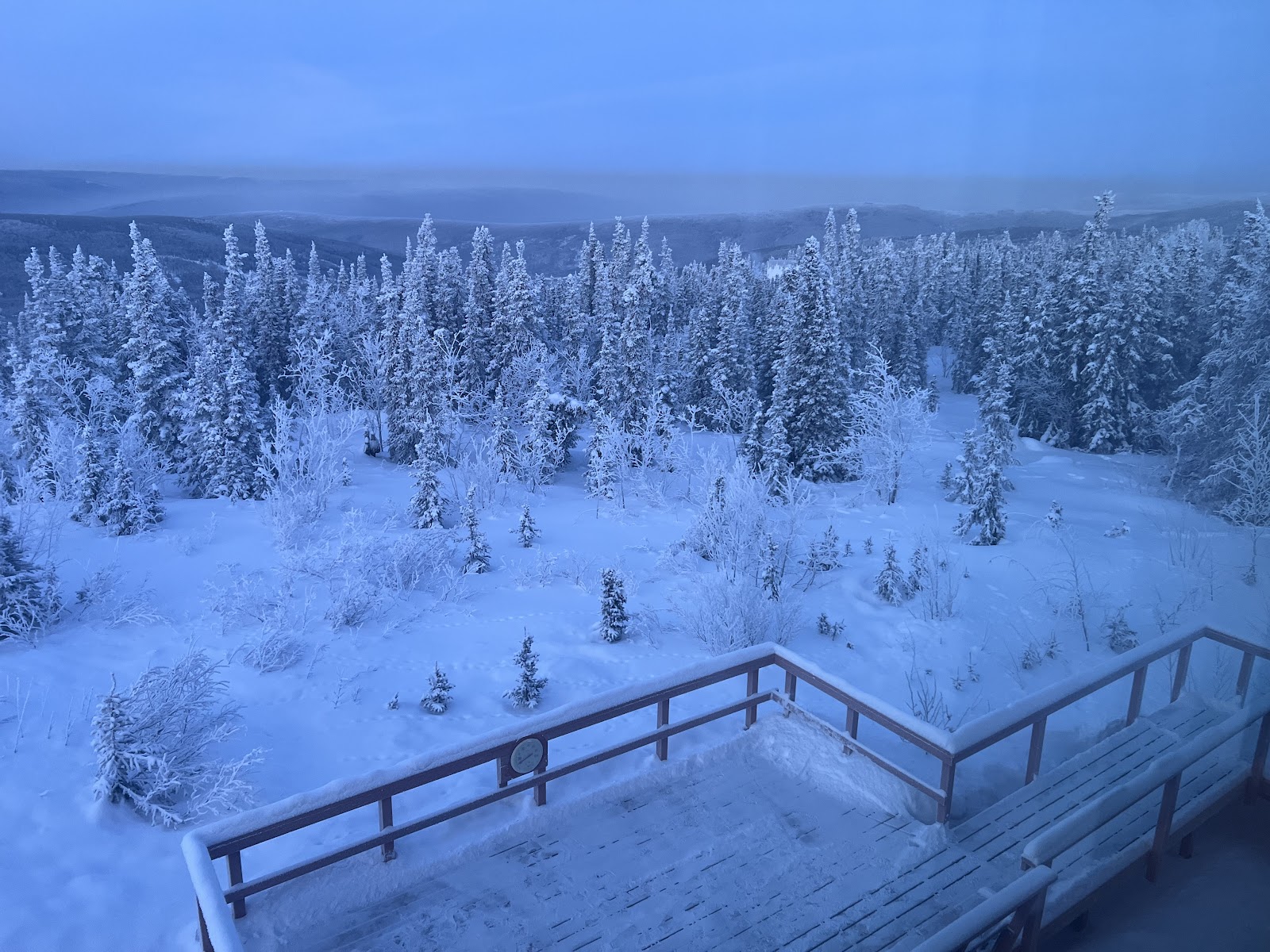
What that produces is extraordinary. Everything is side-lit, all day. Shadows stretch across the whole frame. The colour is warm and rose and lasts for hours rather than minutes. Snow takes that low light and glows. There is no flat light, no harsh light, and no bad hour, because there is only one kind of hour.
The cost is quantity. Four hours, or fewer either side of the solstice, is the entire outdoor budget for a day, and it arrives late in the morning and ends in the early afternoon. So a winter wedding here is scheduled around a window in the middle of the day, which is the reverse of everywhere else, and the ceremony should be in that window rather than after it.
Snow is the other transformation and it is the best natural fill light there is. Fresh snow reflects a very high proportion of the light that falls on it, which means that in a snow-covered landscape the ground is a reflector the size of the world, throwing light upward into faces from below. Eye sockets fill, jaws soften, and a portrait outdoors in snow needs no fill card, no reflector and no flash. It is the exact opposite of the desert, where nothing comes back.
Two technical notes about snow. It fools a meter, badly: a scene that is mostly white will be metered as mid-grey and come back a stop or two underexposed, so expect to add one to two stops of exposure compensation and check a histogram rather than trusting a display. And snow in shade is genuinely blue, strongly, because it is reflecting a blue sky — that is correct rather than an error, and correcting it out makes the snow grey and dead. Let shaded snow be blue and warm only the faces.
Extreme cold produces optical effects that exist almost nowhere else and are worth watching for. At around minus thirty-five and below, suspended ice crystals in the air cause halos, bright spots either side of the sun, and vertical shafts of light above lights and above the sun. Ice fog forms in the valley where there is moisture, which turns the air itself into a diffuser and produces a soft, strange, luminous flatness. None of these can be planned, and all of them are worth recognising and shooting immediately.
Now the aurora, which is why many couples come here and which needs honest framing.
Fairbanks sits under the auroral oval, which is the reason it is one of the more reliable places on the planet to see the aurora. The season runs roughly from late August to mid-April, and the requirement is darkness — which means it is not visible during the summer at all, because there is no night. A couple who want the aurora in their wedding photographs must marry in the cold half of the year. There is no way round that.
Beyond the season, it requires clear sky, geomagnetic activity, and patience. None of the three can be guaranteed on a particular night, and a photographer should say so plainly rather than promise. Multiple nights improve the odds considerably, which is an argument for a couple staying several days.
The technique, for when it happens: a fast wide lens, manual focus set at infinity in advance, a sturdy tripod, high sensitivity, and exposures of a few seconds. Long exposures blur the aurora’s structure, so shorter and noisier is better than longer and smooth — the shape is the subject.
To include the couple, light them briefly and at low power. A small flash or a brief burst from a continuous light during a several-second exposure freezes them while the sky records, and warming that light slightly separates their skin from the green of the sky. Two people standing still for four seconds is achievable; ten is not.
And it is dark and cold while you do this. Agree in advance how long they are prepared to stand outside at minus twenty-five, because the answer is shorter than they think and shorter than you need.
Working in the interior, and the year
Interior Alaska is a genuinely different working environment and a few practical facts matter more here than any aesthetic advice.
Cold kills batteries. Lithium cells lose a large part of their capacity at low temperature, and at minus thirty a battery that lasts a day in a temperate climate may last an hour. Carry several times what you think you need, keep spares in an inside pocket against your body, and rotate them — a battery that appears dead when cold will often recover when warmed.
Condensation is the serious equipment risk and the rule is counter-intuitive. Going from cold to warm is what causes it: a camera at minus thirty brought into a heated room will condense moisture all over and inside it, including on the sensor and inside the lens, and repeated cycles can cause real damage. The standard practice is to seal the camera in a plastic bag while still outside, bring it in sealed, and let it come to room temperature over an hour before opening the bag. Do that every time.
Going the other way is easier but not free: a warm camera taken into extreme cold will fog externally for a moment and then clear, and the lens may stiffen. Let equipment cool gradually where you can.
Everything mechanical slows in extreme cold. Zoom and focus rings stiffen, tripod legs bind, and screens are sluggish. Plan for a slower pace and fewer changes of configuration.
And your hands are the limiting factor. At minus thirty, bare skin on metal is a genuine injury risk and dexterity disappears within a minute. Thin liner gloves under heavier mitts, and operate the camera in liners for short bursts only. This is why a winter session here is planned as ten minutes, not an hour — and it applies to the couple far more than to you, because they will be dressed for photographs rather than for the weather. Have a plan for coats between frames and be the one who insists on it.
The boreal forest is the landscape and it is worth knowing for what it gives. White spruce, paper birch, quaking aspen and balsam poplar on the better ground; black spruce on the permafrost. The black spruce are the distinctive ones — stunted, thin and often leaning at angles because the ground beneath them thaws unevenly, which produces a genuinely strange and very northern-looking forest. Birch trunks are pale and vertical and make superb graphic backgrounds, especially against snow.
Autumn here is very early and very short. Birch and aspen turn gold in the second half of August and are largely down by the middle of September, which means the entire autumn colour season is about two to three weeks and it happens while much of the rest of the country is still in summer. It coincides with the return of darkness and therefore with the start of the aurora season, which makes late August and early September the single most photographically rich window of the year at this latitude: gold birch, dark spruce, a proper evening, and the first aurora of the season.
That window is the answer to when to get married here, if a couple wants the maximum from the place.
The rest of the year, briefly. June and July give continuous light, warmth, mosquitoes and no aurora. Late August to mid-September gives colour, darkness returning, and the first aurora. Late September into October brings the first snow and a rapidly shortening day. November to February is deep winter: extreme cold, a three-to-five-hour day of permanently golden light, snow as a giant reflector, the best aurora odds, and a genuine welfare constraint on anything outdoors. March and early April are the best of both in many ways — still snow, still aurora season, but with a rapidly lengthening day and much less severe cold, which is why experienced photographers here favour it.
Break-up, in late April and May, is mud and grey and the least attractive few weeks of the year. It is the one period to advise against.
Two final scheduling notes. Establish what the venue actually offers in the season you are considering, because a property in interior Alaska may be a different operation in January than in July, and outdoor spaces may simply not be available. And establish that the interiors can hold the whole party comfortably in winter, as a number, because at minus thirty the covered space is not a contingency — it is the venue.
Then pick the season deliberately. At sixty-five degrees north, the season is not a detail of the plan. It is the plan.
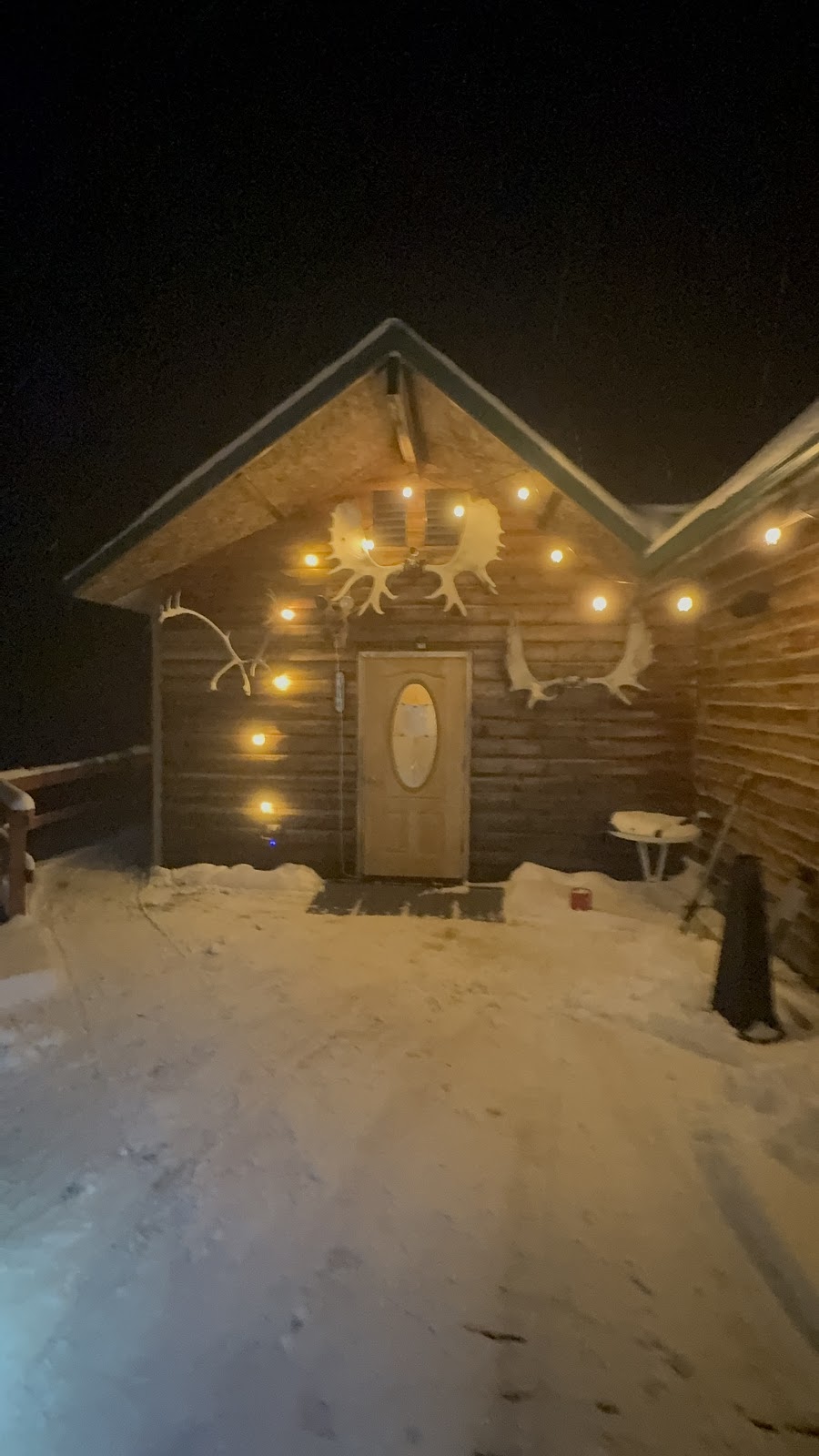
More frames from The Northern Lights Estate
The Northern Lights Estate wedding photography: common questions
Is midday bad for photographs here?
No, and that is the most useful correction in this guide. At the summer solstice the sun never exceeds about forty-nine degrees of elevation — roughly what a southern venue gets at nine in the morning — so it models a face rather than flattening it and comes into a window rather than skimming over the top. Fairbanks never experiences the near-overhead sun that ruins the middle of the day further south. A midday ceremony in June here is a perfectly good photographic proposition.
When is the best light in summer?
Between roughly nine in the evening and one in the morning, when the sun is at its lowest while still up. The colour is warm, the shadows are at their longest, and the raking light lasts for hours rather than minutes — golden hour extended to the length of a working shift. The constraint is human rather than solar: it is the middle of the night by the clock, so plan a short deliberate session with two or three people and put it on the timeline with an explanation, or nobody will be awake for it.
Can we photograph the aurora at our wedding?
Only in the cold half of the year, and only with luck. The season runs roughly late August to mid-April and the requirement is darkness — there is no true night at Fairbanks from about mid-May to late July, so it is simply not visible in summer. Beyond the season it needs clear sky, geomagnetic activity and patience, none of which can be promised for a particular night. Staying several days improves the odds considerably. The technique is a fast wide lens, manual focus at infinity, a tripod and exposures of a few seconds — longer blurs the structure, which is the subject.
How do you include people in an aurora frame?
Light them briefly and at low power during the exposure. A small flash or a brief burst from a continuous light freezes them while the sky records, and warming that light slightly separates their skin from the green of the sky. Two people can stand still for four seconds; ten is unrealistic. Agree in advance how long they will stand outside at minus twenty-five, because the answer is shorter than they think and shorter than you would like.
What does snow do to exposure?
Two things. It is the best natural fill light there is — fresh snow reflects a very high proportion of the light falling on it, so the ground becomes a reflector throwing light up into faces from below, filling eye sockets with no card or flash required. And it fools meters badly: a mostly white scene gets metered as mid-grey and comes back one to two stops under, so add compensation and check a histogram. Also let shaded snow stay blue — it is reflecting a blue sky, which is correct, and neutralising it makes the snow grey and dead.
When is the best time of year overall?
Late August into early September, which is the single richest window at this latitude: birch and aspen turn gold in the second half of August and are largely down by mid-September, so the whole autumn is two to three weeks — and it coincides with the return of darkness and therefore the start of the aurora season. Gold birch, dark spruce, a proper evening and the first aurora of the year. March and early April are the other favourite, with snow and aurora season still running but a rapidly lengthening day and far less severe cold. Break-up in late April and May is the one period to advise against.
More Alaska venue guides
We are writing a photographer’s guide to every venue we would happily shoot in Alaska. Here are three more, plus the full index:
- 49th State Brewing Co, Healy: The Building’s Own Logic
- Alaska Botanical Garden, Anchorage: A Walk Through the Site
- Alaska Wedding Chapel, Seward: One Frame, and How It Is Made
Planning a wedding at The Northern Lights Estate?
At sixty-five north the season is the plan. Tell us which one you want.