 Salmonberry Inn, Anchorage: One Frame, and How It Is Made
Alaska Wedding Chapel, Seward: One Frame, and How It Is Made
A small chapel is easier than a great one. One window, two people, and nothing to fight.
There is one frame a small chapel gives better than any large one, and it is worth building properly because the instinct — to treat it like a scaled-down cathedral — produces the wrong picture.
Two people stand or kneel near the front of a small timber room, lit by one window to the side, with dark boarded walls behind them and the room falling away to near-black at the edges of the frame. That is it. No wide architectural view, no scale, no aisle receding into distance — just a close, quiet, low-key picture of two faces in a small space.
It works because everything about a small chapel serves it. The room is narrow, which means the window is close to the subject and therefore a large soft source. The walls are timber, which absorbs almost everything and gives a background two or three stops down for nothing. And the ceiling is low, which means the light cannot come from above — so it arrives horizontally, which is the most flattering direction there is.
A great chapel has the opposite problem: enormous volume, light entering high above the congregation, and a floor that receives almost nothing. A small one concentrates all of its light where the people are, which makes it a considerably easier building to photograph well.
What it takes away is scale. There is no frame here that is about the architecture, because there is not enough of it — and any attempt at a wide view shows a small room with people in it rather than a space. The pictures are of the couple and the moment, which at a wedding is where the interest is anyway.
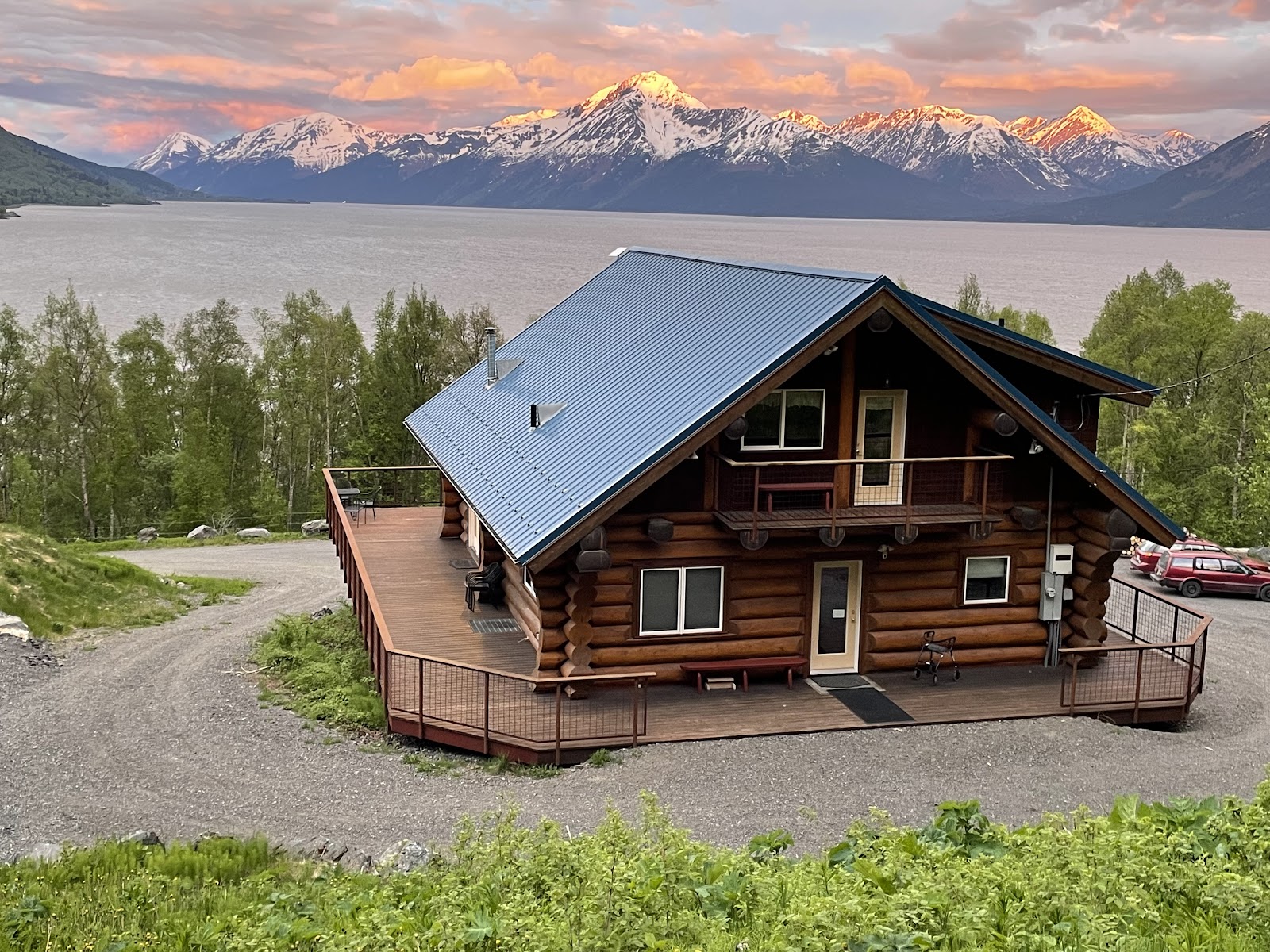
The second element is the setting: Seward sits at the head of Resurrection Bay with steep mountains around it, in coastal rainforest — which means heavy rain, frequent overcast, and a sun that at around sixty degrees north never gets high.
We have not photographed a wedding at the Alaska Wedding Chapel; small timber chapels behave consistently. Guest capacity, whether photography is permitted during the ceremony and from where, whether flash is allowed, what the lighting can be set to, and what access there is before and after are questions for their team — and capacity in particular decides the day, because a small chapel has a hard limit.
Alaska Wedding Chapel at a glance
| Where | A small chapel at Seward, at the head of Resurrection Bay |
| The frame | Two faces near one window in a small dark timber room |
| Why it works | Narrow room, close window, absorbent walls, low ceiling |
| What it lacks | Scale. There is no architectural frame here, and that is fine |
| Ask first | Capacity, photography positions, flash, lighting control, access times |
How the frame is made
The position is the first decision and in a small room it is closer to the window than instinct suggests. A metre is the working distance, and because the room is narrow that puts the subject near the wall rather than in the middle of the space — which is exactly right, because the middle of a small room is where the light is weakest and the background is furthest away.
The turn is the second. Facing the window squarely gives flat even light; turning about forty-five degrees so the light crosses the face gives a lit side, a shadowed side and a gradient between them, which is what makes a face read as three-dimensional. The catchlight confirms it: broad and low on the window side of each eye.
The background is the third and in a timber chapel it is the easiest decision in this guide, because almost everything qualifies. Boarded walls, a dark pew end, an unlit corner — all of them sit two or three stops below a lit face without anything being done. The choice is which dark thing is behind, and a step to one side is the whole adjustment.
The exposure is the fourth and it runs the dark-room way in its strongest form. A meter looking at a small timber room tries to lift it toward mid-grey, which overexposes a face by two stops or more — and the correct frame has a great deal of near-black in it, because that is what the room is.
So: metering on skin, in manual, with the room allowed to stay dark. Metering off a hand in the same light as the faces is the fastest reliable method, and the check is whether the boards have gone black rather than grey.
The white balance is the fifth and it needs setting on a face rather than trusting a preset, because window light is the colour of whatever is outside. In Seward that is frequently a grey overcast sky, which is cool; sometimes a snow-covered slope, which is cooler; and occasionally a sunlit timber wall, which is warm. Thirty seconds, and it changes every frame that follows.
Any artificial light in the room should be switched off if it can be. A warm bulb against cool window light puts two colours on one face and no white balance renders both, and in a small room a single fitting can be enough to matter. Where it cannot be switched off, the gel on any added source has to match whichever is landing on the skin.
Where the light is not quite enough — and in a small chapel under rainforest overcast it frequently is not — one source added just off the camera axis at about half a stop under the window fills the shadow side without destroying the direction. More than that and the window stops being the light, and the frame stops being this frame.
That source has to be close, because nothing in a timber room bounces: the light reaching a face is only the light aimed at it, falling off with the square of distance, so a source at two metres needs roughly a quarter of the output of the same source at four. And it has to be gelled warm, because everything in the room is warm-toned and an ungelled source produces a face that reads cooler than its surroundings.
And the ceiling is not usable as a bounce surface. A low timber ceiling absorbs rather than returning, and what it does return is coloured by the wood — so direct through a modifier is the working approach.
The one thing worth knowing about a small chapel is the working distance. A narrow room means the photographer is close to the couple whether or not that is intended, which changes the lens: a moderate focal length rather than a long one, and a genuine awareness that every movement is visible to everyone. A small chapel is a place to work sparingly and quietly rather than continuously.
What breaks it, and what Seward gives outside
Restrictions break the frame more often than technique does and they are the first thing to establish. Many chapels limit where a photographer may stand during a ceremony and prohibit flash — and in a small room both matter more than they would in a large one, because there is nowhere to stand that is not close and no distance at which a flash is unobtrusive.
Where movement is not permitted during the ceremony, the frame has to be made before or after it with the couple placed deliberately. That is entirely workable and much better arranged in advance than discovered on the day.
No flash changes the approach rather than preventing it: without added light the frame depends on the window alone, which means a fast lens, a raised sensitivity, and accepting noise rather than blur. A noisy sharp frame is usable and a blurred one is not, and in a dim timber room under Alaskan overcast that trade has to be made.
Direct sun through the window is the second thing that breaks it, and it is rare in Seward but not impossible. A hard patch of sun on a face gives a range far beyond what one exposure holds, and old windows frequently have glazing bars that cut it into several patches at once. A sheer curtain turns the window into a diffuser; half a metre either way usually solves it.
A pale-painted interior breaks it completely, and some small chapels are painted rather than bare timber. A pale wall bounces the window light back, fills the shadow side of the face and lifts the background — so the modelling flattens and the separation disappears. The frame is not available in a white room, and the answer there is to find something dark to put behind the subject or to add a source to create the shadow side the room’s bounce has filled in.
Capacity is the fourth and it is a planning matter rather than a technical one. A small chapel seats a small number, which means a large wedding does not fit — and the group photographs happen outside, which in Seward means in whatever the weather is doing.
That shifts the balance of the coverage outward, and what Seward gives outside is worth the trip.
The town sits at the head of a deep fjord with steep mountains rising immediately from the water, which means the mountains are close and they fill a frame from anywhere in town. A longer lens keeps them monumental; a wide one reduces them to a band. And the air here is maritime, so the clarity varies — the sharpest mountain frames come after a front has passed.
The water is a horizontal reflector, throwing light upward into faces standing above it, and Resurrection Bay is sheltered enough to go calm and mirror properly. It carries some glacial silt, which makes it green-grey rather than blue — and it fills nearby faces with a cool cast, so a custom white balance at the water’s edge is worth the thirty seconds.
The rainforest is immediately at the edge of town: Sitka spruce and hemlock, mossed from root to crown, which means the canopy edge is available within a short walk. That is the most reliable outdoor position in Alaska — a metre or two inside at the margin of an opening, soft directional light in front and near-darkness behind, three or four stops of free separation.
And rain is the default. A grey wet day in Seward is technically the easiest day of the year: the whole brightness range collapses, greens saturate, nobody squints, there is no dappling, and every position works at any hour. Wet mossed spruce and wet painted timber are what this coast looks like, and a couple who understand that in advance get a coherent set of photographs rather than a salvage operation.
The mountains also take the sun early. Seward is surrounded by steep slopes, which means the town loses direct sun well before a table says — and the interval frame, with the town in shade and the peaks above still lit, is the best outdoor frame of the day.
- A metre from the window in a narrow room, turned forty-five degrees
- Meter on skin and let the boards go black, not grey
- Set the white balance on a face; window light is the colour of the weather
- Any added source: close, gelled warm, and half a stop under the window
- Ask about flash and positions first; in a small room both matter more
The Seward year
Seward has a maritime Alaskan climate at the head of a fjord: very wet, cool, with a narrow temperature range and the enormous daylight swing that defines the state.
Midwinter gives about five and a half hours of daylight with the sun reaching only about six degrees above the horizon — and with steep mountains around the town, much of it receives no direct sun at all for weeks. Inside a small timber chapel that is very dim indeed, which makes a winter ceremony a fast-lens, high-sensitivity proposition.
The compensation indoors is specific and worth knowing: because the sun is low all year, whatever light does arrive comes almost horizontally, which means it enters a window and reaches further into a small room than a high summer sun would. The chapel is better lit relative to its window in December than in June, even though there is less light overall.
Snow is the winter asset outdoors: the best natural fill available, lifting every shadow and throwing light upward into faces, and it reflects light up into every window, which measurably brightens a dim interior. Snow against near-black mossed spruce is the widest brightness range in this guide — expose for the snow and let the trees go black, overexposing deliberately relative to the meter, which snow fools by about two stops.
A small timber chapel in snow with steep white mountains behind it is one of the cleanest frames in this guide.
Aurora is possible from September to April, and the cloud cover that defines this coast makes clear nights uncommon. It is a possibility rather than a plan.
Break-up in April and May is the least attractive time of year: patchy dirty snow, mud, bare alder and cold water. May is when it begins to turn, and on this coast spring arrives earlier than in the interior because the winters are mild.
June is when the season opens properly. The green arrives fast, the days are enormous, and the low warm light on a clear evening lasts two or three hours and runs until near eleven — which means an outdoor portrait session after a late-afternoon ceremony is entirely reasonable and better lit than one at two.
July and August are the warmest months and the busiest. Seward is a port town and its summer is crowded, which is worth knowing because the waterfront and the town centre have people in them — workable with a longer lens and closer framing, and quieter early and late.
Salmon run through the summer and the wildlife that follows them — eagles, sea otters, sea lions — is a genuine presence. Whales are in the bay in summer.
Late August into September is the best season overall. Alder and cottonwood turn gold against near-black mossed conifer, the alpine tundra on the surrounding slopes turns red and orange, the first snow appears on the peaks, the crowds thin, and the days are still long enough to work in.
Gold alder against dark rainforest, red tundra above it, fresh snow on the peaks and a green-grey bay in front is the strongest combination this town produces, and the window is roughly the last week of August through the middle of September.
The autumn caveat is weather: September brings the first of the season’s storms to this coast, and heavy wind-driven rain removes every outdoor option at once. For a wedding centred on a small indoor chapel that matters less than it would elsewhere, which is a genuine argument for this kind of venue on an autumn date.
October brings the heaviest rain of the year and the shortening days, and by November the season has closed.
More frames from Alaska Wedding Chapel
Alaska Wedding Chapel wedding photography: common questions
Why is a small chapel easier than a great one?
All of its light is concentrated where the people are. A narrow room puts the window close, the timber walls absorb, and a low ceiling forces the light horizontal.
What does it not give?
Scale. There is no frame here about the architecture, and a wide view shows a small room with people in it rather than a space.
How do I expose it?
On skin, in manual, with the timber allowed to go black. A meter looking at a dark room overexposes a face by two stops or more.
What if flash is not permitted?
Fast lens, raised sensitivity, and accept noise rather than blur. A noisy sharp frame is usable and a blurred one is not.
What breaks the frame?
A pale-painted interior, which bounces the light and kills the fall-off — plus direct sun through the glazing bars, and standing too far from the window.
What is outside worth?
A great deal. Close steep mountains, a sheltered bay, and mossed rainforest within a short walk — and a wet day is the easiest of the year.
More Alaska venue guides
We are writing a photographer’s guide to every venue we would happily shoot in Alaska. Here are three more, plus the full index:
- Alyeska Resort, Girdwood: The Light Through the Day
- Bear Creek Winery, Ketchikan: What It Suits and What It Does Not
- Black Diamond Resort, Healy: The One Decision That Governs Everything
Planning a wedding at Alaska Wedding Chapel?
A small room that does the work. Tell us your date and your numbers.