 Salmonberry Inn, Anchorage: One Frame, and How It Is Made
The Alaskan Garden, Palmer: Field Notes, Problem and Solution
Twenty hours of light, glacial mountains, and a wind with a name.
These are field notes, because this venue is a set of specific local conditions rather than one governing idea, and the conditions are unlike anywhere else in this collection.
The Alaskan Garden is at Palmer, in the Matanuska Valley north-east of Anchorage, at a little over sixty-one degrees north. The valley is a broad glacial trough with the Chugach mountains on one side and the Talkeetna range on the other, and it is agricultural — settled as a New Deal farming colony in the nineteen-thirties, and farmed ever since.
Four local facts shape every frame here and they are worth establishing before any technique.
The first is the light budget. At this latitude the summer solstice gives something in the region of nineteen and a half hours between sunrise and sunset, and the sun peaks at only about fifty-two degrees. So there is an enormous amount of light and none of it is ever harsh from overhead — no venue at sixty-one degrees north ever gets the near-vertical sun that ruins the middle of a summer day further south. The winter solstice gives around five and a half hours, with the sun peaking at about five degrees.
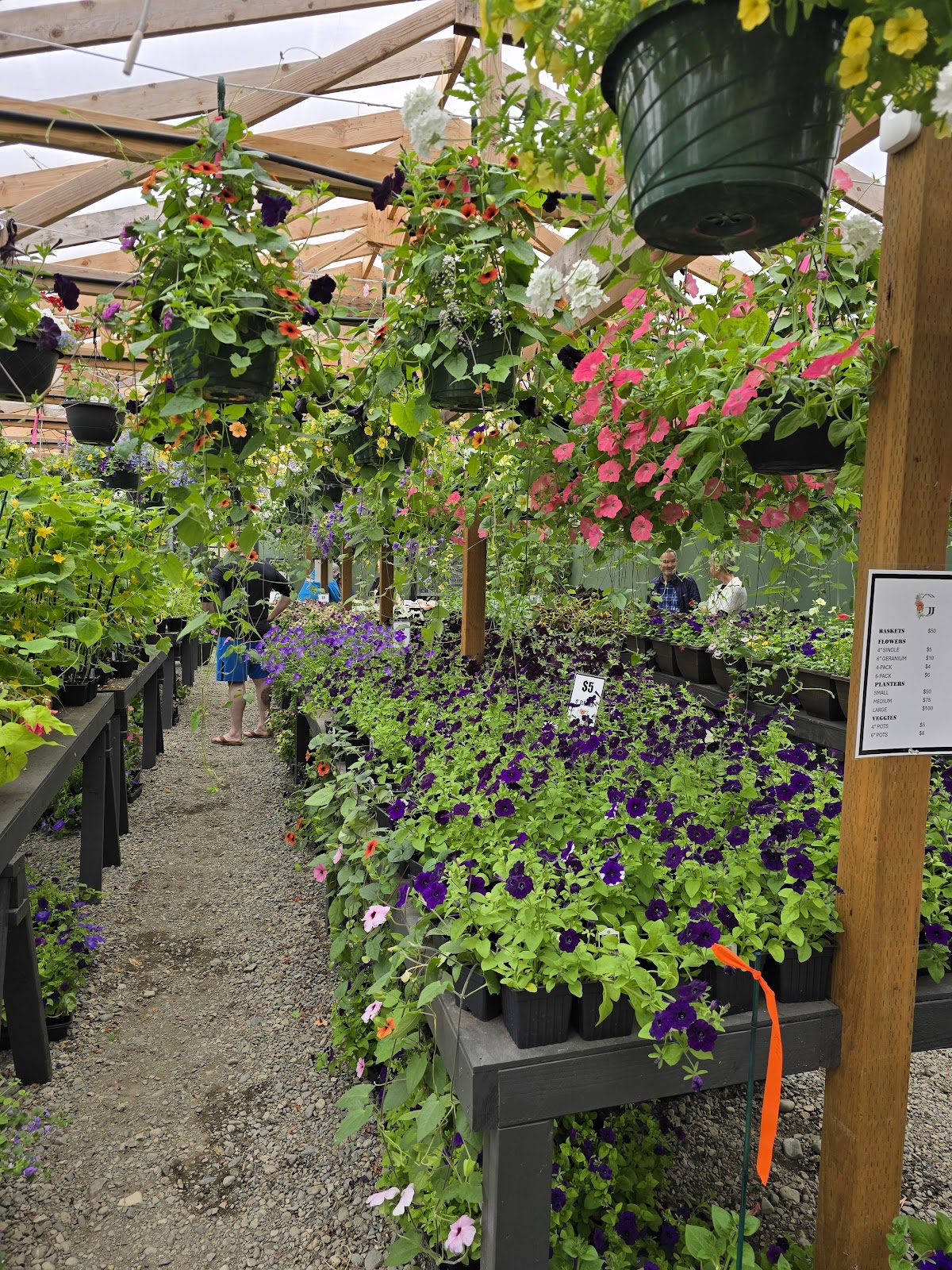
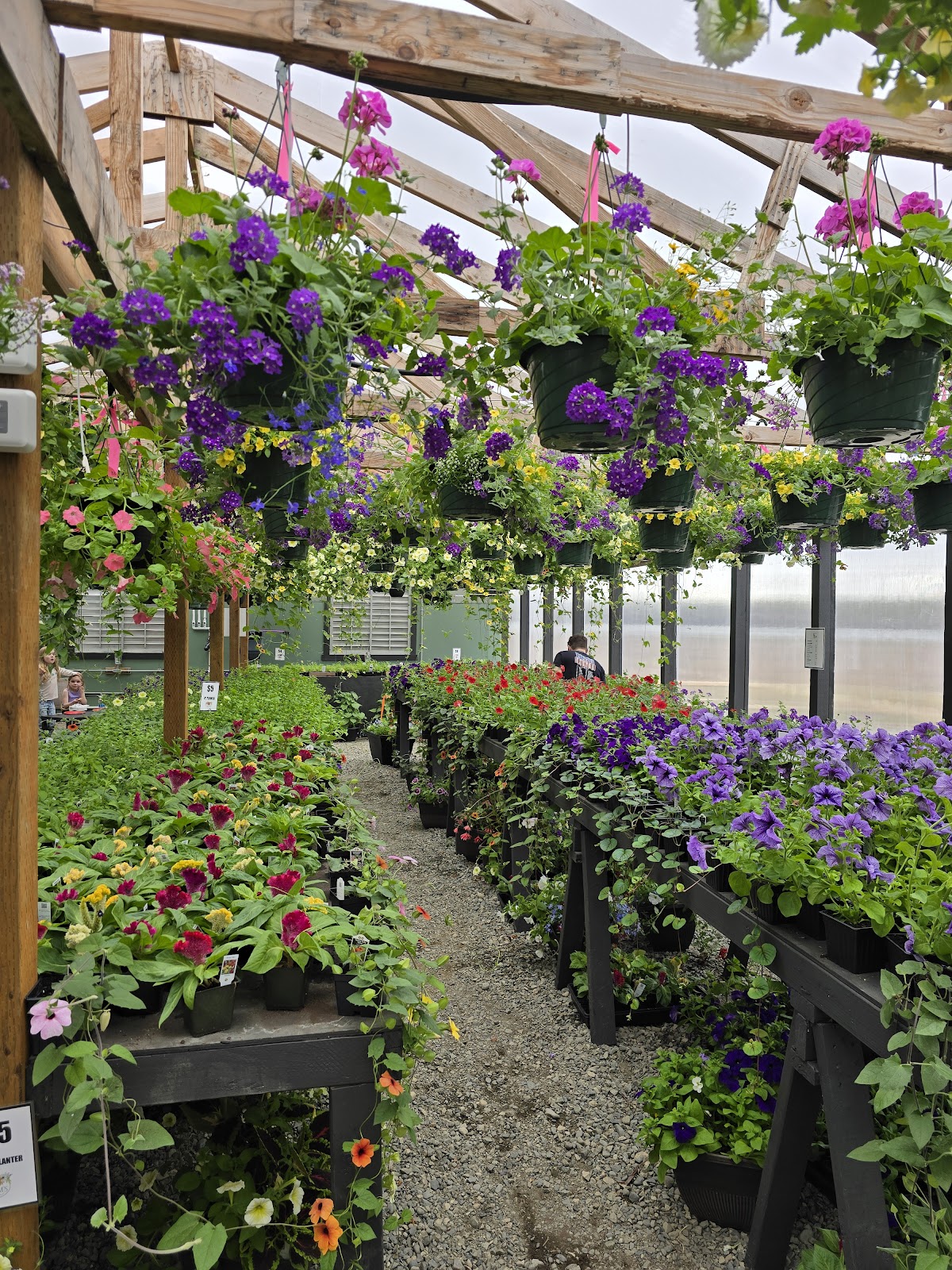
The second is what that light does to the plants, and it is the reason this valley is known. Nineteen or twenty hours of daily photosynthesis through a short intense season grows vegetables and flowering plants to sizes that genuinely surprise visitors — the valley’s agricultural reputation is built on it. For a photographer that means a garden here in late summer has a scale and a density that a garden at a lower latitude does not, and plants that would be knee-high elsewhere are chest-high.
The third is the mountains. The valley is enclosed by real ranges on both sides, which gives every wide frame a background that no amount of planting can compete with — and which takes the sun early, because a range on the western side puts the effective sunset well before the printed time.
And the fourth is the wind. The Matanuska Valley has a named wind: cold air draining down the valley from the ice fields, which in winter reaches speeds that close roads and which can blow strongly at any season. That is a first-order planning consideration for a garden wedding rather than a footnote.
Notes follow, grouped by where you are standing, then the valley itself, then the year — which at sixty-one degrees north is short, intense and unforgiving of vague planning.
The Alaskan Garden at a glance
| Where | A garden venue at Palmer, Matanuska Valley, Alaska, just over 61°N |
| The light | Nineteen and a half hours at the solstice, and a sun that never exceeds ~52° |
| The consequence | Outsized plants — the valley’s agricultural reputation is built on it |
| The background | Real mountain ranges on both sides, which take the sun early |
| The hazard | A named valley wind that can blow hard in any season |
What you meet, and what each one needs
The open garden beds. Problem: fully open to the sky, which at most latitudes means a difficult middle of the day. Solution: here it does not. At a solstice maximum of about fifty-two degrees, the summer sun at this latitude behaves like a mid-morning sun further south — it models rather than flattens, it keeps direction, and open beds are workable through the middle of the day. That is a genuine and unusual freedom and it means a midday ceremony in a Palmer garden is a perfectly good proposition.
The open beds, second note. Problem: the plants are larger than the photographer expects. Solution: use the height rather than being surprised by it. Planting grown under twenty hours of daily light reaches a scale that changes the compositional options — a bed that would be a low band of colour further south can be a wall of foliage and flower at chest or shoulder height, which means you can put a subject behind it, among it, or framed by it rather than merely in front of it. Get low, let the planting rise into the frame around them, and the garden becomes an enclosure rather than a carpet.
The open beds, third note. Problem: the season is extremely compressed. Solution: ask what is actually out in the week of the date, and accept that the answer is narrow. At this latitude the entire growing season runs roughly from late May to early September, which means the garden goes from bare to spectacular to finished in about fourteen weeks. Peak is late July into August. A June date is early; a mid-September date may be over. There is no long shoulder here of the kind a temperate garden offers.
The lawns and open ground. Problem: exposure to the valley wind, which can be sustained rather than gusty. Solution: find the enclosed corner — anything walled, hedged, built against or screened by substantial planting behaves as a courtyard, lit by sky above and bounce off its boundary, and it is both the calmest and the most controllable light on the property. Stand a subject three or four metres out from a sunlit boundary rather than against it, because further out the boundary wraps the light around the face.
The lawns, second note. Problem: the mountains dominate any wide frame and the exposure range between a bright snow-capped range and a shaded foreground is large. Solution: decide which is the subject. Expose for the mountains and light the couple, or expose for the couple and let the peaks blow, or wait for a moment when the ranges are in cloud and the range collapses. A snow-capped peak in full sun against a shaded garden is four or five stops and there is no single exposure that holds both.
The mountains, third note. Problem: they take the sun early. Solution: go and look at the western skyline from the position you intend to use, judge the range’s height above the horizon, and bring the whole evening forward. A range on the western side of a valley can end the direct light twenty to forty minutes before the printed sunset. The compensation is good — the eastern range stays lit after the valley floor is in shadow, glowing warm above a cool foreground, and that is a frame worth positioning for deliberately.
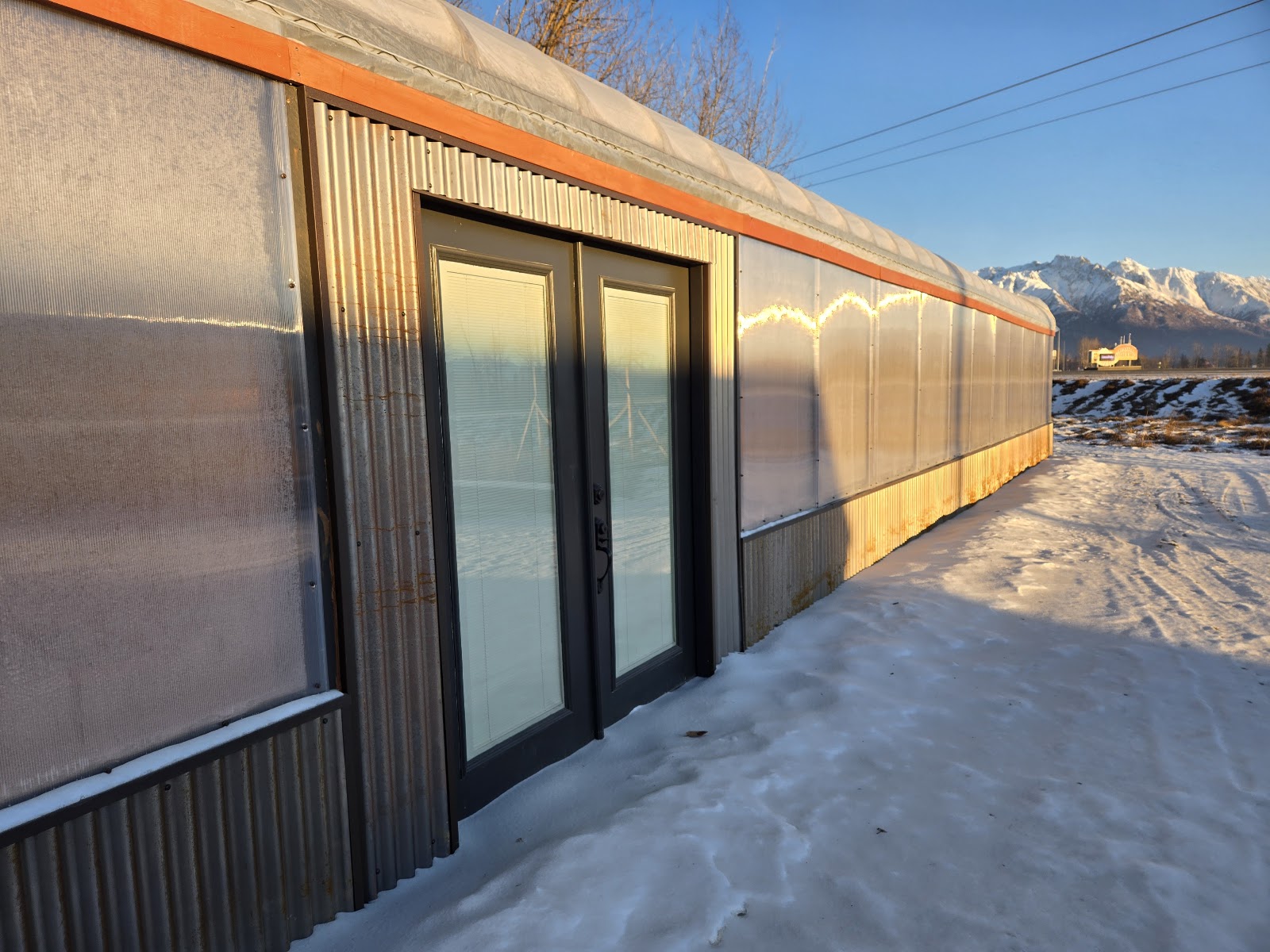
Any glasshouse or covered growing structure. Problem: it is likely the only substantial covered space on a garden property, and it was built for plants rather than for people. Solution: establish its capacity as a number, because in this valley the rain plan and the wind plan are the same plan and that number is the largest risk in the booking. Photographically, a glasshouse is excellent: a translucent roof and walls make an enormous diffuse source, and the light inside is soft, even and available at any hour. The fault is direction — light from all round and above puts shadow in eye sockets — so fill from below with a white card or position near a wall that bounces.
The agricultural surroundings. Problem: a garden in a farming valley sits among working land, which means fields, machinery, fencing and outbuildings in the middle distance. Solution: treat it as context rather than clutter. A frame that includes cultivated fields running to a mountain range is a photograph of this valley specifically, and one composed to exclude them could be any garden anywhere. Ask what is planted in the adjacent land and when it is cut, because it changes the middle distance more than anything in the garden does.
The colony-era buildings, if any are nearby. Problem: none, they are an asset. Solution: look for them. The valley was settled as a planned agricultural colony in the nineteen-thirties and a number of the original farmsteads survive — plain timber farmhouses and barns of a consistent type and date. A weathered timber barn is a warm, matte, finely textured material that takes raking light extremely well, and it places a photograph in the valley’s actual history. Light it from the side, because frontal light flattens every texture in timber.
The valley, the glacier and the wind
Three features of this landscape do most of the work in a wide frame and all three are worth understanding.
The valley is glacial and it is still being made. The Matanuska Glacier lies at the head of it, and the valley’s shape — broad, flat-floored, steep-sided — is the signature of ice rather than water. The river that runs down it is glacial meltwater, which means it is grey rather than blue, carrying rock flour ground from the bedrock, and it braids across a wide gravel floodplain rather than running in a single channel.
That grey braided river is a distinctive subject and it does not photograph like a normal river. It has no reflections to speak of, because the suspended sediment kills them, and it has a great deal of pale gravel around it. So it works as a graphic element — pale braided channels across a dark plain, seen from any elevation — rather than as a water feature. If any position on or near the property looks down the valley at it, that is a frame worth finding.
The mountains are the second, and the enclosure is what makes them useful. Ranges on both sides mean that almost every wide composition has real vertical scale in the background, which is a gift, and it also means the light in the valley is shaped by them. The western range ends the day early. The eastern range catches the last light and glows above a shaded foreground. And on any given day one or both may simply be in cloud, at which point the valley becomes a low enclosed landscape and the frames have to be built from what is close rather than what is distant.
That last point is worth telling a couple. The mountains are visible perhaps two days in three in summer and considerably less in poor weather, and nobody should be promised them. Build the set from the garden and the buildings, and treat the ranges as the bonus they are.
The wind is the third and it is the one that affects a wedding most directly. Cold air drains down this valley from the ice fields above it, and the Matanuska wind is a named local phenomenon that in winter reaches speeds capable of closing roads and moving vehicles. It can blow at any season and it can be sustained for hours rather than gusting.
For a garden wedding that means: a veil may be unmanageable, a lightstand needs sandbagging or holding, anything light will move, a marquee is a serious engineering question rather than a rental decision, and an unamplified officiant will not be heard on open ground. Ask the venue about it directly — anyone operating in this valley will know exactly what it does — and ask what the sheltered options are.
It also has a photographic upside, which is that a strong dry wind clears the air. The mountains are at their sharpest and the long views at their best on a windy day, which is the opposite trade to most venues.
The light itself is worth one more note, because at sixty-one degrees north the azimuth swing is enormous. In midsummer the sun rises well to the north of east and sets well to the north of west, travelling most of the way round the horizon, which means the direction light arrives from changes dramatically through a nineteen-hour day. A position that is beautifully side-lit at four in the afternoon is backlit by nine and front-lit by eleven.
So walk the garden and note which beds, which walls and which mountain views work at which hours. Almost every position is good at some point in a day that long; you simply have to know when. That is a more useful piece of preparation here than anywhere else in this collection.
And the best light is late. Between roughly nine and eleven in the evening in midsummer the sun is low, the colour is warm, the shadows are long and the mountains take a raking light — a golden hour that runs for two hours or more. It is the middle of the evening rather than the middle of the night, which makes it far more usable than the equivalent window at Fairbanks. Put a short session on the timeline at nine and it will happen.
The Matanuska year
The year here is short, intense and very clearly divided, and a couple should choose their date from the divisions rather than from a general idea of Alaska.
Late May into early June is the beginning. Break-up is over, the ground has dried, the light is already very long — sunrise before four and sunset after ten by early June — and the garden is greening but not yet full. Mountains are at their snowiest and therefore at their most dramatic, and the air is clear. The garden is the weak part of the frame at this point and the landscape is the strong one.
Late June into July is the peak of the light. Nineteen and a half hours between sunrise and sunset, warm days, and a sun that never rises high enough to be difficult. The garden is filling fast. The costs are mosquitoes, which in an Alaskan summer are not exaggerated and will determine how long anybody stands anywhere, and the fact that there is no real dusk — the sky does not reach the deep blue a balance-point frame needs, so the technique that structures the end of a day at every other venue in this collection is unavailable.
Late July into August is the garden’s peak and the best window for this venue specifically. The planting is at its maximum, which at this latitude means a scale that surprises people; the days are still very long, with sunset after nine into early August; the mosquitoes are easing; and the light in the evening runs golden for two hours. If a couple is choosing a date for the garden, this is it.
Late August into mid-September is the turn, and it is very fast. Birch and aspen go gold and are largely down within two to three weeks, the garden finishes, the first frosts arrive, and darkness returns — which at this latitude means a genuine dusk for the first time since spring, and the start of the aurora season. That combination of gold birch, snow returning to the peaks, a real evening and a proper balance-point window makes early September a strong and underused option, with the caveat that the garden itself will be past its best.
Late September into October is autumn proper, and then winter arrives quickly.
Winter is long, cold and short-dayed, with around five and a half hours of daylight at the solstice and a sun peaking at about five degrees — which produces permanently low, warm, long-shadowed light for the whole short day, and makes snow the dominant material. Fresh snow is the best natural fill light there is: it reflects a very high proportion of the light falling on it, so the ground becomes a reflector throwing light upward into faces and filling eye sockets with no card or flash at all.
Two snow notes. A mostly white scene gets metered as mid-grey and comes back one to two stops under, so add exposure compensation and check a histogram rather than a screen. And snow in shade is genuinely blue because it is reflecting a blue sky, which is correct rather than an error — neutralising it makes the snow grey and dead, so leave it blue and warm only the faces.
For a garden venue, though, winter removes the garden entirely, and the valley wind in winter is at its most severe. A winter wedding here is an interiors wedding with a short, planned, sheltered outdoor session, and the honest advice is that a garden is the wrong venue type for a Matanuska winter unless the interior is the real attraction.
Break-up, in late April and May, is the one period to advise against anywhere in Alaska: mud, grey snow, bare ground and the least attractive weeks of the year.
Two practical notes that apply across the seasons. Establish the covered capacity as a number and compare it to the guest list, because in this valley the wind plan and the rain plan are the same plan and it is the largest risk in the booking. And establish what is open and operating in the month chosen, because a garden operation at this latitude may simply not be running outside its short season.
One last thing, and it is the compensation for everything above. The half hour after a shower clears in this valley is exceptional: the wind usually drops, the air washes to a clarity that makes both mountain ranges resolve sharply, wet timber and wet foliage go several tones darker and far more saturated, standing water on gravel reflects the sky, and a low sun comes under a broken ceiling onto a lit mountain face above a shaded garden. If a shower goes through at eight in the evening in July, do not pack — you have another two hours of light and it is about to be the best of the year.

The Alaskan Garden wedding photography: common questions
Is the middle of the day difficult here?
No, and that is an unusual freedom. At just over sixty-one degrees north the sun peaks at only about fifty-two degrees even at the solstice, so it behaves like a mid-morning sun much further south — it models rather than flattens and it keeps direction. Open garden beds are workable through the middle of the day and a midday ceremony here is a perfectly good proposition, which is not true at most venues in this collection.
Are the plants really bigger?
Yes, and it changes the compositional options. Nineteen or twenty hours of daily photosynthesis through a short intense season grows plants to a scale that the valley’s agricultural reputation is built on, so a bed that would be a low band of colour further south can be a wall of foliage at chest or shoulder height. Use it: get low, let the planting rise into the frame around a subject, and the garden becomes an enclosure rather than a carpet.
When is the garden at its best?
Late July into August, and the window is narrow. The entire growing season here runs roughly from late May to early September, so the garden goes from bare to spectacular to finished in about fourteen weeks — a June date is early and a mid-September date may be over. There is no long shoulder of the kind a temperate garden offers, so ask what is actually out in the week of the date.
What about the mountains?
They are the best background available and they cannot be promised. Ranges enclose the valley on both sides, which gives every wide frame real vertical scale — but they are visible perhaps two days in three in summer and considerably less in poor weather. Build the set from the garden and the buildings and treat the ranges as a bonus. Note also that a snow-capped peak in sun against a shaded garden is four or five stops, so decide which is the subject rather than hoping for both.
What is the wind situation?
A first-order planning consideration rather than a footnote. Cold air drains down this valley from the ice fields above it, and the Matanuska wind is a named local phenomenon that in winter can reach speeds capable of closing roads, and which can blow sustained rather than gusting at any season. A veil may be unmanageable, lightstands need sandbagging, a marquee is an engineering question, and an unamplified officiant will not be heard on open ground. Ask the venue directly — anyone operating here knows exactly what it does — and note the upside, which is that a strong dry wind clears the air and makes the mountains sharp.
When is the best light?
Between roughly nine and eleven in the evening in midsummer, when the sun is low, the colour is warm, the shadows are long and the mountains take a raking light. That is a golden hour running for two hours or more, and unlike the equivalent at Fairbanks it falls in the evening rather than the middle of the night, so it is genuinely usable — put a short session on the timeline at nine. Also note that the sun’s azimuth swings enormously here, so a position side-lit at four is backlit by nine: walk the garden and note which positions work when.
More Alaska venue guides
We are writing a photographer’s guide to every venue we would happily shoot in Alaska. Here are three more, plus the full index:
- The Aurora Ice Museum, Fairbanks: One Frame, and How It Is Made
- The Chena Hot Springs Resort, Fairbanks: The One Decision That Governs Everything
- The Northern Lights Estate, Fairbanks: The Light Through the Day
Planning a wedding at The Alaskan Garden?
Late July, nine in the evening, and a plan for the wind. Tell us your date.