 The Hoxton Chicago: Photographing a Wedding in Fulton Market
The Cantigny Park, Wheaton: Field Notes, Problem and Solution
Formal gardens, tall-grass prairie and a tank. Decide what the day is.
These are field notes, because this park contains four completely different photographic environments within a few hundred metres of each other, and they do not blend.
Cantigny was the country estate of a Chicago newspaper publisher and it now operates as a public park of some five hundred acres near Wheaton, west of the city. On it are a mansion, around thirty acres of formal gardens, substantial areas of restored tallgrass prairie and woodland, a military museum, and — outdoors, on the lawn — a collection of armoured vehicles, including tanks.
That last item is not a detail. It is the thing that makes this park unlike any other venue in this collection, and it is the first thing to raise with a couple, because reactions to it are strong in both directions.
Some couples will find a tank on a lawn wonderful, and a photograph with one in it is genuinely striking and completely unrepeatable. Others will want nothing to do with it, and that is entirely reasonable. Either way, the vehicles are permanent, they are large, and they are visible from a good deal of the park — so a wedding here needs a decision about them rather than an accident.
The honest framing is that the collection exists as part of a museum commemorating a US Army division, which means it is a memorial context as much as a display. A photographer should treat it accordingly: the vehicles are legitimate subjects and they are not props for climbing on or clowning around.
The four environments, then.
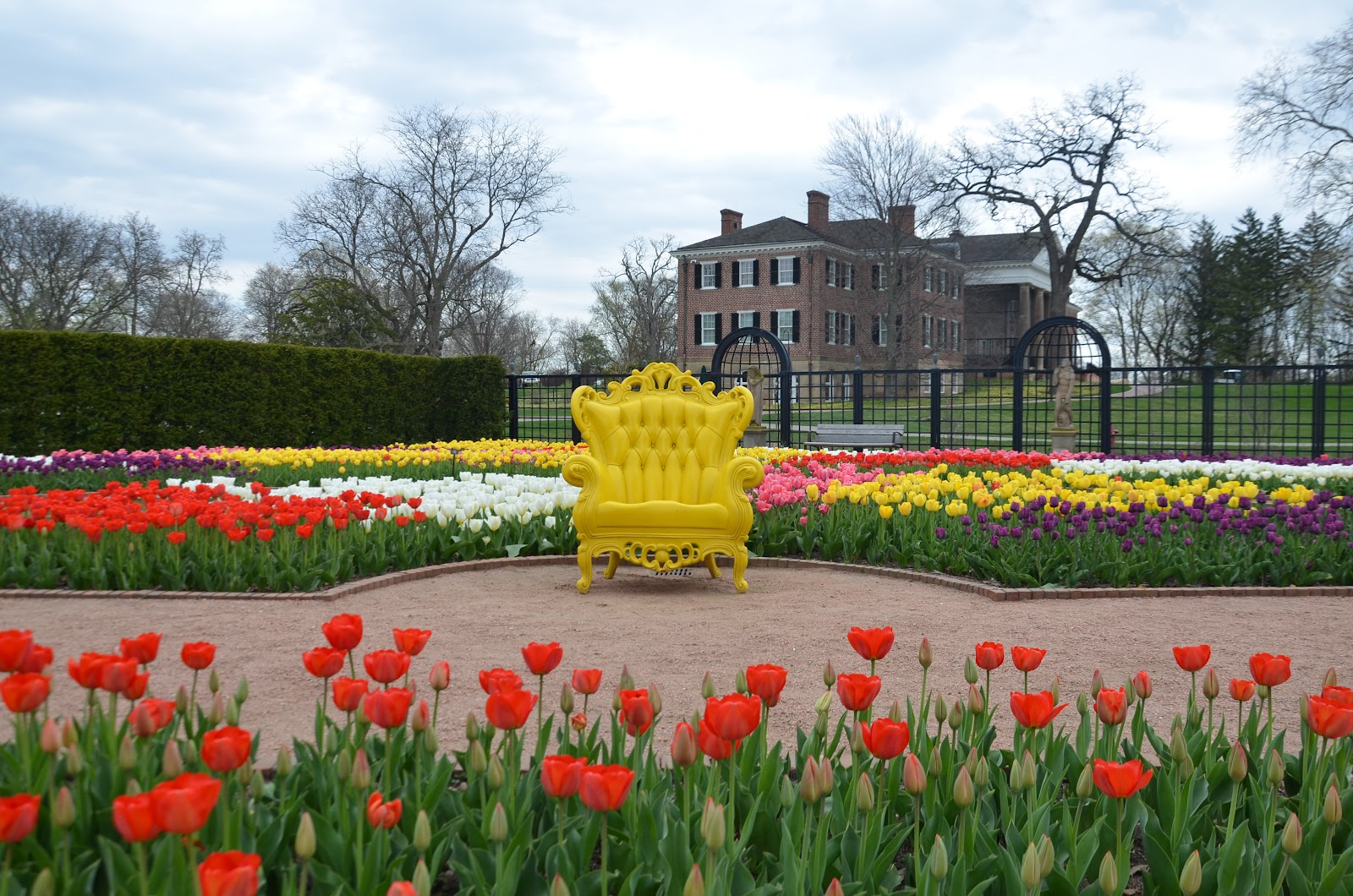
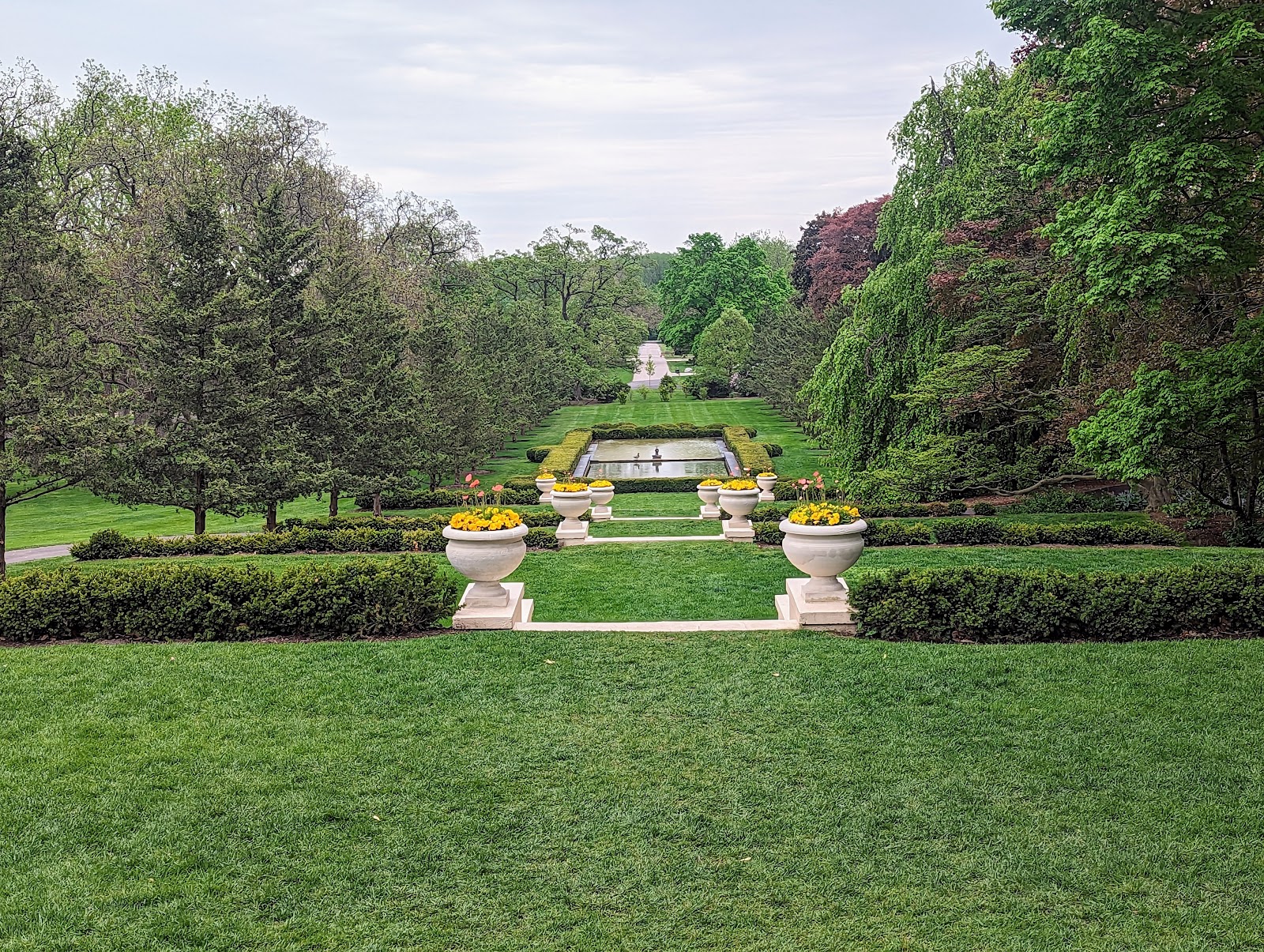
The formal gardens are the conventional wedding landscape: laid-out beds, hedges, paths and structure, open to the sky, at the scale of an estate garden rather than a botanic institution.
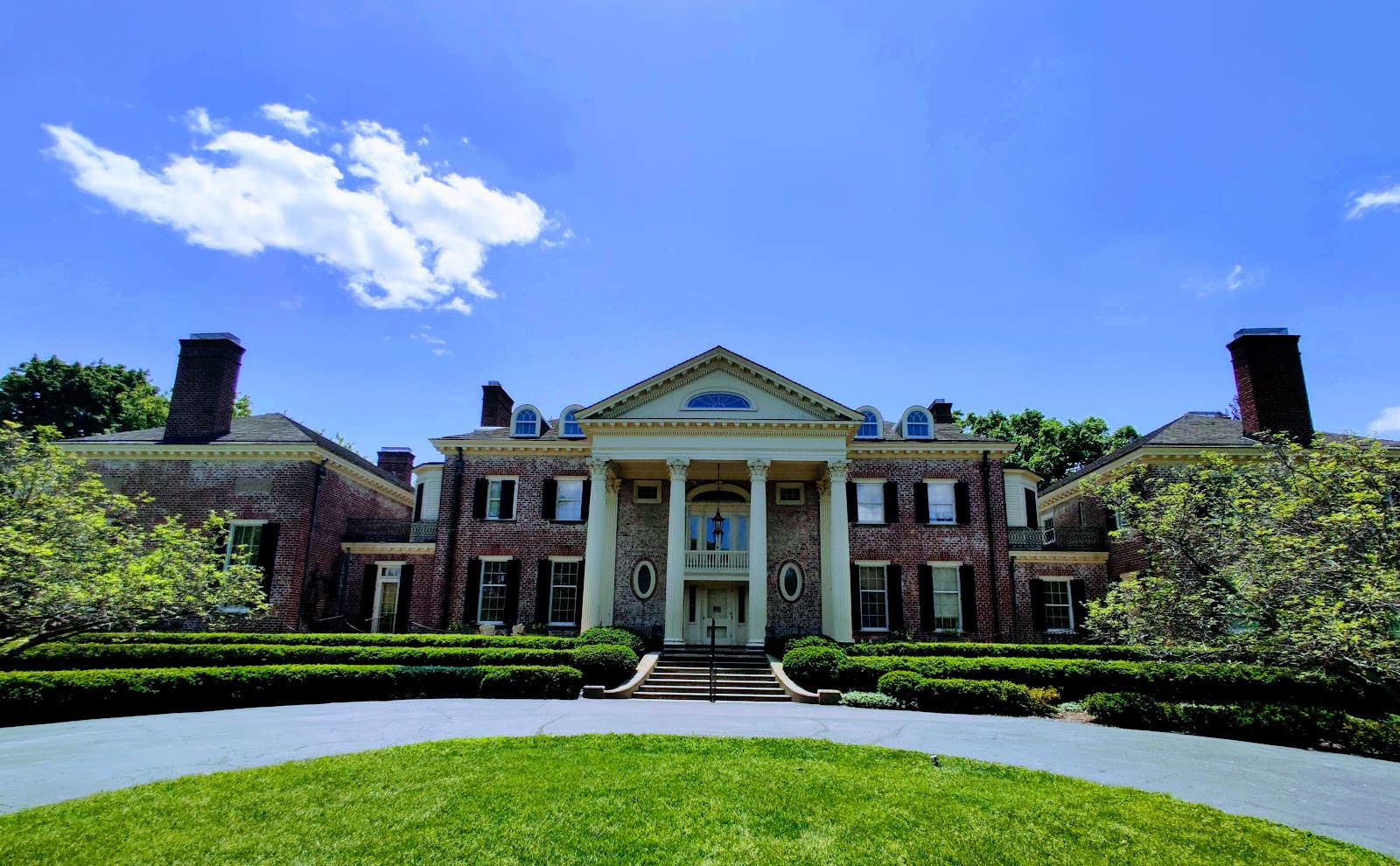
The mansion is a large twentieth-century country house with domestic-scale interiors, which brings all the usual small-house constraints.
The restored prairie is the environment most photographers do not expect and the one with the most to offer. Tallgrass prairie is a specific photographic condition, not a meadow, and it peaks when the gardens are fading.
And the vehicles and museum are their own thing entirely.
Notes below, grouped by environment, then the Chicago-region year. One number for the schedule: this is about forty-two degrees north, which gives civil twilight of roughly thirty-one minutes in midsummer — among the longer dusks in this library — with a usable balance point of thirteen to sixteen minutes, a midsummer noon sun near seventy-one and a half degrees, and a midwinter noon sun near twenty-four and a half.
The Cantigny Park at a glance
| Where | A former Chicago estate of about five hundred acres near Wheaton, Illinois |
| Four environments | Formal gardens, a mansion, restored tallgrass prairie, and armoured vehicles |
| Decide first | Whether the vehicles appear in the photographs — reactions are strong both ways |
| The surprise | Restored prairie peaks in late summer, when the gardens are fading |
| Ask first | Permitted ceremony locations, interior capacity as a number, and the rain plan |
What you meet, and what each one needs
The formal gardens. Problem: open to the sky, so a near-overhead summer sun gives flat light, black eye sockets and a squint, and there is no shade anywhere in a formal layout by design. Solution: ceremony early or late, portraits in the last ninety minutes, and if a midday ceremony is unavoidable, orient it so guests have their backs to the sun and the couple are side-lit rather than front-lit.
The formal gardens, second note. Problem: a laid-out garden is symmetrical and the symmetry punishes sloppiness — a path or a bed photographed two degrees off its axis reads as an error. Solution: get square to things, use a level, and put the subject on the axis. Formal geometry photographed properly is one of the strongest things a garden offers; photographed carelessly it looks like a municipal planting scheme.
The formal gardens, third note. Problem: colour. An estate garden is planted for succession, which means what is in flower changes every fortnight and the beds that dominate in June are finished by August. Solution: find out what is actually in flower in the week of the date rather than promising the images on the website, which were made in the fortnight when the garden peaked. Structure — hedges, paths, walls, specimen trees — is there all year, and structure is what should carry the plan.
The formal gardens, fourth note. Problem: wind and veils on open ground. Solution: find the enclosed corner. Any walled or hedged compartment behaves like a courtyard, lit by sky above and bounce off its own boundary, and it is both the calmest and the most controllable light in the garden. Stand a subject three or four metres out from a sunlit hedge rather than against it, because further out the boundary wraps the light around the face.
The mansion. Problem: domestic room sizes, window openings sized for their period, and a capacity measured in dozens. Solution: find the one best window — the largest opening, facing away from direct sun for the hours you need, with something pale opposite — and use it eight times rather than photographing eight rooms once each. Bring a reflector, because a furnished room returns much less fill than the window size suggests.
The mansion, second note. Problem: capacity and the rain plan, which at any estate-house venue is the largest risk in the booking. Solution: ask for the interior capacity as a number and the covered alternative’s capacity as a number, and compare both to the guest list before the deposit. An interior that seats sixty cannot absorb a hundred and twenty off a lawn, and in this region spring and summer bring genuine severe weather rather than passing showers.
The prairie. Problem: photographers treat it as a field and it is not one. Restored tallgrass prairie grows to two metres or more by late summer — big bluestem, Indian grass, switchgrass, with compass plant and other forbs standing above the grass — which means a person walking into it disappears from the waist down and a wide frame becomes a wall of vegetation. Solution: use the height deliberately. Put the camera low so the grass rises into the frame around the subject, or find a mown path and shoot along it so the grass forms two walls with the couple between them. Both are strong; standing in the middle of it and shooting wide is not.
The prairie, second note. Problem: no shade at all, and it faces open sky. Solution: it is a low-sun environment only. Prairie grasses and seed heads are translucent and they backlight spectacularly — a low sun behind head-high grass turns the whole field into a glowing screen, which is the single best photograph this park produces. At midday the same field is a flat green mass.
The prairie, third note. Problem: timing. Solution: know that this environment runs on the opposite calendar to the gardens. Prairie is at its best from late July into October, when the grasses reach full height and the late-season forbs flower, and it is unimpressive in spring when the previous year’s growth has been cut or burned. So a September wedding here has a fading garden and a superb prairie, and a June wedding the reverse.
The prairie, fourth note. Problem: ticks, chiggers and biting insects in tall vegetation in summer, and seeds that attach to fabric. Solution: keep prairie work to mown paths and edges rather than walking a wedding party into standing grass, and mention it in advance. A dress full of burdock is a real outcome.
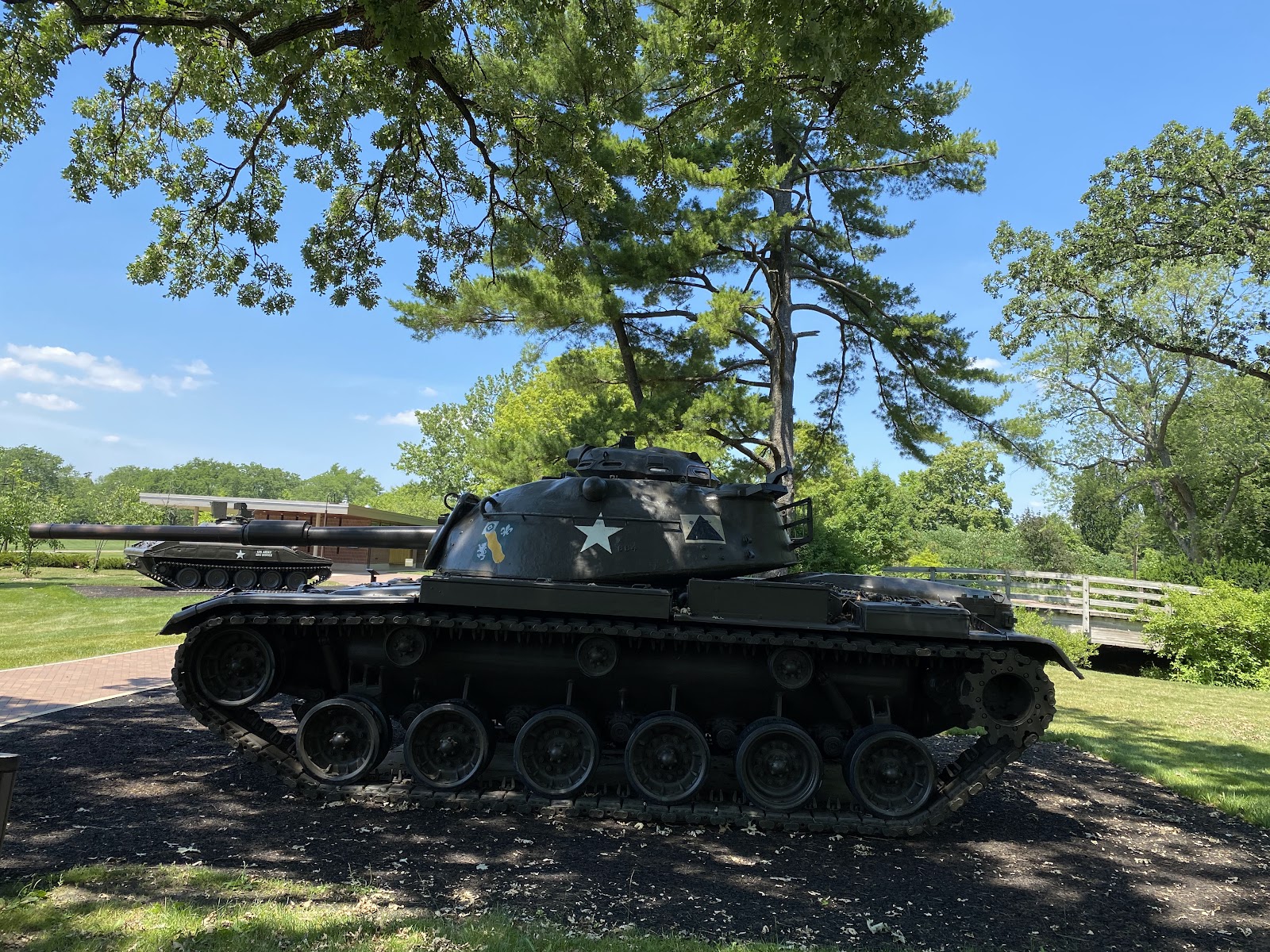
The vehicles and the museum. Problem: they are large, permanent, visible from much of the park, and they carry a memorial context. Solution: decide with the couple in advance whether they feature. If they do, photograph them with the same seriousness you would give a monument: low and wide so the scale reads, in raking light so the riveted and cast surfaces show relief, and with people beside rather than on them. If they do not, note their sightlines on a scout and compose them out, because they will otherwise appear in the background of a garden frame.
The vehicles, second note. Problem: dark painted steel and heavy mass make them difficult subjects — matte olive paint reflects very little and reads as a hole in a bright frame. Solution: expose for the surroundings and let the vehicle go dense as a shape, or light it from the side so the relief registers. Frontal light on a tank is flat and dull; raking light across rivets, tracks and plate edges is genuinely good. Wet is better still: rain darkens and saturates the paint and puts a specular sheen on the steel.
The estate, the woods and the ground it stands on
Two things about the landscape here explain more than the planting does.
The first is that this is glacial ground. The Chicago region was shaped by the Lake Michigan lobe of the last ice sheet, which left low morainic ridges of till separated by flatter lake plain, and the western suburbs sit on that morainic country. That is why there is any relief at all here — not much, but enough to give a garden terraces and a park some gentle shape, which the flat lake plain closer to the city does not have.
Use what relief there is. A subject standing slightly above the camera separates from the background by geometry rather than aperture, and on a broadly flat site any slope is worth walking to find.
The second is the soil, and it is the reason everything grows so well. Millennia of tallgrass prairie built a deep black topsoil — some of the richest agricultural soil anywhere — and a garden planted on that reaches a size and density it would not reach on thin ground. Canopies close properly, hedges are solid rather than thin, and specimen trees are large.
The original vegetation is worth knowing because it is what the restored areas are restoring. This was prairie interspersed with oak savanna and oak woodland — open-grown bur oak and white oak, fire-adapted, with wide low crowns and clear trunks beneath, standing over grass rather than in closed forest.
An open-grown oak of that kind is the best outdoor position at any Midwestern estate. It shades a group of forty, it frames a ceremony without any structure at all, and its crown is broad enough to fill a wide frame. They are not always where the venue suggests, so walk the grounds and find one.
Two canopy rules, always. Light that has passed through leaves is green, so position for open sky arriving from the side — a path, a lawn edge, a canopy edge — rather than filtered light from above, or faces read sickly and no white balance fixes it. And avoid dappled shade entirely: hard bright patches several stops above the surrounding skin cannot be recovered. Full shade or full sun, never the edge between them.
Oaks also set the autumn calendar here, and later than people expect. Maples and ashes in this region turn in the first half of October, but oaks hold russet and bronze into November, which extends the colour window well past where a photographer working from a general Midwest calendar would place it.
The woodland areas give you the third kind of background after formal garden and prairie: trunks receding into soft green or brown, with no structure and no apparatus in frame. That is the simplest good background on the property and it works at a long focal length at any hour.
Two practical notes about the park as an institution. It is publicly accessible, so unless a booking closes an area there will be visitors, and on a fine weekend a five-hundred-acre park near a large city is busy. Work tighter than instinct suggests, use a long lens to compress a background into texture rather than into people, and ask whether a genuinely private window exists — early morning usually.
And ask which locations are permitted for a ceremony and for portraits, as a list. A park of this kind with a museum, a historic house, formal gardens and restoration areas will have places that are available, places that require a specific permission, and places that are not available at all — and the restoration areas in particular may be off limits for good ecological reasons. Get the list in writing months ahead.
The Chicago-region year
At about forty-two degrees north this is one of the higher latitudes in this collection outside the Pacific Northwest, and it gives a genuinely useful number: civil twilight of roughly thirty-one minutes in midsummer, with a balance point of thirteen to sixteen usable minutes. That is a more generous end to the day than anywhere in the South, and on a park with little light pollution the sky holds a clean gradient for longer still.
The midsummer noon sun at about seventy-one and a half degrees is also meaningfully lower than the Gulf South’s, which means the middle of a summer day here still has some direction in it — not good light, but not the vertical wash that a thirty-degree latitude produces. Open shade at midday works properly.
The midwinter noon sun near twenty-four and a half degrees rakes everything all afternoon, which is beautiful and brief.
Humidity is continental-humid: July dewpoints around seventy, filling shadows by roughly two stops against a dry climate, softening shadow edges and keeping detail in eye sockets. The costs are a pale washed sky, haze on any distance, and a lens that fogs coming out of an air-conditioned room into July air.
There is one regional weather mechanism worth knowing because it can change an afternoon abruptly. On warm days the temperature difference between the land and Lake Michigan drives a lake breeze inland, and the boundary where it arrives is often visible as a line of cloud with a sharp wind shift behind it. In the western suburbs that front can reach you in the late afternoon, dropping the temperature several degrees and turning a still evening into a breezy one within twenty minutes. It is not a hazard; it is a reason not to assume a calm evening because the afternoon was calm.
The genuine hazard is spring and summer severe weather. This region sits in an active corridor for organised convection — supercells and occasionally derechos — which arrive fast, with real wind and hail rather than as a passing shower, and carry a tornado risk. Any outdoor ceremony between April and August needs a covered alternative that genuinely exists, is reachable in a few minutes, and has a known capacity. At a park venue that is usually a specific building, and its number is what matters.
May into June is the first good window: the gardens filling, the woodland understorey through its spring flowering, mild air and lengthening evenings with sunset after eight by late June. It is also the wettest and most storm-prone part of the year.
Late August into early October is the second, and at this venue it may be the better one, because of the prairie. That is when tallgrass reaches full height and the late-season forbs flower, and a low sun behind head-high grass is the best frame this park produces. The gardens are past their peak by then, which is the trade.
Mid-October into early November extends it, with maples turning first and the oaks holding late. Air clarity improves markedly once the humidity drops, so the longer views across the park open up.
Summer is workable with the middle of the day given to the woodland and the house. The half hour after a storm clears is the best light of the year: washed air, wet paving and gravel reflecting the sky, planting at full saturation, prairie grasses beaded with water, and — for anyone photographing the vehicles — wet steel that saturates and picks up a sheen it never has dry. If a cell goes through at six, do not pack.
Winter is long, cold and short-dayed here, with sunset before half past four in late December, real snow cover in most years and temperatures well below freezing. That compresses the outdoor portion of a day into the early afternoon and makes a party in formal clothing outdoors a brief proposition. In exchange: the clearest air of the year, a low sun raking everything all afternoon, formal garden structure reading as structure rather than absence once the planting is bare, snow on hedges and on a mansion, and — distinctively — snow on armoured steel, which is a frame nowhere else in this collection can offer.
Two winter cautions, both logistical rather than photographic. Lake-effect and system snow can make travel genuinely difficult, and the region’s occasional ice events strand suppliers. A January date deserves a contingency that assumes some guests cannot drive.
One closing instruction that applies in every season. Decide the vehicle question before the day, not on it. Everything else at this park is ordinary good practice applied to four different environments; the tanks are the one thing that will define the set either way, and a couple should have chosen rather than discovered them.
More frames from The Cantigny Park
The Cantigny Park wedding photography: common questions
Are there really tanks in the park?
Yes, outdoors on the lawn, as part of a museum commemorating a US Army division — so it is a memorial context as much as a display. They are large, permanent and visible from a good deal of the park, and reactions to them are strong in both directions. Decide with the couple in advance whether they feature: if they do, photograph them as you would a monument, low and wide for scale, in raking light so the rivets and plate edges register, with people beside rather than on them. If they do not, note their sightlines on a scout and compose them out.
What is the most surprising thing to photograph here?
The restored prairie, and photographers routinely treat it as a field when it is not. Tallgrass prairie reaches two metres or more by late summer, so a person walking into it disappears from the waist down. Use the height: camera low so the grass rises around the subject, or shoot along a mown path so the grass forms two walls with the couple between them. And it is a low-sun environment only — grasses and seed heads are translucent, so a low sun behind head-high grass turns the whole field into a glowing screen, which is the best frame this park produces.
Does the prairie change the best time of year?
Yes, and it inverts the garden calendar. Prairie is at its best from late July into October, when the grasses reach full height and the late-season forbs flower, and it is unimpressive in spring after the previous year’s growth has been cut or burned. So a September wedding has a fading garden and a superb prairie, and a June wedding the reverse. Late August into early October may be the better window at this venue for exactly that reason.
What about the formal gardens?
Open to the sky with no shade by design, so ceremony early or late and portraits in the last ninety minutes — and if a midday ceremony is unavoidable, orient it so guests have their backs to the sun and the couple are side-lit. The symmetry also punishes sloppiness: a path or bed photographed two degrees off its axis reads as an error, so get square, use a level, and put the subject on the axis. And ask what is actually in flower in the week of the date rather than working from the website’s peak-fortnight images.
Where is the best natural shade?
Under an open-grown oak. This was originally prairie interspersed with oak savanna, and a surviving bur or white oak has a wide low crown with clear trunk beneath — it shades forty people, frames a ceremony with no structure, and fills a wide frame. They are not always where the venue suggests, so walk the grounds. Two rules apply under any canopy: position for open sky from the side rather than light filtered through leaves, which is genuinely green, and avoid dappled shade entirely.
When is the best time of year overall?
Late August into early October for the prairie, or mid-October into early November for colour — maples turn first and the oaks hold russet into November, which is later than a general Midwest calendar suggests, and the air clarity improves markedly once the humidity drops. May and June give the fullest gardens and the longest evenings but are also the wettest and most storm-prone: this region sits in an active corridor for organised convection that arrives fast with real wind and hail, so any outdoor ceremony then needs a covered alternative with a known capacity.
More Illinois venue guides
We are writing a photographer’s guide to every venue we would happily shoot in Illinois. Here are three more, plus the full index:
- The Chicago Botanic Garden, Glencoe: The Venue’s Own Logic
- The Morton Arboretum, Lisle: One Frame, and How It Is Made
- The Brookfield Zoo, Brookfield: The One Decision That Governs Everything
Planning a wedding at The Cantigny Park?
Four environments, one decision about the tanks. Tell us your date.