 The Hoxton Chicago: Photographing a Wedding in Fulton Market
The Brookfield Zoo, Brookfield: The One Decision That Governs Everything
This zoo has real architecture. That is the choice.
Most zoos present a photographer with no decision at all, because there is nothing on site that was designed to be looked at rather than through. This one is different, and the difference is its date.
Brookfield Zoo opened west of Chicago in the nineteen-thirties, and it was laid out as a formal park rather than as a collection of paths: a symmetrical plan with a central mall, axial walks, formal planting, fountains and period architecture in a restrained classical and deco manner. It was also among the first American zoos built around barless, moated enclosures — animals separated from visitors by ditches and level changes rather than by cages — which was the design idea of its generation.
Both of those facts matter photographically and they pull in opposite directions.
The formal plan means there is genuine architecture here, and a genuine axis, and formal landscape of the kind a wedding photographer normally has to go to an estate to find. A frame made on that mall, at the right hour, does not look like a zoo. It looks like a park in a city, which is what the designers intended.
The moated enclosures mean the animal areas photograph better than a caged zoo’s would — no mesh between you and the exhibit — but the moats, retaining walls, guard rails and level changes are still there, and they are still hard engineering in the middle of the frame.
So the one decision is this: is a given frame about the architecture, or about the animals?
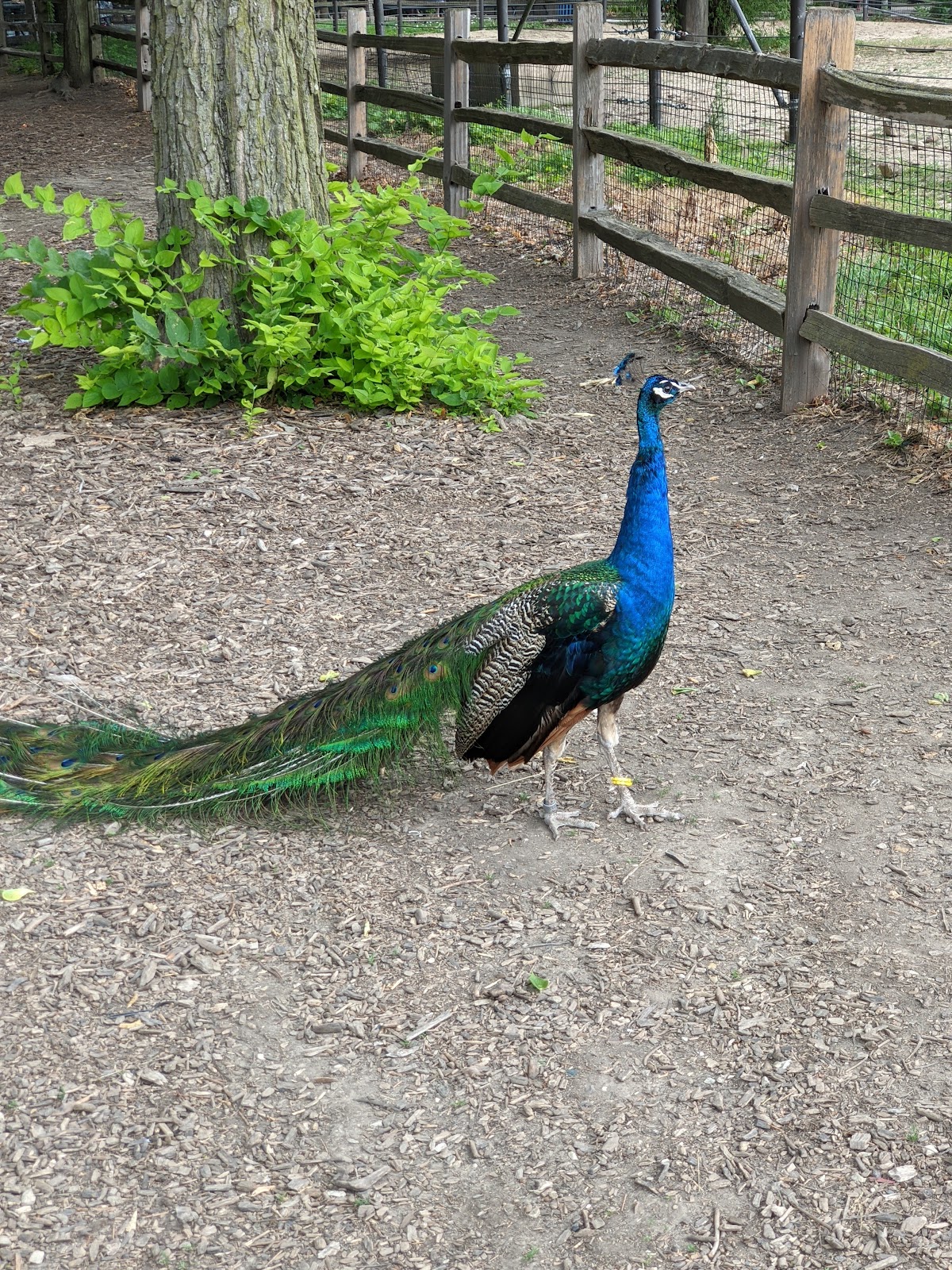
They need opposite handling. Architecture means working the axis, the symmetry, the fountains and the period detail, at the ends of the day, in light that rakes rather than floods — and deliberately excluding the apparatus of a zoo, which is entirely possible on a formal mall. Animals means long lenses, wide apertheres and tight framing, where the enclosure furniture dissolves into a wash and the exhibit reads as a background rather than as a structure.
The muddle in between — a mid-distance frame on a path with a bit of formal planting, a rail, a sign and half an enclosure in it — is what most photographs from any zoo look like, and it is avoidable here in a way it is not elsewhere.
Make the decision per frame and this venue produces a set that will surprise people who expect zoo photographs.
What follows is how each side works, then what the rest of the site gives you, then the Chicago-region year.
The Brookfield Zoo at a glance
| Where | A 1930s zoo west of Chicago at Brookfield, Illinois, on a formal park plan |
| The decision | Per frame: architecture, or animals. They need opposite handling. |
| The asset | A symmetrical mall, axial walks, fountains and period architecture |
| The apparatus | Barless moated enclosures — no mesh, but real walls and rails |
| Ask first | Private or after-hours windows, bookable locations, and the flash policy |
Why the decision governs, and how each side works
Take the architecture first, because it is the reason to choose this zoo over another.
A formal axial plan is the most cooperative landscape a photographer can be handed. It gives you a centre line, a vanishing point, matched planting either side, and something worth looking at at each end, which between them compose a frame before you have made a decision. All you have to do is get on the axis and stay square to it.
And that is the whole discipline. Formal symmetry punishes sloppiness harder than any other kind of composition: two degrees off the centre line and the matched sides stop matching, the vanishing point slides, and the frame reads as an error rather than as a plan. Find the middle by pacing rather than by eye, use a level, and put the couple on the axis.
Photograph the buildings either dead on the centre line or firmly off axis, never a couple of degrees off. A symmetrical facade shot slightly askew looks like a mistake; from twenty degrees off it looks like a decision, and the elements separate instead of overlapping.
The period architecture wants raking light, because it is all relief — mouldings, reveals, cornices, carved and cast detail. At noon a pale classical or deco elevation is a flat plane; in the last hour it is a surface with depth in it. Establish which elevations catch that light on a scout, because it will be a specific set and only for about twenty minutes.
Fountains are the architectural feature to use, and they give you a choice that should be made rather than defaulted: a fast shutter freezes water into distinct droplets, a slow one on a tripod renders it as a veil. Both are good and they are different pictures. At dusk with the mall lit, wet paving around a fountain reflects everything and doubles the frame for free.
Scale is the last architectural tool. Two small figures on a long formal mall is a stronger photograph than a tight portrait against a wall, and the frame then has the plan’s whole geometry in it.
Now the animal side, and it needs different equipment and a different posture.
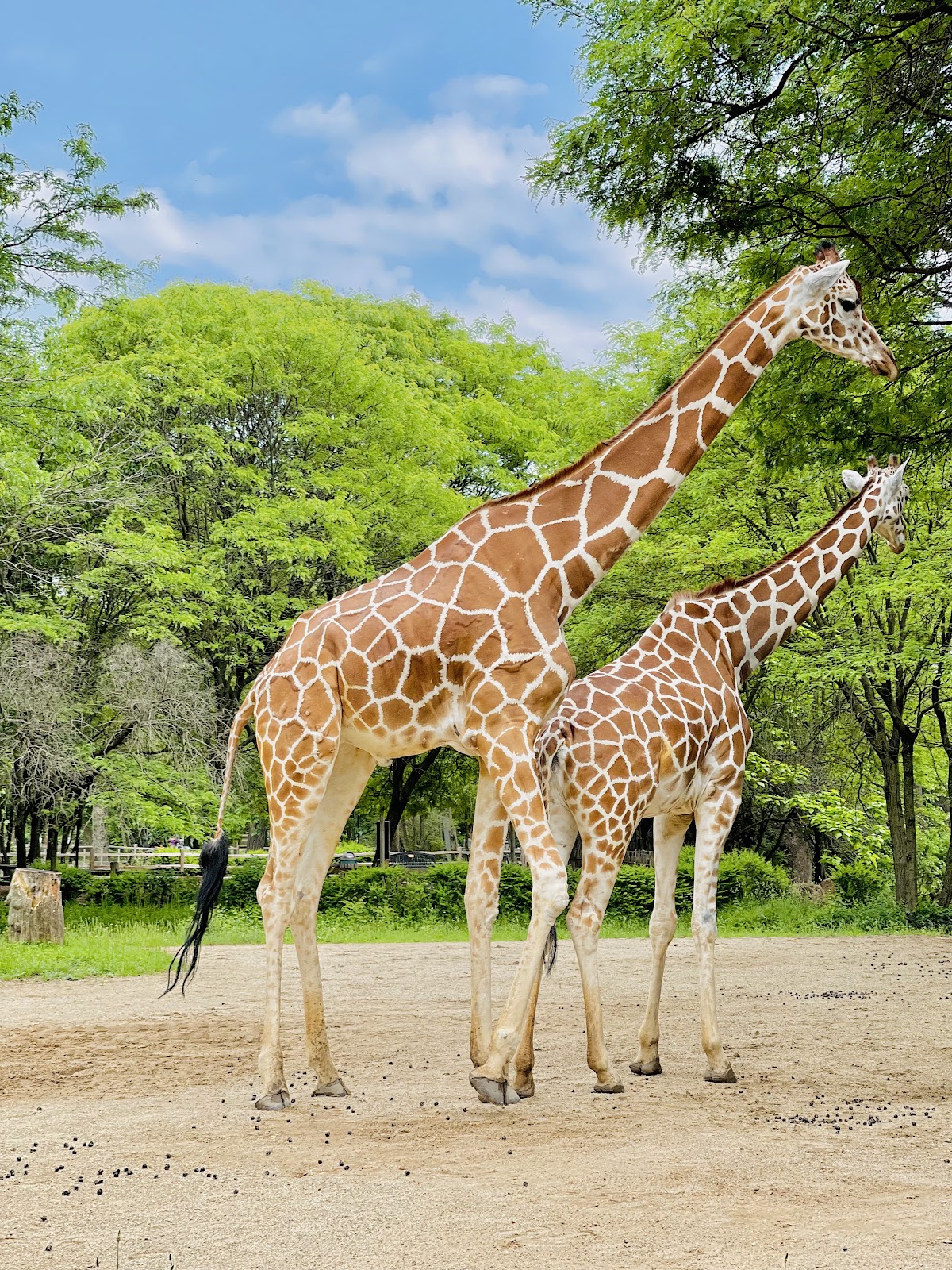
Work long and open. A hundred and thirty-five millimetres at f/2 turns moats, retaining walls, rails and signage into a soft graded wash in which none of it is legible. The same background at thirty-five millimetres and f/8 is an inventory of zoo engineering. This is the single highest-value equipment decision on the animal side and it is worth carrying the lens specifically.
Use planting as a wall. A zoo is densely planted because planting screens enclosures and shades animals and visitors, and that planting is the one element on site that reads as background rather than as apparatus. Find a bank of foliage, put the subject two metres in front of it, get far enough back to be at a long focal length, and the zoo disappears.
Shoot into shade rather than into sun. A subject in open shade with a shaded background has a manageable range; the same subject with sunlit paving behind them is four stops of trouble. In a place this open, backgrounds are more often sunlit than not, so the position is chosen by what is behind rather than by what is in front.
And manage the animal expectation honestly. Many species are indoors, inactive or out of view, exhibits close at different times, and no zoo holds a keeper schedule for a photograph. If one particular animal matters to a couple, raise it months ahead and accept that the answer may be that it cannot be promised. A managed expectation in February beats a disappointment at nine in the evening.
Two questions to settle in writing. The flash policy — assume no flash toward any exhibit, and assume the reason is the animals rather than the photographs, while the answer for an event room is separate. And whether a private or after-hours window is available, which at a zoo is a genuine product and changes the venue completely: the public gone, the mall empty, and the light already low because you were never going to want the middle of the day here.
That last point is worth stating plainly. Open paved walks under a high sun are the worst surface to photograph people on — bright, contrasty and reflecting upward into faces. The same mall at seven in the evening is warm-toned and raked with long shadows giving the paving shape. An evening window is not an upgrade; it is the correct plan.
What follows from it: the rest of the site
Once the decision is understood, the site sorts into four zones and each has one thing to offer.
The formal mall and its axial walks are the architecture zone, covered above. The practical note is that they are also the busiest part of the zoo through the middle of the day, being the main circulation, and the quietest in the evening.
The period buildings are the second zone, and their interiors are worth asking about specifically. A nineteen-thirties zoo building was often a substantial masonry structure with a real entrance hall, tall windows and proper ceiling height — a different proposition from a modern exhibit shed. Which of those are accessible, whether any function as event space, and whether they have exterior glazing are three questions whose answers determine the whole indoor plan. A daylit hall in a period building is a genuinely good portrait space; a windowless exhibit interior is not.
If an interior is windowless, plan the whole block: two lights bounced into opposite corners for ambient if the ceiling is pale — and check, because exhibit ceilings are frequently dark and serviced — one directional source for the key, and a single white balance throughout.
Interiors with exhibits in them bring their own problem, which is mixed and often coloured light. Exhibit lighting is chosen for animals and for viewing, not for faces, and it may be strongly warm, strongly cool, or spectrally odd. Choose the dominant source, balance for it, gel your own light to match, and let the rest fall. Do not average, because averaging is what makes institutional interiors look grey.
The planted and wooded areas are the third zone and the midday answer. Mature canopy is the only shade on site that does not come with engineering attached, and the standard canopy rules apply without exception: position for open sky arriving from the side rather than light filtered through leaves, which is genuinely green, and avoid dappled shade entirely, because hard bright patches several stops above skin cannot be recovered. Full shade or full sun, never the edge.
Look for open-grown oaks specifically. The original landscape here was prairie interspersed with oak savanna, and a surviving bur or white oak has a wide low crown with clear trunk beneath — it shades a group of forty and frames a ceremony with no structure at all. Those are the best outdoor ceremony positions on any site in this region and they are rarely the ones a venue suggests.
The fourth zone is the perimeter and the surrounding parkland, and it is worth asking about because it is where you go when the zoo itself is too busy. Establish what is inside the booking and what is not.
Two general constraints. The public: unless a booking closes an area, a zoo’s visitors are largely families at eye level in bright clothing standing exactly where the good frames are, and on a fine weekend there will be a great many of them. Work tight, work long, and get low or high — eye level is the height at which all the apparatus and all the crowds live.
And walking. A zoo of this size is a genuine walk, and a wedding party of a dozen in formal clothing moves at perhaps fifty metres a minute with stops. Plan two locations properly rather than four badly, ask whether a cart or vehicle is available, and walk the route with a watch beforehand.
One last honest note for the couple. A zoo produces a distinctive and joyful set and fewer classically elegant frames than a hotel or an estate. What is unusual here is that the formal plan gives you some genuinely elegant ones too — which is exactly why the decision at the top of this guide is worth making deliberately rather than drifting into.
The Chicago-region year
At about forty-two degrees north this is one of the higher latitudes in this collection outside the Pacific Northwest, and the numbers are worth having.
Civil twilight runs roughly thirty-one minutes in midsummer, with a genuinely usable balance point of thirteen to sixteen minutes. That is a more generous end of day than anywhere in the South, and at a venue whose best architectural frame is a lit mall against a graduated sky, it is the most valuable block in the day. Ask whether the site lights its architecture and its fountains, and from what time, because the frame depends on it — and in a zoo with an evening closing time, the lighting may come on after you are required to leave. Settle that specifically.
The midsummer noon sun reaches about seventy-one and a half degrees, which is meaningfully lower than the Gulf South’s and means the middle of a summer day here still has a little direction in it. Open shade at midday works properly. It is still the wrong hour for open paving.
The midwinter noon sun near twenty-four and a half degrees rakes everything all afternoon, which on period architecture is the best light of the year and lasts from late morning to mid-afternoon.
Humidity is continental-humid, with July dewpoints around seventy, filling shadows by roughly two stops against a dry climate — softening shadow edges, keeping detail in eye sockets, and making open shade usable. The costs are a pale washed sky, haze on any distance, and a lens that fogs coming out of an air-conditioned building into July air, which at a venue with repeated indoor-outdoor transitions is a recurring event.
One regional mechanism worth knowing because it changes afternoons: on warm days the temperature difference between the land and Lake Michigan drives a lake breeze inland, and the boundary often arrives as a visible cloud line with a sharp wind shift behind it. In the western suburbs that can reach you in the late afternoon and turn a still evening breezy within twenty minutes. Not a hazard, but a reason not to assume calm because the afternoon was calm.
The genuine hazard is spring and summer severe weather. This region sits in an active corridor for organised convection, with supercells and occasionally derechos arriving fast and carrying real wind, hail and a tornado risk. An outdoor ceremony between April and August needs a covered alternative that genuinely exists, is reachable in a few minutes, and has a known capacity — and at a zoo that means a specific building whose number matters more than any assurance.
May into June is the first good window: planting filling, mild air, long evenings with sunset after eight by late June. It is also the wettest and most storm-prone part of the year, and the busiest for a family attraction once school terms end.
Late September into early November is the strongest window and for this venue specifically. The humidity drops out so the mall’s long axial views actually resolve rather than hazing, temperatures are comfortable in formal clothing on open paving, sunset lands around six so the balance point falls at a civil hour, and the crowds thin considerably once the summer holidays are over. Maples turn through the first half of October and the oaks hold russet into November, which extends the colour later than a general Midwest calendar suggests.
Summer is workable with the middle of the day given to canopy and interiors. The half hour after a storm clears is the best light of the year: washed air so the axis opens up, wet paving and stonework several tones darker and far more saturated than dry, fountains and standing water everywhere reflecting the sky, period masonry at full saturation, and a low sun under a broken ceiling. Wet nineteen-thirties stonework is a considerably better material than dry. If a cell goes through at six, do not pack.
Winter is long, cold and short-dayed, with sunset before half past four in late December and snow cover in most years. That compresses the outdoor portion of a day into the early afternoon and makes a party in formal clothing outdoors a ten-minute proposition rather than an hour. Many animals will be indoors or unavailable.
In exchange, winter is when the architecture is at its best: the clearest air of the year, a low sun raking period detail from late morning onward, bare trees letting the formal plan read as plan rather than as planting, far fewer visitors, and snow on a symmetrical mall — which is as good as this site looks and is a frame almost nobody has.
Two winter cautions, both logistical. System and lake-effect snow can make travel genuinely difficult, and the region’s occasional ice events strand suppliers. A January date deserves a contingency that assumes some guests cannot drive.
The instruction that covers the whole year: buy the evening window if it exists, decide per frame whether you are photographing the plan or the animals, carry a long lens for one and a level for the other, and protect fifteen minutes on the axis at dusk.
More frames from The Brookfield Zoo
The Brookfield Zoo wedding photography: common questions
What makes this zoo different to photograph?
Its date. It opened in the nineteen-thirties and was laid out as a formal park rather than a set of paths — a symmetrical plan with a central mall, axial walks, formal planting, fountains and period architecture. So unlike most zoos, there is genuinely something here that was designed to be looked at, and a frame made on that mall at the right hour does not look like a zoo at all. It was also among the first American zoos built around barless moated enclosures, so there is no mesh between you and the exhibits.
What is the one decision?
Whether a given frame is about the architecture or about the animals, because they need opposite handling. Architecture means working the axis and the symmetry at the ends of the day in raking light, and deliberately excluding zoo apparatus — which a formal mall makes possible. Animals mean a long lens wide open and tight framing so moats, rails and signage dissolve into a wash. The muddle between them, a mid-distance path frame with half an enclosure and a sign in it, is what most zoo photographs look like.
How unforgiving is the formal plan?
Very. Symmetry punishes sloppiness harder than any other kind of composition — two degrees off the centre line and the matched sides stop matching, the vanishing point slides, and the frame reads as an error. Find the middle by pacing rather than by eye and use a level. Photograph facades dead on the centre line or firmly off axis, never a couple of degrees off, and remember period architecture is all relief: at noon it is a flat plane, and in the last hour it is a surface with depth.
Should we buy an after-hours window?
If it exists, yes, and not mainly for privacy. Open paved walks under a high sun are the worst surface to photograph people on — bright, contrasty, reflecting upward into faces — so you were never going to want the middle of the day. The same mall at seven in the evening is warm-toned and raked with long shadows. An evening window is the correct plan rather than an upgrade. Ask separately whether the architectural and fountain lighting runs and from what time, because at a venue with a closing time it may come on after you are required to leave.
What about the animals in the photographs?
Unreliable, and worth managing in advance. Many species are indoors, inactive or out of view, exhibits close at different times, and no zoo holds a keeper schedule for a photograph. If one animal matters to a couple, raise it months ahead and accept that it may not be promisable. Assume no flash toward any exhibit — the reason is the animals rather than the photographs — and note that exhibit lighting is chosen for animals rather than faces, so choose the dominant source, balance for it and gel your own light to match.
When is the best time of year?
Late September into early November. The humidity drops out so the mall’s long axial views resolve rather than hazing, temperatures are comfortable on open paving, sunset around six puts the dusk window at a civil hour, and the crowds thin once the summer holidays end. Maples turn in the first half of October and the oaks hold russet into November. Winter is when the architecture itself looks best — clearest air, a low sun raking period detail all afternoon, bare trees letting the plan read as plan, and snow on a symmetrical mall — but it compresses the outdoor day into ten minutes.
More Illinois venue guides
We are writing a photographer’s guide to every venue we would happily shoot in Illinois. Here are three more, plus the full index:
- The Cantigny Park, Wheaton: Field Notes, Problem and Solution
- The Chicago Botanic Garden, Glencoe: The Venue’s Own Logic
- The Morton Arboretum, Lisle: One Frame, and How It Is Made
Planning a wedding at The Brookfield Zoo?
The plan or the animals, decided per frame. Tell us your date.