 The Riverside Hotel, Boise: The Light Through a Day
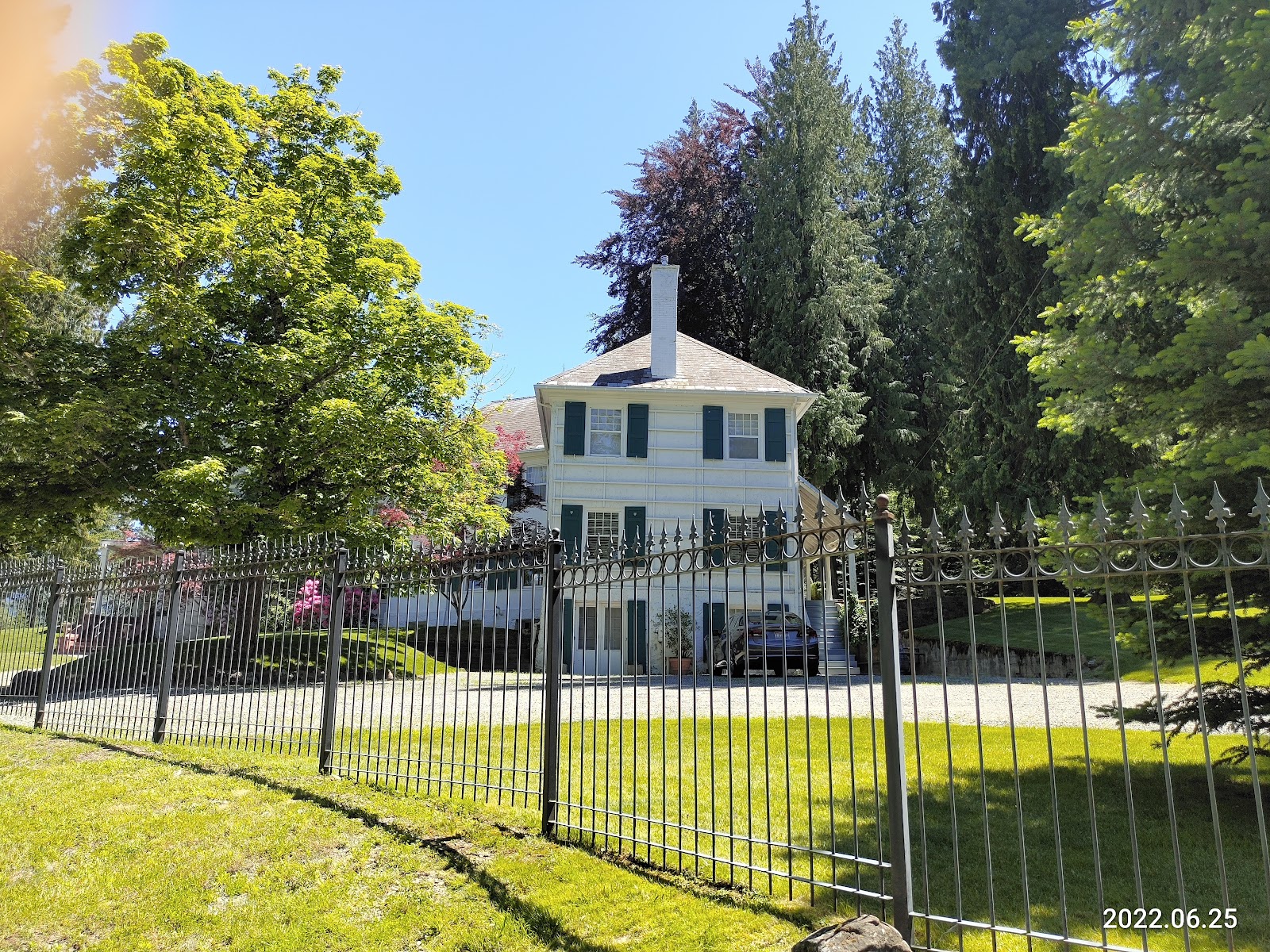
The Clark House, Hayden: The Venue’s Own Logic
Built to look one way. Read that and the day plans itself.
The logic of this house is that it was built to face something, and once you know which way it faces, the whole day arranges itself.
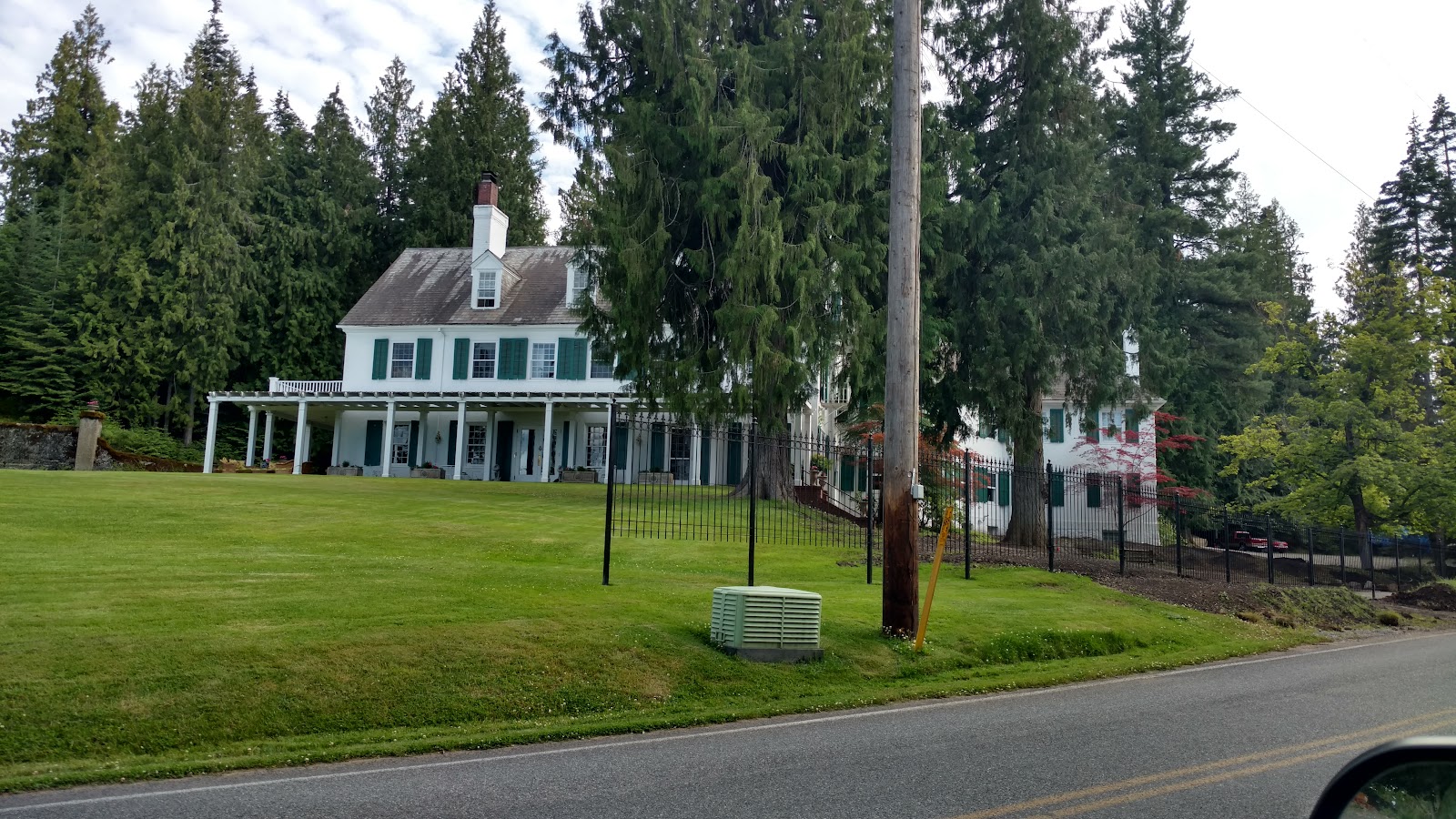
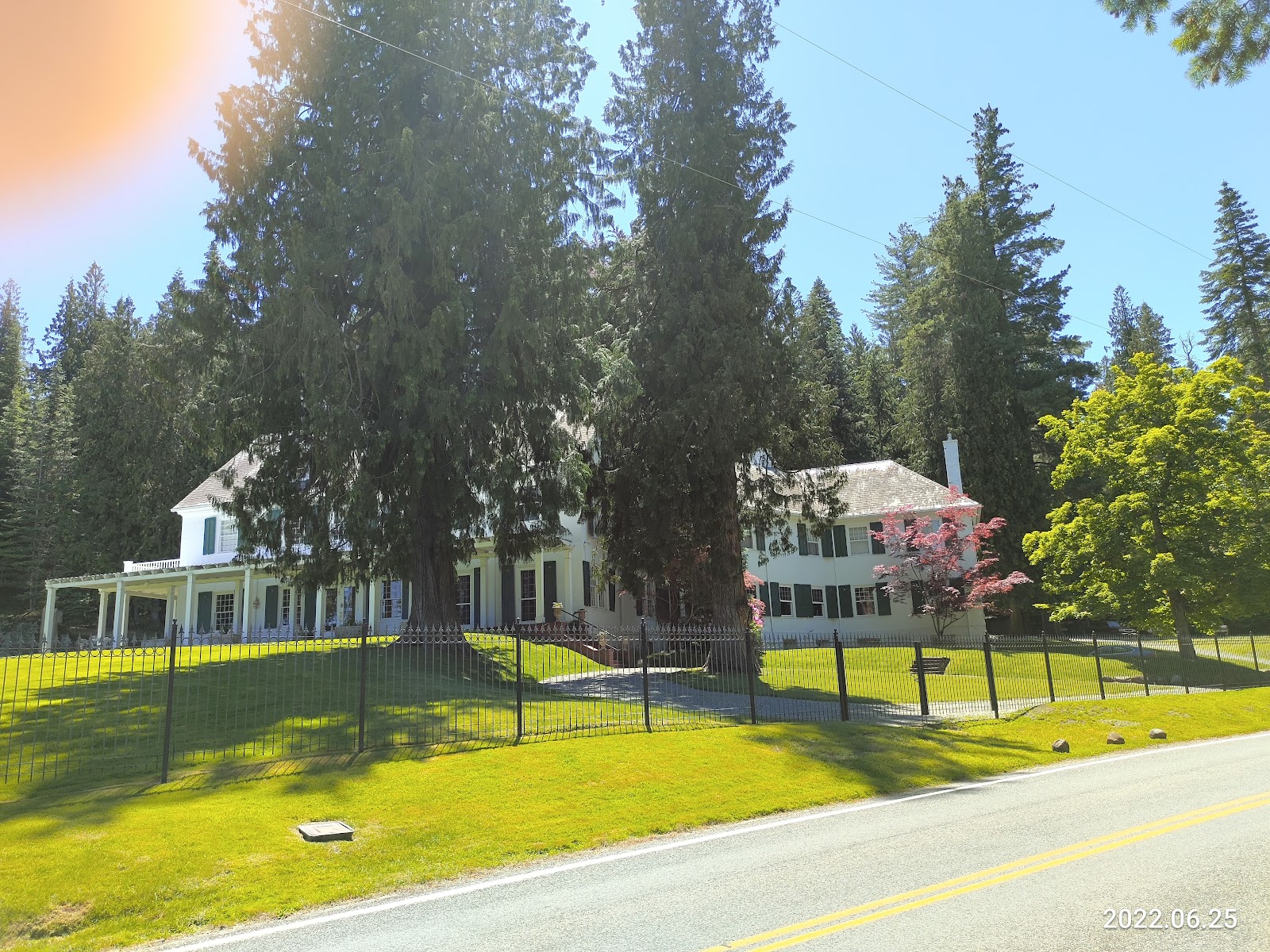
The Clark House stands above Hayden Lake in northern Idaho and dates from around nineteen-ten, built as a summer residence for a wealthy owner at a period when the Panhandle attracted that sort of money. It is a large house of its date with formal planting around it, and it now operates as a small hotel and event venue.
A grand house of that era in a landscape setting is designed rather than placed. There is a principal elevation, a principal approach, and a principal outlook, and the rooms inside are arranged so that the best of them look the best way. Everything else — service, circulation, the back of the house — is disposed behind that.
So the first job on arrival is to establish the orientation, and it takes five minutes. Which way does the principal elevation face? Which rooms are on that side? Where does the approach arrive, and from which direction does the building look its best? Those four answers determine every position you will use.
The reason it matters more here than at a hotel is that a house like this has a hierarchy. The principal rooms have the large windows, the good proportions and the outlook; the secondary rooms do not. At a modern hotel every room is much the same and aspect is the only variable. Here the variation is architectural as well as directional, and the good rooms are genuinely better.
The second thing to establish is the relationship between the house and the lake, because a house above a lake is not a house on a lake. Elevation gives you a view over water rather than a position at the water’s edge, and those are different photographs — the view is broad and layered and includes the far shore and the hills beyond, while a waterline frame with reflections and a low camera requires walking down to it, if walking down to it is possible at all.
Ask that specifically. Whether there is lake access, whether it is within the property, and how long it takes to walk there and back with a wedding party.
The third is the thing that ends the evening. This is a lake in a glacially shaped basin with forested hills around it, and the sun goes behind a ridge before it reaches the horizon. Depending on the aspect and the season, the effective sunset can be twenty to forty minutes earlier than the printed time — although a house set above the water may hold the light a little longer than the shoreline does, which is worth finding out, because it is the one situation where elevation buys you time.
And the latitude: about forty-seven and three-quarter degrees north, the same as Seattle. Sunset after nine in late June with civil twilight close to thirty-seven minutes, and sunset before four in late December with barely eight and a half hours of daylight.
What follows is how the house’s own plan sorts the day, then the grounds and the lake, then the year.
The Clark House at a glance
| Where | A circa-1910 mansion above Hayden Lake, northern Idaho |
| The logic | A principal elevation, approach and outlook — establish all three on arrival |
| The hierarchy | Principal rooms have the windows and the view; secondary rooms do not |
| The catch | A ridge takes the sun twenty to forty minutes before the printed sunset |
| Ask first | Interior capacity as a number, lake access, and which rooms you have |
Reading the plan
Start with the principal elevation, because that is the building’s own best frame.
A house of this date and ambition has a front that was designed to be looked at, usually with symmetry, a defined entrance, and a relationship to whatever lies in front of it — a lawn, a drive, a terrace. Photograph it either dead on the centre line or firmly off axis, never two or three degrees off, because a symmetrical elevation shot slightly askew reads as an error while one from twenty degrees off reads as a decision and the masses separate rather than overlapping.
That elevation wants raking light, because a house of this period is all relief: eaves, reveals, mouldings, porches, chimneys, glazing bars. At noon it is a flat plane. In the last hour it is a surface with depth in it, and every projection throws a shadow. Establish on a scout which way it faces, because that single fact tells you whether the good exterior light is morning or evening, and it is the most useful thing to know about the property.
Use scale. Two small figures at the base of a large house is a stronger photograph than a tight portrait against a wall, and the frame then has the building’s mass in it. On a lawn in front of a grand house, small is better.
Then the approach. A designed house has a drive that arrives deliberately, often with a bend or a screen so the building reveals itself at a particular point. Find that point: it is where the architect intended you to first see the house, and it is almost always the best wide exterior position on the property. It costs nothing and most photographers never look for it.
Now inside, and the hierarchy. Walk the principal rooms first and find the one best window — the largest opening, in the thickest wall, facing away from direct sun for the hours you need it, with something pale opposite. In a house of this period that window will be tall and set in a substantial wall, which collimates the light into a defined directional beam with fast falloff. That is a snoot built into the architecture and it is the best portrait light in the building.
Step the positions out rather than estimating. Falloff from a deep reveal is roughly a stop per step, so a metre and a half in is superb and three metres in is not.
Use that window eight times rather than photographing eight rooms once each. One good window used repeatedly produces a better set than a tour of the house, and it takes a quarter of the time.
Bring something pale to hold opposite it. A furnished period room returns far less fill than the window size suggests, and this is the most useful accessory at any historic house.
For the rest of the interior you are lighting rather than finding. The practical setup is one source bounced off a pale ceiling to lift the ambient by a stop and a half, plus a small directional light for a key if a face needs modelling. Check the ceiling in every room on arrival, because a house of this date may have pale plaster — ideal — or dark timber and panelling, which absorbs everything you send at it and puts you on a modifier instead.
Warm whatever you bring if the room is timber-lined or filament-lit. A neutral flash in a warm room reads cold and looks inserted.
The staircase is the interior frame to make in the first twenty minutes, while everyone is still tidy. A stair in a house of this scale gives a height difference, a diagonal, a leading line, a reason for somebody to look somewhere other than at the lens, and a way to arrange a group at several levels with no riser. From the bottom looking up for drama, from the top looking down for pattern — they are different pictures and both are worth having.
Two questions to settle before the date. The interior capacity as a number and the covered alternative’s capacity as a number, compared to the guest list, because at a house venue that is the largest risk in the booking. And whether lights on stands are permitted, and where, because a historic interior may reasonably restrict them.
One last note on the house. It is a restored or adapted building rather than a museum piece, which means some surfaces are original and some are not, and at close range in flat light the difference can show. That points the same way as everything else: work at distance or in low raking light, where construction detail stops being legible and mass and silhouette take over.
The grounds, and the lake below
The grounds of a house like this are the second half of the venue and they sort into three kinds of space.
The formal planting immediately around the house is the first — beds, hedges, terraces, paths — and it works as any formal garden does. Open to the sky, so hard and flat through the middle of a summer day and superb in the last ninety minutes, with the low sun raking across the beds and backlighting translucent planting. And symmetrical, so get square to it: an axis photographed two degrees off reads as an error.
Any enclosed corner — walled, hedged, or built against the house — is the wind and weather answer. Enclosure behaves like a courtyard, lit by sky above and bounce off the boundary, which is both the calmest and the most controllable light on the property. Stand a subject three or four metres out from a sunlit boundary rather than against it, because further out the wall subtends a wider angle and wraps the light around the face.
The second kind of space is the trees, and in the Panhandle that means conifer. The woods here are western white pine, ponderosa and Douglas fir — tall, straight, widely spaced, with high crowns and reddish plated bark on the pines. Two consequences. They give narrow shade rather than broad canopy, so they are not a midday answer the way a spreading deciduous tree is. And they make excellent verticals: a run of straight trunks behind a subject at a moderate focal length is a strong graphic background, and plated bark takes raking light beautifully.
There is one conifer here worth planning a date around and it is the third kind of space, in effect: western larch, a deciduous conifer, which turns brilliant gold in the second half of October and then drops its needles. So the hillsides around the lake change colour in autumn in a way conifer forests generally do not — bands and patches of gold through dark evergreen. At a house positioned for its outlook, that colours the entire view for about a fortnight, and almost nobody plans for it.
Now the lake below, and the important distinction. A house above water gives you a view, not a waterline. The view is broad and layered — water, far shore, forested hills, mountains beyond — and it is available from the terrace or the lawn with no walking at all, which at the end of a short evening is worth a great deal.
The waterline is a different photograph and it needs access. At the water’s edge, low, you get reflections filling the lower half of the frame and ripples compressing into a luminous path — and Hayden Lake, being enclosed by hills rather than open to a prevailing wind, is frequently calm in the mornings, which means it genuinely mirrors. Forested slopes doubled in still water is the best photograph available anywhere on a lake like this.
But establish whether you can get there. Ask whether there is lake access within the property, whether it is usable by a wedding party in formal clothing, and how long the walk down and back up takes. A slope that is a pleasant two minutes down is a hard eight minutes up in formal shoes, and at this latitude in October you may not have sixteen minutes to spend.
If access exists, the correct plan is the waterline early — a morning session when the lake is still — and the elevated view at the end of the day, when the far hills are lit and the water below is already in shadow. That sequence follows the light rather than fighting it.
Which is the compensation for the ridge. Once the lake is in shadow, the hills on the far side stay lit for a quarter of an hour, glowing warm above dark water, and from an elevated position that is exactly the frame you have: a couple in cool shade on a terrace with a gold hillside across the water behind them. If the surface is still, it is doubled. That is specific to a house above an enclosed mountain lake and it is the reason to be up there rather than down at the water at that hour.
Hayden Lake, and the year
The latitude sets the shape of the year and it is a more extreme shape than the word Idaho suggests.
In late June, sunset is after nine, there are roughly sixteen hours of daylight, civil twilight runs close to thirty-seven minutes and the noon sun reaches about sixty-six degrees. In late December, sunset is before four, there are around eight and a half hours of daylight, and the noon sun never rises above about nineteen degrees.
Thirty-seven minutes is the longest dusk in this library, and the genuinely usable balance point inside it runs eighteen to twenty minutes — enough for two positions rather than one, which at a house with a good elevation and a good interior is exactly what you want. The two to have are the facade lit against a graduated sky with the couple small and lit, and a frame from outside looking in at the lit windows of the principal rooms with colour still in the sky above the roofline.
That second one is the photograph a country house should end with and it is the one most photographers miss, because by then the wedding is inside and dinner has started. It takes ten minutes of setup and five to make. Ask the venue to switch on the lights in the rooms facing you, which costs nothing and transforms the frame, and ask whether the facade is floodlit and from what time, because in some months the lighting comes on after the sky has gone.
Minus the ridge shadow, that window arrives comfortably before full dark in summer and before five in winter — which in December puts it during cocktails and makes it a named item on the timeline or a missed opportunity.
The midsummer noon sun at sixty-six degrees is a full seventeen degrees lower than the Gulf South’s, which means midday here has some direction in it and open shade functions properly. The constraint outdoors in summer is shade rather than sun angle, because conifers give little of it.
The climate is Inland Northwest: drier than the coast, with warm dry summers, cool nights and real snow in winter. July and August are the reliable season, with calm mornings and dependable sun. They are also when the two late-summer hazards bite.
Afternoon thunderstorms build over the mountains through July and August — localised, quick, and carrying genuine lightning risk on exposed ground or at a waterline. That is a safety matter rather than an inconvenience, and it is another reason to know how long the walk back up from the lake takes.
And wildfire smoke has become a serious recurring feature of August and September across the Inland Northwest. Smoke from fires in Idaho, eastern Washington, Montana and British Columbia can fill this region for days, turning the light orange, flattening all contrast and producing air quality that makes an outdoor event genuinely inadvisable. It cannot be forecast far ahead. At a house chosen for its outlook, the specific cost is the view: the layered composition of water, far shore and mountains may simply not be there. A late-summer plan needs an air-quality contingency as well as a weather one.
Mid to late October is the best-looking window of the year — the larch, clear air, thin crowds, calm cold mornings, and sunset around six putting the balance point at a civil hour. The risk is early snow.
Late May into June is the other good window: the grounds filling, long evenings, and the lake still and cold in the mornings. Spring comes late here, so early May may be earlier than a couple expects.
Winter suits a house better than it suits a garden, and at this venue better than most. The interiors do not depend on the season — one good window works in February exactly as in June — and the exterior material is at its best: snow on dark conifer above blue-black water is maximum tonal separation, a low nineteen-degree sun rakes the facade from late morning to mid-afternoon, and bare deciduous planting lets the house’s own massing read clearly. Against that: sunset before four, cold well below freezing, and rural roads in snow, which is a real travel problem for guests and suppliers rather than a photographic one. A January date deserves a contingency.
One winter phenomenon peculiar to these valleys: cold air pools on the low ground under high pressure and forms an inversion, so the lake sits under grey fog or low cloud while the ridges above are in clear sun. At a house above the water that is a gift rather than a problem — you are looking down onto a fog layer with lit hilltops beyond it, which is one of the most atmospheric conditions a mountain venue can offer. Work with it rather than waiting for the sun to come down to you, because it will not.
The compensation in any season is the half hour after a storm clears: washed air so the far shore and the mountains resolve, wet stone and timber several tones darker and far more saturated than dry, the wind usually dropping so the lake flattens, and a low sun coming under a broken ceiling onto lit hillside. If a cell goes through at six, wait rather than pack.
And one instruction that covers the whole property. Establish the orientation in the first five minutes. Everything else here is ordinary good practice applied carefully; the direction the house faces is the fact that decides where and when all of it happens.
The Clark House wedding photography: common questions
What should you establish first on arrival?
The orientation, and it takes five minutes. Which way the principal elevation faces, which rooms are on that side, where the approach arrives, and from which direction the building looks its best. A designed house of this date has a hierarchy — the principal rooms have the large windows, the good proportions and the outlook, and the secondary rooms do not — so unlike a modern hotel, the good rooms here are genuinely better and the variation is architectural as well as directional.
Where is the best interior light?
One window, used eight times. Find the largest opening in the thickest wall, facing away from direct sun for the hours you need, with something pale opposite. A tall window set in a substantial period wall collimates the light into a defined directional beam with fast falloff — a snoot built into the architecture. Step the positions out rather than guessing, because falloff from a deep reveal is roughly a stop per step: a metre and a half in is superb, three metres in is not.
Is the lake accessible?
Ask specifically, because a house above water gives you a view rather than a waterline, and they are different photographs. The view is broad and layered — water, far shore, forested hills, mountains beyond — and available from the terrace with no walking. The waterline needs access, and a slope that is a pleasant two minutes down is a hard eight minutes up in formal shoes. At this latitude in October you may not have sixteen minutes to spare.
What is the best sequence for the day?
Waterline early if access exists, because an enclosed lake is frequently calm in the first hours after first light and genuinely mirrors — forested slopes doubled in still water is the best frame a lake like this offers. Then the elevated view at the end of the day, when the far hills stay lit for a quarter of an hour above water already in shadow, giving you a couple in cool shade with a gold hillside behind. That order follows the light rather than fighting it.
Why does the evening end early?
The lake sits in a glacially shaped basin with forested hills around it, so the sun goes behind a ridge before it reaches the horizon — commonly twenty to forty minutes before the printed sunset. A house set above the water may hold the light a little longer than the shoreline, which is worth establishing, since it is one of the few situations where elevation buys you time. Check the western skyline from the actual position rather than trusting an almanac.
When is the best time of year?
Mid to late October, for the western larch — a deciduous conifer that turns brilliant gold in the second half of the month before dropping its needles, so the hillsides carry bands of gold through dark evergreen for about a fortnight, which at a house positioned for its outlook colours the entire view. Winter suits this venue better than most, with season-proof interiors and snow on dark conifer above blue-black water. Late summer needs a wildfire-smoke contingency, because the specific cost of smoke here is the view itself.
More Idaho venue guides
We are writing a photographer’s guide to every venue we would happily shoot in Idaho. Here are three more, plus the full index:
- Cascade Golf Course, Cascade: What It Suits and What It Does Not
- Chateau des Fleurs, Eagle: The Building’s Own Logic
- Hidden Springs Ranch, Meridian: The Problem, and Four Ways Out
Planning a wedding at The Clark House?
Establish which way it faces, and the rest follows. Tell us your date.