 Tulsa Country Club: Field Notes on a 1908 Club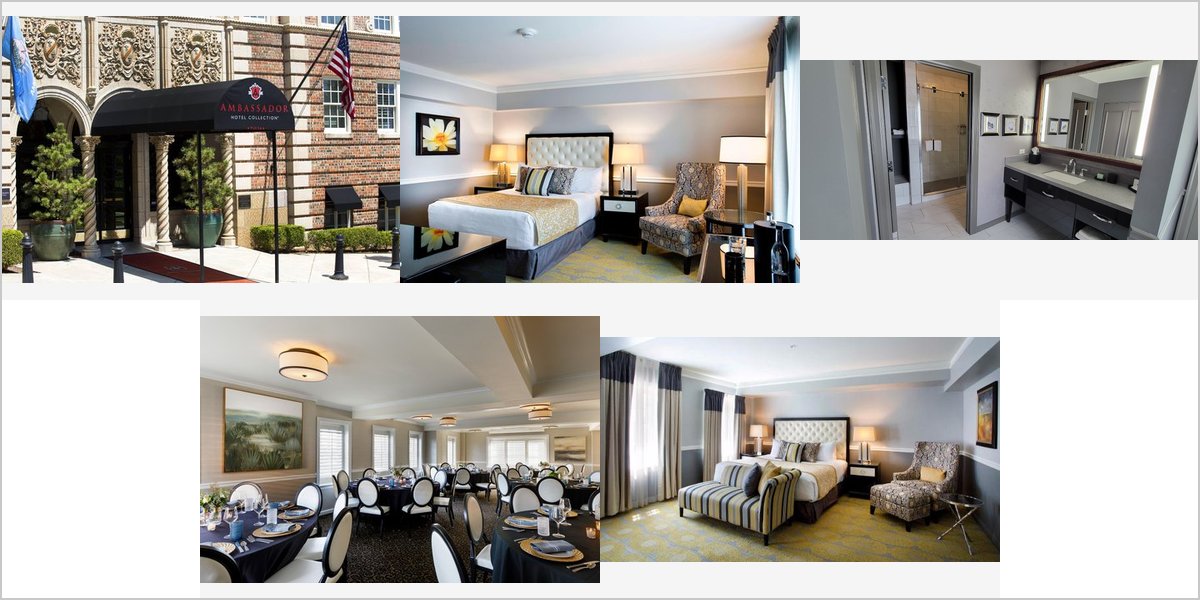
May 29, 2026
The Ambassador Hotel: A Walk-Through of a 1929 Boutique Building
A small 1929 hotel in a city full of Art Deco. Modest rooms are easier to light than grand ones — and the district outside does the heavy lifting.
The Ambassador Hotel occupies a 1929 building in Tulsa, converted into a small boutique hotel with intimate public rooms, period detailing and a restaurant. It sits within reach of the city’s remarkable concentration of Art Deco architecture, which is the byproduct of Tulsa’s oil-boom building programme in the 1920s and 1930s.
Photographically the honest framing is that this is a comfortable, characterful, modest venue in an exceptional architectural city. The hotel gives you intimate warm interiors that are genuinely easy to work in. Tulsa’s Deco stock gives you some of the best early-twentieth-century architecture in the United States, and it is a short distance away.
This is a walk-through in shooting order. We have not photographed a wedding at the Ambassador; small period hotels and terracotta Deco facades behave predictably. Which spaces your booking includes are for their events team.
Ambassador Hotel Tulsa at a glance
| Where | East 14th Street, Tulsa, Oklahoma — near the Deco district |
| Built | 1929; converted to a small boutique hotel |
| Character | Intimate public rooms, period detailing, a restaurant |
| Light | Warm and modest indoors; excellent Deco architecture a short distance away |
| The advantage | Small rooms with moderate ceilings are genuinely easy to light |
Guest rooms first, and the deep-reveal advantage
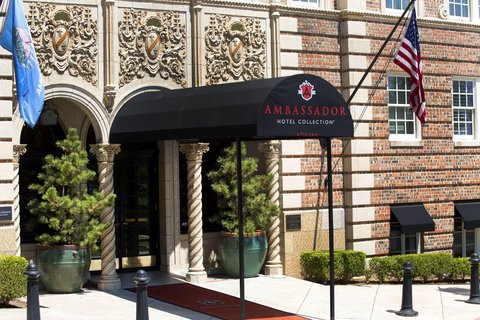
Preparation photographs belong in a guest room, and a 1929 building gives you something a modern hotel does not: reasonably thick walls with window reveals that shape the light. Light entering through a reveal is contained and falls off fast, which gives directional illumination rather than the flat frontal wash a thin-walled window produces.
Place someone a metre inside the reveal, turned into the light, with every artificial fixture switched off and the clutter moved out of frame. That is the best natural light in the building and it requires no equipment. Ask for a higher floor if possible, since it usually means less obstruction and cleaner light.
In a small hotel this is also the largest single opportunity in the day, because the public rooms are modest and the preparation coverage is a meaningful share of the gallery.
The public rooms: small is easy
This is the genuine advantage of a boutique hotel over a grand one and it is consistently underrated. In a large ballroom with a high decorated ceiling, bounce flash returns almost nothing and you need stands, modifiers and real power. In a small room with a moderate pale ceiling, a bounced on-camera flash comes back strong and soft — the whole ceiling becomes a large diffuse source and one unit does the job.
So the lighting problem here is gentle. An on-camera bounce handles moving coverage, and one small warm-gelled light on a stand handles a considered portrait. That means less equipment, faster working and more attention on the people, which shows in the photographs.
The trade is scale and distinctiveness. Small warm rooms will not carry a frame or identify themselves, and there is no grand staircase or ornate ballroom. So go tighter, use longer lenses, let faces fill the frame, and treat the interiors as a studio rather than as a subject.
Period detail and the restaurant
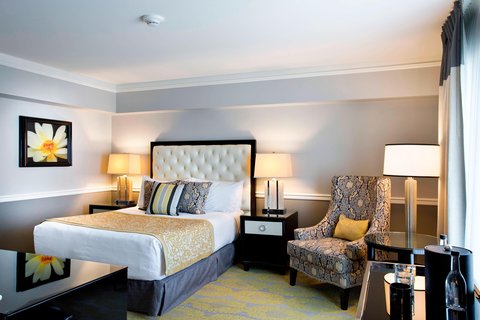
A 1929 conversion usually retains some detail worth shooting on its own — joinery, tilework, a staircase, light fittings, a lobby floor. Those close frames cost nothing in access, they belong to the building rather than being generic, and they give a gallery the quiet images it needs between portraits. In a small venue they matter more than usual, because there are fewer wide frames available.
A hotel restaurant is worth considering as a location if it is included. Restaurants tend to have better-considered lighting than function rooms — table lamps, pendants, warm practicals at head height rather than recessed downlights overhead — which means the light models faces instead of dropping onto them. Place people near a pendant or a lamp rather than in the middle of the floor and much of the work is done.
Keep the room warm in white balance and faces slightly cooler, since a period hotel adds amber from every direction and skin needs some coolness to read naturally.
Tulsa's Deco district, and the timeline
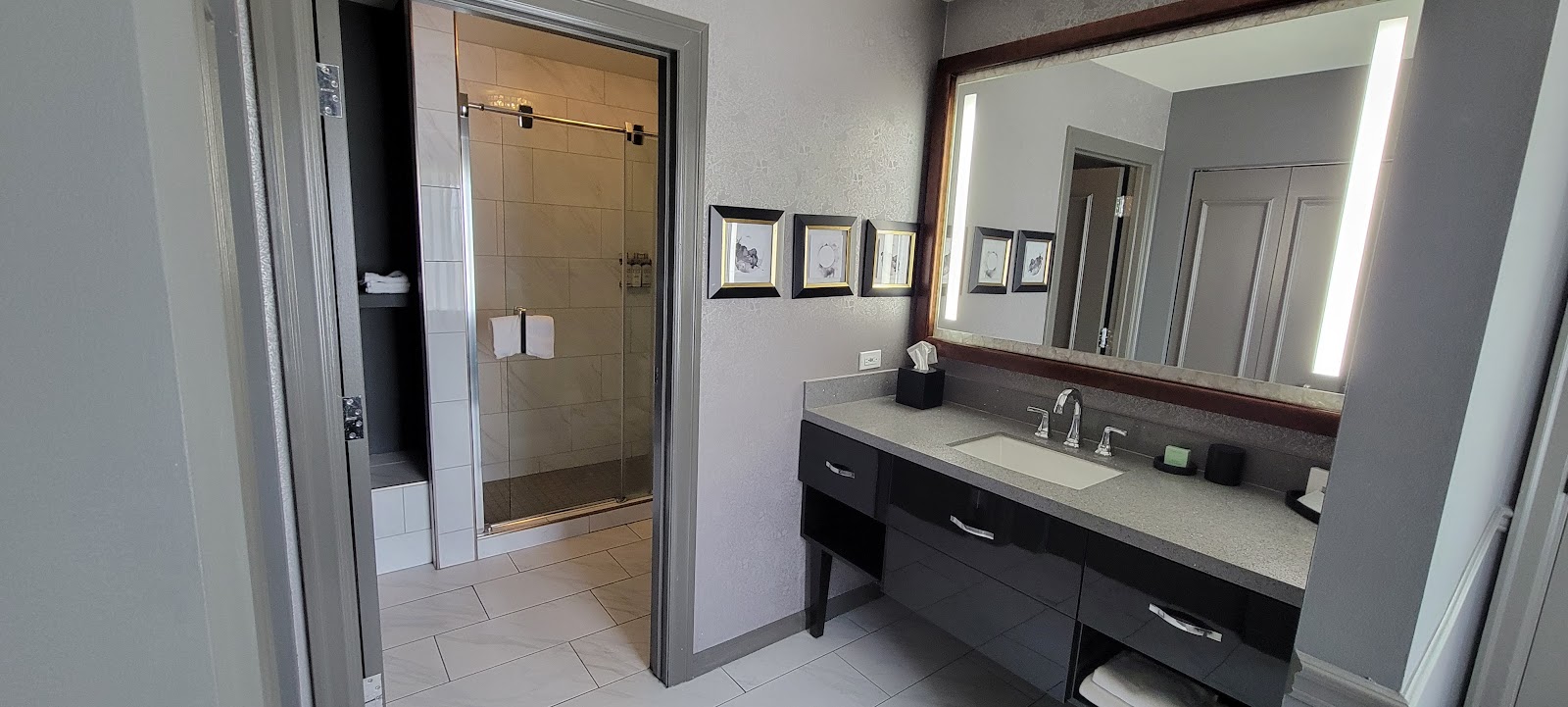
This is where the venue’s photographic value actually sits, and it deserves a proper block rather than ten leftover minutes. Tulsa has one of the finest collections of Art Deco architecture in the United States — terracotta, zigzag and streamline styles, fine low-relief ornament, geometric patterning and metalwork — concentrated in and around downtown.
Architectural terracotta and Deco relief behave the same way: they are fine in scale and low in depth, so they come alive under raking light and disappear under flat or frontal light. The establishing frames belong in the hour when low sun rakes along a facade, shot obliquely so the detail runs away from the camera, with a longer lens compressing several bays.
In a downtown grid that window is short — perhaps fifteen or twenty minutes before the sun goes behind the next block — so it is worth establishing in advance rather than guessing. Then the twenty minutes after sunset, when streetlight balances the sky and terracotta holds its colour.
Oklahoma’s heat and wind govern the length of the block: keep it tight in summer, plan bare or minimally modified flash outdoors, and expect veils and hair to move.
What works in your favour
- Small rooms with moderate pale ceilings mean bounce flash genuinely works
- Deep 1929 window reveals give contained directional daylight in guest rooms
- Period detail gives quiet close frames that belong to the building
- A restaurant with warm practicals at head height models faces rather than dropping on them
- Tulsa’s Art Deco district is among the finest in the country and it is close
What to plan around
- Small warm rooms will not carry a frame or identify themselves
- No grand staircase, ballroom or architectural drama
- Warm throughout with no neutral reference; a differential white balance is needed
- The Deco raking-light window in a downtown grid may be only fifteen or twenty minutes
- Oklahoma heat and persistent wind limit the outdoor block
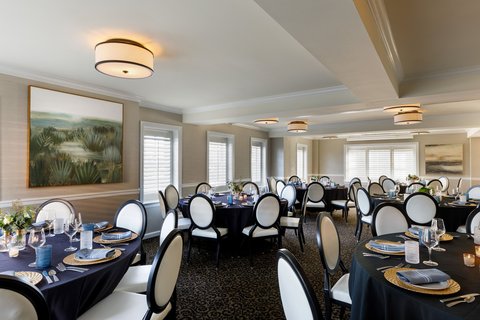
More frames from Ambassador Hotel Tulsa
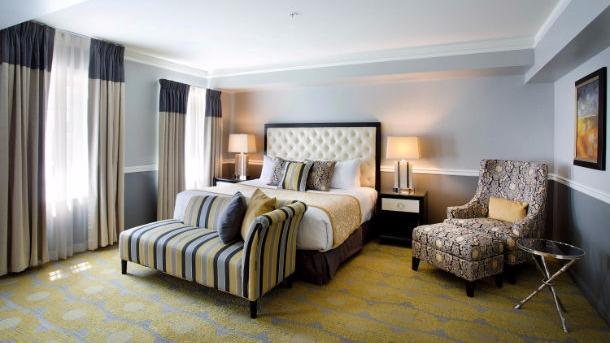
Ambassador Hotel Tulsa wedding photography: common questions
Is a small hotel harder to photograph than a grand one?
Easier to light, harder to make distinctive. Small rooms with moderate pale ceilings return a bounced flash strongly, so one on-camera unit does what stands and modifiers are needed for in a ballroom. What small rooms will not do is carry a frame or identify themselves, so go tighter and treat them as a studio.
Where is the best natural light?
A guest room, a metre inside a window reveal. A 1929 building has walls thick enough that the reveal shapes the entering light and makes it fall off fast, giving directional illumination rather than a flat wash. Switch off every artificial fixture and move the clutter first.
Is the restaurant worth using?
Often yes, if included. Restaurants tend to have better-considered lighting than function rooms — table lamps and pendants at head height rather than recessed downlights overhead — so the light models faces instead of dropping onto them. Place people near a pendant rather than in the middle of the floor.
Why does Tulsa's Deco architecture matter so much here?
Because it is where the venue’s photographic value sits. Tulsa has one of the finest Art Deco collections in the country, a short distance away, and Deco relief and terracotta come alive under raking light. Budget a proper block for it rather than ten leftover minutes.
When should the Deco facades be photographed?
In the hour when low sun rakes along them, shot obliquely so the fine low-relief detail runs away from the camera. In a dense downtown grid that may be only fifteen or twenty minutes before the sun goes behind the next block, so establish it in advance rather than guessing on the day.
More Tulsa venue guides
We are writing a photographer’s guide to every venue we would happily shoot in Tulsa. Here are three more, plus the full index:
- Cain’s Ballroom: Field Notes on a 1924 Dance Hall
- The Gilcrease Museum: Building the Shot List Across Gardens and Galleries
- The Mayo Hotel: Lighting a 1925 Terracotta Tower
Planning a wedding at Ambassador Hotel Tulsa?
A small hotel and a great Deco city is a good combination if the district gets a proper block. Tell us your date and we will work out the raking-light window and plan the walk.