 The House of Blues, Cleveland: What It Suits and What It Does Not
The Columbus Zoo: Field Notes
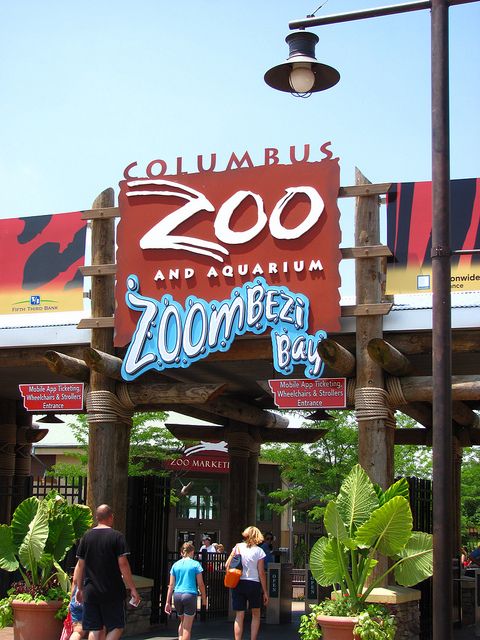
The site is enormous. That is the first problem, not the last.
The first problem at this venue is not light or barriers. It is distance.
A modern zoo of this scale covers hundreds of acres and is organised as geographic regions connected by long paths, which means the walk between two ends of the site is measured in kilometres rather than metres. Many operate internal transport for exactly that reason.
For a wedding that has a direct consequence: a party in formal clothing cannot cover the site, and a photographer who plans frames at opposite ends will spend the day walking rather than photographing. The schedule has to be built around a defined area, chosen in advance, and everything else has to be given up.
That is a different problem from the ones a small venue sets, and it is the one that most often wrecks the coverage — not because any individual frame is hard, but because the good frames are forty minutes apart and there is no forty minutes.
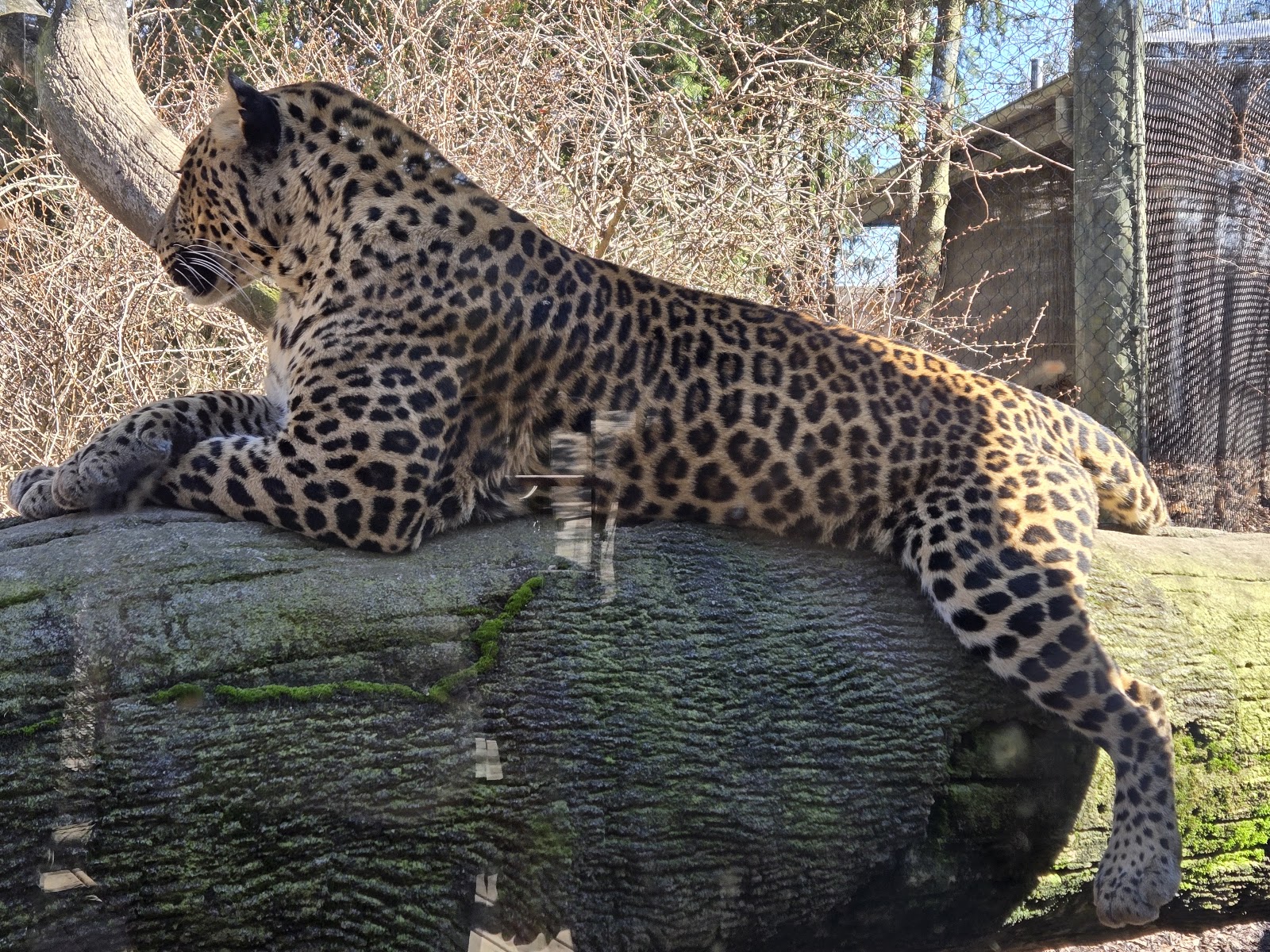
The second problem is the one every zoo has: barriers. Glass, mesh, bars, moats, wires and hidden fences all exist for good reasons and all of them are hostile to a camera. The frame everyone imagines — the couple with an animal behind them — is the hardest one on the property and it almost never works as imagined.
The third is public access, because a zoo is a busy attraction and a wedding happening during opening hours happens among thousands of visitors.
And the fourth is the light, which at a site like this is mostly open sky. Modern zoo design favours large naturalistic enclosures with long sightlines, which means the public paths are broad and largely unshaded — so the middle of a summer day is exposed in a way a wooded site would not be.
The compensations are the setting and the landscaping. The site sits on the Scioto River north of Columbus, which gives water frontage, mature riparian trees and genuine landscape on a flat glaciated plain that otherwise has none.
Columbus sits at about forty degrees north; this site is a little north of the city at roughly eight hundred and fifty feet. The June noon sun reaches around seventy-three and a half degrees, the December noon sun about twenty-six and a half, and civil twilight is roughly thirty-one minutes.
We have not photographed a wedding here. Which areas are bookable, whether after-hours access is offered and what internal transport exists are questions for their team — and all three shape the day.
The Columbus Zoo at a glance
| Where | A very large zoo on the Scioto River north of Columbus |
| Problem one | Scale. The site is kilometres across and the party cannot cover it |
| Problem two | Barriers — glass, mesh, bars, moats and overhead wires |
| Problem three | Public access; thousands of visitors during opening hours |
| Problem four | Broad unshaded paths and a lot of open sky |
Problem one: scale, and how to beat it
The solution to distance is to stop treating the site as one venue and to treat it as a small one that happens to sit inside a large one.
That means choosing a working area before the day — a region of perhaps two or three hundred metres across containing the ceremony space, a reasonable background variety and a route that does not double back — and committing to it entirely. Everything outside that area is given up, deliberately, in advance.
The area worth choosing is almost always the one with water, mature trees and built structures rather than the one with the most interesting animals. That sounds backwards and it is correct: the animals will not appear in most of the frames anyway, and the trees and water will appear in all of them.
The walkthrough is what makes this possible and it is not optional here. On a site this size the good positions cannot be found during a wedding, and a photographer discovering the property on the day will produce competent frames in whatever space they were put in and miss everything else.
Internal transport is worth asking about specifically. Many large zoos operate carts or trains, and access to one changes the calculation completely — it converts a forty-minute walk into a five-minute ride, which puts a second area back within reach. It is also, incidentally, a good frame: a wedding party on a zoo train is a picture with some humour in it.
Plan the route downhill and in one direction. A circuit that returns to the start is easier on everyone than an out-and-back, and a party in formal shoes will manage a single loop and resent a second.
Timing matters more than usual for the same reason. Every transition costs real minutes, so a schedule that allows fifteen minutes between the ceremony and the formal photographs is a schedule that has not accounted for the walk. Twenty-five or thirty is realistic.
One practical note about terrain. Zoo paths are broad, paved and gently graded because they are designed for pushchairs and wheelchairs — which is genuinely good news for anyone in formal dress, and better than most large outdoor venues in this respect. The surfaces are reliable and the gradients are mild.
The tradeoff is that those same broad paved paths are visually dull. A wide grey path is the least interesting foreground available, and frames composed from the middle of one will show it. The fix is to shoot from the path’s edge toward the planting rather than along the path, and to get low enough that the paving drops below the frame.
Problems two and three: barriers, and the public
Each barrier type has one technique that works and the rest is wasted effort.
Glass: put the lens physically against it. A lens hood pressed to the surface eliminates reflections entirely, because no light from behind the camera can reach that point. Shoot wide open so surface marks blur out, and accept lower contrast — enclosure glass is thick and rarely optically clean, so a slight haze is inherent and best corrected afterwards rather than fought at the time.
Mesh: get close, use the longest lens and the widest aperture available. Mesh in front of the lens disappears when it is far inside the near limit of depth of field, because the wires are so far out of focus they blur into nothing. The failure mode is a partly resolved wire, which reads as a grey veil — and the fix is always closer and wider, never further and stopped down.
That requires the sun to be off the mesh. A sunlit wire is bright enough to register even when badly out of focus, so the same mesh that vanishes in shade will haze a frame in direct light. Work the shaded side and check.
Bars: they do not disappear. Compose them in deliberately — a subject framed between two, or a portrait where a bar is a clean vertical — or move to a part of the enclosure with a glass panel.
Moats and distance: accept that the animal and the people are two separate photographs. A long lens for the animal, a normal lens for the couple, and no attempt to force both into one frame. The two good separate frames always work and the composite almost never does.
And overhead wires: look up before every frame. An aviary tension cable crossing the top of an otherwise clean composition is the single most common fault in zoo photography, and it is invisible in a viewfinder until it is glaring in the edit.
The public is the third problem and it has one real solution, which is scheduling.
Establish whether the booking includes access after the zoo closes. An open zoo on a summer Saturday has thousands of visitors, which means strangers in every frame, crowded paths, and a photographer waiting for gaps rather than choosing positions. After closing it becomes a private landscaped park with water and mature trees and nobody in it — a completely different venue, and worth paying for.
The hour also decides the animals, if they matter. Most species are least active in the middle of a warm day and most active early and late, so the hours that suit photography also suit the animals doing something. A midday zoo is largely a zoo of sleeping animals in shade.
Indoor houses reverse that entirely: an aquarium or a nocturnal house runs on its own artificial cycle, which makes those spaces reliable at any hour and gives consistent light that nothing outdoors can match. They are also the wet-weather answer.
If the event is during opening hours, the practical approach is to work tight and low. A long lens at a wide aperture compresses the background and throws passing visitors into unrecognisable colour, and a low camera puts planting rather than crowds behind a subject’s head. Both are habits rather than tricks and both work.
- Choose one working area in advance and give up the rest of the site
- Ask about internal transport — it can put a second area back in reach
- Press the lens hood to enclosure glass; get close, long and wide open for mesh
- Look up before every frame: overhead wires are the commonest fault
- After-hours access turns this into a private landscaped park
Problem four: open sky, and the year
The light on a modern zoo’s public paths is mostly open sky, and that needs managing rather than enduring.
Naturalistic enclosure design gives long sightlines and broad paths, which means the shade is in patches rather than continuous — so on a clear summer day the working areas are genuinely exposed at midday, with a sun reaching seventy-three degrees and no canopy over the paths.
Ohio’s compensation is the humidity, and it is substantial. Summer here is humid, and water vapour scatters light and fills shadows — so a sunlit path in July carries perhaps two stops less contrast than the same sun angle in a dry climate. Shadow edges are softer, eye sockets are less black, and a midday portrait is workable in a way it simply is not in the desert.
That is worth stating as a regional advantage rather than assuming it applies everywhere. The technique that fails in Arizona — standing someone in open shade at noon and exposing normally — works adequately in Ohio because the atmosphere is doing the fill.
Where there is tree cover, Ohio hardwoods do it properly. Sugar maple and oak have dense rounded crowns of broad leaves and cast clean solid shade with no dapple to manage, which means a portrait under one at any hour is straightforward. The riparian species along the Scioto are the ones to find: sycamore above all, whose mottled white, grey and tan bark peels in irregular plates and makes a mature trunk into a pale abstract pattern — one of the best natural portrait backgrounds in the region.
Cottonwood and willow fill in along the water and both turn yellow rather than red, which gives the riverbank a different autumn palette from the maples inland.
The river itself is the site’s best natural asset and it is easy to underuse. On a flat glaciated plain with no relief, water is the only element that provides reflection, depth and a horizon — and a low camera at the water’s edge with the far bank compressed behind gives a frame that does not look like a zoo at all.
Reflections depend on wind, which in central Ohio is frequent and not strongly tied to the time of day, unlike in the desert. So a mirror is luck rather than schedule. Broken water still works: a low sun on a rippled surface gives a path of speculars running toward the camera, and that is a strong frame in its own right.
As to the year, mid to late October is the best fortnight here. Sugar and red maple turn scarlet and orange, oak and hickory go bronze, the riverbank cottonwoods go yellow, and the crowds have thinned from their summer peak. The timing moves with the season — a warm dry autumn delays and dulls it, a cool wet one brings it forward — so plan a fortnight either side of the third week rather than a specific weekend.
Spring is the short brilliant window: magnolias on bare branches in late March, everything leafing by early May, and the whole site fresh before the summer crowds and humidity arrive. Its risk is reliability — an Ohio spring can produce frost, heat and thunderstorms in the same fortnight.
Winter is honest about itself. A nine-hour December day with weeks of flat grey overcast is soft, even light that flatters faces and gives landscape nothing, and a large outdoor site in that weather is a long cold walk. The indoor houses become the whole venue, which they are adequate for and not more.
The one winter compensation worth knowing is that bare deciduous trees against a grey sky read as fine black branch structure — a graphic frame that a leafed tree cannot make, and available for four months. A mature sycamore in silhouette in February is a genuinely good background.
More frames from The Columbus Zoo
The Columbus Zoo wedding photography: common questions
What is the first problem here?
Distance. The site is kilometres across, so a party in formal clothes cannot cover it. Choose one working area in advance and give up the rest.
Which area should I choose?
The one with water, mature trees and structures — not the one with the most interesting animals. The animals will not be in most frames; the trees and water will.
How do I photograph through mesh?
Close, longest lens, widest aperture, and on the shaded side. Sunlit wire registers even when badly out of focus.
Can we get the couple and an animal in one frame?
Rarely, and it is not worth building the day around. Treat them as two separate photographs — a long lens for the animal, a normal lens for the couple.
Is midday workable outdoors?
In Ohio, reasonably. Summer humidity scatters light and fills shadows, so contrast runs about two stops lower than the same sun angle in a dry climate.
When is the best time of year?
A fortnight either side of the third week of October — maples scarlet, riverbank cottonwoods yellow, and the summer crowds gone.
More Columbus, OH venue guides
We are writing a photographer’s guide to every venue we would happily shoot in Columbus, OH. Here are three more, plus the full index:
- COSI Columbus: What It Suits, and What It Does Not
- The Franklin Park Conservatory, Columbus: The Light Through the Day
- The Valley Dale Ballroom, Columbus: The One Decision That Governs Everything
Planning a wedding at The Columbus Zoo?
A very large site, used properly. Tell us your date.