 The Tlaquepaque Arts Village, Sedona: Field Notes on Courtyards
The Silverleaf Club, Scottsdale: The One Decision That Governs Everything
One decision: which way you face. Uphill or down.
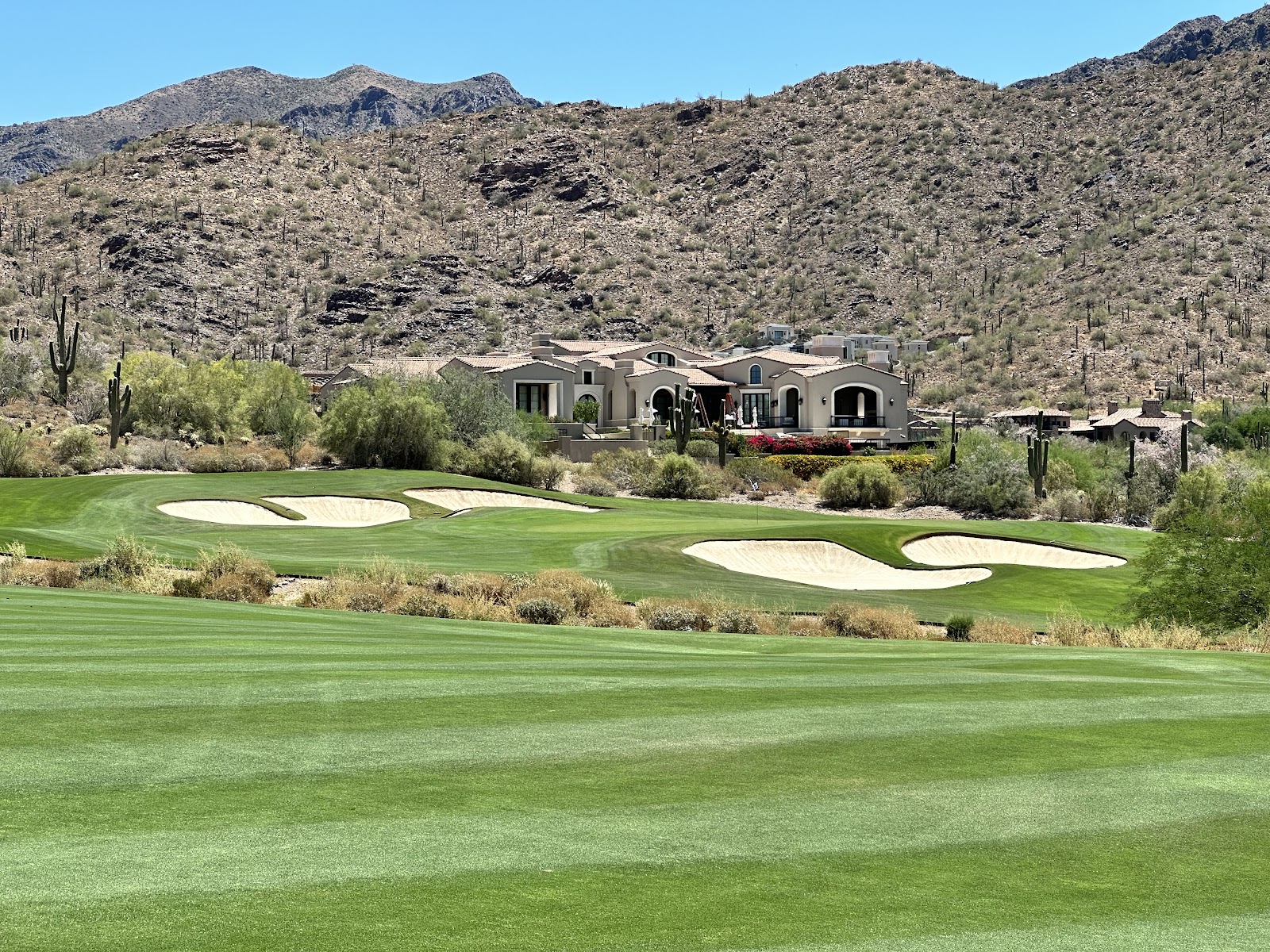
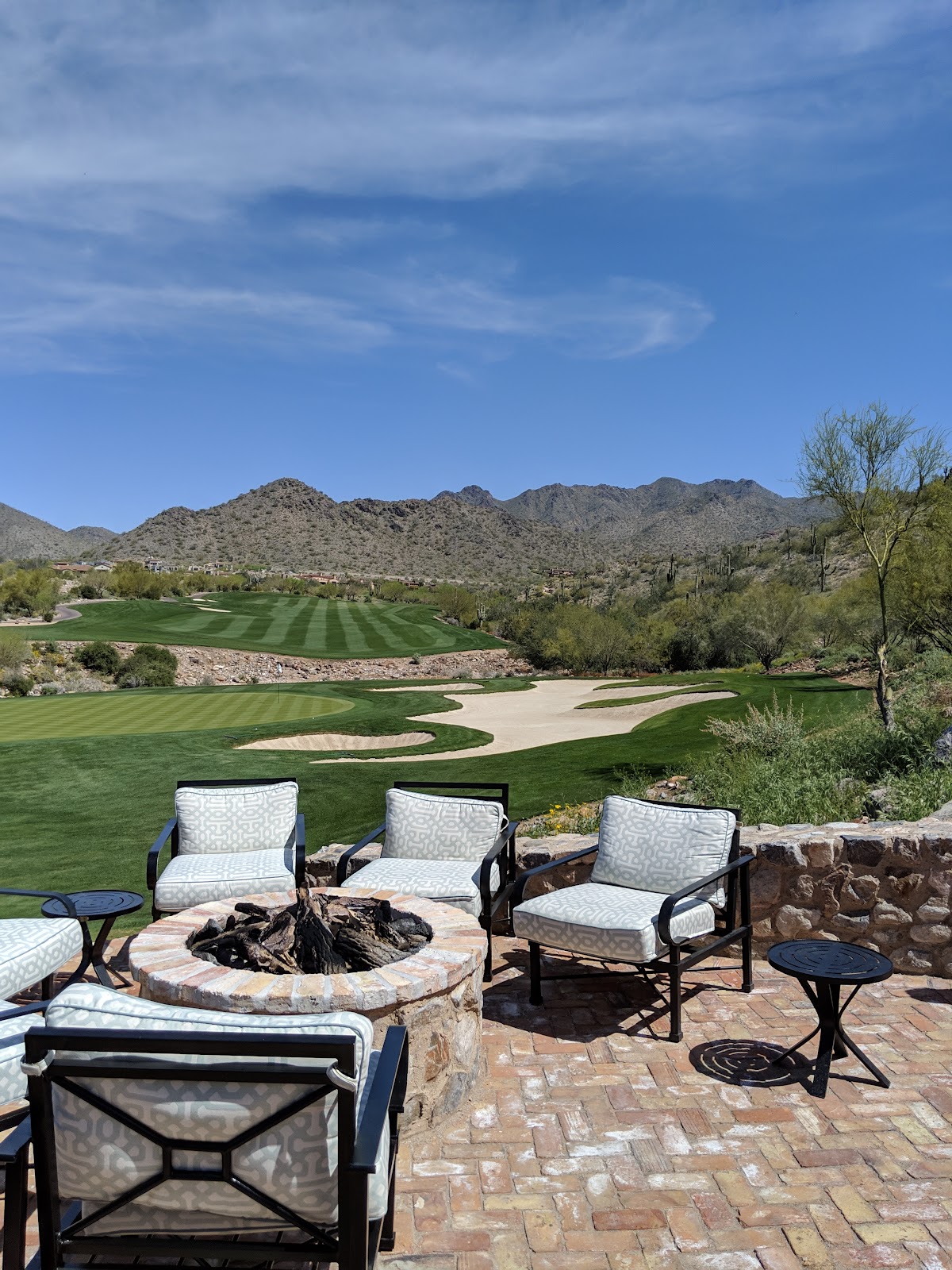
At a club set high on a bajada below a mountain range, one decision governs everything and it is a compass decision: uphill or down.
Uphill is the McDowell Mountains — granite and gneiss, rugged, steeply weathered, rising to around four thousand feet immediately above the property. Downhill is the bajada falling south-west across the best saguaro country in the Sonoran Desert toward the Phoenix basin, with Camelback and the valley beyond.
Those are two completely different pictures and they are lit at opposite times. A frame facing the mountains is front-lit in the evening and back-lit in the morning; a frame facing the valley is the reverse. So the direction is not a matter of taste but of hour, and choosing one commits the schedule.
The bajada is worth understanding because it is the reason the site works at all. A bajada is the coalesced alluvial apron at the foot of a range — the gently sloping fan of material washed down over a very long time, continuous, well drained, and typically the finest saguaro habitat in the desert because it has the best drainage and the least frost of any desert surface.
That gives a property on one two things a valley-floor site cannot have: a steady one-to-three percent grade, which produces genuine sightlines in both directions, and dense mature cactus.
North Scottsdale here sits at about thirty-three and three-quarter degrees north, at roughly two thousand three hundred to two thousand six hundred feet. The June noon sun reaches around eighty degrees, the December noon sun about thirty-three, and civil twilight is roughly twenty-five minutes — short, with an abrupt fall-off.
We have not photographed a wedding here. Which terraces and lawns are bookable, what each of them faces, and the permitted hours are questions for the club — and the middle one is the question this whole guide turns on.
The Silverleaf Club at a glance
| Where | A private club high on the McDowell bajada, north Scottsdale |
| The decision | Uphill to the McDowells, or downhill across the bajada to the valley |
| Uphill | Front-lit in the evening, back-lit in the morning. Rugged granite and gneiss |
| Downhill | The reverse. Saguaro country, Camelback and the Phoenix basin |
| Ask first | What each bookable space actually faces |
Facing uphill
The mountains are the more dramatic of the two directions and the evening is when they work.
In the last hour the sun is behind the camera and low, which means it strikes the range frontally. Granite and gneiss take that light and return a warm pink-grey, and the raking angle picks out every ridge, gully and weathered face — so a range that reads as a flat grey mass at noon becomes a structured, textured, modelled subject with an hour to go.
The gneiss is worth knowing about because it explains the texture. It is a metamorphic rock with visible banding, formed under heat and pressure, and the bands weather at different rates — which gives the range a striped, ribbed quality at distance that a uniform rock would not have. In the exceptionally clear dry air here that banding reads across many miles.
The frame needs a moderate telephoto. A wide lens renders the range at its true angular size, which from this distance reduces four thousand feet of mountain to a modest ridge across the top of the frame. Compression from further back restores the mass the eye perceives, and it is worth walking back for.
The best twenty minutes are the lag, and this is the region’s single most reliable good light. After the sun has dropped below the western horizon the ground goes into shade while the high rock above is still fully lit — which gives a subject in soft, even, easily-metered shadow against a warm dramatic background, with a ratio small enough that one modest source bridges it.
That window is roughly twenty minutes and it happens every clear evening. The club’s own staff will know precisely when it ends on a given lawn in a given month, because it governs their scheduling too.
The morning facing uphill is the opposite and it is underrated. The sun rises behind the range, which means the mountains are back-lit and read as a dark silhouette against a bright sky — a graphic frame rather than a textured one, and a very strong one for a couple placed small at the bottom of it.
It also has the still air. Desert mornings are calm because the thermal circulation that produces the afternoon breeze has not begun, so a veil hangs, hair stays put and a slow shutter is available. The afternoon has none of that.
Noon facing uphill is the failure case and it is worth knowing so it can be avoided. At seventy or eighty degrees of sun elevation the range is lit from almost directly above, which means no shadows describe its form and it flattens to a pale grey wall. There is no technique that recovers it; the answer is to point the camera elsewhere until three.
Facing downhill
The valley direction is the quieter picture and the more specifically local one.
Facing down the bajada, the frame is a long descending slope covered in mature saguaro, with the Phoenix basin spread out in the distance and Camelback Mountain as a recognisable red mass to the south-west. That is a picture about the desert and the city at once, and it is available from a standing position because the slope does the elevation for you.
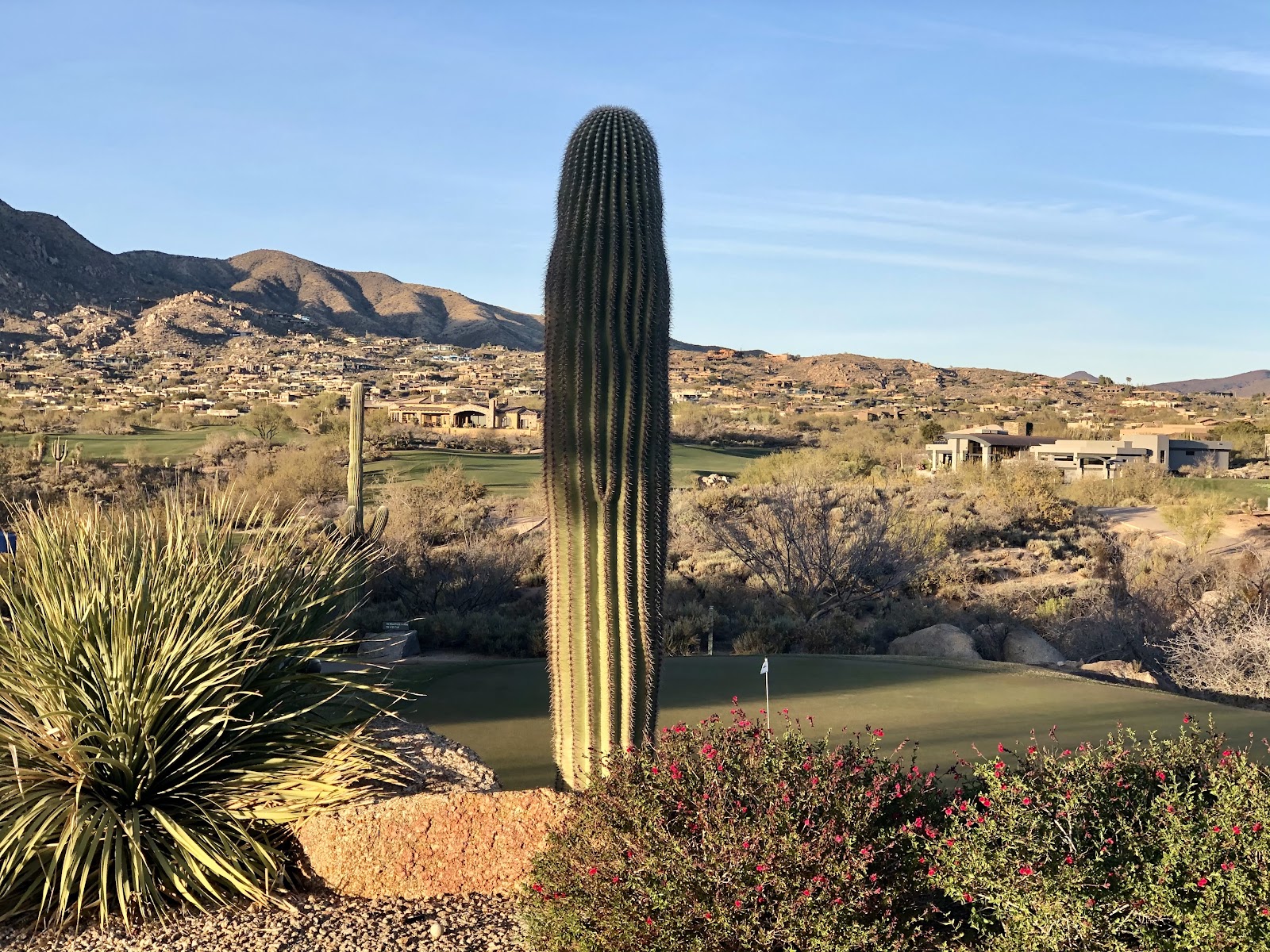
The saguaro stand is the element to use properly, and it is usually used badly. A dense stand behaves as a texture rather than as a set of individual plants, and the technique is a low camera with a long lens: compression stacks the columns into overlapping layers and the ground reads as a cactus forest. From standing height with a wide lens the same ground reads as sparse scrub, which is a failure of method rather than of the landscape.
A single saguaro is the opposite object and it needs placing rather than including. Behind a head it is a distraction; offset with space around it, it is an anchor; and backlit against a clean sky at low sun its silhouette is so recognisable that it needs nothing else in the frame.
The morning is when the valley direction is front-lit, and it is the better of the two. The low sun comes across the bajada from the east, rakes along the slope, throws long shadows from every cactus and every rock, and picks out the relief that a higher sun erases. Combined with the still air, that makes a dawn portrait session facing downhill the technically strongest hour on the property.
The evening facing downhill is back-lit, which is a different and still useful frame. The sun is low in front of the camera, the saguaros rim and separate, the ground goes into warm shadow, and a subject standing in it is haloed. The decision to make in advance is whether the sun is inside the frame or just outside it: inside it flares and the contrast collapses, which can be beautiful and needs a clean front element; blocked behind a saguaro or a boulder it gives the rim without the flare, which is the safer picture.
Camelback is the anchor in that direction and it wants the same treatment as the McDowells — a moderate telephoto, exposure set on the rock, and the subjects lifted by a warm-gelled source at about a stop over the ambient falling on them.
The gel is not optional and it is the state’s most reliable correction. At this latitude in very dry air the sky is a deep saturated blue, which means open shade is lit by a blue source and reads distinctly cool while sunlit rock reads warm. An ungelled flash puts a yellow-green face in front of a red mountain, which is the classic desert error.
The city in the distance is a real element after dark and it is worth one frame. From a bajada at two thousand five hundred feet the Phoenix basin at night is a wide field of light below the camera, and a couple on a dark terrace above it with the city spread out behind is a picture no valley-floor venue can make.
It also means the sky is bright. Stars are not a realistic subject from here, unlike from properties further out into the desert — so light the foreground and let the sky go black rather than attempting both.
And the shade problem applies in every direction. Palo verde and mesquite carry leaves measured in millimetres on open filigree branches and cast a hard moving dapple rather than cover, so a face beneath one at eighty degrees of sun elevation is covered in hard patches that nothing recovers. The shade at a club is the built structures and the irrigated specimen plantings — olive, Aleppo pine, oversized mesquite — and finding those on arrival is five minutes that decides the whole midday.
- Ask what each bookable space faces — the answer commits your schedule
- Uphill is an evening frame; downhill is a morning one
- The lag is twenty minutes of the region’s most reliable light, every clear evening
- Low camera and a long lens to make a saguaro stand read as a forest
- Warm-gel the key: blue-sky shade against warm rock is the desert split
Indoors, and the year
A private club has interiors and they follow a predictable pattern that is worth anticipating.
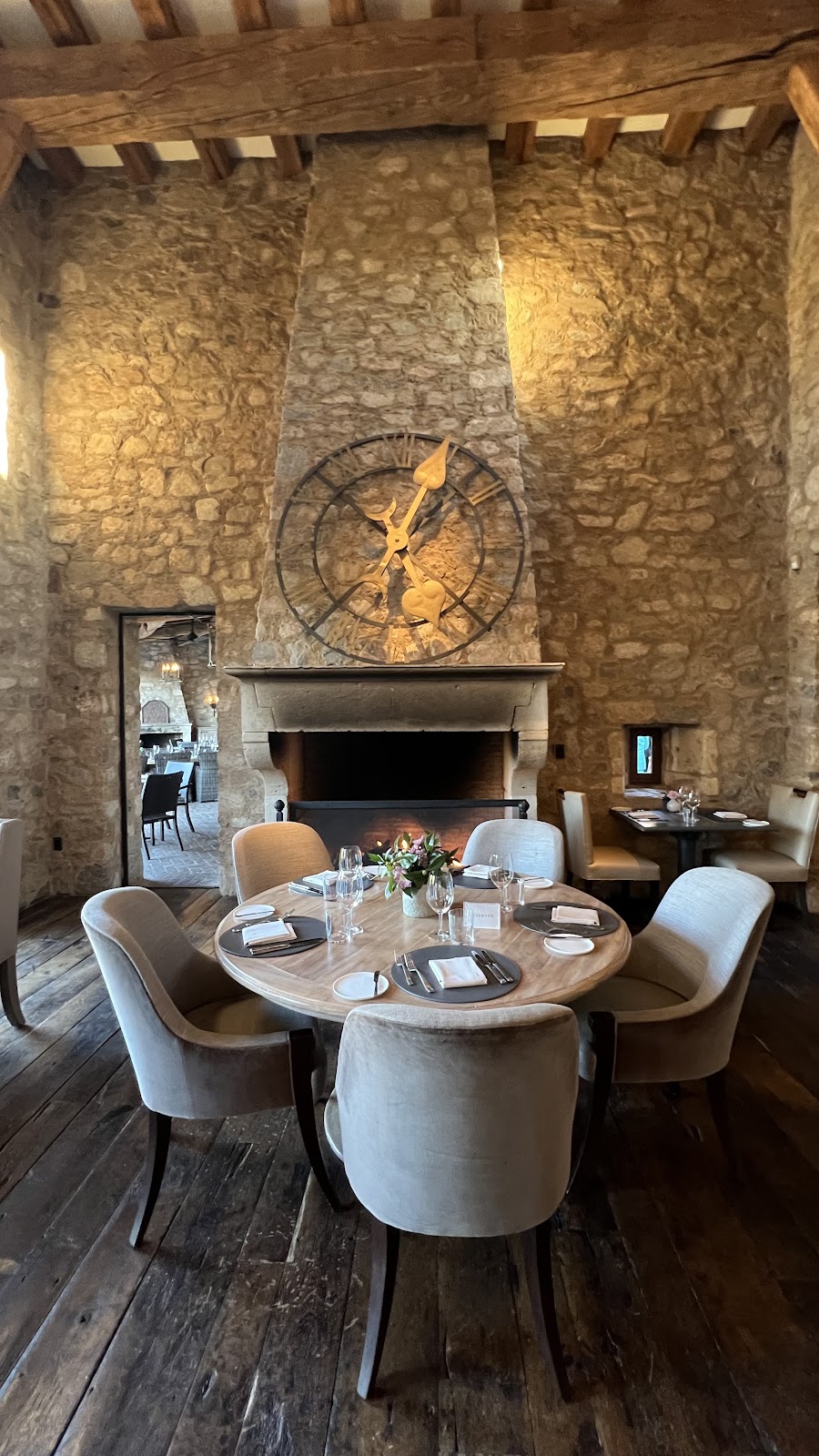
Clubhouse architecture in the Southwest is typically generous in scale, finished in warm stone, dark timber and plaster, and glazed heavily on the view side. Each of those sets a condition.
The glazing is the best of them. A room with one large glass wall is lit by a single very large source, which means a subject standing three or four metres in from it has clear modelling, a soft shadow edge and no top light — the best unassisted portrait light in any modern building, needing nothing but a position.
The corollary is that the side away from the glass is very dark, so a group should be arranged parallel to the glass rather than across the room. Arranged perpendicular, one end will be four stops down from the other.
The exposure trap is the view. A camera metering an interior with a blazing desert landscape beyond the glass will either hold the room and blow the view to white or hold the view and lose the room. Holding both means adding light inside to within about a stop and a half of the exterior, or accepting a blown window and composing so it reads as a shape rather than a hole.
Reflections are the other glass problem. From outside, a glass façade shows what is behind the camera rather than the room behind it, and at some angles the reflection is more legible than the interior. Move sideways before reaching for a polariser — reflections are weakest near perpendicular, and a circular polariser does little at forty-five degrees on a vertical surface.
The dark finishes decide the flash technique. Warm stone and dark timber return very little, so bounce is largely unavailable and the answer is directional sources through modifiers with the room left dark. Where there is pale plaster, bounce off that instead — it is warm, efficient and suits the palette.
Gel everything to match the ambient rather than correcting the ambient to the flash. Clubhouse fixtures are almost always warm tungsten or warm LED, and a daylight-balanced source against them puts a blue face in a golden room.
The year is the low desert’s and it runs opposite to most of this library. November to April is the season: mild, dry, calm, and a December noon sun of about thirty-three degrees that never climbs high enough to flatten a face or erase the mountains’ form — which means directional light for the whole short day, both directions usable, and no bad hour at all.
At two thousand five hundred feet the site is a few degrees cooler than the valley floor year-round, which helps at both ends of the calendar and is a genuine reason to prefer a bajada property.
February to April is the best window in the state, because this desert flowers in spring rather than autumn. Brittlebush yellow across the slope from February, Mexican gold poppy and lupine in March in a year with adequate winter rain, ocotillo putting red on the tips of its whip-like stems, and palo verde flowering a mass of bright yellow through April into May.
A bajada is the best surface in the desert to see a bloom on, because the drainage suits the annuals and the slope presents them at a viewing angle rather than edge-on. A good bloom year here, facing downhill in the early morning, is as good as the state gets. It depends entirely on the previous winter’s rainfall, so it is knowable a month or two ahead rather than a year.
In May the saguaros flower white at the crown of the column, five metres up, which needs a long lens and is a small specific subject rather than a landscape one.
May to September is the honest constraint: afternoons regularly above a hundred and eight degrees even at this elevation, which for a party in formal clothing outdoors is a welfare question rather than a comfort one. A summer schedule belongs at the ends of the day with the middle indoors, where a club is well equipped to hold it.
The monsoon from July is the compensation and on a bajada below a range it is spectacular: moist air lifting over the McDowells builds towering convective cloud through the afternoon, thunderstorms come late, and the half hour after a cell passes gives washed air, wet rock, saturated colour and a low sun under a broken ceiling. It also brings the haboob — a wall of dust advancing across the valley ahead of a collapsing storm, sometimes thousands of feet high — which on a bajada’s long downhill sightlines is as dramatic as anything in these guides, and entirely unplannable.
More frames from The Silverleaf Club
The Silverleaf Club wedding photography: common questions
What is the one decision?
Which way you face. Uphill to the McDowells and downhill across the bajada are lit at opposite times of day, so the direction commits the schedule.
When do the mountains look best?
The last hour, front-lit, and then the twenty-minute lag after the ground goes into shade while the high rock is still in sun.
When is the valley direction best?
Early morning. The low sun rakes across the bajada, throws long shadows from every cactus, and the air is still because the thermal breeze has not started.
How do I photograph a saguaro stand?
Low camera, long lens. Compression stacks the columns into a forest; a wide lens from standing height makes the same ground look like sparse scrub.
How should I arrange a group indoors?
Parallel to the glass wall, never across the room. Perpendicular puts one end four stops down from the other.
Is a bajada site cooler?
A few degrees, year-round, at around two thousand five hundred feet. It helps at both ends of the calendar but does not make a summer afternoon workable.
More Arizona venue guides
We are writing a photographer’s guide to every venue we would happily shoot in Arizona. Here are three more, plus the full index:
- The StoneHouse Venue, Prescott: The Problem, and Four Ways Out of It
- The Vineyard at Florence: The Light Through the Day
- The Westin Kierland Resort, Scottsdale: What It Suits, and What It Does Not
Planning a wedding at The Silverleaf Club?
Mountains one way, a whole valley the other. Tell us your date.