 The Ozark Mountain Lodge, Eureka Springs: The Problem, and Four Ways Out
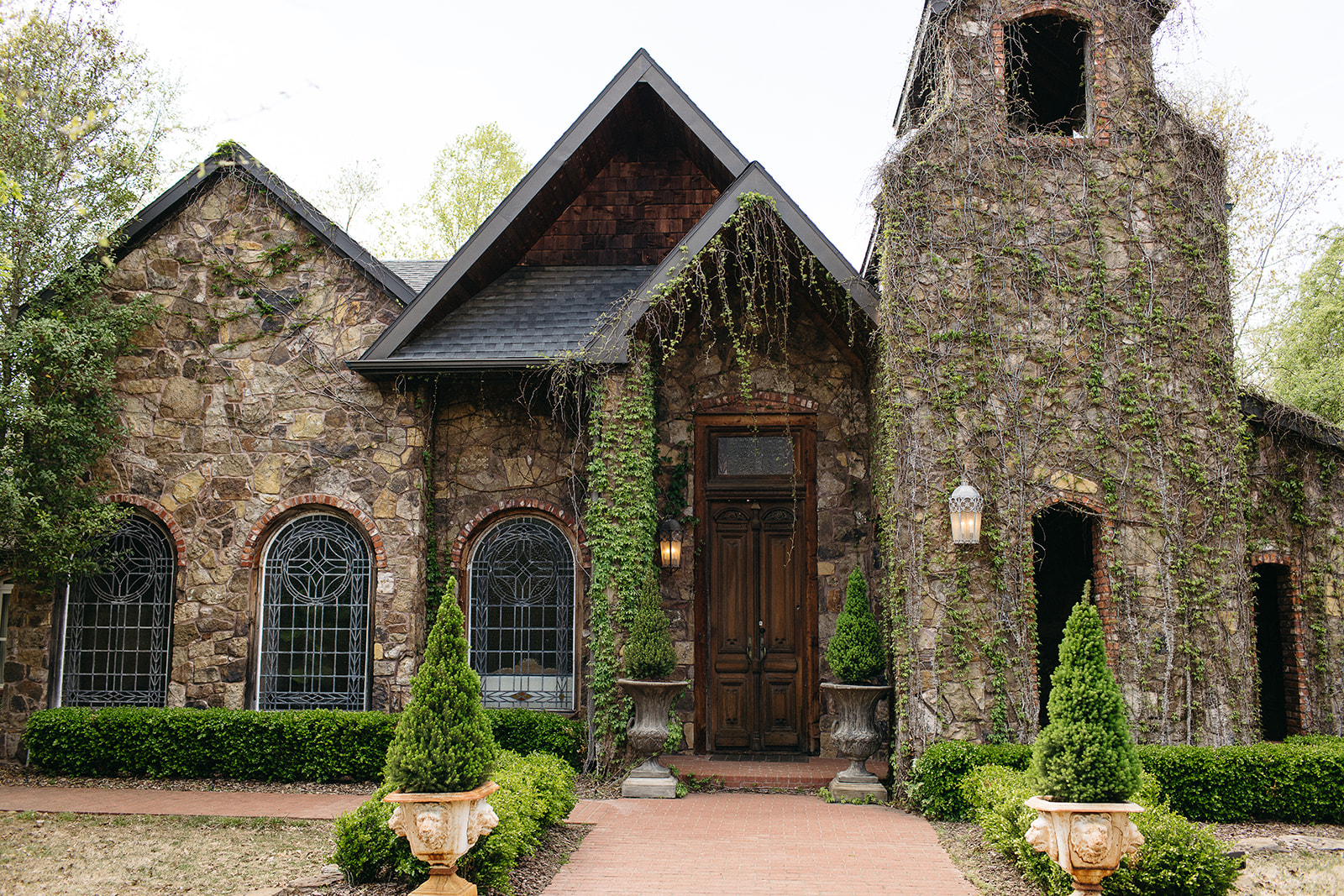
The Stone Chapel at Mattix Farms, Lowell: One Frame and How It Is Made
Stone only exists when the light crosses it. That is the frame.
There is one frame at a stone building that is worth planning the evening around, and it depends on a property of stone rather than on anything about the building’s design.
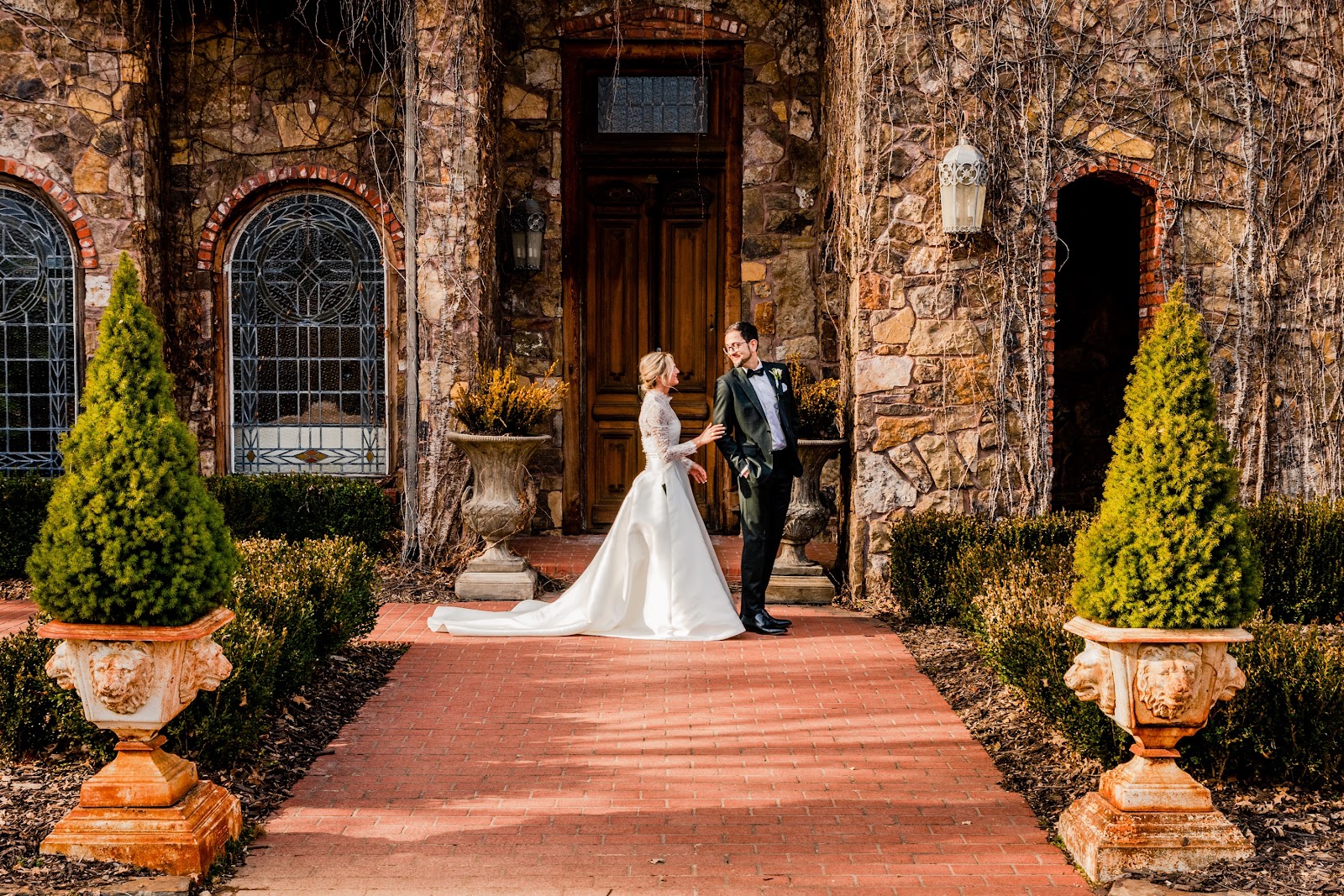
The frame is this: the couple against a stone wall, with the low sun striking that wall at a very shallow angle. It is a simple picture and what makes it work is not the people or the composition but the physics of raking light on a textured surface.
Here is why it matters. Stone is a high-frequency texture — an irregular surface of blocks, mortar joints, tool marks and weathering, at a scale of millimetres to centimetres. Under light that arrives face-on, every part of that surface is lit equally and the texture disappears: a stone wall in frontal light photographs as a flat grey field with a faint pattern on it.
Under light that arrives at a shallow angle across the surface, every projection casts a small shadow and every hollow fills with one. The texture appears, in relief, at full strength. A stone wall in raking light is one of the most beautiful surfaces available to a camera, and the same wall an hour earlier is nothing at all.
The window is narrow, and that is the point of describing it as one frame rather than as a general approach. Raking light means the sun within roughly twenty degrees of the wall’s plane, which for any given wall happens for perhaps twenty or thirty minutes once a day — assuming the sun is on that side of the building at all.
Which means the preparation is: establish which way each wall faces, work out when the sun will be shallow to it, and be standing there. That is a five-minute calculation and it is the difference between the frame and a flat grey background.
Lowell sits in northwest Arkansas at about thirty-six and a quarter degrees north, on the Ozark plateau between Rogers and Springdale. The June noon sun reaches around seventy-seven degrees, the December noon sun about thirty, days run from about nine hours fifty to fourteen hours twenty, and civil twilight is around twenty-eight minutes.
We have not photographed a wedding at this venue. Which spaces and grounds are included, what covered alternatives exist and what the permitted hours are, are questions for their team.
The Stone Chapel at Mattix Farms at a glance
| Where | A stone chapel on farmland at Lowell, northwest Arkansas |
| The frame | The couple against a stone wall with the sun raking across it |
| Why it works | Raking light makes a high-frequency texture appear in full relief |
| The window | Roughly twenty or thirty minutes, once a day, per wall |
| Ask first | Included spaces and grounds, covered alternatives, permitted hours |
Building the frame
Establish the orientations first, and do it on arrival rather than later. Walk the building and note which way each wall faces. An east wall rakes in the first hour after sunrise; a west wall rakes in the last hour before sunset; south and north walls rake at the ends of the day in summer and may never rake in winter, depending on latitude and season.
In northwest Arkansas at the summer solstice the sun rises and sets well north of east and west, which means a north-facing wall gets low sun at both ends of a June day — and in December it gets none at all. That is a large seasonal swing and it is worth checking rather than assuming.
The practical consequence is that a stone building usually has exactly one wall worth photographing against on any given evening, and knowing which one is most of the work.
Place the subjects against the wall, not away from it. This is the decision that is most often got wrong. A couple standing two metres out from a stone wall is photographed with the wall as a background; a couple standing against it, almost touching, is photographed within the surface — and the second version is the one the raking light is for, because the texture and the people are in the same plane and at the same scale.
Standing against a wall also means the light on the people is the same raking light that is on the stone, which is a specific and unusual quality: very low, very directional, from almost exactly to one side. That produces strong modelling with a genuinely dark shadow side, which is dramatic and requires a decision rather than a correction.
The decision is whether to fill it. Left alone, a face in raking light has a bright side and a dark side with little in between, which is a strong and deliberate-looking portrait. Filled — with a reflector on the shadow side, or a small source two stops under the key — it becomes a conventional and more universally flattering portrait that keeps the wall’s texture.
Both are right. What is not right is discovering the ratio after the fact, because the window is twenty minutes and there is no second attempt.
Expose for the stone. The lit face of a raking wall is the brightest thing in the frame and it holds the detail that the whole frame is about, so it sets the exposure — and since the subjects are in the same light, exposing for the stone exposes them correctly too. That is the convenience of standing them against it.
The white balance needs care. A low sun in the last half hour is strongly warm, and pale grey limestone reflects that warmth without adding much of its own — which means the whole frame is warm and the temptation is to correct it. Correcting it neutralises the stone into a dead grey and removes the reason for taking the picture. Balance for daylight, or slightly warm, and let the frame be gold.
Then make it several ways: a wide frame showing a run of wall with the subjects small in it, which is the version that shows the texture best; a tight frame at portrait distance where the stone reads as pattern behind two faces; a frame along the wall with the subjects at a distance so that the light rakes toward the camera; and one of the wall alone, because a raking stone surface is a photograph in its own right and two or three abstract frames in a set are worth having.
The chapel, the farm and the light between
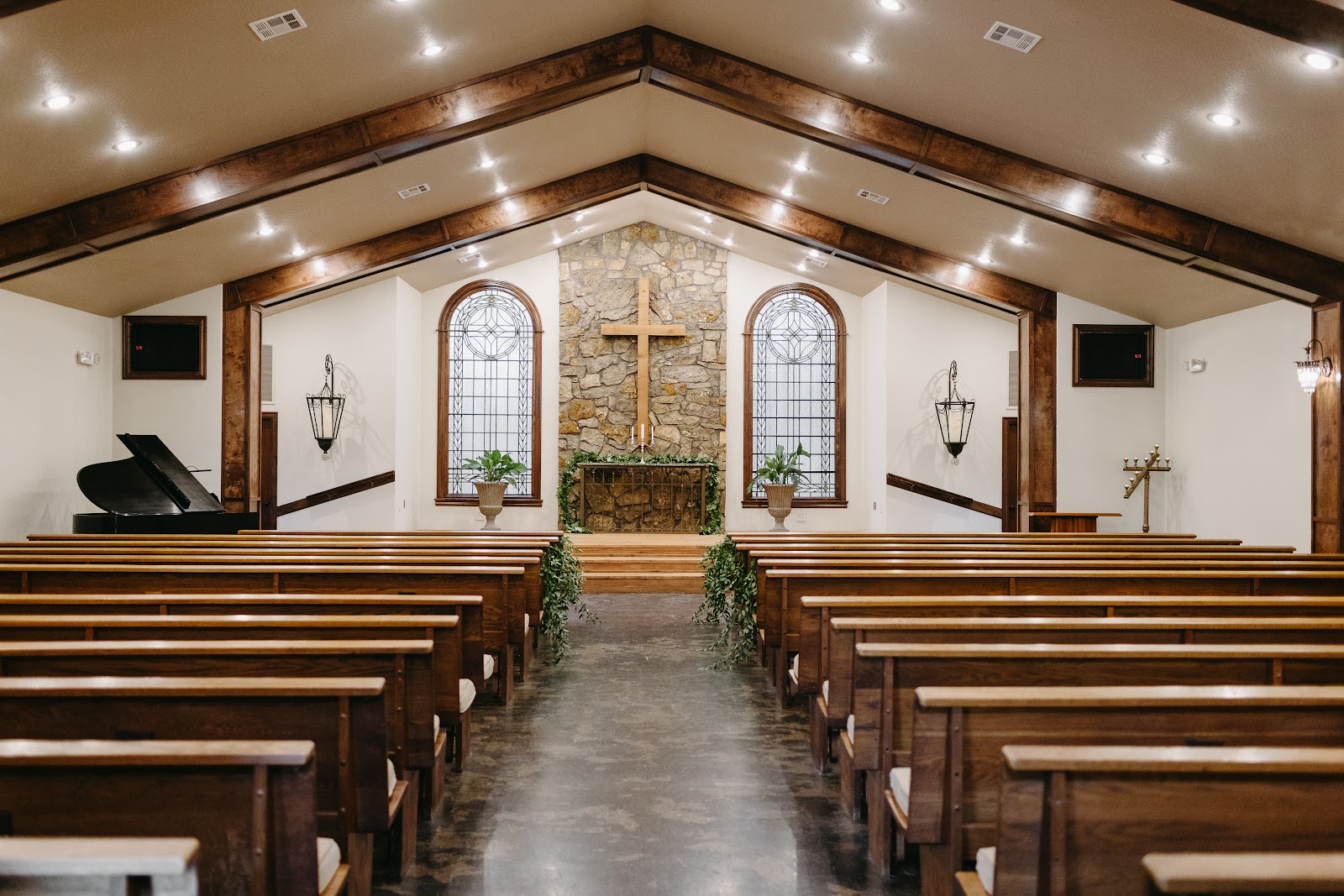
Inside, a stone chapel presents the problem every chapel presents, with one difference: stone absorbs and does not bounce, which makes the interior darker and the fall-off faster than in a timber or plastered building of the same size.
The brightness range between a face in the nave and the glass in a window can run to eight stops. The default answer is to meter on skin, let the windows blow, and compose them out of frame — a tighter crop, a lower camera, a longer lens, or a position that puts stone rather than glass behind the subjects.
One frame exposed for the windows belongs in the set, because it is the picture that says what kind of building this is, and where there is coloured glass it is the only way to photograph the glass at all.
The best portrait position inside is a metre or two from the largest window at forty-five degrees to it, with the dark stone interior behind. Because stone absorbs, the fall-off there is faster than in most buildings — four stops or more between a face at a window and the wall behind it — which gives a black background for nothing.
And the open doorway is the strongest free setup in the building. A subject standing a metre inside it is lit by the whole sky in front and backed by four or five stops of interior dark: a giant softbox and a black backdrop, at any hour, in any weather. That frame is weatherproof, which at an Arkansas venue in April or July is worth more than it sounds.
Outside, a farm in the Ozark plateau country gives open pasture, woodland margins of oak, hickory and eastern redcedar, limestone at the surface, and uneven ground.
Redcedar is the most useful tree. It is a juniper rather than a true cedar, dense and very dark, and it blocks almost all direct light — so a subject a metre inside a redcedar margin, facing out toward sunlit ground, has soft directional light in front and three or four stops of near-black behind. It is the doorway effect, outdoors, and the only reliable portrait position on open ground in the middle of a summer day.
Oak and hickory canopy gives soft even light with a green cast, corrected by standing at the canopy edge rather than deep inside it.
Limestone in the landscape — ledges, outcrops, old field walls — behaves exactly as the chapel’s stone does, which means the raking-light technique described above applies to every stone surface on the property, not just to the building. A limestone ledge in the last half hour is as good a background as the chapel wall, and it is a strong horizontal at seated height as well.
The gradient is the other asset. Almost nothing on the Ozark plateau is level, which means a camera below the subjects on any rise puts them against open sky with no horizon behind them — the cleanest background available in any weather — while a camera above them puts the farm behind. Two photographs from one spot, by walking twenty metres.
And where the farm has weathered timber, that is the other non-green background: dark, textured, low in saturation, and kind to a white dress in exactly the way a bright wall is not. Weathered timber also rakes, for the same reason stone does, which means a barn wall and a chapel wall want the same hour.
Two practical notes. Chiggers and ticks are a genuine consideration in Arkansas in tall grass and at woodland edges from about May into September. And this state sits in the secondary severe-weather corridor of the southeastern United States, with peaks in April–May and a smaller one in November, so a named indoor alternative for anything outdoors in those months is a requirement rather than a courtesy.
- Note which way every wall faces, on arrival
- Put the subjects against the wall, not away from it
- Expose for the lit stone; the people are in the same light
- Do not correct the warmth out — it is why you waited
- Every stone and timber surface on the property wants the same hour
The year, and what it does to stone
Four real seasons with long shoulders, and the frame described above changes with the season in two specific ways: when it happens, and which wall it happens on.
In midsummer the sun rises and sets well north of east and west at this latitude, which means north-facing walls get raking light at both ends of a long day and south-facing walls get it only very briefly, if at all, because the sun is high and nearly overhead for most of the day. Sunset is after half past eight, so the window is late.
In midwinter the sun rises and sets well south of east and west, which means south-facing walls rake for much of a short day — and this is the season’s great advantage. At a December noon elevation of around thirty degrees, the sun never gets high enough to flatten a south wall at all, so the raking window is not twenty minutes but most of the afternoon.
That is the single most useful seasonal fact on this page. A stone building in an Arkansas winter has hours of usable raking light rather than minutes, and a December wedding here gets the best version of its own best frame.
Winter is otherwise short, cool and variable. Snow occurs but rarely lasts. The characteristic Arkansas winter event is freezing rain, which glazes every twig in clear ice and — on a stone wall — fills every joint and hollow with ice that catches the light. An ice-glazed stone surface in low sun is a remarkable thing and it is entirely unplannable.
Bare woods in winter also mean the landscape has almost no green in it: brown grass, grey stone, near-black cedar. For a stone building that is the ideal setting, because the whole frame becomes a study in neutrals and the stone is the most interesting thing in it.
Spring is the region’s best outdoor season and it is early. Leaf-out runs from late March into early April, and before the canopy closes redbud flowers magenta on bare wood and dogwood white beneath. Redbud is the one to plan for: it flowers before its own leaves and before the canopy closes, so it is lit directly rather than filtered — a saturated magenta mass in full sun, for about two weeks.
Magenta redbud against pale grey limestone is the single strongest colour combination this venue offers, and it is worth building the portrait sequence around if the date falls in it.
The cost is the severe-weather peak in April and May, which is where the chapel interior and the weatherproof doorway frame earn their keep.
Summer is hot and humid with dew points in the low to mid twenties Celsius, which puts haze in the air and takes contrast out of anything at distance. For a stone wall at close range that costs almost nothing — which is one of the advantages of a frame made a metre from a surface rather than a kilometre from a view.
The June noon sun at seventy-seven degrees is the hardest light of the year, and the answers are the chapel, the doorway and the redcedar margins.
Autumn is late and long. Oak-hickory forest turns from the last week of October into the first week of November — three to five weeks behind New England — with hickory gold, oak russet and deep red, sweetgum purple-red and sassafras orange, and it holds for a genuine three weeks. Against pale grey stone that warm palette is a better match than northern reds, and the sun is low enough by then that the raking window has begun to lengthen toward its winter generosity.
More frames from The Stone Chapel at Mattix Farms

The Stone Chapel at Mattix Farms wedding photography: common questions
What is the frame?
The couple against a stone wall with a low sun raking across it at a shallow angle, so the texture appears in full relief.
How long is the window?
Roughly twenty or thirty minutes per wall, once a day — and only if the sun is on that side of the building at all.
How close should the subjects stand to the wall?
Against it. Standing out from it makes the wall a background; standing against it puts the people and the texture in the same plane and the same light.
How do I expose it?
For the lit stone. It is the brightest thing in frame and it holds the detail the picture is about — and the subjects are in the same light.
Should I correct the warm colour?
No. Correcting it neutralises the stone into a dead grey and removes the reason for waiting for the light.
Which season is best for this frame?
Winter. At a December noon sun of around thirty degrees, a south-facing wall rakes for most of the afternoon rather than for twenty minutes.
More Arkansas venue guides
We are writing a photographer’s guide to every venue we would happily shoot in Arkansas. Here are three more, plus the full index:
- The Venue at Cedar Creek, Maumelle: Field Notes, Problem and Solution
- The Venue at Hickory Creek, Alexander: Field Notes, Problem and Solution
- The Venue at South Spring, Malvern: What It Suits and What It Does Not
Planning a wedding at The Stone Chapel at Mattix Farms?
One wall, one hour. Tell us your date and we will work out which.