 Dry Tortugas National Park: A Walk Through an Island Fort
The Dalí Museum, St. Petersburg: The One Decision That Governs Everything
A building this assertive is either your background or your subject. Choose.
Most venues can be treated as a backdrop. This one cannot, and that is the single decision that governs every frame made here.
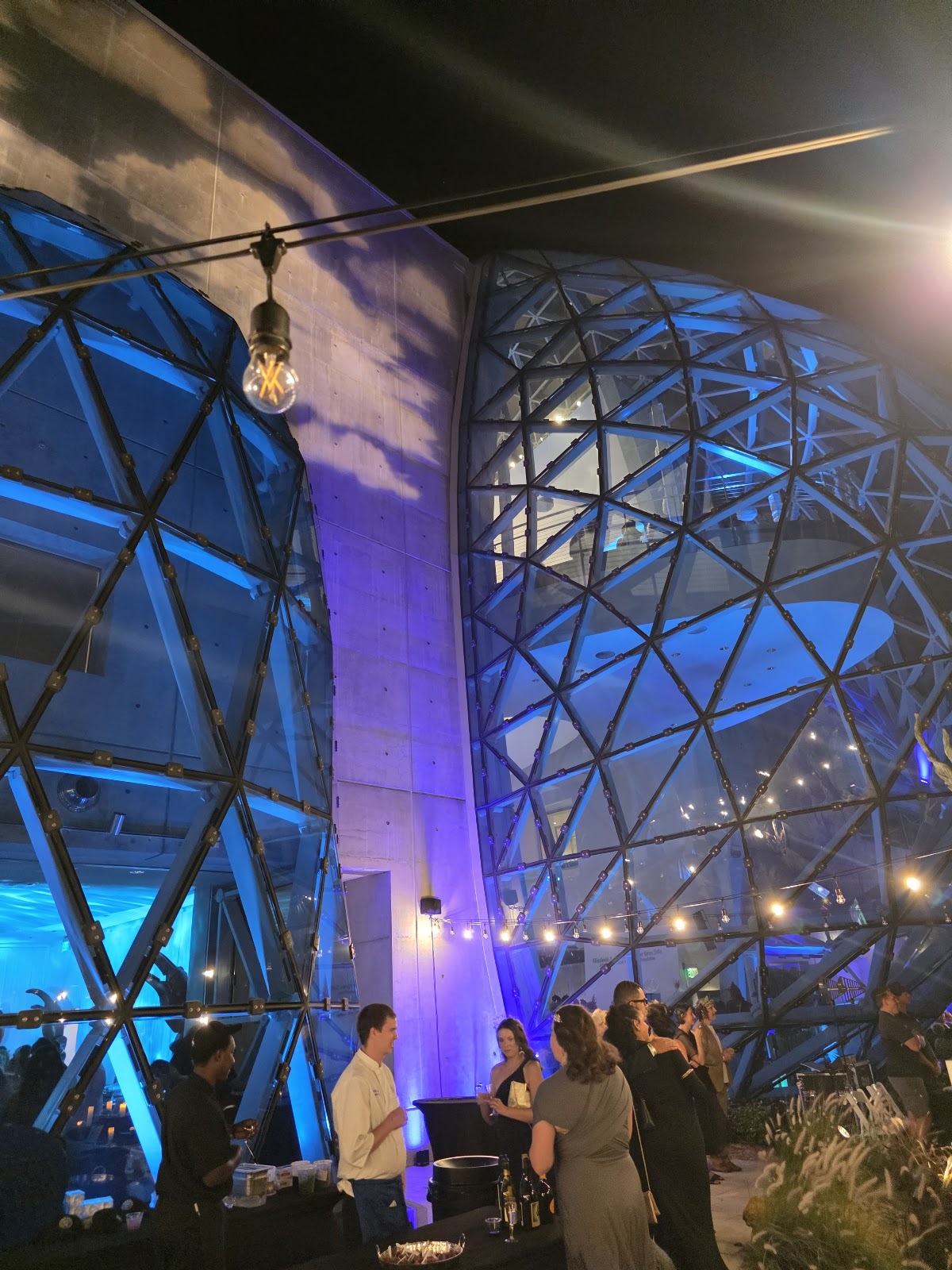
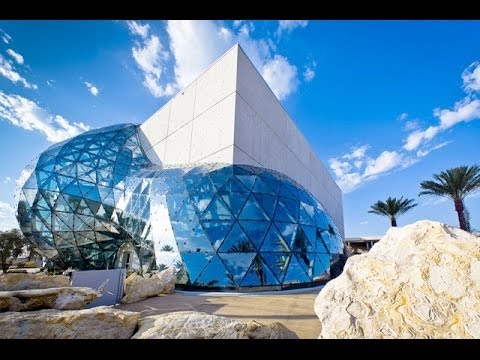
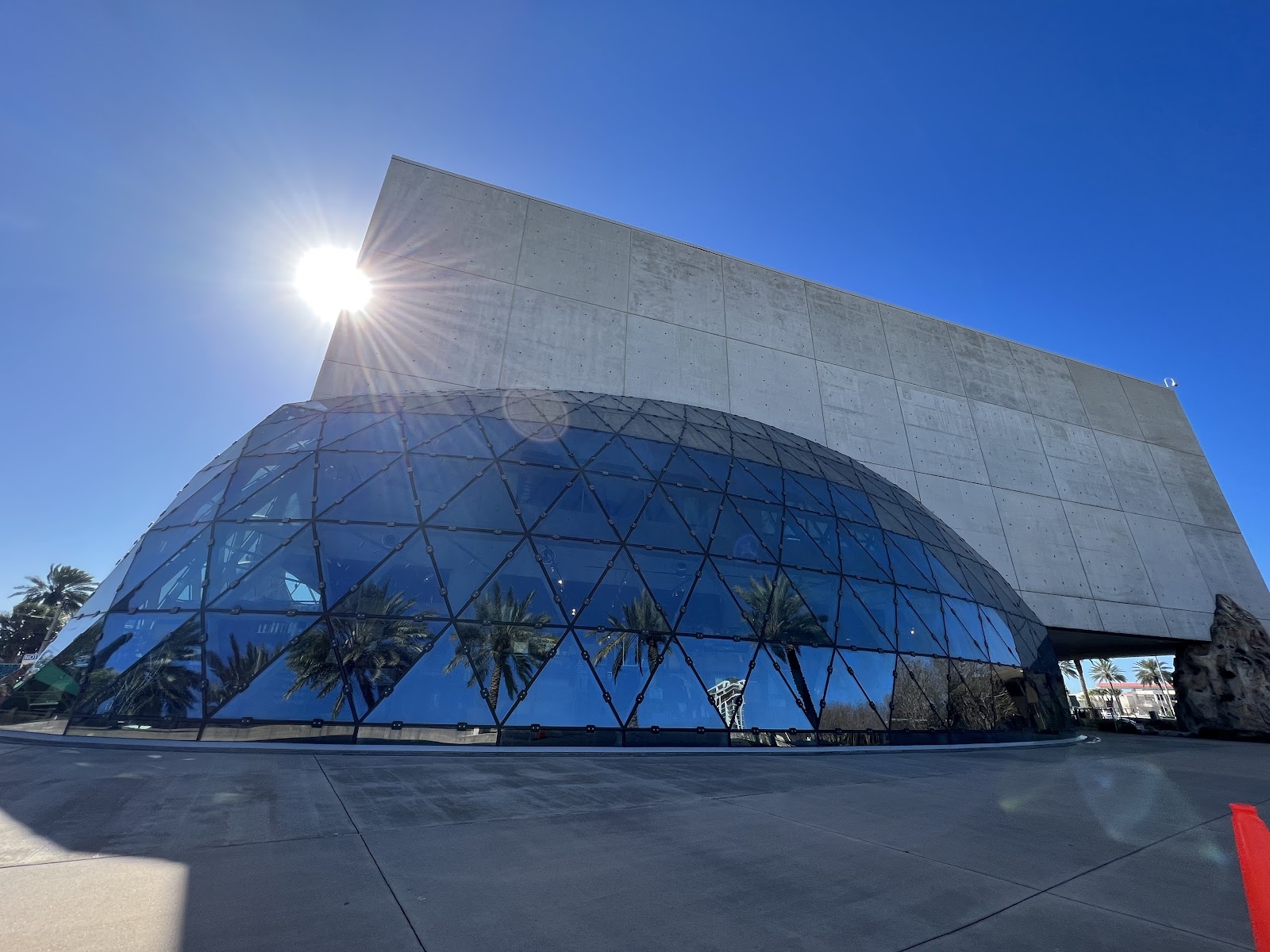
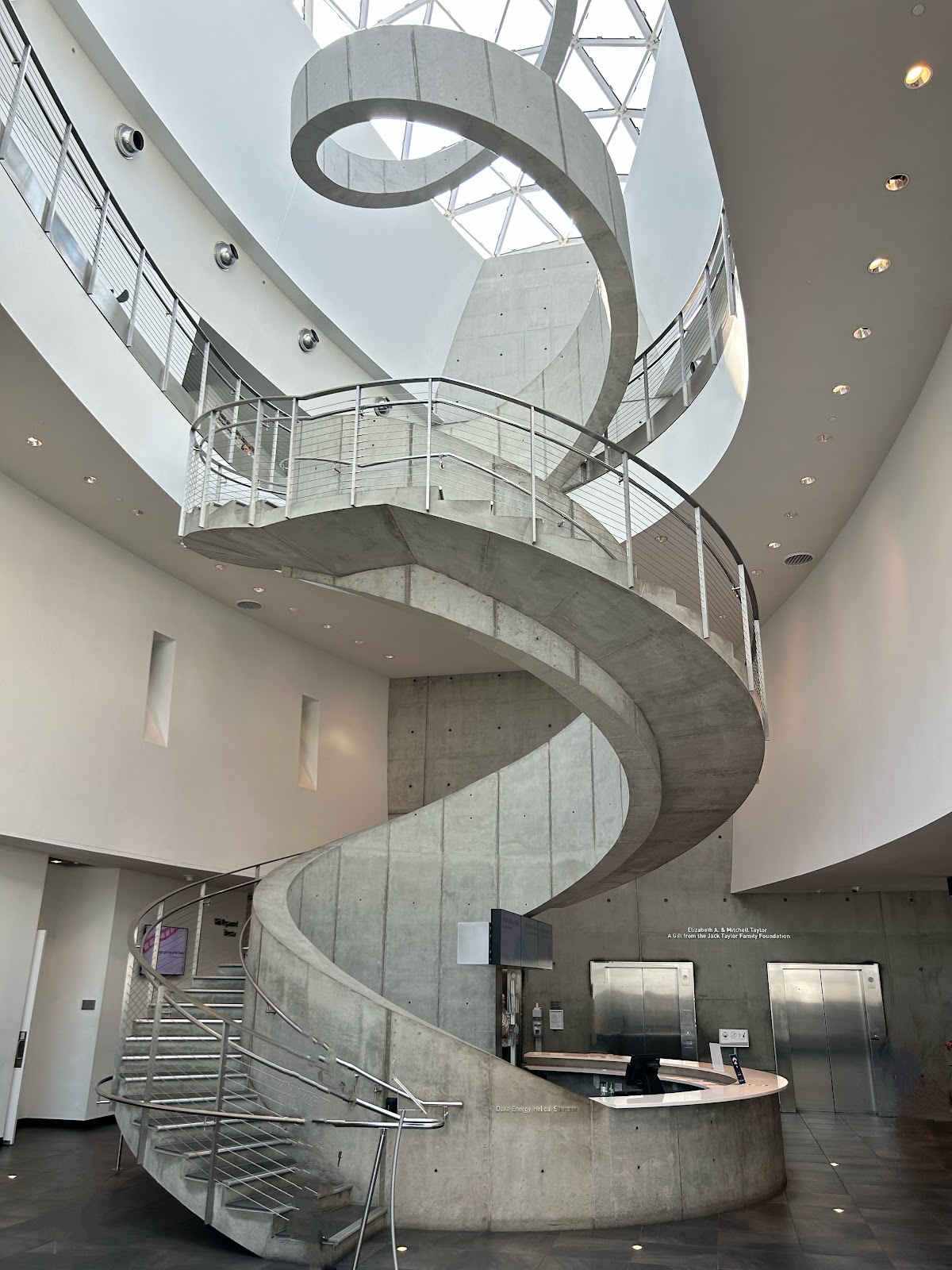
The Dalí Museum is a piece of contemporary architecture on the St. Petersburg waterfront: a heavy concrete mass with a large free-form geodesic glass structure growing out of it, a helical concrete stair inside, and a garden to the water. Everything about it is deliberate, geometric and assertive, and none of it recedes.
That creates a real problem and it is worth naming. A building that is visually strong competes with the people in front of it. A glass geodesic surface is a grid — hundreds of triangles with visible edges — and the eye goes to a grid before it goes to a face. A helical concrete stair is a spiral, and the eye follows a spiral all the way round before it comes back. Put a couple casually in front of either and the photograph is of the architecture, with two people in it.
So the decision is binary. Either the building is the subject and the people are placed as scale and as accent — small, deliberately positioned, letting the geometry carry the frame — or the people are the subject and the building has to be reduced to a texture, a shape or a colour field behind them, by getting close, throwing it out of focus, or using only a fragment of it.
The mistake is the middle: a couple at medium distance with a half-resolved geodesic dome behind them, where neither the building nor the people win. That frame happens constantly here and it is the one to plan against.
St. Petersburg sits at about twenty-seven and a half degrees north. The June noon sun reaches around eighty-six degrees — effectively vertical — and the December noon sun about thirty-nine. Civil twilight runs a little over twenty minutes, so the low light is short.
We have not photographed a wedding at the Dalí Museum. Which spaces are included, what restrictions apply near the collection, whether the stair and the glass structure are available for photographs and what the permitted hours are are questions for their team — and the restrictions near the collection are the ones most likely to change the plan.
The Dalí Museum at a glance
| Where | A concrete-and-glass contemporary museum on the St. Petersburg waterfront |
| The decision | Building as subject, or people as subject. Never both at once |
| Building as subject | People small and deliberately placed; geometry carries the frame |
| People as subject | Get close, throw the geometry out, or use only a fragment |
| Ask first | Collection restrictions, stair and glass-structure access, hours |
Working the decision
When the building is the subject, the method is architectural and the people are compositional elements. That means placing them where the geometry wants a figure, not where a couple would naturally stand.
The concrete exterior gives long uninterrupted planes, and a figure against a large blank plane reads as a deliberate mark. Small in a big empty field is the frame — one third along, well away from the centre, with a lot of nothing around them. That only works if the plane really is blank, which means walking the building to find the ones without fire exits, signage or downpipes in them.
The geodesic glass is the opposite: a dense field of triangles, which means a figure placed against it needs to be inside it rather than in front of it. Standing within the glass structure, with the grid overhead and around, the people are enclosed by the geometry rather than competing with it — and the pattern reads as a setting rather than as a distraction.
The helical stair is the strongest single element and the most demanding. A spiral photographed from directly beneath or directly above is a graphic subject that needs no people at all, and one of those frames belongs in any set made here. With people it works only when they are placed at a point the curve arrives at — the bottom of the sweep, a landing, the outside of the widest turn — so the eye is delivered to them by the curve rather than led past them.
When the people are the subject, the building has to be reduced. Three methods work.
Get close and use a fragment: a section of concrete plane as a plain background, a single glass panel as a graphic element behind a head, the shadow of the grid falling across a wall. A fragment says where you are without describing the whole building.
Throw it out of focus: the geodesic grid at a wide aperture from a metre or two away becomes a soft field of pale shapes, which is a good background precisely because it stops being a grid. This is the most reliable of the three.
Or use its light rather than its shape. A large glazed surface is an enormous soft source, and a subject standing beside one at forty-five degrees gets window light on a scale no domestic interior offers. That frame contains the building as light rather than as geometry, which is the most elegant solution available here and the one that looks least like a museum photograph.
One technical note about the glass. A geodesic surface is made of flat facets at many angles, which means at any given moment some of them are reflecting sky and some are transmitting. The visual result is a patchwork of bright and dark triangles that shifts with the camera position, and small movements change it completely — so if the patchwork matters to the frame, it is worth moving a metre at a time and watching it rather than composing and shooting.
Inside, outside and the waterfront
The galleries are a conventional contemporary-museum lighting problem, and the conventional answer applies: a low warm ambient, light aimed at the works rather than at people, strong pools with dark gaps between them. Balance for the room, gel any added source warm, use the pools rather than filling them, and let the gaps go black.
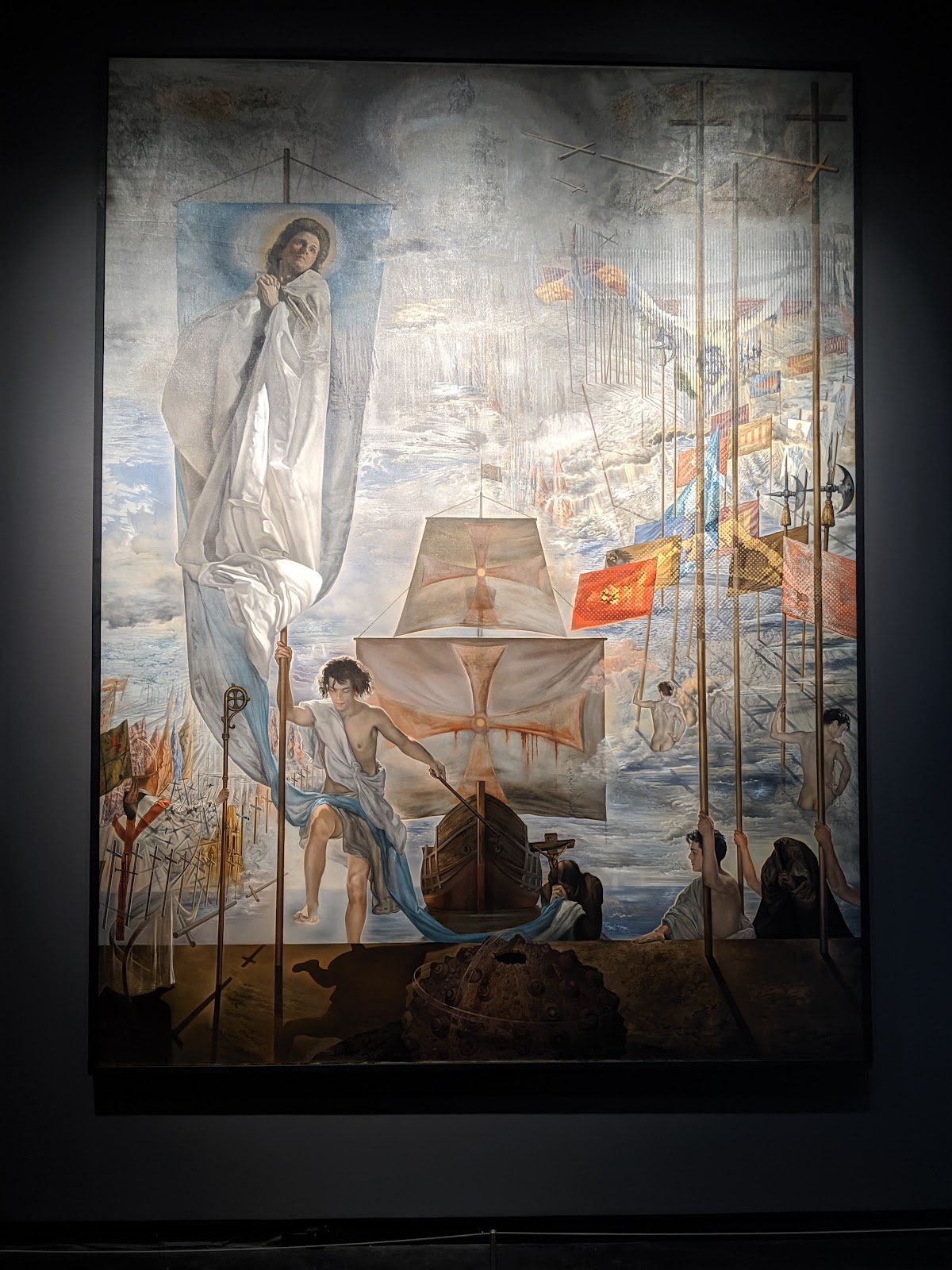
With Dalí specifically there is a compositional caution worth stating. The works are large, high-contrast and figurative, which means a painting behind a couple is not a neutral background — it is another picture, competing directly. Either include a work deliberately and let it be part of the frame, or exclude it entirely. A canvas half-cropped at a subject’s shoulder reads as a mistake.
Restrictions near the collection are likely to be the tightest constraint on the day, and they are the first thing to establish rather than the thing to negotiate with twenty people waiting.
The glass structure is the best interior light in the building. A large multi-faceted glazed volume admits daylight from every direction at once, which produces soft, generous, almost shadowless illumination — and, because the facets are at different angles, the light has a slight directionality that changes with where a subject stands. It is worth moving a subject two metres in each direction and watching what happens rather than assuming it is flat.
It is also hot, in the literal sense. A glazed volume in Florida gains heat rapidly, which matters for a wedding party in formal clothes and means the time spent in there should be planned in minutes rather than assumed.
The concrete is the material to understand. Board-formed or smooth architectural concrete is a mid-grey surface with very low saturation, which makes it the most neutral background in this guide and therefore the most flattering one for colour: a white dress reads as white against it and skin holds its own colour without a cast. It is also completely unforgiving of composition, because a plain grey field shows every misalignment. A degree off level against a concrete edge is visible instantly.
The garden and the waterfront are the softening element. A contemporary building of this kind sits in planted ground with a water edge beyond, and the planting is where the frames that do not look architectural come from — subjects against foliage with the building only implied, or at the water’s edge with the concrete out of frame entirely. Any set made here needs some of those, because twenty frames of geometry is exhausting to look at however good each one is.
The waterfront faces broadly east across Tampa Bay, which means sun over water belongs to the morning and the evening light comes from behind the building. At sunset the concrete is rim-lit and the glass catches the last direct light while the bay behind is in cool afterglow — which is the best exterior frame of the day and also the most obviously architectural one.
The blue period after that is where the building’s own lighting comes into play, and if it is lit at all, the same rule applies as at any illuminated building: the sky and the lit surfaces cross within about a stop of each other for roughly ten minutes, and that crossing is the frame. Whether the exterior lighting is on is worth asking, because the whole plan for the last part of the evening depends on it.
And the standing Florida hazard: in the wet season an air-conditioned gallery sits far below the outdoor dew point, so a lens carried out to the waterfront fogs at once and clears in ten to twenty minutes. With a twenty-minute twilight, one body stays outside.
- Small figure against a genuinely blank concrete plane
- Inside the glass, not in front of it
- Throw the geodesic grid out of focus — it is the most reliable background
- Use the glazing as light rather than as geometry
- Exclude the paintings or include them fully; never half-crop one
The season and the building
A contemporary building is less seasonal than a garden, but the air around it is not, and on this coast the air is the variable that matters.
The dry season, November to April, is better for every exterior frame here. Clear air means the concrete edges are crisp against the sky, the glass facets hold their individual values rather than blurring into one pale mass, and the bay behind the building has definition. A December noon sun at around thirty-nine degrees also models the concrete planes rather than flattening them, which is exactly what a building made of large blank surfaces needs.
The early sunset is a practical advantage: the crossing point between sky and building lighting arrives around six rather than after half past eight, which means it lands during the reception.
The wet season, May to October, is worse for the exteriors and neutral for the interiors. Dew points in the mid-twenties Celsius put haze into the air, which softens the building’s edges and reduces the contrast between the concrete and the sky — and a building whose whole effect depends on hard geometry against open air loses more to haze than a garden does.
It is also the season in which the glazed volume becomes genuinely hot, which is a practical limit on how long a wedding party will stand in the best light in the building.
The afternoon storms have a mechanism: sea breezes from the Gulf and the Atlantic push inland and collide over the peninsula, lifting the air — which is why Florida records more lightning than any other state, and why an outdoor ceremony between June and September needs a named alternative rather than a hope.
For this building the storms give back more than they take. Wet concrete is darker and more saturated than dry concrete, and it reflects, which turns a flat plane into a surface with a sheen and a horizon line in it. A glass geodesic surface with water running over it is a far more interesting thing than a dry one. And broken cloud after a cell has passed gives the exterior the one thing it never gets from a clear Florida sky: a background with structure in it. The half hour after rain is the best exterior window of the wet season, comfortably.
Hurricane season runs June to the end of November, peaking mid-August to mid-October, and a waterfront site in that window is a planning conversation rather than a photographic one.
The tidal range on Tampa Bay is small — generally well under a metre — which means the waterfront edge composes the same way all day and a scouted position holds. That is a convenience, and it is not true of every venue in this guide.
The one seasonal signal in the frame is the planting, and it is weak. Subtropical evergreens look much the same year round, which means the only reliable indicator of the season in a photograph made here is the quality of the light on the concrete — hard and clean in February, soft and hazy in August. For a building this deliberate, that is an argument for February.
More frames from The Dalí Museum
The Dalí Museum wedding photography: common questions
What is the one decision?
Whether the building is the subject or the background. It is too assertive to be both, and the middle distance gives a frame where neither wins.
How do I make the people the subject?
Get close and use a fragment, throw the geodesic grid out of focus at a wide aperture, or use the glazing purely as a large soft light source.
How do I make the building the subject?
Place figures small and deliberately — against a genuinely blank concrete plane, or inside the glass structure rather than in front of it.
How should the spiral stair be used?
Once without people, as a graphic subject. With people, only where the curve delivers the eye to them — the bottom of the sweep or the outside of the widest turn.
What about the paintings?
Include a work fully and deliberately or exclude it. A large high-contrast figurative canvas half-cropped behind a shoulder competes and reads as an error.
When does the exterior look best?
The dry season for crisp edges, and specifically the half hour after wet-season rain — wet concrete is darker and more saturated, and broken cloud gives the sky structure.
More Florida venue guides
We are writing a photographer’s guide to every venue we would happily shoot in Florida. Here are three more, plus the full index:
- South Pointe Park, Miami Beach: A Walk Through the Site
- The Vinoy, St. Petersburg: One Frame and How It Is Made
- Vizcaya Museum & Gardens, Miami: A Walk Through the Site
Planning a wedding at The Dalí Museum?
Subject or background — we will decide before we start. Tell us your date.