 Dry Tortugas National Park: A Walk Through an Island Fort
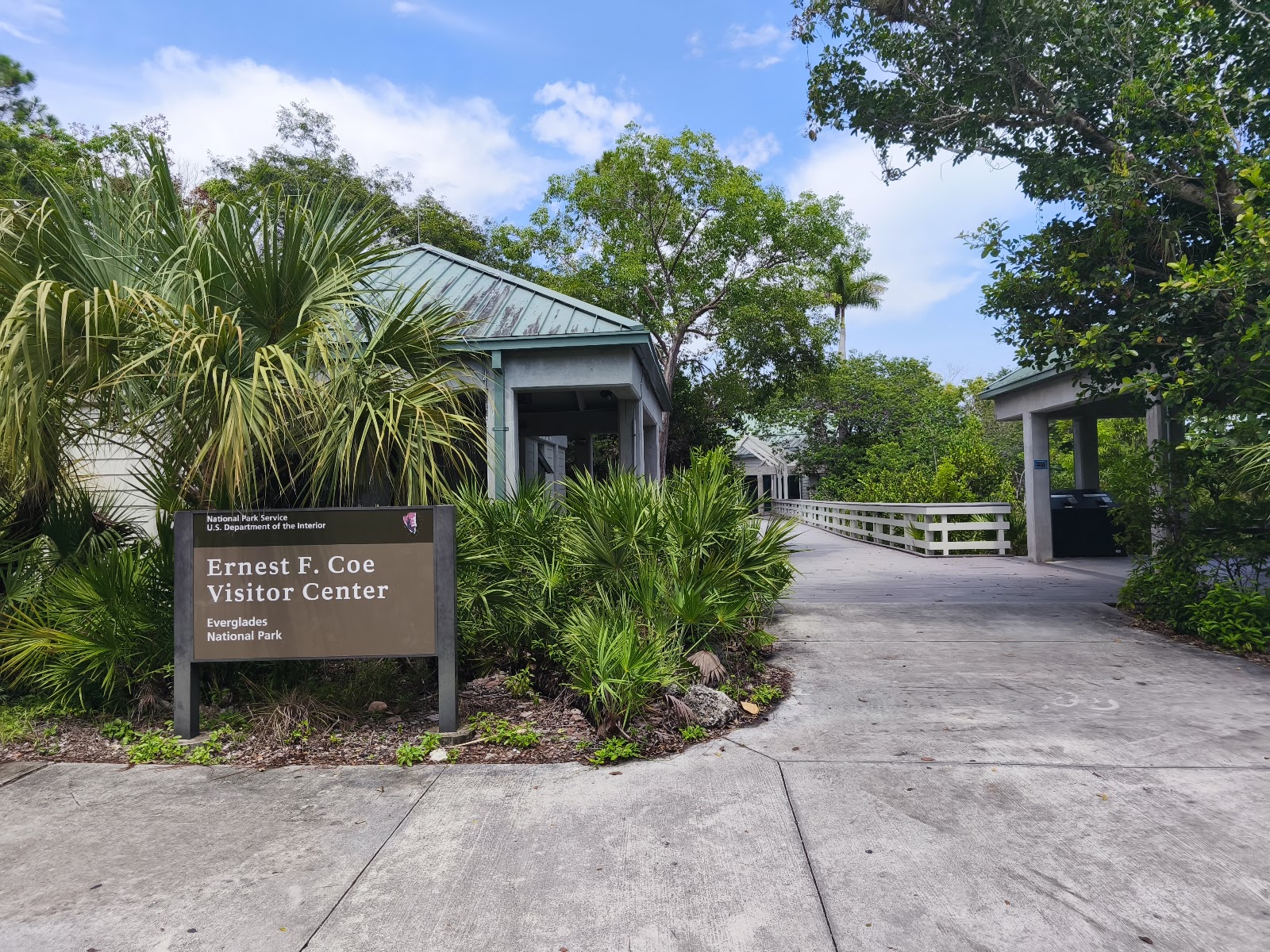
Everglades National Park, Homestead: One Frame and How It Is Made
Ninety per cent sky. The frame is about how you place two people in it.
The Everglades is the flattest landscape in this guide and that single fact determines the photograph. There is nothing to put behind anybody.
The land here has almost no relief — the whole southern peninsula falls by a few metres over many kilometres, and the vegetation responds to elevation changes of inches rather than feet. Sawgrass prairie occupies the wettest ground, dwarf cypress the slightly drier, and hardwood hammocks sit on rises of a foot or two which is enough to keep their roots out of standing water. That is the entire topography.
For a camera it means the horizon sits lower in the frame than anywhere else, the sky occupies most of the picture whether or not you intend it to, and the only vertical elements available are the people, the occasional cypress, and the tree islands in the distance.
So the frame worth building is the one the place actually offers: two figures standing on the prairie, small, with a very large sky above them and an unbroken line of sawgrass running behind. It is a landscape photograph with people in it rather than a portrait with a landscape behind, and treating it as the latter produces the weak version.
It is made of four decisions: where the horizon sits, how big the people are, what the sky is doing, and which season it is. The last one is not optional — there is a half of the year in which this frame is not realistically available at all.
A note on the vegetation, because it is often described wrongly. Sawgrass is not a grass but a sedge, and its leaf margins carry fine serrations sharp enough to cut skin and fabric. Anything described as a walk out into the prairie is not a walk in wedding clothes, which makes the boardwalks, the trails and the road margins the real locations here rather than the open ground.
We have not photographed a wedding in Everglades National Park. Whether ceremonies are permitted, what permit is required, which locations are available, what group size is allowed and what the hours are, are questions for the park — and in a national park those answers are rules rather than preferences.
Everglades National Park at a glance
| Where | Sawgrass prairie and hardwood hammocks near Homestead, south Florida |
| The frame | Two small figures, a vast sky, an unbroken sawgrass line |
| The ground | Sawgrass is a sedge with cutting leaf margins — stay on the built surfaces |
| The season | The dry season, December to April. The wet season is not realistic |
| Ask first | Permits, permitted locations, group limits and hours — park rules, not preferences |
Building the frame
Put the horizon low, and put it lower than instinct suggests. The conventional placement — a third of the way up — gives two-thirds sky, which is already more than most landscapes want and is roughly right here. But this place rewards the more extreme version: the horizon at a fifth or a sixth of the frame height, with the prairie as a thin band along the bottom and everything else air.
That works because the sawgrass is genuinely featureless. There is no mid-ground interest to protect, so giving it more of the frame does not add anything — where giving the sky more of the frame adds whatever the sky happens to be doing, which in south Florida is usually a great deal.
Keep the horizon dead level. A flat natural horizon a degree off is the most visible error available in photography, more so than any built line, because the eye has nothing else to reference against. This is the one venue in this guide where a level check on every frame is worth the time.
Make the people small, and then smaller. A couple occupying a tenth of the frame height in a landscape this empty reads as a deliberate statement about scale. A couple occupying half of it reads as a portrait taken in a dull field. The instinct at the moment of shooting is always to move closer; the frames that survive are the ones taken from further back than felt right.
Two people also need separation from each other to read at that size. At a tenth of frame height, two figures standing together are one shape. A gap of light between them, an arm extended, a slight offset in depth — anything that makes them legible as two — is the difference between a picture of a couple and a picture of a smudge.
Then the sky, which is the actual subject and cannot be arranged. A clear blue Florida sky is the weakest version of this frame: even, featureless, and adding nothing to a featureless foreground. What the frame wants is structure — the towering cumulus that build over the peninsula on almost any warm afternoon, a line of cloud base, the underside of a distant cell, the rays of a sun behind cloud.
The practical consequence is that the weather forecast matters more here than the time of day. A late afternoon with big convective cloud produces a frame that a clear golden hour cannot match.
Expose for the sky and let the prairie go dark. That is the correct relationship rather than a compromise: sawgrass in low light is a mid-to-dark band with a warm tint, and rendering it dark keeps it as the line it should be. Rendering it correctly exposed means overexposing the sky, and the sky is the picture.
The people then need their own light, because at that distance and in that exposure they will be silhouettes. Which is a legitimate choice — a silhouette against a structured sky over a flat horizon is a strong image and needs a gap between the heads and clean separation of limbs. If faces are wanted, a source close to the subjects, warm-gelled to match the low sun, at a stop over the ambient falling on them, is the only way; and at the distance this frame requires, that means a long lens with the light out at the subjects rather than anywhere near the camera.
A final note on the sun’s path. At twenty-five and a half degrees north the sun descends steeply, so civil twilight runs a little over twenty minutes and the light changes visibly between one frame and the next. The sequence has to be planned and rehearsed, because there is no time to work it out in the moment.
The other locations, and the practical realities
The prairie frame is the reason to come, but a wedding needs more than one photograph, and the site gives four other environments.
The hardwood hammocks are the best of them. A hammock is a tree island growing on a rise of a foot or two, dense with broadleaf tropical hardwoods, and the light inside one is a complete contrast to the prairie: dim, soft, green and enclosed. That contrast is worth a great deal in a set of photographs — a portrait made under a closed canopy immediately after a frame with ninety per cent sky reads as a different place, which is exactly what a sequence needs.
The light inside a hammock is strongly green, because it has been transmitted through and reflected off leaves several times. Standing at the edge rather than deep inside keeps most of the illumination arriving from open sky, which reduces the cast to something correctable. Deep inside, a warm-gelled source a stop over ambient is the answer. A global white balance correction turns the whole hammock grey and is the wrong move.
The dwarf cypress stands are the strangest and most photographically distinctive environment here. Cypress growing on thin soil over limestone stay small and widely spaced, which produces an open landscape of scattered small trees — and, unusually for Florida, they are deciduous. In winter a dwarf cypress stand is a field of bare grey branching structure over pale ground, which looks like nothing else in the state and is the single most unexpected frame available.
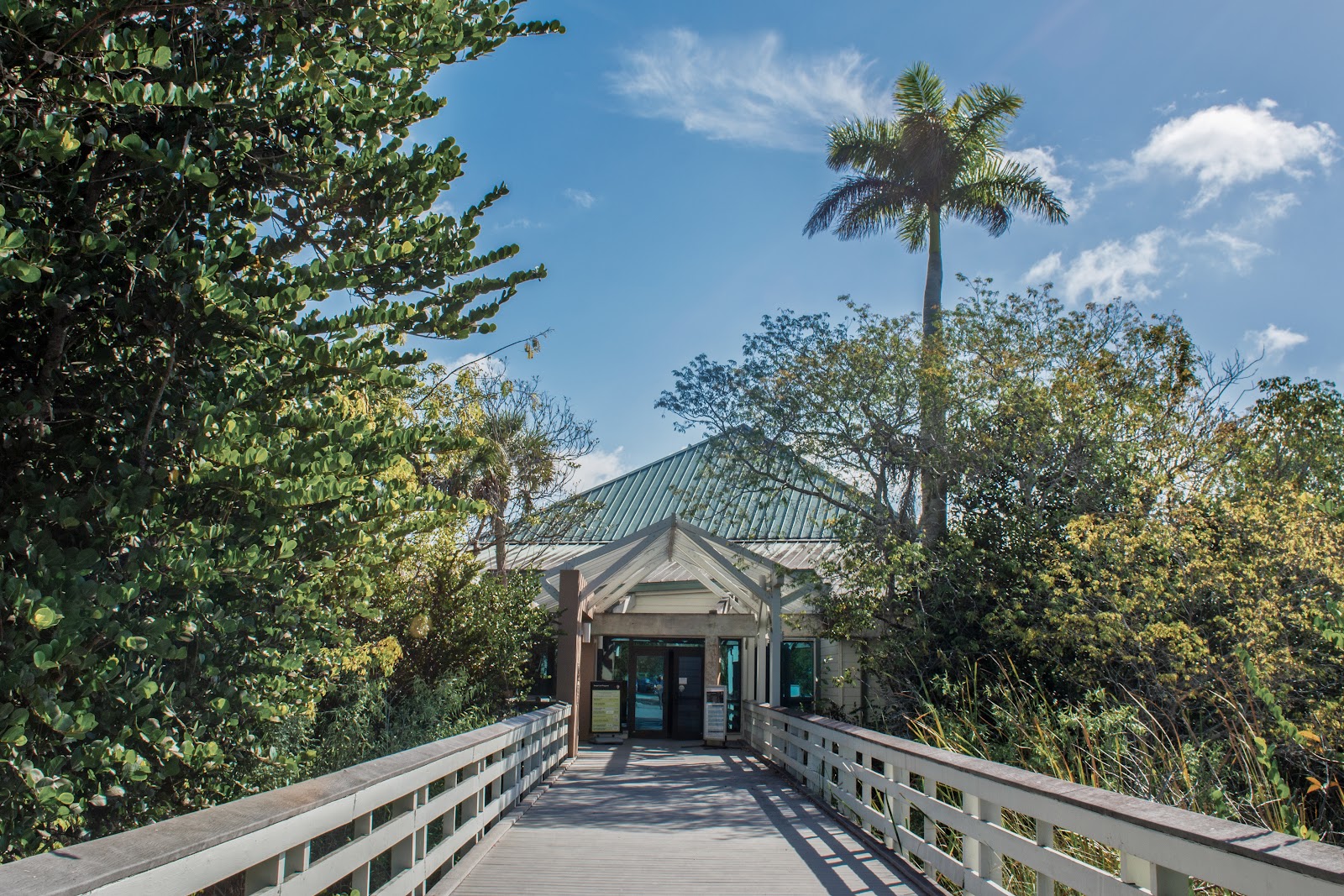
The boardwalks and trails are where people can actually stand, and that limitation deserves emphasis. Sawgrass cuts, the ground is often under water, and the substrate is limestone and peat rather than anything a heel will stand on. In practice the usable positions are built surfaces and their immediate margins, which means the site has fewer locations than its size implies and they should be walked in advance.
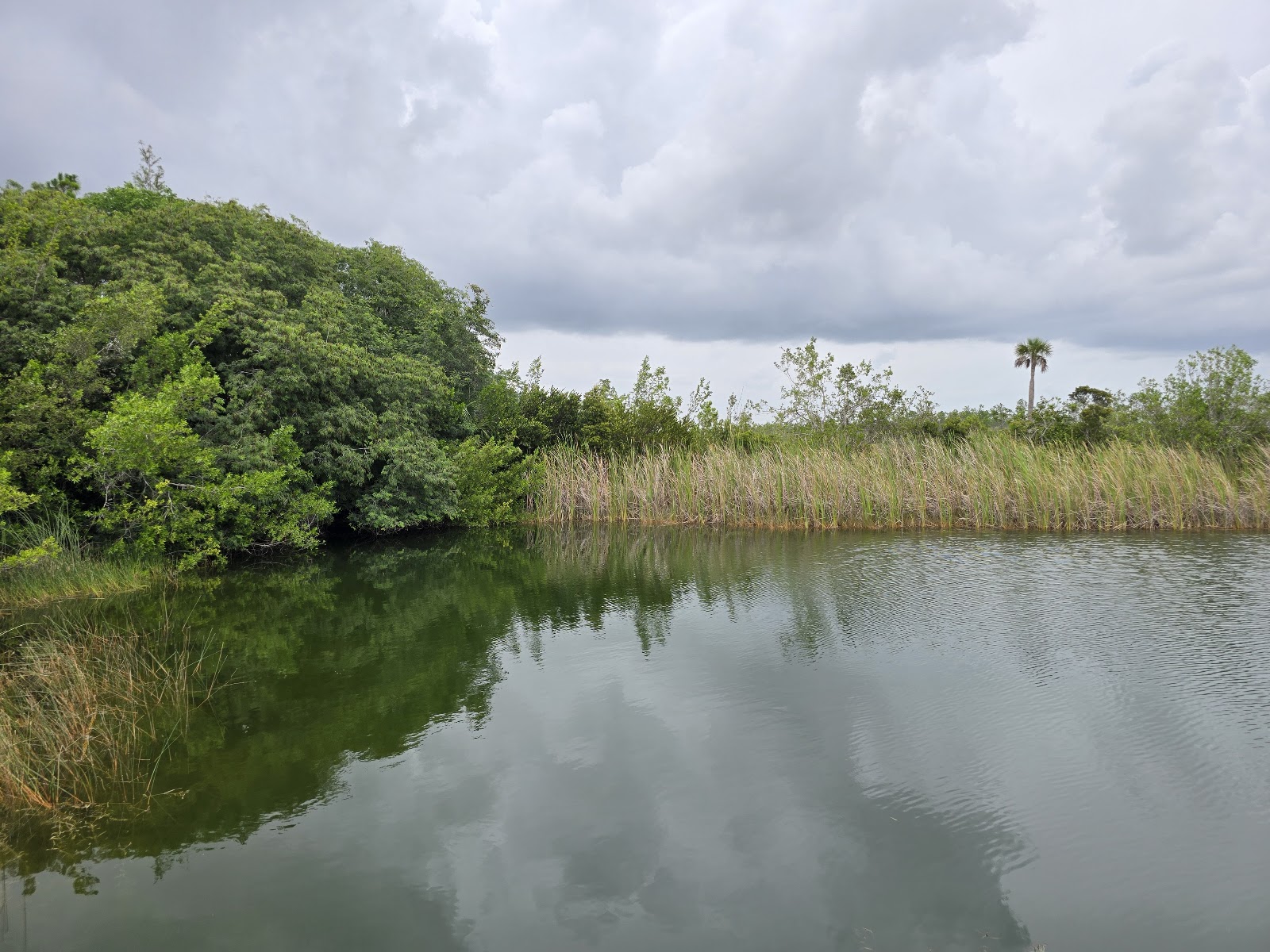
The water is the fourth element, and it is everywhere and almost nowhere. Sheet flow across the prairie is inches deep and moves very slowly southward, which means that after rain the prairie is a mirror lying flat under the sky — the single best condition this landscape offers, because it doubles the sky that the frame is already built around. Standing water among sawgrass stems reflects in patches rather than as a sheet, which reads as texture; open water in a slough or a pond reflects properly.
Wildlife is a genuine consideration rather than a novelty. Alligators are present in numbers, they are usually where the water is, and they do not need to be a problem at a managed location — but a wedding party spreading out along a water margin without anyone thinking about it is a different situation from a photographer working alone. That belongs in the conversation with the park, not in an assumption.
And this is one of the darker skies in eastern Florida, far from the coastal cities. For an evening that runs past twilight, that means a genuinely dark night sky is available — which is both an opportunity for a long-exposure frame and a practical problem, because there is no ambient light at all to work by once the sky has gone.
- Horizon at a fifth of the frame, dead level, checked every time
- Make the people smaller than instinct wants, and separate them
- Expose for the sky; the prairie is meant to be a dark band
- The forecast matters more than the hour — structured cloud is the subject
- Stay on built surfaces; sawgrass cuts and the ground is water
The season, and why half the year is out
This is the one venue in this guide where the season does not merely change the photographs — it determines whether an outdoor wedding is realistic at all.
The dry season runs from about December to April and it is the window. Water levels fall, humidity drops, the air clears, the afternoon storms stop, and — decisively — the mosquito population collapses to something manageable. The December noon sun still reaches about forty degrees, which models faces, and the days are short enough that the low light arrives at a reasonable hour.
It is also when the dwarf cypress are bare and when wading birds concentrate around the remaining water, which makes the landscape more visually structured than at any other time.
The wet season runs from about May to October and the honest assessment is that it is not a realistic window for an outdoor ceremony here. Three things stack up.
The mosquitoes are the first and they are not a nuisance in the ordinary sense. In the Everglades in the wet season the density is extraordinary — this is one of the most mosquito-intense environments in the United States — and it is sufficient to make an outdoor gathering genuinely unworkable rather than uncomfortable. No amount of repellent addresses it for a group of people standing still in formal clothes at dusk, which is exactly when it is worst.
The water is the second. Sheet flow rises through the wet season, which floods ground that was walkable in March and reduces the available locations further.
The storms are the third, and they have a mechanism. Sea breezes push inland from the Atlantic and from the Gulf, and where the two fronts collide over the peninsula the air is forced upward. The southern Everglades sits inside that collision zone, which is why this part of Florida records more lightning than almost anywhere in the United States, and why the afternoon convection here is more reliable than on either coast.
On a landscape with no cover of any kind and no building within reach, an afternoon thunderstorm is not a photographic inconvenience. It is a safety matter, and there is no rain plan available on open prairie.
What the wet season does give, for anyone visiting rather than marrying, is the most dramatic sky this landscape ever produces: towering cumulus, defined cloud bases, distant cells lit from the side, and a flooded prairie mirroring all of it. That is the best version of the frame described above. It is available in June and it is not available at a wedding.
Hurricane season runs June to the end of November, peaking mid-August to mid-October, and after a major storm the vegetation here takes seasons rather than weeks to recover its structure.
The practical summary is narrow: for a wedding, December to April, and within that the second half of the afternoon on a day with cloud. Everything else about this place is a photograph to come back for on your own.
More frames from Everglades National Park
Everglades National Park wedding photography: common questions
What makes this frame different?
There is nothing to put behind anybody. The land is almost perfectly flat, so the sky is most of the picture and the frame is a landscape with people in it.
Where should the horizon sit?
Low — around a fifth of the frame height — and absolutely level. A flat natural horizon is where a degree of tilt shows most.
How should the people be exposed?
Expose for the sky and let the prairie go dark. Either accept silhouettes, or light the subjects with a warm-gelled source out at their position.
Can we walk out onto the prairie?
Not in wedding clothes. Sawgrass is a sedge with cutting leaf margins, and the ground is usually under water. The built surfaces are the locations.
Which season works?
December to April. Lower water, clear air, no daily storms, and a manageable mosquito population.
Why not the summer?
Mosquito density here in the wet season makes an outdoor gathering genuinely unworkable, water levels flood the walkable ground, and afternoon lightning on open prairie has no rain plan.
More Florida venue guides
We are writing a photographer’s guide to every venue we would happily shoot in Florida. Here are three more, plus the full index:
- Fairchild Tropical Botanic Garden, Coral Gables: A Walk Through the Site
- Gaylord Palms Resort, Kissimmee: The Venue’s Own Logic
- The Homestead Resort, Homestead: Field Notes, Problem and Solution
Planning a wedding at Everglades National Park?
A landscape that asks you to stand further back. Tell us your date and we will plan it properly.