 Roots Run Deep, Fruita: The Site’s Own Logic
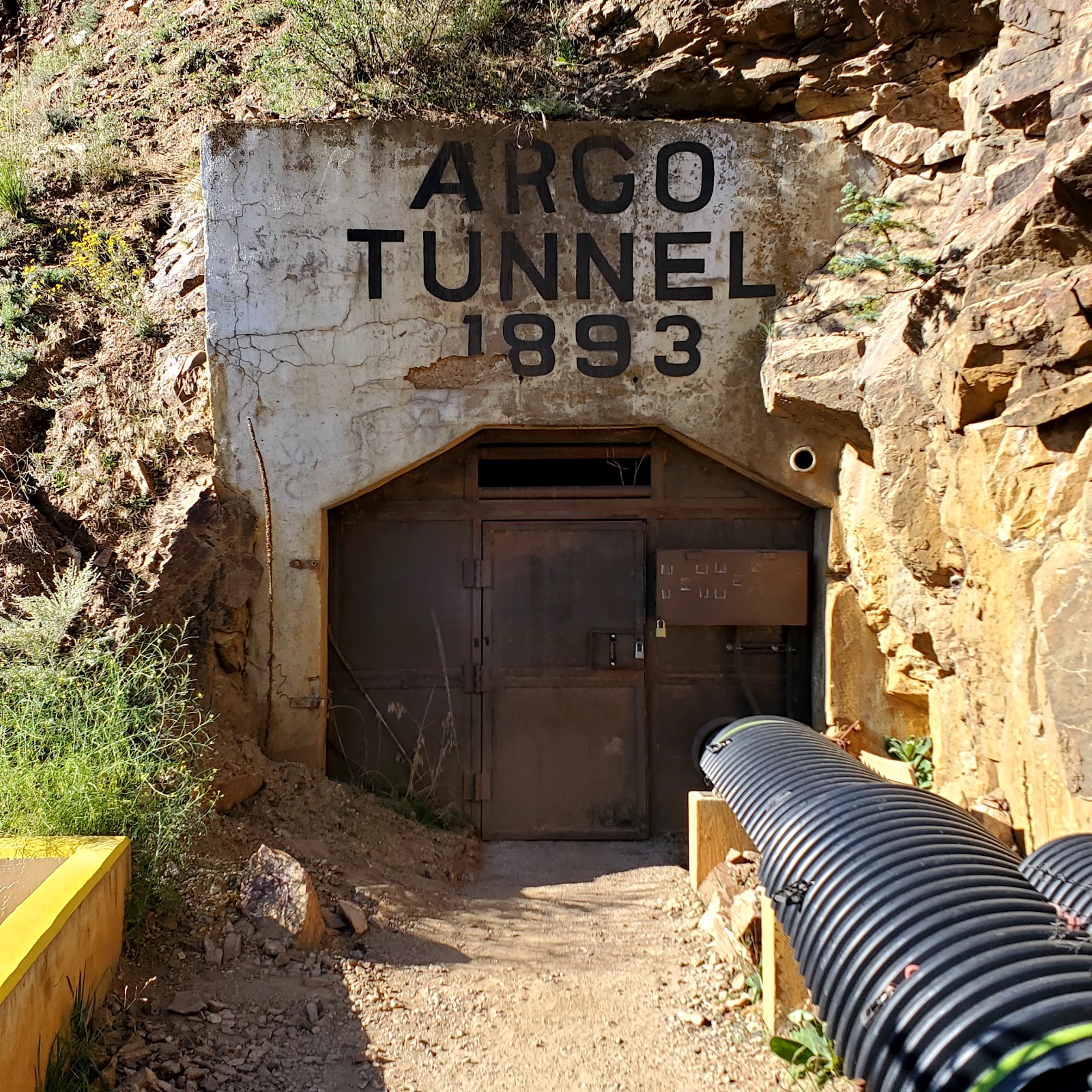
The Argo Gold Mill, Idaho Springs: What It Suits, and What It Does Not
A mill built down a mountainside, because gravity did the work. That shape is the whole story.
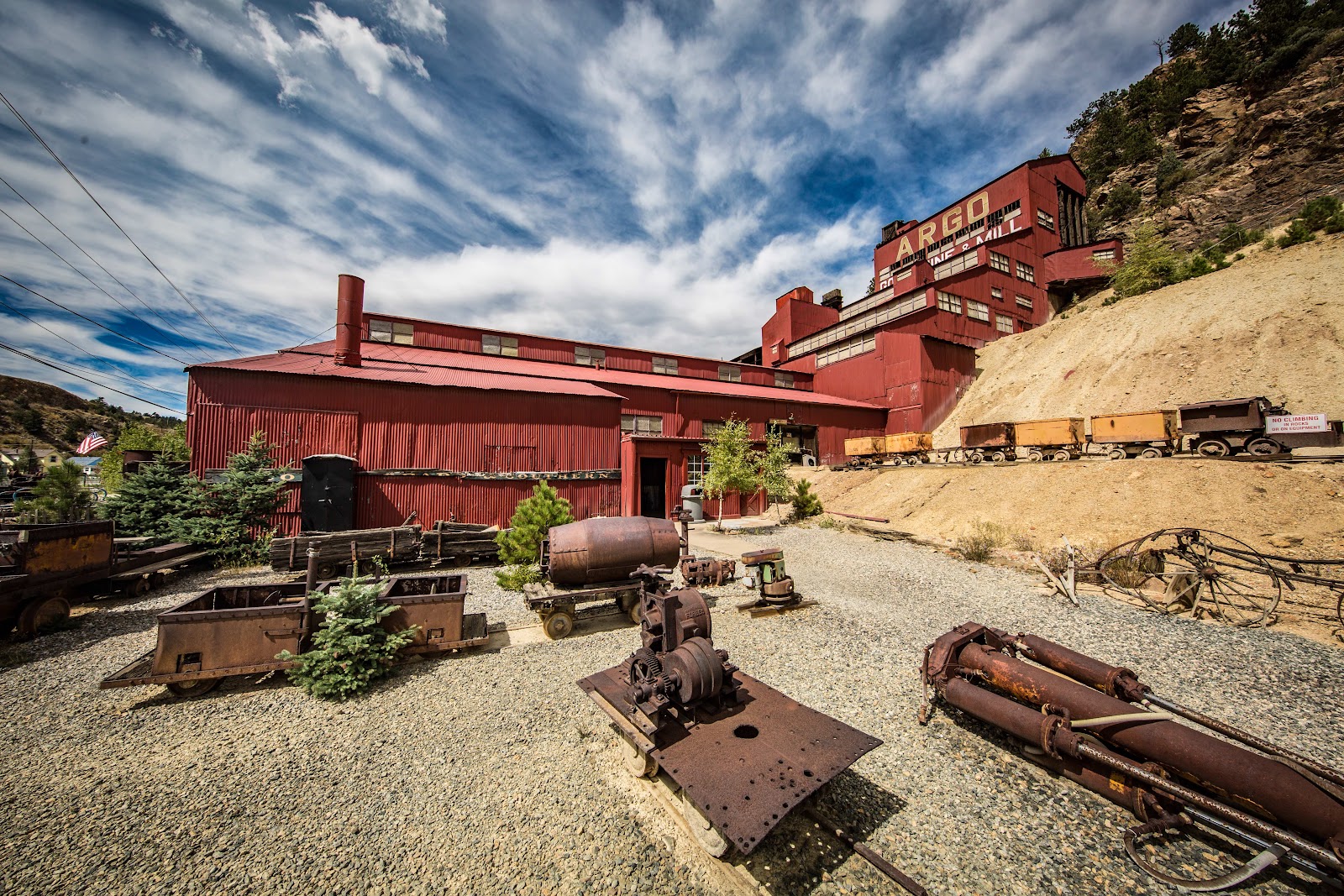
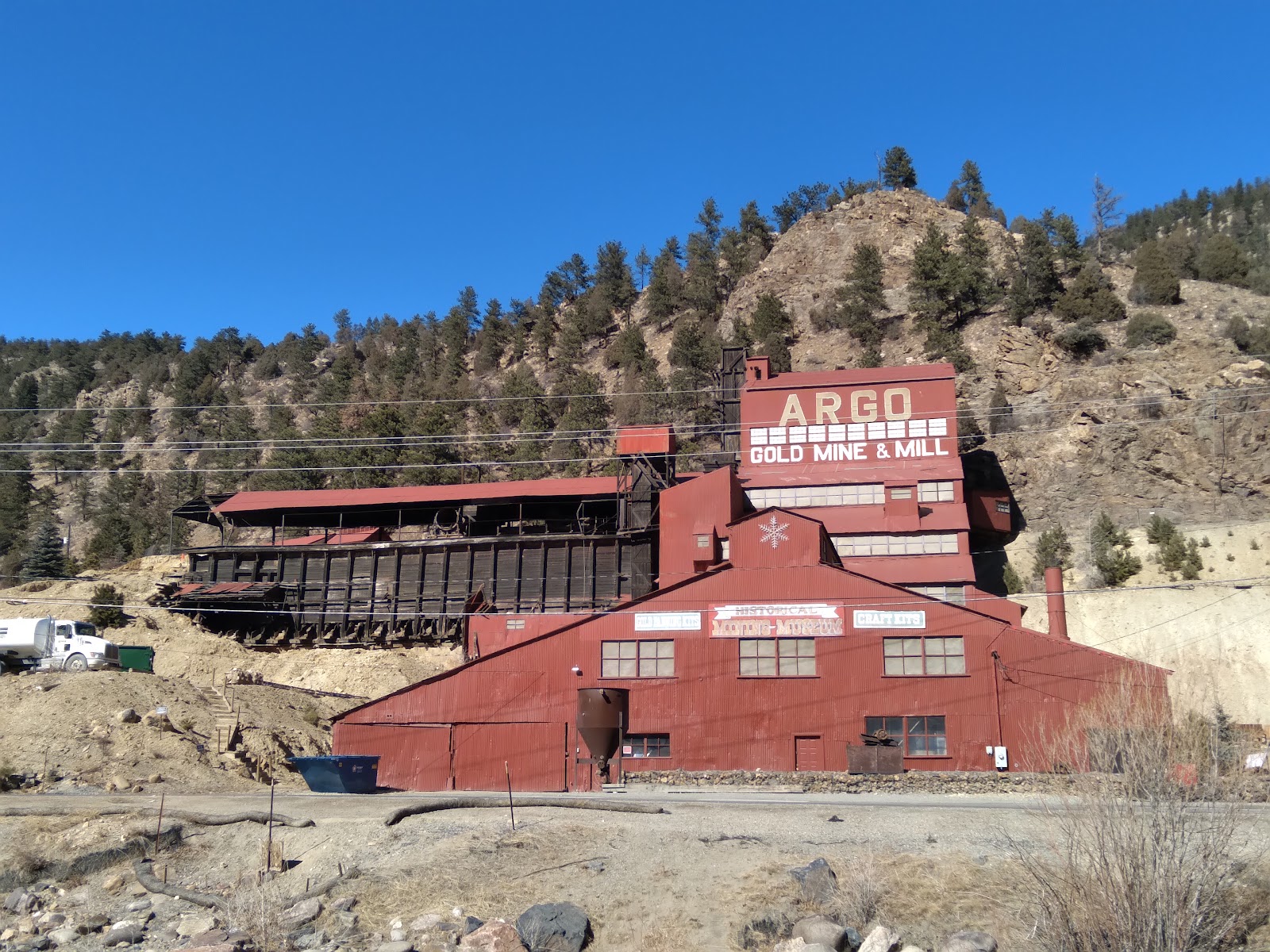
A gold mill of this period was built down a slope rather than across a floor, because the process depended on gravity: ore went in at the top and worked its way down through successive stages. The building is therefore a tall stepped structure clinging to a mountainside, and that shape is the entire photographic story.
What it gives is drama at an unusual scale. Stepped timber and metal structure, heavy machinery, conveyors, tanks and chutes — all of it dark, strongly shaped and full of texture, arranged vertically rather than horizontally. A frame here has a sense of scale and gravity that a flat industrial floor cannot produce.
What it asks is more than most venues. The site is steep, which means climbing. The interiors are very dark with almost nothing that bounces. The structure is historic and in places fragile, which means access rules. And it sits in a narrow mountain valley at altitude, which shortens the day and hardens the light that does arrive.
We have not photographed a wedding at the Argo Gold Mill; historic mill buildings and narrow mountain valleys behave consistently. Which areas are accessible, what the safety and access rules are, and whether the machinery areas may be used are questions for their team — and those are safety answers rather than preferences.
The Argo Gold Mill at a glance
| Where | Idaho Springs, Colorado, in a narrow valley at about 7,500 feet |
| Suits | Vertical industrial structure, heavy machinery, real scale and texture |
| Resists | Steep ground, very dark interiors, access rules, and a short valley day |
| The best light | A large opening, from two or three metres inside it |
| Ask first | Accessible areas, safety and access rules, machinery access |
What it suits
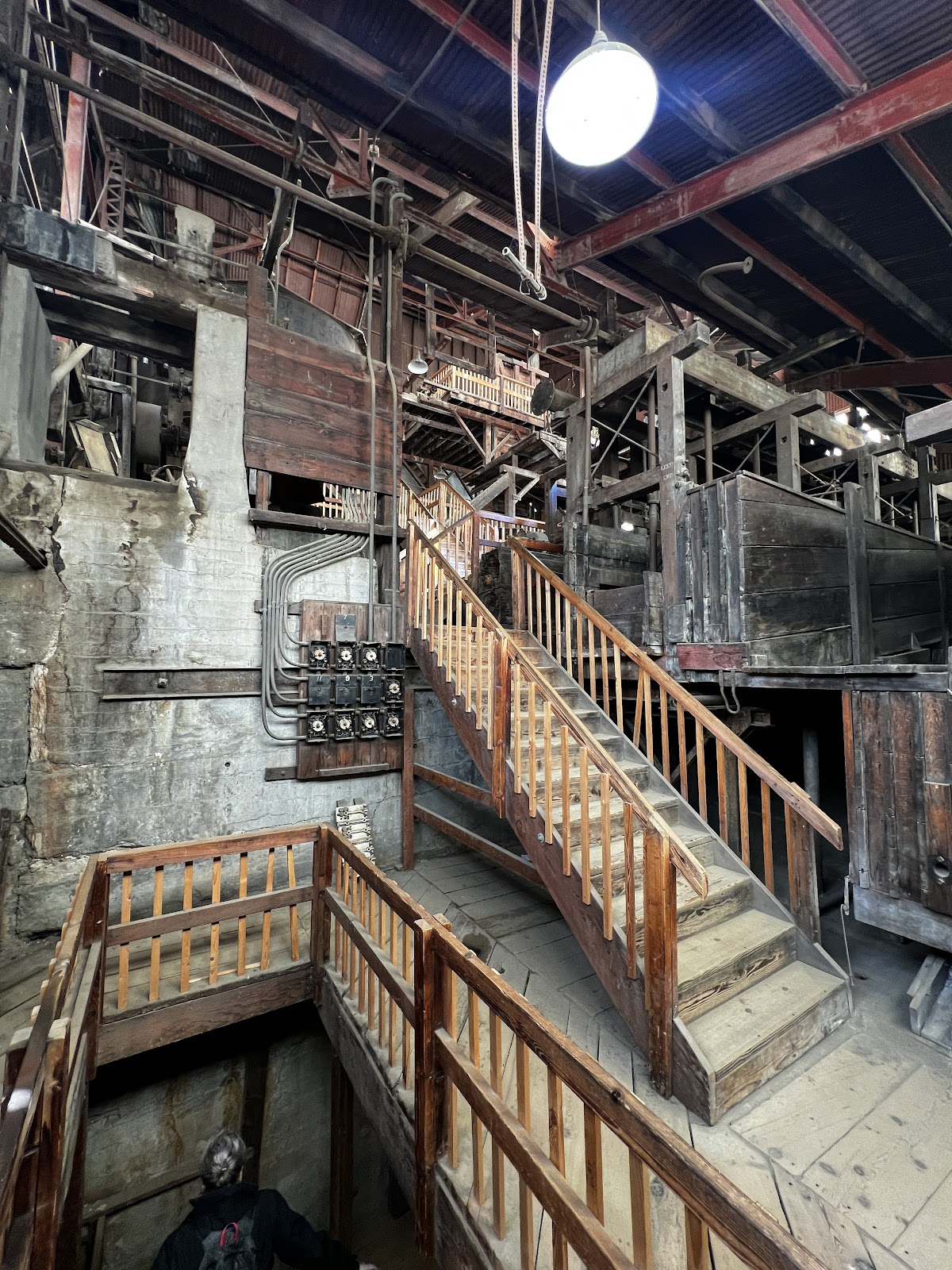
Vertical structure is the first and most distinctive asset. A building that steps down a mountainside gives a photographer something no level industrial site does: real elevation within the venue itself, which means positions genuinely above and below a subject without walking anywhere.
A camera above a group sees faces rather than the backs of heads; a camera below puts structure or sky behind a couple rather than a floor. At a mill those positions are a flight of stairs apart rather than a hillside walk, which makes the perspective changes cheap.
It also means frames that read as sections rather than elevations: looking up or down through several levels of stepped timber and metal gives a layered composition that a single-storey space cannot, and the repetition of structural members through those layers is a strong graphic subject in itself.
Machinery is the second asset. Heavy industrial equipment is large, dark, strongly shaped and blocks light — which makes it an excellent background separated by tone with no equipment, and directional shade for anyone standing beside it. That is doing two jobs at once, and in a dark building the shade matters less than the tone.
Specular metal is the third and it cuts both ways. Polished or worn metal behaves like a mirror rather than a surface, showing any badly placed light at full brightness — so the fifteen-second check from the camera position is essential. Used deliberately, a worn metal surface reflecting a couple is a frame nothing else gives.
Texture is the fourth and it needs raking light. Rough timber, riveted plate, rust, cable and ore-stained concrete all read only when light runs along them: a source pointed at a timber wall makes a flat field, while the same source placed to skim it lifts every joint and every grain line. The positions where existing light already grazes a surface are the ones worth using, and in a mill they cluster near the openings.
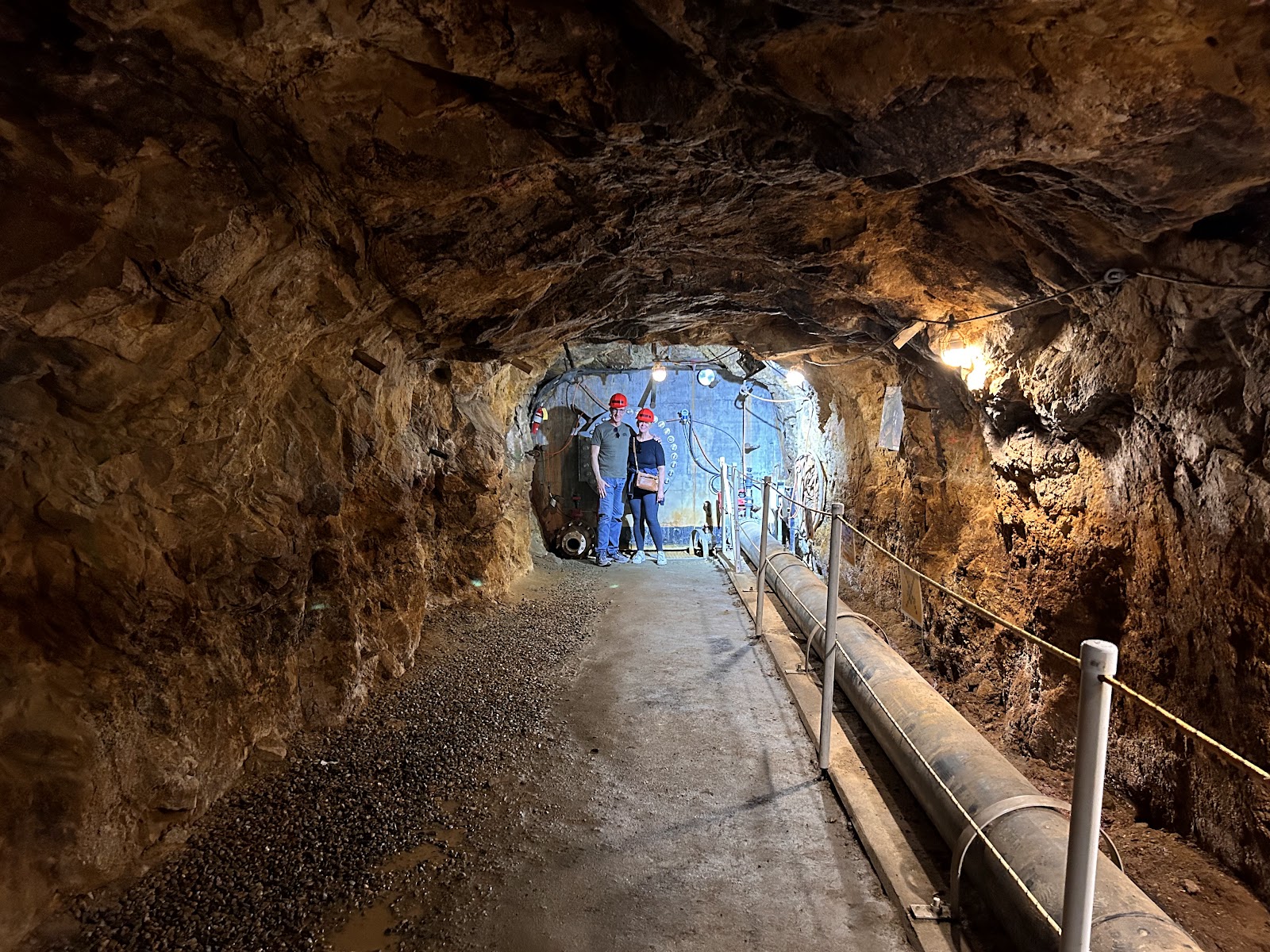
The openings are the fifth and they are the building’s light. A large opening in a mill wall is unglazed, which means nothing diffuses what comes through it — so the exterior beyond is at full brightness while the interior a few metres in is many stops down.
That gap has one very good answer: stand two or three metres inside an opening, facing out, where a subject is lit by an enormous soft source with darkness behind them. That is the best portrait position in almost any industrial building and it needs no equipment at all. One test frame at two, three and four metres in shows where the trade sits, watching the wall behind rather than the face.
What it does not suit
The steepness is the first refusal and it is a practical rather than an optical one. A building down a mountainside means stairs, ladders, catwalks and changes of level, and a wedding party in formal clothes at seven and a half thousand feet climbing through an industrial structure will tire faster than it would at home.
So a short route to two or three chosen positions beats an ambitious tour, it should be walked in advance, and the number of people moving through at once is likely to be limited by the venue rather than by preference.
Very low ambient is the second and it is lower than photographers expect. A mill interior is dark timber, dark metal and ore-stained surfaces, which absorb almost everything — and the openings are few relative to the volume. Measure it with one frame on arrival rather than estimating, because eyes adapt and meters do not, and expect to work at a high ISO with a wide aperture.
Bounce is unavailable. There is nothing pale in the building and the volumes are tall, which means a flash aimed anywhere but at the subject returns essentially nothing. One test frame confirms it in five seconds, and the answer is to light directly into a modifier, close — because light falls off with the square of distance and a modifier at two metres needs a quarter of the output of the same modifier at four.
The compensation is that fall-off in a dark building is absolute: a subject lit by one close source sits against pure black with nothing else needed, which is the most dramatic separation available anywhere. That is worth using deliberately rather than treating the darkness as a problem.
Over-lighting is the error to avoid. A face two stops above a black interior floats in nothing and discards the building entirely — a stop above is plenty, and the structure behind should be allowed to read faintly rather than being lit into visibility.
The access rules are the third and they shape the day more than any technique. A historic mill is a conserved industrial structure with genuine hazards — open drops, fragile floors, machinery, and in places contaminated ground — which means restrictions on where people may go, what may be set down, how many at once, and what footwear is required.
Those are safety answers rather than house preferences, they belong to the venue, and they should be settled at booking. The working assumption is: escorted access, small numbers, no stands, a source in a hand, and a plan that fits inside whatever route has been agreed.
The fourth is the valley. A narrow mountain valley at altitude means the sun clears one side late and drops behind the other early, so direct light on the site may last only a few hours — and the published sunset time is close to irrelevant. The most useful question to ask is when the sun leaves the site, and the answer is earlier than any table suggests.
What the valley gives in exchange is a long period of open shade outdoors, which is genuinely good light — soft, downward, no hard shadows — and which pairs well with the openings, because an opening under open shade is a soft source rather than a hard-edged one.
- Two or three metres inside a large opening, facing out — the best light in the building
- Don’t bounce; nothing in a mill is pale enough. Light close, into a modifier
- Use the fall-off: one source in a dark building gives absolute separation
- A stop above the ambient, never two — the structure should still read
- Settle the access, footwear and numbers rules first; they are safety answers
Outside, and the Colorado year
Outside, the building itself is the subject and a narrow valley gives room to stand back on the opposite side, which means a stepped mill can be photographed whole — a genuinely striking frame, because the shape is unlike any other building type.
It wants raking light, which in a valley means the short window when the sun is on that elevation. A short walk to establish which face is lit at the planned hour is worth more than any accessory, and the venue will know.
The valley’s other outdoor asset is the creek, where one runs: water reflects and doubles anything lit, bounces light upward to fill facial shadows, and makes shutter speed a choice — with camera height deciding between a mirror and a stony bed, and low being the answer on shallow mountain water.
Conifer is the shade outdoors. Dense spruce and fir at this elevation absorb almost all the light falling on them, which gives genuinely full shade and three or four stops of free separation — at the cost of fooling a meter by two stops, so metering on the faces and working in manual is the rule. Ponderosa at lower elevations dapples rather than shades, so the distinction matters.
At around seven and a half thousand feet the altitude is the governing variable. There is meaningfully less atmosphere overhead to scatter sunlight, which means direct sun is harder, shadows go deeper, and a face half in sun is unrecoverable rather than difficult. Full shade or full sun, with nothing in between.
Summer afternoons bring the state’s defining hazard and it needs naming plainly. Mountain convection builds almost daily from July into September, and these storms produce lightning — which on exposed high ground is genuinely dangerous rather than inconvenient, and Colorado has one of the highest rates of lightning casualties in the country.
A narrow valley adds a second risk: water. Heavy rain on steep ground drains fast, and a mountain creek can rise quickly from rain falling upstream. Both are matters for whoever is responsible for the party, and at a site that is largely indoors the building is the alternative — which is one of the type’s advantages.
Autumn is the best window: the air is at its clearest, the afternoons stabilise, and aspen among the conifer turn gold in the second half of September into early October. Because a grove is clonal the whole stand turns at once rather than tree by tree, which gives a uniform gold mass and a sharp window of about a week either side of peak. Gold aspen against a dark stepped mill is the strongest exterior frame the site produces.
Winter is long at this elevation. Snow lies, which is the best natural fill available outdoors — lifting exactly the shadows a low sun carves while fooling a meter by about two stops — and which turns the ground into a reflector that brightens every opening in the building considerably. In a mill whose central problem is darkness, that is a substantial gain rather than a marginal one.
The December midday sun at this latitude reaches only about twenty-seven degrees above the horizon, so the whole short day is raking light — exactly what rough timber, rusted plate and stepped structure all want. The costs are cold in an unheated industrial building, batteries draining faster at altitude, and access that may be limited by snow on a steep site.
More frames from The Argo Gold Mill
The Argo Gold Mill wedding photography: common questions
Why is the building shaped like that?
Because gravity did the work: ore went in at the top and worked down through successive stages, so the mill steps down a mountainside rather than sitting on a floor.
What does that give a photographer?
Real elevation within the venue — positions above and below a subject a flight of stairs apart, and frames that read as sections through several layers.
Where is the best light?
Two or three metres inside a large opening, facing out. An unglazed opening is an enormous soft source with darkness behind.
Can you bounce flash?
No. Nothing in a mill is pale enough and the volumes are tall. Light close into a modifier, and use the absolute fall-off as separation.
What rules should be expected?
Restrictions on access, numbers, footwear and what may be set down. A historic mill has open drops and fragile floors, so those are safety answers.
Is winter useful?
Substantially. Snow turns the ground into a reflector that brightens every opening, and a low sun rakes rough timber and rusted plate all day.
More Colorado venue guides
We are writing a photographer’s guide to every venue we would happily shoot in Colorado. Here are three more, plus the full index:
- Bella Collina, Monument: The Problem, and Four Ways Out
- The Boettcher Mansion, Golden: The Problem, and Four Ways Out
- The Chautauqua Dining Hall, Boulder: One Frame, and How It Is Made
Planning a wedding at The Argo Gold Mill?
A building made by gravity. Tell us your date and we will plan the route.