 Gateway Canyons Resort, Grand Junction: A Walk Through the Site
Roots Run Deep, Fruita: The Site’s Own Logic
Green ground in a red desert. Every useful thing about the light here comes from that single contradiction.
An irrigated farm in western Colorado’s desert is a contradiction made physical, and the contradiction is the logic of the place.
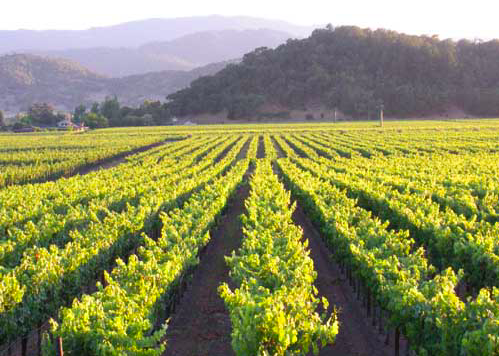
Outside the water, this is high desert at around four and a half thousand feet: red and buff sandstone, sparse sage and shadscale, exceptionally dry clear air. Inside it, wherever a ditch runs, there is dense green — pasture, orchard, vine, and above all cottonwoods, which grow nowhere here except along water and grow very large where they find it.
Three consequences follow, and they explain every working position on such a site.
The cottonwoods are the only real shade in the landscape, and because they exist only along the water, the shade and the water are in the same places. A broad-crowned cottonwood is the one genuinely useful shade tree in the region, and it is the difference between a usable site and an exposed one.
The green ground behaves entirely differently from the desert around it: it absorbs rather than reflects, throws up far less fill than bare pale ground, and reads as saturated rather than bleached in low sun.
And the horizon is red rock — mesas, cliffs, bluffs — which means the background of almost every wide frame is warm and geological while the foreground is green and cultivated. That contrast is the site’s signature and the reason it does not look like anywhere else in the state.
We have not photographed a wedding at Roots Run Deep; irrigated desert farms behave consistently. What is included, the covered alternative, whether the site has usable power, and what the ground and irrigation schedule are doing on the date are questions for their team.
Roots Run Deep at a glance
| Where | Irrigated farmland near Fruita, on Colorado’s western slope |
| The logic | Green where the water runs, desert everywhere else |
| The shade | Cottonwoods along the ditches — the only real canopy in the region |
| The background | Red rock mesas behind green cultivated ground |
| Ask first | Covered alternative, power, ground and irrigation on the date |
The cottonwoods, and the green ground
The cottonwoods are the first thing to find and they are worth more than any structure on the property.
A mature cottonwood has a broad spreading crown carried high on a thick trunk, which is exactly the geometry that shade needs: enough depth to block the overhead sun properly, and enough height underneath to stand and work. Nothing else in western Colorado offers that — piñon and juniper are small, open and thin-crowned, so they dapple and give nothing.
Under a cottonwood the light is soft and comes in from the open sides rather than from above, which models a face instead of flattening it. The best position is a few metres in from the edge of the canopy on the side facing open sky, which gives direction along with the softness.
There are two cautions. The crown is open enough to dapple at the margins, so the test is always to look at a face rather than at the ground; a bright patch anywhere on the skin means move a metre. And cottonwood leaves are large, glossy and light green, which means they transmit as well as reflect — light coming through the canopy carries a green cast onto skin that a custom white balance set on a face in position handles and a daylight preset does not.
The other thing cottonwoods do is sound and movement. The leaves are flat-stalked and turn in the slightest air, so the tree is in constant motion — which in still photography means a shutter fast enough to hold the leaves rather than smear them, if the tree is meant to read as a tree rather than a green blur.
The green ground is the second element and it behaves opposite to the desert around it. Bare pale desert ground is an efficient reflector that throws light upward and fills the shadows a high sun carves; irrigated pasture and orchard grass absorb, so there is far less bounce and the shadows under eyes and chins stay deeper.
That means on the green ground a source or a held reflector actually earns its place at midday, in a way it does not out on the bare ground fifty metres away. The two surfaces need different handling on the same afternoon, which is unusual and worth knowing before the day rather than during it.
In low sun the green ground is where the site is strongest. Low light rakes across pasture and orchard rows rather than falling onto them, which puts texture in every blade and turns cultivated lines into graphic elements — and any planted row is a lead-in or a cut-across depending entirely on where the camera stands, so two steps either way is worth checking before committing.
Orchard rows in particular are a gift: a corridor of trees converging toward a red mesa is a composition the site builds for you, and it works far better on a longer lens that keeps the rows compressed than on a wide one that splays them.
The desert, the horizon, and the day
Off the irrigation, the rules change to desert rules and they are strict.
The air here is exceptionally dry and clear, which means direct sun is hard, contrast is high, and a face half in sun is unrecoverable rather than merely difficult. There is nothing to shade a subject on bare ground, so midday out there is either avoided, or covered, or accepted as a compromise everyone can see.
The bare ground’s one virtue is that it throws light back upward, which fills the shadows a high sun carves — at the cost of uplight under the chin. Something solid on one side corrects it, and the diagnosis is simply to look at the chin in the first frame.
The red rock horizon is what the whole site is arranged around and it needs the right lens. A wide lens renders distant mesas as a thin pale band above a great deal of foreground, which throws away the reason anyone chose this place. A longer lens compresses the cliffs and brings them forward as a warm geological presence behind the couple, and in western-slope air that compression holds detail with almost no haze — which is why it works here and not in humid country.
The exposure for such a frame goes on the rock rather than on skin, with the faces lifted by a close source gelled warm to match. Metering on faces produces a white sky and a flat washed horizon, which is the standard failure of open country. And close matters because nothing at distance bounces: a source at two metres needs roughly a quarter of the output it needs at four.
The best hour is the last one and it is better here than in most places, because red rock in low sun is the most saturated natural colour in this landscape — the same iron oxide that makes the rock red renders most intensely when the light is warmest. Green foreground, glowing red horizon and a warm sky is the frame the site exists to produce, and it lasts roughly forty minutes.
The crossing that follows is short in dry air but it is exceptionally clean: no haze, so the sky holds a genuine gradient rather than a muddy wash. It is a scheduled ten minutes rather than a leisurely wander, and it is worth putting in the running order explicitly.
After that, the western slope has one more thing that the Front Range does not: some of the darkest skies in the country. A night frame with the Milky Way above a mesa is a real possibility rather than a hope — tripod, wide fast lens, twenty or thirty seconds, and a party willing to stand still.
The practical constraints of a working farm apply throughout. Ground conditions depend on irrigation rather than on rain, so a pasture flood-irrigated two days before a wedding is soft regardless of the forecast — a question for the farm rather than for a weather app. Power at a field site may be limited or absent, which means battery sources rather than mains. Wind funnels along a river valley and makes a lightstand a liability and a held panel a sail. And fine dust gets into everything, which argues for changing lenses rarely and in shelter.
- Cottonwoods are the only real shade; check the face, not the ground
- Custom white balance under the canopy — cottonwood leaves transmit green
- Green ground absorbs, bare ground bounces. Different handling, same afternoon
- Longer lens for the mesas; expose for the rock and lift the faces close
- Ask about irrigation, not just the forecast — ground condition is scheduled
The farm year on the western slope
A farm’s year and a desert’s year run together here, and the combination gives a longer usable season than either the Colorado mountains or a hotter desert would.
Spring is the underrated best of it. Fruit country on the western slope blossoms in April, which puts white and pink orchard bloom against red rock — the strongest colour the site produces all year, and a window of a week or two that cannot be moved. Temperatures are comfortable, the air is clear, the light is long. The risk is wind, which in a river valley funnels and accelerates.
Early summer is green, long-lit and reliable, with the day split in two: mornings and evenings excellent, the middle a shade-and-welfare proposition. Western Colorado heat is real — routinely above thirty-five degrees Celsius in July — and a party in formal clothes on open ground at two in the afternoon is uncomfortable in a way that shows.
From roughly July into September the monsoon brings moisture up from the south and produces afternoon thunderstorms. Those give the most dramatic skies of the year — storm cloud over red rock with a shaft of low sun on a cliff — and they bring the two hazards of this landscape: lightning on open ground, and flash flooding in washes and drainages from rain that fell miles away and out of sight.
A named covered alternative with real capacity is a requirement rather than a courtesy, and the decision to use it belongs to whoever is responsible for the party. The clearing after a storm is the best short window of the season: wet rock is at its most saturated and the air is scrubbed clean, which is worth being ready for rather than waiting out indoors.
Late summer is harvest, which at a working farm means fruit on the trees, vines in leaf and activity on the ground — genuinely good material, and a reason to ask what the farm will actually be doing on the date. A wedding photographed among a real harvest looks unlike one photographed on tidy empty ground.
Autumn is the most reliable season overall and the most beautiful. The heat breaks, the monsoon ends, the air reaches its clearest of the year, and the cottonwoods turn a strong pure yellow — typically through late October here. A large yellow cottonwood against a red mesa under a deep blue sky is the single best frame this landscape offers, and unlike mountain aspen it is a long window rather than a week, because cottonwoods along a ditch turn at slightly different rates.
Winter is mild by Colorado standards and completely unlike the mountain venues an hour east. Snow falls but rarely lies long at this elevation, and a dusting on red rock with bare cottonwood structure above green winter pasture is a spare, graphic condition worth having.
The December sun at this latitude reaches only about twenty-seven degrees above the horizon, so the whole short day is raking light — which removes the hard-light problem entirely and makes the site usable from morning to evening rather than for two hours at each end. On the light alone winter is the easiest season, at the cost of cold mornings, a short day and bare trees.
Bare cottonwoods are worth a word, because they are not a loss. The structure of a mature cottonwood without leaves is architectural — heavy trunk, wide-reaching limbs against a clear sky — and it gives a frame the leafy version cannot: a subject under it is no longer in shade, so a low winter sun comes through the branches directly, which is a different picture rather than a worse one.
More frames from Roots Run Deep
Roots Run Deep wedding photography: common questions
What makes this site different from mountain Colorado?
It is irrigated desert at around four and a half thousand feet — green cultivated ground, red rock horizons, and cottonwoods where the water runs.
Where is the shade?
Under mature cottonwoods along the ditches. They are the only broad-crowned trees in the region; piñon and juniper only dapple.
Why a custom white balance under the trees?
Cottonwood leaves are large and glossy, so light coming through them carries a green cast onto skin that a daylight preset will not correct cleanly.
How should the red rock be photographed?
On a longer lens, exposed for the rock, with the faces lifted by a close warm-gelled source. A wide lens reduces the mesas to a thin pale band.
What is the main hazard?
Summer monsoon storms — lightning on open ground and flash flooding in drainages from rain falling miles away. A real covered alternative is required.
When is the site best?
Late October, for yellow cottonwoods against red rock in the clearest air of the year — and April, for orchard blossom, which lasts a week or two.
More Colorado venue guides
We are writing a photographer’s guide to every venue we would happily shoot in Colorado. Here are three more, plus the full index:
- Sapphire Point Overlook, Dillon: The Problem, and Four Ways Out
- Snow Mountain Ranch, Granby: Field Notes on a High Meadow
- The Sonnenalp Hotel, Vail: A Walk Through an Alpine Hotel
Planning a wedding at Roots Run Deep?
Green ground, red horizon. Tell us your date and we will plan for the last hour.